Jianjun Hu is a Professor in the Department of Computer Science and Engineering at the Molinaroli College of Engineering and Computing , University of South Carolina. His research focuses on machine learning, deep learning, data mining, and evolutionary computation applied to bioinformatics, material informatics, and health informatics . Current projects include developing deep learning algorithms for intelligent audio processing , data-driven materials discovery , and medical image analysis . Education: Ph.D. in Computer Science (2004), Michigan State University Postdoc at University of Southern California (2005-2007) and Purdue University (2004-2005) Research Empowerment: Secured funding from NSF, NIH, Nvidia , and the South Carolina Department of Transportation Developed materials informatics platforms like Materialsatlas.org Created algorithms for protein-peptide binding prediction and crystal structure discovery Scientific Contributions: Editorial roles at PLOS ONE and Journal of Health & Medical Informatics Key conference reviewer for GECCO and BIBM Academic Mentorship: PhD advisors: Ananda Mondal, Jhih-Rong Lin, Emrah Atigan, Swain Mrutyunjaya MS thesis advisors: Guoyu Lu, Emrah Atilgan, Kevin Chien, Mythri Sunkara Laboratory: Machine Learning and Evolution Group (MLEG) at University of South Carolina Focus on deep learning for materials discovery , healthcare analytics , and evolutionary algorithms
Rune Hylsberg Jacobsen is a Professor at the Department of Electrical and Computer Engineering, Aarhus University. His work bridges energy systems, drone technology, and blockchain applications, with a focus on smart grids, autonomous systems, and decentralized infrastructure. Research interests include: Security frameworks for prosumer-driven energy systems using blockchain mmWave and LEO satellite communication protocols Homomorphic encryption for smart meter privacy Cooperative drone swarm navigation and infrastructure inspection Earth observation via CubeSats for climate research His recent publications highlight advancements in: Zero trust security models for renewable energy certificates Transport protocol optimization in satellite networks AI-driven charging window scheduling for drone fleets Decentralized identity management in Web3 infrastructure Key projects include: DISCO-2: Student CubeSat for Arctic climate monitoring Drones4Safety: Safety-critical inspection systems VPP4SGR: Virtual Power Plant networks
Giacomo Vitali is a Ph.D. candidate in Computer and Systems Engineering at the Politecnico di Torino , Department of Control and Computer Science (DAUIN), while also serving as a Lecturer at the same institution. His research focuses on Quantum Computing , Machine Learning , and Parallel and Distributed Systems . Education: M.Sc. in Physics of Fundamental Interactions (2018) from the University of Pisa Research: Pioneering hybrid quantum-classical algorithms for industrial applications, including BBQ-mIS and DEN models for graph problems and quantum hardware optimization Teaching: Contributing to courses on Quantum Hardware Design and Quantum Computing at the M.Sc. level, as well as undergraduate courses in Computer Science
Max Planck Institute for Chemical Physics of SolidsGermany
Dr. Claire Donnelly is a Research Professor and Lise Meitner Group Leader heading the Spin3D research group at the Max Planck Institute for Chemical Physics of Solids in Dresden, Germany, where she investigates three-dimensional magnetic systems using advanced imaging techniques. She holds a distinguished research position focused on nanoscale magnetism and spintronics. Education & Career Following her MPhys at the University of Oxford, Donnelly completed her PhD at ETH Zurich and Paul Scherrer Institute (2017). Her doctoral work on 3D magnetic systems received multiple honors. She subsequently held postdoctoral positions at ETH Zurich and the University of Cambridge as a Leverhulme Early Career Research Fellow before establishing her independent group at MPI-CPFS in 2021. Research Focus Donnelly specializes in developing cutting-edge X-ray magnetic tomography techniques to visualize 3D magnetization dynamics at the nanoscale. Her work encompasses: Three-dimensional magnetic nanostructures and topological spin textures Advanced imaging methods including X-ray vector nanotomography and soft X-ray laminography Chiral magnetic interactions and domain wall dynamics in complex geometries Her research bridges fundamental magnetism with potential applications in high-density data storage and quantum computing. Publication Trends Donnelly's recent publications demonstrate strong focus on three-dimensional characterization of magnetic systems, with recurring themes: nanoscale topological textures (skyrmions, Bloch points), advanced X-ray tomography techniques, chiral interactions in synthetic antiferromagnets, and curvature effects in magnetic nanostructures. Her work consistently integrates novel imaging methodologies with fundamental physics exploration. Honors APS Richard Greene Dissertation Award Werner Meyer-Ilse Memorial Award ETH Medal for outstanding doctoral thesis SPS Award for Computational Physics L'Oréal-UNESCO For Women in Science Fellowship European Magnetism Association Young Scientist Award Leadership As founder of the Spin3D group, Donnelly leads a research team developing next-generation magnetic imaging techniques. Her group focuses on creating novel approaches to visualize and manipulate 3D magnetic configurations in complex nanomaterials, with ongoing work in nanofabrication of magnetic architectures and time-resolved imaging of magnetization dynamics.
Southern University of Science and Technology (SUSTech)China
Yu He is a Researcher at the Institute of Quantum Science and Engineering, Southern University of Science and Technology (SUSTech) in Shenzhen, China, where he leads research on silicon-based quantum computing and quantum simulation. He joined SUSTech in March 2020 after international postdoctoral training. Education: Ph.D. in Physics, University of Science and Technology of China (2009-2015) B.S. in Atomic, Molecular and Optical Physics, University of Science and Technology of China (2005-2009) Research Focus: Dr. He specializes in semiconductor quantum technologies with emphasis on silicon-based atomic-scale devices, quantum simulation, and quantum networks. His work bridges experimental quantum optics, solid-state physics, and quantum information processing, particularly through quantum dot systems and dopant atoms in silicon for developing scalable quantum computing architectures. Publication Trends: His 27 publications demonstrate consistent focus on experimental quantum information science. Early work centered on high-purity single-photon sources using quantum dots. Recent breakthroughs include pioneering silicon-based quantum gates and quantum simulation platforms. Publications in Nature and Physical Review Letters frequently explore quantum measurement techniques, photonic quantum walks, and semiconductor qubit control. Awards and Honors: MIT Technology Review's 35 Under 35 Innovators (China) - 2020 Top Ten Quantum Computing Experiments in the World - 2019 Top Ten Scientific and Technological Advances in China - 2017 Laboratory Development: He directs a specialized quantum device laboratory at SUSTech developing STM-based nanofabrication and millikelvin measurement systems for silicon quantum processors. His team actively recruits postdoctoral researchers and engineers for projects in quantum dot manipulation, cryogenic electronics, and quantum chip design.
Nishant Saurabh is a tenured Assistant Professor at the Department of Information and Computing Sciences , Utrecht University , Netherlands. His research focuses on resource and data management , application scheduling , performance modeling , and optimization in large-scale hybrid distributed systems including Cloud, Edge, and Quantum computing. Recently, he has expanded into ML workload scheduling and causal performance attribution across the Cloud-Edge continuum. Research Expertise : Distributed Systems and Cloud Computing Quantum-HPC Middleware Systems Performance Modeling and Optimization ML/AI Workload Scheduling Cloud-Edge Continuum Architectures Observability Frameworks Scientific Leadership : Associate Editor, Springer's Journal of Cloud Computing Editorial Board, Frontiers of AI book series IBM HPC-Quantum Working Committee member Workshop Chair, IEEE IPDPS 2025 Supervision : He has supervised 16+ Master/Bachelor students on projects including container migration, reinforcement learning for serverless computing, and quantum middleware evaluation. Current PhD students include Diogo Landau (Performance Observability), Nathan Keyaerts (LLM Methods), and Negar Alizadeh (Energy Efficiency).
Patrick Karl is a Researcher at the Chair of Security in Information Technology (Technische Universität München). He holds an M.Sc. degree and focuses on efficient hardware implementations for post-quantum cryptography , particularly hardware acceleration of digital signature algorithms on RISC-V platforms for embedded systems. His work addresses performance optimization, power/energy efficiency, and countermeasures against physical attacks such as side-channel and fault attacks . His research spans both FPGA prototyping and ASIC design , including tape-outs for security applications. He contributed to NIST submissions like CROSS , LESS , and FuLeeca , and has published extensively on topics including lattice-based cryptography, masked accelerators, and hardware API overhead for lightweight cryptography. Patrick has taught Lab Course ASIC Design of Hardware Accelerators for RISC-V since WS22/23 and Lab Course Crypto Implementation in SS22. His publications (15 most recent) highlight trends in post-quantum cryptographic hardware , RISC-V security , and physical attack countermeasures . He has presented at venues like RISC-V Summit Europe, COSADE, and FDTC.
Andrea Giuntoli is an Assistant Professor at the Micromechanics group within the Faculty of Science and Engineering at the University of Groningen . He holds a PhD in Computational Soft Matter and Polymer Physics from the University of Pisa (2018), followed by postdoctoral work at NIST (2018-2019) and Northwestern University (2019-2021) under the ChiMaD project (part of the Material Genome Initiative). His research focuses on theoretical and computational modeling of nanoscale building blocks for advanced polymer composites , particularly in controlling mechanical properties, impact resistance, and self-healing through polymer architecture and graphene dispersion. He has secured significant grants including a VENI grant (2022) and an NWO-XS grant (2022). Key research trends from his recent publications (2021-2025) include machine learning-optimized coarse-graining , energy renormalization methods , impact-resistant coatings , graphene-polymer interfaces , and self-healing polymer glasses . His work bridges materials science , computational physics , and applied polymer engineering . Scientific Awards: VENI Grant (2022) NWO-XS Grant (2022) He actively collaborates across institutions (USA, Netherlands) and disciplines, with research impacts in medical devices , advanced materials , and surface science . His lab at the Zernike Institute for Advanced Materials integrates multi-scale modeling with experimental validation to enhance polymer composite performance.
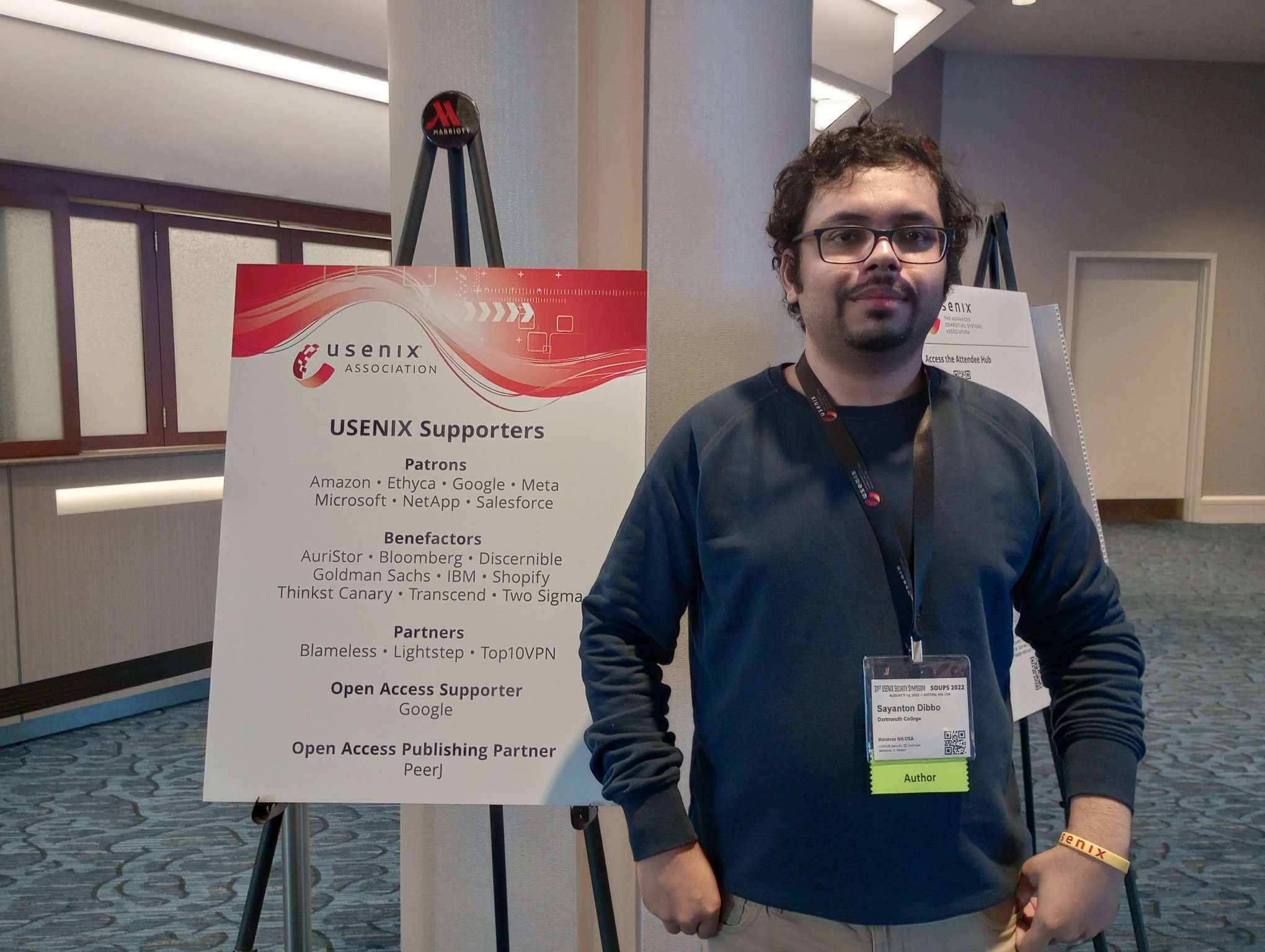
Dr. Sayanton Dibbo is an Assistant Professor in the Department of Computer Science at the University of Alabama, where he leads the Trustworthy AI Lab. He is also a faculty affiliate of the Alabama Center for the Advancement of AI (ALA-AI) and Alabama Cyber Institution & HPC. His academic journey includes a PhD in Computer Science from Dartmouth College (2020-2025) and an MS in Computer Science from the University of California, Riverside (2017-2019). Dr. Dibbo's research spans several critical areas in modern computing: Deep Learning and Computer Vision Secure & Trustworthy AI/ML modeling Analysis of foundation models (LLMs and Multimodal systems) Security and privacy aspects of machine learning systems Biometric-based user authentication for IoT devices His recent work focuses on developing defenses against model inversion attacks using sparse coding architectures, improving robustness in audio classification, and creating secure authentication systems for wearable devices. Dr. Dibbo's research spans multiple data modalities including images, tabular data, audio, and text, addressing critical security and privacy challenges in AI systems. Dr. Dibbo has received recognition for his work including the Dartmouth Graduate Student Council Travel Grant for ICASSP 2024 and the Cybersecurity Cluster Research Fellowship. His service to the academic community includes reviewing for Women in Computer Vision (WiCV) at ECCV 2024, Computers and Security Journal, and Neural Networks Journal. As an educator and mentor, Dr. Dibbo is actively seeking highly motivated undergraduate and graduate students to join his research team at the University of Alabama. His lab focuses on cutting-edge problems at the intersection of AI security, privacy, and robustness, offering students opportunities to work on impactful research with real-world applications.
Dima Krioukov is a Professor at Northeastern University with appointments in the Departments of Physics, Mathematics, and Electrical & Computer Engineering. He is affiliated with the Network Science Institute and leads the DK-Lab research group. His work bridges theoretical physics, mathematics, and network science with applications to the Internet, neuroscience, and cosmology. Primary Office: 177 Huntington Avenue, 2nd floor, Rm. 227, Boston, MA 02115 Additional Locations: The Roux Institute (London and Portland) Contact: +1-617-373-2934 Professor Krioukov's research spans network theory , network geometry , causal sets , and fundamentals of network dynamics . His work establishes connections between geometric properties of networks and their functional characteristics, with applications to navigation in complex systems. He has demonstrated that latent hyperbolic geometry explains heterogeneous degree distributions and strong clustering in real networks, and that the large-scale structure of the universe shares properties with complex networks like the Internet and the brain. His research has led to practical applications including optimal routing schemes for telecommunication networks based on hyperbolic geometry. His recent publications reveal a strong focus on the intersection of geometry and network science, with particular attention to causal sets, Riemann surfaces, and hyperbolic geometry. The research trends show increasing sophistication in connecting discrete network structures with continuous geometric spaces, with applications ranging from quantum gravity to efficient Internet routing. The work demonstrates how fundamental geometric principles govern the structure and function of diverse complex systems across multiple domains. Top 2% scientists worldwide (Stanford University 2024 assessment) USPTO patent on super-scalable routing in telecommunication networks Krioukov leads the DK-Lab, which focuses on theoretical aspects of network science with practical applications. His lab has developed methods to infer latent geometries of networks, created optimal routing algorithms based on hyperbolic geometry, and established connections between network structure and cosmological models. Current projects include research on network geometry, navigation in networks, random graphs and their limits, fundamentals of network dynamics, and quantum gravity applications. The lab maintains strong connections with both theoretical physics and practical network engineering communities.
Dr. Usman Hadi serves as an Assistant Professor in the School of Engineering within Ulster University's Faculty of Computing, Engineering and Built Environment at the Jordanstown campus. His academic trajectory includes a Ph.D. in Electronic Engineering from the University of Bologna (2020), followed by postdoctoral research at Aalborg University and industry experience as an External Research Engineer at Nokia Bell Labs in Denmark (2019-2021). His educational foundation comprises: PhD in Electronic Engineering, University of Bologna (2020) Master's in Digital Predistortion for Compensation of Nonlinearities in Radio over Fiber Links, University of Bologna Dr. Hadi's research spans cutting-edge domains in wireless communications and AI-driven networking solutions. His primary focus includes 5G/6G technologies, Time Sensitive Networks, Radio over Fiber systems, and machine learning applications in telecommunications. Recent work emphasizes AI-enhanced signal detection for MIMO systems, UAV-based communication frameworks, and IoT security architectures, with significant contributions to optical front-haul optimization and wireless sensor networks. Analysis of his publication record reveals a strategic emphasis on AI integration for next-generation wireless systems. Key trends include deep learning applications for MIMO detection in 6G networks, digital twin implementations for UAV fault detection, and secure IoT frameworks for drone communications. His work consistently bridges theoretical advancements with practical implementations in optical and wireless front-haul systems, particularly through the MADNI (Made in UU) drone platform. Notable recognitions include: Top 2% Cited Researcher designation for three consecutive years (2021-2023) Research and Impact Fund Award (2023) Dr. Hadi supervises two PhD students: Ms. Cara Rose (Department of Economy-funded, 2023-present) and Mr. M.Y. Daha (Vice Chancellor's Research Studentship, 2022-present). His active research portfolio includes drone-based climate resilience initiatives funded by the British Council (2025-2026) and IoT-driven cybersecurity frameworks supported by Innovate UK (2025), alongside participation in EPSRC-funded infrastructure projects. He leads the MADNI drone research platform, which integrates state-of-the-art 5G connectivity, object detection, and facial recognition capabilities. His laboratory maintains active collaborations with Nokia Bell Labs, University of Manchester, University of East Anglia, Manchester Metropolitan University, University of Texas, and Boise State University, focusing on next-generation communication technologies and sustainable development applications aligned with UN SDGs.
Prof. Dr. Jürgen Seitz is a full Professor and Head of the Business Information Systems programme at the Baden-Württemberg Cooperative State University (DHBW) in Heidenheim, Germany. Since April 2001 he has shaped the university’s applied informatics curriculum and serves as data-protection liaison and German Informatics Society (GI) trustee. Internationally, he is Associate Editor for several journals and chairs tracks at conferences such as WHICEB and Bled eConference. Education 1988–1991 Diplom-Betriebswirt (BA), Berufsakademie Stuttgart (now DHBW) – focus on data processing 1992–1996 Diplom-Ökonom, University of Hohenheim – economics 1998 Dr. rer. pol., Europa-Universität Viadrina – dissertation on the impact of IT on banking structures Research Interests Seitz’s research integrates business informatics with pressing societal challenges. Key themes include: e-Finance & FinTech: cryptocurrency literacy, blockchain sustainability, digital payment futures e-Health & Health Telematics: barrier-free e-kiosk design, telematics infrastructure for electronic health cards, pandemic digital health solutions Data Management & Analytics: heterogeneous data-warehouse integration, big-data approaches to agriculture, water-quality prediction, renewable-energy forecasting IT Management & Modeling: business-model evaluation, Industry 4.0 architectures, enterprise system integration Publication Trends Across more than 150 peer-reviewed works (1998–2024), Seitz demonstrates a shift from foundational studies in e-commerce and digital watermarking to cutting-edge applications of AI, blockchain, and data analytics in finance, health, and sustainability. Recent articles emphasize machine-learning techniques (k-means, ARIMA, PCA) applied to global agriculture, renewable-energy growth, and gendered cryptocurrency adoption, reflecting a commitment to data-driven, cross-disciplinary impact. Editorial & Scientific Service Associate Editor: International Journal of Networking and Virtual Organisations (IJNVO) , Journal of Cases on Information Technology (JCIT) , International Journal of Cases on Electronic Commerce (IJCEC) Editorial Board Member: International Journal of Global Sourcing and Management (IJGSM) , Journal of Digital Marketing (JDM) , Journal of Internet Banking and Commerce (JIBC) , among others Conference Chair/Co-Chair: WHICEB (Wuhan International Conference on E-Business), Bled eConference eHealth Track Technical Programme Committee Member: IEEE ICDMAI, IEEE IEMCON, IEEE UEMCON, CCWC External examiner & guest lecturer in China, India, USA, Australia, Malaysia, Jordan, Poland, UK, Belarus Advising & Collaborative Networks While individual student names are not disclosed, Seitz mentors within the DHBW cooperative-education model and supervises industry-linked capstone projects. He is a key liaison for German industry partners and international universities, facilitating funded research on FinTech adoption, e-health feasibility, and sustainable IT architectures. His leadership of the Business Informatics programme positions him to coordinate grants and consortia across Europe and Asia. Laboratories & Teams At DHBW Heidenheim, Seitz steers the Business Informatics Lab —a hub for applied R&D projects with corporate partners such as Landesbank Baden-Württemberg and health-sector IT providers. The lab focuses on prototyping blockchain-based e-prescription systems, evaluating FinTech business models, and deploying predictive-maintenance analytics in automotive supply chains. Interdisciplinary student teams work under his guidance to translate academic insights into market-ready solutions.
Abhishek Kumar Gupta is an Associate Professor in the Department of Electrical Engineering at the Indian Institute of Technology Kanpur. His educational background includes: Ph.D. in Electrical and Computer Engineering from the University of Texas at Austin (2016) B.Tech.-M.Tech. dual degree in Electrical Engineering from IIT Kanpur (2010) Dr. Gupta specializes in Wireless communications , with research interests spanning 5G/6G Technologies including mmWave, THz, RIS, vehicular, and molecular communication, Quantum communications, and Stochastic geometry. His work focuses on advancing the theoretical foundations and practical implementations of next-generation wireless systems, particularly in the areas of millimeter wave communications, spectrum management, and network densification. His research has significant implications for the development of future wireless networks that can support the exponentially growing demand for mobile data. Analysis of Dr. Gupta's publications reveals a strong focus on millimeter wave cellular systems, with several papers examining modeling approaches, spectrum licensing strategies, and network analysis using stochastic geometry. His work bridges theoretical mathematics with practical wireless communication challenges, particularly addressing the fundamental limits of network densification and performance scaling in ultradense urban environments. The recurring themes in his research include spectrum efficiency, interference management, and novel approaches to wireless network architecture. Dr. Gupta has received notable recognition for his academic achievements: GE-FS Leadership Award by General Electric Foundation and Institute of International Education (2009) IITK Academic Excellence Award for four consecutive years (2006-2009) Prior to his academic career, Dr. Gupta gained valuable industry experience working with Samsung Research America as a Sr. Standards Engineer, as well as with Applied Microelectronics Circuit Corporation, FutureWei Technologies, and Nokia Networks. This industry experience informs his research approach, ensuring practical relevance alongside theoretical rigor.
Royal Holloway, University of LondonUnited Kingdom
Dr Khalid Omari is a Research Fellow currently working in Dr Liu's spintronics group, where he leads the nanofabrication of spin-wave structures using topological insulators. His research focuses on designing, micromagnetic modelling, and nanofabrication of spin-wave waveguides for quantum logic operations. Previously, he was a research fellow at the University of Nottingham working on antiferromagnetic spintronics and a postdoc at the University of Manchester on graphene spintronics. His educational background includes: BEng in Electrical and Computer Engineering from the American University of Beirut (2006) MSc in Nanotechnology from the University of Sheffield (2011) PhD in Nanomagnetic Materials from the University of Sheffield (2016) Dr Omari's primary research interests lie in spintronics, with a focus on nanomagnetic materials and domain wall dynamics. He has made significant contributions in the areas of graphene spintronics, antiferromagnetic materials, and topological spintronics. His work aims at developing novel spin-based devices for low-energy and high-speed computing, including logic architectures and quantum information processing. His publication record, spanning from 2014 to 2020, demonstrates a consistent focus on domain wall phenomena and spin-wave devices. The articles reveal a progression from fundamental studies of domain wall motion in magnetic nanowires to the development of antiferromagnetic switching and topological insulator-based spin-wave structures, highlighting his expertise in both experimental and computational aspects of spintronics. His notable recognition includes: Daniel Doncaster Prize (2016) Dr Omari has served as Principal Investigator for a research project in the Department of Electronic Engineering, though the project status is currently Not started. He has collaborated with prominent researchers in the field, such as Dr. T. Hayward, on domain wall logic and chirality control. He is an active member of the Nano-Electronics and Materials Group, contributing to cutting-edge research in spintronics and nanofabrication.
Christoph Lüth is a Professor of Computer Science at the University of Bremen and Deputy Head of the Cyber-Physical Systems research group at the German Research Center for Artificial Intelligence (DFKI) since 2006. His work bridges theoretical foundations with practical applications in advanced systems engineering, focusing on provably correct software and program verification. Key affiliations: DFKI Bremen , University of Bremen Research areas: Systems Engineering, Robotics, Hardware Security, Formal Methods Projects: PROTECT (secure systems), EASEPROFIT (post-quantum protocols), DI-OCDCPro (open-source chip design), SIGN-HEP (secure HSM development) His recent publications highlight trends in formal verification of binary code, memory protection in RISC-V architectures, and open-source hardware evaluation. At the University of Bremen, he teaches functional programming and programming language theory. Contact: Christoph.Lueth@dfki.de