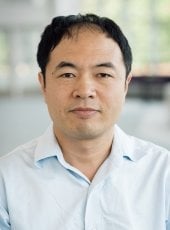
Imre Blank serves as a Lecturer in the Department of Chemistry and Chemical Engineering at École Polytechnique Fédérale de Lausanne (EPFL), affiliated with the School of Basic Sciences. His research focuses on food chemistry and flavor science, particularly investigating taste-active compounds, aroma perception mechanisms, and sensory evaluation of food products. His recent work explores umami taste perception through EEG-based brain rhythm analysis Computational modeling of taste peptides Multi-omics characterization of odorants in plant-based and traditional foods Mechanistic studies of saltiness enhancement by volatiles His publications emphasize analytical chemistry techniques like LC–MS and GC-IMS for flavor profiling. Current research trends examine the molecular dynamics of odorant release, biosensor development for taste detection, and sustainable flavor production inspired by natural processes. He also investigates the impact of processing conditions on coffee aroma formation and bitterness reduction.
Dr. Yasmiyn Irizarry serves as Associate Professor in the Department of African and African Diaspora Studies at The University of Texas at Austin (College of Liberal Arts) and as Associate Director of the Institute for Urban Policy Research & Analysis. She founded the Numbers 4 Justice Lab to advance racial equity through quantitative methods. Education Bachelor's degree from The Ohio State University Master's and Doctorate in Sociology from Indiana University Research Focus As a leading QuantCrit (critical quantitative methods) scholar, Dr. Irizarry examines race and racism across four interconnected domains: K-16 schooling contexts; categorization, identity, and ascription; social attitudes, prejudice, and discrimination; and justice, marginalization, and social control. Her work employs an intersectional framework analyzing race, ethnicity, immigration, class, and place within systems of power, with particular emphasis on Black women's experiences and census data methodologies. Publication Trends Her recent publications (2021-2025) demonstrate consistent focus on police violence against Black women, critical quantitative methodologies in education, and reexamination of racial categories in US Census data. Key themes include mental health impacts of racial profiling, race-shifting in demographic data, and racialized dynamics in STEM education and school safety, reflecting her commitment to transforming quantitative research through critical race perspectives. Research Funding National Science Foundation (current projects on school safety, STEM education, and population policies) Robert Wood Johnson Foundation (revising OMB race/ethnicity standards) Bill and Melinda Gates Foundation (past) Ford Foundation (past) American Educational Research Association (past) Academic Leadership Dr. Irizarry directs the Numbers 4 Justice Lab, which develops and applies quantitative tools to address racial inequities. She teaches graduate courses including Theories of Race/Ethnicity and Sociology of Education across multiple departments (AFR, SOC, WGS), emphasizing critical approaches to quantitative research in racial justice contexts.
David P. Field is a Professor at Washington State University's Voiland College of Engineering and Architecture , where he serves as Director of the Institute of Materials Research and Associate Dean for Research and Graduate Education. His expertise spans physical metallurgy , materials characterization , and microstructure engineering . Ph.D. in Mechanical Engineering, Yale University, 1991 M.S. in Mechanical Engineering, Brigham Young University, 1988 B.S. in Mechanical Engineering, University of Wyoming, 1987 Research focuses on metal deformation , recrystallization mechanisms , and advanced microscopy techniques , particularly addressing texture evolution and grain boundary engineering . Key article trends include computational modeling of microstructural heterogeneity, additive manufacturing of titanium, and thermomechanical processing of uranium-molybdenum alloys. Scientific recognitions include: 2024 Plenary Lecture at ICOTOM 20 2023 Fellow of ASM International 2015 MLK Distinguished Service Award 2011 Best Paper in Physical Sciences, Microscopy and Microanalysis Field has advised 15+ graduate researchers and led international collaborations at institutions like Universite de Lorraine and IISC Bangalore. His work integrates experimental and computational approaches to solve materials challenges in energy and manufacturing sectors.
Michael Strasser is a Full Professor in Sedimentary Geology and Head of the Department of Geology at the University of Innsbruck since 2015. He holds a PhD from ETH Zurich (2008) and has held academic positions including Assistant Professor at ETH Zurich and postdoctoral fellowships at MARUM, University of Bremen. His research focuses on sedimentary geology, tectonic processes, and geohazards such as earthquakes, landslides, and tsunamis, with contributions to the International Ocean Discovery Program (IODP). Education: PhD in Earth Sciences, ETH Zurich (2003–2007) Diploma in Earth Sciences, ETH Zurich (1998–2003) Research Interests: Quantitative analysis of sedimentary systems, submarine landslides, paleoseismic records, and ocean margin geohazards. He leads projects on earthquake-induced sediment transport in trenches and lacustrine paleoseismology in Alpine lakes. Recent Work: His studies include IODP Expedition 386 (Japan Trench Paleoseismology), Alpine lake records of seismic events, and hadal zone biogeochemistry. Key findings link tectonic activity to sedimentary archives in deep-sea trenches and lakes. Awards: AGU/JPGU Asahiko Taira Prize (2017) Hans-Cloos-Preis (2011) ETH Medal for PhD (2008) Advising & Grants: Supervised 26 graduate students (9 PhD, 17 MSc). Active in IODP science committees and international geoscience initiatives like IGCP-640 (Submarine Landslides). Labs/Teams: Leads the Sedimentary Geology Innsbruck group and collaborates with institutions globally on projects combining fieldwork, geophysical analysis, and numerical modeling.
Paul Evans is a Professor in the Department of Materials Science & Engineering at the University of Wisconsin-Madison, College of Engineering. His research focuses on nanoscale materials synthesis, ultrafast dynamics, and advanced X-ray characterization techniques. PhD, Harvard University (2000) MS, Harvard University (1996) BS, Cornell University (1994) Evans investigates solid-phase epitaxy of complex oxides, strain imaging in acoustic devices, and optically driven phase transitions. His work combines experimental and computational approaches, including deep learning for diffraction data analysis. His recent publications highlight breakthroughs in nanoscale crystallization, ultrafast magnetization dynamics, and hybrid magnon-phonon systems. Awards include the Bascom Professorship and Vilas Mid-Career Award. Surface Science and Technology Bascom Professorship (2022) Vilas Associate Award (2019) Polygon Engineering Outstanding Instructor Award (2006) Evans teaches courses in materials structure, advanced X-ray methods, and thesis research. His lab enables scalable synthesis of perovskites and defect-minimized oxide heterostructures.
Björgvin Hjörvarsson is a Professor in Physics at Uppsala University's Department of Physics and Astronomy, specifically within the Materials Physics division where he served as Head until 2024. He is Principal Investigator of the Super ADAM project, Sweden's national neutron facility, and an elected member of both the Royal Academy of Sciences and the Royal Society of Sciences in Uppsala. His research spans low-dimensional aspects of phase transitions, particularly in magnetism and hydrogen in metals. His work has evolved to emphasize finite size effects on structural and magnetic ordering, additive manufacturing, and energy storage and transformation. His research methodology heavily relies on neutron scattering techniques and international collaborations across experimental and theoretical physics. Hjörvarsson's recent publications (2022-2025) reveal a strong focus on metallic glasses produced via additive manufacturing, artificial spin ice systems, magnetic superlattices, and advanced characterization techniques. His work bridges fundamental physics with practical applications in energy storage, materials engineering, and biomedical technologies. Vattenfalls Energistipendium (1985) Liljewalchs scholarship (1989) Good-Guy Award from Fysiska Sällskapet (1990) Idée award from Uppsala University (1995) Benzelius award from Royal Society of Sciences of Uppsala (1995) Letterstedtska award from Royal Swedish Academy of Sciences (2003) Hjörvarsson has supervised 27 PhD students to completion, 1 licenciate student, and currently guides 9 PhD students while supervising 2-3 master's students annually. His research is supported by significant infrastructure including the Super ADAM neutron facility at ILL, Grenoble, which he initiated and developed as Sweden's national neutron scattering infrastructure. Beyond traditional research, he's known for innovative outreach efforts including educational videos on neutron science. Hjörvarsson leads the Materials Physics research group, which maintains strong international collaborations and focuses on experimental condensed matter physics with connections to engineering applications. His team operates specialized laboratories for thin film growth, magnetic characterization, and neutron scattering experiments, supporting both fundamental research and industrial applications.
Kayla Nguyen is an Assistant Professor in the Department of Physics at the University of Oregon, affiliated with the College of Arts and Sciences. Her research focuses on advancing electron microscopy techniques, particularly ptychography, to study magnetism, topology, and material properties at the angstrom scale. She leads the kxnlab , which develops innovative imaging methods for topological materials, magnetic textures, and nanoscale systems. Key research interests include high-resolution imaging beyond diffraction limits, cryo-electron microscopy for biological specimens, and quantitative analysis of magnetic materials using 4D-STEM and Lorentz microscopy. Her work integrates computational approaches with experimental techniques to address challenges in material characterization and structural analysis. Nguyen’s publications highlight advancements in ptychography, sub-angstrom resolution, and imaging chiral magnetic systems. Her research often bridges fundamental physics with applications in nanotechnology, materials science, and art conservation (e.g., analyzing pigments in historical artworks). Advising and grants: While specific grant details are not listed, her research aligns with cutting-edge microscopy and materials science initiatives. She mentors graduate students in experimental and theoretical projects related to her lab’s focus areas. Labs/teams: The kxnlab collaborates with interdisciplinary groups to pioneer microscopy innovations, including air-compatible electron microscopy and pixel array detector technologies.
Professor Geoff Smith is a leading academic in Pharmaceutical Process Analytical Technology at De Montfort University, affiliated with the Leicester School of Pharmacy and the Pharmaceutical Technologies research group. He holds a PhD from the University of Brighton and a BPharm from the University of Bath, and has been instrumental in advancing freeze-drying and process analytical technologies. His research expertise lies in developing and applying novel sensing technologies for pharmaceutical manufacturing. Key areas include freeze-drying process development, impedance and dielectric spectroscopy, terahertz imaging, dynamic laser speckle, and electrostatic measurements for powder flow analysis. His work is strongly industry-oriented, focusing on enhancing process understanding and control through real-time, non-invasive monitoring. The recent publications highlight a strong trend in the application of Through-Vial Impedance Spectroscopy (TVIS) for lyophilization process optimization. Research spans from fundamental studies on ice nucleation and glass transition to practical applications in micro-collapse detection, heat transfer coefficient calculation, and container compatibility. There is also significant work on terahertz-based characterization of crystallinity and microneedle penetration, indicating a broader interest in advanced spectroscopic and imaging techniques for pharmaceutical quality assurance. Scientific Awards and Recognition: While specific awards are not listed in the provided text, his extensive publication record, multiple patents, and leadership in Innovate UK-funded projects reflect high recognition in his field. Professor Smith has successfully secured substantial research funding from Innovate UK and the Technology Strategy Board, including grants such as EXTALcoat, FastLyo, AtlasBio, BioStaRT, and LyoDEA, involving collaborations with industry leaders like GEA, AstraZeneca, and Sanofi. He has supervised numerous PhD projects and plays a key role in teaching Pharmaceutical Quality by Design and Good Manufacturing Practice. He leads the Pharmaceutical Technologies group, which he restructured to include chemists, physicists, and engineers, fostering a multidisciplinary approach to solving current pharmaceutical challenges. Laboratories and Research Groups: He leads the Pharmaceutical Technologies research group at DMU, which focuses on developing and applying advanced analytical techniques like TVIS, terahertz spectroscopy, and laser speckle imaging for pharmaceutical process understanding and control. The group operates at the intersection of pharmaceutical science, engineering, and material science, with a strong emphasis on industrial collaboration and technology transfer.
Affiliations & Roles Rachel Romeo is an Assistant Professor in the Department of Human Development and Quantitative Methodology at the University of Maryland College Park , affiliated with the College of Education . She directs the LEAD Lab and holds faculty roles in the Neuroscience and Cognitive Science interdisciplinary program. Additional affiliations include a courtesy appointment in Hearing and Speech Sciences and memberships in the Language Science Center , Field Committee in Developmental Science , and Brain Behavior Institute . She is licensed in Maryland as a Speech Language Pathologist with clinical certification from ASHA. Education B.A. in Psychology and Linguistics, University of Pennsylvania (2011) M.Sc. in Language Sciences, University College London (via Fulbright Fellowship) Ph.D. in Speech and Hearing Bioscience and Technology, Harvard/MIT Program (2018) Clinical training: MGH Institute of Health Professions Postdoctoral training: Boston Children’s Hospital, Harvard, MIT Research Focus Romeo’s work examines how early experiences shape brain and cognitive development , with emphasis on socioeconomic influences, neurodevelopmental disorders, and translational applications to education/social policy. Key areas include language acquisition mechanisms, neural plasticity in conversational environments, and equity in developmental neuroscience research. Recent studies investigate caregiver-child neural synchrony, speech input variability’s impact on vocabulary, and fNIRS methodology improvements for diverse populations. Awards & Recognition Fulbright Fellowship (UCL) American Speech-Language-Hearing Association Clinical Competence Certification Lab & Interventions LEAD Lab research focuses on Preschool Language and Neural Engagement Study , exploring how socioeconomic factors and conversational environments affect early learning. Projects emphasize precision interventions for disadvantaged populations, including neuroimaging-based approaches and family-centered communication strategies. Current work addresses digital media’s neurodevelopmental impacts and equity in scientific participation.
Yan Cao is an Associate Professor in the Department of Mathematical Sciences at the School of Natural Sciences and Mathematics, The University of Texas at Dallas, where he has served since 2006 after joining as an Assistant Professor. His research bridges computer vision, pattern theory, and biomedical applications with a focus on mathematical foundations for shape analysis. His educational background includes: Ph.D. in Applied Mathematics from Brown University (2003) M.S. in Mathematics from The University of Iowa (1997) B.S. in Computational Mathematics from Peking University (1996) Dr. Cao's research centers on enabling computers to recognize shapes and understand structural variations through advanced mathematical frameworks. He investigates 2D/3D shape analysis using tools like diffeomorphic matching and geometric PDEs, addressing fundamental challenges in three-dimensional geometry where traditional methods like medial axis transforms are inadequate. His work spans medical image analysis, computational anatomy, and computer vision, with emphasis on translating theoretical advances into biomedical applications such as medical imaging and anatomy modeling. His publication record reveals a consistent focus on diffeomorphic deformation techniques applied to medical imaging and computer vision. Key trends include the development of spectral methods for mesh deformation, atlas-based segmentation for anatomical structures, and quantitative approaches for spinal cord and diffusion tensor imaging. These works demonstrate interdisciplinary integration of computer science, mathematics, and biomedical engineering with strong emphasis on practical medical applications. His scientific recognition includes: IEEE International Conference on Computer Vision Travel Award (2005) Brown University's Stella Dafermos Award for academic excellence (2003) Multiple graduate fellowships from Brown University, The University of Iowa, and Peking University Dr. Cao has secured significant research funding including a $273,650 NSF grant for diffeomorphic deformation of textured shapes (2009-2012) and a $63,891 NIH subcontract for spinal cord perfusion measurement (2009-2011). He teaches advanced mathematics courses including Mathematical Analysis, Real Analysis, and specialized topics in medical image analysis, while maintaining active collaborations evidenced by invited talks at Texas A&M University-Commerce, Peking University, and UT Southwestern Medical Center. His research operates within UT Dallas's interdisciplinary mathematical sciences environment, leveraging collaborations across medical imaging and computational fields without dedicated lab facilities specified in available records.
Dr. Axel W. E. Wismüller is a Professor of Radiology and Biomedical Engineering at the University of Rochester Medical Center . As Director of the AI Radiology Laboratory , he uniquely combines clinical practice in cardiothoracic/body imaging with pioneering research in Artificial Intelligence (AI) for medical imaging . Holding MD, MSc (Physics), and PhD (Electrical Engineering) degrees from German institutions, he maintains dual US and German medical licenses and board certifications. Ludwig-Maximilians-Universitaet München (1990-1996) Technical University of Munich (MD 1992, PhD 2006) Ludwig Maximilians University Munich (Residency 1997-2005) His research focuses on machine learning and network connectivity analysis in neuroimaging, particularly for HIV-associated neurocognitive disorders and multiple sclerosis . He invented the XOM algorithm (patented in US/EU) and developed AI systems for chest radiograph analysis , breast cancer imaging , and osteoporosis diagnostics . His work on large-scale Granger causality has transformed brain network analysis methodology. Scientific awards include SPIE Senior Membership (2016), NIH/NIDA R01 funding (2012-2015), and NYSTAR public-private partnerships . Supervising over 30 PhD/MSc students across engineering, computer science, and medicine , he bridges clinical and computational disciplines through active roles in ACR, RSNA, and SPIE .
Weihua Zhou is a Tenured Associate Professor at Michigan Technological University in the College of Computing, with affiliations in Applied Computing, Biomedical Engineering, Computer Science, Electrical and Computer Engineering, and Mathematical Sciences. He holds a PhD from Southern Illinois University Carbondale, an MS and B.Eng. from Wuhan University, and completed postdoctoral research at Emory University. Academic Positions : Tenured Associate Professor (2025–present), Tenure-Track Assistant Professor (2019–2025) at Michigan Tech; Nina Bell Suggs Endowed Professorship (2015–2019) at the University of Southern Mississippi. Research Interests : Focuses on medical imaging and health informatics , particularly machine learning applications in cardiovascular diagnosis , osteoporosis risk stratification , and senile dementia early detection . Additional work includes radiomics for COVID-19 severity assessment , federated learning in medical segmentation , and deep learning for proximal femur strength prediction . Scientific Awards : USM Nina Bell Suggs Endowed Professorship, USM College of Arts and Sciences Scholarly Research Award, American Heart Association Research Leaders Academy (2017, 2018), USM Butch Oustalet Distinguished Professorship Research Award. Lab & Tools : Leads the Medical Imaging & Informatics Lab (MIILab-MTU) and contributes to the NSF/MRI GPU Cluster. Open-sourced tools include KD4COVID19 for radiomics analysis and ECGTools for ECG classification.
Dr. Ashley Wood is a Senior Lecturer and Director of Learning and Teaching at the School of Optometry and Vision Sciences, Cardiff University. An experienced optometrist and Cardiff graduate, Dr. Wood has been with the institution since 2012, contributing significantly to both research and teaching in the field of vision sciences. Dr. Wood's educational background includes a BSc in Optometry & Vision Science (2003-2006) and a PhD in "Retinal structure and function in Age-related Maculopathy" (2007-2011), both from Cardiff University. Professional credentials include Fellowship of the Higher Education Academy (FHEA), Accreditation for Eye Health Examination Wales (EHEW), and registration as an Optometrist with the General Optical Council (GOC: 01-32560). Research interests focus primarily on age-related macular degeneration (AMD), the leading cause of vision loss in the EU/UK. Dr. Wood employs objective assessment methods including Optical Coherence Tomography (OCT), ocular electrophysiology, and retinal imaging densitometry. Current work involves using a prototype long wavelength OCT device that enables visualization of the choroid, a layer of blood vessels beneath the retina not visible with standard OCT devices. This technology also allows retinal imaging under dark-adapted conditions, facilitating studies of physiological and pathological changes in the dark-adapted eye. Dr. Wood has secured significant research funding including a Macular Society PhD Studentship (£99,858), AltRegen Ltd. Clinical Trial (£1.2M), and multiple studentships from the College of Optometrists and Abbeyfield Research Foundation. Current research projects focus on improving AMD detection and monitoring to ultimately support better treatments and prevent vision loss. Scientific contributions include numerous publications on AMD detection, OCT imaging, and electrophysiological assessment. Key awards and recognitions include multiple CUROP Summer Studentships, Abbeyfield Research Foundation PhD Studentship, and ISCEV Travel Award. Teaching responsibilities are extensive, including leadership of the Investigative Optometry and Case Studies module (OP3206) and Abnormal Ocular Conditions module (OP3104). Dr. Wood also delivers color vision lectures, supports clinical sessions, and supervises research projects. International teaching experience includes collaboration with HU University of Applied Sciences in Utrecht, Netherlands for the "Eye Care and Diabetes; the Bigger Picture" summer school. Administrative roles include serving as Director of Learning and Teaching, Exams Liaison Officer, and chairing the Student-Staff Panel. Dr. Wood currently supervises multiple postgraduate students working on AMD-related research projects.
Eva Pålsgård is an Associate Professor in Engineering Physics with a focus on Microsystems Engineering at Uppsala University. She currently serves as a Research Advisor at the University Administration, specifically within the Office for Technology and Natural Sciences, Unit for Research Support. Her work focuses on Horizon Europe initiatives including EIC & EIT RawMaterials, Energy, Biotechnology KIC, with expertise spanning biomaterials, energy systems, and sustainable development. Dr. Pålsgård earned her Doctor of Philosophy in Ion dynamics in insulin-producing cells. Her academic journey includes: Marie Curie Fellow (1998) Postdoctoral fellow and researcher at the University of Oxford (1994-1999) Eva's research spans multiple interdisciplinary fields with a strong focus on materials science and biomedical applications . Her work in biomaterials has led to significant contributions in bone implant technology, particularly with nano-porous alumina coatings that improve osseointegration. She has also conducted important research in energy systems , nuclear engineering , and sustainable development , with specific expertise in electrochemical energy storage and nuclear fission/fusion technologies. Her methodology often involves advanced nuclear microscopy and X-ray microanalysis techniques to study elemental distributions in biological systems. Analysis of Dr. Pålsgård's publication record reveals a clear evolution in her research focus. Early in her career, she concentrated on cellular biology, particularly studying ion dynamics in insulin-producing cells using nuclear microscopy techniques. Over time, her research shifted toward biomaterials and bone implant technology, with numerous publications on nano-porous alumina coatings for medical applications. More recently, her work has expanded into energy systems and sustainable development, reflecting her current role advising on Horizon Europe initiatives in these areas. This progression demonstrates her ability to apply fundamental materials science principles across diverse application domains. Among her notable recognitions: Marie Curie Fellow (1998) As a Research Advisor for Horizon Europe programs, Dr. Pålsgård provides strategic guidance on research funding applications, particularly in the areas of EIC & EIT RawMaterials, Energy, and Biotechnology KIC. Her extensive background in both academic research and industry (including previous positions at VINNOVA, Pharmacia Diagnostics, Q-Med, and Karolinska Institutet) gives her unique insights into translating research into practical applications. She has been involved in numerous collaborative projects bridging academia and industry in the fields of biomaterials, energy systems, and sustainable technologies. Dr. Pålsgård's research has been conducted through collaborations with multiple institutions including the University of Oxford, Karolinska Institutet, and Chalmers University of Technology. Her work on bone implant interfaces involved interdisciplinary teams combining expertise in materials science, orthopedics, and cellular biology. Currently, through her advisory role, she connects researchers across Europe working on sustainable energy solutions, raw materials innovation, and biotechnology applications.
Dr. George Bevan is an Associate Professor in the Department of Geography and Planning at Queen’s University, with cross-appointments in Classics, Geological Science and Engineering, and Art History/Art Conservation. His research focuses on Late Antiquity, Syriac Studies, Papyrology, Photogrammetry, and GIS applications in archaeology. He teaches courses on pre-modern geographical history and Digital Photogrammetry. Bevan holds a BA (Hons) in Classics from the University of British Columbia, and MA/PhD in Classics from the University of Toronto. His archaeological fieldwork spans Greece, Jordan, Bulgaria, and Macedonia, collaborating with the Balkan Heritage Field School to train students in heritage documentation and geomatics. He is a recipient of the Balkan Heritage Field School Alumni Award for Excellence in Teaching. Research interests include the intersection of digital technologies with classical archaeology, particularly Reflectance Transformation Imaging (RTI), UAV-based documentation, and quantitative analysis of ancient materials. His work integrates geospatial tools to study historical landscapes and cultural heritage preservation. Publications span topics from Byzantine coin metallurgy to astronomical inscriptions and petroglyph surveys. Key collaborations: Balkan Heritage Field School Field projects: Wadi Hafir petroglyph survey, Stobi archaeological site, Keskintos astronomical inscriptions Methodological expertise: Photogrammetry, RTI, XRF spectrometry, GIS mapping Teaching emphasizes hands-on training in geomatics applied to archaeological contexts, complementing his research agenda. His work bridges classical studies with cutting-edge digital methodologies, contributing to both disciplinary knowledge and practical heritage conservation practices.