معرفی
Affiliations & Roles
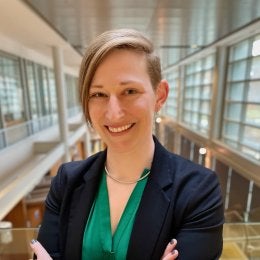
Rachel Romeo is an Assistant Professor in the Department of Human Development and Quantitative Methodology at the University of Maryland College Park, affiliated with the College of Education. She directs the LEAD Lab and holds faculty roles in the Neuroscience and Cognitive Science interdisciplinary program. Additional affiliations include a courtesy appointment in Hearing and Speech Sciences and memberships in the Language Science Center, Field Committee in Developmental Science, and Brain Behavior Institute. She is licensed in Maryland as a Speech Language Pathologist with clinical certification from ASHA.
Education
- B.A. in Psychology and Linguistics, University of Pennsylvania (2011)
- M.Sc. in Language Sciences, University College London (via Fulbright Fellowship)
- Ph.D. in Speech and Hearing Bioscience and Technology, Harvard/MIT Program (2018)
- Clinical training: MGH Institute of Health Professions
- Postdoctoral training: Boston Children’s Hospital, Harvard, MIT
Research Focus
Romeo’s work examines how early experiences shape brain and cognitive development, with emphasis on socioeconomic influences, neurodevelopmental disorders, and translational applications to education/social policy. Key areas include language acquisition mechanisms, neural plasticity in conversational environments, and equity in developmental neuroscience research. Recent studies investigate caregiver-child neural synchrony, speech input variability’s impact on vocabulary, and fNIRS methodology improvements for diverse populations.
Awards & Recognition
- Fulbright Fellowship (UCL)
- American Speech-Language-Hearing Association Clinical Competence Certification
Lab & Interventions
LEAD Lab research focuses on Preschool Language and Neural Engagement Study, exploring how socioeconomic factors and conversational environments affect early learning. Projects emphasize precision interventions for disadvantaged populations, including neuroimaging-based approaches and family-centered communication strategies. Current work addresses digital media’s neurodevelopmental impacts and equity in scientific participation.