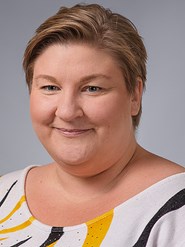
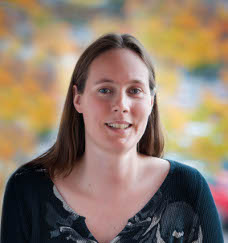
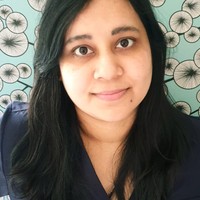
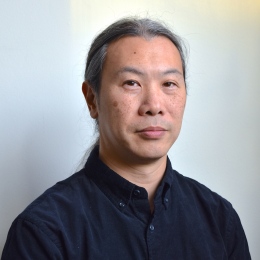
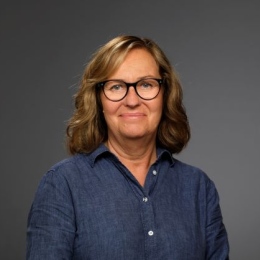
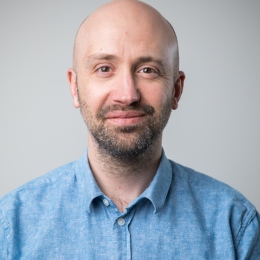
Therese Nordin is an Assistant Professor at Umeå University's Department of Community Medicine and Rehabilitation, specializing in occupational therapy. Her research focuses on social participation and togetherness among older adults within home care contexts, particularly through the STAY-IN-TOUCH project. Research Themes Gerontological perspectives on loneliness Co-creative methods in home care interventions Relational and transactional models of human activity Power dynamics in health services research Qualitative approaches to social participation Recent Publications Her work explores the interplay between structural care provision and subjective experiences of social connectedness in aging populations, with specific attention to: Gender norms and loneliness in men Home care professionals' conceptualization of social needs Design of participatory care models Quantitative-qualitative integration in aging research Methodological Expertise Therese employs a range of qualitative approaches, including: Scoping reviews Creative co-design methodologies Narrative analysis Transactional perspective frameworks
Sara Stymne is a Senior Lecturer in Computational Linguistics at the Department of Linguistics and Philology, Uppsala University, where she has been working since 2012. She initially joined as a post-doc (2012-2015), then worked as a researcher (2015-2017), and served as an assistant professor (2017-2023) before her current position as Senior Lecturer. Prior to Uppsala, she was a researcher at Linköping University's Department of Computer and Information Science. Dr. Stymne earned her PhD in Computational Linguistics from Linköping University in 2012 with the thesis 'Text Harmonization Strategies for Phrase-Based Statistical Machine Translation,' following a Licentiate degree in Computational Linguistics (2009) and a Master's degree in Cognitive Science (2006), both also from Linköping University. During her doctoral studies, she spent the autumn of 2010 and spring of 2009 at Xerox Research Centre Europe in Grenoble, France. Her primary research interests focus on cross-lingual natural language processing and digital humanities, with particular emphasis on multilingual dependency parsing. Dr. Stymne is passionate about applying computational linguistics to solve research questions in other fields, including language history, literary analysis, and political science. Her earlier work concentrated on machine translation, with specific interests in discourse-aware translation, compound processing, and error analysis. She has made significant contributions to the development of language technology tools for analyzing dialogue, narrative, and stylistic features in literature. Analysis of Dr. Stymne's recent publications reveals a strong focus on cross-lingual and cross-domain natural language processing. Her work spans multiple subfields including dependency parsing across genres and topics, discourse relation analysis in low-resource languages like Egyptian Arabic, direct speech identification in Swedish literature, and causality detection in governmental documents. A notable trend is her application of NLP techniques to digital humanities problems, particularly in analyzing literary texts and historical language change. Her research often involves creating and utilizing specialized datasets for specific linguistic phenomena across multiple languages. Dr. Stymne actively supervises graduate students, having guided numerous master's and bachelor's theses on topics ranging from speech recognition to multilingual parsing and causality detection. She leads or participates in several research projects including 'Fictional prose and language change' (funded by VR, 2021-2023) and 'Enabling climate-resilient development' (funded by Marianne and Marcus Wallenberg Foundation, 2023-2027), demonstrating her commitment to interdisciplinary research with practical applications. Her work has resulted in several notable software resources including uuPronPred for cross-lingual pronoun prediction, uuparser for dependency parsing, and Docent for document-level machine translation. Within the Computational Linguistics and Language Technology group at Uppsala University, Dr. Stymne contributes to multiple research initiatives focused on developing language technology tools for digital humanities applications. Her team works closely with literary scholars and historians to create computational methods for analyzing large corpora of literary texts, particularly focusing on Swedish literature across different historical periods. Her research bridges the gap between theoretical computational linguistics and practical applications in the humanities, creating new methodologies for quantitative analysis of literary and historical texts.
Fariya Sharmeen is an Associate Professor of Mobility and Urban Planning at KTH Royal Institute of Technology's School of Architecture and the Built Environment (ABE), affiliated with the Digital Futures Faculty. She holds a PhD from Eindhoven University of Technology and has previously served as Assistant Professor at Radboud University, Lecturer at Bangladesh University of Engineering and Technology (BUET), and research fellow at institutions including TU Delft and Imperial College London. Her research focuses on sustainable mobility transitions, social network dynamics in travel behavior, and policy responses to emerging transport technologies like MaaS and cycling innovations. Notable honors include the 2017 Piet Rietveld Award for transport research and a 2013 Royal Geographic Society award for transport geography. Sharmeen advises doctoral and master’s students on topics such as urban transformation and mobility governance. She coordinates courses like Sustainable Mobility (FAG3187) and leads projects like Bicification and ENCom. Her work integrates quantitative methods with policy analysis, addressing challenges in both global north and south contexts.
Robert Östling is a Professor of Economics at the Stockholm School of Economics (SSE), affiliated with the Department of Economics and the Karl-Adam Bonnier Center for Governance within the House of Governance and Public Policy. He holds a PhD from SSE (2008) and previously worked at Stockholm University's Institute for International Economic Studies until 2018. His research focuses on applied microeconomics and behavioral economics, particularly examining how wealth impacts attitudes, behavior, and life outcomes using Swedish lottery data. He teaches econometrics, behavioral economics, and economics for MBA students, and serves as program director for SSE's MSc in Economics. Key roles include board membership of the Swedish Economics Association and the Expert Group on Public Economics (ESO), and membership in the scientific advisory board of the Swedish Consumer Protection Agency. He co-founded the popular economics blog Ekonomistas , recognized as 'Swede of the Year' in 2017. Awards include the Assar Lindbeck Medal (2021) and the Arnberg Prize (2009). His research spans wealth effects on labor supply, health, child development, and political behavior. Notable projects include studying lottery winners' long-term well-being and portfolio decisions. Teaching innovations include using animated GIFs for econometrics instruction. He has contributed to policy debates on economic reforms, consumer protection, and pandemic responses. Outreach activities include public writing and policy advisory roles. His research has been featured in outlets like the New York Times and Swedish media. He remains active in academic networks, including the Network for Evidence-Based Policy.
Cheuk Wai Tai is a Senior Staff Researcher at Stockholm University's Department of Environmental and Materials Chemistry since 2009. He manages the transmission electron microscopes and sample preparation equipment at the Electron Microscopy Center and serves as Section Editor for the Journal of Electronic Materials. His work focuses on quantitative structure characterization in functional materials research, particularly within nanoscience and nanotechnology contexts. Education: Ph.D. in Applied Physics, The Hong Kong Polytechnic University, 2004 M.Phil. in Applied Physics, The Hong Kong Polytechnic University, 2001 M.Sc. in Physics, The Chinese University of Hong Kong, 1998 B.Sc. (Hons) in Engineering Physics, The Hong Kong Polytechnic University, 1997 Dip. in Mechanical Engineering (Computer Aided Engineering), Institute of Vocational Education (formerly Haking Wong Technical Institute), Hong Kong, 1992 His research centers on structure-property relationships in functional materials through advanced electron microscopy techniques. Current specializations include Pair Distribution Function (ePDF) & Diffuse Scattering, Energy Materials characterization, and EM sample preparation methodology development. The group maintains strong focus on translating structural data into functional performance metrics for nanomaterials. Recent publications (2013-2019) demonstrate consistent emphasis on electron microscopy applications for energy storage materials (batteries, photocatalysts) and functional ceramics. Key trends include structural disorder analysis in piezoelectrics, development of quantitative TEM methods like SUePDF, and nanoscale characterization of electrocatalyst surface phases. His work bridges materials chemistry with advanced imaging techniques. Scientific recognition includes: Fellow of The Royal Microscopical Society (U.K.) Senior Member of IEEE Marie Curie Fellowship (2007-2009) from European Commission Sir Edward Youde Memorial Fellowship (2003/2004) from Hong Kong S.A.R. Government He teaches Solid State Chemistry (KZ7003) and leads Introduction to Analytical Electron Microscopy (KZ8009), having previously taught Advanced Transmission Electron Microscopy (KZ8010) before 2011. Major grants supporting his work include: "Quantitative structural characterisation using 3D electron-based pair distribution function" (Swedish Research Council) "A Multidimensional Toolkit for Modern Electron Microscopy" (Swedish Foundation for Strategic Research) "Mitigating Ni-rich Li-ion cathode side-reactions" (Swedish Energy Agency, Co-applicant) He leads the Cheuk-Wai Tai group within Stockholm University's chemistry department and oversees operations at the Electron Microscopy Center, where his team develops and applies advanced characterization techniques for functional materials research.
Lena Roxell is a Lecturer at the Department of Criminology, Stockholm University, where she conducts research on prison systems, recidivism, and criminal networks. She is an active member of the Quantitative Criminology Research Group, established in 2022, which focuses on the possibilities and limitations of quantitative methods in criminology. Her primary research interests include prison research, with particular focus on long-term sentenced prisoners, prison networks, and recidivism patterns. Dr. Roxell examines how prison experiences affect reintegration outcomes and studies the structural aspects of co-offending networks. Her work often employs quantitative methods to analyze large datasets related to criminal behavior and prison administration. Analysis of her recent publications reveals a consistent focus on prison governance, recidivism timing, and the social dynamics within correctional facilities. Her research spans comparative studies (particularly between Sweden and other countries), methodological approaches to criminological research, and specialized topics like faith-based units in prisons and hate crime patterns. The publications demonstrate a sophisticated use of quantitative methods and longitudinal data analysis throughout her career. Dr. Roxell teaches thesis work and supervises students in prison research. Her current research project focuses on analyzing reduced recidivism after prison sentences based on client composition, prison services, labor market connections, and substance abuse. She is actively involved in the Quantitative Criminology Research Group at Stockholm University, contributing to methodological developments in the field and applying these approaches to understand complex prison dynamics and criminal behavior patterns.
Daniel Pettersson is a Professor at University of Gävle specializing in educational science with a particular focus on international knowledge measurements, comparative education, and curriculum studies. His work critically examines the hegemony of comparisons in education, particularly through large-scale assessments like PISA, and explores how these influence educational policy and practice. Professor Pettersson's research spans several interconnected domains within educational science. He investigates how international comparisons shape educational discourse and policy, examining the historical development of assessment practices and their impact on national education systems. His work frequently analyzes the production of educational knowledge through data visualization and quantification, revealing how numbers become authoritative in educational decision-making. A significant portion of his research focuses on Swedish education within international contexts, exploring how global educational trends are adopted, adapted, and contested in national settings. His extensive publication record reveals several key trends in his scholarly work. Over the past two decades, Pettersson has traced the evolution of international large-scale assessments from marginal research tools to central policy instruments. His recent work increasingly examines data visualization techniques in educational research and the historical construction of educational knowledge through quantification. He also explores the intersection of teacher education with international assessment frameworks, revealing tensions between global educational discourses and local teaching practices. Professor Pettersson has made significant contributions to understanding how educational policy is shaped by international comparisons. His research demonstrates how assessment data becomes transformed into policy narratives that influence educational reform. He has documented the historical trajectory of international assessment research, showing how it evolved from marginal academic interest to central policy instrument. His collaborative work with scholars like Sverker Lindblad, Thomas Popkewitz, and Tatiana Mikhaylova has been particularly influential in critically examining the political dimensions of educational measurement. His research activities include extensive work with international research teams, participation in major conferences including the Nordic Education Research Association (NERA) and the International Standing Conference for the History of Education (ISCHE), and contributions to systematic reviews of international comparative research. Professor Pettersson's work bridges historical analysis, policy studies, and critical examination of educational measurement practices, providing valuable insights into how global educational knowledge is produced and circulated.
Ulla Mörtberg is a Professor and Docent at KTH Royal Institute of Technology's Digital Futures Faculty, specializing in Sustainable Development, Environmental Science and Engineering. She holds academic roles in the Department of Sustainable Development, Environmental Science and Engineering and is actively involved in interdisciplinary projects such as the EO-AI4GlobalChange initiative and the Embedding AI in geospatial policy tools for clean cooking adoption. Her work bridges geospatial technologies, environmental policy, and sustainable urban planning. Key research focuses include renewable energy planning (wind farms, bioenergy), urban ecosystem services, biodiversity conservation, and geodesign applications. She leads projects addressing climate solutions in Stockholm, such as integrating nature-based solutions into urban compaction strategies and evaluating green infrastructure impacts on urban heat. Her methods emphasize GIS-based decision support systems and multi-criteria analysis for balancing environmental, social, and economic objectives. Recent publications highlight advancements in ecosystem services assessment frameworks, wind energy sustainability, and urban biodiversity dynamics. Notable contributions include spatial optimization models for forest management and policy assessments of Brazil's Forest Code. Her work often involves global case studies but emphasizes regional applications in Sweden and the Stockholm region. Mörtberg collaborates extensively with municipal planners and policymakers, contributing to sustainable development goals through actionable research. Her projects often involve international partnerships and address global challenges such as deforestation in the Amazon and energy transition pathways in Europe.
Christian Lundahl is Professor of Education at Örebro University, specializing in the history of assessments, evaluation, and Swedish educational research. His work focuses on internationalization of educational data, marketization of schools, and the role of PISA in policy debates. He leads the transnational research project The Global Laboratory – Torsten Husén and the Internationalization of Educational Research (funded by the Swedish Research Council) and co-edited books like Beyond PISA . Lundahl also developed Sweden’s first MOOC for teacher education and serves as scientific leader for the Open Parliament Laboratory (OPaL) . Research Interests : History of educational assessments and evaluations Transnational educational policy flows Marketization and computational analysis in education PISA data utilization and mis/trust Curriculum theory and policy Equity in grading and national tests Recent Trends in Publications include computational analytics in policy data, historical analysis of educational laboratories, and critiques of PISA’s political role. His 2025 articles examine sampling bias in parliamentary data and school marketization. Projects and Leadership : Principal investigator for The Global Laboratory (2020-2024) Co-developer of Sweden’s first MOOC for teacher training (2013) Scientific leader of OPaL – The Open Parliament Laboratory Visiting Professor at Humboldt University (2020)
Neda Haj Hosseini is a Senior Lecturer and Associate Professor in Biomedical Engineering at Linköping University's Department of Biomedical Engineering (IMT) . She contributes to teaching courses like TBMT56 - Medical Technology and TBME08 - Biomedical Modeling and Simulation , while leading research initiatives in AI-driven cancer diagnostics and biomedical optics. Research Focus: Development of AI methods for cancer diagnostics, optical coherence tomography (OCT) applications, and fluorescence spectroscopy in surgical guidance Affiliations: Center for Medical Image Science and Visualization (CMIV) , Analytic Imaging Diagnostic Arena (AIDA) , Swedish Medical Technology Association Recent Research Trends demonstrate expertise in applying deep learning to: Pediatric brain tumor classification using multimodal imaging Optical biopsy techniques for intraoperative decision support Automated biomarker quantification in histopathology Medical imaging data integrity and algorithm validation Scientific Awards include grants from: Joanna Cocozza Foundation (2022) Swedish Childhood Cancer Foundation (2024) Academic Leadership involves mentoring students in projects such as: "Multiple Instance Attention-based Learning for Brain Tumor Classification" "Vision Transformers for Multiclass Brain Tumor Tissue Classification" "Reaction-diffusion Models for Image-driven Tumor Simulation"
Christofer Edling is a Professor of Sociology at Lund University, affiliated with the Faculty of Social Sciences. Previously, he held a professorship at Jacobs University Bremen (2008–2012) and served as Head of the Department of Sociology at Stockholm University (2006–2008). He earned his PhD from Stockholm University in 1999 and has held prestigious fellowships at the Swedish Collegium for Advanced Study (2002–2005), Wissenschaftskolleg zu Berlin (2004/05), and Stellenbosch Institute for Advanced Study (2013). His research focuses on sociological theory and methods, particularly social network analysis and quantitative methodologies. Key areas include crime and extremism, social inequality, and political sociology. He has published extensively on topics like lone-actor terrorism, social capital, and the dynamics of violent extremist groups. Edling’s work bridges theoretical insights with empirical data, often using register-based and survey data. His recent studies analyze contemporary social phenomena such as gun violence trends in Sweden and the integration of youth immigrants. He collaborates with researchers in criminology, environmental policy, and public health, reflecting his interdisciplinary approach. Major awards include the Torgny Segerstedt Pro Futura Fellowship and multiple fellowships at leading research institutes. His contributions span books, journal articles, and methodological reviews, emphasizing analytical sociology and mathematical modeling.
Andreas Duit is a Professor of Political Science at Stockholm University and also serves as a Guest Professor at the Political Science Unit, Luleå University of Technology. His academic work focuses on comparative environmental politics with special emphasis on the role of the state in addressing environmental challenges. Department of Political Science, Stockholm University Guest Professor, Political Science Unit, Luleå University of Technology Former visiting scholar at the Workshop in Political Theory and Policy Analysis at Indiana University, Bloomington Former visiting scholar at the Department of Political Science, University of Washington Professor Duit's research centers on comparative environmental politics, particularly examining how states address environmental challenges. His work employs quantitative methods and cross-national panel data analysis, with additional engagement in complex system analysis and survey research. His primary research interests include climate policy, environmental governance, sustainability transitions, and the relationship between welfare states and environmental policy. Analysis of Professor Duit's recent publications reveals a strong focus on climate governance mechanisms, environmental state development, and the interplay between political institutions and environmental outcomes. His research spans multiple analytical levels from international climate agreements to domestic policy implementation, with particular attention to how different governance structures affect environmental performance across countries. GREENTRANS: The Great Green Transformation – Politics, Markets and Civil Society in the Anthropocene (funded by Marcus and Marianne Wallenberg Foundation) THERAPY: The Electoral Ramifications of Environmental Policy (funded by FORMAS) GLEAN: A Global Survey of Learning, Participation and Ecosystem Management in Biosphere Reserves GRACE: Governing the Anthropocene – Environmental Policy and Outcomes in a Comparative Perspective Professor Duit has secured significant research funding from major Swedish research organizations including FORMAS, MISTRA, the Swedish Research Council, and the Marcus and Marianne Wallenberg Foundation. His research portfolio demonstrates a consistent focus on understanding the political dimensions of environmental challenges and identifying effective governance approaches for sustainability transitions.
Tommy Löfstedt is an Associate Professor at Umeå University , affiliated with the Department of Computing Science and the Department of Mathematics and Mathematical Statistics. His research focuses on machine learning , computer vision , and medical image analysis , with applications in life sciences, radiation therapy, and biomedical imaging. He leads multiple research projects, including AI-driven delineation in radiation therapy, quantitative MRI for radiotherapy, and machine learning for plant nutrient uptake. Current research emphasizes structured regularization methods to improve model interpretability and robustness. Key applications include medical image segmentation , Alzheimer's classification , and uncertainty estimation in MRI . Recent publications highlight his work on morphological regularization , adversarial attack mitigation , and multi-task learning in medical imaging contexts. His projects span 2022–2026 with funding for pediatric oncology automation and gynecological cancer staging. Affiliated with both computing and mathematical departments, he bridges algorithm development with applied mathematical frameworks in medical and life science domains.
Niklas Mattsson-Carlgren serves as an Associate Professor and Senior Lecturer at Lund University's Faculty of Medicine, Department of Clinical Sciences. He holds multiple significant roles including Deputy Research Team Manager and Principal Investigator for several major research projects. His affiliations extend to the Wallenberg Centre for Molecular Medicine (WCMM), LU Profile Area: Proactive Ageing, and MultiPark: Multidisciplinary Research Focused on Parkinson's Disease. Dr. Mattsson-Carlgren's research primarily focuses on Alzheimer's disease and other neurodegenerative conditions, with additional work on acute brain injuries such as those following cardiac arrest. His expertise spans neurochemistry, including the regulation of pain and sleep. He employs biochemical measurements, neuroimaging, and cognitive testing to study disease processes in vivo across the spectrum from preclinical disease to advanced dementia. His work aims to improve diagnostic and prognostic methods in clinical practice, enhance clinical trial design for novel therapies, and deepen understanding of disease mechanisms. His recent publications demonstrate a strong emphasis on plasma biomarkers for Alzheimer's disease detection and monitoring, with particular focus on tau and amyloid pathology. The research shows increasing integration of machine learning approaches with traditional biomarker analysis, reflecting a trend toward more sophisticated diagnostic tools that combine multiple data sources for improved accuracy in predicting disease progression. As Principal Investigator for multiple significant projects including 'Longitudinal plasma biomarkers, cognitive data and amyloid PET to improve early prevention of Alzheimer's disease' and 'Validation of an MTBR tau immunoassay for CSF and plasma,' he leads substantial research efforts funded by organizations including Familjen Rönströms stiftelse, Eli Lilly and Company, and the Knut and Alice Wallenberg Foundation. He also serves as supervisor for PhD students, notably for 'Studies of induced neuronal cells in Alzheimer's disease.' Dr. Mattsson-Carlgren is actively involved in the neuroscience community, serving on the program committee for Neuroscience Day 2025. His research contributes to UN Sustainable Development Goals related to health and wellbeing. His work has gained significant attention, with multiple papers being picked up by news outlets and referenced across social media platforms including X (Twitter) and Bluesky.
Agneta Andersson is an Associate Professor at the Department of Food Studies, Nutrition and Dietetics at Uppsala University. Her academic career spans multiple research areas within nutrition science, with a particular focus on clinical nutrition, dietary assessment methods, and dietetic practice. She maintains an active research profile with numerous publications in high-impact nutrition journals. Dr. Andersson's research interests center on nutrition across diverse populations and contexts. Her work examines dietary patterns in Swedish adults, food environment interactions among immigrant populations, and specialized nutritional needs in clinical settings such as burn care and bariatric surgery. She has made significant contributions to understanding oral nutritional supplement adherence, the implementation of standardized nutrition care processes, and whole grain consumption effects on metabolic health. Her research methodology spans qualitative explorations of patient and practitioner experiences, quantitative dietary assessments, and clinical intervention studies. Analysis of her recent publications reveals a clear trajectory toward clinically focused nutrition research, particularly in specialized medical contexts including burn injury recovery and metabolic surgery. Her work demonstrates increasing emphasis on patient-centered care approaches, documentation standards in dietetic practice, and the translation of nutrition science into practical clinical applications. The publications span multiple subdisciplines within nutrition science, reflecting both depth in specific clinical areas and breadth across the nutrition field. Dr. Andersson has contributed significantly to academic literature through book chapters and co-authorship of the textbook 'Näringslära för högskolan: Från grundläggande till avancerad nutrition' (Nutrition for Higher Education: From Basic to Advanced Nutrition). Her research collaborations extend across multiple Swedish institutions and involve interdisciplinary teams including dietitians, physicians, and public health researchers. She has been involved in developing assessment tools for nutrition impact symptoms and has examined dietitian practices regarding oral nutritional supplements and specialized nutrition care processes.