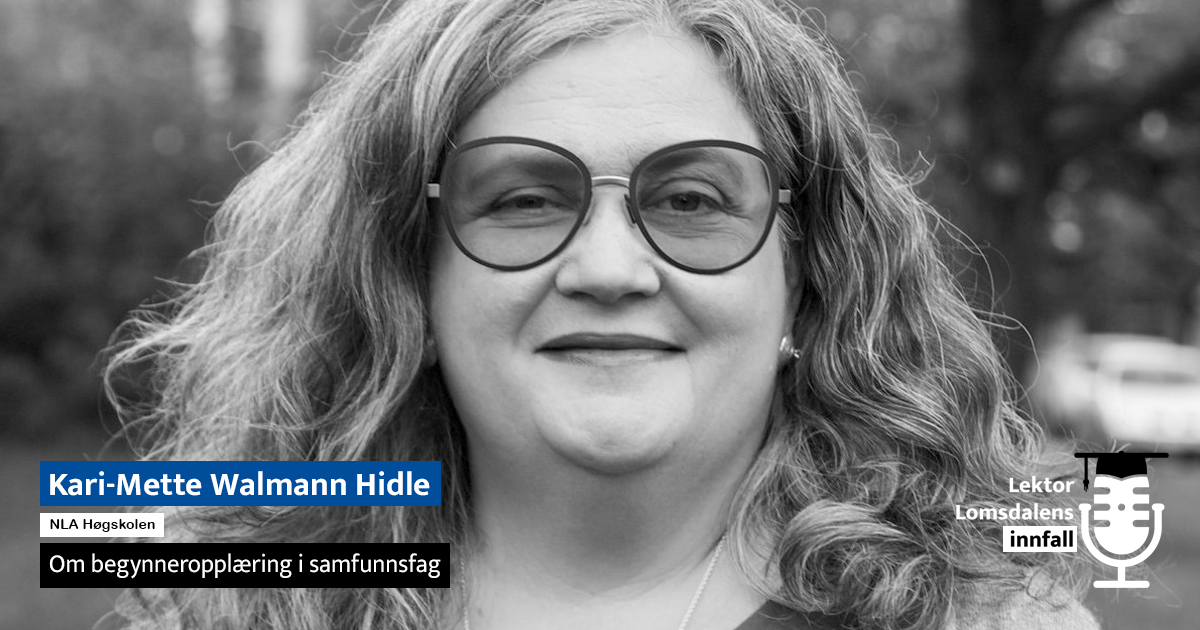
Kari-Mette Walmann Hidle is a Professor of Social Studies Education at NLA University College , Oslo. Her work focuses on curriculum development , human rights education , and sustainability in early childhood and primary education. She leads the social sciences research group at NLA and has published extensively on topics like democratic education , intercultural pedagogy , and transitions between kindergarten and school . Her research explores educational policy , subject didactics , and the integration of diversity and social justice into Norwegian curricula. Recent publications analyze sustainability and human rights in primary education , emphasizing curriculum design and pedagogical strategies. She actively disseminates her work through podcasts , keynote lectures , and Nordic conferences . Her articles reveal a focus on educational reform , environmental curriculum , and methodological innovation in social studies . She collaborates with researchers like Espen Helgesen and Ove Skarpenes , contributing to journals such as Policy Futures in Education and Acta Didactica Norden . While no explicit scientific awards are mentioned, her leadership in research groups and editorial contributions underscores her academic impact.
Jose Ignacio Belda Alvarez is an Interim Substitute Professor at Pablo de Olavide University , affiliated with the Department of Economics, Quantitative Methods and Economic History. His research focuses on Applied Economics and Economic History , with a particular emphasis on international trade dynamics and regional economic competitiveness. Education: PhD in Economics (2011) from the University of Seville, with a thesis analyzing Spanish economic competitiveness through foreign trade (1999-2009). Research Interests revolve around international trade, economic competitiveness, agri-food export analysis, and regional development strategies. His work often examines policy impacts on agricultural sustainability and entrepreneurial trends in specialized sectors. Recent Publications highlight themes such as Spanish trade dynamics, Andalusian agri-food competitiveness, and entrepreneurial intentions in educational contexts. Articles span 2011-2021, reflecting longitudinal trends in economic and trade policies.
Professor Kate Tchanturia is a leading academic at King's College London , affiliated with the Institute of Psychiatry, Psychology & Neuroscience and serving as a Professor in the Department of Psychological Medicine . She is a Consultant Clinical Psychologist at the South London and Maudsley NHS Foundation Trust and holds visiting professor roles at Ilia State University (Georgia) and Tbilisi State Medical University. Her work bridges clinical practice, research, and education in eating disorders and autism. Doctor of Clinical Psychology, Tbilisi State University (1998) PhD in Experimental Psychology, Tbilisi Academy of Sciences (1989) MSc in Psychology, Tbilisi State University (1982) Her research focuses on neuropsychological, cognitive, and emotional aspects of eating disorders , particularly in women and autistic individuals. She explores treatment innovations, cultural adaptations, and recovery trajectories through translational studies. Recent projects include the PEACE Pathway for autism-inclusive care and SOOTH-ED with sensory technology. Her 15+ recent articles highlight collaborations in autism and eating disorder comorbidity , cognitive remediation therapy , and neuroimaging . Key awards include the National Award of Georgia , President of the Eating Disorders Research Society , and Academia Europaea membership . She mentors PhD students and supervises clinical trainees.
Silvia S. Martins, MD, PhD, is Professor of Epidemiology at Columbia University Mailman School of Public Health, where she directs the Substance Use Epidemiology Unit and co-directs the NIDA T32 Substance Abuse Epidemiology Training Program. She serves as Vice Dean for Faculty and holds affiliations with Columbia's Global Health Initiative, Injury Science Center, and Population Research Center. Her education includes an MD from UFPR-Brazil (1998) and a PhD from the University of São Paulo (2003). Dr. Martins' research examines substance use epidemiology through interdisciplinary lenses, focusing on: Policy impacts of cannabis/opioid regulations on overdose rates and usage patterns Machine learning applications for analyzing drug policy effectiveness Child/adolescent psychiatric epidemiology and global substance use disparities Urban health interventions and community-based substance abuse prevention Her work spans national contexts including the U.S., Brazil, and Uruguay. Her publications demonstrate strong thematic coherence, with recent work emphasizing: Quantitative analysis of cannabis/opioid policy impacts using longitudinal data Innovative methods (e.g., machine learning, geospatial modeling) in epidemiological research Health equity dimensions of substance policies across racial/ethnic groups Maternal health and polysubstance use during public health crises Awards & Honors: Tow Leadership Scholar (2021-2023) Columbia University Irving Medical Center Mentor of the Year (2021) Calderone Health Equity Award (2021) National Hispanic Science Network Mentoring Award (2021) Dean's Award for Excellence in Mentoring (2017) Joseph Ciarrocchi Award for Youth Gambling Research (2011) As principal investigator on multiple NIH grants since 2006, she leads projects examining: Synergistic effects of opioid/cannabis policies in the U.S. Drug overdose trends in Latin America (Brazil, Colombia, Mexico) Unemployment insurance effects on drug outcomes during COVID-19 She mentors early-career researchers through the NIDA T32 program, with >90 mentee-led publications. She directs the Substance Use Epidemiology Unit and co-leads the PHIOS interdisciplinary group. Additional affiliations include Columbia’s Center for Injury Science and Prevention, Institute of Latin American Studies, and Global Mental Health Program.
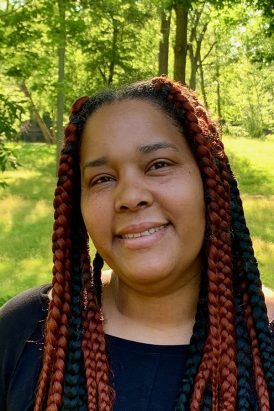
Lindsay Holly, Ph.D. is an Assistant Professor in the Department of Psychology at Marquette University, where she directs the CARE Lab for Youth Mental Health Equity. Her work focuses on advancing culturally responsive, evidence-based mental health services for youth, with particular attention to raising treatment accessibility and empowering youth and families to promote mental health equity. Dr. Holly's educational background includes: Ph.D. in Clinical Psychology from Arizona State University (2016) M.A. in Clinical Psychology from Arizona State University (2012) M.S. in Human Development from the University of Rochester (2008) B.A. from the University of Maryland (2007) Her research program examines how to improve evidence-based interventions for youth mental health, particularly for traditionally underserved populations. Grounded in developmental psychopathology and guided by cultural-contextual frameworks, Dr. Holly's work uses qualitative, quantitative, and mixed methods to: (1) elucidate the role of parents in youth mental health treatment; (2) improve cultural appropriateness of clinical practices; and (3) increase accessibility to mental health care. Current projects include examining cultural determinants of parental help-seeking for youth of color and supporting student success through school-based mental health services. Dr. Holly has published extensively on youth mental health equity, with recent work focusing on parental beliefs about mental health etiology across racial/ethnic groups, parental burnout, cultural aspects of anxiety disorders, and evaluation of family-based interventions. Her research demonstrates consistent attention to cultural factors and equity in mental health service delivery. Among her professional recognitions are the Undergraduate Student Research Poster Award (2nd place) from the Wisconsin Psychological Association, the Undergraduate Research Poster Award from the Society for Clinical Child and Adolescent Psychology, and the Best Poster Award at Marquette University's Diversity in Psychology Research Conference. As an educator, Dr. Holly teaches Psychological Assessment 1 and supervises doctoral clinicians at the graduate level, and Abnormal Psychology at the undergraduate level. She is also developing a new course titled "Youth in Context: Culture, Development, and Mental Health." Her mentorship extends to numerous graduate and undergraduate students who have presented research at national conferences and received awards for their work.
Joseph Lewis is a Research Associate at the McDonald Institute for Archaeological Research within the Department of Archaeology at the University of Cambridge. He completed his PhD in Archaeology at Cambridge (2020-2024) following an MSc in Geographical Information Science with Distinction from the University of Leicester and a BSc in Applied Geology from the University of Plymouth. Dr. Lewis specializes in Computational Archaeology, with research interests spanning Geographic Data Science, Spatial Modeling, Spatial Uncertainty, and Bayesian Data Analysis. His work focuses on developing quantitative methods for analyzing archaeological landscapes through spatial statistics and computational approaches to understanding ancient movement and connectivity across Britain, Europe, and the Mediterranean. His publication record demonstrates expertise in Roman road networks, least cost path analysis, and uncertainty quantification in archaeological modeling. Lewis has developed innovative methodological approaches that combine spatial statistics with archaeological theory to better understand past human movement patterns and landscape use, with particular focus on Roman Britain and Mediterranean connectivity. Scientific Awards: Open-Oxford-Cambridge AHRC DTP - Judy and Nigel Weiss Studentships at Robinson College Match-funded Studentship Vice-Chancellor's & King's College Scholarship (now Honorary) CASA Prize for best paper on Spatial Analysis - GISRUK 2018 2nd Prize GISCRG Dissertation Prize 2017 Royal Institution of Chartered Surveyors Prize 2017 - Best Dissertation 2016 Lewis is the author and creator of the R package 'leastcostpath,' which provides tools for calculating Least Cost Paths and networks while incorporating barriers and uncertainty through probabilistic modeling. His technical proficiency spans R, Python, QGIS, ArcGIS, and SQL, enabling sophisticated spatial analyses of archaeological data across multiple periods and geographical regions.
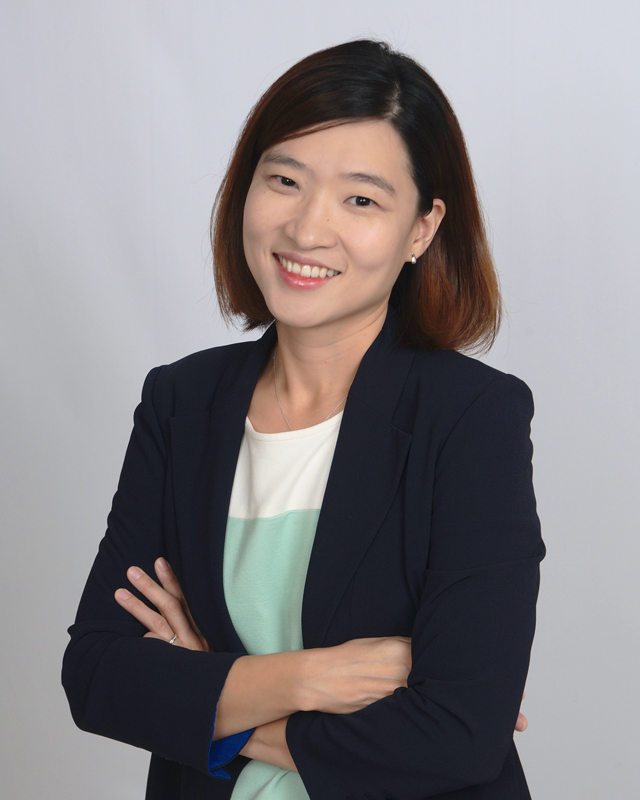
Rosie Jahng serves as an Associate Professor at Wayne State University, specializing in digital media, crisis management, and science communication. She teaches undergraduate and graduate courses including Public Relations Theory, Social Media & Public Relations, and Theories of Media Effects, emphasizing quantitative research methods and computational approaches. Her academic credentials include: PhD in Journalism from the University of Missouri MA in Journalism from the University of Texas-Austin MA in Communication from Seoul National University, South Korea BA in Telecommunication from Sookmyung Women's University, South Korea Dr. Jahng's research critically examines media effects in digital environments, with particular focus on how online comments influence information credibility judgments and how journalists navigate scientific uncertainty during public health crises. Her work bridges public relations and computational communication, investigating fake news dynamics, crisis response strategies on social media, and the ethical dimensions of science reporting. Methodologically, she integrates large-scale data analysis with experimental designs to uncover patterns in audience behavior and journalistic practices. Analysis of her recent publications reveals a cohesive trajectory examining communication during societal disruptions—spanning the Flint water crisis, Syrian refugee coverage, and the COVID-19 pandemic. Her scholarship consistently addresses how digital platforms reshape professional communication norms, with strong emphasis on verification practices, narrative framing, and the psychological mechanisms underlying public trust. Her research program has secured significant external funding from the Arthur W. Page Center for Integrity in Public Communication and the Association for Education in Journalism and Mass Communication, complemented by multiple internal Wayne State University grants supporting her investigations into media authenticity and crisis communication.
Kristie Dotson serves as the University Diversity and Social Transformation Professor at the University of Michigan, affiliated with the College of Literature, Science, and the Arts (LSA) and the Philosophy, Politics and Economics (PPE) program. Her work bridges institutional roles with transformative philosophical inquiry focused on systemic oppression. Her academic foundation includes: Ph.D. in Philosophy from the University of Memphis (2008) M.A. in Philosophy from the University of Memphis (2005) M.A. in Literature from the University of Illinois at Chicago (1999) B.A. in African American Studies, Business Administration, and English Literature from Coe College (1996) Professor Dotson's research centers on epistemic violence and exclusion within knowledge production systems, particularly examining how Black feminist frameworks expose mechanisms that maintain racial and gender hierarchies. Her scholarship demonstrates how epistemic practices obscure oppression through deliberate gaps in recognition and validation of marginalized perspectives. Her work critically engages metaphilosophical questions about philosophy's purpose, arguing for its role as a practice of social transformation rather than abstract theorizing. This perspective manifests in her development of concrete tools like the Faculty Epistemic Exclusion Scale and theoretical innovations such as epistemic exclusion theory. Analysis of her publication trajectory reveals increasing focus on institutional manifestations of epistemic injustice, particularly within academic evaluation systems. Her recent work combines rigorous theoretical development with personal narrative forms (love letters, apostate tales) to demonstrate how epistemic resistance operates through both scholarly and embodied practices. This dual approach challenges traditional boundaries between academic philosophy and lived experience while documenting patterns of scholar devaluation affecting faculty of color.
Katya Drozdova is a Professor at Seattle Pacific University’s School of Business, Government, and Economics , with a joint appointment in Business, Information Systems, and Political Science. She holds a PhD and MPhil in Information Systems from NYU Stern School of Business and MA/BA in International Relations from Stanford University. Expertise in cyberpower, geopolitical strategy, counterterrorism, and asymmetric threat analysis Principal Investigator for the Mining Afghan Lessons from Soviet Era (MALSE) program funded by the U.S. Department of Defense Visiting Fellow at Stanford’s Hoover Institution and affiliate with the Empirical Studies of Conflict Project (ESOC) Her research combines information theory with security studies , focusing on: Strategic decision-making under uncertainty Human and technological network optimization in hostile environments U.S.-Russia relations and their geopolitical implications Early-warning systems for terrorist network detection Cybersecurity policy balancing civil liberties Recent publications analyze cyberpower (SAGE, 2017), asymmetric warfare (Journal of Cold War Studies, 2019), and geo-religious literacy in Russia (Routledge Handbook, 2022). Her work has been cited in Computational and Mathematical Organization Theory and Hoover Digest . Key affiliations include: NYU’s Alexander Hamilton Center for Political Economy Stanford’s Center for International Security and Cooperation (CISAC) Consortium for Research on Information Security and Policy (CRISP) funded by NSA Community engagements: Hosted Qatar’s Prime Minister Sheikh Abdullah Al-Thani (2016) Public dialogue with General Keith Alexander (2015) Interview with Secretary Madeleine Albright (2014)
Dennis Esch serves as Lecturer (Assistant Professor) in Marketing and Behavioural Science at Cranfield School of Management, Cranfield University, where he acts as the Strategic Marketing and Sales Group's liaison for research matters. Previously, he directed the Cranfield Customer Management Forum, one of the School's premier research practice clubs. Dr. Esch holds award-winning academic qualifications in marketing, psychology and behavioural science from Lancaster University Management School and Cranfield School of Management, establishing a strong interdisciplinary foundation for his research. His research program centers on three interconnected domains: the psychological mechanisms of brand influence in consumer decision-making, the transformative impact of emerging technologies on consumer perceptions and preferences, and the complex relationship between social consumption experiences and human happiness. Methodologically, he integrates behavioral science principles with marketing theory through quantitative approaches including experiments, field studies, and big data analysis to address questions with both theoretical significance and practical managerial relevance. Dr. Esch's publication record reveals an evolving research trajectory from foundational consumer behavior studies (2016-2019) examining product assortment effects, sports consumption impacts, and social identity dynamics, toward contemporary methodological innovations in mobile research platforms (2022-2025). His recent work demonstrates particular expertise in evaluating mobile-first platforms for crowdsourcing behavioral, advertising, and personality research, addressing critical questions about digital research validity and ecological relevance. While specific major scientific awards beyond his noted 'award-winning degrees' aren't detailed in available information, his research has been published in reputable outlets including Behavior Research Methods and Academy of Marketing Science proceedings, indicating scholarly recognition. Dr. Esch brings extensive international teaching experience across multiple contexts, having instructed postgraduate students and executives in brand management, marketing strategy, consumer behavior, and research methods in the UK, Germany, and Switzerland. His pre-academic industry background includes significant roles at Audi, Henkel, Vaillant Group, and Swiss Post, providing practical grounding for his academic work and enhancing the real-world applicability of his research findings. His research methodology reflects a commitment to bridging the gap between laboratory rigor and field relevance, particularly through his investigations of mobile research platforms that can capture authentic consumer experiences while maintaining scientific validity. This approach addresses contemporary challenges in behavioral research methodology while generating actionable insights for marketing practitioners.
Ryan Scrivens is an Associate Professor at the School of Criminal Justice, Michigan State University, and holds cross-appointments as Associate Director at Simon Fraser University's International CyberCrime Research Centre and Research Fellow at VOX-Pol Network of Excellence (Ireland). His problem-oriented research combines computational methods with qualitative insights to study right-wing extremism, hate crime, and cyber-terrorist activities. PhD in Criminology (2017), Simon Fraser University MA in Criminology (2011), Ontario Tech University BA in Criminology (2009), Ontario Tech University His research integrates advanced quantitative methods and machine learning with in-depth interviews to analyze: online radicalization pathways , right-wing extremist forum dynamics , and CVE program evaluation . Recent work examines incel subcultures on Reddit, hate speech during global crises, and desistance modeling for extremists. His publications span journals like Terrorism and Political Violence and Social Media + Society , with forthcoming volumes on Former Extremists (Oxford) and Right-Wing Extremism (Palgrave). Funded by Public Safety Canada and the Canadian Network for Research on Terrorism, Security and Society, he advises law enforcement agencies and tech companies internationally. Early Career Impact Award (2022), American Society of Criminology As editorial board member for Terrorism and Political Violence and Perspectives on Terrorism , Scrivens bridges academic rigor with practitioner needs through 60+ publications and policy engagement.
Dr. Rowan Hilend serves as an Assistant Professor of Supply Chain Management in the College of Business at Colorado State University. Her research bridges criminology, psychology, and management to investigate illicit activities across international supply networks. Illicit supply chains Wildlife trafficking Organizational misconduct Sustainability challenges Her work spans both traditional and illegal supply chain contexts, emphasizing interdisciplinary and global approaches. Recent publications focus on data standards, trafficking frameworks, and mathematical modeling of illicit networks. Scientific awards include: National Science Foundation grant for wildlife trafficking detection
Dr. Mark Peterson is a Professor of Marketing and Sustainable Business Practices at the University of Wyoming's College of Business, Department of Management & Marketing. With a Ph.D. in marketing from Georgia Institute of Technology (1994) and over 60 refereed journal publications, he specializes in sustainability integration into business decisions and consumer behavior. Affiliation: University of Wyoming since Fall 2007 Previous: University of Texas at Arlington International experience: Germany, South Korea, Turkey, France, Canada Research Interests focus on environmental-social business integration, international marketing dynamics, and macromarketing frameworks. His work bridges academic theory with practical applications for sustainable enterprise. Notable Publications include Sustainable Marketing: A Holistic Approach (2021) and editorship of the Journal of Macromarketing (2016-2019). Articles span sustainability theories, consumer vulnerability analysis, and global prosperity modeling. Scientific Awards : Alpha Kappa Psi Award (1995) Charles C. Slater Award for Lebanon market analysis (2024) Advising & Grants : Mentors Ph.D. students in sustainability research and consumer behavior. Secured funding for macromarketing studies and international projects.
Dr. Henry Prunckun is an Adjunct Associate Research Professor at Charles Sturt University's Australian Graduate School of Policing and Security. With a PhD, MPhil, MSocSc, and BSc, he brings extensive academic credentials to his role as a methodologist specializing in transnational crime, including espionage, terrorism, drugs and arms trafficking, and cyber-crime. His research interests focus on intelligence analysis methodology, counterterrorism strategies, and the theoretical foundations of intelligence work. Prunckun has developed expertise in applying scientific methods to intelligence gathering and analysis, with particular emphasis on the historical and contemporary roles of intelligence in national security and law enforcement contexts. His recent publications demonstrate a strong focus on foundational intelligence concepts, with his "Espionage Black Book" series covering topics from basic intelligence to spy radio communications. These works bridge theoretical knowledge with practical applications for students and practitioners in the field. Two literature awards Professional service award from the International Association of Law Enforcement Intelligence Analysts With a 28-year operational career in the criminal justice system, including five years as a senior counterterrorism policy analyst, Prunckun brings practical experience to his academic work. He has supervised numerous doctoral students across policing, security, and public policy disciplines, with research topics spanning citizen journalism in policing, terrorism investigation strategies, and police efficiency indicators. His work often examines the intersection of intelligence analysis, law enforcement practice, and security policy development.
Dr. Pascal Crépey is a Professor at the School of Advanced Studies in Public Health (EHESP) in Rennes, France. He specializes in epidemiology, biostatistics, and the dynamics of communicable diseases. Affiliated with the Department of Quantitative Methods in Public Health (METIS) and UMR 6051 ARENES, his work bridges mathematical modeling, health economics, and infectious disease surveillance. He coordinates the IDEA Field Epidemiology Course and leads research on pandemic mitigation strategies, antibiotic resistance networks, and vaccine effectiveness. Education: Doctorate in Biomathematics and Biostatistics from Pierre and Marie Curie University Dr. Crépey’s research focuses on infectious disease modeling , particularly influenza , COVID-19 , and RSV . His work examines non-pharmaceutical interventions, health economics of prevention , and regional healthcare network dynamics in spreading antibiotic-resistant bacteria. He has authored over 60 peer-reviewed articles. His recent publications highlight trends in Long COVID resource utilization , high-dose influenza vaccines , and mathematical modeling for pandemic preparedness . Key themes include cross-border healthcare coordination, vaccine hesitancy , and big data epidemiology . Dr. Crépey actively trains field epidemiologists through the IDEA course and contributes to policy discussions on influenza vaccination strategies and epidemiological surveillance .