Oleksandr Kapranov is an Associate Professor of English at NLA University College's Teacher Education program. His work intersects discourse analysis, climate change communication, and English language teaching (ELT), with a focus on sustainable development education and intercultural communication. Research areas include political speeches (e.g., Keir Starmer, Rishi Sunak), corporate disclosures (Bank of England, Vedanta Resources), and media framing (Greenpeace branches, King Charles III). Key pedagogical interests: digital competence, beginner EFL training, and discourse markers in academic writing. His recent publications analyze climate change discourse through syntactic structures, metonymy, modality, and evidentiality, emphasizing institutional and political narratives. While no formal awards are listed, his work spans interdisciplinary collaborations with NGOs, governments, and universities.
Jan Oskar Engene is an Associate Professor in the Department of Comparative Politics at the University of Bergen, Norway. His academic career spans several decades with significant contributions to both terrorism studies and heraldry research. Engene's research interests have evolved significantly over time, beginning with a strong focus on terrorism, political violence, and European security. His early work centered on the TWEED (Terrorism in Western Europe: Explaining the Trends) dataset, which documented terrorist incidents across Western Europe from 1950 onward. Over the years, his research expanded to include political symbolism, heraldry, and flag history, particularly regarding Norwegian political symbols and their evolution. His work demonstrates a unique interdisciplinary approach, bridging political science with historical and symbolic analysis. Analysis of Engene's publication trends reveals a clear evolution from predominantly terrorism-focused research in the 1990s and early 2000s toward increasing engagement with heraldry, political symbolism, and Norwegian historical identity markers in recent years. The earlier works focus on quantitative terrorism analysis, counterterrorism policy, and European security frameworks, while more recent publications examine municipal heraldry, county coats of arms, and historical political symbols. This shift demonstrates Engene's ability to apply political science methodologies to diverse research areas while maintaining a consistent focus on political symbolism and identity. Engene has supervised numerous Master's theses at the University of Bergen, primarily in the areas of terrorism studies, European politics, and political identity. His supervision record includes students researching topics such as state responses to terrorism in Italy, Nordic political systems, and regional identity in Western Europe. While specific grant information isn't detailed in the available materials, his TWEED project represents a significant research undertaking that likely involved external funding. Engene maintains active engagement with public discourse through media appearances, having participated in numerous television and radio programs discussing terrorism, security policy, and political symbolism. His work with the TWEED project established him as a leading expert on European terrorism patterns, while his more recent heraldry research has positioned him as a specialist in Norwegian political symbolism and historical iconography.
Jan Buts is an Associate Professor at the Sustainable Health Unit within the Faculty of Medicine at the University of Oslo, specializing in the intersection of translation theory, medical humanities, and corpus linguistics with a focus on sustainable health and development discourses. His academic background includes: Linguistics and Literature studies at KU Leuven (Belgium) PhD in Translation and Intercultural Studies from the University of Manchester (UK) Postdoctoral research at Trinity College Dublin (Ireland) Assistant Professor position at Boğaziçi University (Turkey) Buts' research centers on corpus-assisted discourse analysis applied to translation theory, medical humanities, and sustainable development. He actively develops the Sustainability and Health Corpus to analyze how language shapes public health narratives, gender discourses in development aid, and conceptual frameworks around sustainability. His work bridges linguistic analysis with critical perspectives on social justice and health equity. Analysis of his recent publications reveals a strong trajectory toward integrating corpus linguistics with medical humanities and sustainable development goals. Key trends include examining gendered vulnerabilities in policy discourse, translation's role in knowledge dissemination for sustainability, and digital media's impact on health communication – all characterized by methodological innovation in corpus construction and conceptual analysis. His scientific recognition includes: Runner-up for the Martha Cheung Award (2023) Buts serves on the executive council of IATIS (International Association for Translation and Intercultural Studies) and leads multiple research initiatives including the SHE Corpus project. His grant activities focus on interdisciplinary collaborations between translation studies and medical humanities, particularly through projects like KNOWIT (Knowledge in Translation) and MEDRA (Medicalisation of Democratic Rights in Abortion debates). He directs the Sustainable Health Unit, fostering cross-disciplinary teams that combine linguists, medical researchers, and public health experts to advance data-driven critical analysis of health and sustainability discourses through innovative corpus methodologies.
Marco Seeber is a Professor at the University of Agder's Department of Political Science and Management. He holds a PhD from the University of Chieti Pescara (Italy) and has previously worked at the University of Lugano (Switzerland) and Ghent University (Belgium). His research focuses on public policy, governance, and management with specialization in higher education systems, research evaluation, and science policy. Professor Seeber's research examines policy implementation, research metrics, peer review systems, academic careers, internationalization, and interdisciplinarity in higher education. He employs comparative and quantitative methodologies to analyze governance structures and policy impacts across different educational systems. He has received significant recognition including the Swiss Prize for Research in Education (2019) and fellowships from IEEE, AIUM, and AIMBE. As Co-Editor-in-Chief of the European Journal of Higher Education, he shapes scholarly discourse in his field. He currently coordinates the Horizon CSA project IANUS (2025-) and leads courses in organizational theory, research methodology, and leadership.
Dr. Saeed Karimi Aghdam Ordaklou is an Associate Professor of English Language and Didactics at the Faculty of Education and Arts, Nord University, Norway. His academic career is rooted in applied linguistics, with a focus on second language acquisition, educational psychology, and dynamic systems theory. PhD in Applied Linguistics (Second Language Acquisition), University of Jyväskylä, Finland MA in English Language Teaching, Azarbaijan Shahid Madani University, Iran B.A. in English Language & Literature, University of Tabriz, Iran Professional Teacher Education, JAMK University of Applied Sciences, Finland His research synthesizes Vygotsky’s cultural-historical psychology, dynamic systems theory, and dialectical frameworks to explore second language development in sociocultural contexts. Key themes include L2 writing, complexity-accuracy-fluency dynamics, and interdisciplinary theoretical integration. Recent publications emphasize dynamic systems theory applications, digital mediation in multilingual writing, and the sociocultural dimensions of language learning. He has also guest-edited special issues addressing theoretical dialogues in applied linguistics. Dr. Karimi Aghdam has taught in Iran, Finland, and Norway, and holds teaching qualifications from the UK, Finland, and Norway. He actively collaborates with international scholars and has held visiting researcher roles at UC San Diego, Penn State, and the University of Southern Denmark.
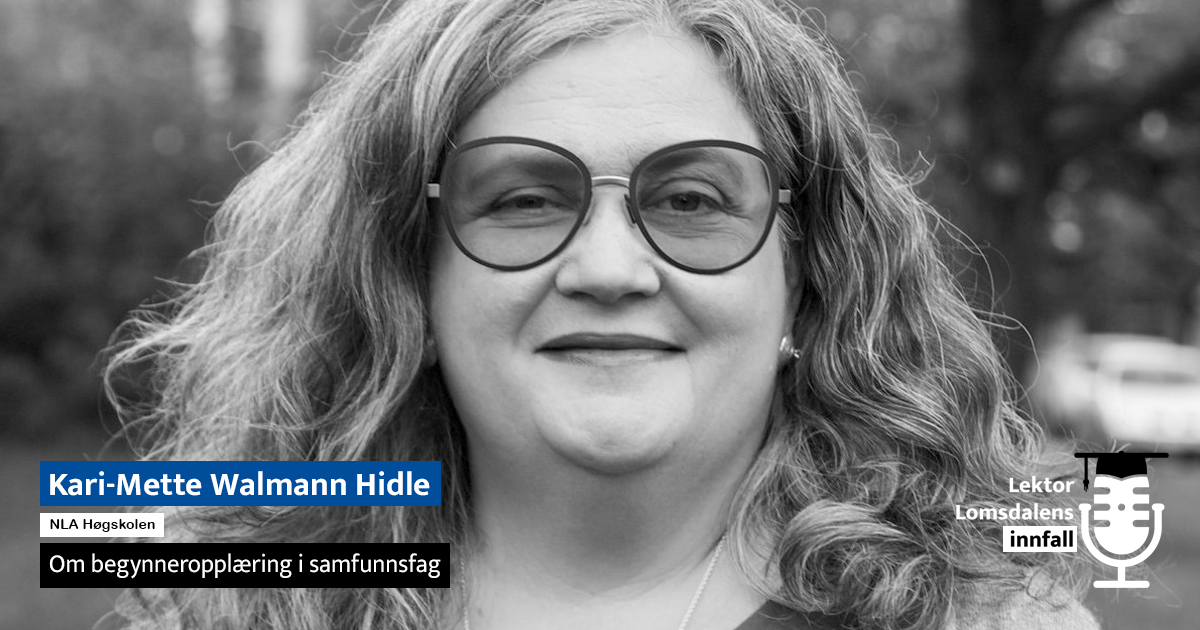
Kari-Mette Walmann Hidle is a Professor of Social Studies Education at NLA University College , Oslo. Her work focuses on curriculum development , human rights education , and sustainability in early childhood and primary education. She leads the social sciences research group at NLA and has published extensively on topics like democratic education , intercultural pedagogy , and transitions between kindergarten and school . Her research explores educational policy , subject didactics , and the integration of diversity and social justice into Norwegian curricula. Recent publications analyze sustainability and human rights in primary education , emphasizing curriculum design and pedagogical strategies. She actively disseminates her work through podcasts , keynote lectures , and Nordic conferences . Her articles reveal a focus on educational reform , environmental curriculum , and methodological innovation in social studies . She collaborates with researchers like Espen Helgesen and Ove Skarpenes , contributing to journals such as Policy Futures in Education and Acta Didactica Norden . While no explicit scientific awards are mentioned, her leadership in research groups and editorial contributions underscores her academic impact.
Runar Hilleren Lie is a Postdoctoral Research Fellow at the Department of Public and International Law, Faculty of Law, University of Oslo. He is actively engaged in interdisciplinary research at the intersection of law, technology, and international relations, contributing to major projects such as COPIID, NoRDASIL, and CLEANUP. His research interests span International Investment Law , Computational Legal Studies , International Economic Law , Energy Law , and Legal Technology . He employs data-driven and computational methodologies to analyze legal texts, arbitrator behavior, treaty development, and institutional dynamics in international dispute settlement. The most recent publications reveal a strong trend toward empirical and computational analysis of international investment law, particularly focusing on influence networks, authorship prediction, compliance politics, and the evolving role of legal actors in arbitration. His work bridges traditional legal scholarship with cutting-edge data science techniques. He teaches JUS5080 – Programming for Lawyers and JUS5671 – Legal Technology: Artificial Intelligence and Law , reflecting his commitment to integrating technological literacy into legal education. Email: r.h.lie@jus.uio.no, rhlie@jus.uio.no Phone: +47 22859431 Visiting Address: Domus Juridica, 7th floor, Kristian Augusts gate 17, 0164 Oslo Postal Address: Postboks 6706 St. Olavs plass, 0130 Oslo He is affiliated with the Law and Technology (JOT) research group and the Research Group on International Law . His current research projects include: COPIID : Compliance Politics and International Investment Disputes NoRDASIL : Advancing Data Science in Migration Law (NORDFORSK) CLEANUP : Machine Learning for the Anonymisation of Unstructured Personal Data (Research Council of Norway, 2020–2023)
Marcos Caballero serves as Associate Professor at both the University of Oslo's Center for Computing in Science Education and Michigan State University. His work bridges physics education research with computational science instruction across educational levels from high school to graduate programs. His educational background includes: B.S. in Physics from University of Texas at Austin (2004) M.S. in Physics from Georgia Institute of Technology (opto-microfluidics research) Ph.D. in Physics Education Research from Georgia Tech (2011, first PER-focused doctorate there) Postdoctoral research at University of Colorado Boulder Caballero's research investigates how computational tools and science practices shape physics learning, employing both cognitive and sociocultural theoretical frameworks. Key projects examine measurement uncertainty assessment, computational literacy development, and equity in graduate admissions. His work spans micro-level analyses of student coding comprehension to macro-level studies of computing's impact across degree programs, with significant contributions to transforming upper-division physics curricula toward active learning environments. His recent publications (2021-2024) reveal concentrated focus on measurement uncertainty assessment instruments , computational thinking frameworks , and holistic graduate admissions reform . These works demonstrate increasing methodological sophistication through NLP applications and large-scale educational data analysis, while maintaining practical relevance for physics classroom transformation. Caballero co-founded Georgia Tech's Physics Education Research group and currently leads UiO's Center for Computing in Science Education and Michigan State's Physics Education Research Lab . His international partnership for computing in science education drives cross-institutional curriculum development, focusing particularly on integrating computational practices into core physics instruction while addressing equity challenges in STEM education.
Laura Alexis Janda is a Professor of Russian Linguistics at the UiT The Arctic University of Norway , where she has worked since 2008. She is a member of the CLEAR research group (Cognitive Linguistics: Empirical Approaches to Russian) and leads the THREAT-DEFUSER project funded by the Norwegian Research Council. Her academic profile spans Cognitive Linguistics , Construction Grammar , and Corpus Linguistics , with a focus on Russian, Slavic, and Sámi languages . Education: PhD in Slavic Linguistics & Certificate in Teaching ESL, UCLA (1984) Visiting Fellowships at Princeton University and UNC Chapel Hill Training in Persian, Czech, and Russian methodologies Research Interests: Janda’s work bridges constructional networks and grammatical profiling in Slavic languages, with emphasis on aspect , case semantics , numeral classifiers , and political discourse analysis . She explores how morphological units like Russian prefixes function as verb classifiers and investigates language change in Sámi and Russian contexts. Publication Trends: Recent articles analyze ChatGPT’s grammatical interpretation , constructicon architecture , and ideological messaging in Putin’s speeches . Her research integrates quantitative methods and FAIR data principles to address both theoretical and pedagogical challenges. Awards & Grants: 2021 Honorary Doctorate (University of Turku, Finland) 2018 Member of the Norwegian Academy of Science and Letters 2017 Open Data Champion (SPARC Europe) 2013-2015 Norwegian Research Council grant for 'Birds & Beasts: Shaping Events in Old Russian' 2007-2011 Norwegian Research Council grant for 'Exploring Emptiness: Russian Verbal Morphology and Cognitive Linguistics' Collaborative Networks: Janda mentors international researchers and collaborates with linguists in Russia, Norway, and the U.S. She co-developed the Russian Constructicon and Construxercise! pedagogical tool, emphasizing interdisciplinary applications of linguistic theory. Labs & Projects: She co-founded the Tromsø Construction Lab , advancing constructicon resources for Russian and Sámi languages. Her THREAT-DEFUSER project examines perceived threats in Russian and Norwegian political discourse.
Lisbeth M. Brevik is a Professor at the Department of Teacher Education and School Research (ILS), Faculty of Educational Sciences, University of Oslo. She also serves as a Circle U. Chair, contributing to the European university alliance’s mission in sustainable education. Her work bridges research and practice in English didactics, higher education, and school research. Her research interests include: English didactics and second language reading comprehension Digital gaming as a tool for informal and formal language learning Mixed methods research design and open data practices Life skills and public health education in schools Curriculum renewal and bilingual education The analysis of her recent publications reveals a strong focus on integrating digital games into English instruction, examining gender dynamics in language learning, and advancing mixed methods in educational research. Her work often explores how classroom practices align with broader educational goals, particularly in Norwegian secondary schools. She frequently collaborates on interdisciplinary and cross-institutional projects, emphasizing real-world application. Her notable scientific contributions include: Instruction Guidance Awards Editorial leadership in Acta Didactica Norge Key publications with Circle U. on sustainable education Lisbeth M. Brevik leads externally funded research projects such as HeaLS (Public Health and Life Skills), EDUCATE (Subject Renewal), ETOS (Bilingual Education), and VOGUE (Vocational and General Students’ Use of English). She supervises PhD candidates and mentors emerging researchers, often involving students as co-researchers. Her work is supported by grants from national and international research councils. She is affiliated with several research groups and networks, including: Studies of Instruction across Subjects and Competences (SISCO) Circle U Pedagogical Academy Kellogg College, Oxford University ORCID, ResearchGate, Google Scholar
Tamara Kalandadze is an Associate Professor at the Department of Education, ICT and Learning at Østfold University College in Norway. She also holds an Associate Professor position at the Knowledge Center for Education at the University of Stavanger and has previously worked as a Senior Lecturer at OsloMet and as a Researcher at the Knowledge Center for Education, Norwegian Research Council. Her academic expertise bridges special education, developmental science, and research methodology with a strong commitment to open and reproducible research practices. Education: 2019: PhD in Special Education, Department of Special Education, University of Oslo 2008: Master's degree in Special Education, Department of Special Education, University of Oslo 2006: Applied Linguistics, Department of Linguistics and Nordic Studies, University of Oslo Tamara Kalandadze's research spans multiple interconnected domains with a central focus on open science methodologies within educational and developmental contexts. Her work significantly contributes to understanding neurodiversity, particularly autism spectrum disorder, developmental language disorders, and figurative language comprehension. She has pioneered approaches to 'open evidence synthesis' including meta-analyses that prioritize transparency and reproducibility. Her scholarship bridges special education, developmental psychology, and research methodology, with particular attention to how research practices can be made more inclusive of neurodivergent perspectives. Kalandadze actively promotes participatory research models where neurodivergent individuals contribute to the research process itself. Analysis of Kalandadze's recent publication record reveals a strong trajectory toward integrating open science principles with neurodiversity research. Her work demonstrates growing emphasis on methodological transparency in developmental science, with increasing focus on participatory approaches that center neurodivergent voices. The publications show evolution from traditional meta-analyses of autism research toward more innovative frameworks that combine open science practices with neurodiversity-affirming approaches. A notable trend is her development of the NIRO (Non-Interventional, Reproducible, and Open) evidence synthesis framework, which has gained recognition across multiple disciplines. Leadership and Editorial Roles: Associate Editor, Infant and Child Development (2023-) Topic Editor for Wiley's Special Issue on Neurodiversity (2023) Initiator and Leader of RIOT (Reproducible, Interpretable, Open and Transparent) Science Club Deputy Leader of the DeveLeP research group Local Node Lead for Norwegian Reproducibility Network (NORRN) Kalandadze actively supervises master's students at both Østfold University College and the University of Oslo, and serves as co-supervisor for PhD candidate Malin Dahlby-Skoog at Karolinska Institutet. Her supervision focuses on research methodology, particularly open and reproducible approaches to studying neurodevelopmental conditions. She has developed and leads a PhD course on 'Open and Credible Science,' reflecting her commitment to training the next generation of researchers in transparent research practices. Her collaborative network spans multiple international institutions including University College London, University of Oslo, University of Stavanger, University of Copenhagen, and institutions in Georgia. As founder of the RIOT Science Club in Norway, Kalandadze has established a vibrant community focused on advancing open science practices. She is actively involved in the DeveLeP research group (Development Learning and Psychological Processes) which investigates developmental trajectories in learning and psychological processes. Her work with the Communicative Processes (ComPros) research group focuses on language development and communication challenges, particularly in neurodivergent populations. These research environments provide interdisciplinary spaces where methodological innovation meets practical application in educational and clinical settings.
Lilith G. Rüschenpöhler serves as Associate Professor for Chemistry Education at the Norwegian University of Science and Technology (NTNU) since 2023. Prior to this, she held a Margarete von Wrangell fellowship at Ludwigsburg University of Education (2021-2023) and worked as a part-time secondary school teacher in Germany (2021-2022). Research Interests: Decolonizing science education in European contexts Multilingual science learning strategies Science capital theory and application Generative AI integration in science instruction Philosophical foundations of science education Her recent publications focus on cultural comparisons in chemistry education (Germany/China), equity-focused teaching approaches, and vocational orientation tools. She has developed card games for science career exploration and conducted extensive research on self-concept formation in chemistry students. Scientific Awards: Margarete von Wrangell fellowship (2021-2023) As a trained secondary school teacher with expertise in chemistry and French as a foreign language, she has taught in four languages and developed innovative teaching materials including international science capital metrics and planetary boundaries lesson plans.
Julien Mayor is a Professor at the Department of Psychology, University of Oslo , specializing in Language Acquisition , Infant Speech Perception , and Computational Modeling in Psychology . His work bridges cognitive development with bilingualism and dialect exposure, focusing on how infants learn words through parental speech patterns. He leads the BabyLing project, developing tools like TLex for unbiased language screening.
Ida Katrine Riksaasen Hatlevik is a Professor at the Department of Teacher Education and School Research, University of Oslo. Her research focuses on student competence development in higher and professional education, with an emphasis on teacher education quality, professional coherence, teacher efficacy, and institutional-school partnerships. She employs both quantitative and qualitative methodologies. PhD in Professional Studies, HiOA (2014) Cand.polit. in Pedagogy, University of Oslo (1999) Cand.mag. in Sociology and Philosophy, University of Oslo (1994) Her research interests include: Quality in teacher education Coherence in professional education Motivation and teacher efficacy Partnership models between institutions and schools Recent publications explore transformative learning, program coherence, and institutional collaborations, reflecting her focus on bridging theory-practice gaps and enhancing teacher professional development. She leads the Quality in Practice research project and has contributed to initiatives like ProTed and PROMO . Her work spans educational reform, curriculum design, and practice-based learning models, with interdisciplinary applications in pedagogy and medical education.
Gabriela Saldanha Viva is a Researcher at the Centre for Sustainable Healthcare Education (SHE) at the University of Oslo. She serves as Project Manager for the Erasmus+ Partnership "DEBATING DEMOCRACY" and coordinates the Honors Certificate on the Politics of Sustainability in Public Health. Additionally, she is a member of the MEDRA research team and organizes the SHE Talks lunchtime seminar series. Her educational background: Degree in Legal Translation from the Universidad de la República (Uruguay) MPhil from UMIST (now the University of Manchester) PhD from Dublin City University, Ireland Dr. Saldanha Viva's research focuses on the intersection of language, knowledge, and power. As a linguist and discourse analyst, she investigates how language shapes collective understandings of the world and influences social processes. Her work spans corpus linguistics, translation studies, and the analysis of health policy discourse, with particular attention to sustainability in healthcare education and democratic concepts in public health. She is also deeply engaged in methodological questions regarding what constitutes valid knowledge in research. Her recent publications reveal a strong trend in applying corpus-based methods to analyze health policy and translation phenomena. She has made significant contributions to understanding subjectification in antimicrobial resistance policy, the role of translators as artistic performers, and the methodological foundations of translation theory. Her work bridges humanities and health sciences, fostering interdisciplinary dialogue. Her scientific awards and honors include: Elected Member of the Executive Council of IATIS IATIS Solidarity & Scientific Excellence conference bursary (2021) Honorary Research Fellow, University of Warwick (2021-2024) Dr. Saldanha Viva has secured research funding including: CircleU Interdisciplinary Research Network: Global Health and Individual Responsibility: Complementary or Contradictory Concepts? (2022-2023) British Academy/AHRC/ESRC Visiting Fellowships Sponsor (2009) Her current projects include the Erasmus+ DEBATING DEMOCRACY initiative and multiple SHE Corpus research groups. She is actively involved in several research groups under SHE, including those investigating antibiotic resistance and complexity in health education, critical concept analysis in health education, Knowledge in Translation (KNOWIT), and the Medicalisation of Democratic Rights in debates about Abortion (MEDRA).