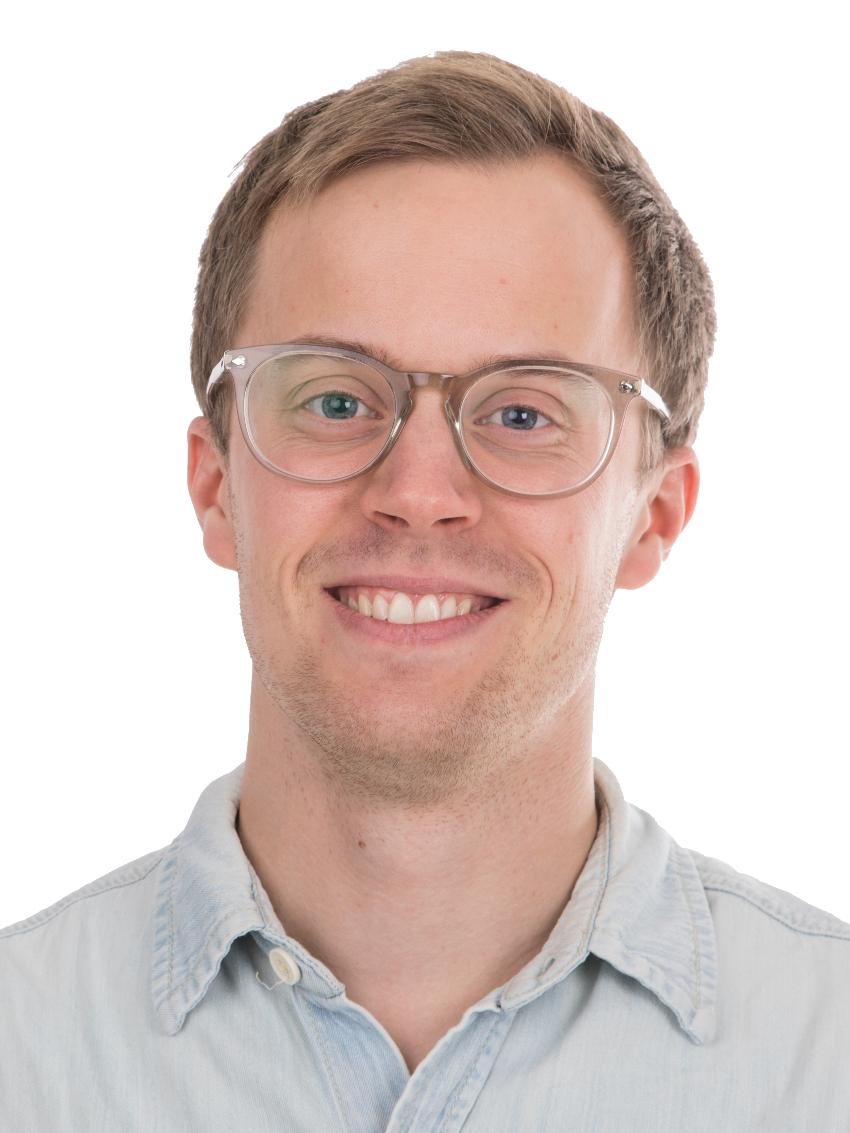
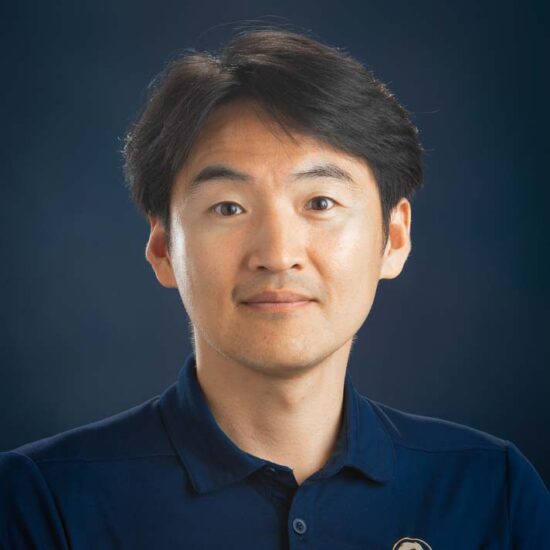
Vishesh Kumar Dubey is a Researcher at the Department of Physics and Technology within UiT The Arctic University of Norway . He is affiliated with the Ultrasound, Microwaves and Optics research group, focusing on advanced optical imaging techniques. Current position: Researcher in Physics and Technology University: UiT The Arctic University of Norway His research spans quantitative phase microscopy, super-resolution imaging, and machine learning integration in biomedical optics . Recent work emphasizes photonic chips for histopathology, coherence effects in phase imaging, and SERS-based bacterial detection . Publications highlight collaborations with multidisciplinary teams across Europe and Asia. Key trends in his work include label-free imaging, waveguide platforms, and computational optical methods . No scientific awards or student advising details are mentioned in the provided texts.
David Micheron is a Senior Lecturer at UiT The Arctic University of Norway, affiliated with the Department of Physics and Technology. His work spans two distinct research domains: optical nanoscopy and STEM education . Micheron contributes to photonic chip development for biomedical imaging and explores pedagogical strategies for large-group physics instruction. Research Focus : Photonic chip-based super-resolution microscopy, histopathology applications, and STEM education innovations Teaching : Course development for introductory physics (FYS-0100, FYS-1002, FYS-1003) and former FYS-2008 Measurement Techniques Collaborations : Active in the Optical Nanoscopy research group and Realfagsdidaktikk i høyere utdanning (Physics Education in Higher Education) Micheron’s publications highlight advances in on-chip nanoscopy for biomedical analysis and student-active learning methodologies.
Mamoru IWABUCHI is a Professor at Waseda University's School of Human Sciences, where he has served since April 2018. Previously, he held positions as Associate Professor and Project Associate Professor at The University of Tokyo's Research Center for Advanced Science and Technology (2009-2018), and as Associate and Assistant Professor at Hiroshima University's Graduate School of Education (2001-2008). His academic journey includes international experience as a Visiting Researcher at the University of Washington (2003-2004) and Research Associate at the University of Dundee (1997-2000). Dr. IWABUCHI earned his Doctor of Engineering and Master of Engineering from Osaka University, and an MSc from the University of Dundee. His educational background spans Electrical Engineering and Applied Computing, providing a strong foundation for his interdisciplinary research. His research focuses on Rehabilitation Science and Human-Computer Interaction with particular emphasis on assistive technology for people with disabilities. He has pioneered smartphone-based diagnostic systems for eye health assessment and developed innovative communication interfaces for individuals with severe and multiple disabilities. His work bridges engineering, healthcare, and education, creating practical solutions that enhance accessibility and inclusion. Recent projects integrate machine learning with everyday technologies to support reading and writing difficulties, while maintaining compatibility with standard classroom materials. Analysis of his publication record reveals a consistent trajectory from fundamental assistive technology research toward increasingly sophisticated, integrated solutions that leverage mainstream technologies like smartphones and tablets. His work demonstrates a progression from specialized assistive devices toward adaptations of commercially available technologies that serve both disabled and non-disabled users. 2020.11: Outstanding Presentation Award, Human Interface Society 2019.12: Excellent Presentation Award, Japan Society for Welfare of the City 2017-2014: Microsoft MVP Awards (Windows Development and Kinect for Windows) 2008: University of Washington DO-IT Program Trailblazer Award 2004: Japan Society for Industrial Technology Education Meritorious Service Award Dr. IWABUCHI has secured significant research funding through Japan Society for the Promotion of Science grants, focusing on inclusive education, communication support for severe disabilities, and digital fabrication for assistive technology. His laboratory (iwalab.jp) serves as a hub for developing practical solutions that bridge technological innovation with real-world disability support needs. He has held leadership roles in professional societies including the Human Interface Society and ISAAC (International Society for Augmentative and Alternative Communication), contributing to the advancement of accessibility standards and practices in Japan and internationally.
Jing Kang is an Assistant Professor (non-tenure-track) at the Waseda Institute for Advanced Study, Waseda University, where she is affiliated with the Faculty of Commerce and Graduate School of Commerce. Previously, she served as an Assistant Professor at Hiroshima University's Graduate School of Advanced Science and Engineering (2021-2024), and held research positions at the University of Pennsylvania including Research Fellow at the University Transportation Center--CM2 Project and Visiting Scholar at the Institute for Urban Research. Her academic journey reflects a strong interdisciplinary focus bridging geography, environmental science, and urban planning. Dr. Kang's educational background includes: Doctor of Science from Beijing Normal University (2011-2017), College of Global Change and Earth System Science, specializing in Global Environmental Change (Quantitative Remote Sensing) Joint scholarship program between National Oceanography Centre UK and Beijing Normal University (2014-2016) Her research interests span multiple interconnected domains at the intersection of environmental science, urban systems, and geospatial technologies. Dr. Kang focuses on environmental policy and social systems, with particular expertise in Climate Change Adaptation, Carbon Neutral strategies, and Human geosciences. She applies advanced Remote Sensing techniques, Spatial Data Integration, GIS methodologies, and Spatial Econometrics to address pressing urban environmental challenges. Her work bridges technical geospatial analysis with policy-relevant insights, particularly examining how electric vehicle adoption reshapes urban infrastructure and energy systems. Dr. Kang's publication record reveals a clear trajectory of increasingly sophisticated interdisciplinary research connecting transportation systems, urban form, and environmental sustainability. Her recent work demonstrates a strong emphasis on applying machine learning techniques to geospatial data for understanding electric vehicle infrastructure dynamics, carbon emissions patterns, and urban environmental challenges. She has developed innovative methodologies for analyzing urban functional shrinkage, EV charging accessibility, and the relationship between land use changes and carbon dynamics. Her research consistently leverages multi-source geospatial big data to provide evidence-based insights for urban climate action and sustainable mobility planning. Dr. Kang has received several notable scientific awards: First Prize of China High-Resolution Remote Sensing Application Solution Competition (2018) National Oceanography Centre UK and Beijing Normal University Joint Scholarship Program (2014) Second Prize (Province level) in National Undergraduate Mathematical Modeling Contest (2008) As an active researcher, Dr. Kang has secured competitive funding including a Japan Society for the Promotion of Science Grants-in-Aid for Scientific Research project "Assessing the Coordination of Electric Vehicle Adoption on Urban Energy Transition: A Geospatial Machine Learning Framework" (2024-2026) and a Waseda University Grant for Special Research Projects on "Towards Effective Climate-Land Governance: Evidence-Based Approaches to Sustainable Land Use Policies" (2024-2025). She serves as a peer reviewer for numerous prestigious journals including Nature Scientific Data, Energy, Land Use Policy, and Sustainable Cities and Society, demonstrating her standing in multiple academic communities. Dr. Kang actively contributes to academic discourse through invited presentations at international venues including Waseda University Research Institute of Business Administration Seminar, International Workshop on Practical Applications of AI Technologies, and Nature Conferences on Air Pollution and Climate Change. Her work on "Accessible Remote Sensing: Interdisciplinary Approach and Applications" (CRC Press, 2025) represents a significant contribution to making advanced geospatial methodologies more widely accessible to interdisciplinary researchers.
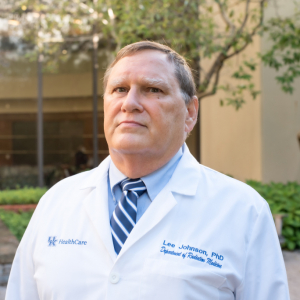
Lee Johnson is a Professor and Director of Graduate Studies for Radiation Science College at the University of Kentucky, affiliated with the Radiation Medicine department. His work bridges nuclear physics and clinical applications, focusing on advancing radiation therapy techniques and medical imaging methodologies for cancer treatment. His academic foundation includes: B.S. in Chemical Engineering from the University of Kentucky (1979) B.A. in Science Education from the University of Kentucky (1981) Ph.D. in Nuclear Chemistry from the University of Kentucky (1993) Postdoctoral Training at Duke University Medical Center (1993-1995) Dr. Johnson's research spans medical physics, radiation oncology, and nuclear chemistry with significant contributions in SPECT imaging reconstruction, dosimetry for targeted radiotherapy, and grid therapy development. His early nuclear physics work on dysprosium isotopes evolved into clinical applications including real-time monitoring of blood flow during radiation therapy and carbon fiber couch optimization. His expertise in therapeutic radiological physics is evidenced by board certification from the American Board of Radiology. Analysis of his publication history reveals a strategic shift from fundamental nuclear research to applied medical physics. His most impactful work focuses on improving radiation delivery precision through innovations in grid block technology, IMRT protocols, and SPECT imaging techniques. The recurring themes across his career include quantification of radiopharmaceuticals, mitigation of treatment complications, and translation of physics principles into clinical oncology practice. His professional recognition includes: American Board of Radiology Certification in Therapeutic Radiological Physics (1999) As Director of Graduate Studies, Dr. Johnson shapes the Medical Physics Graduate Program curriculum and oversees resident training. His collaborative research with institutions like Duke University and the University of Kentucky's Chandler Medical Center demonstrates sustained engagement in funded projects addressing critical challenges in radiation oncology, though specific grant details aren't documented in the source material. He actively contributes to the Radiation Medicine department's tripartite mission through clinical research on surface dose mitigation, basic science investigations in radioisotope quantification, and translational work on real-time physiological monitoring during treatment. His leadership supports the department's equipment-intensive research environment including SPECT imaging systems and linear accelerator technology.
Nathaniel Hathaway , PhD, is an Assistant Professor at the Eshelman School of Pharmacy , UNC-Chapel Hill, and a member of the UNC Lineberger Comprehensive Cancer Center. His research bridges chemical biology and epigenetics to unravel molecular mechanisms governing gene expression , with a focus on chromatin dynamics and heterochromatin formation . Education: Undergraduate degree magna cum laude (2001), Michelson-Morley Research Competition winner (2000). Hathaway's lab pioneers chemical epigenetic modifiers (CEMs) that harness endogenous chromatin machinery via dCas9 targeting to regulate gene expression. His work also involves high-throughput drug discovery for epigenetic inhibitors in cancer and other diseases. Recent publications highlight CRISPR-CEM fusion systems , PROTAC-based PRC2 degradation , and computational models of heterochromatin . Key awards: CBMC Teaching Recognition (2016, 2017) IBM Junior Faculty Development Award (2017) AACP New Investigator Award (2016) Hathaway's research integrates protein bioengineering , synthetic chemistry , and mammalian models to address fundamental questions in epigenetic memory and develop translational therapies for cancer.
Beáta Megyesi is a Professor of Computational Linguistics at Uppsala University's Department of Linguistics and Philology, currently on leave from August 2023 to December 2025. She holds a PhD in Speech Communication from the Royal Institute of Technology (KTH) and has been a prominent figure in computational linguistics research and education at Uppsala University since at least 2000. Her academic background includes: PhD in Speech Communication, Department of Speech, Music and Hearing, KTH (2002) BA in Computational Linguistics, Department of Linguistics, Stockholm University (2000) Megyesi's research focuses on the intersection of computational methods and humanities, particularly historical cryptology and digital philology. She develops innovative tools that enable humanists and social scientists to obtain quantitative analyses of historical texts, with special emphasis on automatically cracking historical ciphers. Her work bridges linguistic analysis, computer science, and historical research, creating methodologies for processing and analyzing encoded historical documents. She has pioneered approaches to automatic transcription, key structure extraction, and deciphering techniques for historical manuscripts, making significant contributions to both computational linguistics and historical research. Analysis of her recent publications reveals a strong trend toward interdisciplinary research combining historical cryptology with advanced computational methods. Her work demonstrates increasing sophistication in handling historical ciphers through machine learning, image processing, and language modeling techniques. The research spans multiple languages and historical periods, with particular focus on early modern European diplomatic correspondence. Her publications show consistent contributions to both theoretical frameworks and practical tools for historical document analysis, with growing attention to privacy concerns in language learner data. Megyesi has held significant leadership roles including: President of Northern European Association for Language Technology (NEALT, 2020-2021) Head of Department, Department of Linguistics and Philology (2009-2018) Director of English Park Campus, Uppsala University (2017-2018) Member of Swedish Research Council's preparatory group for Linguistics (2021-2023) As an educator, Megyesi has supervised graduate students including Eva Pettersson and Mojgan Seraji, and has taught courses on language technology, digital philology, and computational linguistics at both undergraduate and graduate levels. She has received research funding from Vetenskapsrådet (Swedish Research Council) for multiple projects including DECRYPT (2018-2024) and DECODE (2015-2017), demonstrating sustained research productivity and external recognition of her work's significance. Megyesi leads the DECRYPT project focused on developing methods to automatically crack historical ciphers, working with interdisciplinary teams of linguists, computer scientists, and historians. Her research group has developed specialized tools for transcription of encrypted manuscripts and created important resources like the DECODE Database of Historical Ciphers and Keys. She is an active participant in the international historical cryptology community, frequently organizing and contributing to conferences in this specialized field.
Federico Rey serves as an Associate Professor in the Department of Bacteriology at the University of Wisconsin-Madison, conducting research at the Wisconsin Institute for Discovery (330 N. Orchard Street, Madison). His work centers on gut bacterial metabolism's role in human disease pathogenesis, with significant contributions to understanding microbiome-host interactions in cardiovascular and neurodegenerative disorders. His primary research interests include gut microbiome composition and function, bacterial metabolism of dietary components, and microbial metabolite impacts on host physiology. Key investigation areas involve trimethylamine N-oxide (TMAO) in atherosclerosis, imidazole propionate in Alzheimer's disease, and dietary influences on microbiome-driven metabolic conditions like MASH. His laboratory employs gnotobiotic mouse models, human cohort studies, and systems genetics to elucidate causal mechanisms. Analysis of his recent publications reveals dominant themes: gut microbiome associations with Alzheimer's pathology biomarkers (e.g., amyloid burden), microbial mediation of dietary effects on cardiovascular disease, and spatial characterization of gut microbiota in response to nutritional interventions. His work consistently identifies specific bacterial metabolites as mechanistic drivers of disease processes across multiple organ systems. No scientific awards were mentioned in the source material Student advising details and grant information were not provided His research operates within the Wisconsin Institute for Discovery's collaborative ecosystem, utilizing advanced genomic, metabolomic, and imaging techniques
Valeria Anna Sovrano is an Associate Professor at the Center for Mind/Brain Sciences (CIMeC) and the Department of Psychology and Cognitive Science at the University of Trento. Her research focuses on comparative cognition , brain asymmetries , and spatial-numerical skills in fish and reptiles , with a particular emphasis on visual perception of illusions and environmental geometry encoding . She leads the Lower Vertebrates Behavior and Neurobiology Unit at CIMeC and has supervised numerous doctoral projects. PhD in Experimental Psychology (University of Padua, 2004) Master degrees in Legal Psychology, Criminology, and Human Rights Recent work explores neurodevelopmental disorders in zebrafish models , inhibitory control in reptiles , and environmental pollutant impacts on cognition . Her studies on fish spatial navigation and numerical discrimination have been widely cited across cognitive science and developmental psychology. Notable awards include the AIP Section of Experimental Psychology award (2000) and the Gold Medal of the Italian President (2007) . She has taught courses like Biological bases of social behavior , Animal Cognition , and Psychobiology of stress , while coordinating STEM outreach programs and serving on equality & diversity committees.
Professor Tom André Jos Vosch is affiliated with the Department of Chemistry at the University of Copenhagen's Faculty of Science. His research focuses on DNA-templated nanomaterials and optical spectroscopy, with significant contributions to understanding luminescent silver nanoclusters. His research interests center on Nanospectroscopy and DNA Nanotechnology , particularly the synthesis and characterization of DNA-stabilized silver nanoclusters for biomedical imaging applications. Current work explores near-infrared emission mechanisms, anti-Stokes processes, and atomic-level structural analysis of nanoclusters ranging from Ag 11 to Ag 28 systems. Analysis of recent publications (2024-2025) reveals consistent focus on Atomic-resolution structural characterization Near-infrared optical properties Quantum yield optimization DNA-nanocluster interaction mechanisms Novel analytical methodologies Applications in bioimaging While no specific awards or students are listed in available materials, his 139 research outputs demonstrate sustained productivity in nanomaterials science. His laboratory operates within the Nanospectroscopy group at the University of Copenhagen, as indicated by his research website.
Dr. Ho Yeol Yu serves as an Assistant Professor of Sport and Recreation Management within the Department of Health and Human Performance at East Texas A&M University's College of Education and Human Services. He joined the university in 2024 following four years as an Assistant Professor of Sport Management at Arkansas State University, a Division I institution. His academic credentials include a Ph.D. in Kinesiology (Sport and Fitness Administration) from the University of Houston (2020), an M.S. in Sport Management from Florida State University (2015), and a B.S. in Sport Science from Daejin University (2011). Dr. Yu's research centers on sports consumer behaviors, with specific emphasis on game attendance patterns, team merchandise purchasing dynamics, sports team branding strategies, service quality perceptions, and fan team switching behavior. He employs rigorous quantitative research methods and sports analytics to decode fan psychology and decision-making processes, bridging theoretical sport marketing concepts with practical industry applications. His methodological approach consistently leverages advanced statistical modeling to extract actionable insights for sports organizations. Analysis of his recent 15 publications reveals a cohesive research trajectory focused on data-driven consumer behavior analysis across diverse sports contexts—from smart fitness apparel adoption to city branding effects during sporting events. The work demonstrates sophisticated application of reflective-formative modeling, technology acceptance frameworks, and pandemic-era consumer hesitation studies, all contributing to evidence-based sport management practices. Associated with the ROARHP Lab, Dr. Yu teaches Sport Marketing, Sport Analytics, and Finance in Sports, with Sport Analytics being his preferred course due to its hands-on data analysis components that students report as career-transforming experiences in sports industry roles.
Eva Pålsgård is an Associate Professor in Engineering Physics with a focus on Microsystems Engineering at Uppsala University. She currently serves as a Research Advisor at the University Administration, specifically within the Office for Technology and Natural Sciences, Unit for Research Support. Her work focuses on Horizon Europe initiatives including EIC & EIT RawMaterials, Energy, Biotechnology KIC, with expertise spanning biomaterials, energy systems, and sustainable development. Dr. Pålsgård earned her Doctor of Philosophy in Ion dynamics in insulin-producing cells. Her academic journey includes: Marie Curie Fellow (1998) Postdoctoral fellow and researcher at the University of Oxford (1994-1999) Eva's research spans multiple interdisciplinary fields with a strong focus on materials science and biomedical applications . Her work in biomaterials has led to significant contributions in bone implant technology, particularly with nano-porous alumina coatings that improve osseointegration. She has also conducted important research in energy systems , nuclear engineering , and sustainable development , with specific expertise in electrochemical energy storage and nuclear fission/fusion technologies. Her methodology often involves advanced nuclear microscopy and X-ray microanalysis techniques to study elemental distributions in biological systems. Analysis of Dr. Pålsgård's publication record reveals a clear evolution in her research focus. Early in her career, she concentrated on cellular biology, particularly studying ion dynamics in insulin-producing cells using nuclear microscopy techniques. Over time, her research shifted toward biomaterials and bone implant technology, with numerous publications on nano-porous alumina coatings for medical applications. More recently, her work has expanded into energy systems and sustainable development, reflecting her current role advising on Horizon Europe initiatives in these areas. This progression demonstrates her ability to apply fundamental materials science principles across diverse application domains. Among her notable recognitions: Marie Curie Fellow (1998) As a Research Advisor for Horizon Europe programs, Dr. Pålsgård provides strategic guidance on research funding applications, particularly in the areas of EIC & EIT RawMaterials, Energy, and Biotechnology KIC. Her extensive background in both academic research and industry (including previous positions at VINNOVA, Pharmacia Diagnostics, Q-Med, and Karolinska Institutet) gives her unique insights into translating research into practical applications. She has been involved in numerous collaborative projects bridging academia and industry in the fields of biomaterials, energy systems, and sustainable technologies. Dr. Pålsgård's research has been conducted through collaborations with multiple institutions including the University of Oxford, Karolinska Institutet, and Chalmers University of Technology. Her work on bone implant interfaces involved interdisciplinary teams combining expertise in materials science, orthopedics, and cellular biology. Currently, through her advisory role, she connects researchers across Europe working on sustainable energy solutions, raw materials innovation, and biotechnology applications.
Yu Saiki serves as Associate Professor in the Department of Mechanical Engineering at Nagoya Institute of Technology's Graduate School of Engineering. His research focuses on thermal/fluid engineering with specialization in combustion science, plasma diagnostics, and decarbonization technologies for industrial applications. Dr. Saiki earned his Master of Engineering (2006) and Doctor of Engineering (2009) from The University of Tokyo, following undergraduate studies in Mechanical Engineering at Nagoya University (graduated 2004). His academic journey reflects deep specialization in thermal fluid systems. His research interests span Thermal Engineering , Fluid Engineering , and Combustion Science with emphasis on radical surface reactions, microscale combustion, and decarbonization of industrial thermal processes. Current projects include ammonia/hydrogen combustion for metal processing and plasma-based surface modification techniques. Analysis of his recent publications reveals strong focus on radical-surface interactions (70% of works), decarbonization technologies (20%), and advanced diagnostics (10%), with increasing industry collaboration for practical applications. Combustion Society of Japan Encouragement Award (2019) Nagoya Institute of Technology Excellent Faculty Evaluation Award (2017) Combustion Society of Japan Paper Award (2016) Japan Society of Mechanical Engineers Encouragement Award (2014) Dr. Saiki leads significant research funding including NEDO's Green Innovation Fund Project (2023-2032) on thermal process decarbonization and multiple JSPS grants. He actively serves on committees for the Combustion Society of Japan (Colloquium Chair), Japan Society of Mechanical Engineers, and Japan Heat Transfer Society. His laboratory collaborates with DENSO Corporation on particle velocity measurements and jet flow control.
Dr. Julian D. Langer serves as Group Leader and Head of Mass Spectrometry at the Max Planck Institute of Biophysics and Max Planck Institute for Brain Research in Frankfurt. His laboratory specializes in developing advanced mass spectrometry workflows and methods to address complex questions in structural biology, molecular neurobiology, and membrane protein research. Funded by both Max Planck Institutes, his lab operates eight state-of-the-art instruments from Bruker, Thermo, and Waters coupled to nano-UPLCs and analytical UPLCs. Dr. Langer's research focuses on three primary areas: direct sequencing of membrane protein complexes, hydrogen/deuterium exchange mass spectrometry (HDX-MS) for studying membrane protein dynamics, and proteome profiling in neuronal systems. His group has made significant contributions to identifying novel subunits in membrane protein complexes, characterizing ligand binding sites, and monitoring proteome remodeling in homeostatic synaptic plasticity. He is particularly known for developing specialized MALDI-TOF/TOF techniques that allow acquisition of information-rich PSD MS/MS spectra up to m/z 9000. His recent work demonstrates significant trends toward neuroproteomics and small protein discovery , with numerous publications on synaptic proteome mapping, neuronal ribosome dynamics, and detection of novel small proteins in prokaryotes. His research bridges structural biology, neurobiology, and analytical chemistry, with applications spanning from basic membrane protein mechanisms to neurological disorders. Dr. Langer actively collaborates with numerous research groups and is a member of DFG's SPP 2002 (Small proteins in prokaryotes) and BMBF's MOEL-SOEL program. He has developed specialized methodologies including BONCAT technology for proteome turnover studies and workflows for cell-type specific proteome analysis from living animals. His laboratory maintains strong connections with instrument vendors and has successfully extended HDX-MS techniques to large membrane protein complexes. Current research directions include investigating protein synthesis in neuronal processes, characterizing molecular components in specialized cellular systems like Sepia chromatophores, and developing next-generation mass spectrometry approaches for biomolecular analysis.
Alberto Puliafito serves as Assistant Professor in Oncology at the University of Turin (since 2018) and Researcher in Cell Migration at Candiolo Cancer Institute, FPO-IRCCS (since 2010). His dual appointments position him at the intersection of cancer biology and developmental biophysics, with active research spanning tumor heterogeneity, cell migration dynamics, and embryonic patterning mechanisms. His research program integrates quantitative biophysics with molecular oncology to investigate collective cancer cell behaviors and fundamental developmental processes. Key interests include cytoplasmic flow mechanics in Drosophila embryogenesis, heteroclonal tumor cluster formation, and vascular development pathways. This interdisciplinary approach combines live imaging, mathematical modeling, and 3D tumor microenvironment systems to uncover mechanical and molecular drivers of biological organization. Analysis of his 37 publications (2018-2023) reveals consistent focus on cancer cell migration mechanics and embryonic self-organization. Recent work demonstrates how nuclear positioning synchronizes cell cycles in embryos and how heteroclonal clusters drive metastatic progression. His collaborative network bridges cell biologists, physicists, and clinicians, with prominent publications in Cell, Nature Genetics, and Developmental Cell highlighting mechanistic insights with therapeutic implications.