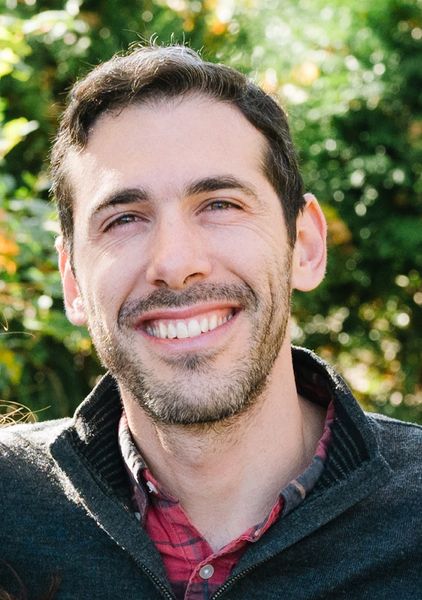
Dr. Ana Canedo is Assistant Professor in Demography at Université de Montréal, specializing in migration, inequality, and education policy. Her research uses causal inference methods to examine how social policies affect migration patterns, labor market outcomes, and educational access, with regional focus on Mexico, US, and Canada. She teaches courses on migration, economic demography, and quantitative methods. Research examines: Impacts of cash transfer programs Education tracking systems and equity Return migration challenges Labor market discrimination Publications demonstrate 60% focus on migration economics, 30% on education inequality, and 10% on methodology. Current PhD students investigate migration integration and contraceptive access barriers.
Steven Rosenzweig is an Assistant Professor of Political Science at Boston University, specializing in comparative politics with a focus on democracy, political violence, and electoral accountability. He coordinates the department’s Research in Comparative Politics Workshop and teaches courses on political violence, democratic erosion, and research methods. Education: Ph.D., M.Phil., and B.A. from Yale University. Research interests include political violence mechanisms, democracy erosion, African politics, and causal inference methodologies. His book Voter Backlash and Elite Misperception: The Logic of Violence in Electoral Competition (Cambridge University Press, 2023) examines how politicians use violence strategically during elections. Current projects explore social norms in ethnic voting, conceptual frameworks for election-related violence, and law enforcement partisanship effects. Publications appear in Quarterly Journal of Political Science , Electoral Studies , and Research & Politics . His work combines quantitative methods with case studies to address global democratic challenges.
Alfred Løvgren is a Research Fellow in the Department of Economics at the University of Oslo. He holds a Master of Science in Economics (2023), a Bachelor of Science in Computer Science (2023), and a Bachelor of Science in Economics (2021), all from the University of Oslo. His research focuses on public economics, development economics, labor economics, and applied econometrics. Løvgren’s work bridges quantitative methods with policy-relevant questions in economic development and labor markets. Education: MS in Economics, University of Oslo, 2023 BS in Computer Science, University of Oslo, 2023 BS in Economics, University of Oslo, 2021 Research Interests: Løvgren explores topics such as taxation policy design in developing economies, labor market dynamics using computational tools, and causal inference methodologies in applied economics. His interdisciplinary background in computer science and economics enables innovative approaches to economic modeling and data analysis. Awards/Grants: No specific awards or grants mentioned in the provided texts. Advising & Labs: No current advisees or lab affiliations listed. His work is likely centered on collaborative research projects within the Department of Economics.
Alessio Gaggero is an Assistant Professor in the Department of Quantitative Methods for Economics and Business at the University of Granada (UGR). His research focuses on econometric methodologies applied to health economics, public policy evaluation, and labor market dynamics. He holds a Google Scholar profile and has published extensively on topics including Mendelian randomization, regression discontinuity designs, and the causal impacts of health conditions. His academic work spans multiple disciplines, with notable contributions to understanding the effects of smoking on retirement risk, pandemic policy impacts on public health, and socioeconomic factors influencing health outcomes. He has also authored teaching materials on advanced econometric models such as ARMAX, VAR, and stochastic volatility frameworks. Gaggero's research demonstrates a strong emphasis on causal inference methodologies and their application to real-world policy questions. His publications frequently bridge quantitative methods with substantive topics in health, aging, and development economics.
Virginia Ghiara is a Visiting Researcher at the University of Kent. She completed her PhD in 2019 at the same institution, focusing on big data applications for causal discoveries in social sciences. Her work involves collaborations with Public Health England and Imperial College London's School of Public Health. Currently, her research centers on AI ethics, regulatory frameworks for AI, and standardization in technology governance. Her educational background includes a PhD from the University of Kent (2019) and prior studies not detailed here. Research interests span philosophy of science, epistemological questions in AI, and methodological debates in mixed methods research. Her publications appear in journals like Synthese and Journal of Mixed Methods Research , addressing topics ranging from causal inference in social sciences to paradigm roles in interdisciplinary research. No scientific awards are explicitly mentioned. No advising or grant information is provided in the text. Her work is associated with the UK What Works Centre's evidence-based policy initiatives and current AI ethics projects.
Dr. Stephen Porter is a Professor of Higher Education in the Department of Educational Leadership, Policy, and Human Development at North Carolina State University. He holds a Ph.D. in Political Science with a concentration in econometrics from the University of Rochester. His research focuses on student success, causal inference methodologies, and survey validity, supported by grants from major organizations like the Institute of Education Sciences and the National Science Foundation. Dr. Porter has served on editorial boards for seven journals including American Educational Research Journal and chairs grant review panels for the Institute of Education Sciences. He has held visiting scholar positions at RTI International, Nagoya University (Japan), and the Center of Excellence for Complex Data Analysis. His expertise includes advising on national surveys like the National Postsecondary Student Aid Studies. Porter teaches advanced quantitative methods courses (ED 710-711, ED 714, ED 795) and has published over 8,000 citations in peer-reviewed work. Research trends in his articles emphasize policy evaluation, survey methodology innovations, pandemic impacts on academia, and equity issues in education. His work bridges statistical rigor with practical applications in higher education policy and institutional effectiveness. Dr. Porter’s grants include projects on competency-based education, voucher programs, and FAFSA strategies. While no formal advisees are listed, his teaching and professional service reflect significant mentorship roles. He has contributed to institutional research at Wesleyan University and analyzes college mergers, faculty workload, and student engagement dynamics.
Nicholas Piggott is a Professor and Extension Specialist in the Department of Agricultural and Resource Economics at North Carolina State University. He has been affiliated with the university since joining in 1997. His academic roles include teaching, research, and extension activities focused on agricultural markets, demand analysis, and risk management. Education: Piggott holds a Ph.D. (1997) and M.S. (1994) in Agricultural Economics from the University of California, Davis, and a B.S. in Agricultural Economics (1992) from the same institution. Research interests span demand analysis, agricultural biotechnology, applied econometrics, and risk management. His extension program emphasizes grain marketing strategies and risk mitigation for farmers. Notable research themes include the economic impacts of biotechnology adoption, food safety information on consumer behavior, and spatial market integration. His publications reflect a focus on agricultural economics, biotechnology, and policy. Recent work addresses yield risk in crop insurance, GMO market basket costs, and mitigation strategies for wind-borne plant diseases. He has contributed to evaluations of agricultural promotion programs, such as the California Table Grape Commission. Scientific recognition includes the 2024 AARES Distinguished Fellow award. Piggott advises graduate students in the Ph.D. program and co-teaches courses on commodity futures markets. He collaborates with interdisciplinary teams to address challenges in food systems, agricultural policy, and market dynamics. He maintains an active extension program through the NC State Grain Marketing team, providing resources for farmers on pricing strategies and risk management. His work bridges academic research and practical applications to enhance agricultural resilience and market efficiency.
Sascha Göbel is a postdoctoral researcher at Goethe University Frankfurt am Main since January 2021, specializing in political science methodology. He completed his doctoral studies at the University of Konstanz, defending his dissertation "Methodological Contributions to the Study of Political Participation" in March 2021. His research focuses on quantitative analysis of political participation patterns, electoral behavior, and methodological innovations in social science research. Key areas include survey methodology, causal inference in political behavior studies, and statistical modeling of voter engagement across demographic groups. While no formal advising relationships or scientific awards are documented in the provided text, his work bridges theoretical political science with advanced empirical techniques. Current research likely extends his doctoral contributions to contemporary electoral dynamics in European democracies.
Olaf Dammann is a physician, epidemiologist, and philosopher at Tufts University School of Medicine , where he holds a professor position in both the Department of Public Health and Community Medicine and the Department of Pediatrics . He also holds a professorship in Philosophy at Tufts University School of Arts and Sciences. Education : Doctor of Medicine (Universities of Lubeck and Hamburg, Germany, 1990) Master of Science in Public Health (Harvard School of Public Health, 1997) Ph.D. (University of Johannesburg, South Africa, 2019) Research Interests : His work spans epidemiology and philosophy, focusing on the etiology of perinatal retina and brain disease , particularly the role of intrauterine infection in maternal/fetal inflammatory responses leading to brain white matter damage and ROP. He has been funded by the National Eye Institute (R21 and R01 grants) to study inflammatory biomarkers and ROP. His philosophical work centers on causal inference and etiological explanation , including two books: Causation in Population Health Informatics and Data Science (Springer, 2019) and Etiological Explanations (CRC Press, 2020). Article Trends : His recent publications emphasize opioid-related mortality (spatiotemporal modeling), neonatal sepsis and ROP (etiological pathways), and philosophical critiques of statistical significance and causal inference in medicine. Scientific Awards : Excellence in Teaching Award, MD/MPH and DVM/MPH Tracks (Tufts University, 2015) New England Perinatal Society Mentor Award (2015) Outstanding Tufts University School of Medicine Lecturer (2015-2016) Teaching Activities include courses such as Clinical Epidemiology, Skills & Tools II/III, and Health Data Analysis and Usage, reflecting his interdisciplinary expertise in public health, informatics, and epidemiology.
David Most is an Associate Professor in the Department of Biostatistics & Informatics at the Colorado School of Public Health, University of Colorado. His expertise spans statistical methodology, longitudinal data analysis, and the philosophical foundations of statistical inference. Dr. Most holds a Ph.D. in Social Research Methodology/Applied Statistics from UCLA, an M.A. in Sociology from Johns Hopkins, an M.S. in Biostatistics from UNC Chapel Hill, and a B.A. in Political Science from Columbia College. His research focuses on advancing statistical techniques for observational studies and addressing critical questions in public health through rigorous quantitative methods. Notable contributions include work on ritual therapeutics in global mental health and the sociological factors influencing graduate program enrollment. Education: Ph.D., Social Research Methodology/Applied Statistics, UCLA M.A., Sociology, Johns Hopkins University M.S., Biostatistics, UNC Chapel Hill B.A., Political Science, Columbia College Dr. Most has been recognized with the 2022 Best Teacher Award from the Colorado State University Alumni Association, reflecting his dedication to education. His work bridges statistical theory with real-world applications, addressing issues ranging from dietary interventions to the cultural dimensions of healthcare. Recent research trends show a focus on interdisciplinary topics such as the impact of ritual practices on mental health, the interpretation of statistical evidence in clinical contexts, and the methodological rigor required for observational study designs. His publications span epidemiology, biostatistics, and social sciences, demonstrating a commitment to diverse research frontiers. Key Awards: 2022 Best Teacher Award, Colorado State University Alumni Association Dr. Most's advisory and grant activities are centered on advancing statistical methodologies in public health research, though specific grant details are not detailed here. His work contributes to both academic and applied contexts, emphasizing the translation of statistical insights into actionable public health strategies.
Paul Clarke is a Professor at the University of Essex, affiliated with the ESRC Research Centre on Micro-Social Change (MiSoC). His work focuses on methodological advancements in causal analysis, longitudinal data analysis, and statistical modeling with applications in social and health research. He collaborates extensively on projects like Understanding Society, a major longitudinal survey, and develops innovative methods for causal inference, survey design, and panel data analysis. Research Interests: Causal Analysis | Longitudinal Data | Statistical Modeling | Survey Methodology | Social Science Research | Health Applications Recent work includes developing double machine learning for panel models, exploring hyperparameter impacts on causal discovery algorithms, and improving weighting schemes for survey data. His contributions bridge statistical theory and applied social science, addressing challenges in representativeness and mode effects in large-scale surveys. Collaborations: Works with researchers like Annalivia Polselli (British Academy Postdoctoral Fellow), Damian Machlanski, and Yanchun Bao on methodological projects. Active in interdisciplinary teams at MiSoC and Understanding Society initiatives.
Dr. Mehmet Yavuz is a Postdoctoral Researcher at the University of Salzburg's Faculty of Social Sciences, specializing in Political Science. He holds a PhD in Political Science from the Central European University (2024) and has taught introductory courses on statistics and political institutions. His research focuses on the politics of trade, quantitative text analysis, causal inference, and authoritarian regimes. He received the prestigious Elinor Ostrom Prize in 2024 from the Italian Political Science Association. His work bridges theoretical and methodological contributions to political science, particularly in analyzing trade dynamics and authoritarian governance. He is affiliated with the GEOTRADE research project and is based at Rudolfskai 42, Room 2037 in Salzburg.
Pernilla Lif Holgerson is an Associate Professor and Senior Consultant Dentist at the Department of Odontology (Pediatric Dentistry Section) at Umeå University, Sweden. She serves as Head of the Department and is affiliated with Norrlands University Hospital. Her work integrates clinical dentistry, public health research, and microbiological investigations. Research focuses on oral microbiota dynamics, genetic influences on oral health, dietary impacts on caries development, and health equity in oral care access. Key projects include the NorthPop birth cohort study, analyzing microbiome development, and investigating genetic-lifestyle interactions in dental outcomes. Her publications emphasize pediatric oral health disparities, microbial profiling in caries, and longitudinal studies of microbiome changes. Notable contributions include exploring vitamin D's role in caries, taste genetics' dietary links, and policy analyses of oral health subsidization reforms. She collaborates with the N4 Research Group and leads projects like the OMIC initiative (Oral Microflora in Children) and GLIDE (Gene-Lifestyle Interactions in Dental Endpoints). Her work bridges clinical practice, public health policy, and basic science to address oral health challenges across life stages.
Dr. Anthony O'Hare is a Senior Lecturer in Mathematics at the University of Stirling since March 2013. His research focuses on epidemiological modeling, infectious disease dynamics, and game theory. He holds a PhD in Physics from the University of Loughborough and has prior experience in computational physics, veterinary epidemiology, and financial risk management. O'Hare is the developer of the Broadwick framework for computational epidemiology and has contributed to studies on bovine tuberculosis, sea lice resistance, and social media surveillance in livestock farming. Education: BSc Physics, Mathematics, and Mathematical Physics (University College Cork, 1994) Postgraduate Diploma in Computational Physics (1995) MSc Computational Physics (University of Salford, 1996) PhD in Physics (University of Loughborough, 2007) Research Interests: Epidemiological modeling, spatial disease dynamics, game theory applications in farming systems, computational physics, and phylodynamics. Professional Memberships: Institute of Physics, Edinburgh Mathematical Society. His recent work examines the role of social media in disease surveillance, treatment resistance in pathogens, and the integration of genomic data into disease models. He has presented widely on topics such as zero in mathematics, the history of epidemiological modeling, and the intersection of mathematics and animal behavior. Labs/Teams: Biological Modelling Group, Computational Mathematics and Optimisation Research Group.
Yoto Yotov is a Professor at the School of Economics, LeBow College of Business, Drexel University. He also holds the position of Research Professor at the ifo Institute in Munich, Germany, and is a member of the Council for Economic Analysis (CEA) of Bulgaria. His research focuses on international trade, trade policy, and economic sanctions, with a strong emphasis on structural gravity modeling and empirical estimation. Research Interests: International Trade and Trade Policy Structural Gravity Modeling Economic Sanctions and Their Trade and Welfare Impacts Trade Agreements and FDI Trade Cost Estimation and Decomposition Yotov’s recent publications span top journals such as the American Economic Review , Journal of International Economics , and Economic Journal . His work often involves constructing large-scale datasets (e.g., the Global Sanctions Database) and applying structural models to assess the effects of trade policies. He has contributed significantly to understanding the impact of GATT/WTO, deep trade agreements, and sanctions on global trade flows and welfare. Scientific Awards: 2023 Lindback Award for Distinguished Teaching (Drexel University) 2023 Dean’s Research Fellowship (LeBow College of Business) 2023 Medal of Honor (D.A. Tsenov Academy of Economics) 2016 Provost Award for Outstanding Mid-career Scholarly Achievement 2015 Research Fellow, CESifo Research Network 2010 Allen Rothwarf Award for Teaching Excellence Yotov advises and consults for international organizations including the WTO, IMF, World Bank, and European Commission. He is an Associate Editor for Economics Letters and Review of International Economics , and actively contributes to policy discussions through platforms like VoxEU. He leads initiatives such as the 'Gravity for Undergrads' project and offers specialized training courses on trade policy analysis.