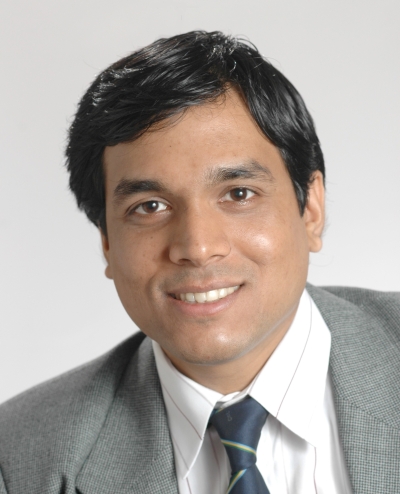
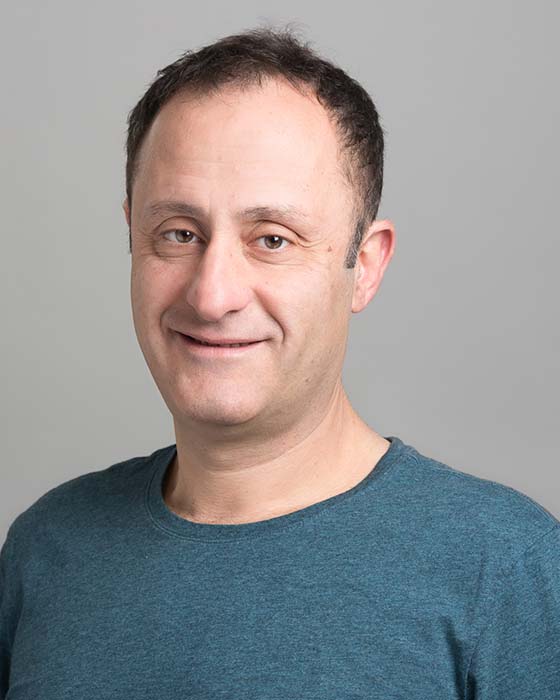
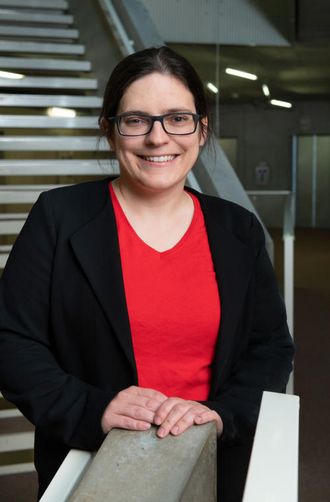
Sanjit A. Seshia is the Cadence Founders Chair Professor in the Department of Electrical Engineering and Computer Sciences at the University of California, Berkeley . He is affiliated with the Group in Logic and the Methodology of Science and participates in centers like the Industrial Cyber-Physical Systems Center , Berkeley AI Research , and the Simons Institute for the Theory of Computing . Research interests include formal methods for automated verification and synthesis of dependable systems, with applications to cyber-physical systems , AI-based autonomy , and computer security . His work spans SMT solving, model counting, syntax-guided synthesis, and algorithmic improvisation, with tools like UCLID5 , VerifAI , and Scenic for verifying autonomous systems and educational platforms like CPSGrader . Students and collaborators include notable researchers such as Dorsa Sadigh (Stanford), Daniel Fremont (UC Santa Cruz), and Hazem Torfah (Chalmers). He has co-founded startups like Decyphir and 20ⁿ Labs based on his research.
Martin Diller is a Researcher at the International Center for Computational Logic (ICCL) at TU Dresden, where he has been since May 2019. He is part of the 'Logic Programming and Argumentation' group led by Sarah Gaggl. His current research focuses on formal models of argumentation and their application in AI systems, particularly within the SEMECO interdisciplinary cluster on AI-assisted regulatory workflows for medical systems and cybersecurity. Education: Holds a joint MSc in Computational Logic from TU Wien, TU Dresden, and University of Bolzano (via the EMCL program with an Erasmus Mundus scholarship). Previously completed a MA in Philosophy (Logic & Epistemology) and BSc in Computer Science at Universidad Nacional de Córdoba, Argentina, with postgraduate funding from CONICET. Also conducted research internships at University of Aberdeen, UCL, NICTA (Canberra), and others. Key Projects: Active in the Transregional Collaborative Research Center ‘Foundations of Perspicuous Software Systems’ (2019–2022), and the Center for Scalable Data Analytics and Artificial Intelligence (2023). Currently leads research in probabilistic argumentation and flexible dispute derivations for assumption-based arguments. Key Contributions: Developed the 'flexABle' system for argumentation framework analysis, contributed to admissibility criteria in probabilistic argumentation, and advanced methods for integrating natural language processing with formal argumentation systems. Grants & Funding: Involved in EU-funded interdisciplinary projects and German collaborative research initiatives. Labs/Teams: Core member of the Logic Programming and Argumentation group at ICCL, collaborating with institutions worldwide.
Eduardo Calò is a PhD Candidate in Natural Language Processing (NLP) at the Department of Information and Computing Sciences , Utrecht University, under Prof. Kees van Deemter. He works on the Interactive Natural Language Technology for Explainable Artificial Intelligence (NL4XAI) project, funded by EU Horizon 2020 under a Marie Sklodowska-Curie grant. Research Focus: Logic-to-text generation, formula simplification, and explainable AI Projects: LoLa system development, GECko+ error correction tool Expertise: Computational linguistics, hybrid symbolic-neural approaches, multilingual NLP His work spans four key areas: (1) translating logical formulae into natural language with hybrid methods, (2) evaluating text quality through faithfulness and fluency metrics, (3) simplifying first-order logic expressions, and (4) developing writing assistance tools. He seeks to bridge symbolic logic with neural language models while addressing cross-linguistic challenges. Recent publications demonstrate technical depth in formula minimization using QBF solvers, UX optimization for NLP interfaces, and discourse-level error correction systems. Collaborations include Albert Gatt, Jordi Levy, and Kees van Deemter across multiple EU-funded initiatives.
Leander Tentrup is a researcher in the Reactive Systems Group at Saarland University's Computer Science Department. He earned his Ph.D. in 2019 with a thesis titled Symbolic Reactive Synthesis , focusing on automated system design and verification. His work emphasizes formal methods for reactive systems, quantified Boolean formulas (QBF), and hyperproperty monitoring in cyber-physical systems. Education : Ph.D. in Computer Science (Saarland University, 2019). Research Interests : Formal verification, reactive synthesis, QBF solving, distributed systems, runtime monitoring, and security-critical systems. Notable contributions include award-winning solvers like CAQE and tools like RVHyper for hyperproperty monitoring. Scientific Achievements : Won the Reactive Synthesis Competition and Competitive Evaluation of QBF Solvers. His research bridges theoretical advances in formal methods with practical tool implementations. Teaching & Mentoring : Advised and tutored students in courses on formal verification, embedded systems, and security protocols. Active in mentoring seminar projects on hyperproperties and infinite games. Labs & Teams : Core member of the Reactive Systems Group, contributing to the development of tools like StreamLAB, BoSy, and QuAbS for automated system design and analysis.
Dr. Oliver Kullmann is an Associate Professor in the Department of Computer Science at Swansea University, Faculty of Science and Engineering. His work focuses on theoretical computer science, particularly in satisfiability (SAT) solving, constraint satisfaction problems, and algorithm design. He has contributed to advancements in SAT-solving techniques like Cube-and-Conquer and has published extensively on topics such as quantified Boolean formulas, minimal unsatisfiable subformulas (MUSes), and parallel computing. Research Interests: Dr. Kullmann’s research spans algorithmic approaches to SAT and CSP, including the development of efficient solving methods, formal verification, and parallel computing optimizations. His work emphasizes practical applications of theoretical results, such as the Boolean Pythagorean Triples problem and GPU-accelerated algorithms for combinatorial problems like the N-Queens puzzle. Publications highlight his contributions to SAT theory and applications, with a focus on foundational aspects like autarkies, clause-set minimization, and hypergraph-based techniques. His work also integrates interdisciplinary methods, such as leveraging linear algebra and graph theory for SAT decision problems. Dr. Kullmann supervises PhD and MRes students in areas including SAT solving algorithms, general-purpose programming languages, and verification tools. He teaches modules such as Algorithms (CS-270) and the Logic and Computation Project (CS-700). His research platform, the OKlibrary, supports holistic SAT-solving research.
Dr. Friedrich Slivovsky is a computer scientist specializing in computational complexity, logic in computer science, and algorithm design. His research focuses on quantified Boolean formulas (QBF), SAT solving, and circuit minimization, with recent contributions to fine-grained complexity analysis and structure-aware lower bounds. He serves as a module co-ordinator for postgraduate and undergraduate courses in optimization at his institution. 2025: Fine-Grained Complexity Analysis of Dependency Quantified Boolean Formulas (QBF complexity, dependency schemes) 2024: Strategy Extraction by Interpolation (proof complexity), eSLIM: Circuit Minimization with SAT (logic synthesis), Hardness of Random Parity Encodings (CDCL solver analysis) 2023: Circuit Minimization with QBF-Based Synthesis (exact circuit optimization), Structure-Aware QBF Lower Bounds (tractability expansion) His work bridges theoretical analysis with practical applications in automated reasoning and formal verification. Teaching roles include coordinating optimization modules, emphasizing algorithmic efficiency and computational problem-solving.
Marijn J.H. Heule is an Associate Professor at the School of Computer Science , Carnegie Mellon University . He received his PhD from Delft University of Technology in the Netherlands. His research focuses on solving hard combinatorial problems through Satisfiability (SAT) solving , with applications in formal verification, number theory, and extremal combinatorics. Education: PhD in Computer Science, Delft University of Technology, Netherlands Heule's work addresses fundamental challenges in SAT solving, including: Exploiting high-performance computing via the cube-and-conquer paradigm Validating results from SAT solvers using novel proof formats His research has produced 15+ recent publications (2025-2021) on topics like automated reasoning, formal verification, and combinatorial proofs. Notable achievements include: Best Paper Award at HVC 2011 (Cube-and-Conquer) 200 TB proof for the Boolean Pythagorean Triples Problem Co-editor of the Handbook of Satisfiability He has advised multiple PhD students including Emre Yolcu , Joseph Reeves , and Bernardo Subercaseaux . His tools like DRAT-trim and QRAT-trim have become standard in proof validation.
Professor Andreas Veneris, currently at the University of Toronto , holds cross-appointments in the Edward S. Rogers Sr. Department of Electrical & Computer Engineering , Department of Computer Science , and the Munk School of Global Affairs & Public Policy . He earned his Diploma in Computer Engineering from the University of Patras (1991), M.S. in Computer Science from USC (1992), and Ph.D. in Computer Science from UIUC (1998). AAAS ACM Fellow IEEE Fellow Professional Engineers of Ontario Technical Chamber of Greece Planetary Society NSERC COHESA Network Director His research spans two decades of CAD/VLSI design automation followed by blockchain technology focusing on CBDCs , smart contract verification , DeFi mechanisms , and techno-legal Web3.0 policy . Recent work includes ASTRAEA decentralized oracle , DeFi insurance protocols , and privacy-preserving CBDC architectures . Award highlights: ACM SIGSOFT Distinguished Paper (ICSE 2024) IEEE Best Paper Awards (2024, 2022, 2020) ACM SIGARCH Maurice Wilkes Award MICRO Hall of Fame He advises Ph.D. candidates in blockchain and machine learning while leading research sponsored by Ripple (UBRI) , Huawei , and IBM . His group develops value-based accelerators for deep learning and formal verification frameworks for smart contracts. Selected projects include: HEMVM (Interoperable Blockchain VMs) BAKUP (DeFi Insurance Protocol) SigVM (Event-Driven Smart Contracts) CnvluTin (Ineffectual Neuron-Free CNNs) Stripes (Precision-Variable DL Accelerators)
Martina Seidl is a Professor at the Johannes Kepler University Linz , serving as Head of the Institute for Symbolic Artificial Intelligence . She leads research initiatives in formal verification, quantified Boolean formulas, and symbolic AI. Key Projects : Industrial problem solving using symbolic AI (2025–2026), Cluster of Excellence "Bilateral AI" (2024–2029), LOGTECHEDU (2018–2020) Leadership Roles : PhD Committee member at TU Wien, Associate Editor for the Artificial Intelligence Journal Her research focuses on automated reasoning , QBF solving , and formal methods in computer science. She has developed tools like PyQBF and Booleguru for propositional logic and constraint solving. Recent publications analyze semantic feature model differences, solution counting for QBF families, and tree-based model counters. She contributes to educational programs through lectures on formal models, SAT solving, and neurosymbolic AI. Scientific activities include organizing workshops like "Alles Logisch?" and participating in program committees. Current funded projects emphasize interdisciplinary AI applications and logic-based educational technologies.
Martin Kronegger serves as a Senior Lecturer in the Department of Automation Systems at Vienna University of Technology (TU Wien), where he teaches courses including Fundamentals of Digital Systems, Computer Engineering Projects, and Scientific Projects in Computer Science for the 2025W and 2026S semesters. His academic profile demonstrates active engagement in both teaching and research within the Faculty of Electrical Engineering and Information Technology. Dr. Kronegger's research centers on theoretical foundations of artificial intelligence with emphasis on parameterized complexity, automated planning, and answer set programming. His work bridges theoretical computer science with practical applications in knowledge representation and reasoning, as evidenced by publications in premier venues like Artificial Intelligence journal and AAAI conferences. Key research themes include: Backdoor techniques for planning problems Parameterized complexity analysis of AI problems QBF solving for conformant planning SAT-based verification methods for software models His publication landscape reveals consistent contributions to parameterized complexity theory applied to planning and logic programming from 2011-2019, with significant work on multiparametric analysis of answer set programming and SAT-based approaches to planning problems. The research trajectory shows deepening theoretical contributions while maintaining connections to practical AI applications. Dr. Kronegger has supervised at least one diploma thesis on planning solvers and has participated in major research projects including FAIR (2013–2018), START (2014–2022), and X-TRACT (2014–2018). His project work demonstrates sustained collaboration with research groups at TU Wien focused on computational logic and automated reasoning. Based in the Automation Systems research group (E191-03) at TU Wien's Treitlstraße campus, he maintains active research collaborations through projects like the START program and contributes to the international answer set programming community as evidenced by involvement in the Fourth Answer Set Programming Competition.
Tomáš Peitl is a researcher and university assistant at the Institute of Logic and Computation, Vienna University of Technology, within the Algorithms and Complexity group. His roles include teaching courses like Algorithms and Data Structures and Structural Decompositions and Algorithms. He holds a PhD in Computer Science from TU Wien (2019) and has held postdoctoral positions at Friedrich Schiller University (Jena, Germany) and TU Wien, funded by FWF grants. His research focuses on Quantified Boolean Formulas (QBF), Dependency QBF, SAT solving, proof complexity, and algorithm development for formal verification. He has contributed to software tools like Qute (a QBF solver) and SAT Modulo Symmetries. Education: PhD in Computer Science (2015–2019, TU Wien), MSc in Mathematics (2013–2015, Comenius University, Bratislava), BSc in Mathematics (2010–2013, Comenius University). Research interests span theoretical aspects (e.g., proof complexity, computational complexity) and practical applications (e.g., SAT/QBF solver development). His work bridges algorithmic theory and real-world problem-solving. Recent articles explore dependency schemes in QBF, resolution paths, and SAT-based approaches to graph theory problems. Notable awards include the Best Paper Award at CP 2020 and the FWF Erwin Schrödinger Fellowship. Peitl collaborates on projects like the Austrian Science Fund (FWF) grant on DQBF theory and has developed tools for shortest proof calculation (short.py) and symmetry-handling in SAT solving. His contributions highlight advancements in automated reasoning and computational logic.
Dr. Leroy Chew is a Research Fellow at the Institute of Logic and Computation at Technische Universität Wien. He specializes in theoretical computer science with focus areas in proof complexity, quantified Boolean formulas (QBF), and SAT solving. His educational background includes a PhD from the University of Leeds and postdoctoral research at Carnegie Mellon University. Dr. Chew's research explores the boundaries of computational complexity and formal verification systems. His current projects include developing novel proof systems for quantified formulas and expansion-based approaches for constraint satisfaction problems. He leads research funded by the ESPRIT Grant on QBF Proofs and Certificates. His publication record demonstrates consistent contributions to formal verification and computational logic, with recent advances in strategy extraction techniques and dual proof systems. He maintains academic collaborations across Europe and the United States, and has served on program committees for major conferences including SAT and QBF Workshops. Dr. Chew has received the EPSRC Postdoctoral Prize Research Fellowship and continues to develop computational tools for the research community, including proof generators and strategy extraction software.
Tomáš Peitl is a University Assistant at the Vienna University of Technology's Institute of Logic and Computation. His research focuses on quantified Boolean formulas (QBF), proof complexity, SAT solving, and dependency schemes. He teaches courses on Algorithms and Data Structures, Algorithmics, and Structural Decompositions. Dr. Peitl has developed specialized tools including the QBF solver Qute which implements dependency learning and reflexive resolution-path dependency schemes. His current research examines decision heuristics in QCDCL and hardness characterizations of QBF resolution systems. Recent publications explore symmetry breaking techniques in quantified graph search, QCDCL decision strategies, and the generation of hard SAT instances. He maintains collaborations through conferences like SAT and IJCAI, and contributes to theoretical foundations of automated reasoning.
Uwe Egly is an Associate Professor at the Department of Knowledge-Based Systems, Faculty of Informatics, Technische Universität Wien (TU Wien). His research focuses on automated reasoning, proof theory, knowledge representation, and computational logic, with a strong emphasis on quantified Boolean formulas (QBFs), argumentation frameworks, and applications of AI in engineering. He leads projects funded by the Austrian Science Fund (FWF) and the Vienna Science and Technology Fund (WWTF), including the Boolean project (2011–2019) and FAME (2011–2014). Egly is known for developing QBF solvers like DepQBF and contributing to SAT-solving techniques. He teaches courses such as Abstract Argumentation , Formal Methods in Computer Science , and Quantum Computing . His research interests span proof complexity, satisfiability checking, and AI-driven algorithms for path planning. He has advised numerous students on theses involving quantum algorithms, QBF solver optimizations, and argumentation frameworks. Egly’s work bridges theoretical computer science with practical applications, including contributions to deformation monitoring systems and circuit synthesis using SAT-based methods. He is involved in international workshops and conferences, such as SAT, FMCAD, and Dagstuhl Seminars, and has edited proceedings for events like SAT 2014 . His collaborations include projects on scenario-based testing of UML diagrams and semantics-aware model versioning. Egly’s interdisciplinary approach integrates logic, artificial intelligence, and computational methods to solve complex theoretical and applied problems.
Leroy Nicholas Chew is a PostDoc Researcher and FWF Projektassistent at the Vienna University of Technology (TU Wien). He is affiliated with the Department of Algorithms and Complexity within the Faculty of Informatics. His roles include contributing to research projects such as QBFPC (2022–2025), Overcoming Intractability in the Knowledge Compilation Map, and REVEAL-AI (2020–2024). These projects reflect his focus on advancing theoretical computer science and automated reasoning methodologies. While specific educational details are not explicitly provided in the text, Leroy Nicholas Chew holds a PhD, as indicated by his role listing. His current position suggests a strong background in computer science and theoretical foundations, consistent with his research activities. His research interests span several key areas in theoretical computer science, including proof complexity, quantified Boolean formulas (QBF), automated reasoning, and knowledge compilation. He explores the hardness of computational problems in logical frameworks, such as analyzing resolution and CDCL proof systems, developing optimal dual proof systems for answer set programming (ASP), and investigating model counting techniques. His work often bridges foundational theory with practical applications in formal verification and algorithm design. Recent publications (2024) highlight advancements in circuits and proofs, model counting, and ASP-QRAT proof systems. Earlier work (2016–2022) addressed QBF resolution calculi, dependency schemes, and certification challenges. These trends underscore his specialization in formal methods and computational logic. No scientific awards are explicitly mentioned in the provided text. In addition to his research, Chew is involved in multiple funded projects. These include the FWF-supported QBFPC (2022–2025), which examines QBF proofs and certificates, and the REVEAL-AI project (2020–2024), focusing on overcoming intractability in knowledge compilation. While specific grant details beyond project funding are not mentioned, his participation underscores his role in collaborative, grant-funded research initiatives. No formal advisees are listed. Chew is part of the Algorithms and Complexity department at TU Wien, collaborating on projects that emphasize proof systems, formal verification, and algorithmic foundations. His work integrates theoretical insights with practical computational methods.