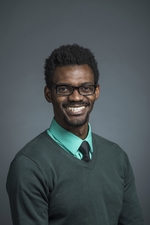
Dr. Nicholas S. Bell is an Assistant Professor in the Department of Special Education at the University of Connecticut. His research and teaching focus on disrupting educational injustices through anti-racist practices, culturally relevant pedagogy, and advanced quantitative methods. Spencer Foundation Racial Equity Grant Spencer Foundation Conference Grant Dr. Bell’s research spans four key areas: anti-racist special education policies, culturally relevant STEM teaching for students with/without disabilities, special education teacher preparation, and the application of QuantCrit in educational research. His methodological approach combines qualitative, mixed-method, and advanced statistical models like structural equation modeling. Recent publications highlight his work on racialized resegregation in special education, equity-focused teacher training, and culturally responsive STEM instruction. Dr. Bell mentors PhD students and secures grants to advance racial equity in education.
Dr. Yasmiyn Irizarry serves as Associate Professor in the Department of African and African Diaspora Studies at The University of Texas at Austin (College of Liberal Arts) and as Associate Director of the Institute for Urban Policy Research & Analysis. She founded the Numbers 4 Justice Lab to advance racial equity through quantitative methods. Education Bachelor's degree from The Ohio State University Master's and Doctorate in Sociology from Indiana University Research Focus As a leading QuantCrit (critical quantitative methods) scholar, Dr. Irizarry examines race and racism across four interconnected domains: K-16 schooling contexts; categorization, identity, and ascription; social attitudes, prejudice, and discrimination; and justice, marginalization, and social control. Her work employs an intersectional framework analyzing race, ethnicity, immigration, class, and place within systems of power, with particular emphasis on Black women's experiences and census data methodologies. Publication Trends Her recent publications (2021-2025) demonstrate consistent focus on police violence against Black women, critical quantitative methodologies in education, and reexamination of racial categories in US Census data. Key themes include mental health impacts of racial profiling, race-shifting in demographic data, and racialized dynamics in STEM education and school safety, reflecting her commitment to transforming quantitative research through critical race perspectives. Research Funding National Science Foundation (current projects on school safety, STEM education, and population policies) Robert Wood Johnson Foundation (revising OMB race/ethnicity standards) Bill and Melinda Gates Foundation (past) Ford Foundation (past) American Educational Research Association (past) Academic Leadership Dr. Irizarry directs the Numbers 4 Justice Lab, which develops and applies quantitative tools to address racial inequities. She teaches graduate courses including Theories of Race/Ethnicity and Sociology of Education across multiple departments (AFR, SOC, WGS), emphasizing critical approaches to quantitative research in racial justice contexts.
Dr. Marvin Powell is an Associate Professor in the Division of Educational Psychology and Research Methods at George Mason University's College of Education and Human Development. He specializes in research methodology, focusing on psychometric properties of educational/psychological instruments using latent trait analyses. His work integrates critical theories like QuantCrit and CRQI to address quantitative research questions. PhD from University of North Texas Research interests include statistical anxiety mitigation through humor, anti-racist research practices, and decolonizing methodologies. Teaches advanced quantitative methods courses including item response theory and measurement development. Affiliated with the School of Education and Mathematics Specialist Leadership programs. No specific articles listed in provided materials. Advances anti-racist research through courses like EDRS 892. Active in curriculum development for doctoral programs.
Dr. Stephanie D'Costa is an Assistant Professor in the Kalmanovitz School of Education at Saint Mary’s College of California. Her work bridges school psychology and trauma-informed practices, focusing on culturally sustaining methodologies for marginalized youth. Decolonizing school psychology research Adolescent mental health crisis management Culturally responsive assessment frameworks Bilingual school psychology competencies Her recent publications (2022-2024) emphasize critical methodologies (QuantCrit), trauma-informed practices, and systemic equity in K-12 settings. Key themes include racialized oppression, linguistic equity, and Indigenous mental health frameworks. As a licensed clinical psychologist, she specializes in trauma interventions for children and collaborates on community-based mental health initiatives. Her research continues to shape national dialogues on educational equity and school psychology reforms.
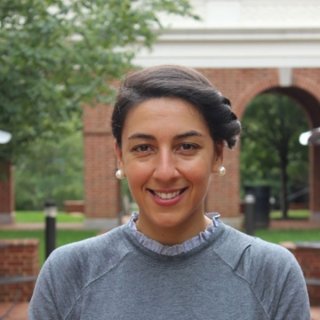
Shereen El Mallah serves as a Research Assistant Professor in the Department of Education Leadership, Foundations & Policy at the University of Virginia's School of Education and Human Development, with faculty affiliations at Youth-Nex and the Center for Advanced Study of Teaching and Learning (CASTL). Her educational qualifications include: Ph.D. from University of Massachusetts Amherst M.A. from Virginia Tech B.S. from Johns Hopkins University El Mallah's research centers on bridging applied science and social justice through rapid cycle evaluation, participatory approaches, and Quantitative Critical Race Theory (QuantCrit). She addresses systemic gaps between research-practice translation, outcome measurement validity, and racial/socioeconomic inequities in education, prioritizing partnerships with marginalized communities to challenge dominant narratives using mixed-methods frameworks. Her active research initiatives encompass: African American Adolescent Development in Context: The Role of Congruence Across Socialization Agents and Settings Compass Model Early-Stage Evaluation Becoming Ethical People Character Development Among Students in EL Education Schools (ExCEL) Portrait of a Thriving Youth
Dr. Verónica N. Vélez is the Associate Dean for Academic Affairs and Professor of Secondary Education and Education & Social Justice at Western Washington University's Woodring College. She holds a Ph.D. from UCLA in Social Science and Comparative Education with a focus on Race and Ethnic Studies. Her research centers on racial inequities in education, particularly using GIS and Critical Race Spatial Analysis (CRSA), and co-developed QuantCrit to address race in quantitative research. She has led major grants, including a $1.1M NSF grant on spatial justice in physics education and a Spencer Foundation grant for QuantCrit methodologies. Education: B.A. Psychology, Stanford University M.A. & Ph.D. Social Science and Comparative Education, UCLA Research Interests: Critical Race Theory (CRT) and LatCrit frameworks Racialized spatial inequities in education GIS as anti-racist praxis Quantitative Critical Race Methodologies (QuantCrit) Chicana/Latina feminist methodologies Ethnic Studies integration in teacher education Grants & Awards: $1.1M NSF Spatial Justice in Physics Education Grant (2022–present) $75K Spencer Foundation Vision Grant (2023–present) AAHHE Faculty Fellow and Ford Foundation Fellow ESRI Women in GIS Innovator recognition (2024) Her work bridges academia and community, including 15 years as a migrant family organizer. She advises on education policy through partnerships with grassroots organizations and has published extensively in Race, Ethnicity, and Education and Science Education. Her recent books include QuantCrit: Examining Race and Racism through Quantitative Approaches (2023) and Handbook of Race and Refusal in Higher Education (2024).
Michael Frisby is an Assistant Professor in the Department of Educational Policy Studies at Georgia State University's College of Education & Human Development. His academic journey includes a Ph.D. in Educational Studies from the University of Michigan (2022), an M.S. in Statistics from Michigan State University (2012), and a B.A. in Philosophy from the University of Arkansas at Little Rock (2009). Research Focus Frisby specializes in advanced quantitative methodologies, particularly Structural Equation Modeling and Item Response Theory, integrated with critical theory frameworks. His primary research aims include: Developing and validating the White Critical Consciousness Index (WhiCCI) to measure critical consciousness in white individuals Advancing critical quantitative literacy aligned with social justice principles Exploring latent moderation effects in educational and health-related research His recent work in AERA Open demonstrates pedagogical innovations in critical quantitative methods, while his publications span diverse fields including HIV/AIDS research, youth activism studies, and special education policy analysis. Key Contributions Through collaborative projects, Frisby has contributed to understanding: Relational processes in Mozambican couples dealing with HIV/AIDS Longitudinal critical consciousness development in marginalized youth Barriers created by bar exam cut scores in legal education His methodological expertise bridges traditional statistical approaches with critical consciousness theory, challenging conventional data interpretation paradigms.
Jamaal R. Young is an Associate Professor at Texas A&M University and Director of the Aggie STEM TEACHING, LEARNING & CULTURE initiative. He holds a Ph.D. in Curriculum and Instruction from Texas A&M (2011), an M.Ed. (2008), and a B.S. in Biomedical Engineering (2004). His research focuses on STEM equity, particularly examining how opportunity structures (e.g., teacher quality, technology access) impact traditionally underrepresented students’ STEM dispositions and identities. He employs meta-analysis, research synthesis, and large-scale data analysis to study factors like racial bias, income level, and gender inequity. Dr. Young has secured funding from NASA and NSF, and serves as an associate editor for the Journal of Urban Mathematics Education and on the editorial panel of the Journal for Research in Mathematics Education . Key research interests include Black students’ mathematics identity, culturally responsive pedagogy, and the role of out-of-school activities in STEM engagement. He has advised two doctoral students: Julia Elise Calabrese (2022) and Ashley Marrie Williams (2022). Courses taught include EDCI685 (Directed Studies), EDCI720 (Engineering Design in School Teaching & Learning), and MASC351 (Problem Solving in Math). His work bridges education policy, equity, and urban STEM contexts, emphasizing systemic barriers and culturally informed solutions. Editorial Roles: Journal of Urban Mathematics Education (Associate Editor), Journal for Research in Mathematics Education (Editorial Panel) Funding: NASA, National Science Foundation (NSF) Key Themes: QuantCrit methodology, STEM identity development, and equitable learning environments. Dr. Young’s publications span over two decades, addressing topics from Black girls’ STEM perceptions to the impact of technology in urban classrooms. His research consistently advocates for equity-centric educational practices, informed by both quantitative rigor and critical social theory.
Katherine Batchelor serves as John Heckert Professor and Coordinator of Adolescent and Young Adult Education at Miami University within the Department of Teaching, Curriculum, and Educational Inquiry. Her academic leadership focuses on preparing educators through critical literacy frameworks and social justice pedagogy. Her educational foundation includes: Ph.D. in Curriculum and Instruction - Literacy from Kent State University M.Ed. in Curriculum and Instruction - English/Language Arts from Kent State University Post Baccalaureate in Middle Childhood Education Reading and Sciences Licensures from Cleveland State University B.A. in English from Eastern Michigan University Dr. Batchelor's research centers on critical literacy practices among adolescents, examining how young adult literature, digital media, and multimodal composition foster equity in educational settings. Her work interrogates power structures through frameworks like critical race theory and feminist pedagogy, emphasizing student agency and perspective-shifting in literacy development. Recent scholarship explores innovative applications including meme culture during the pandemic, VSCO sticker analysis, and interactive fiction in classrooms. Analysis of her 2019-2025 publications reveals consistent methodological diversity blending quantitative critical race theory (QuantCrit) with qualitative approaches. Key thematic threads include social justice teacher education, digital literacies, and the pedagogical potential of young adult literature to address refugee narratives, LGBTQ+ representation, and implicit bias. Her work demonstrates particular attention to preservice teacher development across disciplinary contexts. Her professional recognition includes: John Heckert Professorship (prestigious endowed chair) National Board Certified Teacher credential Consistently top-rated course evaluations within her department As Coordinator of Adolescent and Young Adult Education, Dr. Batchelor mentors future educators while maintaining active scholarship. Her National Writing Project membership informs professional development initiatives focused on writing pedagogy. The source materials indicate no specific grant funding details but reflect sustained research productivity through peer-reviewed publications. Dr. Batchelor contributes to the National Writing Project network, participating in educator development programs that extend her classroom research into broader professional communities. Her international work in Warsaw, Poland demonstrates cross-cultural applications of literacy pedagogy.
Dr. Kristy A. Robinson is an Associate Professor at the Faculty of Education , McGill University , specializing in the Department of Educational and Counselling Psychology . Her research bridges achievement motivation , developmental trajectories , and STEM education to address equity in academic engagement. PhD, Educational Psychology and Educational Technology, USA BS, Psychology, USA Dr. Robinson’s work examines: Developmental patterns of identity, interest, and competence beliefs during adolescence and early adulthood, using variable- and person-oriented approaches. Emotional complexity in classrooms, analyzing co-occurring emotions and their relations to motivation through structural equation modeling. Classroom interventions that support motivation and identity in introductory STEM courses, combining student- and teacher-focused strategies. Key trends in her publications include: Quantitative analysis of motivational climate disparities in STEM learning environments. Development of control-value theory through studies on emotional and motivational predictors. Design of contextualized interventions for equitable student outcomes. Scientific recognition: 2024 President’s New Researcher Award, Canadian Psychological Association 2024 Outstanding Early Career Scholar Award, AERA Division C 2024 Wilbert C. McKeachie Early Career Award, AERA Motivation SIG She leads the MILES Lab (Motivation, Identity, Learning, and Education in STEM), mentoring graduate students and advancing research on motivationally supportive instruction.
Jamaal R. Young, Ph.D., is an Associate Professor and Director of Aggie STEM Teaching, Learning & Culture at Texas A&M University. He holds a Ph.D. in Curriculum & Instruction from Texas A&M (2011), an M.Ed. (2008), and a B.S. in Biomedical Engineering (2004). His work focuses on STEM equity, particularly for underrepresented populations, examining how opportunity structures like teacher quality, technology access, and out-of-school activities influence STEM dispositions and achievement. Young’s research employs meta-analysis, large-scale data analysis, and QuantCrit frameworks to investigate factors affecting Black learners’ mathematics identity and STEM persistence. He has edited journals like the Journal of Urban Mathematics Education and secured funding from NASA and NSF. His courses include EDCI685, EDCI689, and EDCI720, focusing on STEM pedagogy and instructional design. Key research themes include: Social determinants (racial bias, income) on STEM outcomes Impact of out-of-school time programs Teacher education and TPACK development QuantCrit applications in education research Recent publications emphasize equity in urban STEM education, Black girls’ STEM identity, and the role of parental and community support. His work bridges theory and practice, advocating for systemic changes to improve STEM access and retention.
Dr. Kamden K. Strunk is Professor in the Foundations of Education at Virginia Commonwealth University's School of Education. His research develops critical quantitative methodologies (including QuantQueer and QuantCrit) to study LGBTQ+ educational experiences, intersectional queer studies, and educational psychology through social justice frameworks. Research innovations: Pioneering QuantQueer methodology for LGBTQ+ educational research Meta-analytic examinations of achievement goal theory Critical analyses of educational psychology's racial foundations Mixed-methods studies of Deep South LGBTQ+ student experiences Authored 'Research Methods for Social Justice and Equity' (2019) and 'Encyclopedia of Queer Studies in Education' (2021). Leads Spencer Foundation and AERA-funded projects on LGBTQ+ affirming mental healthcare and bridging disciplinary divides in queer scholarship.
Dr. Jemimah Young is an Associate Professor in the Department of Teaching, Learning & Culture at Texas A&M University. She specializes in multicultural and urban education, focusing on academic outcomes for historically marginalized populations, particularly Black women and girls. Her work bridges research with practice through teaching undergraduate and graduate courses on culture, identity, diversity, social justice, educational foundations, and research methodology. Additionally, she has extensive experience in K-12 education as a teacher and consultant in urban school systems across the U.S. Dr. Young serves as program chair for the AERA Critical Examinations of Race, Class, and Gender SIG and co-founder/co-editor of the Journal of African American Women and Girls in Education. She also chairs the Multicultural Education program in her department. Her research emphasizes equity in STEM, gifted education, and curriculum design, often employing critical race theory and QuantCrit methodologies to analyze systemic disparities. Her scholarly contributions span topics such as Black girls’ STEM identity formation, the impact of teacher diversity on student belonging, and reimagining multicultural education. She critiques policies like school tracking and advocates for culturally informed pedagogical practices through frameworks like the Urban Education Typology and the equity paradox typology. Dr. Young’s advisory and editorial roles reflect her commitment to amplifying marginalized voices in education. She has co-edited influential works like Cultivating Achievement, Respect, and Empowerment (CARE) for African American Girls in PreK-12 Settings (2017). Her work frequently intersects with policy analysis, content analysis, and mixed-methods research to address racial and gender inequities in educational systems.
Lindsay Pérez Huber is a Professor in the Equity, Education and Social Justice program within the Department of Advanced Studies in Education and Counseling at the College of Education, California State University, Long Beach. She is also the Coordinator of the Equity, Education and Social Justice program and teaches graduate courses in social and cultural analysis, critical pedagogies, and qualitative research methods. Education: Ph.D., Social Science and Comparative Education, specialization in Race and Ethnic Studies, UCLA M.A., Social Science and Comparative Education, specialization in Race and Ethnic Studies, UCLA B.A., Chicano/Latino Studies, UC Irvine B.A., Political Science, UC Irvine Dr. Pérez Huber's research centers on critical race theory, racial microaggressions, Chicana feminist epistemologies, and the educational experiences of undocumented Latinx students. She employs interdisciplinary and humanizing methodologies such as testimonio and Critical Race Feminista Methodology to examine systemic racism and resistance in educational contexts. Her work bridges CRT and LatCrit to analyze how racist nativism and political rhetoric shape educational inequities. Her recent publications reflect a strong trend toward theorizing racial microaffirmations as responses to microaggressions, advancing QuantCrit methodologies, and developing critical content analysis frameworks for children's literature. She has also contributed significantly to understanding the impact of DACA and immigration policies on Latinx communities. Scientific Awards and Honors: National Academies Ford Foundation Fellow Visiting Scholar, UCLA Center for Critical Race Studies Vice President, Critical Race Studies in Education Association (CRSEA) Dr. Pérez Huber is actively involved in research leadership, having co-coordinated the UCLA Latina/o Education Summit and led major policy reports on educational equity. She mentors emerging scholars and collaborates extensively on critical race research. Her work is widely published and cited, with a significant digital presence on Academia.edu. Research Centers and Teams: She has collaborated with the UCLA Chicano Studies Research Center and the Eva Longoria Foundation on impactful studies related to Latina education and immigration policy. She is a core contributor to the Critical Race Studies in Education Association (CRSEA) and helps shape national discourse on racial justice in education.
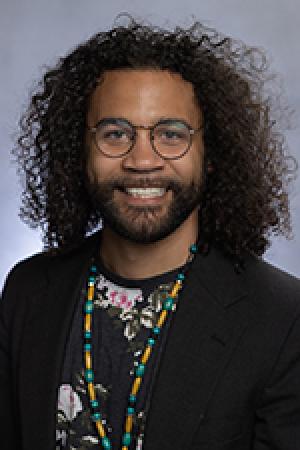
Nathaniel Stewart is an Assistant Professor and Carmen Starkson Campbell Endowed Fellow for Innovation in Teacher Development in the Department of Organizational Leadership, Policy, and Development at the University of Minnesota. A former middle school science teacher, his research examines Black educators' roles as policy activists through critical educational policy analysis and anti-colonial epistemologies. Research Focus: Critical quantification and Black Critical Theory frameworks Supporting justice-oriented educators in transforming oppressive policy structures Ethnic studies pedagogies as living archives His recent publications explore Black educational resistance, quantitative critical methodology, and Black-Indigenous solidarity. Courses taught include OLPD 8302: Educational Policy Perspectives.