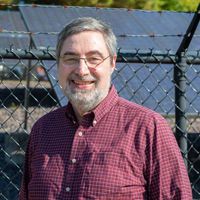
Elvis Dartey Okoffoمشاهده پروفایل
پژوهشگر ارشد
- Microplastics
- Nanoplastics
- Biodegradable plastics
- +۵ مورد دیگر
Dr. Elvis Dartey Okoffo is a Research Fellow at the Queensland Alliance for Environmental Health Sciences (QAEHS) within The University of Queensland's Faculty of Health, Medicine and Behavioural Sciences. His research focuses on developing innovative analytical methods to characterize and monitor environmental and human exposures associated with plastics pollution. His research interests center on plastic pollution analysis, with expertise in microplastics, nanoplastics, and biodegradable plastics. He has pioneered novel sampling approaches and analytical techniques for monitoring plastics in diverse environmental samples including drinking water, wastewater, biosolids, seafood, marine sediments, compost, and food systems. His work leverages advanced technologies such as pressurized liquid extraction, ultrafiltration, and pyrolysis gas chromatography coupled with mass spectrometry to provide insights into plastic distribution, abundance, and ecological impacts. Okoffo's recent publications demonstrate a strong focus on methodological development for plastic quantification, environmental monitoring across diverse matrices, and understanding pollution pathways. His work spans from fundamental analytical chemistry to applied environmental monitoring, with particular emphasis on Australian ecosystems including Moreton Bay and wastewater treatment systems. As an associate advisor, Dr. Okoffo supervises multiple PhD students working on projects related to specialized hyphenated methodologies for plastic quantification, microplastics in water systems, microplastic inputs from ships, degradation levels affecting quantification, and nanoplastics characterization. His research is supported by grants from Central Queensland University, Minderoo Foundation, and the Australian Academy of Science. His laboratory work focuses on developing and validating analytical methods for plastic detection across various environmental matrices, with particular expertise in pyrolysis-GC-MS techniques. The research team collaborates extensively with environmental scientists, marine biologists, and public health experts to address the multifaceted challenges of plastic pollution.