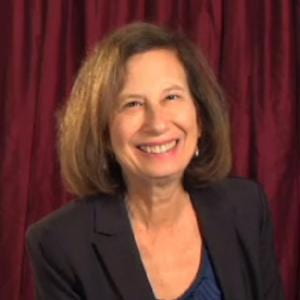
Susan C. Levine is the Rebecca Anne Boylan Distinguished Service Professor of Education and Society in the Department of Psychology at the University of Chicago. Her research explores the interplay between early spatial and numerical thinking, focusing on how adult-child interactions shape mathematical development in home and school settings. Her work examines children's understanding of natural numbers and fractions, evaluates interventions to improve math skills, and investigates how parental and teacher math attitudes influence child outcomes. Key areas include math anxiety, gesture-based learning, and socioeconomic impacts on numeracy. Recent publications highlight gesture interventions for spatial misconceptions, math anxiety in college calculus, and the role of parental interactions in shaping children's mathematical beliefs. The Distinguished Service Professor award recognizes her contributions to educational psychology.
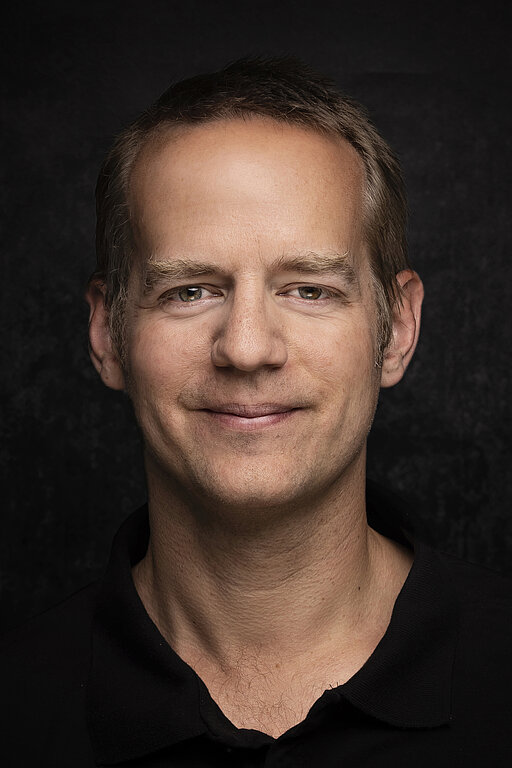
Prof. Dr. Sebastian von Mammen is a tenured professor at the University of Würzburg's Institute for Computer Science, where he heads the Games Engineering research group and contributes to the Chair for Human-Computer Interaction. His group leads the Games Engineering academic program. Previously, he completed his habilitation (2012-2016) at the University of Augsburg's Chair of Organic Computing and was a postdoctoral fellow at the University of Calgary. His research spans: Real-Time Interactive Systems : Visual programming, immersion techniques, software engineering Interactive Simulations : Serious games for healthcare/logistics/construction Artificial Life : Self-organisation, adaptive systems, evolutionary computation Artificial Intelligence : Agent-based modeling, procedural content generation Recent publications (2023-2025) demonstrate strong focus on: Virtual reality applications in education (femtoPro optics simulator, BrainBuilder neuroanatomy) Healthcare technology platforms (VIA-VR for medical serious games) Game mechanics analysis (Match-3, Jump'n'Run flow) AI-driven emotion recognition and interactive systems Computational modeling of biological systems He leads the Games Engineering research group and previously participated in the Evolutionary and Swarm Design group (Calgary) and LINDSAY project. His lab develops VR simulations for scientific training and serious games applications.
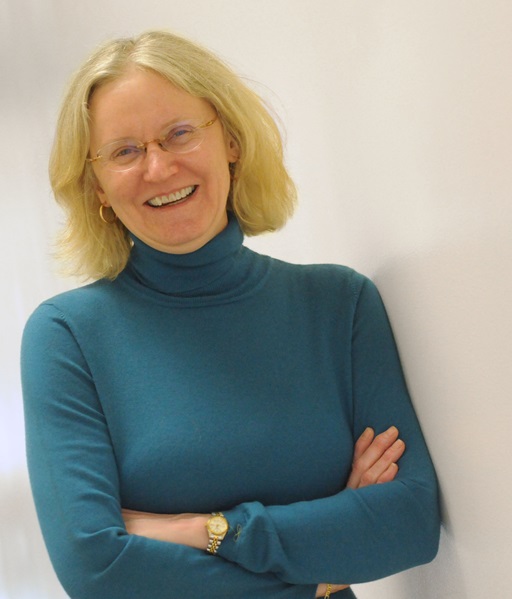
Caitlin Smith is a Teaching Professor in the Department of Linguistics at the University of North Carolina at Chapel Hill. Previously, she held positions as a lecturer at the University of California Davis and a postdoctoral fellow at Johns Hopkins University. She earned her Ph.D. in Linguistics from the University of Southern California in 2018. Her research focuses on phonology, particularly exploring gestural representations and their application to phenomena like vowel harmony, opacity, and phonological exceptionality. Key areas include computational modeling of gestural harmony, typological asymmetries in phonological patterns, and speech production analysis using real-time MRI data. She collaborates with researchers in computational linguistics and speech production, including work with Microsoft Research AI on integrating structured representations into neural networks. Her recent work emphasizes the learnability of phonological patterns through computational models and the reanalysis of traditional phonological puzzles within a gestural framework. She has developed the Grammar + Gesture Gradual Learning Algorithm (GGGLA) to model the acquisition of gestural parameters, demonstrating how derivationally opaque patterns emerge naturally in the Gestural Harmony Model. Her contributions span both theoretical and experimental phonology, with notable publications in venues like The Oxford Handbook of Vowel Harmony , Proceedings of NELS , and Scientific Data . She actively engages in interdisciplinary research, bridging formal phonology with computational methods and articulatory phonetics.
Max Schleser is Associate Professor in Film and Television at Swinburne University of Technology, where he also conducts research with the Centre for Transformative Media Technologies (CTMT). He is an Adobe Creative Educator Innovator, Founder of the Mobile Innovation Network & Association (MINA), and Screening Director of the International Mobile Innovation Screening & Festival. His work spans academic, artistic, and community domains, with a focus on innovative screen practices. Max holds a PhD in Creative Arts from the University of Westminster, an MA in Art and Media Practice with Distinction, and a BA Hons. His research centers on immersive media, documentary film, and creative arts 4.0, particularly cinematic VR and interactive filmmaking. He investigates screen production, emerging media, and smartphone filmmaking as tools for community engagement, creative transformation, and transmedia storytelling. His recent publications reveal a strong trend toward integrating Generative AI into documentary and city film genres, exploring the 'AI eye' and computational non-fiction. He also investigates novel immersive production methods in VR, HyFlex pedagogies in film education, and collaborative mobile storytelling through workshops. His work consistently bridges creative practice with theoretical inquiry. Best Cinematography, International Cell Phone Cinema - Cannes (2025) Best Mobile Film, Nitiin International Film Festival (2024) Dean's Award for Teaching and Research, Swinburne University (2023) International Visiting Research Scholar, Auckland University of Technology (2024) Early Career Award - Research, Massey University (2012) Max leads multiple research grants focused on health storytelling, intergenerational connection, AI in screen industries, and sustainability education. He supervises creative projects and has conducted digital storytelling workshops for cultural institutes and government bodies worldwide. As founder of MINA and director of major festivals, he leads international networks in mobile media innovation. He also serves on the editorial board of the Media Practice and Education journal and has co-edited several key volumes on mobile media and storytelling.
Roméo TÉDONGAP is a Professor of Finance at ESSEC Business School (Paris-Singapore), specializing in empirical asset pricing, behavioral finance, and macro-finance. He holds a Ph.D. in Economics from Université de Montréal and has held academic positions at Stockholm School of Economics (2007–2016) and ESSEC since 2016. His research focuses on asymmetric risk attitudes, systemic risks, and long-term investment valuation, with notable contributions to journals like Journal of Financial Economics and Review of Financial Studies . Key distinctions include the 2013 EFMA Best Paper Award and the 2008 Best PhD Thesis award. Education: Ph.D. in Economics (Université de Montréal, 2008) Engineer’s Degree in Statistics and Economics (ENSEA Abidjan, 2003) Bachelor’s in Mathematics (University of Dschang, 2000) Research Interests: Macroeconomic uncertainty, behavioral asset pricing, climate finance, African stock markets, and systemic risk dynamics. His work bridges theoretical models with empirical applications, addressing topics like ultra-long investments, pandemic impacts, and microfinance strategies in Africa. Awards: 2013 EFMA Best Conference Paper Award 2008 Université de Montréal Best PhD Thesis Wallander Scholarships (2007–2013) Teaching & Leadership: Associate Dean for Research at ESSEC (2021–2024) Head of Finance PhD Program (2018–2021) Courses include Financial Markets, Advanced Derivatives, and Asset Pricing Grants & Editorial Roles: ANR grant for LONGTERMISM (2017) Associate Editor, British Accounting Review Editorial Board, Pan-African Scientific Research Council Labs & Collaborations: Active in ESSEC’s Energy & Commodity Finance Research Center, focusing on sustainable finance and climate transition investments.
Dr. Gail Kaiser is a Professor of Computer Science at Columbia University, where she has served for 40 years. She directs the Programming Systems Lab (PSL) and is affiliated with the Software Systems Lab (SSL). Her research focuses on software systems, program analysis, testing, security, and AI-driven software engineering. She earned her PhD from Carnegie Mellon University and a BS from MIT. Education: PhD in Computer Science, Carnegie Mellon University (1985) MS in Computer Science, Carnegie Mellon University (1980) BS in Computer Science and Engineering, MIT (1979) Research & Teaching: Dr. Kaiser teaches COMS W4156 (Advanced Software Engineering) and COMS E6156 (Topics in Software Engineering). Her work spans metamorphic testing for machine learning, secure computing, and AI in SE. Notable contributions include pioneering metamorphic testing for classifiers and secure containers research. Awards & Grants: 2025 Distinguished Journal Award (ICST) NSF grants totaling over $2M for secure computing and software assurance ACM SIGSOFT Distinguished Paper Awards (2023, 2014) Labs & Collaborations: Her labs (PSL and SSL) drive innovation in program analysis and security. Collaborations include DARPA, NIH, and industry partners like IBM and Microsoft.
Professor Dorthe Bleses is affiliated with Aarhus University's School of Communication and Culture, Department of Linguistics. Her research focuses on language acquisition, child development, and early childhood education, with particular emphasis on interventions and parental influences. She leads projects like The Puzzle of Danish and collaborates on initiatives such as READ in Foster Care and SPELL . Research interests include language development in Germanic languages, the impact of parenting behaviors on cognitive and social outcomes, and the effects of early interventions on literacy and numeracy skills. Her work integrates psycholinguistic theory with practical educational programs, emphasizing scalable solutions for disadvantaged populations. Key projects include evaluating large-scale literacy interventions (SPELL) and studying factors influencing language skills in diverse populations, including foster children and bilingual learners. Collaborations span Denmark and internationally, addressing topics like maternal health impacts on language acquisition and cross-cultural childcare practices. Though no awards are listed, her contributions to early childhood research are evident through her extensive publication record and leadership in interdisciplinary teams. She has no listed advisees but collaborates widely with colleagues like Rikke Svane and Erika Hoff on major studies.
Sebastiano Vascon is an Associate Professor at Ca' Foscari University of Venice's Department of Environmental Sciences, Computer Science and Statistics (DAIS), and affiliated with the European Center for Living Technology. He earned his PhD in 2016 from the Italian Institute of Technology and University of Genoa, focusing on evolutionary game theory in pattern analysis and computer vision. His postdoctoral work spanned institutions like the Technical University of Munich and ETH Zurich, where he specialized in Active Learning and multi-object tracking. His research merges AI with interdisciplinary challenges, including climate change, environmental science, and cultural heritage preservation. Key areas include graph neural networks, computer vision, and game-theoretic models. He leads projects like RePAIR (AI for cultural heritage reassembly) and EasyWalk (AI-driven mobility solutions), and contributes to initiatives like MEMEX (digital storytelling). Teaching spans courses in Deep Learning, Machine Learning for Environmental Applications, and AI in Cultural Management. Research projects include: RePAIR: AI-driven 3D puzzle solving for artifact reconstruction EasyWalk: Socially-aware navigation systems MEMEX: AI for inclusive digital storytelling Climate modeling with IceBoost framework Publications highlight innovations in trajectory forecasting, environmental risk assessment, and graph-based methods. He actively reviews for top conferences (CVPR, ECCV) and journals.
Natasha Anne Rappa is an Associate Professor in the School of Education at Murdoch University, within the College of Health and Education. Her research focuses on educational technology, generative AI, virtual/mixed reality learning, and 21st-century skills. She holds a PhD from the University of Sheffield and an MA from the University of Michigan. Education: PhD in Education, University of Sheffield (2011–2015) MA in Educational Studies, University of Michigan–Ann Arbor (2010–2011) Postgraduate Diploma in Education, Nanyang Technological University (1996–1997) Bachelor of Arts with Honours, National University of Singapore (1992–1996) Awards: 2024 Vice Chancellor's Award for Excellence in Postgraduate Supervision 2021 Vice Chancellor’s Award for Excellence in Research and Innovation 2008 Lenovo Innovation Merit Award 2003 Service Excellence Award (Ministry of Education, Singapore) Her work explores AI-driven pedagogy, simulation-based learning, and MOOCs. Recent projects include dialogic approaches to AI integration in secondary education and the validation of work readiness scales. She actively contributes to journals like British Journal of Educational Technology and Asia-Pacific Education Researcher .
Rosen Valchev is an Associate Professor of Economics at Boston College, affiliated with the Morrissey College of Arts and Sciences. He holds a Ph.D. from Duke University. His research focuses on Macroeconomics, International Finance, and Financial Economics, with emphasis on exchange rate dynamics, business cycle analysis, and global economic systems. Education: B.S./B.A. (Duquesne University), M.A. and Ph.D. (Duke University) Teaches ECON3372 and ECON8872 International Finance courses Key research interests include the durability of the dollar in global trade, risk-driven business cycles, and information asymmetry in financial markets. His work examines topics like currency internationalization, bounded rationality in decision-making, and pricing rigidities under uncertainty. Recent projects explore how geopolitical shifts and economic policies affect international monetary systems. Selected publications include studies on risky business cycles, dollar dominance in trade finance, and the disconnect in exchange rate theories. He contributes to the NBER and maintains an active presence in academic working paper series.
Darrell Earnest is an Associate Professor in the College of Education at the University of Massachusetts Amherst, specializing in the Department of Teacher Education & Curriculum Studies (TECS). He focuses on STEM education, particularly how students conceptualize time and tools like analog clocks, hourglasses, and digital representations. His work emphasizes equity in mathematics education and the interplay between representations, tools, and learning. Education: B.A., Washington University, 1998 M.A., Tufts University, 2002 M.A., University of California, Berkeley, 2007 Ph.D., University of California, Berkeley, 2012 Research Interests: Time as a mathematical and interdisciplinary concept Curriculum design and teacher education Equity in STEM education Cognitive development in elementary mathematics Key Projects: Clock Work : Investigates children’s understanding of time through analog/digital clocks and non-standard tools like hourglasses. Time Literacy Project : Explores time management practices among undergraduate students, focusing on neurodivergent learners and academic success. Lesson Planimation : Examines how preservice teachers adapt curriculum materials into student-centered lessons, using animations to visualize instructional design. Advising & Grants: Supervises graduate students (e.g., Alicia Gonzales, Christine McGrail) and collaborates with institutions like Disability Services. His work has been funded through projects on time literacy and curriculum translation. Labs/Teams: Collaborates with Dr. Julie Amador (University of Idaho) on curriculum design and teacher education initiatives.
Jill Dunham is an Associate Professor in the Department of Mathematics at Schmid College of Science and Technology , Chapman University. Her research spans topological graph theory , computational problems in discrete mathematics , recreational mathematics , and pedagogy , focusing on tactile learning and course assessment. She earned a B.Sc. from Iowa State University and M.Sc. and Ph.D. from George Mason University. Education: B.Sc. in Mathematics, Iowa State University M.Sc. in Mathematics, George Mason University Ph.D. in Mathematics, George Mason University Her research projects include finding the maximum touching number for coin graphs , enumerating solutions to paper-folding problems , and applying graph theory to commutative algebra structures . She also contributes to pedagogical innovations through hands-on activities in undergraduate mathematics education. Recent publications include work on round-robin tournaments , edge colorings in Hamiltonian cycles , and coin graph representations . Her collaborations appear in volumes like The Mathematics of Various Entertaining Subjects and Numery .
Arianna Bisazza is an Associate Professor in the Computational Linguistics Group at the University of Groningen, where she leads the InClow research group focused on Interpretable, Cognitively inspired, Low-resource language models. Her work bridges computational linguistics, cognitive science, and language acquisition to develop more robust and interpretable language processing algorithms that can adapt to diverse linguistic phenomena worldwide. Dr. Bisazza's research interests span statistical modeling of human languages in multilingual contexts, with particular focus on improving language model performance for "challenging" or low-resource languages. Her work explores how insights from human language acquisition can inform better language modeling techniques, and she investigates methods to make state-of-the-art NLP systems more interpretable and transparent. As a cross-disciplinary researcher, she actively seeks to enhance our understanding of human language processing and evolution through computational modeling tools. Her recent publications reveal a strong emphasis on multilingual evaluation frameworks (like TurBLiMP and MultiBLiMP), interpretability of language models, and connections between human language acquisition and neural network learning. Her work consistently addresses the challenge of making language technology more robust across diverse linguistic structures and typological features. Outstanding Paper Award at the BabyLM Challenge (CoNLL'24 Shared Task) for "BabyLM Challenge: Exploring the Effect of Variation Sets on Language Model Training Efficiency" Dr. Bisazza currently leads a Vidi project funded by the Dutch Research Council (NWO) on improving low-resource language modeling through child language acquisition insights. She is also part of two national consortium projects funded by NWA-ORC initiatives: InDeep (Interpreting deep learning models for language, speech & music) and LESSEN (Low Resource Chat-based Conversational Intelligence). She supervises multiple PhD students, including two China Scholarship Council (CSC)-funded researchers working on simulating human patterns of language learning and change. Her earlier research was supported by a Veni grant (2017-2021) focused on understanding and improving the encoding of linguistic structure in Neural Machine Translation models. As head of the InClow research group, Dr. Bisazza oversees a team investigating interpretable, cognitively inspired approaches to low-resource language modeling. The group's work combines insights from cognitive science and linguistics with cutting-edge NLP techniques to develop language models that better reflect human language processing capabilities, particularly in resource-constrained settings.
Ruggero Pagnan is a Contract Professor at the University of Genoa. His research focuses on educational effectiveness, particularly in distance learning and remedial education programs. He has collaborated on the PER.S.E.O. project analyzing the efficacy of self-directed learning paths for fulfilling university access requirements. Recent publications (2022-2023) concentrate on assessing the impact of digital remedial courses for university access competencies. Earlier work (2016) explored complex logical puzzles' educational applications. No formal academic awards are listed. His professional activities include curriculum development for competency-based education and digital learning environment evaluation.
Ryan J. Alvarado is an Associate Professor of Mathematics at Amherst College, where he holds a position in the Department of Mathematics. His research focuses on Harmonic Analysis, Partial Differential Equations (PDEs), and Geometric Analysis, particularly exploring the interplay between geometry and analysis in nonsmooth environments. He has contributed significantly to the study of Analysis on Metric Spaces, extending classical results from Euclidean settings to more general spaces. Alvarado has also organized conferences, such as the 2017 Analysis on Metric Spaces conference at the University of Pittsburgh, showcasing his leadership in the field. Alvarado earned his Ph.D. in Mathematics from the University of Missouri (2015), following an M.A. (2011) and B.A. (2008) from the same university and William Jewell College, respectively. His teaching spans a wide range of mathematics courses, from introductory calculus to advanced proof-based subjects, emphasizing interactive learning and pedagogy. His scientific awards include the Project NExT Fellowship, teaching grants like the Provost’s Personalized Education Seed Funding, and the Excellence in Teaching Award from the University of Missouri. Alvarado’s work is published in prestigious journals, with recent contributions focusing on embedding theorems, functional analysis, and geometric PDEs.