

Petter Nielsen is a Professor at the Department of Informatics , University of Oslo, specializing in large-scale information systems, digital platforms, and health informatics in developing countries. He leads the Information Systems research group and serves as Head of the PhD program at his department. His research focuses on: Digital innovation in resource-constrained settings Architecture of health information systems Governance of digital global public goods Socio-technical aspects of platform ecosystems Frugal innovation for healthcare Recent work examines scaling digital platforms (DHIS2, OpenMRS) across sectors and regions, with emphasis on institutional dynamics, standardization, and pandemic response systems. Publications highlight hybrid solutions in health informatics and the role of boundary resources in platform adoption. Projects include: HISP (Health Information Systems Programme) DHIS2 software development ETHIC student exchange program with African universities He serves as Senior Editor for Information Systems Journal and Information Technology for Development , and has chaired multiple IFIP9.4 conferences.
جستوجوی استاد و پژوهشگر
استاد راهنما، استاد دانشگاه یا پژوهشگر مناسب برای مسیر پژوهشیتان را پیدا کنید و با او ارتباط بگیرید.
نمایش ۷۲۱-۷۳۵ از ۱۴٬۴۴۴ استاد راهنما
اطلاعات این پروفایلها از صفحات عمومی دانشگاهها جمعآوری شده و ممکن است بهروز نباشد.

Giuseppe Colangelo is an Associate Professor of Law and Economics at the University of Basilicata and holds adjunct roles at LUISS Guido Carli (Rome, Italy) and the Transatlantic Technology Law Forum (TTLF). He specializes in innovation policy, competition law, and economic analysis of legal frameworks. His research bridges EU and U.S. antitrust approaches, focusing on digital markets, data governance, and transnational litigation. Education includes a Law degree from LUISS Guido Carli, an LL.M. in Competition Law from Erasmus University Rotterdam, and a Ph.D. in Law and Economics from LUISS. He has been a TTLF Affiliate since 2017. Key research interests include AI-driven collusion, antitrust implications of data accumulation, and interoperability policies. Over 15 publications analyze topics like anti-suit injunctions in SEP litigation, EU-US regulatory divergence in digital platforms, and privacy-antitrust intersections. His work emphasizes transatlantic comparative law and policy recommendations for addressing market power in tech sectors.
- Entrepreneurship
- AI
- Innovation
- +۸ مورد دیگر
Julienne Senyard is an Associate Professor at Griffith University's Department of Management, affiliated with the Griffith Business School and the Centre for Work, Organisation and Wellbeing. She holds roles such as Program Outcomes Director for Griffith Business School and has over two decades of academic and entrepreneurial experience. She earned a PhD in Entrepreneurship from Queensland University of Technology (2015), with earlier degrees in Business Communication/Marketing and Arts from QUT and Griffith. Her research focuses on entrepreneurship, innovation, resourcefulness, and social impact, including refugee entrepreneurship and circular economy initiatives. Recent projects include evaluating waste management in First Nations communities and exploring AI's role in entrepreneurship education. Dr. Senyard has secured over $1.5M in research funding, including grants from the Queensland Government and Australian Research Council. Notable awards include the 2024 Vice Chancellor’s Innovation Engagement Award and Senior Fellow status from the Higher Education Academy. Teaching responsibilities include undergraduate courses like Innovation, Creativity, and Entrepreneurship (2043IBA) and postgraduate leadership modules. She supervises doctoral research on topics like social ventures, humanitarian integration, and agri-food systems. Her work emphasizes culturally grounded policy pathways and community-led solutions in circular economy frameworks.
Anna Sender is a Professor at the Lucerne School of Business (Lucerne University of Applied Sciences and Arts), specializing in strategic Human Resource Management (HRM) and organizational dynamics. She holds a PhD in Economics from the University of Zurich and has over nine years of industry experience in international financial sectors. Her research focuses on applied projects in collaboration with organizations, emphasizing talent management, pay transparency, and non-standard work patterns. She uses mixed-methods approaches, incorporating sociology and cultural studies perspectives. Research Interests: Strategic HRM, Talent Identification Paradoxes, Pay Communication, Remote Work Dynamics, and HR Professionals' Role Innovation. Key projects include exploring talent retention strategies, the role of jesters in paradox navigation, and hybrid work models. She is actively involved in networks like CRANET and serves on the board of ZGP (Zurich HR Association). Publications span top journals like Human Resource Management , Journal of Management Inquiry , and Academy of Management Proceedings . Recent work highlights include studies on pay transparency, boomerang contractors, and HR professionals’ paradox management. She has received grants from the Swiss National Science Foundation (SNSF) and Innosuisse for projects on talent identification and hybrid work. Awards: Best Paper Nominee (2022 Academy of Management Conference) Grants: SNSF Grant: "Talent Recipe: Managing Talent Identification Paradoxes" Innosuisse Grant: "Raydesk Hybrid Work Project" Advisory Roles: Board Member, ZGP Editor, Journal of East European Management Studies Labs/Teams: Leads research initiatives on talent management, pay transparency, and New Work paradigms through collaborative projects with industry partners and academic networks.

Fariss-Terry Mousa, Ph.D., is a Professor of Management and Zane D. Showker Professor of Entrepreneurship at James Madison University's College of Business. He holds a Ph.D., M.B.A., and B.A. from Washington State University. His research focuses on entrepreneurship, strategic management, and innovation, with a particular emphasis on IPO processes, board dynamics, and high-tech industry challenges. He has held academic roles at JMU since 2009, progressing from Assistant to Associate and full Professor. Dr. Mousa's work bridges academic and practical domains, including studies on mobile technology in education and corporate governance. He has received significant awards like the 2022 MBA Graduate Teaching Award and the 2016 Provost’s Distinguished Teacher Award. His research spans over two decades, addressing topics such as CEO power, venture capital conflicts, and SME alliance strategies. He is affiliated with the Center for Entrepreneurship and contributes to the MBA Program, emphasizing experiential learning and innovation. His publications analyze IPO underpricing, board member self-interest, and the impact of slack resources on innovation. Collaborations include studies with institutions like Seoul’s CSES and Ivey Publishing. He maintains a robust presence in scholarly communities through Google Scholar and LinkedIn, showcasing his leadership in entrepreneurship education and research.
Stefano Paleari is a Full Professor of Financial Systems Analysis at the Department of Management, Information and Production Engineering, University of Bergamo. He holds a degree in Nuclear Engineering from Politecnico di Milano and has held significant academic roles, including Rector of the University of Bergamo (2009–2015) and President of CRUI (2013–2015). His research interests span financial systems, aviation economics, and higher education governance, with notable contributions to policy analysis and institutional performance evaluation. Administrative Roles: Scientific Director of ICCSAI, EUA Board member, and advisor to the Italian Ministry of Universities and Research. Key Projects: Led initiatives on university sustainability, energy consumption, and digital healthcare systems. Recognition: Honored as Grande Ufficiale della Repubblica Italiana and Cavaliere di Gran Croce, and awarded the Pearson Prize for financial research. His work integrates academic leadership with practical policy impact, focusing on institutional efficiency and innovation in education and healthcare sectors.
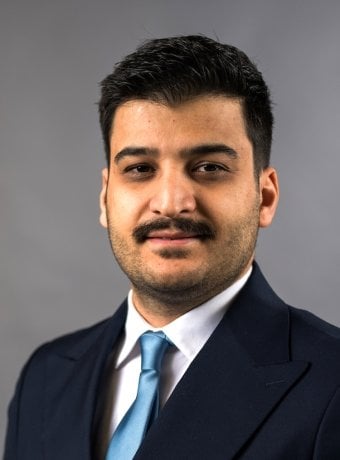
Abdolmajid Erfaniمشاهده پروفایل
استادیار
- Construction Economics
- Data-driven Infrastructure Management
- Project Delivery and Procurement
- +۵ مورد دیگر
Dr. Abdolmajid Erfani is an Assistant Professor in the Department of Civil, Environmental, and Geospatial Engineering at Michigan Technological University. He holds a PhD in Civil Engineering from the University of Maryland, College Park (2023), an MSc in Construction Engineering and Management from the University of Tehran (2019), and a BSc in Civil Engineering from the same university (2017). His research focuses on construction economics, smart construction technologies, data-driven infrastructure management, workforce development, and AI applications in project delivery. Dr. Erfani leads studies on workforce equity in transportation and construction industries, leveraging big data and natural language processing. He has published over 30 peer-reviewed papers and received prestigious ASCE awards including the 2024 Arthur M. Wellington Prize and Thomas Fitch Rowland Prize. He serves on the editorial board of the ASCE Journal of Management in Engineering. His recent grants include a National Cooperative Highway Research Program project (PI, 2024–2027) on price adjustment clauses for construction risk sharing and a Minnesota DOT-funded initiative (PI, 2025–2027) on leveraging transportation investments for economic equity. He also co-leads a Federal Railway Administration project (Co-PI, 2025–2028) aimed at promoting railroading careers. Research interests span equity analysis, AI modeling, and predictive analytics for infrastructure resilience. He integrates LinkedIn data and machine learning to study gender disparities in career progression, achieving groundbreaking insights in leadership dynamics within construction sectors.

Justina Joseمشاهده پروفایل
استادیار
Dr. Justina Jose is an Assistant Professor at the School of Public Affairs, San Diego State University (SDSU), part of the College of Professional Studies and Fine Arts. Her work focuses on public financial management, particularly public debt management and infrastructure financing. She holds a PhD in Public Policy from Georgia State University, an M.Sc. in Economics from Symbiosis International University (India), and a BA in Economics from Stella Maris College (India). Dr. Jose's research examines tools states use to oversee local government finances and their impact on fiscal outcomes. She has studied water-sewer infrastructure financing and climate-resilient projects, collaborating with Atlanta and Georgia policymakers. Her work appears in journals like Journal of Public Budgeting, Accounting and Financial Management and Environment and Urbanization Asia . She actively participates in conferences such as the Association for Budgeting and Financial Management (ABFM) and APPAM. Her research trends emphasize fiscal policy in crises, intergovernmental debt oversight, and infrastructure funding. She has analyzed municipal debt markets, broadband deployment impacts, and pandemic responses in India. Dr. Jose’s projects bridge academic research with practical policy advice, aiming to enhance fiscal accountability and sustainable development.
Mondher Fekiمشاهده پروفایل
دانشیار
Mondher Feki is an Associate Professor of Management at Université Paris-Saclay, focusing on IS/IT management and digital transformation. His research explores blockchain applications in supply chains, robotic process automation (RPA), robo-advisors, and generative AI. He teaches Management Information Systems and Data Management courses. Currently serving as a reviewer for journals like Business & Information Systems Engineering and conferences like HICSS and ECIS. Active member of the Association Information & Management (AIM). Key research areas include digital transformation strategies, blockchain's operational impact, AI-driven financial advisory systems, and RPA implementation in insurance sectors. His work emphasizes technology adoption challenges and strategic alignment in business contexts. Recent publications analyze blockchain use in French retail logistics, RPA benefits for Allianz France, and IS quality's strategic role in firm performance. Conference contributions address robo-advisors in crowdfunding and pandemic-driven higher education innovation. Maintains active academic service roles in peer review and conference organization.

Giovanni VAIAمشاهده پروفایل
دانشیار
Giovanni Vaia is an Associate Professor at Ca' Foscari University of Venice, Department of Management. He holds roles as Scientific Director of the Digital Enterprise Lab (DEL) and DEL FabLab, focusing on digital transformation, IT governance, and innovation. His academic qualifications include a PhD in Organization and Technology (University of Molise/Naples) and a second PhD in Information Science (Turku School of Economics). Research interests span digital transformation, IT outsourcing, innovation management, business ethics, and public administration efficiency. He leads projects such as CEVID (Veneto Region) and IBM’s Impact Sourcing initiative. Notable works include monographs on corporate crisis and mafia firm combat strategies, as well as contributions to journals like European Journal of Information Systems and Journal of Information Technology. Teaching responsibilities include Business Administration, Digital Management, and Global Sourcing. He advises on digital agendas for the City of Venice and collaborates with institutions like the European Commission (DG Connect). Key labs include DEL (digital innovation) and DEL FabLab (manufacturing 4.0).
Stuart Cunningham is a distinguished academic and researcher affiliated with Queensland University of Technology (QUT), leading the Digital Media Research Centre. His work focuses on media industries, creative economies, digital platforms, and cultural policy. He has contributed to over 255 publications, including books, journal articles, and policy submissions addressing issues like screen industry sustainability, platform governance, and the intersection of creativity with STEM sectors. Notable roles include editing Creator Culture: An Introduction to Global Social Media Entertainment (2021) and co-authoring influential papers on SVOD regulation, China’s livestreaming industry, and Australian creative hotspots. His policy work includes submissions to national reviews on cultural industries and digital classification frameworks. Cunningham’s research bridges academic inquiry with practical policy advocacy, emphasizing the transformative role of digital innovation in media landscapes. Key areas of focus include the global screen ecology, platform studies, and the socioeconomic impacts of creative industries. He has led projects analyzing regional creative economies and their policy implications, as seen in works like Australian Cultural and Creative Activity: A Population and Hotspot Analysis (2020). His career reflects a commitment to understanding evolving media ecosystems and their societal roles.

Prof. Dr. Dr. hc Jörg Becker is a Senior Professor at the University of Münster, leading the Chair of Business Informatics and Information Management. He holds prominent roles such as Director of the European Research Center for Information Systems (ERCIS) and former Pro-Rector for Strategic Planning. His expertise spans e-government, process management, and digital transformation. Becker earned his habilitation and doctorate from Saarland University, specializing in information systems and material flow control. Research focuses include hybrid value creation, trade information systems, and smart energy business models. He has advised numerous institutions and served on national committees like the Plattform 'Digitale Verwaltung' and the National E-Government Competence Center (NEGZ). His editorial roles include Business & Information Systems Engineering and Information Systems and e-Business Management. Becker has authored over 200 publications, with recent work on digital government competencies, citizen involvement in smart cities, and trust in information systems. Awards include Fellow of the German Informatics Society (GI) and honorary doctorates. His grants include projects on digital middle-tier towns and IT requirements for social security digitization.
Tamara Heidi Rothمشاهده پروفایل
استادیار
Tamara Heidi Roth is a tenure-track Assistant Professor in the Information Systems Department at the Sam M. Walton College of Business, University of Arkansas. She previously served as a Post Doctoral Researcher at the Interdisciplinary Centre for Security, Reliability and Trust (SnT) at the University of Luxembourg and has an interdisciplinary background spanning information systems and educational psychology. Dr. Roth holds two PhDs: one in Information Systems from the University of Luxembourg (2021-2024) and another in Educational Psychology from the University of Bayreuth, Germany (2020-2022). Her educational background reflects her interdisciplinary approach to research that bridges technology adoption with human and organizational factors. Dr. Roth's research focuses on the adoption and integration of emerging technologies, particularly blockchain and digital identity systems, within structured organizational environments such as government agencies and utilities. Her work explores how these technologies can drive innovation while addressing cultural and structural barriers to implementation. Through an interdisciplinary lens, she examines the intersection of technology, organizational behavior, and human-centric innovation. Her research spans multiple domains including public sector technology implementation, responsible innovation, digital identity systems, and the social implications of emerging technologies. Dr. Roth has published extensively in top-tier journals including the Journal of Information Technology, Government Information Quarterly, Journal of the Association for Information Systems, Nature Machine Intelligence, and MIT Sloan Management Review. Her recent work shows a strong focus on blockchain applications in government, digital identity systems, and the social implications of emerging technologies. She has developed a distinctive research trajectory examining how structured organizations adopt and implement blockchain and digital identity technologies, with particular attention to institutional barriers and cultural factors. Excellent Thesis Award, University of Luxembourg, 2024 (awarded to only the top 10% of Science, Technology, and Medicine PhD graduates) Dr. Roth serves as an Associate Editor for major conferences including the International Conference on Information Systems (ICIS) and has provided editorial reviews for numerous prestigious journals such as Journal of Information Technology, Management Information Systems Quarterly, and Journal of the Association for Information Systems. She teaches undergraduate courses at the University of Arkansas on Information Systems, Artificial Intelligence and Technology Ethics, and Introduction to Business Information Systems. Her research activity spans Innovation Management, Behavioral Research, Responsible Innovation, Organizing Visions, Digital Identities, and both Qualitative and Computationally Intensive Research approaches.

- Social and Employment Policies
- Organizational Innovation in the Public and Third Sectors
- Sociology of Work and Business
- +۱۶ مورد دیگر
Jean-Michel Bonvin is a Full Professor of Social Policies and Vulnerabilities at the Faculty of Social Sciences, University of Geneva . He holds a PhD in Sociology from the University of Paris Sorbonne and leads a robust research agenda funded by the Swiss National Science Foundation and the European Union. He is actively involved in major research initiatives including SocIEtY (EU-FP7), RE-InVEST (H2020), and the National Research Center LIVES (NCCR-SNF), as well as past EU projects such as WorkAble , EduWel , and Eurocap . He also contributes to COST actions on social protection reform and gender well-being. His academic focus lies at the intersection of social and employment policies , organizational innovation , the sociology of work , and theories of justice , with a special emphasis on Amartya Sen’s capability approach . His research critically examines themes such as activation policies, social inclusion, the gig economy, and the socioeconomics of inequality. His recent publications reflect a strong trend toward integrating the capability framework into analyses of social protection, labor regulation, youth transitions, and digital work. He explores how institutional structures shape individual agency and voice, particularly among vulnerable populations. His work often bridges normative theory with empirical research, contributing to debates on social justice, democratic participation, and the future of the welfare state. Bonvin has received recognition through sustained research funding and leadership roles. He is a member of editorial boards for journals such as Negotiations , Swiss Journal of Social Work , and Finance & the Common Good . He has also served as President of the Swiss Association for Social Policy since 2008 and is a founding member of CESCAP . He advises on public policy evaluations for cantonal and federal institutions, including studies on social assistance, housing, pandemic impacts, and labor regulations. His teaching includes governance of social security, socioeconomics of inequalities, and social policy analysis. He contributes to academic discourse through edited volumes, policy reports, and interdisciplinary collaborations. Bonvin is affiliated with research groups focused on social vulnerability, life course studies, and social dialogue. His work is central to the LIVES network and projects like INVOLVE (2023–2026), which promotes inclusive public policies. He leads research on the gig economy, social investment, and participatory capability, often in collaboration with European and Swiss institutions.
Jason Skuesمشاهده پروفایل
دانشیار
- Applied and developmental psychology
- Social and personality psychology
- Clinical and health psychology
- +۷ مورد دیگر
Assoc Prof Jason Skues is an Associate Professor in the School of Health Sciences at Swinburne University of Technology, where he contributes significantly to research, teaching, and PhD supervision. His work focuses on mental health, identity development, cultural intelligence, and psychological wellbeing across diverse populations including university students, prisoners, vocational trainees, and emerging adults. University: Swinburne University of Technology School: School of Health Sciences Academic Rank: Associate Professor Email: jskues@swin.edu.au His research interests span applied and developmental psychology, social and personality psychology, and clinical and health psychology. He investigates mental health literacy, cyberbullying, identity processes, and the psychological impact of educational and vocational experiences. His work often employs qualitative and mixed methods to explore complex human behaviors and interventions. The most recent publications show a strong trend toward mental health in educational and vocational contexts, prison mental health, cultural intelligence development through international exchange, and cyberbullying in emerging adults. His research consistently addresses real-world applications, aiming to improve training, policy, and psychological support systems. Office of Learning and Teaching (OLT) Citation (2012) Jason Skues supervises a wide range of PhD projects, particularly in identity development, mental health interventions, cyberbullying, and educational psychology. He has secured multiple competitive research grants from bodies including the Department of Justice, Department of Defence, and St. John's University, supporting studies on sleep problems, smoke-free prisons, and human-machine interface technologies. His collaborative network includes researchers across psychology, nursing, education, and forensic science. He leads and contributes to research teams focused on mental health in higher education, justice care, and vocational training. His work with simulated persons in nursing education and prison-based mental health programs highlights his commitment to innovative, evidence-based interventions.
فقط ۷۵۰ نتیجه اول نمایش داده میشود. برای رسیدن به نتایج دقیقتر، جستوجو را با فیلترها محدودتر کنید.