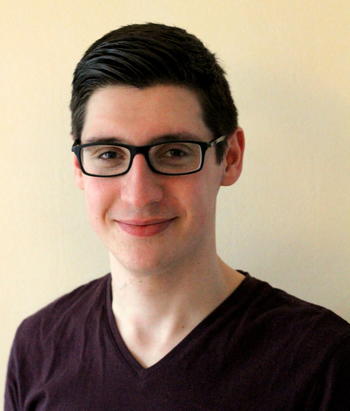
Carsten Elbro is a Professor at the Department of Nordic Studies and Linguistics (Faculty of Humanities, University of Copenhagen). He holds a Dr. phil. from the University of Copenhagen (1990) and has been a Professor since 1997. His research focuses on reading difficulties, dyslexia, and psycholinguistics. He founded the Centre for Reading Research and the Danish Dyslexia Information Centre. He serves on editorial boards for journals like Scientific Studies of Reading and Annals of Dyslexia . His work spans applied linguistics, educational interventions, and developmental psychology. Recent studies explore metaphor comprehension, early dyslexia intervention, and national assessment tools. He has advised 7 PhD students and collaborates internationally in projects on cross-linguistic phonological learning and inference abilities in reading. Elbro has led research initiatives funded by Danish, Taiwanese, and Hong Kong grants, emphasizing evidence-based pedagogy. His contributions bridge academic research and practical educational strategies to address literacy challenges.
Megan Welsh is an Associate Professor at the School of Education, University of California, Davis. Her research focuses on educational assessment methodologies, behavioral stability analysis, and technology integration in teaching. She investigates screening systems for social-emotional-behavioral risks and studies technological innovations like virtual reality in language education. Her publications cover methodological innovations in assessment design, longitudinal behavior analysis, and ethical considerations in teaching technologies. Research demonstrates consistent focus on improving assessment validity and addressing practical challenges in educational measurement. No awards are mentioned in the provided information. No information available regarding students, grants, or labs in the provided text.
Michael Walsh Dickey is a Professor and Associate Dean for Graduate Studies at the University of Pittsburgh’s School of Health and Rehabilitation Sciences (SHRS), holding joint appointments in the Department of Communication Science and Disorders and the Department of Psychology. He directs the Language and Brain Laboratory, focusing on aphasia treatment, psycholinguistics, and neurolinguistics. His work emphasizes improving outcomes for individuals with post-stroke language impairments through evidence-based interventions. Education : Bachelor of Arts in Linguistics and Spanish, University of North Carolina, Chapel Hill Doctor of Philosophy in Linguistics, University of Massachusetts, Amherst Postdoctoral Fellowship in Aphasia and Neurolinguistics, Northwestern University Research Interests : Aphasia treatment methodologies Cognitive and neural mechanisms of language processing Role of semantic and world knowledge in language recovery Optimizing treatment dosing and delivery His research spans experimental and clinical domains, with a focus on advancing rehabilitation practices through neuroimaging, behavioral experiments, and meta-analytic approaches. Notable contributions include studies on verb retrieval deficits, semantic feature analysis treatment efficacy, and the neuroanatomical correlates of language impairments. Professional service includes leadership roles in the Academy of Aphasia and the Clinical Aphasiology Conference. His work bridges basic science and clinical practice, aiming to enhance quality of life for individuals with communication disorders.
Prof. Henk A.L. Kiers is a Professor in Statistics and Data Analysis at the University of Groningen's Faculty of Behavioural and Social Sciences, within the Department of Psychometrics & Statistics. His research focuses on advanced statistical methodologies, particularly in multivariate analysis, three-way component analysis, and psychometrics. He has contributed extensively to data analysis techniques for large datasets, including methods for uncovering underlying structures in complex data matrices. Key research interests include Bayesian analysis, statistical education, and the application of statistical methods in psychology and psychiatry. He has held editorial roles and received the Psychometrika Reviewer Award in 2017. His work bridges theoretical advancements with practical applications, such as improving classification methods and addressing challenges in missing data analysis. Prof. Kiers is actively involved in academic collaborations, including projects on data fusion and the development of statistical software tools like the R package ThreeWay. His contributions to the field have been recognized through numerous high-impact publications and methodological innovations.
Anselm Fuermaier is an Associate Professor at the Department of Clinical & Developmental Neuropsychology, University of Groningen. His academic roles include editorial board memberships for journals like Psychological Injury and Law and Applied Neuropsychology: Adult . He holds a PhD in Clinical Neuropsychology from Groningen (2014), previously serving as Assistant Professor before promotion to Associate in 2020. Education: MSc in Psychology (2010) from Universities of Regensburg, Germany, and Keele, UK PhD in Clinical Neuropsychology (2014) from University of Groningen Research focuses on neuropsychological assessment of attention disorders, validity testing in clinical populations, and ADHD in adults. Key themes include symptom validity, performance assessment tools, and cognitive functioning in neurological/psychiatric conditions. His work addresses challenges like feigning detection and AI-assisted coaching impacts. Publications emphasize ADHD assessment methodologies, post-COVID cognitive impairments, and Parkinson’s disease financial capability studies. His team develops tools like the Groninger Effort Test (GET) for validity assessment. Awards include the BSS Science for Society Award (2018). He advises on driving cessation for cognitively impaired patients and collaborates internationally on neuropsychological research.
Malihe Alikhani is Assistant Professor at Northeastern University's Khoury College of Computer Science and Ethics Institute Fellow. Her research develops fair AI systems for communication and decision-making, with applications in healthcare and education. She serves as Ethics Chair for ACL Rolling Review and has advised Congress on AI policy. Awards: Best Paper Awards at ACL 2021 and INLG 2021; DARPA grant recipient.
Adam E Green is a Professor in the Department of Psychology at Georgetown University's College. He specializes in the neuroscience of creativity, particularly how neural processes underpin creative thinking and learning. His work integrates cognitive neuroscience with educational contexts, exploring endogenous neural mechanisms and neurostimulation techniques to enhance creativity. He is the founder and former President (2019-2021) of The Society for the Neuroscience of Creativity. Dr. Green holds a Ph.D. in Cognitive Neuroscience from Dartmouth College and a B.A. from Johns Hopkins University. His research focuses on creativity's neural foundations, including the cognitive and emotional dynamics of creative problem-solving, math anxiety's impact on STEM performance, and spatial cognition development. He has pioneered tools like the Scientific Creative Thinking Test (SCTT) and conducts translational research to bridge neuroscience and educational practice. His recent work examines creativity differences in natural environments, the role of semantic integration in idea generation, and computational approaches to predicting academic success through creativity metrics. Key contributions include linking creativity to brain network dynamics, demonstrating creativity-specific anxiety, and advancing interdisciplinary frameworks for creativity measurement. His grants focus on enhancing creative cognition through neuroscientific insights and improving STEM education via spatial learning interventions. Active in both basic and applied neuroscience, Green's work has implications for mental health, education policy, and cognitive enhancement technologies.
Vanesa Guerrero Lozano is an Associate Professor in the Department of Statistics at Universidad Carlos III de Madrid, affiliated with the Flores de Lemus Institute and the UC3M-Santander Big Data Institute. Her work bridges mathematical optimization, statistical modeling, and data science, with applications across disciplines including biomedicine, fluid mechanics, and sustainable development. Her research focuses on developing advanced statistical methodologies using mathematical optimization. Key interests include shape-constrained regression, P-splines smoothing, sparse modeling, clustering of categorical data, and interpretable machine learning. She applies these techniques to complex datasets in turbulence modeling, biological age imputation, and pandemic forecasting. The recent publications reveal a strong trend in integrating optimization techniques with statistical learning, particularly in nonparametric and semiparametric models. There is a consistent emphasis on interpretability, robustness, and scalability, especially for high-dimensional and dynamic datasets. Applications span from fluid dynamics to public health, demonstrating interdisciplinary impact. Scientific Awards and Recognition: Ayuda adicional within the Juan de la Cierva Incorporación Program (2020), awarded by the State Research Agency (AEI) Research Leadership and Advising: She has served as principal investigator on multiple competitive research projects funded by national and regional agencies, including the State Research Agency (AEI), the Jacques Hadamard Mathematical Foundation, and the Community of Madrid. Her projects cover topics such as constrained additive models, machine learning for sustainable fishing, turbulence control, and ADHD diagnosis using data science. She has supervised at least one doctoral thesis on constrained smoothing models, indicating active mentorship in methodological statistics and optimization. Laboratories and Research Groups: She is a member of the Energy Analytics research group and conducts her work within the UC3M-Santander Big Data Institute, which supports interdisciplinary data science research. Her affiliation with the Flores de Lemus Institute further underscores her engagement with advanced statistical and computational methodologies.
Kseniia Marcq is a Research Fellow at the Centre for Educational Measurement (CEMO) at the University of Oslo. Her primary role involves postdoctoral research focusing on educational assessment methodologies. She holds a PhD in Educational Sciences (expected 2025) and an MSc in Measurement, Assessment, and Evaluation from the University of Oslo. Her academic background includes roles as a research assistant and teaching assistant in various educational measurement courses. Her research interests center on large-scale educational assessments, particularly the Programme for International Student Assessment (PISA), with a focus on item format analysis, nonresponse patterns, and psychometric methodologies. She explores cross-country comparisons, gender disparities in educational metrics, and improving the reliability of assessment instruments. Her publications analyze PISA 2018 data, examining item nonresponse, cognitive domain measurement, and methodological advancements in kernel equating and IRT models. She contributes to projects like the 'Early and Adapted Assessment for Language Skills' (SEALS) and collaborates with the Frontier Research in Educational Measurement (FREMO) group. Teaching responsibilities include courses on data science, measurement models, linear models, and survey methodology. She supervised a Master’s thesis on PISA’s mathematical literacy scores and actively participates in academic discourse through peer-reviewed journals. Her work bridges theoretical psychometrics with practical applications in international educational evaluations.
Trude Nilsen is a Research Professor at the University of Oslo's Department of Teacher Education and School Research and a leader in the CREATE Centre for Research on Equality in Education. She specializes in educational inequalities, quantitative methods, and international large-scale assessments like TIMSS, PISA, and TALIS. Her work focuses on analyzing teaching quality, teacher competence, and school climate to improve educational equity and outcomes. Education: PhD in Science Education and International Large-Scale Assessment, MSc in Astrophysics, and studies in pedagogy and computer programming. Research Highlights: Leads projects such as TESO (Teachers' Effect on Student Outcomes) and contributes to global expert groups for TIMSS, TALIS, and TALIS Starting Strong. Her studies have explored factors influencing mathematics performance, sleep/nutrition impacts on academic achievement, and systemic approaches to educational equity. She combines structural equation modeling and multilevel analyses to address causal relationships in education. Grants & Projects: Norwegian Research Council-funded CREATE (2023–), TESO (2018–2024), and multiple international collaborations. Supervises PhD/master students and teaches advanced quantitative methods courses. Key Contributions: Over 50 peer-reviewed articles and book chapters, including analyses of Nordic education systems' equity trends and validation of teaching quality instruments. Her work bridges policy implications with rigorous data-driven insights.
Dr. Monnica T. Williams is a tenured Professor in the School of Psychology at the University of Ottawa, where she holds the Canada Research Chair in Mental Health Innovation and Equity. She is also an Adjunct Scientist at the Institute of Mental Health Research, Royal Ottawa Hospital, and a Research Affiliate at the University of Massachusetts, Lowell. Her academic journey includes prior faculty roles at the University of Pennsylvania, University of Louisville, and University of Connecticut. Ph.D. in Clinical Psychology, University of Virginia (2007) M.A. in Psychology, University of Virginia (2003) B.S. in Electrical Engineering / Biomedical Technology, MIT Additional studies at UCLA Dr. Williams' research centers on mental health disparities, racial trauma, OCD, microaggressions, and psychedelic-assisted therapies. She has published over 300 peer-reviewed articles and authored books on healing racial trauma, antiracist therapy, and psychedelic justice. Her work bridges clinical science with social justice, emphasizing culturally-informed care for BIPOC communities. Her recent publications (2022–2025) reveal a strong focus on racial trauma assessment and treatment, equity in psychedelic research, discrimination in AI, and barriers to mental healthcare for marginalized groups. Themes include validation of trauma scales, development of therapeutic protocols, and systemic critiques of racism in institutions. APA Division 12 Samuel M. Turner Early Career Award (2015) Board-certified in Behavioral and Cognitive Psychology Scientific Advisor, International OCD Foundation Member, Chacruna Institute’s Racial Equity and Access Committee Dr. Williams supervises several graduate students and leads two research labs: the Laboratory for Psychedelic Clinical Research and the Laboratory for Mental Health Disparities. She has received federal and foundation grants and serves as an expert witness on discrimination in legal cases. She also conducts antiracist training workshops and public speaking engagements globally. Her labs focus on developing and testing interventions for racial trauma and advancing equitable psychedelic therapies. She is a vocal advocate for increasing representation of BIPOC individuals in psychology and mental health research.
Augustin Mutak is a Researcher at the Chair of Psychometrics, Department of Psychometrics at the Faculty of Humanities and Social Sciences, University of Zagreb. He previously served as a Research Assistant at Freie Universität Berlin (2021–2024). He is pursuing a doctoral degree under Prof. Dr. Steffi Pohl, focusing on psychometric model development integrating Item Response Theory and response time analysis. His research interests include mood rhythmicity, scale validation, and statistical methods using R and Stan. Education: BSc and MSc in Psychology from the University of Zagreb (2013–2018). He conducted academic work at the University of Oxford (2018) and founded the private business Psihometar (2018–2021), offering psychometric analysis services to clients like Griffith University. He developed the widely used R package cosinor2 for rhythmicity analysis (29,000+ downloads). Research Contributions: His work spans 7 peer-reviewed articles, 10 conference presentations, and workshops. Key projects include DFG-funded studies on test-taking behavior and GBA-funded psychotherapy trials. Awards include the Rector’s Award for student research (BSc). Community Engagement: President of the Association of Students of Zaprešić (2015–2018), Youth Council delegate (2017–2020), and Management Board member of Youth centre “CeZaM” (2018–2023). Active in revitalizing student associations and improving local scholarship systems.
Nico Remmert serves as a Research Assistant at the Department of Education and Psychology, Methods and Evaluation/Quality Assurance unit of Freie Universität Berlin under Prof. Dr. Steffi Pohl since February 2021. Concurrently pursuing a PhD in Psychology since 2021, his work bridges statistical methodology and clinical psychology. His educational background includes: Bachelor's in Psychology (2014-2018, Freie Universität Berlin) Master's in Psychology: Clinical and Health Psychology (2018-2020, Freie Universität Berlin) Master's in Statistics (since 2020, Humboldt-Universität Berlin) Research focuses on psychometric innovation in misophonia assessment and clinical avoidance behavior modeling. Key contributions include developing the Berlin Misophonia Questionnaire (BMQ-R) and pioneering methods using missing responses/response times to quantify avoidance. Current work integrates Item Response Theory with latent-state-trait models for clinical diagnostics. His publication pattern reveals concentrated expertise in sound intolerance disorders and missing data methodology, with 6 major outputs between 2022-2023 spanning questionnaire validation, avoidance behavior modeling, and misophonia networks. Award highlights: Misophonia Student Research Grant from soQuiet (2023) Incentive Funds for Research Implementation (2022) As a Research Assistant, he secures competitive funding while teaching statistics/diagnostics courses since 2021. International collaborations include research stays at King's College London with Silia Vitoratou's Psychometrics and Measurement Lab, supported by Misophonia Research Fund participation. Embedded in Prof. Pohl's research group, he contributes to the Methods and Evaluation/Quality Assurance team's mission in advancing psychological assessment techniques through rigorous statistical approaches.
Leonardos Ioannis is a Professor at the Department of Animal Biology with emphasis on Ichthyology at the University of Ioannina. His research focuses on ichthyology, marine biology, and cancer biology, particularly glioblastoma therapy. He teaches courses in Zoology, Ichthyology, and Aquaculture. His work spans ecological studies of fish species, invasive species impacts, and translational medical research using zebrafish models. He leads research in metabolomics, toxicology, and genetic identification of freshwater fishes. His lab is affiliated with the university's research facilities, contributing to both ecological conservation and biomedical advancements. Research interests include: Ichthyology (fish behavior and ecology), marine invasive species dynamics, cancer therapeutics (glioblastoma), and environmental toxicology. Over 30 peer-reviewed articles since 2006 highlight contributions to zebrafish models for cancer research, aquatic ecosystem studies, and molecular identification of species. His recent work (2023-2025) integrates theranostic platforms for brain cancer and environmental impact studies of pollutants. Collaborations span universities and research institutes across Greece and globally. No named scientific awards are listed in the provided texts.
Johnathon P. Ehsani is an Associate Professor at the Johns Hopkins Bloomberg School of Public Health, with primary affiliation in the Department of Health Policy and Management and joint appointments in Health, Behavior and Society and the Whiting School of Engineering. He is actively engaged in research and teaching related to transportation safety and public health policy. PhD, University of Michigan, 2012 MPH, University of Sydney, 2003 BS, University of Technology, Sydney, 2000 Dr. Ehsani's research centers on injury prevention and transportation safety, utilizing policy analysis and behavioral research to reduce motor vehicle crashes. His work spans teen driving behavior , distracted driving policies , licensing systems , and the public health implications of emerging mobility technologies such as e-scooters, bike-share, and autonomous vehicles. He employs experimental, observational, and population-based methods, including naturalistic driving studies, to evaluate real-world driver behavior and policy effectiveness. His recent research emphasizes equity in transportation and the integration of public health principles into automated vehicle development. The 15 most recent publications reflect a strong focus on adolescent driving safety, mental health and driving risk, transportation equity, and the safety impacts of new mobility services. His work combines epidemiological rigor with policy relevance, often addressing vulnerable populations such as teenagers and children in rideshare vehicles. The research spans disciplines including public health, behavioral science, urban planning, and engineering. Scientific Awards and Honors: Leon S. Robertson Faculty Development Chair in Injury Prevention (2016–2019) NIH Intramural Research Training Award (2012–2016) Eno Transportation Fellow (2014) Outstanding New Researcher, University of Michigan School of Public Health (2009) Sir John Monash Scholar (2008–2011) Dr. Ehsani leads active research projects, including the Logbook Research Study on teen driver safety. He serves on the Academic Advisory Council of PAVE (Partners for Automated Vehicle Education), contributing expertise on public trust and safety in autonomous vehicles. While student advisement is not explicitly detailed, his leadership in funded research and collaborative projects indicates a supervisory role in training junior researchers. His work is supported by grants and institutional funding, though specific grant titles are not listed in the provided text. He is affiliated with interdisciplinary teams bridging public health, engineering, and policy, reflecting the integrative nature of his research on transportation systems and health outcomes.





.jpg)