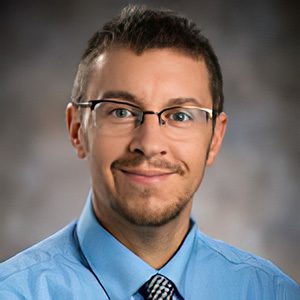
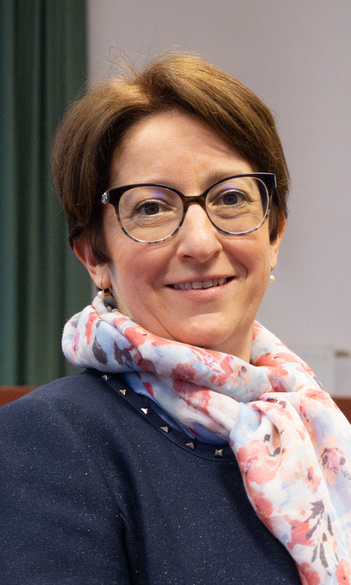
Antonia Krefeld-Schwalb is an Assistant Professor at the Department of Marketing Management, Rotterdam School of Management, Erasmus University. With a background in cognitive science and management, her research bridges computational modeling, eye-tracking, and consumer decision-making to address sustainability challenges. Current Affiliation: Assistant Professor, Rotterdam School of Management Research Focus: Sustainable consumer behavior, decision-making processes, and methodological improvements Key Collaborations: Columbia University, University of Geneva, Erasmus Sustainability Program Her cognitive science training informs methodological approaches like mouse/eye tracking and computational modeling applied to marketing problems. She investigates structural parameter interdependencies, external validity threats in surveys, and climate risk communication effectiveness. Recent research trends include climate adaptation strategies, sustainable behavior interventions, and meta-scientific analyses of statistical practices in consumer research. She advocates for heterogeneous population sampling and preregistration to enhance validity. Scientific Honors: Veni Grant (NWO) She develops targeted sustainability interventions through collaborations like the Erasmus Sustainability Program. Her work appears in journals such as PNAS, Journal of Marketing Research, and Psychological Review.
Dr. Yfke Ongena is a Senior Lecturer in Communication and Information Sciences at the University of Groningen's Faculty of Arts. She holds a PhD from Vrije Universiteit Amsterdam (2005) and has extensive postdoctoral experience, including at the University of Nebraska-Lincoln (2006). Her research focuses on survey methodology, questionnaire design, and interviewer-respondent interaction. Key projects include the NWO-funded 'Mixed modes in the European Social Survey' (2011–2015) and current work on socially desirable responses in surveys. Education: BSc/MSc in Communication Science (University of Groningen), PhD in Survey Methodology (VU Amsterdam). Awards include the GOR25 Poster Award (2025). She has authored over 55 publications, with recent work addressing AI in medical diagnostics, physician cost awareness, and gender equity in academic careers. Research Interests: Survey design challenges, measurement bias, representation in surveys, and the integration of AI in healthcare. Active in professional networks like the European Survey Research Association and GESIS. Grants and Projects: NWO-funded projects, ESRA conference involvement, and collaborations with institutions like the University of Twente and Groningen Radiology departments. Currently investigates patient perspectives on AI in prostate cancer diagnosis and residency training programs in radiology.
Associate Professor Stephen Carter is an Associate Professor in Pharmacy Practice at the University of Sydney's Sydney Pharmacy School within the Faculty of Medicine and Health. He serves as the Program Director for Undergraduate Pharmacy programs and is a registered pharmacist with clinical specialisation in medication management review. Stephen holds qualifications including BPharm, MSc, PhD, and Grad Cert Edu (Higher Ed). He is a Fellow of the Pharmaceutical Society of Australia (FPS), Fellow of the Higher Education Academy (FHEA), and holds other professional accreditations. His research focuses on optimizing the role of pharmacists in healthcare, particularly examining how consumers and caregivers obtain and use medicines, designing effective pharmacist services, and supporting pharmacists throughout their professional journey. His work spans areas including osteoporosis care, medication adherence, service quality in community pharmacies, and the application of advanced statistical methods like Structural Equation Modelling. Stephen's publications demonstrate a strong focus on practical pharmacy interventions, with significant work on osteoporosis management services, perinatal depression screening in pharmacies, and digital health approaches to improve medication adherence. His research employs diverse methodologies including randomized controlled trials, qualitative studies, and advanced psychometric analyses. Early Career Investigator Award Australasian Pharmaceutical Science Association (APSA) for 2017 Lesmuller Award for Best Oral Communication - Pharmaceutical Care Network Europe Working Conference, Berlin, 2013 Recipient of the 2013 Annual Best Paper Award by Elsevier publication, Research in Social and Administrative Pharmacy Best Poster Presentation Award: International Social Pharmacy Workshop, Boston, USA, 2014 Top reviewer, Research in Social and Administrative Pharmacy (2015, 2016, 2017, 2019) Stephen actively supervises several graduate students including PhD candidates Fatima Rezea, Steven Tran, Veronika Seda, Kingston Leung, and Joel Hillman, as well as MPhil student Linda Krogh. He has secured significant research funding, including co-leading a $2.36 million Randomized Controlled Trial and managing four current competitive grant-funded projects totaling over $6.3 million. His work has particular emphasis on translating research into practical pharmacy services that improve patient outcomes. Stephen is actively involved in major research initiatives including the #STOP trial (Safer medicines To reduce falls and refractures for OsteoPorosis) and the TICTOC trial (Timely post-discharge medication reviews to Improve Continuity – the Transitions Of Care stewardship), both focusing on innovative pharmacist-led interventions to improve medication safety and effectiveness.
Nathan Bowling is a Professor of Psychology and Associate Director of the Ph.D. Program in Industrial-Organizational Psychology at the University of Central Florida's College of Sciences. His research focuses on occupational stress, counterproductive work behavior, and research participant carelessness. He has published over 65 peer-reviewed articles in top-tier journals and secured over $1M in external funding since 2021. Dr. Bowling is a Fellow of SIOP and APS, and his work has been cited extensively in influential publications like Aguinis et al.'s (2017) textbook and Ioannidis et al.'s (2020) global scientist rankings. Education: Ph.D. in Psychology, Central Michigan University, 2005 Research Interests: Development of measures for organizational constraints and workplace stressors Psychometric validation of survey instruments Impact of personality traits on workplace behavior Evaluation of peer reporting policies and counterproductive behavior prevention His work often addresses methodological challenges in survey research and organizational data quality. Grants & Awards: $1+M in external funding as Principal Investigator Fellowships from SIOP and APS Listed in top 2% of most cited I-O psychology authors Advising: Currently accepting students for Fall 2025. Labs/Teams: Active member of UCF's Industrial-Organizational Psychology research group, specializing in organizational behavior, stress, and survey methodology.
Professor Gabriel Kuperminc is a faculty member at Georgia State University’s College of Arts & Sciences, Department of Psychology, with a secondary appointment in the School of Public Health. He serves as Chair of the Community Psychology Program and a member of the Developmental Psychology Program. His research focuses on resilience in adolescence, community-based prevention programs, and cultural factors influencing health and development. He collaborates with non-profits to evaluate youth programs and has expertise in mentoring interventions, substance abuse prevention, and immigrant youth studies. Education: Ph.D., University of Virginia, 1994. Research interests include understanding how cultural contexts shape youth development and health behaviors. His work emphasizes collaboration with marginalized communities, including immigrant families and organizations addressing systemic inequities. Notable projects include studies on group mentoring effectiveness (funded by DOJ), photovoice methodologies for trauma recovery, and interventions targeting acculturative stress among Latino youth. Key affiliations include the Center for Latin American and Latino Studies, Center for Human Rights and Democracy, and Center for Research on School Safety. Since 2009, he leads a Maymester Study Abroad Program on Human Rights in Argentina. Grants and collaborations include DOJ-funded research on juvenile justice system interventions and CDC evaluations of public health programs. He directs the Social Ecology and Adolescent Development Lab, focusing on youth resilience and community health interventions.
Kimmo Vehkalahti is a Senior University Lecturer and docent at the University of Helsinki, specifically affiliated with the Centre for Social Data Science within the Faculty of Social Sciences. He serves as a Teachers' Academy Supervisor in the doctoral program and maintains an active research profile with numerous publications and projects. His research interests focus on social data science, social statistics, multivariate methods, open data science, and statistical data processing using R programming. Vehkalahti has developed expertise in applying statistical methods to social science research questions and data visualization. His recent publications demonstrate a strong focus on multivariate analysis applications in behavioral sciences, social data visualization, and student well-being research. The publications span diverse areas including statistical methodology, data visualization techniques, and educational interventions. Fellow of the Teachers' Academy (2013) Best Teacher of the City: Kaupungin Paras Opettaja (2010) Good Teacher: Hyvä Opettaja (2009) Magister Bonus - Good Teacher (2003) One of the best teachers of Open University (2017) Vehkalahti actively supervises academic work with 40 thesis supervisions and 10 PhD supervisions documented. He participates in significant research projects including SASE Stress as strength in education (since 2022) and WELLS - Promoting university students' well-being and life-long learning (since 2019). His academic service includes conference participation, peer review, and organizational roles in international statistical organizations.
James D. Ivory is a Professor of Media Studies in the Department of English at Virginia Tech's College of Liberal Arts and Human Sciences. He has been a faculty member at Virginia Tech since 2005, initially in the Communication department before transitioning to the English department. His work bridges the humanities and digital media studies, focusing on the social and psychological impacts of interactive technologies. Ivory directs research in the VT G.A.M.E.R. Lab, part of the university's Digital Media Research Facility, and has established himself as a leading scholar in game studies and digital media effects research. Dr. Ivory's educational background includes: Ph.D. in Mass Communication from the University of North Carolina at Chapel Hill (2005) M.A. in Communication from the University of Wyoming (2002) B.S. in Communication from the University of Wyoming (2000) Dr. Ivory's primary research focuses on the social, behavioral, and cultural dimensions of interactive digital media, particularly video games, simulations, and virtual environments. His work examines how technological features of new entertainment media affect users' experiences and behaviors. He also investigates research practices and how scientific findings are communicated to both scholarly communities and the public. His interdisciplinary approach spans communication, psychology, human-computer interaction, and media studies, addressing critical questions about digital media's role in society, including issues of representation, ethics, and mental health impacts. His recent publications demonstrate a growing emphasis on methodological rigor in digital media research, with increasing attention to open science practices and research reproducibility. While maintaining his focus on video games and virtual environments, his work has expanded to address broader questions about scientific communication, research ethics, and the translation of findings to policy contexts. His scholarship shows a trajectory from examining specific media effects toward more meta-scientific concerns about how research in this field is conducted and communicated. Dr. Ivory has received recognition through media coverage of his expertise in major outlets including USA Today and The Washington Post, particularly regarding video games and digital communication. His work has been cited extensively across multiple disciplines. As an educator, Dr. Ivory has mentored numerous students through course instruction and curriculum development. He has been instrumental in developing innovative programs including the Digital Game Design/Analysis curriculum and Communicating Science initiatives. His teaching spans research methods, communication technology, media effects, and digital media production. Dr. Ivory leads the VT G.A.M.E.R. Lab (Games, Applied Media, and Experimental Research), which serves as a hub for interdisciplinary research on interactive media. The lab supports both faculty and student research projects examining various aspects of digital gaming and virtual environments. Through this facility, he fosters collaboration between humanities scholars and technologists to advance understanding of digital media's societal impacts.
Katalin Piniel is an Assistant Professor at the Department of English Applied Linguistics within the School of English and American Studies at Eötvös Loránd University, Budapest. Her work bridges applied linguistics and educational psychology , focusing on the dynamic interplay of emotions , including language anxiety , motivation, and self-efficacy in foreign language learning contexts, particularly in Hungary. PhD in Language Pedagogy (ELTE) Associate Editor of Studies in Second Language Learning and Teaching Active reviewer for applied linguistics journals Her research integrates complex dynamic systems theory to analyze longitudinal changes in affective variables and employs meta-analytic techniques to validate anxiety measurement tools like the Foreign Language Classroom Anxiety Scale (FLCAS) . She explores formative and summative assessment practices in Hungarian high schools and investigates flow experiences during language tasks. Her methodological interests include quantitative tools (e.g., Rasch analysis), collaborative research , and cross-cultural comparisons (e.g., Hungarian-Kazakh studies). Recent publications highlight trends in emotion-motivation dynamics , skills-based anxiety measurement , and the impact of online education on affective variables. She collaborates on projects examining special needs learners , including Deaf and hard-of-hearing students , in foreign language acquisition. Contact: brozik-piniel.katalin@btk.elte.hu | ORCID | Google Scholar | ResearchGate
Jean-Philippe Ayotte-Beaudet is an Associate Professor at the Faculty of Education, Université de Sherbrooke, where he also holds the Research Chair on Outdoor Education since 2021. Previously, he served as Director of the Center for Research on Science Teaching and Learning (2020-2023) and as Assistant Professor (2017-2023). His academic journey includes a PhD in Education from Université du Québec à Montréal (2018), where his dissertation focused on students' interest in outdoor science education. Dr. Ayotte-Beaudet specializes in outdoor education, science education, and environmental education, with particular expertise in contextualized learning approaches that connect classroom instruction to real-world environments. His research examines how outdoor learning experiences impact students' engagement, scientific observation skills, and overall well-being. He has developed frameworks for implementing school-based outdoor education and investigated the cognitive and psychological benefits of nature-based learning. His publication record shows strong trends in outdoor education research, particularly focusing on elementary and secondary science education in natural settings. His recent work explores the impact of outdoor learning on students' ability to make scientific observations, the effects of nature exposure on mental health, and the development of media literacy skills in science education. His research spans both theoretical frameworks and practical implementation strategies for educators. Prix du jury, parrainé par le CRSNG, au concours La preuve par l'image (2023) Prix du public Découverte, parrainé par Radio-Canada, au concours La preuve par l'image (2023) Prix Initiatives inspirantes en éducation (2022) Prix Harfang des neiges (2022) Prix Pat-Clifford, lauréat canadien volet doctoral (2020) Bourse d'études supérieures du Canada Vanier (2017) Dr. Ayotte-Beaudet has secured significant research funding, including a $1.2 million SSHRC Partnership Grant for secondary science education development, a $2.5 million SSHRC Observatory grant on student mental health, and multiple FRQSC grants supporting his outdoor education research. He has supervised numerous graduate students and collaborated extensively with school boards, government agencies, and community organizations. His work with the Research Chair on Outdoor Education has established him as a leader in developing evidence-based approaches for implementing outdoor learning in educational settings across Quebec. As Director of the Center for Research on Science Teaching and Learning (2020-2023) and current holder of the Research Chair on Outdoor Education, Dr. Ayotte-Beaudet has built collaborative research teams involving multiple universities, school boards, and community partners. His work with the Open Sky School project demonstrates his commitment to translating research into practical interventions that address mental health challenges through nature-based approaches.
Elena Serena Piccardi is a Senior Lecturer in Developmental Psychology at the University of East London (UEL), School of Childhood and Social Care. Her research focuses on the early development of sensory perception in infants at elevated likelihood for Autism Spectrum Disorder (ASD) and Attention Deficit Hyperactivity Disorder (ADHD), utilizing EEG to identify neural markers linked to sensory processing and their longitudinal relationships with behavioral and clinical assessments. Education: PhD in Developmental Cognitive Neuroscience, Birkbeck, University of London (2021) Postgraduate Certificate in Teaching and Supporting Learning in Higher Education, Birkbeck & Higher Education Academy (2019) MSc in Cognitive Neuroscience & Clinical Neuropsychology, University of Padova (2015) BSc in Clinical Psychology, University of Bergamo (2013) Elena's research explores how early sensory atypicalities in tactile, auditory, and visual domains impact later social and cognitive development. Her work emphasizes translational foundations for early intervention protocols and cross-institutional collaboration with the Centre for Brain and Cognitive Development (Birkbeck), University of East Anglia, and Cambridge University. Her recent publications span topics like sensory regulation in typical/atypical development, research reproducibility frameworks, and neural markers of tactile processing in infants. She is a Wellcome Trust Research Fellow and Local Lead for the UK Reproducibility Network, advocating for open science practices. Teaching & Public Engagement: Module Leader for PY7160 (Independent Research Dissertation, MSc) Contributor to PY6010, PY5010, and other developmental psychology courses Public dissemination: STAARScast podcast (2022), UEL Women in Science feature (2022), and international media collaborations
Hanna Eklof is an Associate Professor at Umeå University's Department of Applied Educational Science within the Faculty of Social Sciences. Her research focuses on educational psychology and assessment, particularly examining test-taking motivation in international large-scale assessments. Her primary research interests include: Educational Psychology and Assessment Test-taking Motivation and Effort Mathematics Anxiety and Performance Working Memory and Cognitive Processes Large-scale Educational Studies (PISA, TIMSS) Psychometric Methods and Validation Dr. Eklof's recent publications demonstrate a consistent focus on understanding how student motivation affects performance in international assessments, particularly examining response processes, questionnaire-taking behavior, and the relationship between cognitive factors and academic achievement. Her work often employs sophisticated psychometric methods including Item Response Theory and process data analysis to investigate test-taking behavior. Her scientific contributions include numerous publications in high-impact journals examining test-taking motivation across different cultural contexts, the development of assessment tools like the Swedish MARS-E for measuring mathematics anxiety, and investigations into how cognitive factors like working memory mediate relationships between anxiety and performance.
Dr. David Bell is an Associate Professor in the Departments of Kinesiology and Orthopedics and Rehabilitation at the University of Wisconsin – Madison. He serves as Director of the Wisconsin Injury in Sport Laboratory. His research focuses on musculoskeletal injury risk factors, particularly sport specialization’s impact on youth athletes. He holds a PhD from UNC Chapel Hill and a master’s from the University of Virginia. His work has been funded by the National Athletic Trainers’ Association, American Medical Society for Sports Medicine, and American College of Sports Medicine. Key awards include the 2017 New Investigator of the Year and 2017 STOP Sports Injuries Award for best youth injury prevention paper. He authored the NATA’s 2019 official statement on sport specialization and edited a 2019 Journal of Athletic Training special issue on the topic. He currently holds a 2030 Impact Fellowship (2020–2025) from the UW-Madison School of Education. His research spans injury epidemiology, sport participation trends, and clinical practice improvements. Recent studies address opioid use after surgery, psychosocial impacts of sport specialization, and socioeconomic factors in youth sports access. He collaborates with athletic trainers nationwide to improve injury prevention strategies and healthcare equity in sports.
Professor Jonathan Erichsen serves as Professor of Visual Neuroscience and Deputy Head of School within the School of Optometry and Vision Sciences at Cardiff University. With a distinguished career spanning several decades, he has established himself as a leading researcher in visual neuroscience and eye movement disorders. Professor Erichsen's research has evolved from early work on central near response pathways in the brain, including vergence and the pupillary light reflex, to a broader focus on eye movement disorders. His primary research interests include the control of visuomotor behavior, eye movement abnormalities in neurodegenerative conditions, and visual function assessment in individuals with nystagmus. He has pioneered innovative methodologies including stereotaxic surgery, immunohistochemistry, neural pathway tracing, and microstimulation in his investigations. His recent publications demonstrate a clear trend toward clinical applications of eye movement research, particularly in developing better assessment tools for visual function in nystagmus patients. The research spans from fundamental neuroanatomy to practical clinical tools, with significant contributions to understanding infantile nystagmus, Huntington's disease-related eye movement abnormalities, and visual function in children. His work increasingly integrates advanced eye tracking technologies with clinical applications. Professor Erichsen founded the Cardiff Research Unit for Nystagmus (RUN) approximately twenty years ago, establishing a large cohort of volunteers with infantile nystagmus to study how environmental factors like stress affect visual performance. More recently, he established the Eye Movement Experimental Research Group (EMERG) to expand research into eye movement abnormalities associated with neurodegenerative conditions including Huntington's disease, schizophrenia risk, and dystonia. His research has demonstrated that traditional measures of visual performance, such as visual acuity, are not significantly affected by changes in eye movements of individuals with nystagmus, suggesting the need for developing better outcome measures in clinical practice. Professor Erichsen remains actively involved in postgraduate supervision and continues to produce high-impact research in visual neuroscience.
Overview Ron Rapee is a Distinguished Professor of Psychology at Macquarie University and Founding Director of the Centre for Emotional Health. He specializes in clinical psychology, focusing on anxiety and related disorders across the lifespan. His research emphasizes treatment efficacy, prevention strategies, and mental health service delivery. Research Interests Rapee’s work spans anxiety, depression, and internalizing disorders. Key areas include prevention of mental health issues, treatment development (e.g., the Cool Kids programs), and factors influencing mental health outcomes. He explores body image, stigma reduction, and culturally adapted interventions. Awards & Recognition 2009: Distinguished Career Award 2009: Distinguished Contribution to Science 2012: Member in the General Division, Order of Australia Professional Engagement Rapee advises on research globally, collaborates with international teams (e.g., Denmark, China), and engages with communities through workshops and media. He chairs the Anxiety Disorders Advisory Committee for WayAhead NSW. Research Impact His Cool Kids programs are used in 30+ countries. Recent projects include school-based mental health screening and interventions targeting anxiety and alcohol use in young adults.
Ying Zhang serves as an Assistant Professor in the Department of Psychology within Clarkson University's Lewis School of Health & Life Sciences, where her research examines developmental trajectories of cognitive, social, and emotional functioning from early childhood through emerging adulthood. Her work emphasizes contextual influences including cultural dynamics, socioeconomic conditions, and family relationships on self-regulation development. Her educational background includes: Ph.D. in Psychology from Syracuse University (2021) M.Ed. in Education from Jilin University (2012) B.Eng. in Engineering from University of Jinan (2008) Grounded in Diversity Science , Dr. Zhang investigates ecological influences on child self-regulation, particularly examining how intimate partner violence exposure, parental mental health, and socioeconomic disparities create pathways for risk and resilience. Her methodological approach integrates advanced statistical modeling with longitudinal designs, latent profile analyses, and machine learning techniques to analyze large secondary datasets, generating insights applicable to real-world interventions for vulnerable populations. Analysis of her 15 most recent publications (2023-2025) reveals three dominant research streams: (1) intricate mechanisms linking intimate partner violence to child self-regulation through parenting stress pathways, (2) socioeconomic and cultural influences on developmental outcomes using machine learning methodologies, and (3) diversity promotion in higher education contexts. Her work increasingly incorporates technology applications, including AI-based violence detection systems. Dr. Zhang actively involves undergraduate researchers in her projects, as evidenced by numerous student co-authorships, and teaches courses including Introduction to Psychology, Cultural Psychology, Diversity Science, and Prenatal/Child Development. Her office is located in Clarkson's Science Center (Box 5825) with open hours Mondays and Fridays 1-3:30pm.