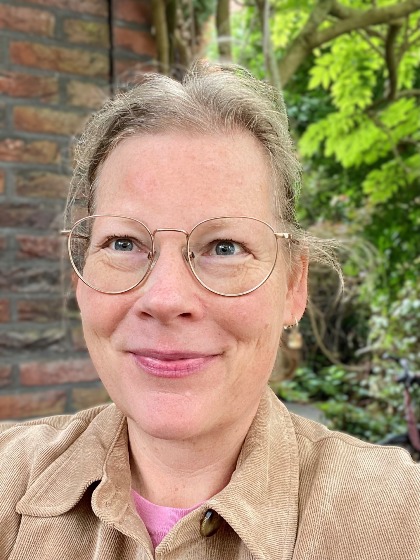
Andrea Dietrich is a Senior Researcher in Child and Adolescent Psychiatry at the University of Groningen's Faculty of Medical Sciences. She holds dual affiliations with the University Medical Center Groningen (UMCG) and Accare, the Child Study Center in Groningen, Netherlands. Her primary focus is on neurodevelopmental disorders, particularly tic disorders, ADHD, and behavioral problems. She leads internationally recognized studies like the TIC Genetics project and the EMTICS study, exploring genetic and environmental factors influencing these conditions. Her research emphasizes gene-environment interactions, biomarkers, stress physiology, and predictors of treatment efficacy. Key areas of investigation include cognitive factors in tic disorders, the interplay between genetic predispositions and environmental stressors (e.g., prenatal complications), and improving quality of life for affected children. Her work bridges clinical research and practice, with a focus on evidence-based interventions and optimizing medication use. She collaborates globally through initiatives like the ENIGMA consortium and the TS-EUROTRAIN network. Dr. Dietrich’s contributions include developing European clinical guidelines for Tourette syndrome and advancing neuroimaging genetics in child psychiatry.
Dr. Nina Kupper is an Associate Professor of Medical and Clinical Psychology at Tilburg University, Netherlands, within the Tilburg School of Social and Behavioral Sciences. Her research focuses on explanatory mechanisms in behavioral cardiology, particularly investigating psychological risk factors and biobehavioral mechanisms in cardiovascular disease. She leads studies such as THORESCI and PSYCHE, examining outcomes post-percutaneous coronary intervention. Education: PhD in Psychology from Vrije Universiteit Amsterdam (2005), focusing on behavioral genetics of cardiovascular functioning. Previously worked at Georgia Prevention Institute, USA. Career highlights include roles as Chair of the School’s Ethics Review Board (2010–2020) and editorial board memberships for Psychosomatic Medicine and General Hospital Psychiatry . Research interests include Type D personality, psychosocial screening in heart disease, and stress biomarkers. Collaborations span national and international institutions, including LifeLines (UMC Groningen), KORA/MONICA (Munich), and Ulm University. She has advised/co-advised multiple PhD students and contributed to datasets like the THORESCI registry. Professional contributions include grant reviewing for NWO and the Dutch Heart Foundation, and participation in the ZonMW Rubicon committee. Her work emphasizes translating psychosocial findings into clinical practice and preventive strategies.
Dr Marta Francesconi is an Associate Professor at University College London's IOE - Department of Psychology and Human Development. She joined IOE in 2017 as a Research Associate, progressing to Lecturer (2021-2024) before her current role. Her work focuses on identifying biomarkers predictive of mental health issues in children and adolescents, particularly examining the role of inflammation, adverse life events, and the built environment. She teaches modules on the Psychology with Education BSc and contributes to the Child Development MSc and Professional Educational, Child and Adolescent Psychology DEdPsy programs. Dr Francesconi holds a PhD in Clinical-Experimental Neuroscience from Sapienza University of Rome, with postdoctoral training at UC San Diego. Her research integrates clinical psychology, immunology, and environmental science, addressing societal challenges like climate change and urban design impacts. Key themes include stress-inflammation pathways, decision-making in eating disorders, and urban environments' cognitive effects. She has published in high-impact journals such as Brain, Behavior, and Immunity and Psychological Medicine . Her interdisciplinary approach bridges basic science and clinical practice, aiming to improve early interventions for mental health. She emphasizes London's multicultural environment as a critical asset for her work, fostering collaborations across disciplines and institutions.
Judy Hutchings is a Professor of Psychology at Bangor University's School of Psychology and Sports Science and Co-Director of the Centre for Evidence Based Early Intervention. She has over four decades of experience in clinical psychology, focusing on parenting programs for socially disadvantaged children, bullying prevention through the KiVa program, and global health interventions in low/middle-income countries. Her work spans collaborations with Welsh/UK governments, WHO, UNICEF, and NGOs. Awarded OBE in 2011 for services to children Established the Centre for Evidence Based Early Intervention (2002) Co-developed Parenting for Lifelong Health (global south program since 2012) Principal investigator for NIHR-funded KiVa RCT (11,000 children) Research Interests: Parenting interventions for behavioral issues, school readiness, online parenting support (COPING), cross-cultural adaptation of programs, and violence prevention. Her work integrates clinical practice with economic evaluations and implementation science. Recent articles demonstrate expertise in Dialogic book-sharing programs (2025) Latent transition analysis of parenting programs (2025) Feasibility of school-based interventions (2024) Global implementation challenges (2024) Teacher classroom management (2023) Awards: OBE (2011) Advising: Supervised numerous Masters/PhD students since 2000. Current projects focus on Montenegrin Roma community parenting programs and neurodiversity support. Labs/Teams: Leads the Centre for Evidence Based Early Intervention at Bangor University, collaborating with international teams in South Africa, Philippines, Thailand, and Eastern Europe.
Dr. Anja Holwerda is a Researcher (PhD) affiliated with both the Faculty of Behavioural and Social Sciences and Faculty of Medical Sciences at the University of Groningen. Her primary position is as Senior Researcher at Basiseenheid Orthopedagogiek / Expertisecentrum Gezinnen met Meervoudige en Complexe problemen, focusing on work participation and support systems for vulnerable youth and families. She also leads projects at C4Youth and Kenniswerkplaats Jeugd Friesland, emphasizing collaborative practices and policy development. Her educational background includes a PhD in Medical Sciences (2013), Master’s in Epidemiology (2012), and a degree in Social Geography with a focus on demographic and health geography. Her research spans interdisciplinary collaboration, youth care coordination, and employment support for individuals with disabilities or mental health challenges. Key research interests include: (1) Work participation pathways for young adults with disabilities, (2) Multi-problem family interventions, (3) Interagency collaboration in healthcare, and (4) Policy development for vulnerable youth. Recent work highlights include evaluations of dialogue tables for service improvement and evidence-based practices for housing solutions. Her publications emphasize practical applications of research, such as guidelines for family networks in complex cases and frameworks for sustainable employment support. She has contributed to over 40 peer-reviewed articles and reports, with a focus on translating research into actionable strategies for practitioners and policymakers. Current projects involve leading initiatives like ‘Leren van Praktijkervaringen’ and ‘Maatwerk voor Kwetsbare gezinnen’, focusing on learning from field experiences and tailored support systems. She actively engages with regional stakeholders through C4Youth to bridge academic and practical knowledge gaps in youth care.
Camilo Ortiz is an Associate Professor and Co-director of Clinical Training in the Doctoral Program in Clinical Psychology at Long Island University (LIU), Post campus, within the College of Education, Information and Technology. He specializes in parenting, disruptive behavior in children, bedtime resistance, elimination disorders, and cognitive-behavioral therapy for child and adult psychiatric disorders. Dr. Ortiz earned his Ph.D. in Clinical Psychology from the University of Massachusetts, Amherst in 1999, completed a pre-doctoral internship at Montefiore Medical Center, and a postdoctoral fellowship at Stony Brook, joining LIU in 2001. He is a licensed psychologist in New York State. His research focuses on evidence-based parent training interventions, particularly behavioral strategies for managing child behavior problems. He has published extensively on topics including time-out procedures, cultural adaptations of parent training, technology-enhanced interventions, and the role of religion and community settings in service delivery. His work bridges clinical science with practical implementation in diverse populations, including Head Start families and minority communities. Dr. Ortiz's recent publications highlight a strong trend toward innovation in parent training—integrating technology (e.g., online coaching), examining cultural and familial factors (e.g., acculturation, father involvement), and refining behavioral techniques (e.g., extinction, reinforcement sequencing). His research spans developmental stages and emphasizes accessibility, acceptability, and efficacy of interventions across diverse contexts. His scientific awards and grants reflect sustained external funding from prestigious sources including the National Institutes of Health (NIH), National Institute of Mental Health (NIMH), and Department of Health & Human Services. Notable grants include a K01 Career Development Award and multiple R-level and intramural grants supporting the development of behavioral interventions and assessment tools. Dr. Ortiz actively mentors students through research and clinical supervision, though specific advisee names are not listed. He teaches the full-year statistics sequence and clinical courses on cognitive-behavioral therapy and evidence-based treatments for children and adolescents. His professional service includes leadership in the Association for Behavioral and Cognitive Therapies (ABCT), where he has chaired special interest groups and panels on parenting and behavioral interventions. He also contributes to community outreach by exploring faith-based delivery of parent training.
Dr. Çisem Uzun is a Lecturer in the Psychology Department at Üsküdar University's Faculty of Humanities and Social Sciences, where she has been teaching since 2019. She completed her PhD in Psychology at Üsküdar University in 2024 with a dissertation on transcranial direct current stimulation's effects on emotion regulation. Education: PhD in Psychology, Üsküdar University (2024) Higher Education in Psychology, Istanbul Maltepe and Istanbul Arel Universities BA in Child Development, Istanbul University Dr. Uzun's research focuses on emotion psychology, positive psychology, family and child psychology, psychoeducation, and neuroscience applications. Her work particularly examines family dynamics in divorced households, digital media impacts on children, and therapeutic applications of play. She has developed expertise in both clinical assessment tools and educational interventions. Her publication trends show consistent focus on child mental health across multiple contexts - family structures, educational settings, and digital environments. Recent work (2022-2024) expands into contemporary family challenges and digital psychology, while maintaining her foundational focus on child development and emotional regulation. Dr. Uzun actively contributes to academic training through diverse courses including Physiological Psychology, Positive Psychology, Clinical Psychology, and Family Counseling. Her project work demonstrates practical application of psychological research through collaborations with government agencies on child development monitoring, firefighter psychological support, and parental education programs. She has participated in multiple research projects including the Üsküdar Nomophobia Scale development, psychosocial support programs for firefighters, and focus group studies on 0-3 year old children's psychosocial development. Her teaching portfolio spans both undergraduate and graduate levels with courses in Learning Psychology, Psychological Ethics, and Marriage Counseling.
Brian Kavanaugh is an Assistant Professor of Psychiatry and Human Behavior at Brown University's Alpert Medical School and a pediatric neuropsychologist at Bradley Hospital and Rhode Island Hospital. Board-certified in clinical neuropsychology with pediatric subspecialty certification from the American Board of Professional Psychology, he directs research at the intersection of neurodevelopment and psychiatric disorders in youth. His educational trajectory includes a BA from Loyola University (2009), PsyD in Clinical Psychology from Antioch University New England (2014), followed by pediatric neuropsychology fellowship training at E. P. Bradley Hospital and Brown University (2014-2016). Dr. Kavanaugh's research pioneers brain-based interventions for childhood neuropsychiatric disorders using multimodal neuroimaging (MRI), electrophysiology (EEG), and neuromodulation (TMS). His work targets executive dysfunction across diagnostic boundaries, with particular emphasis on oscillatory dynamics in working memory, genetic neurodevelopmental disorders (ASH1L, SLC13A5, Christianson syndrome), and trauma-related neurocognitive sequelae. He actively develops translational approaches to modulate neural circuits underlying cognitive deficits. Analysis of his 15 most recent publications (2023-2025) reveals dominant research streams: 1) Neural oscillation biomarkers for cognitive deficits in ADHD and depression, 2) Lifespan phenotyping of rare genetic disorders, 3) Sex-specific neurodevelopmental manifestations, and 4) TMS treatment optimization using neurophysiological predictors. His work consistently bridges basic neuroscience with clinical intervention. Scientific recognition includes: NIMH K23 Career Development Award Brain & Behavior Research Foundation NARSAD Young Investigator Award Current research funding spans NIMH, Brain & Behavior Research Foundation, The Carol Peterson Foundation, and the COBRE Center for Neuromodulation. While specific advisees aren't documented in source materials, his leadership in the COBRE Center involves mentoring junior investigators in pediatric neuromodulation. Collaborative networks include neurologists, geneticists, and psychiatrists across Brown's clinical ecosystem. Dr. Kavanaugh operates within the Division of Child and Adolescent Psychiatry, leveraging institutional resources at Bradley Hospital's Pediatric Neuropsychology Service and the COBRE Center for Neuromodulation. His team integrates clinical assessment with advanced neurophysiological methods to develop circuit-targeted interventions for youth with complex neuropsychiatric presentations.
Beate Krickel is an Associate Professor of Philosophy at Berlin University of Technology, specifically within the Institute for Philosophy, History of Literature, Science and Technology. She also has an affiliation with Humboldt University, Berlin's Department of Philosophy. Having earned her PhD in 2015, she has established herself as a prominent scholar in the philosophy of cognitive science and mind. Dr. Krickel specializes in examining the metaphysical commitments of the new mechanistic philosophy, with particular focus on cognitive ontology, unconscious mental processes, and the relationship between brain structures and cognitive capacities. Her research bridges philosophy with cognitive science and neuroscience, addressing foundational questions about how we conceptualize mental phenomena and their relation to physical mechanisms. Her recent work (2023-2024) has explored cross-cutting causal systems, cognitive homology, mechanistic explanation completeness, and repression models. These publications reveal a consistent interest in how mechanistic approaches can be applied to cognitive phenomena while addressing ontological implications. Her scholarship demonstrates how philosophical analysis can inform scientific practice in cognitive science and neuroscience. Dr. Krickel has developed significant contributions to understanding the relationship between mechanistic explanation and cognitive ontology, arguing that neural mechanisms alone cannot derive meaningful cognitive ontologies but serve as epistemic proxies for best systematizations. She has also proposed a psychological 'how-possibly' model of repression that combines advantages of higher-order and separation models while avoiding their problems. Her collaborative work with scholars like Marie I. Kaiser, Mariel Goddu, and others demonstrates her engagement with interdisciplinary research that connects philosophy with empirical cognitive science. Her publications consistently address methodological challenges in individuating cognitive categories and systems while maintaining philosophical rigor.
Judith Brouillette, PhD, is a Clinical Associate Professor at the Department of Psychiatry and Addictology, Faculty of Medicine, University of Montreal, and leads the Psychiatry Department at the Montreal Heart Institute (ICM). Her research explores bidirectional relationships between anxiety disorders and cardiovascular diseases, psychological distress in medical populations, parenting practices in congenital heart disease, and pandemic-related burnout in healthcare workers. Education: PhD in Cardiology (Montreal Heart Institute, 2005), MD (University of Montreal, 2017) Research Themes: Anxiety in chronic illness, QT interval pharmacology, psychosomatic cardiology, pandemic mental health, clinical leadership in psychiatric care. Her grant-funded projects include TORSADE (2021-2025, FRQS/FMCC) and PRÉOCCUPATIONS CONGÉNITALES (2019-2023, Fondation de l'Institut de Cardiologie de Montréal). Scientific Awards: FRQS Clinician-Researcher Fellowship (Junior 1). Advising: Supervised 3 graduate students (PhD and MSc) Collaborations: Worked with teams at ICM, University of Montreal, and American Heart Association
Rebecca Pearson is Professor of Developmental Psychology and Epidemiology at Manchester Metropolitan University, affiliated with the Institute for Children's Futures. Her research examines intergenerational transmission of mental health disorders through relational processes, combining developmental psychology with epidemiological methods. Core research areas include: Parent-child relationship dynamics using novel observational methods Genetic and environmental pathways in mental health transmission Impact of perinatal mental health on child development Longitudinal trajectories of depression from adolescence to adulthood Her publications demonstrate methodological innovation in wearable camera technology for capturing naturalistic interactions and analysis of genetic nurturing effects. Recent work focuses on pandemic impacts on family mental health and breastfeeding difficulties. She leads multiple international cohort collaborations and has influenced perinatal mental health policy in the UK and WHO guidelines.
Dener Cardoso Melo is a Postdoctoral Fellow at the University of Alberta's Faculty of Medicine & Dentistry, Department of Psychiatry since 2024. His research bridges psychiatric genetics, developmental psychopathology, and reward neuroscience, with significant contributions to understanding ADHD and mental health trajectories across the lifespan. His educational background includes a PhD from the University of Groningen completed in 2024, as evidenced by his dissertation Pleasure and poison: Unraveling the relationship between reward sensitivity and psychopathology . This foundational work established his expertise in reward processing mechanisms and their clinical implications. Research interests focus on reward sensitivity as a transdiagnostic mechanism linking to ADHD, affective disorders, and broader psychopathology. His fingerprint analysis reveals 100% engagement with Reward Sensitivity and 75% with Adolescents and ADHD research. He investigates how genetic factors shape reward-related traits using advanced genomic structural equation modeling, while also examining measurement invariance of assessment tools like ASEBA across developmental stages. His circadian rhythm work demonstrates nonlinear insomnia-chronotype relationships with gender-specific patterns. His publication trends show increasing integration of genetic methodologies with clinical psychology, particularly through large-scale collaborations like the Estonian Biobank study. Recent work emphasizes transdiagnostic frameworks connecting reward processing deficits to multiple mental health conditions rather than single disorders. Professional activities include high-impact invited presentations at academic and public venues such as ADHD Europe Webinars (2021), where he discussed "Rewards and ADHD" and "Reward sensitivity and the future course of ADHD and other psychopathologies." His media engagement demonstrates commitment to public science communication, including features on "What do rewards have to do with mental health problems?" (2020). Collaborative networks span international institutions including University of Groningen, University of Alberta, and University of Cambridge (via Estonian Biobank consortium). His work contributes to UN Sustainable Development Goal 3 (Good Health and Well-Being) through mental health research with clinical translation potential.
Bing Xu is a researcher at Erasmus MC specializing in Child and Adolescent Psychiatry/Psychology . Active in interdisciplinary neuroscience and psychology research, their work focuses on neurobiological correlates of psychiatric symptoms in youth. Primary affiliation: Erasmus MC (Child and Adolescent Psychiatry/Psychology) Research focus: Psychopathology, Behavioral Neuroscience, Cognitive Development Key research areas include brain structure-function relationships , neuroimaging of psychiatric symptoms , and social exclusion reactivity . Their publications demonstrate expertise in multivariate neuroanatomical analysis , white matter microstructure , and physical activity effects on brain development . Recent publications show collaborative work across disciplines using advanced imaging techniques ( EEG , MRI ) and computational approaches. No awards or advisees are documented in available sources.
Dr. Lot Sternheim is an Associate Professor at the Department of Clinical Psychology, Faculty of Social and Behavioural Sciences, University of Utrecht. Her research focuses on anxiety processes in anorexia nervosa, particularly intolerance of uncertainty, cognitive rigidity, and social anxiety. She contributes to clinical practice through translational research in the Utrecht Research Group Eating Disorders, collaborating with neurobiologists, psychologists, and patient associations. Academic Appointments: Associate Professor (2011-present) Key Research Areas: Anxiety in Eating Disorders, Cognitive Processes, Clinical Psychology Collaborations: Prof. Paul Boelen's Clinical PsychoPathology Lab, international clinical institutions Recent articles emphasize neurocognitive mechanisms in anorexia nervosa, body representation studies , and family-based interventions . Her work explores how cognitive inflexibility impacts treatment outcomes and how interoceptive awareness relates to body dissatisfaction. Scientific contributions include: Funded dissemination of the New Maudsley Method manual Pilot training program for caregivers in the Netherlands Over 30 peer-reviewed publications since 2012 As Teaching Coordinator, she oversees curriculum development and supervises MA thesis students. Her clinical training in Cognitive Behavioral Therapy (2022) enhances translational research applications.
Dr. Minet de Wied is an Assistant Professor at the Department of Youth and Family within the Faculty of Social and Behavioural Sciences at Utrecht University. Her research focuses on the development of empathy in healthy children and empathy problems in children and adolescents with conduct problems. She collaborates extensively with professionals and researchers at Accare Forensic Youth Psychiatry (FJP), Netherlands Institute Forensic Psychiatry & Psychology (NIFP), and Tilburg University, bridging academic research with clinical practice. Dr. de Wied completed her psychology studies and earned her PhD at the University of Amsterdam (Psychonomics). Her academic career includes positions at the Department of Communication Science (University of Amsterdam) and Experimental Psychology (Utrecht University). She has also gained international research experience as a visiting fellow at the University of Alabama (USA) and completed a postdoc at Utrecht University's Department of Child and Adolescent Studies. Her research program employs a multimethod approach to studying empathy and mimicry, examining both physiological responses and self-reported measures across various populations. She investigates empathy in typically developing children, those with disruptive behavior disorders, and youth in forensic settings, with particular attention to how callous-unemotional traits relate to empathy deficits. Her work explores gender differences in empathic responses and the neural mechanisms underlying empathy disruptions in adolescents with behavioral problems. Through her interdisciplinary approach, she connects developmental psychology with forensic applications. Dr. de Wied's publication record demonstrates consistent focus on empathy across developmental, clinical, and forensic contexts. Her recent work examines facial mimicry, oxytocin administration in forensic populations, gender differences in empathy, and the role of empathy in treatment outcomes for adolescents in forensic psychiatric services. This research shows strong connections between basic empathy processes and their disruptions in youth with behavioral problems. As an educator, Dr. de Wied teaches across multiple disciplines in the Master's program Clinical Child, Family and Education Studies (CCFES). She also provides specialized training in empathy for professionals through the 'pro Justitia Rapporteur' program at NIFP and has developed an innovative interdisciplinary course 'Empathy for biologists, law students and social scientists.' She serves on the Medical Research Ethics Committee Utrecht and is a member of the Descartes Centre at Utrecht University, reflecting her commitment to research ethics and interdisciplinary scholarship.