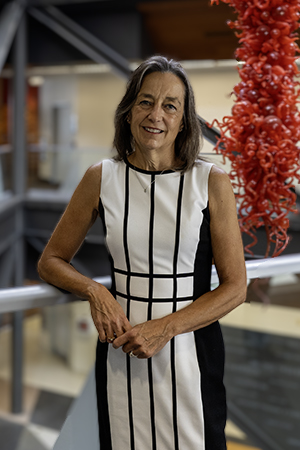
Heidi Bråthen is a Doctoral Research Fellow at the Department of Informatics, University of Oslo, within the Faculty of Mathematics and Natural Sciences. Her research focuses on participatory design methodologies, particularly involving older adults, and explores the role of materials and physical prototyping in creating accessible assistive technologies. She holds a dual affiliation as both a doctoral researcher and a student within the same faculty. Her work emphasizes user-centered approaches to technology design, aiming to bridge gaps between users' past experiences and modern technological interfaces. This includes studies on tangible interactions and contextual design strategies to enhance elderly users' engagement with assistive systems. Publications highlight contributions to participatory design practices, material-based design, and technology for aging populations. Research projects often involve collaborations with interdisciplinary teams, focusing on practical applications of design theories. No scientific awards are explicitly listed, though her publications indicate active involvement in academic discourse. Her advising and grant activities remain unspecified in the provided materials. She is part of the Design of Information Systems research group within the Department of Informatics.
Dr. Abigale Stangl is an Assistant Professor in the School of Industrial Design at the Georgia Institute of Technology . Her research focuses on inclusive design practices , accessibility , and sensory AI , prioritizing disability-first innovation . She explores tactile media, multimodal systems, and human-centered design principles to enhance accessibility for individuals with disabilities, particularly those who are blind or visually impaired. Her research interests include: Development of tactile interfaces and eyes-free interaction techniques Visual privacy management for blind users Collaborative design processes with disabled communities Ethical AI integration in assistive technologies Her work spans diverse domains such as: Video/audio accessibility solutions Children’s crossmodal learning through play Disability advocacy in workplace innovation Private content detection in visual assistance tools Though no specific grants or awards are listed, her projects emphasize interdisciplinary collaboration and real-world impact.
Ulrika Knagenhielm-Karlsson is a Full Professor and Head of the Division of Architecture, Technique, and Theory at KTH School of Architecture. She holds dual roles as an academic and practicing architect, leading research in sustainable methods and digital technologies. Her work bridges architecture with artistic research, emphasizing ecological and technological intersections in built environments. Education: Architecture degree from Columbia University and Landscape Architecture from the Swedish University of Agricultural Sciences. Research focuses on architectural representation, preservation of existing structures, and how technologies shape knowledge. Key projects include Interiors Matter: A Live Interior (Swedish Research Council grant) and collaborations with servo stockholm and Brrum. Exhibitions include the Venice Architecture Biennale and SFMoMA. Grants include a 2012 Graham Foundation grant and a 2018 Swedish Research Council grant. She has held visiting professorships at Städelschule, Tokyo University, and Konstfack. Teaching involves graduate design studios and seminars at KTH. Her lab affiliations include Digital Futures (KTH-Stockholm University-RISE collaboration) and InnoChain EU research network.
Cecilia Berlin is an Associate Professor at Chalmers University of Technology's Department of Design & Human Factors, specializing in ergonomics and human factors engineering. Her research focuses on optimizing work environments to enhance both human well-being and system performance, particularly in manufacturing and production settings. Key areas include cognitive workload analysis, workplace design, and social sustainability in industrial contexts. University: Chalmers University of Technology School: School of Industrial and Materials Science Department: Design & Human Factors Her work emphasizes preventive occupational health strategies and the integration of ergonomics into Industry 4.0/5.0 transitions. Notable contributions include frameworks like ACD³ for ergonomic workplace design and Change Agent Infrastructure for stakeholder analysis in work system interventions. Cecilia has collaborated on projects such as the VirKA study on VR office environments and the PreKo model for cognitive workload assessment in manual assembly. Her research bridges human abilities, technology, and organizational practices to create sustainable and productive work systems.
Robb Mitchell is an Associate Professor at the University of Southern Denmark, affiliated with the Centre for Learning Computational Thinking and the Department of Design and Communication . His research focuses on the intersection of technology, design, and social interaction, emphasizing embodied learning, collaborative interfaces, and the ethical implications of digital tools. Mitchell explores how tangible and digital systems can enhance education, social connectivity, and creative expression through experimental designs. His work spans areas such as Human-Computer Interaction , Embodied Learning , and Collaborative Technologies , with a particular interest in fostering convivial interactions and addressing interpersonal gaps through design. Mitchell’s publications reflect a commitment to innovative methodologies, including participatory design, prototyping, and empirical studies of user behavior. Key themes in his research include: Designing tools for educational and social contexts Exploring the role of technology in everyday interactions Developing frameworks for sustainable and ethical technology integration While no explicit awards or grants are listed, Mitchell’s extensive publication record and involvement in interdisciplinary research initiatives highlight his contributions to the field. His work often bridges academic research and practical applications, aiming to create meaningful technological interventions in real-world settings.
Celia Lopez Ongil is an Associate Professor in the Department of Electronic Technology at the University Carlos III of Madrid. She also serves as Acting Director of the University Institute of Gender Studies, Deputy Director of the Institute of Gender Studies, and Deputy Vice-Rector for Internationalization. Her research focuses on wearable technologies with a gender perspective, affective computing for social impact, and embedded systems design. Key projects include the EMPATÍA-CM initiative addressing gender-based violence through multimodal affective computing and the WEMAC dataset for emotion recognition. She leads the Microelectronic Design and Applications (DMA) research group and has contributed to interdisciplinary fields like biomedical sensors, radiation-hardened electronics, and hardware-software co-design. Education: Ph.D. in Electronics (university unspecified), with a strong background in both technical and gender studies disciplines. Research interests span wearable electronics, gender-inclusive technology development, and ethical AI applications. Her work integrates hardware innovation with social science to address societal challenges, particularly in health monitoring and violence prevention. Publications emphasize cross-disciplinary methodologies, with over 50 articles in journals like Sensors and IEEE Transactions. Notable contributions include adaptive emotion recognition systems and fault-tolerant embedded architectures. She actively participates in international conferences on technology ethics and gender studies in STEM. Labs/Teams: Microelectronic Design and Applications (DMA) group, Institute of Gender Studies, and collaborations with OPTOS CubeSat space instrumentation projects.
J. Michael Moore is an Instructional Associate Professor in the Department of Computer Science & Engineering at Texas A&M University, part of the College of Engineering. He holds a PhD in Computer Science from Texas A&M (2007) and has extensive teaching experience in courses like Human-Computer Interaction and Accessible Computing. His research focuses on HCI, software design, accessibility, and digital libraries, with notable work on design exploration and document triage systems. Education includes a B.S. in Biochemistry from Texas A&M (1991) and an M.S. in Computer Science from Texas State University (1997). He has authored over 20 peer-reviewed publications and has been recognized with awards such as the 2014 Mentoring Award and the Guseman Award (2002). Moore also contributes to professional service roles, including advising student organizations like DeAF and OSTEM. Teaching: Over 20 years of instruction in programming, HCI, and accessible computing. Research: Specializes in HCI, accessibility, and collaborative design tools. Service: Serves on committees for diversity initiatives and professional networks. His work integrates technical innovation with user-centered design principles, emphasizing accessibility and inclusive computing practices.
Miķelis Grīviņš is a Research Professor at the Faculty of Social Sciences, University of Latvia, where he leads the research group 'Healthy and sustainable food systems.' His work focuses on strengthening the connection between food production and consumption, promoting resilience, sustainability, and equitable governance within food systems. He actively supervises doctoral students and leads multiple EU-funded research initiatives. His research interests include sustainable food systems, food consumption behaviors, citizen science in food research, urban agriculture, and the cultural and gender dimensions of food. The group employs mixed methods, combining surveys, interviews, ethnography, and participatory methodologies, often integrating digital tools and interdisciplinary frameworks. The recent publications reflect a strong trend in sustainable food systems, with emphasis on household-level consumption models, governance innovation, and participatory assessment of urban agriculture. Research consistently aligns with UN Sustainable Development Goals, particularly in health, sustainability, and social resilience. Developed a citizen science prototype tool for food system engagement. Created models for analyzing household food consumption and diets. Co-developed a participatory methodology for assessing social and environmental impacts of urban agriculture. Prof. Grīviņš is actively involved in research supervision, project leadership, peer review, and conference organization. He collaborates across disciplines and with external stakeholders to advance sustainable food futures. His team emphasizes transdisciplinary innovation, blending research with arts and industry to develop novel solutions for food system challenges.
Mads Brath Jensen is an Assistant Professor at the Department of Architecture, Design and Media Technology within the Technical Faculty of IT and Design at Aalborg University, Denmark. His academic and research work is centered on the integration of robotics, computational design, and material behavior in architectural processes. His research interests focus on computational architecture , robotic fabrication , and interactive human-robot co-creation . He investigates how real-time feedback between humans, materials, and robots influences cognitive design decisions. His work spans parametric design , clay 3D printing , acoustic tectonics , and sustainable material systems , often manifesting in physical research pavilions and robotic installations. The trends in his recent publications highlight a consistent trajectory toward interactive design frameworks , material-aware robotic processes , and acoustic-architectural integration . His work bridges theoretical design exploration with practical, buildable outcomes, emphasizing real-time human intervention in digital fabrication. Scientific Awards: No formal scientific awards listed in the provided text. Advising and Grants: Mads Brath Jensen has supervised and co-supervised multiple research projects, often as Principal Investigator (PI), including Whispering Wall , Acoustic Tectonics Studio , and Utzon(x) Research Pavilion . These projects were research-based and involved collaboration with external partners such as Boligfonden Kuben. While specific grant amounts are not listed, the sustained project activity indicates successful funding acquisition. He has also advised on educational frameworks and design studios, contributing to research-based teaching at BSc and MSc levels. Labs and Teams: He is affiliated with the Create Integrated Architecture group and the Centre for Sustainable and Digital Transformation at Aalborg University. He has collaborated extensively with Professor Iben Worre Foged and others in the Utzon(x) research and teaching initiatives, organizing summer schools and workshops. His work involves interdisciplinary teams integrating architecture, robotics, and computer vision.
Ann Fruhling is a Distinguished Professor in the College of Information Science & Technology at the University of Nebraska at Omaha, where she serves as the founding Director of the School of Interdisciplinary Informatics and Chair of the Ph.D. in Computing and Information Science program. She is also co-Director of the Nebraska University Center for Biomedical Informatics Research and Innovation and Director of the Consortium for Public Informatics (CPHI). Education: Ph.D. in Management Information Systems, Strategy, Marketing, Computer Science, and Human-Computer Interaction – University of Nebraska–Lincoln, 2003 MBA – University of Nebraska at Omaha, 1991 BS in Computer Information Systems – Colorado State University, 1983 Dr. Fruhling's research centers on human-computer interaction, usability, health and biomedical informatics, and agile system development. Her work emphasizes designing and evaluating information systems for high-stakes environments, particularly emergency response and public health laboratories. She is the Principal Investigator of STATPack™, a widely deployed bioterrorism surveillance system. Her recent publications reflect a strong focus on usability in health IT, emergency informatics, agile methodologies, and public health system design. The research spans disciplines including information systems, cognitive science, software engineering, and public policy, with recurring themes of user-centered design, system reliability, and real-world implementation challenges. Scientific Awards: Charles W. and Margre H. Durham Distinguished Professor (2017) UNO Graduation Marshal (2016) Mutual of Omaha Distinguished Professor (2011) Nebraska Navy Admiral Award (2006) Dr. Fruhling has secured over $8.5 million in research funding across more than 100 projects, supporting the training and development of over 85 students. She advises doctoral students in the CIS Ph.D. program and leads collaborative research initiatives through CPHI and the Biomedical Informatics Center. Her teaching portfolio includes Human-Computer Interaction, Health Informatics, Agile Development, and MIS Capstone courses. She leads the STATPack™ research lab in PKI 363 and collaborates with public health laboratories across the Midwest. Her team focuses on developing, evaluating, and deploying informatics solutions for emergency preparedness and response.
Matthew Manos: Academic & Social Innovator Matthew Manos serves as Associate Dean for Academic Planning and Associate Professor of Practice in Design Strategy at the University of Southern California. He is the founder of verynice , a design strategy firm that provides free services to nonprofits, working with clients like Apple, UNICEF, and NASA. He previously chaired the Los Angeles Creative Advisory Board under Mayor Garcetti and designed curricula for the IYC high school initiative. His research focuses on creative facilitation tools in healthcare, education, and social entrepreneurship. Education Master of Fine Arts in Media Design Practices, ArtCenter College of Design Bachelor of Arts in Design Media Arts, UCLA Research & Impact Manos pioneers frameworks for equitable collaboration and strategic foresight . His work includes Models of Impact (a toolkit for social enterprises) and Comix from the Heart (healthcare storytelling via comics). His articles in Forbes , HOW Magazine , and academic journals address CSR, education reform, and design ethics. Awards & Recognition Golden Root Award (2013) for pro-bono leadership Forbes 30 Under 30 nomination LA Mayor’s Pro Bono Service Award (2014, 2018) Leadership & Outreach At USC, he oversees admissions, curriculum, and industry partnerships. He has lectured globally at institutions like Singularity University and Google, advocating for design-driven social change . Prior roles include adjunct professorships at CCA and ArtCenter, and teaching at Moscow’s Strelka Institute. Projects & Labs verynice : Pro-bono design services ($50M+ impact) Models of Impact : Used by 100,000+ practitioners Comix from the Heart : Patient-art collaboration in healthcare
Dr Sandra Gaudenzi is a globally recognized academic and practitioner in interactive narratives, particularly in interactive documentaries (i-docs). She holds a Visiting Professor role at the University of Westminster, where she co-leads the Digital and Interactive Storytelling LAB MA program. She also serves as a Visiting Fellow at the Digital Cultures Research Centre (UWE, UK), co-directing the i-Docs conference and co-editing the foundational text i-docs: The Evolving Practices of Interactive Documentary . Her professional background spans factual television production and over two decades of research, teaching, and consulting in digital storytelling. Gaudenzi's research focuses on interaction design in digital narratives, storytelling ideation processes, and co-creative methodologies. Notable projects include the Corona Haikus collaborative pandemic response project and her role as Creative Director of the BBC Taster's DigitalMe interactive experience. Her PhD, The Living Documentary , explores participatory reality co-creation in digital documentaries. She has presented at over 30 international conferences since 2013, including talks on AR in crisis communication, immersive trends, and ethical AI in storytelling. Gaudenzi pioneered the !F Lab training initiative (2015–2018), developing the WHAT IF IT ideation process for interactive narratives, documented in her !F Lab Field Guide . Her work bridges academic research with industry practice through workshops, symposia, and collaborative productions across Europe and South America.
Prof. Dr.-Ing. Christian Baier is a Professor in the Department of Construction at Technische Hochschule Mittelhessen. His expertise spans Building Information Modeling (BIM), construction informatics, and sustainable construction practices. He holds a diploma from Gießen-Friedberg University of Applied Sciences (2002), a Master's in Lean Construction from Coventry University (2005), and a Doctorate from the University of Cantabria (2016) focusing on BIM methodology in public sector construction. His research emphasizes holistic BIM integration, process modeling for sustainable construction, and digital transformation in the construction industry. Key contributions include work on BIM standards, LOD implementation, and mobile defect management systems. He actively supervises theses and manages the construction department's research initiatives. Notable publications include analyses of BIM adoption in Germany and international contexts, collaborative process management frameworks, and advancements in construction simulation technologies. His work bridges academic research with practical applications in public infrastructure projects.
Amy Killen is a Teaching Professor in the Department of Design at Monash University, coordinating the interdisciplinary DGN1000 program. Her work bridges design innovation with public health and urban infrastructure challenges, supported by collaborations with organizations like WHO, Monash Health, and Metro Trains Melbourne. She holds a PhD in 'Designing the Urban Rail Environment to Reduce Vandalism' (2020). Research focuses on co-design methodologies for global health guidelines, sustainable urban mobility, and additive manufacturing applications. Notable projects include developing a Design Toolkit for WHO guideline developers and pioneering anti-vandalism interventions in rail environments. Awards include the Research Rising Star Award (2020), International Design Silver Award (2021), and James Dyson Award (2016). Current initiatives involve launching Monash's Collaborative Design degree and advancing interdisciplinary design practices aligned with UN Sustainable Development Goals.
Ross MacLachlan is a Senior Teaching Fellow in the Department of Design, Manufacturing and Engineering Management at the University of Strathclyde, Faculty of Engineering. He holds an MEng in Product Design Engineering from the same institution (2001) and is actively engaged in multidisciplinary design engineering education. He facilitates key modules across undergraduate years in Electrical Concepts, Fluid Mechanics, Design Engineering, and Design Management, and supports studio-based classes including Design Emotion and Experience. He serves as the 1st-year undergraduate advisor of studies and is the local coordinator for the Joint MSc in Global Innovation Management (GIM), a collaborative program with Hamburg University of Technology and Aalborg University, previously supported by the Erasmus Mundus scholarship. His research interests include Design Creativity, Design Education, Innovation Management Education, Creative Design Methods, Culture and Design, Open-source in Design Practice, Product Acoustics, and Engineering Pedagogy . He has led and participated in funded industry projects such as the development of a tennis court pace measurement apparatus and a system for Transoesophageal probe handling. His recent publications explore the integration of AI (e.g., ChatGPT) in engineering education, virtual-physical-digital prototyping, and co-creation models in learning. His recent publications demonstrate a strong trend toward enhancing engineering pedagogy through technology integration, creativity enhancement, and experiential learning. Topics span AI in education, prototyping methodologies, co-creation frameworks, and analytical techniques in design assessment, reflecting a commitment to innovation in engineering education and practice. Scientific Awards: None listed in the provided text. Advising and Grants: Ross MacLachlan supervises undergraduate and postgraduate student design and research projects, as well as group industrial projects. He has been Principal Investigator or Co-investigator on multiple funded projects, including EDUWEAR (2024–2027), Creating Innovative and Active Co-learning Environments (2022–2024), KTP - Elite Bedding (2020–2022), Embedding Design Improv (2017–2021), and New Engineering Design Processes through Constructs of Humour (2015–2017). These projects focus on educational innovation, wearable rehabilitation devices, humor in design, and industry collaboration. Labs, Teams, and Professional Activities: He is part of the Design Research Group at Strathclyde and has been involved in organizing major events such as the International Symposium of Engineering Education (ISEE) 2022 and the Engineering Academics Network (EAN) Annual Congress. He collaborates internationally, particularly within EU-funded and UK-Turkey higher education initiatives, and contributes to academic discourse through conference participation and peer-reviewed publications.