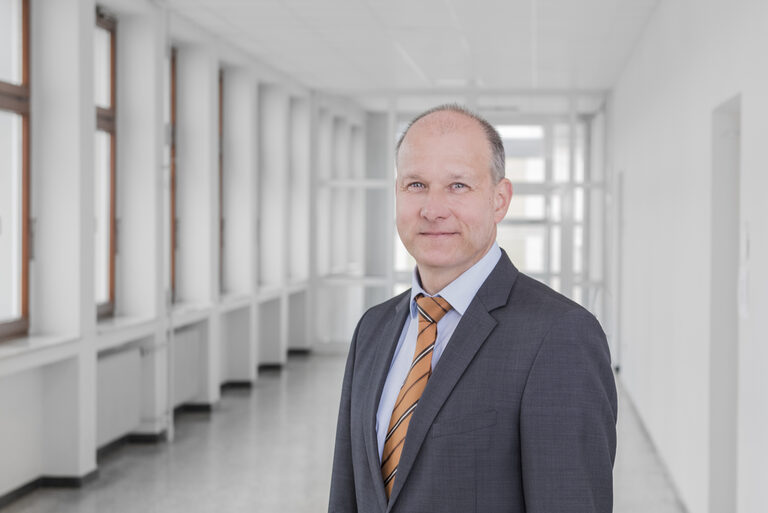
Douglas D. Hodson is a Professor of Computer Engineering at the Air Force Institute of Technology (AFIT), Wright-Patterson AFB, Ohio, affiliated with the Department of Systems and Engineering Management within the Graduate School of Engineering and Management. He holds a PhD in Computer Engineering from AFIT (2009), an MBA and MS in Electro-Optics from the University of Dayton, and a BS in Physics from Wright State University. His research focuses on computer engineering, software engineering, real-time distributed simulation, and quantum communications , with a strong emphasis on Quantum Key Distribution (QKD) systems, modeling and simulation (M&S), and Live-Virtual-Constructive (LVC) environments. His work integrates cybersecurity, network performance, and advanced simulation frameworks such as AFSIM and SwarmSim. His recent publications (2021–2022) reflect a trend toward secure distributed systems, AI-driven classification, fog modeling in military simulations, and opinion dynamics in social systems. These works span disciplines including cybersecurity, artificial intelligence, defense modeling, and environmental effects in multi-domain operations. Scientific Awards and Honors: IEEE Senior Member (2021) Outstanding Achievement Award, World Congress in CSCE (2018) SOCHE Faculty Excellence Award (2017) Harold Brown Award (2015) Multiple AFIT Civilian Category III Awards (2014, 2013) Dayton Area Graduate Studies Institute Scholar (2003–2007) Rev. Raymond A. Roesch, S.M., Award of Excellence, University of Dayton MBA (1998) Advising and Grants: Dr. Hodson has advised numerous graduate students, many of whom are co-authors on his publications. His research has been supported by AFIT, AETC, and collaborative defense-focused grants, particularly in quantum communications and simulation technologies. He has led or contributed to teams receiving Air Force Modeling and Simulation Team Awards and QKD Research Team Awards. Labs and Teams: He is a key contributor to the AFIT Quantum Communications and Modeling & Simulation research teams, working on projects involving AFSIM, QKD system modeling, decoy state protocols, and swarm UAV simulation. His lab environment fosters interdisciplinary collaboration in cybersecurity, physics, and software engineering.