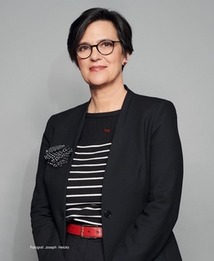
Prof. Paula-Irene Villa Braslavsky holds the Chair of Sociology/Gender Studies at Ludwig Maximilian University of Munich (LMU), Faculty of Social Sciences. She is on sabbatical during Summer Semester 2025 but continues research supervision and colloquia. Her research focuses on intersections of racism, sexism, and neoliberalism, with notable works like The Future of Difference and Top Girls . She co-edits the journal Gender Salon and leads projects on gender studies, queer theory, and postfeminism. Her academic contributions span monographs, anthologies, and journal articles addressing global social movements, anti-genderism, and body politics. Key themes include critical analysis of contemporary gender regimes, decolonial theory, and the sociocultural implications of neoliberalism. Her work frequently bridges theory and activism, emphasizing intersectional approaches to systemic oppression. Publications include edited volumes on #MeToo, fat studies, and the sociological analysis of bodies, reflecting her commitment to interdisciplinary research. She maintains an active academic presence through her website LMU Gender Studies and Academia.edu .
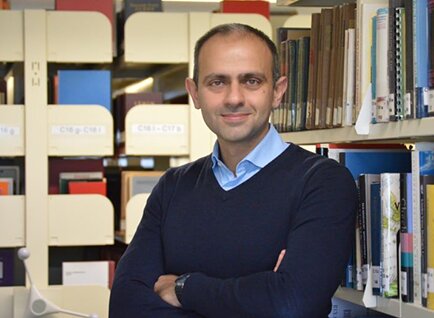
Zaur Gasimov is a Lecturer at Johannes Gutenberg University Mainz and currently serves as DAAD Departmental Coordinator and Co-Head at the Faculty of Economics and Administrative Sciences, Turkish-German University. He holds a habilitation in Modern History and Eastern European History, with a focus on Eastern European History, political science, and sociology. Education : B.A. in International Relations from Baku State University; M.A. from Catholic University of Eichstätt-Ingolstadt; Doctorate in Eastern European history Research : Concentrates on Russian-Turkish relations, nationalism in Eastern Europe, cultural transfer processes, and historical narratives. His habilitation thesis analyzed Polish-Turkish anti-Soviet alliances. Publications : Authored monographs on Prometheism, Azerbaijani historiography, and Russification policies. Collaborated on comparative studies of cultural transfer and Ottoman-Russian entanglements.
Dr. phil. Andrej Holm is a Researcher at the Institute of Social Sciences , Humboldt University of Berlin, specializing in Urban and Regional Sociology . As a Women's Representative and active academic, he focuses on gentrification, housing policy in international comparison, and European urban policy. His work bridges academia and activism, contributing to housing referendums and social movement analysis. Research Themes : Gentrification dynamics, financialization of housing, socio-ecological housing transformation, and post-socialist urban development. Key Projects : Expert analysis for Berlin housing socialization referendum (2022), comparative studies on Amsterdam/Barcelona/Berlin/Vienna (2022), and social infrastructure reconceptualization (2021). Holm's publications span urban policy critiques and housing justice , with recent 2025 works examining financial investors' impact on Berlin housing and pandemic-era housing conditions. His research integrates political economy with spatial inequality frameworks.
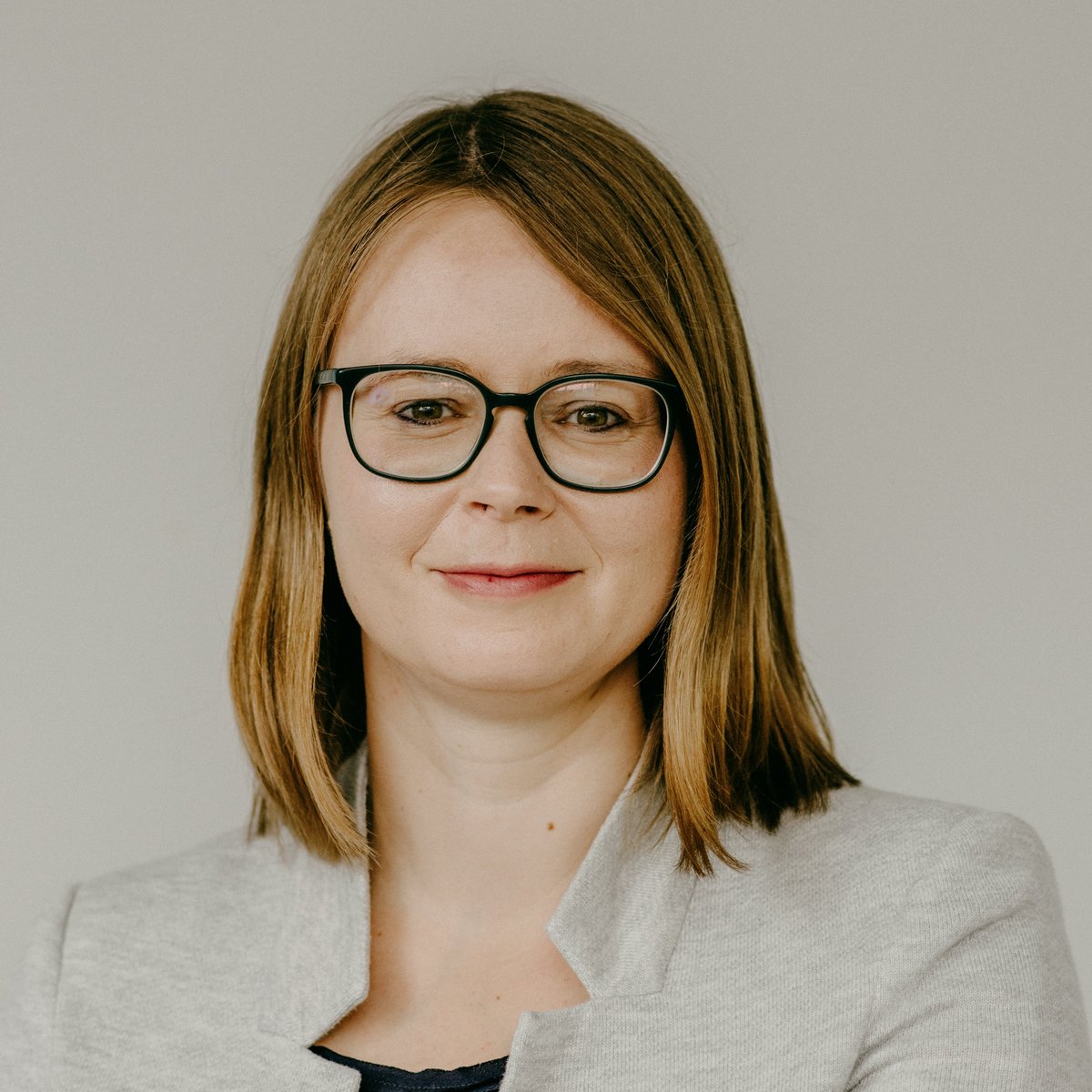
Anna-Lena Hönig is a postdoctoral researcher at the Cluster of Excellence 'The Politics of Inequality' at the University of Konstanz. Her work focuses on comparative authoritarian politics, democratization, and the dynamics of resistance and repression, with an emphasis on cooperation between non-state actors such as NGOs, social movements, and terrorist organizations. Co-founder of the annual Workshop on Conflict Dynamics Board member of the German Association for Peace and Conflict Studies (AFK) Her methodological focus includes social network analysis, survey experiments, and causal inference. She previously completed her PhD at the University of Mannheim and was affiliated with the Graduate School of Economic and Social Sciences (GESS) and the Peace Research Institute Oslo (PRIO) through its Research School on Peace and Conflict.
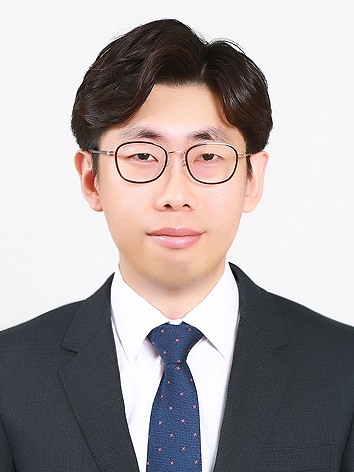
Inho Hong is an Assistant Professor at the Graduate School of Data Science, Chonnam National University (Gwangju, Korea), leading the Computational Social Science and Complex Systems Lab (CSL). His research explores socio-spatial systems through data science and complex systems methods, focusing on urban dynamics, human mobility, and AI's societal impact. Education: Ph.D. in Physics (2019), Pohang University of Science and Technology (POSTECH) M.S. in Physics (2012), POSTECH B.S. in Physics (2010), POSTECH Research Interests: Urban Data Science : Analyzing urban scaling laws and innovation pathways Human Mobility : Modeling intra-city movement patterns Social Impact of AI : Ethical and societal challenges Natural Language Processing : Text embedding for policy analysis Complex Systems : Network approaches to protests and epidemics Recent Work Trends: Over 2020–2022, his articles centered on pandemic control, protest networks, and urban green spaces' psychological impact. Recent 2023–2025 work extends to vocational education analysis and mobility laws within cities. His methods combine network science with large-scale data analytics. Awards: Young Statistical Physicist Award (Korean Physical Society, 2021) Best Paper Award (Korea Computer Congress 2021) Global Ph.D. Fellowship (NRF, 2014–2017) Grants & Labs: Current lab focuses on socio-spatial systems. Past roles include Associate Research Scientist at Max Planck Institute for Human Development (2020–2023) and Postdoctoral Fellowships at POSTECH and APCTP.
Prof. Dr. Christian Volk is a Professor of Political Theory at Humboldt-Universität zu Berlin's Department of Social Sciences since 2020. Previously, he led the 'Politics and Law' research area at Freie Universität Berlin (2016–2020). His research focuses on democratic theory, legal and constitutional frameworks, and civil disobedience in modern democracies. He leads an ERC-funded project ('Protest and Order') exploring protest dynamics in Western democracies. Education: RWTH Aachen University (Political Science/Economics/Economic History), with a doctorate (2010) on Hannah Arendt's legal theory. Postdoctoral roles included managing DFG-funded projects on sovereignty concepts and coordinating research on international dissidence. Research Interests: Political Theory & Philosophy Democratic/Social Theory Legal/Constitutional Theory Civil Disobedience & Protest Movements Transnational Governance His work bridges classical thinkers like Arendt with contemporary issues like postcolonial critique and global order challenges. Publications Highlight: Over 30 peer-reviewed articles and monographs, including Arendtian Constitutionalism (2015) and Die Ordnung der Freiheit (2010). Recent work examines protest's democratic gestus and transnational civil society partnerships. Awards: Summa Cum Laude PhD (2010), 2013 'Outstanding Work' award for thesis. Active in academic leadership roles, including editorial boards for Democratic Theory and Zeitschrift für Politische Philosophie . Teaching: Offers courses on political terminology, Hannah Arendt's thought, and migration/postcolonial theory. Supervises doctoral candidates and maintains a public blog analyzing protest movements.
Prof. Dr. Andreas Zick is a leading scholar at Bielefeld University, serving as Scientific Director of the Institute for Interdisciplinary Conflict and Violence Research (IKG) and Professor for Socialization and Conflict Research at the Faculty of Education. He also co-leads the ConflictA initiative since 2023 and contributes to migration education through the Faculty of Education. 2008: Professor for Socialization and Conflict Research, Bielefeld University 2013: Director of IKG 2023: Scientific Head of ConflictA His research focuses on intergroup conflicts , group-based antipathy , right-wing extremism , radicalization , and socialization processes . He investigates spatial dimensions of radicalization, societal integration challenges, and prejudice dynamics through comparative studies. Recent publications analyze radicalization spaces (2024-2025) using spatial sociology, democratic conflict perceptions (2025), and cross-cultural prosocial behavior during pandemics. Key methods include ethnography, longitudinal surveys, and multi-perspective comparative analysis. Scientific contributions recognized by: Communicator Award (2016) Nevitt Sanford Lifetime Award (2022) Active in public policy as member of the Federal Agency for Civic Education's advisory board and Federal Commissioner's Antiracism Expert Council. Leads major projects on radicalization prevention and spatial conflict dynamics with national/international partners.
Thomas Richter is a leading academic and Professor at the German Institute for Global and Area Studies (GIGA) , where he serves as Lead Research Fellow and Head of the Research Programme "Accountability and Participation" . His work focuses on the institutional and material determinants of authoritarian rule , executive personalization , and global political economy , particularly in the Middle East and North Africa region. Education: PhD in Political Science (summa cum laude) at the University of Bremen (2008); studies at Eberhard-Karls University Tuebingen and University of Michigan, Ann Arbor. His research explores the interplay of rentier statehood and economic reforms , civil society under authoritarian regimes , and shrinking civic spaces . Recent projects include the Merian Center for Advanced Studies in the Maghreb (MECAM) and the Monitoring System and Transfer Platform Radicalisation (MOTRA) , funded by BMBF and DFG. Richter has published extensively on topics such as anti-Semitism , executive power dynamics , and public opinion on military service in Germany. He has received notable awards, including the Lijphart/Przeworski/Verba Data Set Award (2017) and the Gero Erdmann-Preis für vergleichende Area-Forschung (2022) . His collaborative work spans institutions like the WZB Berlin and Université de Tunis . Richter is also a co-editor of the Perspectives on the Maghreb series with Amsterdam University Press.
Prof. Dr. Sabrina Zajak serves as Head of the Consensus & Conflict Department at the Deutsches Zentrum für Integrations- und Migrationsforschung (DeZIM-Institut) and holds an adjunct professorship at the Faculty of Social Sciences, Ruhr University Bochum. A founding member of the Institute for Protest and Movement Research (ipb), she also serves on the board of Research Committee 47, 'Social Movements and Social Classes,' of the International Sociology Association. Her academic trajectory includes significant positions at Humboldt University Berlin, the Max Planck Institute for the Study of Societies Cologne, and the Social Science Center Berlin (WZB). Zajak's research centers on political sociology with dual emphases on consensus and conflict dynamics in plural societies. Her consensus research examines civil society engagement, refugee assistance networks, alliance formation, and everyday solidarity practices, while her conflict research analyzes protest movements, diversity challenges, and discrimination patterns. She has pioneered studies on transnational civil society alliances, particularly examining how social movements navigate national boundaries and build cross-border solidarity. Her recent publications reveal a decisive shift toward analyzing intersectional dynamics of race, migration, and social movements in European contexts. With significant attention to the Black Lives Matter movement's reception in Germany, her work demonstrates how global racial justice movements are adapted to local contexts. Her research increasingly addresses civil society responses to refugee crises, examining both supportive engagement and exclusionary practices, while also investigating structural barriers to diversity in German federal administration and cultural institutions. As a prolific academic leader, Zajak has served as (co-)editor for special journal issues including Development and Change (2017), Industrial Relations (2018), Social Movement Studies (2021), Competition and Change (2020), Moving the Social (2020), and European Cultural and Political Sociology (2022). Her department currently manages over 20 active research projects spanning discrimination experiences in Saxony, diversity in federal administration, Muslim youth association work, and violence protection in refugee accommodations, demonstrating the breadth and policy relevance of her research agenda.
Prof. Dr. Jan Eckel is a Professor of Modern and Contemporary History at the University of Freiburg . His academic career includes prior professorships at the University of Tübingen (2016-2021) and the University of Cologne (2015-2016). He researches human rights history , transnational politics , and globalization discourses since the late 19th century. Research Focus: Interactions between state/non-state actors, Cold War dynamics, decolonization, and ethical governance frameworks. Grant Involvement: DFG-funded projects, including SFB 923 sub-project on globalization narratives (1990s-2000s). His 15 most recent publications analyze globalization discourses, human rights evolution, and transnational conflict resolution, with keywords spanning 20th-Century History , Political Science , and Conflict Studies . Scientific Awards include the 2024 Opus Magnum Scholarship and multiple honors for historical analysis excellence. He advises seven doctoral students in contemporary history and globalization studies.
Prof. Dr. Nadja-Christina Schneider is Professor of South Asian Societies and Cultures at the Humboldt University of Berlin, where she is affiliated with the Institute of Asian and African Studies within the Faculty of Humanities, Social Sciences and Education. She previously served as Professor of Gender and Media Studies for the South Asian Region at HU Berlin from 2017 to 2024, and before that as Professor of Media and Society at the IAAW with a focus on Global South Asian Studies from 2009 to 2016. She also held an interim professorship in Visual and Media Anthropology at Heidelberg University during the winter term 2016/17. Her research focuses on media culture, gender, urban transformation and intersectional im/mobility in South Asia. She is particularly interested in media developments in South Asia, mediatization processes and social change, and debates on Islam, media and gender. Her interdisciplinary approach draws from South Asian Studies, Modern and Contemporary History, and Islamic Studies. Prof. Schneider's recent publications demonstrate a strong focus on transcultural media and communication, critical regionalism in architecture, and visual representations of social cohesion and identity politics in South Asia. Her work often explores how media forms shape and are shaped by social transformations, with particular attention to gender dynamics and religious identities. Her significant research projects include 'Beyond Social Cohesion - Global Repertoires of Living Together (RePLITO)' from October 2021 to December 2024, where she served as co-spokesperson and HU project leader. Prof. Schneider has supervised several doctoral projects including: Mobility and Witnessing: Independent Documentary Film Practices in the Kashmir Conflict (Max Kramer) Cinema, Cultures and Marker of Muslim Identity (Saima Haq) Mobility Differentiated: Navigating Religion, Activism and Everyday Life among LGBT Indonesians (Wikke Jansen) Unveiling Images. Regimes of Visibility in the Visual Politics of Contemporary Far Right Parties in Europe (Anna Kathrin Oswald) She has held prestigious research fellowships such as the Alexander von Humboldt research fellowship (Feodor Lynen Fellowship), a senior research fellowship at the Humanities Center for Advanced Studies 'Multiple Secularities' at Leipzig University, and a research fellowship at the Heidelberg Center for Transcultural Studies.
Prof. Dr. Rachid Ouaissa serves as University Professor and Head of the Department of Middle Eastern Politics at the Center for Near and Middle Eastern Studies (CNMS), Philipps University of Marburg since March 2009. He concurrently holds affiliations with the Center for Interdisciplinary Religious Studies and Center for Conflict Research at the same institution, and maintains active roles in Berlin-based research networks including EUME and the Wissenschaftskolleg zu Berlin. His academic formation includes a PhD from the University of Leipzig (2004) supervised by Prof. Hartmut Elsenhans, preceded by undergraduate studies at Martin-Luther-Universität Halle-Wittenberg (1994-1999) where he received the DAAD-Preis in 1997. His scholarly trajectory includes a Visiting Scholarship at Dalhousie University (2008) and prior research positions at the University of Leipzig. Ouaissa's research program centers on Middle Eastern and North African political dynamics with four interconnected pillars: cultural-identitarian political movements (comparing BJP in India and Algerian parties), moderate Islamist parties as potential EU partners, state-class behavior during resource scarcity (Iraq case study), and fundamentalist movement development (FIS in Algeria vs. Mahdia in Sudan). His conceptual innovation emphasizes blocked middle classes mobilizing religious identity to challenge state power, while his recent work develops 're-configuration' frameworks for understanding post-Arab Spring transformations. His publication trajectory from 1999-2021 reveals evolving scholarly priorities: early work focused on Algerian state formation and political Islam, shifting toward comparative cultural-identitarian movements (2007-2009), then moderate Islamist parties' foreign policy (2009-2012), with contemporary research addressing Hirak protests and theoretical re-configuration models. The corpus demonstrates consistent engagement with Algeria while expanding to regional comparative frameworks, particularly through co-edited volumes on Maghreb entanglements and MENA transformation processes. His scientific recognition includes: DAAD-Preis der Martin-Luther-Universität (1997) Friedrich-Ebert-Stiftung PhD Fellowship (2000-2002) Friedrich-Ebert-Stiftung Scholarship (1998-1999) Professor Ouaissa has secured major research funding including two German Research Foundation (DFG) projects: 'New Cultural-Identitarian Political Movements' (2007-2009) and 'Moderate Islamist Parties as EU Partners' (2009-2012). He actively mentors emerging scholars through the Friedrich-Ebert-Stiftung's doctoral programs and serves on its selection committees, while his policy engagement manifests through frequent media contributions analyzing Algerian protests and regional dynamics for outlets including Le Monde, El Watan, and Deutsche Welle. He leads the Department of Middle Eastern Politics at CNMS while contributing to the university's interdisciplinary research infrastructure through the Center for Interdisciplinary Religious Studies and Center for Conflict Research. His international scholarly integration is evidenced by co-editing the book series 'Politik und Gesellschaft des Nahen Ostens' and 'Studien zur Geschichte und Zeitgeschichte Westasiens und Nordafrikas', alongside editorial leadership of the journal META (Middle East Topics and Arguments).
Dr. Irene Weipert-Fenner is a Senior Researcher and Project Director at the Peace Research Institute Frankfurt (PRIF), serving as a member of its Executive Board since 2024 and coordinating the Research Group on Regime Competition since 2023. She holds a PhD from Goethe University Frankfurt (2013) and previously served as a Visiting Professor for Middle Eastern Politics at the University of Marburg (2019). Her research focuses on authoritarian regimes, political transformation, social movements, and socioeconomic conflicts in North Africa, with a particular emphasis on Egypt and Tunisia. Key projects include leading studies on IMF reforms, socioeconomic protests, and trust dynamics in social movements. She has authored or co-authored over 30 peer-reviewed articles and books, including The Autocratic Parliament (2020) and edited volumes on clientelism and protests. Awards include the DAVO Dissertation Prize (2014). Her work bridges comparative politics, conflict studies, and regional expertise, addressing themes like democratization, protest dynamics, and geopolitical implications of regional conflicts. Affiliations: PRIF, University of Marburg (visiting role) Education: PhD in Political Science, Goethe University Frankfurt (2013) Research Groups: Regime Competition, Intra-state Conflict Key Projects: ConTrust initiative (2021–2025), Tunisian budget politics analysis Her research publications emphasize interdisciplinary approaches to understanding political economy, trust in social movements, and the interplay between socioeconomic grievances and authoritarian resilience. Recent work explores green hydrogen economies in North Africa and the erosion of democratic trust in Tunisia.
Silke Mende is a Professor of Modern and Contemporary History (19th–21st century) at the Westfälische Wilhelms-Universität Münster since April 2021. Her research spans transnational entanglements, secularism, colonialism, Francophonie, and social movements, with a focus on Germany, France, and Western Europe. She leads the project Secularism as a (Post-)Colonial Challenge? Religion and Republicanism in Marseille (EXC 2060 A3-30) and contributes to the DFG Cluster of Excellence Competing Truths. Strategies and Reflections in the Changing Public Spheres . 2018: Habilitation in Modern and Contemporary History, University of Tübingen 2009: Ph.D. in Philosophy and History, University of Tübingen 1997–2003: Studies in Modern History, Medieval History, and Political Science at Tübingen and Aix-en-Provence Her work explores the history of democracy (since 1970s), transnational history (19th–20th centuries), and new history of ideas . Recent articles analyze the evolution of Francophonie, the German Greens’ ideological shifts, and secularism in postcolonial Marseille. She has received the Dr. Leopold Lucas Prize for early-career scholars (2011) and serves on the board of the Association for Political History since 2023. Scientific Awards : Dr. Leopold Lucas-Nachwuchswissenschaftler-Preis (2011)
Dr. Taylan Acar is a Post-Doctoral Researcher at Goethe University Frankfurt/Main, focusing on the intersection of gender, socio-economic status, and immigrant backgrounds in parenting norms and childcare practices. His work emphasizes the gendered division of labor, attitudes toward gender equality, and external childcare utilization in Germany. PhD in Sociology, University of Wisconsin-Madison Project: Internalized Gender and Parenting Norms (2025) Research areas: Gender Studies, Sociology of Education, Migration Studies His research spans comparative analyses of educational integration, labor dynamics in healthcare, and socio-political factors affecting family processes. Recent publications highlight discrepancies between gender ideology and childcare practices, while older works address subcontracted labor and feminist reimaginings of neoliberal policies. Scientific awards include the Ferhunde Özbay Best Article Award (Turkish Population Studies Association). His work is funded by Boğaziçi University Research Fund (BAP) and contributes to debates on gender equality, migration integration, and educational equity.