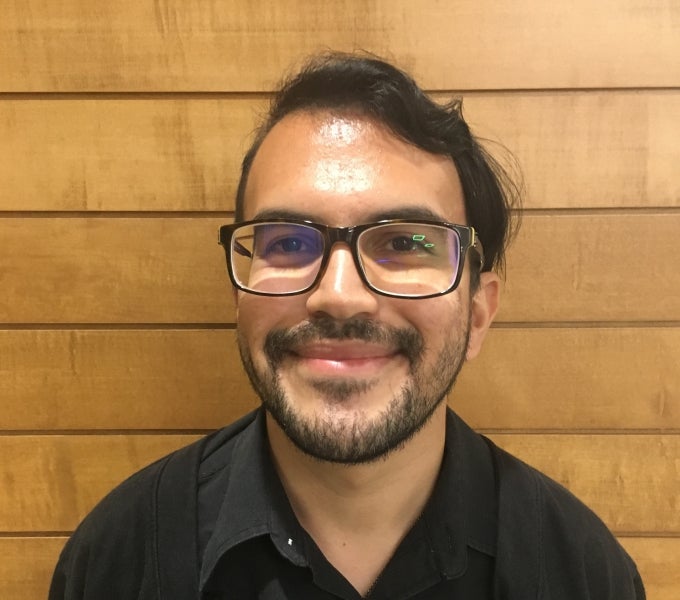
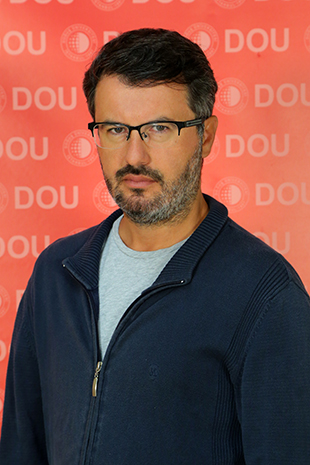
Elias Chavarria Mora is a Lecturer at the School of Political Science, University of Costa Rica, and a PhD candidate in Political Science at the University of Pittsburgh (expected 2025). He focuses on comparative political behavior and Latin American politics , with regional expertise in Central American electoral systems and party politics . Education: PhD in Political Science (2025, University of Pittsburgh) M.A. in Political Science (2020, University of Pittsburgh) Licentiate in Political Science (2017, University of Costa Rica) B.A. in Political Science (2015, University of Costa Rica) His research investigates social media's role in elections , ideology , and unconventional political participation . He employs data science methods , including text analysis, spatial econometrics, and machine learning. Recent publications analyze political education curricula , data protection laws , and electoral dynamics in Latin America. His work appears in journals like Latin American Politics and Society and Revista Latinoamericana de Opinión Pública . He coordinates the Observatorio de la Política Internacional Sergio Iván Moya Mena at the University of Costa Rica and has collaborated with the University of Salamanca's Parliamentary Elites in Latin America Observatory.
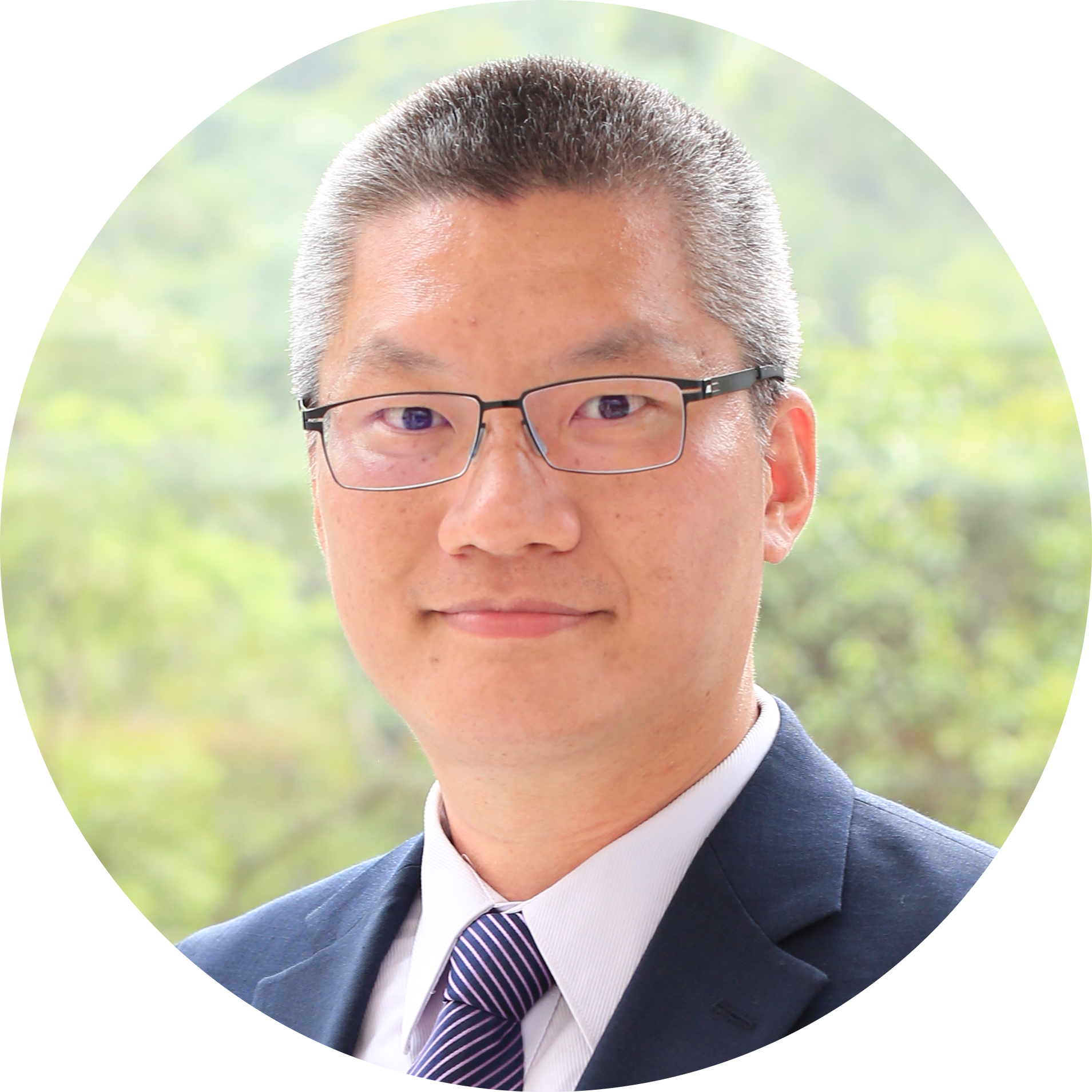
Wen-Chin Wu is a Research Fellow/Professor at the Institute of Political Science at Academia Sinica in Taipei, Taiwan. She has been appointed as the Lenore Annenberg and Wallis Annenberg Fellow at the Center for Advanced Study in the Behavioral Sciences (CASBS) at Stanford University for the 2025-26 academic year. Her academic profile demonstrates significant contributions to political science, particularly in comparative authoritarianism and political economy. Dr. Wu earned her B.A. from National Chengchi University (NCCU), M.A. from NCCU and Katholieke Universiteit Leuven, and Ph.D. from Michigan State University. She was a visiting scholar at the Harvard-Yenching Institute during the 2019-20 academic year. Currently, she serves as the coordinator of the Institute for Social Science Methodology funded by Taiwan's National Science and Technology Council. Her research primarily focuses on comparative and international political economy, comparative authoritarianism, and Chinese politics, with particular interest in economic statecraft and media dynamics in authoritarian regimes. Wu's work examines how dictators utilize trade policies to prolong political survival, how varieties of authoritarianism determine policy choices, and how Taiwanese citizens perceive cross-Strait relations and national security issues. Her methodological approach combines formal modeling, statistical analysis, and experimental survey techniques. Her recent publications reveal consistent scholarly productivity with research spanning authoritarian politics, trade policy, media freedom, and Taiwan security issues. Wu's work demonstrates sophisticated integration of theoretical frameworks with empirical evidence, particularly through survey experiments conducted in Taiwan and cross-national comparative analyses. Lenore Annenberg and Wallis Annenberg Fellow at CASBS, Stanford University (2025-26) Wu actively contributes to policy discussions through publications in outlets like The Diplomat and Global Asia. Her research on Taiwanese public opinion regarding cross-Strait relations and national security has informed contemporary debates on Taiwan-US-China dynamics. As coordinator of the Institute for Social Science Methodology, she plays a significant role in advancing methodological training for social scientists in Taiwan.
Alexandra Walsham is Professor of Modern History at the University of Cambridge and a Fellow of Emmanuel College. She previously held roles as Chair of the Faculty of History (2019-2022) and currently serves as President of the Historical Association. Her academic roots include a PhD from Trinity College, Cambridge, following studies at the University of Melbourne and Exeter University. Her research focuses on religious and cultural history of early modern Britain, particularly the Protestant and Catholic Reformations. Key themes include post-Reformation Catholicism, religious tolerance, providence, miracles, the history of the book, and the relationship between religion and landscape. Her work has been supported by grants from the British Academy, AHRC, and the Leverhulme Trust. Walsham has authored award-winning books like Providence in Early Modern England and The Reformation of the Landscape , and edited volumes on topics such as archives, memory, and confessional history. She has delivered prestigious lectures including the Ford Lectures at Oxford (2018) and the Wiles Lectures at Queen’s University Belfast (2024). Her professional service includes editorial roles for Past and Present and the Cambridge Studies in Early Modern British History series. She led the AHRC-funded 'Remembering the Reformation' project (2016-2019) and chairs the Early Modern Section of the British Academy. Awarded a CBE in 2017 and an honorary doctorate from Melbourne in 2023, Walsham’s work bridges academic rigor and public engagement, influencing both scholarly discourse and historical education.
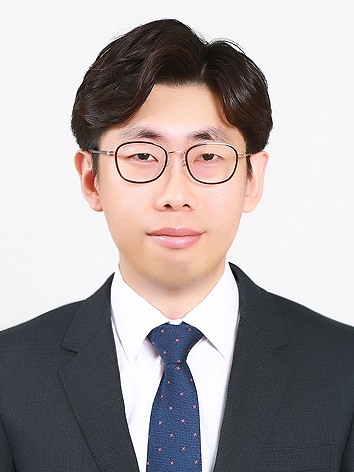
Inho Hong is an Assistant Professor at the Graduate School of Data Science, Chonnam National University (Gwangju, Korea), leading the Computational Social Science and Complex Systems Lab (CSL). His research explores socio-spatial systems through data science and complex systems methods, focusing on urban dynamics, human mobility, and AI's societal impact. Education: Ph.D. in Physics (2019), Pohang University of Science and Technology (POSTECH) M.S. in Physics (2012), POSTECH B.S. in Physics (2010), POSTECH Research Interests: Urban Data Science : Analyzing urban scaling laws and innovation pathways Human Mobility : Modeling intra-city movement patterns Social Impact of AI : Ethical and societal challenges Natural Language Processing : Text embedding for policy analysis Complex Systems : Network approaches to protests and epidemics Recent Work Trends: Over 2020–2022, his articles centered on pandemic control, protest networks, and urban green spaces' psychological impact. Recent 2023–2025 work extends to vocational education analysis and mobility laws within cities. His methods combine network science with large-scale data analytics. Awards: Young Statistical Physicist Award (Korean Physical Society, 2021) Best Paper Award (Korea Computer Congress 2021) Global Ph.D. Fellowship (NRF, 2014–2017) Grants & Labs: Current lab focuses on socio-spatial systems. Past roles include Associate Research Scientist at Max Planck Institute for Human Development (2020–2023) and Postdoctoral Fellowships at POSTECH and APCTP.
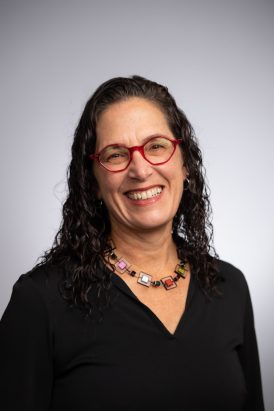
Jennifer Pan is a Professor of Communication at Stanford University, with courtesy appointments in Political Science and Sociology. Her research bridges political communication, digital media, and authoritarian politics, focusing on how censorship, propaganda, and information manipulation operate in the digital age. She employs experimental and computational methods to analyze large-scale political activity datasets, exploring how authoritarian and democratic regimes shape public preferences and behaviors through digital strategies. Her work extends to algorithmic effects on political attitudes and cross-national media dynamics. Key research areas: Authoritarian resilience, digital repression, social media manipulation, censorship mechanisms, computational political communication Methodologies: Experimental design, big data analysis, computational modeling, field studies in authoritarian contexts Her recent publications examine topics like disguised repression through non-political legal actions, gender compliance in authoritarian settings, and algorithmic amplification of political news. These studies often utilize randomized experiments and social media platform data.
Judit Bodnar is a Professor in the Department of Sociology and Social Anthropology at Central European University (CEU), affiliated with the Doctoral School of History. Her research spans urban theory, political economy of globalization, public space, and the cultural dimensions of capitalism. She actively contributes to academic discourse through publications and editorial roles. Research Interests: Urban theory and history Modernity and capitalism (comparative and historical) Uneven development Public space and public art Political economy and culture of globalization Sharing economy and digital platforms Food and politics Her recent work focuses on the transformation of public and private boundaries in the context of digital platforms like Airbnb and home restaurants, as well as the racial and spatial segregation of Roma communities in urban Europe. She critically examines the legacies of 1968 as a global moment and the gentrification of urban spaces such as Chicago’s Cabrini Green. The publication trends reflect a deep engagement with urban sociology, political economy, and cultural critique, especially in the context of neoliberalism, digital transformation, and global inequality. Her work bridges historical analysis with contemporary urban challenges. Editorial Role: Co-editor, Critical Historical Studies , University of Chicago Press Academic Events: Privacy Goes Public: Airbnb, Home Restaurant and the Reconfiguring of Public and Private in the Sharing Economy (November 24, 2021) Racial Cities: The Segregation of Roma in Urban Europe (October 5, 2017) She advises doctoral students in the Doctoral School of History and supervises research on urban and historical sociology. Her work is supported by interdisciplinary collaborations and engagement with global scholarly networks. She is involved in critical urban research, often linking theory with social justice concerns. Labs and Research Groups: Active participant in urban sociology and globalization research clusters at CEU Contributor to transnational dialogues on the right to the city and urban commons
Joanna Pawlik is an Associate Professor and Head of the Department of Art History at the University of Sussex, within the School of Media, Arts and Humanities. Her research focuses on modern art and literature, emphasizing transnationalism, avant-gardism, and protest movements. She has been funded by prestigious grants like the Leverhulme Trust and the AHRC. Her 2021 monograph Remade in America , awarded the MSA First Book Prize, examines Surrealism's role in American activism post-1940. Current research explores fascist iconography in American art (1945–1980), funded by a Leverhulme Fellowship. Education: PhD in Art History, University of Sussex (2003–2008) MA in Art History, York University, Canada (2021–2022) BA Hons in Art History, University of East Anglia (2018–2021) Research Interests: Her work investigates surrealism's transnational legacies, anti-fascist art, feminist/queer methodologies, and postwar American visual culture. She examines how surrealist principles intersect with race, gender, class, and activism in movements like the Beat Generation and Black Arts Movement. Grants & Awards: Leverhulme Research Fellowship (2020–2022) Leverhulme Trust Grant 'Radical America: Afterlives' (2016) MSA First Book Prize (2021) Professional Activities: Co-director of the SAVAnT Doctoral School promoting interdisciplinary American visual studies. Supervises PhD projects on postwar American art, anti-fascism, and feminist/queer art history. Engages in public scholarship through interviews and exhibitions.
Peter Gries is a Professor of Chinese Politics and the Lee Kai Hung Chair at the University of Manchester, serving as the founding Director of the Manchester China Institute. He previously held roles at the University of Oklahoma and the University of Colorado, Boulder. Born in Singapore, he holds degrees from Middlebury, the University of Michigan, and a PhD from UC Berkeley. His research focuses on political psychology, particularly U.S.-China relations and Chinese nationalism, with notable works including China’s New Nationalism and The Politics of American Foreign Policy . He leads initiatives like the UK-China International Photography Award and the UK-China Diplomatic Dialogue. His grants include funding from the Ford Foundation and Smith Richardson Foundation for projects on security dialogues and course development. He sits on editorial boards of The China Quarterly , Political Psychology , and Nations & Nationalism . Recent work explores racial stereotypes, intersectionality, and threat perception in international relations. Education : Bachelor's and Master's in Asian Studies from Middlebury and the University of Michigan PhD in Politics from UC Berkeley Research Interests : Political psychology of international affairs U.S.-China relations Chinese nationalism and foreign policy Public opinion dynamics Grants : $60,000 from Smith Richardson Foundation (2005–2006) Multiple grants from Ford Foundation and Mershon Center for Sino-American Security Dialogues $4,000 from Freeman Foundation for Chinese Foreign Policy course development Media Contributions : Expert commentary on BBC World News, NYT, and CGTN Discussions on U.S.-China trade wars, China’s Japan policy, and global perceptions of China Labs/Institutes : Manchester China Institute Former director of the Institute for US-China Issues at University of Oklahoma
Pauline Jones is a Professor of Political Science at the University of Michigan (UM) and the Edie N. Goldenberg Endowed Director for the Michigan in Washington Program. She also founded and directs the Digital Islamic Studies Curriculum (DISC). Her research focuses on institutional change in Central Asia, state regulation of religion, and pandemic policy responses. She holds a Ph.D. (with distinction) from Harvard University. Education: Ph.D. (Government), Harvard University, with distinction M.S. (Government), Harvard University B.A. (Political Science and History), UC Berkeley, with honors Her research explores how state religious policies affect political attitudes, pandemic compliance behaviors, and historical memory's role in foreign aid support. She has authored five books, including Institutional Change and Political Continuity in Post-Soviet Central Asia and The Oxford Handbook on Politics in Muslim Societies . Current projects analyze protest impact on authoritarian policies and historical narratives' influence on foreign policy. She has held leadership roles at UM’s Islamic Studies Program (2011-14), International Institute (2014-20), and currently directs the Michigan in Washington Program. Affiliated with the Global Islamic Studies Center, Center for Political Studies, and Weiser Center for Emerging Democracies. Teaches courses on radical Islam, Central Asian politics, qualitative methods, and pandemic governance. Her work appears in American Political Science Review , Annual Review of Political Science , and Foreign Affairs .
Prof. Dr. Barış ÇOBAN is a prominent academic and administrator at Doğuş Üniversitesi, serving as Dean of the Faculty of Arts and Sciences and Chair of the Department of Communication Sciences. He holds a PhD from İstanbul Üniversitesi (2004) and has held academic positions at multiple institutions since 1997, including roles as Assistant Professor at universities like Yeni Yüzyıl Üniversitesi and Okan Üniversitesi before becoming a full professor at Doğuş Üniversitesi in 2016. His academic journey also includes administrative roles like Dean (2018–present) and Department Chair at various institutions. His research focuses on alternative media, social movements, citizen journalism, and surveillance studies. Notable publications include works on digital journalism, Gezi Resistance activism, and counter-surveillance in Turkey. He has contributed to edited volumes such as Panoptikon 2.0 and Assault on Journalism , and his work frequently addresses media ethics, globalization impacts on communication, and the role of social media in societal change. Courses taught include 'Research in Mass Media,' 'Alternative Media,' and 'Media Ethics' in both Turkish and English. He has supervised over 10 master’s and doctoral theses on topics ranging from citizen journalism to media ethics in Turkey. His interdisciplinary approach bridges media theory with activism, emphasizing critical discourse analysis and media democratization efforts. Academic service includes roles on university boards, editorial work for journals like Communications , and contributions to international conferences on media freedom and journalist safety. His work highlights the intersection of technology, power dynamics, and media’s role in shaping societal narratives.
Dr. Galina Miazhevich is a Senior Lecturer at the School of Journalism, Media and Culture (JOMEC) at Cardiff University, UK. Previously, she served as a lecturer at the University of Leicester's School of Media, Communication and Sociology (2013-2017) and as the Gorbachev Media Research Fellow at the University of Oxford (2008-2012). Her academic career focuses on media representations in post-communist contexts, with particular expertise in Russian and Eastern European media landscapes. Dr. Miazhevich earned her PhD from the University of Manchester, where she subsequently worked for two years as a Research Associate on an AHRC-funded project examining representations of Islam as a security threat. Her educational background has informed her research trajectory, which bridges media studies, political communication, and cultural analysis of post-Soviet societies. Dr. Miazhevich's research spans several interconnected domains: media representations of Islam and multiculturalism in Europe; media and democracy in post-communist Europe; gender, media, and emergent forms of post-Soviet identity; feminism; Eurovision and popular culture; and diaspora, transnationalism, and media. Her work consistently examines how media shapes and is shaped by political transitions, identity formation, and social movements in post-Soviet contexts, with particular attention to marginalized voices and resistance practices. Analysis of Dr. Miazhevich's recent publications reveals a consistent focus on resistance, identity, and power dynamics in post-Soviet media environments. Her work increasingly examines gender and sexuality as political categories, particularly through the lens of feminist and LGBTQ+ resistance to authoritarian regimes. The Eurovision Song Contest serves as a recurring analytical framework for understanding cultural diplomacy and nation-branding strategies. More recently, her research has pivoted toward documenting anti-war resistance following Russia's invasion of Ukraine, examining how celebrities and media figures navigate political dissent under authoritarian conditions. Dr. Miazhevich has received several notable recognitions for her scholarly contributions: AHRC Leadership grant 'A Quiet Revolution: Discursive Representations of Non-heteronormative Sexuality in Russia' (2018-2020, £250,960) Visiting Fellowship at the Davis Centre for Russian and Eurasian Studies, Harvard University (Fall 2023) Fellow of the Higher Education Academy (FHEA) Associate Editor for the Oxford Encyclopedia of Race, Ethnicity, and Communication (2024) Dr. Miazhevich actively mentors the next generation of scholars, currently co-supervising PhD students Diyana Dobreva (with Professor Martin Innes) and John Tasker (with Professor Paul Bowman). She welcomes PhD proposals in areas including digital culture and resistance, media management and misinformation, media and democracy, representation of minority groups, post-communist identity politics, gender and feminism, Eurovision and popular culture, and geopolitics and nation-branding. Her grant portfolio demonstrates sustained success in securing competitive research funding, including leadership of an AHRC grant and participation in the Academy of Finland project FEMCORUS (2021-2025). Dr. Miazhevich is deeply engaged with academic communities, serving as co-convenor of the (Digital) Media and Culture group at the British Association for Slavic and East European Studies (BASEES) since 2016 and as a member of the Advisory Board of the European Communication Research and Education Association (ECREA) since 2021. Her work extends beyond academia through public engagement, including invited talks at prestigious institutions like Harvard University and participation in policy-relevant events at Chatham House addressing LGBTQ+ politics in Russia.
Revd Professor Andrew Atherstone is the Professor of Modern Anglicanism , Tutorial Fellow in Church History , and Latimer Research Fellow at Wycliffe Hall, University of Oxford. His career spans academic scholarship, parish ministry, and ecclesiastical advisory roles. Institutional Affiliation: University of Oxford (Wycliffe Hall) Academic Roles: Professor, Tutorial Fellow, Research Fellow Church Roles: Served on Church of England's Faith and Order Commission and Liturgical Commission Andrew’s research focuses on the intersection of Anglicanism and Evangelicalism , with particular emphasis on historical and theological dynamics. He has authored and edited numerous volumes exploring: Christian Fundamentalism (2023 Oxford Handbook) Charismatic Renewal (2021 Transatlantic Study) Reformation History (2011-2015 publications) Modern Anglican Leadership (2014 Welby biography) His work combines rigorous historical analysis with practical ecclesiological insights, examining how theological movements shape denominational identity and practice. Scientific contributions and awards include: Latimer Research Fellow (successor to Latimer House, Oxford-based Anglican Evangelical institute) Editorial leadership in key theological handbooks Andrew teaches courses on Anglicanism, Church History, Ecclesiology, and Evangelicalism, maintaining active engagement with contemporary church governance and theological discourse.
Professor Tony Kushner is the James Parkes Professor of History at the University of Southampton , affiliated with both the History Department and the Parkes Institute . His work spans Jewish migration history , Refugee studies , and Representation and memory of the Holocaust , with additional expertise in Bystander studies and Heritage, history and memory . Current Research: Cultural history of Jacob Harris (18th-century Jewish triple murderer); co-presentations to the Holocaust with Dr Aimee Bunting. Key Article Trends: Focus on Holocaust memory, urban Jewish communities, migration patterns, and intersections of race, colonialism, and genocide. Scientific Awards: BA Fellowship (Dr Jennifer Craig-Norton) K Pieren Postdoc Research Fellowship Hannah Ewence Postdoc Research Fellowship Kushner Rothschild Parkes Intl Summer School in Jewish Heritage PhD Supervision: Currently supervising 7 PhD students across History and Geography. Grants: Sponsored research projects from the British Academy and Rothschild Foundation (Hanadiv) Europe.
Susan Smith-Peter is a Professor of History at the College of Staten Island, City University of New York, specializing in Russian history beyond Moscow and St. Petersburg. Her research focuses on regional identity, civil society development, and imperial governance in 19th-century Russia, with particular attention to Siberia and provincial dynamics. She holds a Ph.D. from the University of Illinois at Urbana-Champaign and a B.A. from Ohio University. Her work analyzes how Tsarist administrative frameworks fostered subnational identities through statistical bureaus, agricultural societies, and provincial newspapers. Notable contributions include *Imagining Russian Regions* (2018), which argues that autocracy’s civil society initiatives inadvertently fueled revolutionary movements. Her research has been supported by grants from the Fulbright Program, American Historical Association, and IREX. Professor Smith-Peter’s publications span journals like *Slavic Review* and *Kritika*, exploring topics from sugar beet industries to colonial Alaska. She has translated key texts into Russian and edited historical documents such as *The Great Republic Tested by the Touch of Truth*. She serves on campus committees and previously chaired Columbia University’s Seminar on Slavic History and Culture. Key Awards: Fulbright Fellowship, American Historical Association Grant, IREX Grant Grants: Fulbright-Hays Fellowship, University of Illinois Grant, CUNY Grant Her interdisciplinary approach bridges economic, cultural, and political history, emphasizing regional agency within imperial contexts. Ongoing projects explore Siberian historiography and the legacy of 19th-century provincial activism.
Tal Simons is Professor of Organization Theory in the Department of Organisation and Personnel Management at Rotterdam School of Management (RSM), Erasmus University Rotterdam, and has been an ERIM Fellow since 2019. His research examines organizational responses to societal pressures through institutional and behavioral lenses. Simons' work centers on institutional theory applications in regulatory resistance, ideological dynamics, and organizational authenticity. He investigates how firms navigate social movements, media scrutiny, and moral legitimacy challenges across diverse sectors including tobacco, wine, and contemporary dance. His methodology blends historical analysis with qualitative case studies to uncover patterns in community cohesion, aesthetic innovation, and cross-cultural collaboration. Publication trends reveal an evolution from foundational studies on kibbutzim and Israeli wine industry transformation (1997-2010) toward contemporary analyses of CSR-media relationships, regulatory compliance, and authenticity construction (2015-2024). Recent work emphasizes ideological imperatives in news coverage and moral legitimacy frameworks, while maintaining consistent theoretical grounding in institutional logics and organizational ecology. Professional recognition includes: ERIM Fellow (2019–present) As an active doctoral supervisor, Simons mentors nine PhD candidates across organization theory and behavior domains. His advisees explore cross-cultural collaborations, multi-stakeholder organizing, sustainability-focused community enterprises, and societal change mechanisms. Supervision spans 2015 to present with roles as promotor and committee member, reflecting sustained commitment to developing organizational scholarship through next-generation researchers.