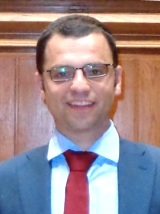
Corrine McConnaughy is a Research Scholar and Lecturer in the Department of Politics at Princeton University. Her research focuses on American democracy's institutional foundations, particularly how historically excluded groups shape political outcomes. She also specializes in political methodology and has contributed to initiatives expanding women's involvement in political research. Her work has been recognized with awards such as the Carrie Chapman Catt Prize and the Lucius Barker Award. Her expertise spans American Politics, Gender and Race/Ethnicity in Politics, Social Movements, and Voting Rights. She co-directs the Princeton Research in Experimental Social Science (PRESS) work group and helped establish the Visions in Methodology program. Her book The Woman Suffrage Movement in America: A Reassessment (2013) reinterprets women’s suffrage strategies. She frequently engages in public scholarship through media outlets like the Washington Post and Vox. Key Awards: Carrie Chapman Catt Prize, Lucius Barker Award Grants: National Science Foundation funding Public Engagement: Regular commentary in major media Methodological Contributions: Experimental design innovations, statistical validity frameworks Her research bridges historical analysis with contemporary political challenges, emphasizing institutional dynamics and marginalized voices.
Steven T Keener serves as Assistant Professor in the Department of Sociology, Social Work and Anthropology at Christopher Newport University and directs the Center for Crime, Equity and Justice Research and Policy. His educational credentials include a Ph.D. in Public Policy and Administration from Virginia Commonwealth University, an M.S. in Criminal Justice from the same institution, and a B.A. in Political Science with minors in Philosophy and Religious Studies from Christopher Newport University. Dr. Keener's research centers on the intersection of mental health and criminal justice systems, with specialized focus on prison reentry processes and criminal justice policy reform. His work examines how mental health crises manifest within judicial frameworks and correctional environments, particularly analyzing systemic barriers faced by formerly incarcerated individuals reintegrating into society. He investigates policy interventions aimed at reducing recidivism through mental health support systems and equitable justice practices. His publication trajectory reveals consistent emphasis on mental health crisis response protocols, carceral geography implications, and pandemic-era reentry challenges. Recent works analyze legislative approaches to mental health policing, Virginia's prison spatial distribution, and community-oriented policing effectiveness - demonstrating evolving focus from theoretical frameworks to actionable policy solutions. Dr. Keener currently leads a Virginia Humanities-sponsored initiative titled 'Strengthening and Expanding Humanities Content at the 2025 Hampton Roads Social Justice Conference' and mentors students in criminology and criminal justice policy courses. As Director of the Center for Crime, Equity and Justice Research and Policy, he oversees research initiatives connecting academic scholarship with community-based justice reform efforts, emphasizing data-driven approaches to systemic inequities in criminal legal systems.
Ava Hunt is an Associate Professor of Applied Theatre affiliated with the College of Arts, Humanities and Education. Her work focuses on applied theatre methodologies, particularly in contexts involving vulnerable populations, including young people in marginalized communities and individuals in war-torn regions. She explores themes such as co-creation, community resilience, and the transformative potential of performance. Key research projects include the Destinies initiative, which uses participatory theatre to foster inter-relational communities among vulnerable groups. Hunt’s work also addresses boundary negotiation in performance, such as in her Acting Alone series, which examines performer-audience dynamics and ethical engagement in political theatre. Her 2008 study highlighted challenges faced by drama educators in post-conflict Sri Lanka. Hunt’s publications span academic journals (e.g., Research in Drama Education , Journal of Applied Arts and Health ) and edited volumes on drama in education and youth theatre. Her presentations include contributions to conferences like the International Federation for Theatre Research and the Performing Care & Carelessness Conference . While no formal awards are listed, her research demonstrates sustained engagement with socially impactful theatre practices, emphasizing collaboration, mental health, and community-building.
Prof. Dr. Marcus Menzl is a Professor of Sociology of the Built Environment at Technische Hochschule Lübeck, leading the Urban Planning Bachelor Program within the Department of Civil Engineering. His expertise focuses on urban sociology, social processes in urban development, and suburbanization. He holds a Dipl.-Soz. from Freie Universität Berlin (1995) and a Dr. rer. pol. from TU Hamburg-Harburg (2006). His research explores housing trends, neighborhood dynamics, and inclusive urban development, with notable work on Hamburg’s HafenCity and Wolfsburg’s urban revitalization projects. Recent publications (2013–2018) address topics like urban transformation, social inclusion, and policy frameworks. Awarded the 2024 Student Teaching Award, Menzl has contributed to academic and applied urban studies through roles at HafenCity Hamburg GmbH, TU Berlin, and other institutions. His work bridges theoretical urban sociology with practical urban planning challenges.
Prof. Frank Esken holds dual roles as Professor of Psychology and Program Director for the Psychology (B.Sc.) program at the University of Europe for Applied Sciences (UE) in Iserlohn, Germany. His academic career includes prominent positions at institutions such as the University of Salzburg, University of Osnabrück, and the Hanse-Wissenschaftskolleg (HWK), where he contributed to interdisciplinary research on consciousness, metacognition, and normative dimensions of human behavior. Prior to UE, he served as Senior Scientist at the University of Salzburg (2018–2019) and Lecturer at the Stiftung EBWK (2017–2019). His research has been supported by prestigious programs including the EUROCORES-Programm, ESF-funded projects, and the DFG-FWF-SNF EU-DACH initiative. His work bridges philosophy and cognitive science, addressing topics like self-consciousness, social norms, and evolutionary psychology. Research interests include cognitive development, intersubjectivity, and the philosophical foundations of mind. His publications span over two decades, with notable contributions to journals like Phenomenology and the Cognitive Sciences , Developmental Review , and Information Philosophie . Awards and fellowships include: EUROCORES-Programm Research Fellow (2007–2008) Hanse-Wissenschaftskolleg Twin Research Fellow (2010–2011) ESF Project Research Fellow (2012–2016) His research collaborations span universities in Europe and beyond, emphasizing interdisciplinary approaches to understanding human and animal cognition.
Thom Ratkos is an Associate Professor in the Department of Psychological Science at Berry College and serves as Director of the Applied Behavior Analysis (ABA) program and Autism Program. He holds a PhD in Behavior Analysis from Western Michigan University (2017), an MA (2014), and a BS (2009) from Eastern Michigan University. His academic roles include teaching courses in behavior analysis for Berry's BCaBA course sequence and overseeing the ABA minor program. Dr. Ratkos’ research focuses on conceptual issues in behavior analysis, verbal behavior, and integrating sociological theories with behavioral principles. His clinical background includes early intensive behavioral intervention for children with autism and assessing problem behavior in school and outpatient settings. His publications emphasize experimental studies on verbal behavior, stimulus control, and applied behavior analysis. Notable recent works explore autoclitics, vocal blocking effects, and delayed matching-to-sample performance. He actively contributes to professional associations like the Association of Behavior Analysis International. Dr. Ratkos’ program administration includes coordinating the ABA curriculum and fostering interdisciplinary connections between behavior analysis and sociology. His work bridges theoretical research with practical applications in education and clinical settings.
Dr. Orbelina Eguizabal Escobar is a Professor of Christian Higher Education at Biola University's Talbot School of Theology. She holds a Ph.D. from Talbot School of Theology and dual M.A. and B.A. degrees from Central American Theological Seminary (Guatemala). Her roles include membership in Biola's Institutional Review Board (IRB) and service on Moody Bible Institute's Board of Trustees. Her expertise spans theological education leadership, curriculum design, and faculty development in Latin America. She has authored/co-authored books such as the three-volume Leadership in Theological Education series and contributed to Spanish translations like El liderazgo en la educación teológica . Her research focuses on Christian education strategies in growing churches, particularly in Latin America. She presents internationally on theological education and supports global Christian educational initiatives. Notable works include studies on spiritual formation among Latino Protestant communities and leadership frameworks for theological institutions.
Adriana Molina-Garzón is an Assistant Professor at the Paul H. O’Neill School of Public and Environmental Affairs, Indiana University Indianapolis. Her research focuses on sustainable development in rural areas, governance arrangements, and climate change impacts in developing countries, particularly in Central/South America and Africa. She holds a Ph.D. in Political Science from the University of Colorado Boulder, an M.A. in Economics, and a B.A. in Business Management and Economics from Los Andes University, Colombia. Her professional experience includes roles as an Assistant Professor at the University of New Mexico, a Research Fellow at the Inter-American Development Bank, and consultantships with the World Bank and Science Based Targets Network. She specializes in analyzing social and environmental projects, using methodologies like text-as-data, networks, and experiments to address governance challenges. Research interests span climate change mitigation, NGO roles in conservation, and institutional analysis. Her articles emphasize cross-scale governance, equity in conservation programs, and decentralized policy impacts. Current projects include studies on drone technology for healthcare access and environmental protests’ societal engagement. Teaching includes courses on environmental policy, program evaluation, and nonprofit leadership. Students praise her ability to blend theoretical concepts with practical experiments, fostering engagement in policy analysis and environmental governance.
Matthew Baggetta is an Associate Professor of Public & Environmental Affairs at Indiana University-Bloomington's Paul H. O'Neill School of Public and Environmental Affairs. His expertise lies in civil society, civic engagement, and social movements, with a particular focus on membership-based organizations and their impact on members and communities. Dr. Baggetta's educational background includes: Ph.D. in Sociology, Harvard University, 2009 M.A. in Sociology, Harvard University, 2005 B.A. in Sociology, University of Notre Dame, 2001 Baggetta's research focuses on how voluntary associations create opportunities for members to actively participate and lead organizations, and how these opportunities influence members and communities. His work examines civil society and civic engagement with particular attention to membership-based organizations. He has conducted studies of Sierra Club chapters, local community choirs, campus-based student groups, and large urban associations. A key contribution of his research is the development of a systematic social observation data collection tool for studying civic activity, which he applies in the Observing Civic Engagement Project. His publications reveal consistent themes across political science, sociology, and nonprofit studies, with a focus on how organizational structures influence civic engagement, leadership development, and social capital formation. Baggetta's work particularly emphasizes the importance of creating meaningful participation opportunities within associations and how these opportunities can transform both individual members and broader communities. Dr. Baggetta has received numerous awards and grants for his research: Co-recipient of $10,000 Dugan Research Award for Philanthropic Impact (2018) Recipient of $290,000 in federal research grants from the Corporation for National and Community Service (2017-19) Outstanding Junior Faculty Award from IU (2015) Recipient of $50,000 research grant from the Spencer Foundation (2014) Outstanding Academic Publication Award from N.C. State University (2013) Trustee's Teaching Award (2014, 2016) Certificate of Teaching Excellence from Harvard University (2009, 2010) Baggetta actively contributes to the academic community through service on the board of directors of the Melos Institute, a think tank focused on membership-based organizations, and by contributing to Mobilizing Ideas, an interdisciplinary blog focused on social movements. His research has been supported by multiple federal and foundation grants, demonstrating the significance and impact of his work in understanding civil society. Through the Observing Civic Engagement Project, Baggetta leads innovative research applying systematic social observation methods to study civic activity across diverse organizational settings. This project represents a significant methodological contribution to the field of civil society research.
Joel Nathan Rosen is an Associate Professor of Sociology and Media Studies at Moravian University, where he also serves as Director of the Communications and Media Studies Program. His work bridges sociology, media analysis, and cultural studies, focusing on sport, celebrity, and American cultural identity. Rosen holds a B.S. from Ohio State University, two M.A.s from the University of Mississippi, and a Ph.D. in Sociology from the University of Kent-Canterbury. His research explores media's portrayal of human efficacy through cultural phenomena like sport, music, and celebrity. Key interests include moral panics in media, African-American and Southern culture, and the evolving relationship between sport and societal values. Rosen has authored or co-edited numerous books, including The Erosion of the American Sporting Ethos and volumes in the Sport and Celebrity series. Rosen's recent publications (2022–2021) emphasize sport as a cultural spectacle, celebrity dynamics, and racial/gender narratives in media. His work critiques commercialization of activism, athlete stardom, and the erosion of traditional competitive ethics. He has contributed to journals such as NINE: A Journal of Baseball History and Culture and Media History Monographs . No scientific awards are listed in the provided materials. His advising and grant activities are unreported here. Rosen’s personal website ( www.joelnathanrosen.org ) likely contains additional research and professional updates.
Diana J. Leonard is an Associate Professor of Psychology and Department Chair at Lewis & Clark College in Portland, Oregon. She holds a PhD in Social Psychology from the University of California, Santa Barbara (2012) and a BA in Psychology from Northwestern University (2004). Her research focuses on social and political psychology, particularly intergroup communication, racial passing, and role-playing games (e.g., larp) as tools for understanding group dynamics. Her work examines how emotions shape intergroup apology, perceptions of victimization, and reactions to group disadvantage. She also investigates moral judgments of racial passing and applies psychological frameworks to larp communities. Professor Leonard teaches courses including Social Psychology, Research Methods, and Virtual Identities. She has received awards such as the Kris Williams Impact Award for her contributions to diversity and inclusion initiatives. Her research has been published in journals like Group Processes & Intergroup Relations , Journal of Experimental Social Psychology , and International Journal of Role-playing . She directs the ESIP Lab, studying emotions and social identity in psychology, and collaborates on projects funded by grants from the John S. Rogers Science Research Program and the Miller Foundation.
Shubha Kamala Prasad is an Assistant Professor of International Relations at the Hertie School in Berlin, Germany. Her research focuses on domestic sources of foreign policy, including substate conflict and diaspora mobilization. She holds a PhD in Political Science from Georgetown University (2020), an MPhil and MA in International Politics from Jawaharlal Nehru University (New Delhi), and was a Max Weber Postdoctoral Fellow at the European University Institute (2020–2022). Her work also includes organizing Track II Dialogues between India and Pakistan to foster diplomatic engagement. Dr. Prasad’s academic journey includes teaching and research positions at leading institutions, reflecting her expertise in conflict studies, human rights, and transnational politics. Her recent contributions explore how domestic insurgencies influence UN voting patterns and diaspora groups’ roles in shaping foreign policy. She has published widely on topics ranging from pandemic governance in India to the intersection of religion in international relations theories. Education: PhD in Political Science, Georgetown University (2020) MPhil & MA in International Politics, Jawaharlal Nehru University (India) Awards & Fellowships: Max Weber Postdoctoral Fellowship (2020–2022) Advising & Grants: While no specific grants are listed, her research often bridges policy-relevant topics like conflict resolution and transnational advocacy. She contributes to initiatives at the Hertie School’s Centres for International Security and Digital Governance. Labs/Teams: Engaged with interdisciplinary groups at the Hertie School, though no specific lab affiliation is explicitly stated.
Christopher Mercado is an Adjunct Assistant Professor in the The Lesley H. and William L. Collins College of Professional Studies at St. John's University. He teaches courses including CRJ 2001 (Theories of Crime), CRJ 2002 (Police and the Community), and CRJ 2004 (American Correctional Systems). His research focuses on policing dynamics, public safety, and the Ferguson Effect's impact on law enforcement behavior. Research Interests: Exploring how societal events like the Ferguson protests influence police-community relations and officer engagement strategies. His work bridges criminological theory with practical implications for public safety policy. No awards or grants are explicitly listed. He advises no formally documented students. No specific labs or teams are mentioned in his profile.
Luc TESSIER is an Associate Professor of Finance and Accounting at EM Normandie since 2017, affiliated with the Department of Law, Finance & Control. He holds a PhD in Economics from Université Paris Nanterre and ENS-Cachan (2001), focusing on collective innovation trajectories and technological transformations. His research explores business trajectory analysis, entrepreneurial failure, SME growth dynamics, and economic policy impacts. TESSIER has published extensively in top-tier journals like Small Business Economics and Canadian Journal of Administrative Sciences , with notable contributions to understanding business angel investments and French industrial policy reforms. Education: PhD in Economics (2001), Université Paris Nanterre & ENS-Cachan Research Interests: Business performance and trajectories Economic policy evaluation (e.g., CVAE abolition) Entrepreneurial finance and Business Angel dynamics Post-pandemic labor market transformations Renewable energy economics (biogas/agricultural methanization) Key Achievements: 2024 AOM Best Paper Award for work on 'The Great Resignation' Lead researcher in cross-border studies on Business Angel practices Teaching: Financial Analysis, Accounting, and Finance modules across executive programs.
Georgios Karyotis is a Professor of Security Politics at the University of Glasgow's School of Social and Political Sciences, Department of Political & International Studies. He joined the university in 2013 after working at the University of Strathclyde since 2004. Holding a PhD in International Security from the University of Edinburgh (2005), he specializes in international security theory, austerity politics, and migration policy. His research focuses on securitization theory development, protest dynamics under austerity, and migration integration challenges in Greece and beyond. Key research areas include: 1) conceptual/methodological extensions of securitization theory (e.g., mixed methods analysis of elite-audience interactions), 2) comparative austerity politics (including British Academy-funded work on protest and voting behavior in Greece), and 3) migration policy outcomes (Carnegie Trust-funded studies on migrant lived experiences in Greece). He co-edited *The Politics of Extreme Austerity: Greece in the Eurozone Crisis* (Palgrave Macmillan, 2015) and serves as Secretary of the Greek Politics Specialist Group (GPSG) of the Political Studies Association (PSA). His work frequently engages with policy impacts and public attitudes, analyzing topics like desecuritization of migration, crisis governance, and refugee protection frameworks. Recent projects include UK-focused studies on pandemic politics and refugee empathy dynamics. Grants include British Academy and Carnegie Trust funding. He actively supervises PhD topics related to his core research areas. Affiliations: University of Glasgow | Greek Politics Specialist Group (GPSG) | Dianeosis Think-Tank collaborator | Konrad-Adenauer-Stiftung contributor. Teaching focuses on international relations, securitization theory, and global political challenges.