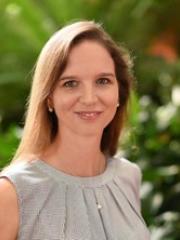
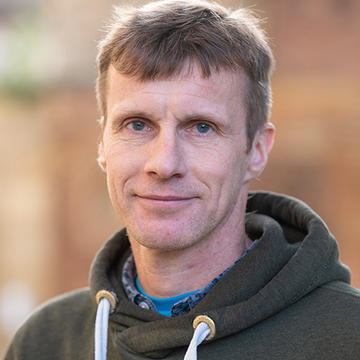
Dr. Janin Chandra is a Senior Research Fellow at the Frazer Institute, University of Queensland, leading her own lab since 2023. Her research focuses on immune regulation in HPV-driven cancers, antigen-presenting cells, and squamous cell carcinomas. She holds a PhD in Immunology from the University of Zurich and has extensive postdoctoral experience at UQ and biotech companies like Admedus Vaccines. She has published over 35 journal articles, contributed to clinical trials, and received the Garnett Passe Mid-Career Fellowship (2023–2027). Education: Master of Science (Goethe University, Frankfurt), PhD (University of Zurich). Research highlights include developing HPV vaccines, studying immune suppression mechanisms, and investigating Langerhans cell dysfunction in tumors. Her work bridges immunology and oncology, targeting therapies to modulate antigen-presenting cells. Research Interests : HPV-induced immune evasion mechanisms Antigen-presenting cell biology in cancer Clinical development of DNA vaccines Immune microenvironment of head/neck and cutaneous cancers Grants & Awards : Current funding includes targeting cancer-associated fibroblasts (Garnett Passe Fellowship). Past grants involve microbiome analysis and vaccine development. Lab Activities : Her lab investigates intra-tumor immune regulations and develops novel immunotherapies. Collaborations span veterinary oncology and microbiome research.
Jonathan Doye is a Professor of Theoretical Chemistry at the University of Oxford, affiliated with Queens College. He holds positions in the Department of Chemistry and collaborates with the Brandeis Bioinspired Soft Materials MRSEC. His research focuses on theoretical and computational studies of soft matter and biomolecular systems, including DNA biophysics, DNA nanotechnology, liquid crystals, and quasicrystals. He co-developed the oxDNA coarse-grained model for DNA simulations, widely used in nanotechnology research. Education: Bachelor’s and PhD in Theoretical Chemistry from the University of Cambridge Postdoctoral research at FOM Institute in Amsterdam (1996–1998) Research Interests: Coarse-grained modeling of DNA and RNA Patchy-particle self-assembly (including quasicrystals) Prokaryotic S-layer structural analysis Liquid crystal phase behavior of DNA origami rods Key Achievements: Discovery of one-component icosahedral quasicrystals via patchy particles Development of oxDNA model for DNA origami simulations Structural elucidation of S-layers across prokaryotes Awards: Royal Society of Chemistry Harrison Memorial Prize (2000) Labs/Teams: Jonathan Doye's Research Group focuses on computational studies of soft matter systems, with experimental collaborations in DNA nanotechnology and materials science.
Professor Nick Turner is a Professor in Bioanalytical Chemistry at the University of Sheffield's Department of Chemistry within the School of Mathematical and Physical Sciences. He holds a BSc in Pharmacology (University of Southampton, 1997), an MRes in Biochemistry (University of Exeter, 1999), and a PhD in Bio-organic Chemistry (Cranfield University, 2004). His career includes roles at the University of Utah, University of Newcastle (Australia), Open University, and De Montfort University, where he progressed from Lecturer to Reader in Bioanalytical Chemistry. In 2022, he received an EPSRC Established Career Fellowship for artificial chaperone research and was awarded a personal chair. His research focuses on molecular recognition, particularly molecularly imprinted polymers (MIPs) for biosensing, nucleic-acid-polymer hybrids, and artificial chaperones. These technologies address challenges in drug detection, environmental monitoring, and biomedical diagnostics. He actively supports PhD applications in these areas. Awards: EPSRC Established Career Fellowship (2022), Senior Fellowship of HEA (2016) Professional Memberships: Royal Society of Chemistry, Macro Group UK (Secretary) Teaching interests include analytical chemistry and pharmacology, emphasizing modern techniques like VR/AR in drug design education. He contributes to interdisciplinary projects such as the Open Science Laboratory and MOOC development.
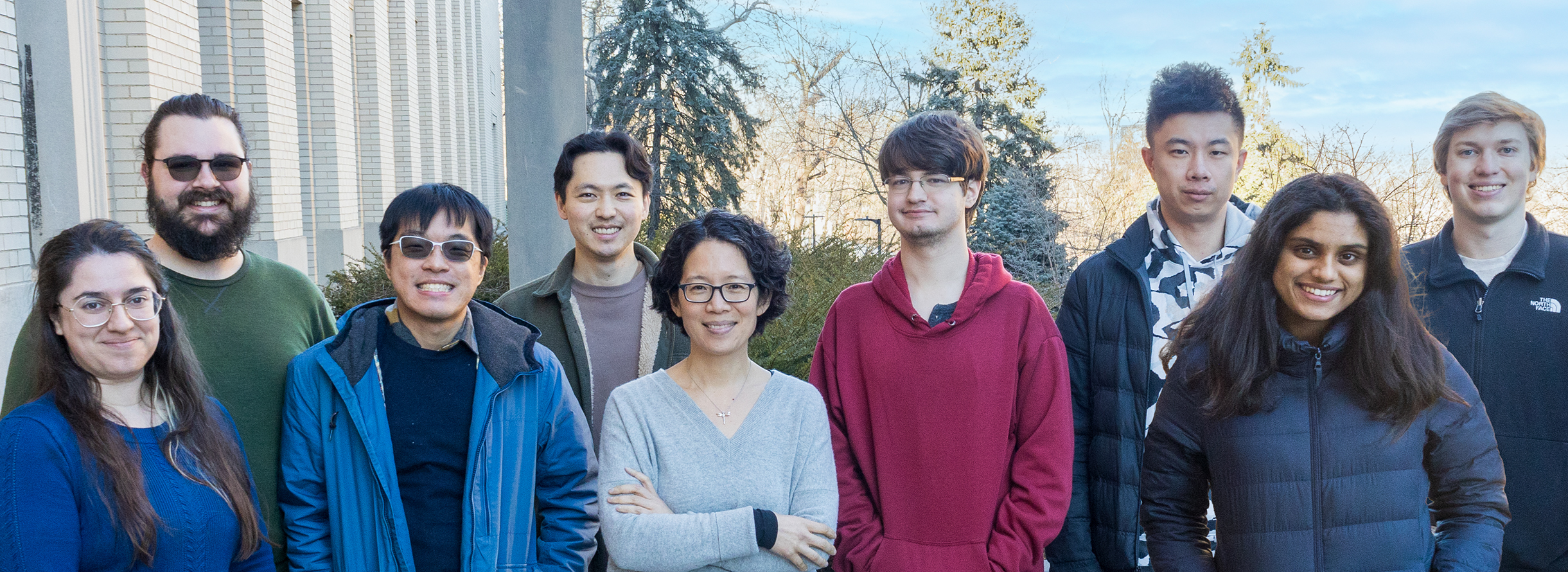
Lillian T. Chong is a Professor in the Department of Chemistry at the University of Pittsburgh, affiliated with the Kenneth P. Dietrich School of Arts and Sciences. She leads the Chong Lab, focusing on computational biophysics and biomolecular simulations. Her research emphasizes developing advanced simulation methods like weighted ensemble (WESTPA) for studying rare events in biomolecules, such as protein folding, binding pathways, and conformational switches. Research Interests: - Development of weighted ensemble algorithms for long-timescale simulations - Protein-protein binding kinetics and unbinding pathways - Design of switchable proteins with enhanced dynamic properties - Integration of experimental data (e.g., NMR, EPR) with simulations Recent Article Trends: Recent work explores ligand unbinding mechanisms, glycan-mediated spike protein dynamics, and force field validation. The lab’s methods are applied to drug discovery, viral entry mechanisms, and enzyme catalysis. Awards & Honors: Gordon Bell Special Prize for HPC-Based COVID-19 Research (2020) NSF CAREER Award (2009-2014) Bellet Teaching Excellence Award (2017) Advising & Grants: Advised students including Darian Yang (PhD 2023) and Jeremy Leung (PhD 2023). Funded by NSF and industry grants, including work on SARS-CoV-2 spike protein dynamics and force field development. Labs & Teams: The Chong Lab collaborates with groups at CMU and NIH, developing open-source tools like WESTPA and LPATH . Research spans Pittsburgh’s computational biophysics community, with interdisciplinary projects in drug design and protein engineering.
Sachi Horibata is an Assistant Professor in the Department of Pharmacology & Toxicology at Michigan State University (MSU), affiliated with the College of Human Medicine. She is also associated with the Precision Health Program and the Neuroscience Program. Her research focuses on cancer biology, drug discovery, and computational genomics, with a particular emphasis on understanding mechanisms of drug resistance in cancers like acute myeloid leukemia (AML) and breast cancer. Dr. Horibata’s work integrates proteomics, transcriptomics, and cellular models to uncover therapeutic targets and biomarkers. She holds a PhD in Biological and Biomedical Sciences from Cornell University (2010–2016). Her research interests include genomic analysis of cancer heterogeneity, enzyme-driven cancer progression (e.g., PAD enzymes), and immune evasion mechanisms in tumors. Her recent studies highlight the role of protein citrullination in cancer cell migration and endocrine resistance. Dr. Horibata’s publications span topics in oncology, immunology, and molecular biology, with a focus on translational research. She teaches PHM 802: Cellular, Molecular and Integrated Systems Pharmacology. Her lab is located in the Interdisciplinary Science and Technology Building at MSU.
University of North Carolina at Chapel HillUnited States
Jenny PY Ting, PhD, is the William R. Kenan, Jr. Distinguished Professor of Genetics at the UNC School of Medicine and a member of the UNC Lineberger Comprehensive Cancer Center. She serves as Director of the Center for Translational Immunology and Co-Director of the Inflammatory Diseases Institute. Her research focuses on innate immunity, inflammation, and the molecular mechanisms underlying autoimmune diseases, cancer, and neuroinflammation. Dr. Ting's lab investigates the NLR protein family, particularly their roles in inflammasome activation, MHC regulation, and microbial sensing. She has discovered critical functions of NLRC5 and CIITA in immune gene transcription and pioneered studies on plexin-semaphorin signaling in immune cell interactions. Her work on SARS-CoV-2 revealed necroptosis-driven cell death cascades in airway cells, informing therapeutic strategies against cytokine storms. Key Projects: Microbiome-based therapies for multiple sclerosis Targeting NLRP3 inflammasomes in inflammatory diseases Role of plexins in T cell activation and sepsis Awards: National Academy of Sciences member (2022), AAI Distinguished Fellow (2023), ICIS-Pfizer Award (2021). Her lab employs cutting-edge techniques including transcriptomics, proteomics, and murine models. Collaborations span virology, oncology, and neurobiology, with translational goals for immune-based therapies.
Sang-Hyun Oh is Distinguished McKnight University Professor and Sanford P. Bordeau Chair in Electrical and Computer Engineering at University of Minnesota. His research develops nano-optical tools for biomedical applications, specializing in plasmonic biosensors, nanophotonic devices, and optical manipulation techniques. Key innovations include nanofluidic platforms for single-molecule analysis, high-Q metasurfaces for vibrational spectroscopy, and waveguide-integrated optical tweezers. Recent projects focus on diagnostic technologies such as Nano-QuIC for Parkinson's detection and computational design of upconversion materials. His laboratory advances nanofabrication methods including template stripping and atomic-layer lithography to create plasmonic nanostructures with atomic-scale precision. Collaborative projects bridge photonics, neuroscience, and clinical medicine to develop next-generation biosensors.
John M. Archibald is a Professor in the Department of Biochemistry and Molecular Biology and the Department of Microbiology & Immunology at Dalhousie University's Faculty of Medicine in Halifax, Nova Scotia, Canada. He serves as Director of the Institute for Comparative Genomics (ICG) and holds the Arthur B. McDonald Research Chair of Excellence. Dr. Archibald has been a department member since 2003 and was University Research Professor from July 2016 to June 2021. Dr. Archibald earned his PhD from Dalhousie University. Following postdoctoral research at the University of British Columbia with Patrick Keeling, he returned to Dalhousie as a faculty member in 2003. Dr. Archibald's research focuses on the genes and genomes of microorganisms, particularly examining how genes are transferred between eukaryotes, prokaryotes and viruses, and how endosymbionts become organelles. His laboratory uses molecular biological and computational methods to study the genes and genomes of prokaryotic and eukaryotic microorganisms. Key research areas include the pivotal molecular and biochemical events that have shaped eukaryotic evolution, understanding evolutionary relationships among eukaryotic microbes, how endosymbionts become organelles, and how eukaryotic genes, genomes and proteins change over time. Current work examines the spread of photosynthetic organelles (chloroplasts) in eukaryotes and the extent of lateral (horizontal) gene transfer in nuclear genomes. His recent publications demonstrate a strong focus on protist genomics, endosymbiosis, and the evolution of eukaryotic cells. The research spans multiple disciplines including genomics, evolutionary biology, microbiology, and bioinformatics, with particular emphasis on understanding the complex evolutionary history of eukaryotes through comparative genomic approaches. His work often involves international collaborations and large-scale genomic projects. Dr. Archibald has received numerous scientific honors including: Election as Fellow of the Royal Society of Canada Election as Fellow of the American Academy of Microbiology (2015) Arthur B. McDonald Research Chair of Excellence University Research Professor (July 2016-June 2021) Membership in the Canadian Institute for Advanced Research (2003-2017) Visiting By-Fellow at Churchill College, University of Cambridge (2012) Appointment to the Royal Society of Canada's College of New Scholars, Artists and Scientists (2017) Dr. Archibald actively mentors graduate students and postdoctoral fellows, with current advisees including PhD students Cedric Blais, Dmytro Tymoshenko, and Jessica Latimer, and MSc student Charlotte Maclean. His lab has received substantial research funding that supports these trainees and enables cutting-edge genomic research. He has served in editorial roles for prestigious journals including Current Biology, Environmental Microbiology and BMC Biology, and was Treasurer of the International Society for Molecular Biology & Evolution (2009-2011). The Archibald Lab operates within the Institute for Comparative Genomics at Dalhousie University, which was officially launched in September 2021 with Dr. Archibald as Director. The lab maintains active collaborations with researchers worldwide and contributes to major international genomic initiatives including the Aquatic Symbiosis Genomics Project.
Dr. Praveen Nekkar Rao is an Associate Professor in the Department of Medicinal and Bioorganic Chemistry at the University of Waterloo, cross-appointed to the Departments of Biology and Chemistry within the Faculty of Science. His research focuses on rational drug design, medicinal chemistry, and the development of therapeutic agents for neurodegenerative disorders, cancer, and viral infections. He holds a PhD in Pharmaceutical Science (University of Alberta, 2004) and postdoctoral training at The Scripps Research Institute (2006–2008) and the University of Alberta (2004–2005). Dr. Rao’s work integrates molecular modeling, synthetic organic chemistry, and high-throughput screening to discover novel drug candidates. Key areas include amyloid aggregation inhibitors for Alzheimer’s disease, TDP-43-binding ligands for neurodegenerative diseases, and repurposing DPP4 inhibitors for SARS-CoV-2. He collaborates internationally with institutions such as the University of Alberta, Florida Atlantic University, and Daping Hospital, China. Teaching: Courses in medicinal chemistry, toxicology, and patient-focused care (e.g., PHARM 141, PHARM 220–224, PHARM 320–324). Awards: 2021–22 and 2016 Outstanding Faculty Mentor, 2015 Early Researcher Award (Ontario). Labs: Medicinal and Bioorganic Chemistry Lab at Waterloo, focusing on peptide synthesis, medicinal chemistry, and drug discovery. His research has led to patents (e.g., Indolizine derivatives, WO2013116948) and media coverage for breakthroughs in Alzheimer’s therapy and antiviral strategies.
Ana Maria Gomes is an Associate Professor at the Faculty of Biotechnology of Universidade Católica Portuguesa (UCP), affiliated with the Centre for Biotechnology and Fine Chemistry (CBQF). She holds a PhD in Biotechnology (1999) and specializes in probiotics, functional foods, and bioactive compounds. Her research focuses on enhancing food systems through innovative processing techniques and valorizing byproducts for health benefits. Education: PhD in Biotechnology (1999) Affiliations: CBQF, UCP Faculty of Biotechnology Key Projects: PeptiBiotics (2023-2024), AWARE (2022-2026), VIIAFOOD (2021-2025) Research Interests: Probiotics, functional food development, antioxidant mechanisms, and food biotechnology. She explores applications in antimicrobial peptides, alternative proteins, and sustainable food systems through interdisciplinary collaborations. Recent work includes studies on diatom bioactivity, avocado oil metabolism effects, and high-pressure cheese processing. Awards include the NEWFOOD 2020 prize for food innovation and recognition for obesity-prevention yogurt research. Supervised 46 academic works at UCP Active in grants: FIND4S (2024-2027), STARGATE (2021-2023) Labs/Teams: Leads CBQF’s food biotechnology initiatives and collaborates with the VIIAFOOD innovation platform.
Dr. Chad Paulk is an Associate Professor in the Department of Grain Science and Industry at Kansas State University. His research focuses on Feed Processing Technologies, Monogastric Nutrition, and Quality Assurance/Feed Safety. He holds a B.S. from the University of Georgia (2009) and M.S./Ph.D. degrees from Kansas State University (2011/2014). Previously, he served as an Assistant Professor of Swine Nutrition at Texas A&M University (2014–2017). His current role involves 60% research and 40% teaching, including courses like GRSC 100 (Foundations in Grain Science) and GRSC 650 (Nutritional Impacts of Processing). He advises Feed Science undergraduate students and co-leads the Feed Science Club. Key research themes include optimizing feed processing parameters, mitigating pathogen risks in feed systems, and evaluating novel feed ingredients like Kernza® grain. Recent work emphasizes viral pathogen detection in feed mills (e.g., African swine fever virus), enzyme supplementation effects, and the impact of feed particle size/pelleting on nutrient digestibility. He collaborates with industry partners to enhance feed safety protocols and sustainable practices. Laboratory affiliations include the BIVAP Feed Quality Assurance Lab and the O.H. Kruse Feed Technology Center. His research has addressed critical issues like mitigating porcine epidemic diarrhea virus contamination and optimizing feed formulations using thermal processing and organic additives.
Shang Song is an Assistant Professor of Biomedical Engineering and Materials Science and Engineering at the University of Arizona , where she leads the Integrated BioDesign Lab. Her work bridges advanced engineering methods with cell therapies to develop microphysiological platforms and regenerative treatments. Education: PhD in Bioengineering from University of California Berkeley and University of California San Francisco BS in Biomedical Engineering (Honors) from Brown University Dr. Song's research focuses on manipulating cellular microenvironments to create novel therapeutics. Key areas include conductive biomaterials for stem cell therapy, organ-on-chip systems , and neural repair through electrical stimulation. Her work spans molecular, cellular, and organ-level biological scales to address translational challenges in human health. Recent publications highlight trends in conductive hydrogels , electrical modulation of stem cells , and microfluidic blood-brain barrier modeling . These align with her lab's emphasis on multi-scale engineering solutions for regenerative medicine. Scientific Awards: George H. Davis Fellowship (2025) ORAU Ralph E. Powe Junior Faculty Enhancement Award (2024) American Heart Association Career Development Award (2024) Arizona Biomedical Research Centre New Investigator Award (2024) NIH F32 Fellowship (2019) Forbes 30 Under 30 (2016) NSF Graduate Research Fellowship (2010) Gates Millennium Scholar (2006) Her lab integrates advanced engineering design with disease-mimicking models to create organs-on-chips platforms and regenerative strategies that address clinical needs through cross-disciplinary innovation.
Ditte Hededam Welner is a Senior Researcher & Group Leader at the Novo Nordisk Foundation Center for Biosustainability, Technical University of Denmark. Her research focuses on Enzyme Engineering and Structural Biology, particularly the development of enzyme biocatalysts for sustainable industrial production of natural products like aromas, dyes, and pharmaceuticals. She leads efforts to replace petroleum-based chemical synthesis with eco-friendly bio-based processes, emphasizing glycosyltransferase (GT) engineering to enhance substrate specificity, efficiency, and stability. Education: Biochemistry, University of Copenhagen (2000–2011). Research Interests: Glycosylation mechanisms, high-throughput enzyme discovery/evolution, structural biology techniques (X-ray crystallography, NMR), and biocatalysis applications in sustainable chemistry. Her work contributes to UN SDG 9 (Industry, Innovation, and Infrastructure) and SDG 12 (Responsible Consumption and Production). Recent publications highlight advancements in alginate degradation mechanisms, sucrose synthase engineering, and glycosyltransferase applications in biocatalytic routes for indigo/indican production. She supervises multiple PhD projects on enzyme optimization, machine learning for enzyme engineering, and sustainable bioprocessing. Professional Activities: Peer review for journals like Nature Catalysis and Metabolic Engineering , conference organization, and editorial contributions. Active in promoting open-access science and sustainable biotechnology. Labs/Teams: Leads the Enzyme Engineering and Structural Biology group at DTU, collaborating with industry and academic partners globally to advance biocatalytic solutions for environmental challenges.
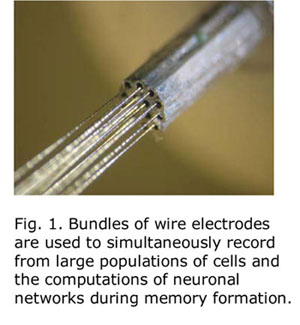
Stefan Leutgeb is a Professor in the Department of Neurobiology at the University of California San Diego (UCSD), affiliated with the School of Biological Sciences. His research focuses on the neural mechanisms underlying long-term memory storage, particularly the role of coordinated neuronal activity and synaptic plasticity in hippocampal and cortical networks. His work investigates how spatial and nonspatial information is encoded, how memory systems degrade in aging and neurodegenerative disorders like dementia, and the translational implications of these findings. Key research areas include hippocampal ensemble dynamics, temporal organization of neuronal activity, and the impact of Alzheimer’s-related proteins (e.g., APP) on neural networks. Leutgeb employs multi-electrode recordings, optogenetics, and computational modeling to study these processes. His lab has discovered critical mechanisms such as pattern separation in the dentate gyrus and the role of theta oscillations in memory encoding. Notable recent contributions include studies on how hippocampal network dysfunction due to APP expression disrupts spike timing ( 2022 ), theta oscillation roles in memory phases ( 2021 ), and the necessity of dentate gyrus activity for spatial working memory ( 2018 ). Despite no explicitly listed awards, his prolific publication record reflects significant contributions to systems neuroscience. Leutgeb’s research also explores cognitive aging and cross-species comparisons of neural processes. His lab emphasizes translational research, aiming to bridge basic neuroscience discoveries with clinical applications for neurodegenerative diseases. Current projects include investigating hippocampal ensemble dynamics during memory retention and developing biomarkers for cognitive flexibility.
Prof. Dr. Jörg Stülke is a full Professor of Microbiology and Head of the Department of General Microbiology at the Institute of Microbiology and Genetics, University of Göttingen. He has held this position since 2003 and leads an active research group focused on bacterial metabolism and gene regulation. His research spans two major model systems: the pathogenic bacterium Mycoplasma pneumoniae and the well-studied Bacillus subtilis . His group employs systems-level approaches including transcriptomics, metabolomics, and bioinformatics to understand metabolic regulation and gene expression. Key interests include protein phosphorylation, RNA-mediated regulation, mRNA processing, and the role of second messengers such as cyclic di-AMP in bacterial physiology and pathogenicity. The recent publications reveal a strong trend in molecular microbiology, functional genomics, and systems biology. His work often integrates experimental and computational methods, particularly evident in the development and maintenance of the SubtiWiki database for B. subtilis . The research bridges fundamental mechanisms of life with applications in understanding bacterial virulence and cellular homeostasis. He is affiliated with several graduate programs under the Göttingen Graduate Center for Neurosciences, Biophysics, and Molecular Biosciences (GGNB), including: Molecular Biology (IMPRS) Biomolecules: Structure - Function - Dynamics (GZMB) Molecular Biology of Cells (GZMB) Microbiology and Biochemistry Genome Science (IMPRS) While no individual students are listed, he clearly supervises doctoral candidates through these programs. His group has secured significant research output, including publications in Science , Nucleic Acids Research , and PLOS Pathogens , indicating successful grant funding and collaborative research. The lab maintains a dedicated website at http://genmibio.uni-goettingen.de/ , which serves as a hub for research activities and resources like SubtiWiki.