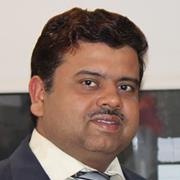
Xiaoze Pei is a Professor in the Department of Electronic & Electrical Engineering at the University of Bath, affiliated with the Institute for Advanced Automotive Propulsion Systems (IAAPS) and the Electronics Materials, Circuits & Systems Research Unit (EMaCS). His research focuses on superconductivity applications in electric systems, cryogenic power electronics, and DC network technologies for aerospace and renewable energy integration. Key projects include leading initiatives such as Towards Zero Emissions Electric Aircraft through Superconducting DC Distribution Network and HSTEA - Aerospace R&I , addressing challenges in electric propulsion, fault current limiters, and cryogenic power converters. His work contributes to UN Sustainable Development Goals related to clean energy and sustainable transport. Expertise: Superconducting fault current limiters (SFCL), DC circuit breakers, cryogenic power systems. Current roles: Principal Investigator (PI) on multiple UK and EU-funded projects. Collaborations: Extensive work with industry partners and academic institutions on electric aircraft, hydrogen control systems, and e-mobility technologies. Recent research emphasizes high-current cryogenic DC circuit breakers, superconducting air-core motors for aircraft, and topology optimization for power electronics. He actively supervises doctoral students in these areas and has published over 90 peer-reviewed articles. Labs/Teams: Leads research within EMaCS and collaborates with teams specializing in power electronics, cryogenics, and aerospace propulsion.
Dr. John Hastings is a Professor in the Department of Computer Science at Dakota State University, part of the Beacom College of Computer & Cyber Sciences. With nearly 35 years of experience, he specializes in teaching and curriculum development in computer science, combining academic rigor with industry insights from his roles as an AI/ML engineer, team leader, and business owner. Education: Ph.D., Computer Science, University of Wyoming M.S., Computer Science, University of Wyoming B.S., Computer Science, University of Wyoming Research interests include machine learning, AI applications in natural language processing (LLMs), generative AI, computer vision, ecological/environmental AI, AI in games, and gamification in education. Recent publications focus on cybersecurity challenges, AI ethics, and insider threat detection. His work has been recognized with awards such as the AAAI’s Innovative Applications of Artificial Intelligence (IAAI) Award and an International IPM Award for Excellence related to the CARMA AI tool. Teaching emphasizes active learning and practical skills, including courses on programming, data structures, AI, and cybersecurity. He advocates for gamification in education to enhance student engagement and success.
Gianfranco Anfora is a Full Professor at the University of Trento, affiliated with both the Department of Civil, Environmental and Mechanical Engineering and the Center Agriculture Food Environment (C3A), where he serves as Deputy Dean. His research focuses on agricultural entomology, biological control, and sustainable pest management. Key expertise areas include integrated pest control, semiochemicals, and viticulture-related challenges. Anfora teaches courses on biopesticides, vine protection, and eco-sustainable management of invasive species. His research emphasizes vibrational communication in pests like Halyomorpha halys and Drosophila suzukii, exploring non-chemical control strategies such as sterile insect techniques and biological control agents. Collaborative projects include classical biological control programs targeting invasive species in vineyards and果园. Anfora’s work often bridges ecology and applied pest management, addressing climate and landscape impacts on agricultural practices. Recent studies highlight innovations in vibrational mating disruption, substrate-borne signaling, and radiation effects on pest behavior. His contributions aim to balance productivity, environmental sustainability, and regulatory compliance within agri-food systems. No scientific awards are explicitly mentioned, but his extensive publication record reflects significant contributions to entomological and agricultural research.
Mateja Durovic is a Professor of Law and Technology at King’s College London, holding roles as Deputy Director of the Centre for Technology, Ethics, Law and Society (TELOS) and Academic Director of the Executive programme on Consumer Law. He previously served as Assistant Professor at City University of Hong Kong (2015-2017). His academic credentials include a PhD and LLM from the European University Institute, an LLM from the University of Cambridge, and an LLB from the University of Belgrade, graduating as top of his class. Research focuses on consumer law, contract law, and the intersection of law with new technologies. He has published in leading journals such as the European Review of Private Law and collaborates with institutions globally. His work addresses digital vulnerabilities, smart contracts, EU consumer directives, and online commercial practices. He is a visiting professor at universities in Europe and Asia and advises international organizations like the European Commission and the United Nations. Professional affiliations include the European Law Institute and Society of Legal Scholars. His contributions have been cited by the Court of Justice of the European Union and UK Law Commission. He leads King’s Cybersecurity Centre and Centre for Data Futures, advancing interdisciplinary research in digital technologies, cybersecurity, and participatory data infrastructure.
Alfons Oude Lansink is a Professor and Chairholder in Business Economics at Wageningen University, Netherlands. He holds adjunct professorships at Universitas Padjadjaran (Indonesia) and the University of Florida (USA), and serves on the Dutch Ministry of Agriculture's CDM committee and Rabobank's scientific advisory board. His academic career spans roles as director of Wageningen School of Social Sciences (WASS) and Secretary-General of the European Association of Agricultural Economists. Education: MSc and PhD in Agricultural Economics from Wageningen University Leadership: Head of Business Economics group since 2003 His research focuses on dynamic technical and economic efficiency , sustainable performance of food supply chains , and economics of plant health . Recent work examines climate adaptation strategies, circular economy applications, and cross-border agri-food innovation dynamics using advanced econometric models. Key projects include MINDSTEP (modeling farm decisions), Closing the Loop (insect-based agriculture), and Food Pro-tec-ts (transboundary food technologies). Publications address topics like: Technical efficiency in dairy and arable farming Economic impacts of climate change on agriculture Corporate social responsibility in food manufacturing Policy evaluation for biogas and organic farming He serves as: Secretary/Treasurer of agricultural economics journal foundation Advisor to Universitas Padjadjaran (Indonesia) on policy and PhD supervision Editorial board member of Agronomy Journal and European Review of Agricultural Economics
Professor Jason Hall-Spencer is a globally recognized marine biologist at the University of Plymouth and a full professor at the University of Tsukuba (Japan), with an adjunct role at Xiamen University. His research focuses on ocean acidification, invasive species (e.g., lionfish), and climate change impacts on marine ecosystems. He pioneered the use of underwater CO2 seeps as natural analogues for climate change studies, a methodology now adopted globally. His work has influenced policies to protect deep-water corals and Arctic reefs, and he leads projects like RELIONMED to combat lionfish invasions in the Mediterranean. Education: Studied Applied Marine Biology at Heriot-Watt University, completed a PhD on coralline algae at Millport Marine Station, and conducted fieldwork across Europe, Asia, and the Pacific. His career includes discovering UK deep-water coral reefs and Arctic reefs, leading to their legal protection. Research Interests: Ocean acidification effects on marine organisms, invasive species management, CO2 seep dynamics, coral reef ecology, and marine conservation. His work combines field experiments, policy advocacy, and community engagement to address global marine challenges. Grants and Collaborations: Secured €1.7M from the EU Life Programme for lionfish control and a $400K grant on plankton dynamics. Collaborates with organizations like the Marine Biological Association and international researchers on projects such as the Ocean Organ to visualize CO2 impacts. Labs/Teams: Leads the Marine Conservation Research Group at Plymouth, coordinating initiatives like RELIONMED and influencing global marine policies through partnerships with governments and NGOs.
Tamar Kodish is an Assistant Professor in Clinical Psychology and Neuroscience at the University of Colorado. Her research focuses on improving access to mental health services for marginalized youth, particularly youth of color, addressing disparities in depression, anxiety, and suicide prevention. She holds a PhD from the University of California Los Angeles (2022). Her work employs implementation science frameworks to study mental health service delivery in healthcare, educational, and digital contexts. Current projects include a text-messaging intervention pilot for college students of color, in collaboration with UCLA’s ALACRITY Center. Future directions emphasize school-based suicide prevention, peer support models, and engagement strategies for underserved youth. Research themes include racial/ethnic disparities in mental health care, digital mental health innovation, and culturally responsive interventions. Methodological strengths lie in mixed methods and community partnerships. No scientific awards are explicitly listed, though her work aligns with equity-focused initiatives. Advising and grants are not detailed in the provided text.
Dr. Douglas Lobner is a Research Professor in the Department of Biomedical Sciences at Marquette University, College of Health Sciences. His research focuses on neurodegenerative disease mechanisms, environmental toxin interactions, and dental material toxicity. He investigates how environmental factors like mercury, pesticides, and BMAA interact with genetic predispositions to cause neurodegenerative diseases such as Alzheimer’s, Parkinson’s, and ALS, particularly through the cystine/glutamate transporter (system xc-). His work also explores dental pulp capping materials, emphasizing growth factor-enhanced repair mechanisms and system xc- regulation to prevent root canal procedures. Key collaborations involve studies on glutamate signaling, neurotoxicant synergy, and drug-induced neuroplasticity. Published research includes over 14 studies from 2009–2014, emphasizing system xc- regulation by growth factors, neurotoxin synergies (e.g., methylmercury and BMAA), and dental material toxicity mitigation strategies. His lab contributes to the Neuroscience Collaboratory and Integrative Neuroscience Research Center at Marquette.
Joseph Frey is an Assistant Professor in the Department of Social Work at the University of North Texas. His research focuses on stigma-related issues affecting marginalized populations, including LGBTQ+ communities and families involved in social service systems. He examines intersections between mental health, criminal justice policies, and child welfare, with a particular emphasis on adverse childhood experiences (ACEs) and parenting support mechanisms. His work utilizes both quantitative and qualitative methods to address systemic barriers in service provision. Key themes include the impact of regional cultural attitudes on sexual identity stigma in the American South, the role of probation officer networks in connecting individuals with mental health resources, and strategies to enhance parental self-efficacy in under-resourced communities. Dr. Frey has published extensively on topics such as Head Start program effectiveness, latent class analysis of ACEs, and peer support interventions for fathers. His scholarship bridges academic research with practical applications in social work practice and policy development.
Dr. Chutima Boonthum-Denecke is a Professor in the Department of Computer Science at Hampton University's School of Science. She joined Hampton University in 2006 as an Assistant Professor and now serves as Director of the Information Assurance and Cyber Security Center (IAC@HU). She leads the NSF CyberCorps Scholarship for Service program and has contributed to NSF initiatives like ARTSI and STARS Alliances. Her educational background includes a Ph.D. in Computer Science from Old Dominion University (2007), an MS in Applied Computer Science from Illinois State University (2000), and a BS in Computer Science from Srinakharinwirot University (1997). Dr. Boonthum-Denecke's research integrates artificial intelligence, natural language processing, and cybersecurity. Key interests include: Developing intelligent tutoring systems and educational games Secure coding practices for software engineering NLP applications in information retrieval and assessment tools Cyber-physical security for IoT and robotics Her recent publications (2016-2021) focus on machine learning applications in cybersecurity, including sentiment analysis for threat detection, blockchain-enhanced IoT security, and vulnerability assessments of emerging technologies. Collaborative work with students frequently addresses privacy ethics in AI assistants, RFID implants, and cloud systems. She mentors students through the IAC@HU lab, resulting in award-winning conference presentations on cybersecurity topics. As Principal Investigator of NSF CyberCorps, she oversees scholarship programs that bridge academic research with national security needs.
Mustafa A. Mustafa is a Senior Lecturer (Associate Professor) in the Department of Computer Science at The University of Manchester, where he leads the Trusted Digital Systems Cluster as part of the university-wide Centre for Digital Trust and Society. His academic journey spans prestigious institutions including The University of Manchester, where he completed his PhD, and KU Leuven in Belgium, where he served as a post-doctoral research fellow. Dr. Mustafa earned his educational qualifications through an impressive academic path: a B.Sc. in communications from the Technical University of Varna, Bulgaria (2007), an M.Sc. in communications and signal processing from Newcastle University, UK (2010), and a Ph.D. in computer science from The University of Manchester, UK (2015). His doctoral research focused on "Smart Grid Security: Protecting Users' Privacy in Smart Grid Applications," laying the foundation for his subsequent research career. Dr. Mustafa's research expertise centers on information security, data privacy, and applied cryptography with particular focus on smart grid systems, smart city applications, e-health, and IoT. His work addresses critical challenges in securing peer-to-peer electricity trading markets, smart metering infrastructure, electric vehicle charging systems, and health data management. He has developed innovative solutions for keyless car sharing systems, frictionless authentication mechanisms, and privacy-preserving protocols for data collection and distribution. His scholarly contributions demonstrate a consistent trajectory toward increasingly sophisticated privacy-preserving techniques applied across multiple domains. Recent work shows a growing integration of artificial intelligence and machine learning approaches with traditional cryptographic methods, particularly in federated learning systems and large language model verification. His research bridges theoretical cryptography with practical implementations in energy systems and healthcare applications. Dr. Mustafa's scientific achievements have been recognized with several prestigious awards: Winner of the Student Video Competition at IEEE SmartGridComm 2017 for "Secure and Privacy-friendly Local Electricity Trading" Best Paper Award at SECURWARE 2017 Distinguished Achievement Award as Postgraduate Research Student of the Year nominee by the School of Computer Science of The University of Manchester (2015) Dame Kathleen Ollerenshaw Research Fellowship (2018-2023) As an academic supervisor, Dr. Mustafa has mentored numerous graduate students through their PhD and Master's research, with a particular focus on privacy and security challenges in emerging technologies. His current supervision portfolio includes research on privacy-friendly multi-agent systems for smart grids, security for IoT in e-health, vulnerability detection in IoT cryptography, and bot detection systems. He has secured significant research funding through multiple competitive grants including EnnCore: End-to-End Conceptual Guarding of Neural Architectures (EPSRC, 2020-2024), SCorCH: Secure Code for Capability Hardware (EPSRC, 2019-2023), and SNIPPET: Secure and Privacy-friendly Peer-to-peer Electricity Trading (FWO-SBO project, 2019-2023). Dr. Mustafa leads the Trusted Digital Systems Cluster within the Centre for Digital Trust and Society at The University of Manchester. His research group comprises PhD students, postdoctoral researchers, and collaborators working on cutting-edge security and privacy solutions. The team maintains strong international collaborations, particularly with KU Leuven in Belgium, and contributes to standards development as evidenced by Dr. Mustafa's role as an expert in the IEC/SYC/WG 3 "IEC Smart Energy Roadmap."
Professor Ravi Shukla is a faculty member at RMIT University's School of Science, holding the title of Professor and Deputy Head of Department (Research). He specializes in Nanobiotechnology, with research spanning biomaterials, drug delivery systems, and medical diagnostics. His work integrates biosciences, materials science, and food technology to advance understanding of nanomaterial-biomolecular interactions. Academic History: Professor Shukla has held roles at RMIT since 2011, progressing from Research Fellow to his current professorship. He also serves as an Adjunct Professor at the University of Missouri and Theme Leader for Nanobiotechnology at RMIT’s Center for Advanced Materials and Industrial Chemistry. His teaching focuses on fostering student belonging and innovation in biotechnology education, including coordinating RMIT’s undergraduate Biotechnology program. Research Interests: His lab explores hybrid biomaterial synthesis, nano-enabled proteomics, and non-viral gene therapy using MOFs. Recent work emphasizes applications in diabetes biosensing, CRISPR/Cas9 delivery, and antimicrobial resistance mitigation through nanostrategies. Over 130+ publications and substantial research funding highlight his interdisciplinary impact. Professional Engagement: Editor roles in Frontiers in Bioengineering and Biotechnology , Co-Editor-in-Chief of Current Research in Nutrition and Food Science , and advisor to the Australasian Association of Ayurveda underscore his leadership. He actively mentors students in projects like nano-antimicrobial wound healing and aptamer-based hepatitis A detection. Key Achievements: Pioneered nucleic acid-encapsulated MOFs for cancer therapy and developed paper-based biosensors for rapid diagnostics. His work aligns with UN Sustainable Development Goals 2 (Zero Hunger) and 3 (Good Health).
Lei Lei is an Associate Professor at the University of Guelph, specializing in Computer Engineering. Her research focuses on Machine Learning/Deep Reinforcement Learning, Internet of Things (IoT)/Internet of Vehicles (IoV), Mobile Edge Computing, and Smart Grid Optimization. She explores cutting-edge applications in energy-efficient systems, autonomous vehicles, and intelligent transportation networks. Her work integrates advanced AI techniques with real-world challenges in communication and control systems. Key research areas include optimizing electric vehicle charging schedules using hierarchical deep reinforcement learning and enhancing vehicular networks through 6G communication protocols. She has pioneered methods for joint communication-control systems, securing federated learning models, and developing robust resource allocation strategies in IoT and edge computing environments. Lei Lei’s publications emphasize interdisciplinary solutions, bridging computer science, electrical engineering, and transportation systems. Her recent work addresses challenges in smart grid security, multitimescale control systems, and the application of AI tools like ChatGPT in connected vehicles. She is affiliated with the AI Affiliated Faculty at the University of Guelph, reflecting her contributions to artificial intelligence research.
James J. Duane is a Professor at Regent Law School , part of Regent University. He has held visiting roles as Distinguished Visiting Professor at William and Mary Law School and served as a faculty associate at Harvard University’s Berkman Center for Internet and Society. His expertise spans Evidence Law, Civil Procedure, Trial Practice, and Appellate Advocacy, with over 30 scholarly articles and co-authorship of Weissenberger’s Federal Evidence . He has been recognized with multiple teaching and scholarship awards, including the Regent Faculty Excellence Awards and the Distinguished Faculty Achievement Award from Virginia’s Higher Education Council. Duane holds a J.D. cum laude from Harvard Law School and an A.B. magna cum laude from Harvard College, where he was elected to Phi Beta Kappa. His research focuses on evidentiary rules, procedural law, and legal advocacy. He has lectured nationally on topics such as hearsay exceptions, jury instructions, and constitutional rights, and has testified before the U.S. Judicial Conference’s Advisory Committee on Evidence Rules. His public advocacy includes a widely viewed YouTube talk advising against police interrogations for innocent suspects. Duane is also a contributing editor to Black’s Law Dictionary and teaches at the National Trial Advocacy College and National Litigation Academy. Key professional milestones include serving as trial counsel in Schenck v. Pro-Choice Network (1997 Supreme Court case) and clerking for federal judges. He is admitted to practice in New York and Virginia, and maintains active roles in legal associations like the Virginia Bar Association. His awards reflect sustained excellence in teaching, scholarship, and contributions to legal education.
Markus Friedrich is a Professor in the Department of Biological Sciences at Wayne State University, affiliated with the College of Liberal Arts and Sciences. His research focuses on insect development, gene family evolution, and arthropod visual systems, with a particular interest in cave-adapted species. He has held roles including Editor-in-Chief of the Molecular Biology and Genomics Section for the journal Insects and advised on the Australian Research Council project DP230100731 (2023-2024). Education: PhD in Zoology from Ludwig-Maximilians-Universität München (1995), postdoctoral training at Caltech (1996–1999). His research interests span comparative genomics, evolutionary developmental biology, and the genetic basis of sensory adaptations. Notable work includes studies on opsin gene evolution, cave animal adaptations, and the genomic basis of arthropod diversification. Recent publications highlight discoveries in harvestmen relict eyes, horseshoe crab Pax6 homologs, and cave beetle sleep behavior. Teaching includes courses like BIO4220 Biological Dimensions of Evolutionary Psychology and BIO1500 Basic Life Diversity . He has supervised numerous students and volunteers, fostering a dynamic research lab environment. His work integrates genomic, developmental, and evolutionary approaches to unravel mechanisms of trait evolution in insects. Grants/Awards: Australian Research Council funding, editorial leadership in entomology journals. Labs/Teams: The Friedrich Lab focuses on evolutionary genetics, with projects involving Tribolium beetles, cave organisms, and comparative genomics.