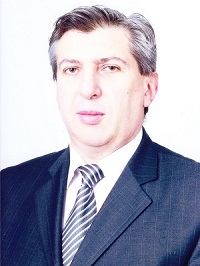
Carlos David Zuluaga Ríos is a Postdoctoral Researcher at the Institute for Research in Technology (IIT) of the Comillas Pontifical University, affiliated with the Higher Technical School of Engineering (ICAI). He holds a B.Sc. and M.Sc. in Electrical Engineering from the Universidad Tecnológica de Pereira (2010, 2013), and a Ph.D. in Engineering (2018) from the same institution. His research focuses on electric power systems, renewable energy integration, distributed generation, and electric vehicle technologies. Key research areas include probabilistic modeling of energy systems, optimization algorithms for grid integration, and control systems for sustainable technologies. He has contributed to projects like improving tools for hybrid AC/DC power systems analysis under renewable energy penetration. Recent work includes studies on temperature effects on air quality solutions and neuro-probabilistic frameworks for EV energy demand forecasting. He has authored over 20 journal articles, conference papers, and a book chapter. His work has been published in journals like Applied Energy , IEEE Transactions on Power Systems , and Sustainability . He has presented at international conferences such as ICIAP and IREP. His current project (TED2021-130610B-C22) focuses on advancing hybrid power system tools with EU funding.
John Zheng Shen is a Professor and Director at the School of Mechatronic Systems Engineering at Simon Fraser University. He holds a Ph.D. in Electrical Engineering from Rensselaer Polytechnic Institute (1994) and has over 30 years of experience in power electronics, renewable energy systems, and semiconductor device research. His work bridges academia and industry through extensive patent development and conference leadership. Education Ph.D. in Electrical Engineering, Rensselaer Polytechnic Institute, USA (1994) M.S. in Electrical Engineering, Rensselaer Polytechnic Institute, USA (1991) B.S. in Electronic Engineering, Tsinghua University, China (1987) Shen's research focuses on power electronics , fault protection in microgrids , and transportation electrification . His recent publications emphasize DC circuit breaker design, hybrid converter optimization, and stability analysis in renewable energy systems. He has contributed to over 300 peer-reviewed papers and holds 18 U.S. patents. Shen has received multiple accolades including the NSF CAREER Award , IEEE Fellow , and Motorola Science and Technology Award . He has served in leadership roles for IEEE Power Electronics Society and organized over 30 international conferences.
Ali Bidram is an Associate Professor in the Department of Electrical and Computer Engineering at the University of New Mexico (UNM), Albuquerque, NM. He holds a Ph.D. from the University of Texas at Arlington (2014), an MS and BS from Isfahan University of Technology (2010 and 2008). His research focuses on control and protection of power systems, particularly in power electronics-intensive grids, smart grids, and renewable energy integration. He has received prestigious awards including the NSF CAREER Award and multiple teaching excellence recognitions. Education: Ph.D., Electrical Engineering, University of Texas at Arlington, 2014 MS, Electrical Engineering, Isfahan University of Technology, 2010 BS, Electrical Engineering, Isfahan University of Technology, 2008 Research Interests: Microgrid/Smartgrid control Grid modernization Renewable energy integration Power systems protection and control Scientific Awards: NSF CAREER Award UNM School of Engineering Junior Faculty Teaching Excellence Award IEEE Albuquerque Outstanding Engineering Educator Award New Mexico EPSCoR Mentorship Award Advising and Grants: Bidram has advised numerous projects and secured grants focusing on grid resilience, renewable integration, and cyber-physical security. His work includes collaborations with industry partners like Quanta Technology, LLC. Labs/Teams: He leads the Power Systems Emerging Technologies (PSET) research group, focusing on advanced grid technologies and cybersecurity solutions.
Juraj Havelka is a Full Professor and Head of the Department of High Voltage and Energy at the Faculty of Electrical Engineering and Computing, University of Zagreb. His work focuses on integrating renewable energy sources into power systems, with extensive technical studies for grid connections of solar, wind, biomass, and geothermal power plants. Research Interests: His expertise spans power system stability, grid protection algorithms, renewable energy integration, and smart grid technologies. Key areas include: Fault detection and protection in DC/AC microgrids Photovoltaic power forecasting using deep learning Grid impact assessments for large-scale renewable installations Power management systems for offshore and industrial applications Technical Contributions: He has led over 70 technical studies for connecting renewable energy plants to distribution grids, covering solar (e.g., SE Lozovac, 9999 kW), wind (e.g., Dazlina, 19.9 MW), biomass, and geothermal projects. These studies evaluate grid stability, protection settings, and compliance with IEC standards.
Prof. Gerd Balzer is a Professor in the Department of Electrical Power Systems at Technische Universität Darmstadt. His research focuses on power system reliability, HVDC technology, short-circuit current calculations, and asset management. He has extensively contributed to the analysis of electrical networks, including transformer behavior, capacitor impact on short circuits, and grid integration challenges. His work addresses critical issues such as fault current mitigation, network stability under renewable integration, and optimal maintenance strategies. Key research areas include: High-Voltage Direct Current (HVDC) systems and their interaction with AC networks Transient and steady-state analysis of electrical networks Asset management for infrastructure systems Risk-based optimization of maintenance and replacement strategies His recent publications emphasize advancements in short-circuit current calculation methods for complex systems, including those involving HVDC converters and meshed networks. He has also explored the impact of modern grid components like capacitors and renewable energy systems on network stability. Prof. Balzer's collaborative projects address real-world challenges such as offshore wind park integration, voltage regulation in distribution grids, and congestion management using advanced controllers. His work aligns with global efforts to enhance grid resilience and reliability amid evolving energy landscapes.
Pablo García González is a Full Professor and Director of Postgraduate and Doctoral Studies at the ICAI School of Engineering, Comillas Pontifical University. He is affiliated with the Department of Electronics, Automation and Communications and conducts research at the Institute for Research in Technology (IIT). His academic career has been centered on control systems and power electronics applications in electric power networks. His research interests include: Control of electric power systems Power electronics and its applications FACTS devices (UPFC, STATCOM) Active filters HVDC systems Stability and control of modern power grids His recent publications focus on advanced power system control, including DC segmentation for oscillation mitigation, integration of plug-in electric vehicles for frequency control, and modeling of power electronics devices. These works appear in top journals such as IEEE Transactions on Power Systems and International Journal of Electrical Power & Energy Systems. Notable scientific contributions include: Supervision of PhD theses on PEV aggregation and active power filtering Leadership in major research projects funded by MCIN, Comunidad de Madrid, and the European Commission Authorship of book chapters on STATCOM control and smart grids Technical reports on HVDC-VSC systems and power system protection He has advised on numerous industrial projects for companies like Endesa, Unión Fenosa, and Reganosa, and has contributed to outreach through Comillas Magazine. His work bridges academic research and practical engineering solutions for modernizing electrical grids.
Prof. Ralf-Dieter Rogler serves as Professor of Switchgear Technology at Dresden University of Applied Sciences' Faculty of Electrical Engineering. He teaches core courses including Switchgear Technology, High-Current Technology, Plant Protection, Low-Voltage Systems, Electrical Safety, and Power System Diagnostics, with active modules scheduled through summer semester 2026. His research spans critical power engineering domains: Switchgear testing under short-circuit/continuous operation (DC to 400 Hz) High-current validation (10 kA AC, 5 kA three-phase/DC) High-voltage/partial discharge testing (100 kV AC) Mechanical stress analysis of conductors/supports Infrared diagnostics and arc fault pressure modeling Transformer DGA and fuse/current transformer design Prof. Rogler leads research in Electrical Power Engineering and High-Current Technology laboratories, developing specialized software for thermal/pressure calculations. As a publicly appointed sworn expert, he contributes to EUKS compliance testing through measurement protocols and calibration standards. His recent publications focus on advancing electrical safety standards, switchgear reliability, and diagnostic methodologies for modern power systems.
João Luiz Afonso is a Full Professor at the Department of Industrial Electronics, Engineering School, University of Minho, Portugal. He received his B.Sc. and M.Sc. degrees in Electrical Engineering from the Federal University of Rio de Janeiro, Brazil, in 1986 and 1991, respectively, and his Ph.D. in Industrial Electronics from the University of Minho in 2000. He obtained his Habilitation degree in Electronics and Computers Engineering in 2016. His academic and professional journey includes: Member of the IE R&D Group at Centro ALGORITMI Director of the Department of Industrial Electronics (2017-2021) Coordinator of the Group of Energy and Power Electronics (GEPE) Steering committee member of the thematic line "Smart Cities and People" at ALGORITMI Vice-president of TMOB-HUB - Transportation and Mobility Research Hub Professor Afonso teaches several courses including Electrical Machines, Power Quality and Active Power Filters, Renewable Energies and Electric Mobility, Power Electronics for Smart Grids, and Environmental, Social and Economic Sustainability. His extensive research portfolio spans Power Electronics technologies applied to Power Quality, Active Power Filters, Renewable Energy, Electric Vehicles, Energy Efficiency, Energy Storage Systems, Innovative Railway Systems, Smart Grids, Smart Cities, and Aerospace. His publication record is impressive with over 300 publications including 55 papers in international journals with referee, 240 papers in international conferences with referee, and 9 book chapters. His research impact is evidenced by 4047 citations, an h-index of 30, and 71 papers in Q1/Q2 journals. He has supervised 17 Ph.D. theses and 74 M.Sc. theses, demonstrating his commitment to academic mentorship. Professor Afonso has participated in 32 research projects, coordinating 21 of them. His editorial contributions include being a member of the Editorial Board for MDPI Energies and MDPI Electronics, and serving as Guest Editor for 13 Special Issues of Journals. He has organized several international conferences including GreeNets 2018 and SESC 2019-2023. Among his notable recognitions: IEEE Senior Member since 2016 Listed among the "World's Top 2% Scientists" for 2021 and 2022 Active participation in editorial boards of multiple journals His research group, GEPE, focuses on advancing Power Electronics technologies for sustainable energy systems. Professor Afonso's work bridges theoretical research with practical applications, particularly in the integration of renewable energy sources, electric mobility solutions, and smart grid technologies. His leadership in transportation and mobility research through TMOB-HUB demonstrates his commitment to addressing real-world challenges in sustainable transportation.
Prof. Piotr Chrzan is a full-time Professor at Gdańsk University of Technology's Faculty of Electrical and Control Engineering, where he leads research in the Department of Power Electronics and Electrical Machines. His office is located in Building A, Room EM-211, and he can be contacted via phone (+48583471719) or email. His research encompasses: Advanced power electronics converter design using GaN transistors EMI mitigation through shielding and quasi-resonant techniques Wideband modeling of DC-DC converters Control systems for electrical drives Renewable energy integration with photovoltaic nano-installations Educational engineering tools including remote laboratories Publication analysis reveals three dominant themes in his recent work: GaN semiconductor applications (2020-2025): 60% of publications focus on GaN-based converter optimization, EMI reduction, and 3D packaging techniques Modeling methodologies : 25% cover wideband converter modeling, parasitic parameter extraction, and simulation validation Educational systems : 15% develop teaching tools for power electronics and renewable energy
Djordje Lekic is a Senior Lecturer at the Faculty of Electrical Engineering, University of Banja Luka, specializing in the Department of Electrical Power Engineering. He was elected to his current academic rank in December 2022. His research spans: Electric machine design and optimization Renewable energy integration and hybrid power systems Fault detection in power distribution networks Finite element analysis applications in electromagnetics Power electronics and drive systems Recent publications demonstrate strong focus on energy efficiency optimization, electromagnetic modeling, and sustainable power solutions. He has led or contributed to multiple national research projects including: Development of permanent magnet synchronous motors (2021-2024) Non-contact fault detection in power networks (2020-2022) Renewable energy for telecom infrastructure (2020-2022) Power quality improvement for industrial consumers (2019) with cumulative funding exceeding 100,000 BAM. He maintains active industry collaborations, including a patented wireless power transfer system with international inventors.
Dariusz Smugała is a Lecturer at the Department of Electrical Engineering , Faculty of Electrical and Computer Engineering , Cracow University of Technology . His work focuses on power systems, electromagnetic relay dynamics, and energy quality optimization. Key research areas include: Switching processes in low-voltage relays and circuit breakers Thermal behavior under short-circuit conditions Harmonic distortion analysis in LED drivers and power networks High-frequency transient protection in wind turbine transformers His publications span journals like IEEE Transactions on Industrial Electronics , Energies , and Measurement , emphasizing computational modeling (e.g., MATLAB-based tools) and experimental validation. He collaborates on projects addressing arc plasma dynamics, insulation systems, and power device reliability.
Доброслав Данайлов Данков е професор и ръководител на катедра в Технически университет - Габрово, Факултет по Електротехника и Електроника, Катедра Електроника. Той работи в университета от поне 1994 г. и е активен изследовател с над 100 публикации и 20 завършени проекта. Катедрата му се намира в кабинети 2305 и 2315, а контактните му данни включват телефон (066 827)+305,340 и имейли dankov@tugab.bg и dankov@abv.bg. Основните области на научен интерес на проф. Данков включват силова електроника, индукционни системи за нагряване, технологии за електромобили, широколентови полупроводникови елементи (SiC, GaN), безжичен трансфер на енергия и надеждност на електронни системи. Неговите изследвания са фокусирани върху подобряване на ефективността, надеждността и енергийната ефективност на преобразувателни устройства и системи. Той е автор на 9 учебника и учебни помагала, включващи 'Автомобилни електронни системи и диагностика' (2022) и 'Електронно-технологични и индустриални преобразователни устройства и системи' (2021). Анализът на неговите 15 най-нови статии показва ясна тенденция към приложението на нови полупроводникови технологии (GaN и SiC транзистори) в различни електронни системи, специално в индукционни нагреватели и системи за безжичен трансфер на енергия. Има съществен фокус върху надеждността на електронните компоненти и системи, както и върху приложението на тези технологии в електромобилите. Данков активно изследва методи за подобряване на точността при оценка на състоянието на заряда (SOC) и състоянието на здравето (SOH) на батериите за електромобили. Проф. Данков е ръководил четирима докторанта, двама от които са завършили успешно. Той е работил по 20 проекта през периода 1994-2022 г., включващи както вътрешни изследователски проекти в ТУ-Габрово, така и проекти с външно финансиране чрез Националния научен фонд и Оперативната програма 'Наука и образование за интелигентен растеж'. През 2021-2022 г. той е участвал в проекти за разработка на електромобил и модернизация на висшите училища. Той преподава дисциплината 'Автоматизация на проектирането в електрониката' и е написал рецензия за дипломна работа на инж. Камелия Цонева Колева. Данков активно участва в международни конференции като UNITECH и IEEE CIEES, където представя новите си изследвания в областта на силовата електроника и индустриалните преобразувателни системи.
Christian Andreasen is an Associate Professor at the University of Copenhagen's Department of Plant and Environmental Sciences, where he leads the Plant Protection research group in the Section for Crop Sciences. He earned his MSc in Agronomy (1986) and PhD in Weed Science (1990) from the Royal Veterinary and Agricultural University (now University of Copenhagen). His academic career includes roles as Assistant Professor (1991-1995), Associate Professor (1995-present), and Head of Crop Sciences (2004-2015). His research spans weed biology, sustainable crop protection, and seed technology, with emphasis on: Non-chemical weed control (laser weeding, thermal methods) Crop-weed interactions in changing climates Seed science and quinoa cultivation in tropical zones Biodiversity conservation in agricultural systems Publications (2019-2025) demonstrate strong focus on sustainable agriculture technologies, particularly laser-based weed control, climate adaptation of crops, and biochar soil applications. Research consistently addresses herbicide alternatives, precision agriculture, and resilience of crops like quinoa under abiotic stresses. He actively advises PhD candidates and has supervised 10+ doctoral projects. Major grants include Horizon 2020's WeLASER project (2021-2024) on autonomous laser weeding, AC/DC Weeds (2021-2022) for perennial weed management, and Sweedhart (2016-2019) on harvest weed seed control. Leads field and laboratory facilities at Taastrup Campus, collaborating internationally through NIBIO (Norway) and DanSeed consortium.
Sarah Immanuel is a Senior Lecturer in the Business and Hospitality vertical at Torrens University, specializing in Data Management and Data Analytics. She directs teaching, research, and subject coordination within the Centre for Artificial Intelligence Research and Optimisation (AIRO), leveraging her 23+ years of academic experience across Australian and international institutions. Her educational background includes: Bachelor of Electrical and Electronics Engineering from Bharathiar University Master of Applied Electronics Engineering from Bharathiar University PhD in Biomedical Engineering from The University of Adelaide (dissertation: Polysomnographic signal processing for advanced diagnostics of paediatric sleep disordered breathing) Immanuel's research focuses on biomedical signal processing applications for sleep disorders and clinical diagnostics. She develops machine learning models for disease prediction in sleep disorders, mental health, and cardiovascular conditions, while creating data analytics platforms for healthcare decision-making. Her work integrates Signal and Image Processing with AI to address Digitally Enhanced Living challenges, particularly for elderly populations through ARC Industry Transformation Research Hub projects at Flinders University. Analysis of her 27 research outputs reveals consistent focus on cardiorespiratory dynamics, with recent publications (2023-2024) emphasizing transvenous phrenic nerve stimulation for central sleep apnea, heart rate variability biomarkers for stress/cognitive decline, and machine learning applications for surgical candidate prediction. Her fingerprint shows dominant themes in Central Sleep Apnea (100%), Transvenous Phrenic Nerve Stimulation (100%), and Polysomnography (60%). As an active PhD supervisor, she mentors students in cardiorespiratory signal processing and machine learning for clinical applications. Her research has generated significant community impact through the ARC Hub project on elderly care technologies. Immanuel maintains active research collaborations through Flinders University's Academic status position and contributes to healthcare innovation via the AIRO center's data-driven platforms.