
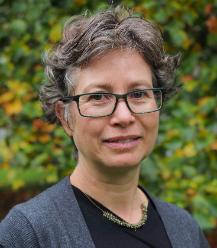
Tamar Keren-Portnoy is a Professor in the Department of Language and Linguistic Science at the University of York, where she has held academic positions since 2006, progressing from Research Fellow to Professor in 2021. She is actively involved in research, teaching, and external collaborations, focusing on early language acquisition and developmental psycholinguistics. Her work bridges linguistics, psychology, and clinical applications, particularly in supporting infants at risk of language delay. Her research interests center on how low-level skills such as babbling and phonological perception contribute to higher-level language development. She investigates the role of infant vocalizations, parental speech input, sleep, and motor development in vocabulary growth. A significant focus is on interventions for children with Down syndrome, including the development and evaluation of the BabblePlay app. She also explores the psycholinguistics of Semitic languages like Hebrew and Arabic, examining root-and-pattern morphology in early language learners. The most recent publications reflect a strong trend in interdisciplinary research combining developmental science, technology, and clinical intervention. Topics include app-based babbling reinforcement, sleep’s role in word learning, cross-linguistic child-directed speech, and sound symbolism in maternal speech. Her work increasingly integrates experimental methods, systematic reviews, and randomized controlled trials to advance both theoretical understanding and practical applications. She is a member of the ESRC Peer Review College and leads multiple funded projects with collaborators across psychology, engineering, and health sciences. Her grants include support from the British Academy and the Economic and Social Research Council (ESRC), focusing on early intervention, vocalization reinforcement, and language outcomes in at-risk populations. Her laboratory, associated with the BabblePlay project and the York Baby Lab, engages in naturalistic observation and experimental studies with infants and toddlers. She collaborates internationally, including work with Ugandan populations and cross-linguistic studies of Danish, Arabic, and Hebrew. Her team includes researchers in linguistics, psychology, and health sciences, reflecting the interdisciplinary nature of her work.
جستجوی استاد راهنمای دانشگاهی
برای مسیر پژوهشیتان، استاد راهنما، استاد دانشگاه و پژوهشگر مناسب را پیدا کنید و با آنها ارتباط بگیرید.
نمایش ۱۶۶-۱۷۵ از ۱۷۵ استاد راهنما
اطلاعات پروفایلها از صفحات عمومی دانشگاهها گرفته شده و ممکن است بهروز نباشد.
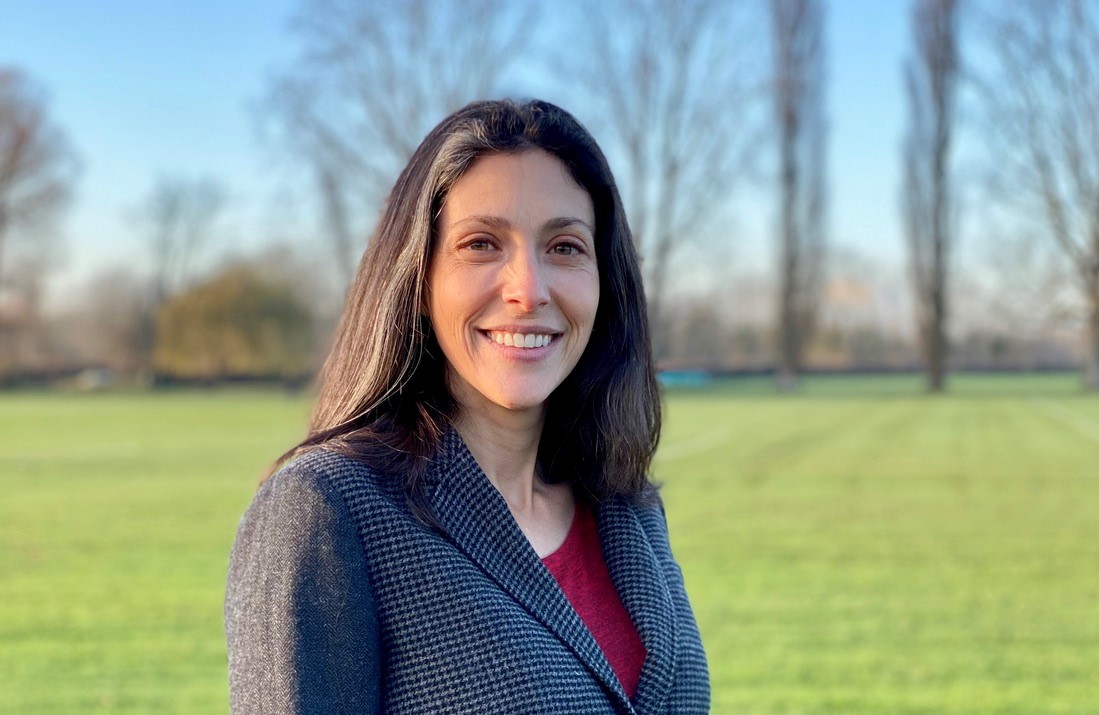
Professor Netta Weinstein is a faculty member at the University of Reading, specializing in human motivation, wellbeing, prejudice and stigma, close relationships, emotion regulation, technology use, mental health, and listening. Her research integrates self-determination theory with applied psychology, focusing on how autonomy-supportive environments affect behavior in diverse contexts such as healthcare technology, education, and social relationships. PhD, Clinical Psychology, University of Rochester (2010) MSc, Clinical Psychology, University of Rochester (2007) BA, Psychology, San Diego State University (2004) Recent publications highlight interdisciplinary work spanning motivation , wellbeing , listening , and technology ethics . Her 2025 studies include autonomy in law compliance, dialogical theory applications, and healthcare AI values tradeoffs. 2024 work examines political discourse harmony, character strengths communication, and classroom technology use motivations. She supervises BSc, MSc, and PhD research placements and maintains an external blog at Soarin’ Solitude . Her methodological expertise spans experimental psychology, longitudinal studies, and qualitative analysis of emotional and social phenomena.
- Human motivation
- wellbeing
- prejudice and stigma
- +۵ مورد دیگر
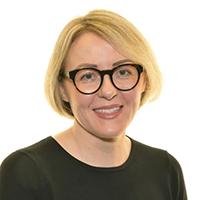
Viktoria Magneمشاهده پروفایل
دانشیار
Viktoria Magne is an Associate Professor at the University of West London , affiliated with the School of Human and Social Sciences in the Education Studies and Early Childhood department. She began her career as an ESOL teacher in higher education and holds a PhD in Education from the Université de Sherbrooke . Her research focuses on the intersection of applied linguistics and social issues , particularly how sociolinguistic factors (accent, race, language ideologies) shape language attitudes. She aligns her work with the United Nations SDG 4 (inclusive education) and SDG 10 (reducing inequalities). Recent publications explore L2 fluency perception , accent attitudes , and multivariate dataset methodologies in second language acquisition. She collaborates with the London Second Language Acquisition Research Forum (L-SLARF) and London TESOL Research Forum , and co-chairs the CLiE working group . Her work on AI integration in assessment (2025) emphasizes constructivist pedagogy , using AI as a collaborative tool to foster critical thinking , creativity , and student voice rather than enforcing artificial constraints.
- Applied Linguistics
- Education
- Sociolinguistics
- +۴ مورد دیگر
Professor Jason Hall is a Professor in the Department of English and Creative Writing at the University of Exeter, where he has worked since 2004. He served as inaugural head of the Department of Penryn Humanities (2014-2016) and as Associate Director of Exeter's International Institute for Cultural Enquiry (now Societies and Cultures Institute). He is currently on research leave during term 1 of the 2024-25 academic year. His educational background includes: BA in English from Hendrix College, Arkansas PhD in English from the University of London (Birkbeck College) Professor Hall's research focuses on literary and cultural history across the nineteenth and twentieth centuries, with expertise in poetics, fiction, material culture, and the history of science and technology. His work intersects critical theory with technical analysis of verse forms and narrative structures. He teaches critical theory, academic writing, poetry, sensation fiction, and adventure romance modules, occasionally contributing to Exeter's Liberal Arts programme. His research supervision emphasizes Victorian/20th-century literature, prosody, and science-technology intersections. Professor Hall actively mentors PhD and Master's students in his core research areas and maintains affiliations with the Societies and Cultures Institute.
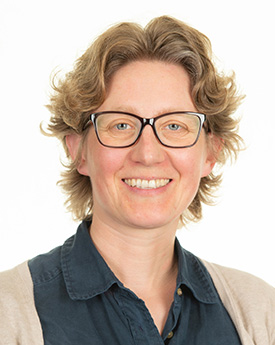
Margriet Groenمشاهده پروفایل
مدرس ارشد
Dr. Margriet Groen is a Senior Lecturer in the Department of Psychology at Lancaster University. Her research focuses on individual differences in language and literacy development in typically and atypically developing children, including those with dyslexia, developmental language disorder, hearing impairments, or Down syndrome. She investigates the interplay of perception and motor skills in speech sound representation for reading, and has contributed to the development of functional Transcranial Doppler Ultrasonography (fTCD) to study cognitive lateralization. Research Interests Role of audiovisual processing and sensorimotor control in speech sound processing Phonological and prosodic contributions to language/literacy acquisition Individual differences in cognition (attention, memory, learning) affecting development Future work merging sensorimotor control and fTCD methodologies Scientific Awards UKLA Wiley Research in Literacy Education Award PhD Supervision & Professional Engagement Dr. Groen supervises projects on phonology, prosody, and cognition in language/literacy development. She participates in conferences, workshops, editorial activities, and hosts academic and non-academic visitors.
Sophie Salffner is a researcher at SOAS University of London, affiliated with the School of Languages, Cultures and Linguistics. Her work focuses on African languages, particularly the endangered Ikaan (Ukaan) language spoken in Nigeria. Research Interests: Dr. Salffner's research spans phonology, tone systems, and cultural documentation in African languages. She has conducted extensive fieldwork in Nigeria, contributing to linguistic theory and methodological innovations in language documentation. Publication Trends: Her publications include studies on Ikaan's tonal grammar, phonetic field methods, and cultural projects. She emphasizes endangered language preservation and interdisciplinary approaches combining linguistics and technology. Labs & Collaborations: Dr. Salffner collaborates with the Centre for Endangered Languages, Cultures and Linguistics (LAC) at SOAS and has worked with researchers like Brian Sands and Mark Tzika on phonetic tools and African language classification.
- Linguistics
- African Languages
- Phonetics
- +۳ مورد دیگر
Niamh Kelly is a Lecturer in Phonetics and Phonology at the School of English Literature, Language and Linguistics, Newcastle University (UK). Her research integrates phonetics, psycholinguistics, and theoretical phonology with a focus on understudied language varieties and bilingual speech patterns. Education: PhD in Linguistics (focus on Norwegian pitch accent and intonation) Current Research: Tonal alignment, vowel length, syllable structure in Lebanese Arabic; L2 intonation in Welsh English; sound system interaction in bilingual speakers Prior Positions: Visiting Assistant Professor (VAP) at UT El Paso (2021-22), postdoctoral researcher at University of Graz (2015-16), research at American University of Beirut Publications: 11+ peer-reviewed articles in journals like Journal of the International Phonetic Association , Glossa , and Frontiers in Psychology Teaching: Courses on phonetics, phonology, laboratory phonology, and advanced topics in phonology Her work examines acoustic correlates of stress, cross-dialectal phonetic variation, and perceptual distinctions in stops and tonal systems. She employs both production and perception experimental methodologies. Scientific Collaborations & Grants: Collaborators: Scott Seyfarth (co-author on Armenian study), R. Smiljanic (co-author on Norwegian studies), I. Mennen (co-author on Welsh English research) Projects: Bilingual /l/ production in El Paso, lexical stress in Welsh English, Norwegian pitch accent perception, Zapotec rhythmic grouping Her laboratory phonology approach combines phonetic data with theoretical phonology, focusing on non-canonical language varieties including Irish English, Palestinian Arabic, and Western Armenian. She also investigates sociolinguistic factors like language dominance and typological influences.
- Phonetics
- Phonology
- Psycholinguistics
- +۴ مورد دیگر
Padraic Monaghan serves as Professor of Cognition in the Department of Psychology within Lancaster University's Faculty of Science and Technology. His interdisciplinary research bridges Psychology and Linguistics through behavioral experiments, observational studies, and computational modeling to investigate language cognition across developmental stages. Monaghan holds a BSc in Philosophy and Maths from the University of Manchester, and MSc/PhD in Cognitive Science from the University of Edinburgh. His prior academic appointments include positions at Edinburgh University, University of Warwick, University of York, and University of Amsterdam. His research spans Language Acquisition (examining how children integrate phonology, prosody, gesture, and environmental cues), Literacy Development (analyzing connections between oral language skills and reading training efficacy), Language Evolution (tracking learnability properties through diachronic studies), and Sleep-Cognition Interactions (investigating offline memory processing and problem-solving enhancement). His work employs cross-situational learning paradigms and computational approaches to model acquisition mechanisms. Recent 2025 publications demonstrate concentrated focus on vocabulary/grammar acquisition in children through cross-situational learning frameworks, with significant attention to individual differences, literacy outcomes, and neurodiverse populations. The corpus reveals strong emphasis on meta-analytic methodologies and experimental designs exploring phonological processing in native/non-native contexts, while sleep-related cognition appears in foundational work but not current publications. Scientific Awards: No awards documented in source materials. Monaghan supervises eight PhD candidates across Developmental Psychology and Language Learning Research Lab: Sophie Bennett, Hailong Chen, Sophie Lund, Delyth Piper, Summer Wang, Wensi Zhang, Liuqi Zhu, and Siqi Zou. His active funding includes ESRC CASE project on bilingual development (2023-2026), Bilingualism at School research (2022-2024), and ESRC International Centre for Language (2019-2025), building on prior leadership of the LUCID Centre for Language and Communicative Development (2014-2020). He directs the Language Learning Research Lab within Lancaster's Cognitive Psychology and Developmental Psychology research groups, examining environmental influences on linguistic development through collaborative, multi-method approaches to language acquisition and literacy.
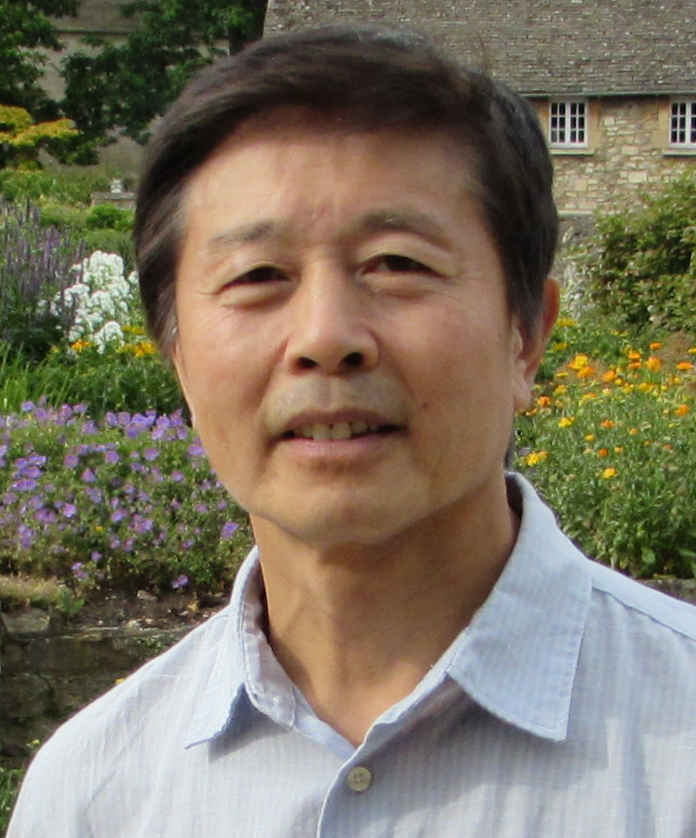
Yi Xuمشاهده پروفایل
استاد
Yi Xu is a Professor of Speech Sciences at the Division of Psychology and Language Sciences, University College London (UCL), where he investigates the fundamental mechanisms of speech production and perception in connected discourse. His research centers on how multiple layers of communicative meaning are encoded through articulation, with pioneering contributions to speech prosody modeling including the Target Approximation (TA) model and Parallel Encoding and Target Approximation (PENTA) model. He also developed the Bio-informational Dimensions (BID) theory for vocal expression of emotions and maintains active international collaborations on cross-linguistic prosody phenomena. Professor Xu's research spans speech prosody, computational phonetics, emotional speech, and coarticulation, focusing on dynamic articulatory mechanisms in tonal languages like Mandarin. His work integrates theoretical modeling, empirical validation, and tool development to address core questions about meaning encoding in speech. Key themes include the relationship between articulatory constraints and perceptual outcomes, neural processes in speech acquisition, and evolutionary perspectives on emotional expression. Recent publications (2023-2024) demonstrate strong interdisciplinary convergence across linguistics, computer science, and cognitive science, with emphasis on Mandarin tone-syllable interactions, deep learning applications in phonetic analysis, and cross-linguistic timing patterns. His work consistently bridges theoretical frameworks with practical computational implementations, advancing understanding of speech as a multi-layered communication system. He has created influential research tools including qTAtrainer for automatic intonation analysis based on the TA model, PENTAtrainer for function-loaded pitch target extraction, and FormantPro for large-scale formant movement analysis. These Praat-based tools are widely adopted in speech science for prosody research and have enabled large-scale empirical studies of connected speech phenomena.
Dr Hae-Sung Jeon is a Lecturer in Psychology at the University of Central Lancashire's School of Psychology and Humanities. Her academic profile demonstrates a strong commitment to research in speech communication with particular expertise in speech prosody—the melody, timing, and tonal qualities of voice—as well as phonetic variation in multimodal communication. Dr Jeon's research interests center on linguistic prosody, phonetic variation, and speech perception, with a special focus on Korean language varieties. Her work examines how pitch, timing, and intonation patterns function in communication across different languages and contexts. She has made significant contributions to understanding speech rhythm, intonation patterns in Korean dialects, and cross-linguistic prosodic perception. Analysis of her publication record reveals a consistent research trajectory focused on speech prosody with increasing emphasis on Korean language varieties. Her recent work shows growing international collaboration, particularly with researchers in phonetics and linguistics across Europe. The publications demonstrate methodological diversity, incorporating experimental approaches, corpus analysis, and cross-linguistic comparisons to investigate fundamental questions about speech perception and production. Dr Jeon has published extensively in high-impact journals including Speech Communication, The Journal of the Acoustical Society of America, and Laboratory Phonology. Her research bridges cognitive psychology, linguistics, and phonetics, contributing to our understanding of how humans process speech across different languages and contexts.
- Speech Prosody
- Phonetics
- Linguistics
- +۳ مورد دیگر