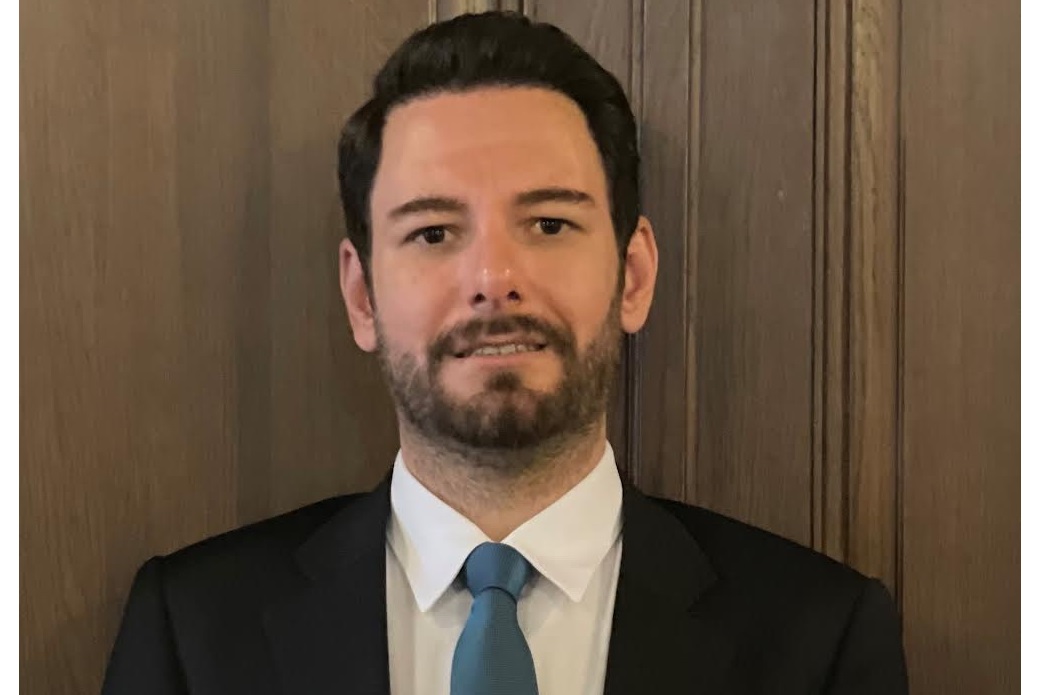
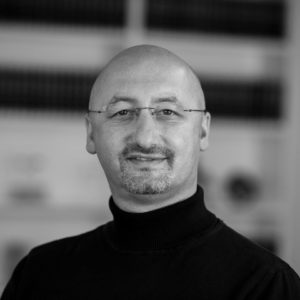
Assist. Prof. Dr. Erman Eroğlu is a faculty member at the School of Law, Social Sciences University of Ankara, specializing in Private International Law. He holds a Doctorate from Case Western Reserve University School of Law, an LL.M. in International Business Law from Boston University and Penn State Law, and an LL.B. from Ankara University Faculty of Law. Academic Affiliation: School of Law, Social Sciences University of Ankara Additional Role: Visiting Professor at Sciences Po (2024) His research focuses on Private International Law, International Commercial Arbitration, Intellectual Property and Competition Law, and Media & Communications Law. He has supervised multiple master's theses on international arbitration topics. Scientific awards include the 2023 Academic Performance Award from Ankara Sosyal Bilimler Üniversitesi for highest TR Dizin publications. His work analyzes arbitration ethics, cross-border enforcement challenges, and legal protections for street art. Key Publications: 'Illicit Financial Gains in International Commercial Arbitration' (2025), 'Due Process in Pandemic-Era Arbitration' (2022)
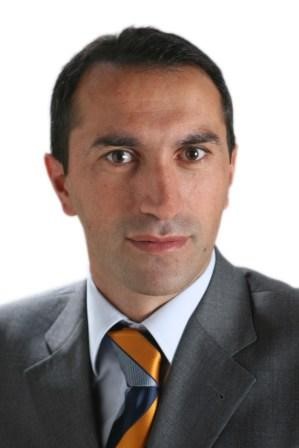
Assoc. Prof. Dr. Talat Kaya is an academic with expertise in Private International Law , International Trade Law , and WTO Law at the Social Sciences University of Ankara , where he has served since 2018. He holds a BA from Ankara University Faculty of Law (1998) , an LLM from Vanderbilt University (2005) , and a PhD from Ankara University (2013) . Dr. Kaya previously worked at the Undersecretariat of the Prime Ministry for Foreign Trade (now Ministry of Trade) from 2000–2018, contributing to international trade agreements and WTO submissions, and served as a Judge Trainee (1999–2000). Education : BA, Ankara University Faculty of Law (1998) LLM, Vanderbilt University (2005) PhD, Ankara University (2013) Dr. Kaya’s research spans Private International Law , International Investment Law , International Intellectual Property Law , and International Competition Law . His work analyzes WTO agreements, trade dispute mechanisms, and legal frameworks for cross-border economic activities. Recent publications include critical perspectives on multilateral investment courts , economic sanctions , and environmental clauses in arbitration . His academic contributions reflect trends in International Trade Law , Investment Dispute Resolution , and Intellectual Property Compliance , with a focus on balancing legal obligations with practical challenges in global commerce. Advisory Roles : Head of Private International Law Department, ASBU (2018–) Vice Dean, Faculty of Law, ASBU (2018–) Editorial Board Member, ASBU Law Journal Professional Experience : Undersecretariat of the Prime Ministry for Foreign Trade (2000–2018) Advisory Center on WTO Law, Geneva (2007–2008)
Dr. Matthew David is an Associate Professor in the Department of Sociology at Durham University. His academic work bridges digital sociology, intellectual property studies, and media theory, focusing on the intersections of technology, power, and social control in global capitalism. Research Interests: David’s research spans digital economy ethics, moral panic theory, human-animal relations, and the political economy of knowledge. He critically examines how digital technologies reshape IP regimes, surveillance practices, and societal norms, often through interdisciplinary lenses combining sociology, criminology, and science studies. Recent Publications: His work includes analyses of historical sociological narratives (2024), moral panic theory during pandemics (2024), and critiques of digital surveillance in sports broadcasting (2021). Earlier contributions explore the ethics of cloning (2020), IP regulation (2017), and the criminalization of digital sharing (2010).
Rosalind Bark is a Lecturer in Ecological Economics at the School of Environmental Sciences, University of East Anglia. Her research combines environmental economics methodologies with social science frameworks to address sustainability challenges in water resources and ecosystem services management under changing conditions. Key Research Themes: Climate Change Adaptation Nature-Based Flood Risk Mitigation Participatory Governance Ecosystem Services Valuation Water Allocation Policy Community Engagement in Environmental Management Recent publications highlight trends in: Nature-Based Solutions implementation Transboundary water governance Urban riparian corridor valuation Climate risk communication Indigenous water rights Remote sensing applications for environmental valuation Email: r.bark@uea.ac.uk
Andrew Schwartz is the Laurence W. DeMuth Chair of Business Law and Professor of Law at the University of Colorado Law School . He teaches Contracts and Corporations courses, with recent syllabi including advanced corporate law seminars. Education: Not explicitly mentioned in provided text Research Focus: Specializes in crowdfunding regulation , corporate governance , and contract law , particularly examining digital finance and business ethics His 15 most recent publications analyze equity crowdfunding , securities regulation , and contractual responses to pandemics , with work appearing in journals like Washington and Lee Law Review and Harvard Business Law Review . Articles span financial technology , startup finance , and legal innovation . Awards: United States Fulbright Research Scholar Award (2017) He has written extensively on corporate elections , shareholder rights , and digital transformation of finance , with commentary featured in Columbia Law School Blue Sky Blog and Harvard Law Forum . His book Investment Crowdfunding (Oxford University Press, 2023) represents the culmination of his research in this area.
University of California, Los AngelesUnited States
Kian Goh is an Associate Professor of Urban Planning at UCLA's Luskin School of Public Affairs, where she investigates the spatial politics of urban climate change responses across North America, Southeast Asia, and Europe. A licensed architect and co-founder of SUPER-INTERESTING! design practice, she bridges academic research with professional practice in urban ecological design and social mobilization. Her educational background includes: Ph.D. in Urban and Environmental Planning from MIT Master of Architecture from Yale University Prior academic appointments span Northeastern University, University of Pennsylvania, The New School, and Washington University in St. Louis. Dr. Goh's research centers on climate justice, urban resilience, and the intersection of design with social movements. Her work critically examines how climate adaptation plans reinforce or challenge spatial inequalities, with particular focus on queer space and smart city sociopolitics. Her forthcoming MIT Press book Form and Flow: The Spatial Politics of Urban Resilience and Climate Justice analyzes global power dynamics in urban climate responses through case studies in New York, Jakarta, and Rotterdam. Analysis of her recent publications reveals dominant themes in climate justice praxis, with strong emphasis on racial capitalism, fiscal equity, and grassroots mobilization. Her scholarship consistently connects urban theory to on-the-ground climate activism, highlighting how marginalized communities shape resilient futures through spatial resistance and alternative governance models. Dr. Goh has not been mentioned to have received specific scientific awards in the provided materials. As an educator and practitioner, she mentors students in urban planning while leading SUPER-INTERESTING!—a Brooklyn-based firm engaged in multidisciplinary architecture and strategic consulting. Her professional work with Weiss/Manfredi and MVRDV informs her academic research on just urban design and climate adaptation. Through SUPER-INTERESTING!, Dr. Goh collaborates with community organizations on climate resilience projects, particularly focusing on queer spatial practices and equitable smart city development. Her current fieldwork in Jakarta examines urban waterscapes and hydro-politics in sinking cities, while ongoing projects analyze fiscal mechanisms for climate justice in North American municipalities.
Ashley Deeks serves as the Class of 1948 Professor of Scholarly Research in Law at the University of Virginia School of Law, where she also directs the National Security Law Center and holds a Senior Fellowship at the Miller Center. Her academic career demonstrates deep engagement with the intersection of law, technology, and national security. Professor Deeks' research spans multiple critical areas including international law, national security law, artificial intelligence applications in legal contexts, federalism, constitutional law, and cyber law. Her work often examines how traditional legal frameworks adapt to emerging technological challenges and evolving security threats. She has made significant contributions to understanding how international legal norms apply to new domains like cyberspace and artificial intelligence. Her recent publications reveal a growing focus on the legal implications of artificial intelligence, particularly in national security contexts, as well as the evolving relationship between federal and state authority in national security matters. Deeks' scholarship demonstrates how legal frameworks must evolve to address challenges posed by technological innovation while maintaining constitutional principles. Among her notable achievements is her leadership of the National Security Law Center, which serves as a hub for interdisciplinary research on national security challenges. Her work has influenced both academic discourse and practical policy considerations in government agencies dealing with national security and technology regulation.
Prof. Dr. Ali Yarayan is an honorary professor at Friedrich-Alexander University Erlangen-Nuremberg, appointed in 2016 in the field of civil law, with specializations in commercial law, Turkish law, and comparative law. He serves as Director of the Research Centre for Turkish Law at the same institution. Yarayan is also a practicing attorney admitted to the German bar since 2003, specializing in commercial and corporate law since 2010. He founded Bidirex GmbH in February 2022 as an entrepreneurial venture. Education and qualifications: Law degree from University of Freiburg (1995-2000) Legal traineeship at Higher Regional Court of Karlsruhe (2000-2002) Doctorate in law from University of Freiburg (2004) on German-Turkish database protection Sworn Turkish interpreter and translator for Baden-Württemberg courts (1998) Specialist lawyer for commercial and corporate law (2010) His research focuses on comparative legal systems with emphasis on Turkish-German jurisprudence, particularly in commercial law, intellectual property, family law, and corporate governance. Yarayan's work frequently examines intersection points between Turkish and European legal frameworks, with substantive publications in trademark protection, medical liability, and cross-border family law matters. Yarayan has organized several international symposia on Turkish-German legal topics and serves as editor for conference proceedings in these fields. He previously held positions as lecturer at Friedrich-Alexander University (2006-2008) and maintained the lectureship for Turkish law (2008-2013). As Director of the Research Centre for Turkish Law, he coordinates academic investigations into Turkish legal systems and their interaction with European frameworks.
Catherine Bros is a Researcher at Université de Tours, affiliated with the College of Law, Economics and Social Sciences. Her work focuses on economics, gender studies, and social norms, particularly in India and South Asia. Discipline: Economics Contact: catherine.bros@univ-tours.fr Her research explores themes such as gender economics, labor market dynamics, caste systems, and public goods provision. She analyzes skill mismatches, microfinance impacts, pandemic-induced poverty, and land tenure issues in developing economies. Scientific publications highlight regional economic disparities, social fragmentation, and institutional challenges in India. Her work combines empirical analysis with policy evaluation, emphasizing the intersection of cultural norms and economic outcomes.
Dr. Juan Jiménez-Salcedo is a Professor at Universidad Pablo de Olavide in the Department of Philology and Translation , with a focus on French Philology . He is also affiliated with the Université de Mons (Faculté de traduction et d'interprétation). Research Pillars : Postmonolingualism and intercultural education Linguistic policy analysis in Colombia, the EU, and Catalonia Legal translation and judicial bilingualism Gender studies in historical and modern contexts Key Publications : 2021: Investigated Colombian bilingual education policies 2020: Analyzed EU multilingualism and Catalan-Spanish legal conflicts 2019: Explored Catalan language desterritorialization 2018-2017: Co-edited volumes on postmonolingual translation justice Methodological Contributions : Applied sociocritical paradigms to language policy analysis Developed mixed-methods approaches for courtroom interpreting quality His work bridges jurilinguistics , gender studies , and microterritory language dynamics , emphasizing ethical translation practices in multicultural legal systems.
Timothy Lubin is the Jessie Ball duPont Professor and Chair of the Department of Religion at Washington and Lee University, where he also serves as Adjunct Professor of Law. He heads the Law, Justice and Society Program and the Middle East and South Asia Studies Program, and is Vice-President of the American Society for Premodern Asia. A leading scholar in South Asian religious history and Hindu law, Lubin maintains active research affiliations with institutions across Asia and Europe. His educational background includes: Ph.D. in South Asian religious history, Columbia University (1994) M.Phil. in South Asian religious history, Columbia University (1991) Certificate in South Asian Studies, Columbia University School of International and Public Affairs (1991) M.T.S. in comparative study of religion, Harvard University (1989) B.A. in French literature and linguistics, Columbia University (1986) Lubin's research focuses on Hindu law (Dharmaśāstra) , Brahmanical authority , and the legal and religious history of premodern South and Southeast Asia . His current projects examine the institutionalization of Brahminical traditions, the reception of Sanskrit legal texts in Java and Bali, and the political economy of religious practices. He employs interdisciplinary methods spanning philology, epigraphy, and diplomatics to analyze how religious professionals shaped legal norms and social structures. His extensive publication record reveals consistent engagement with the dynamics of status, religious endowments, and legal pluralism in premodern contexts. Lubin's work bridges religious studies, legal history, and political economy, demonstrating how cosmopolitan legal norms were adapted to local conditions across South and Southeast Asia through charter immunity clauses, property rights, and ritual practices. Key scientific awards include: American Council of Learned Societies fellowship National Endowment for the Humanities fellowship Fulbright-Hays Faculty Research Abroad fellowship American Philosophical Society Sabbatical Fellowship Science and Religion Course Award (2002) Lubin has received substantial research support including Lenfest Foundation sabbatical grants and Glenn Summer Research Grants from Washington and Lee University. His academic leadership extends to organizing major conferences on status and justice, and mentoring junior scholars through collaborative projects. As principal investigator for the ERC-funded DHARMA Project's Southeast Asia components, he directs international teams editing Old Javanese legal texts and analyzing cross-cultural legal transmission. He maintains active research collaborations through the DHARMA Project (ERC 809994), where he co-leads task forces on Southeast Asian textual sources and coordinates with epigraphers at the École française d'Extrême-Orient. Lubin also directs Washington and Lee's Law, Justice and Society Program, fostering interdisciplinary research on legal traditions across historical and cultural contexts.
Alessio Kolioulis serves as a Lecturer (Teaching) in Urban Economic Development at the Bartlett Development Planning Unit (DPU), University College London . A globally recognized leader in night-time economies and cultural policy, he has led the MSc Urban Economic Development program since 2018 while bridging academic research with municipal collaborations through organizations like the Greater London Authority and C40 Cities. PhD in Aesthetics and Urban Planning (Paris 8 University, 2018) MA in Social Anthropology of Development (SOAS, 2012) BSc in Development Economics (University of Florence, 2010) His research intersects urban governance with economic strategies , focusing on night studies and its implications for climate action. Recent publications explore integrating night-time economies into climate science (Nature Climate Change, 2024), co-production frameworks (Fairville Labs, 2024), and postfordist urban transitions (2023). Key projects include editing the forthcoming Routledge Handbook of Night-Time Economies . Scientific awards highlight his educational contributions: Associate Fellow, Higher Education Academy (2019) Fellow, Higher Education Academy (2025) Professional roles extend to Economist at VibeLab (since 2020) and Head of Night-Time Research at Autonomy Institute (since 2021). Multilingual (Greek, Italian, English, Spanish, French, Portuguese), he contributes to European, African, and Middle Eastern socio-economic studies.
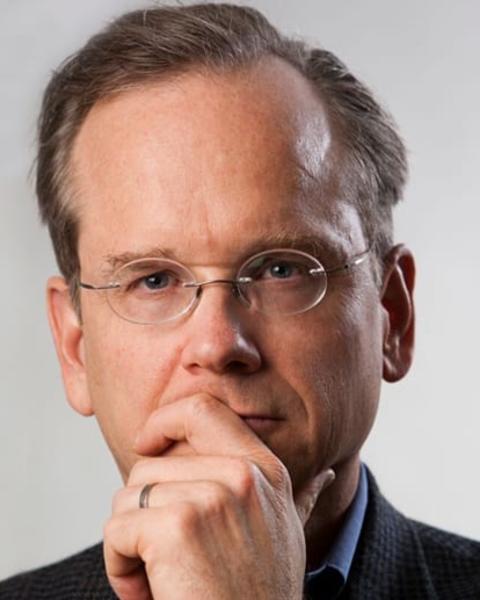
Lawrence Lessig is the Roy L. Furman Professor of Law and Leadership at Harvard Law School . He previously taught at Stanford Law School (founding the Center for Internet and Society ) and the University of Chicago. A respected legal scholar, Lessig is also the founder of Equal Citizens and a founding board member of Creative Commons . He serves on the Scientific Board of the AXA Research Fund and is a member of the American Academy of Arts and Sciences and the American Philosophical Society. Education: BA in Economics and BS in Management, University of Pennsylvania MA in Philosophy, Cambridge University JD, Yale Law School Lessig's research bridges law and technology , focusing on intellectual property and internet governance, with recent work on institutional corruption —legal relationships that erode public trust, particularly in democratic systems. His scholarship includes critiques of campaign finance laws and proposals for constitutional reform. Recent publications include The Buckley Overreach (2025), analyzing campaign finance under originalism, and Conversation Networks (2025), exploring digital communication's impact on democracy. Earlier works like The End of End-to-End (2001) established him as a foundational thinker on internet architecture. Scientific awards and honors: Webby Award Free Software Foundation's Freedom Award Scientific American 50 Award Fastcase 50 Award Member, American Academy of Arts and Sciences Member, American Philosophical Society He has advised on constitutional law, notably Republic, Lost (2011) and They Don't Represent Us (2019), and has contributed to debates on digital rights , free culture , and AI ethics .
Professor Xuan-Thao Nguyen is the Pendleton Miller Chair in Law and Director of the Asian Law Center at the University of Washington School of Law. She specializes in Intellectual Property , Corporate Governance , Technology Law , and Banking , with a focus on Cryptocurrency , Law and Technology , and E-Commerce . Her work bridges legal frameworks with innovation economics. Her research explores IP Taxation as a tool for economic growth, Blockchain applications in corporate law, and Global Tech Competition between China and the U.S. She has advised on high-profile cases involving Trademark Disputes (e.g., Starbucks vs. Starbucks Workers United) and Trade Secrets (Group14 litigation). Recent publications analyze AI Copyright Class Actions (2025), Crypto Losses (2024), and Tech Bankruptcy trends. Her book Silicon Valley Bank: The Rise and Fall of a Community Bank for Tech (2024) provides a critical case study of tech finance. She actively engages in international policy discussions, including Vietnam Data Protection (2024), U.S.-Vietnam Economic Ties (2024), and Metaverse Regulation . She leads UW's Entrepreneurship and Law Speaker Series and collaborates with institutions across Southeast Asia and the U.S.
Matthew Gardner Kelly is an Assistant Professor at the University of Washington College of Education, specializing in the Department of Educational Foundations, Leadership & Policy. His work focuses on the intersection of political, legal, social, and economic history in education inequality. PhD in History of Education and Educational Policy, Stanford University MA in History, Stanford University BA in History, Bard College Kelly’s research traces how racial, economic, and spatial educational inequities are created through state policies and resisted by marginalized communities. His first book, Dividing the Public: School Finance and the Creation of Structural Inequity (2024), examines historical school funding policies that perpetuated segregation and inequality. His upcoming book, Taken for Granted: Native Land and the Colonial Origins of Public Education , extends this analysis to settler colonialism and Native land dispossession. Kelly’s publications include peer-reviewed articles in Educational Researcher , Teachers College Record , and History of Education Quarterly , addressing topics like funding disparities, geospatial analysis, and legal challenges. He has served as an expert witness in William Penn School District v. PA Department of Education , influencing a landmark ruling against Pennsylvania’s underfunding. His work has received multiple awards, including the Vincent DeSantis Prize and Rabel J. Burdge Outstanding Article Award. PhD, Stanford University MA, Stanford University BA, Bard College