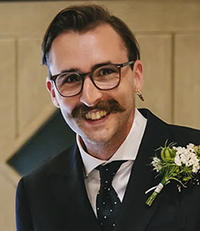
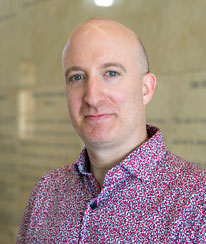
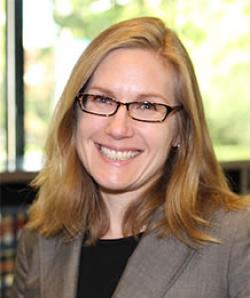
Luke J Davies is a Leverhulme Early Career Fellow in the Faculty of Philosophy at the University of Oxford. His research focuses on Kant’s moral and political philosophy, particularly exploring the interplay between duties to self and the legitimate role of the state. He previously held a fellowship in the Department of Government at the London School of Economics (2018–2022). Education: PhD in Philosophy, University of Oxford (2014–2019) BPhil in Philosophy, University of Oxford (2012–2014) BA in Philosophy, University of Toronto (2006–2011) His research interests include Kantian ethics, political philosophy, rights theory, and the philosophical foundations of state legitimacy. Current work examines how duties to self shape interpersonal moral obligations within Kantian frameworks. Key Themes in Publications: Recurring topics include Kant’s theories of property, citizenship, welfare, and cosmopolitanism, with a focus on reconciling individual autonomy with collective moral obligations. Recent work extends to the state of nature, cosmopolitan law, and active citizenship in republican frameworks. Awards: Leverhulme Early Career Fellowship (2022–2025) His academic trajectory combines rigorous engagement with Kantian texts and contemporary applications of classical philosophy to political and ethical dilemmas.
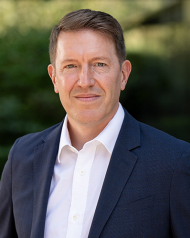
Alan Patten is the Howard Harrison and Gabrielle Snyder Beck Professor of Politics and Chair of Princeton University's Department of Politics. He holds a D.Phil. from Oxford University, with prior academic roles at McGill University and the University of Exeter. His research bridges historical political thought and contemporary political philosophy, focusing on minority rights, language politics, nationalism, and religious freedom. He is the author of Hegel's Idea of Freedom (1999), Equal Recognition: The Moral Foundations of Minority Rights (2014), and co-editor of Language Rights and Political Theory (2003). Patten has served as editor of Philosophy & Public Affairs (2010–2017) and currently directs Princeton's University Center for Human Values. His recent work explores a liberal theory of religious freedom and critiques neocolonial dynamics in cultural trade. Awards include the APSA First Book Prize and the C.B. Macpherson Prize. Education: B.A. (McGill), M.A. (Toronto), M.Phil. & D.Phil. (Oxford, 1996). Teaching includes courses on political theory, democracy, and self-determination. Patten has advised numerous Ph.D. students on topics in political philosophy and intellectual history. Research interests span the moral foundations of minority rights, language policy in multicultural contexts, and the historical development of nationalist thought. His work often combines normative argumentation with historical analysis, addressing contemporary issues like religious exemptions, cultural preservation, and global justice. Awards: APSA First Book Prize in Political Theory (1999) C.B. Macpherson Prize (Canadian Political Science Association, 1999) Service: Chair of the Department of Politics (2018–2024), editorial roles, and academic leadership in interdisciplinary initiatives at Princeton.
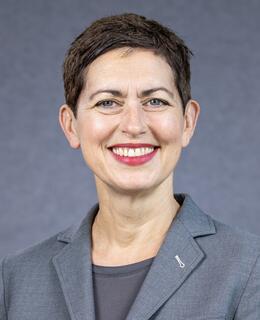
Steven Kelts is a Lecturer at Princeton University, affiliated with the School of Public and International Affairs (SPIA) and the Department of Computer Science . He leads the Integrated Ethics in CS program and has served as Director of the non-profit All Tech Is Human. Research Focus: Kelts examines ethical frameworks in technology innovation, historical political economies, and the intersection of democratic theory with corporate responsibility. His work spans Measuring ethics education in computing Evolving corporate structures for ethical action Locke's economic justice theories Machiavelli's republican ideals Madison's institutional designs Publications reveal trends in: Utilitarian logic in Agile teams Roman censorship models 17th-century English economic debates Mill's social value legislation Scientific Recognition: Recipient of Princeton's Council on Science and Technology grants for Agile Ethics program Google seed grant for corporate ethics frameworks University-wide award for GradFutures AI ethics leadership Advisory Roles: Includes ethics advisor to the Responsible A.I. Institute and institutional design mentor for political theory projects.
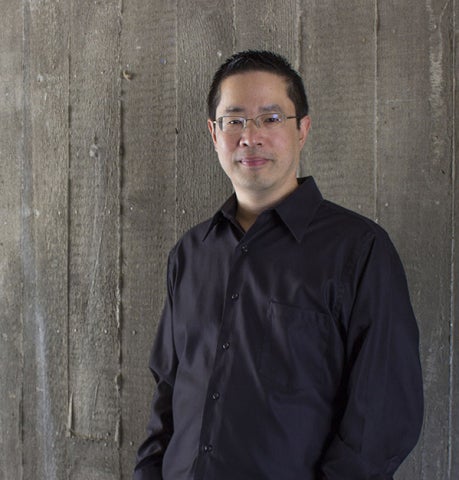
Raymond Ku is the John Homer Kapp Professor of Law at Case Western Reserve University School of Law. He has served as Associate Dean for Academic Affairs and Co-Director of the Center for Law, Technology and the Art. His work focuses on Constitutional Law, Cyberlaw, Privacy, and Copyright, with an emphasis on how technology and evolving societal norms intersect with individual liberties. Education Juris Doctor (J.D.), New York University (1995) Bachelor of Arts (A.B.), Brown University (1992) Professor Ku’s research explores the tensions between free speech and copyright, the implications of digital technology on privacy, and the constitutional boundaries of surveillance. His publications span topics like peer-to-peer file sharing, reproductive rights, and data privacy, reflecting a commitment to addressing contemporary legal challenges through interdisciplinary lenses. His scholarship appears in prestigious law reviews, including Berkeley, Chicago, and Vanderbilt. He authored the first casebook on cyberspace law. Awards include the 2009 Distinguished Teacher Award and being voted Professor of the Year by the 2009 graduating class. Raymond Ku clerked for Judge Timothy K. Lewis and practiced constitutional, intellectual property, and antitrust law before transitioning to academia. He has taught at multiple institutions, contributing to legal education and research related to technology and civil liberties.
Laura Spitz is Dean and Professor at the University of Calgary Faculty of Law, with a concurrent Visiting Professorship at Université Paris 1 Panthéon-Sorbonne Law School. Her academic and professional journey spans multiple institutions, including Seattle University, University of New Mexico, Cornell University, and Thompson Rivers University. Educational Background: JSD, Cornell University JD, University of British Columbia BA, University of Toronto Spitz's research interrogates the legal construction of borders and identities, blending contracts, commercial law, and critical analyses of personhood in corporate and environmental contexts. Her work explores the limits of subject-object dichotomies in law and society. Notable awards include multiple Graduation Hooding Professor distinctions at the University of New Mexico and Colorado Law School, alongside teaching accolades. She contributes to constitutional pluralism debates and has co-authored influential works on legal personhood. A nonpracticing member of the Law Society of British Columbia, Spitz serves as a legal expert in contracts and business law, with experience in First Nations economic development and nonprofit law. She has advised on Supreme Court cases and held leadership roles in global engagement and international affairs.
Suzie Dunn is an Assistant Professor at Dalhousie University's Schulich School of Law and Acting Director of the Law & Technology Institute. She teaches Contracts, Judicial Decision-Making, Law and Technology, Intellectual Property, and Legal Ethics. Her research focuses on the intersection of gender, equality, technology, and law, particularly technology-facilitated violence, deepfakes, and digital privacy. Education: PhD candidate at the University of Ottawa Faculty of Law, with JD, LLM, and BA degrees. She previously served as a part-time professor at the University of Ottawa, where she taught Contracts and Law of Images, earning a 2021 teaching excellence award. Awards include the Joseph-Armand Bombardier Scholarship for PhD research and the Greenberg Prize for Feminist Research. Professional roles include advising the G7 and UN on gender-based violence in digital contexts, contributing to CIPPIC interventions in landmark Supreme Court cases (R v Jarvis, R v Downes), and serving on advisory boards for organizations like the Women’s Legal Education and Action Fund. She is a Senior Fellow at CIGI, working on global projects against online gender-based violence, and co-authored a UN resolution on digital violence prevention. Her work extends to tech safety toolkits for domestic violence shelters, policy development, and international collaborations. She was called to the Ontario bar in 2016 and actively engages in public discourse on AI ethics and digital rights.
PD Dr. Jannis Lennartz is a Senior Lecturer in Public Law at Humboldt University Berlin, specializing in constitutional law, administrative law, and digital legal issues. He holds a habilitation (2022) and has held visiting professorships at Göttingen and Cambridge. His research focuses on intersections of law and technology, fundamental rights in the digital age, and legal theory. He has published extensively on AI copyright challenges, algorithmic governance, and constitutional limits in administrative contexts. Education: BA Political Science (Erfurt, 2008), dual法学博士 (Göttingen/Berlin, 2013-2017), habilitation (Berlin, 2022). Key awards include the Leibniz Prize. Teaching includes Constitutional History (10 006), New Developments in Law (10 603), and General Administrative Law (10 450). Research highlights: Over 30 peer-reviewed articles since 2015 across constitutional law, intellectual property, and digital governance. Notable works include Chancellor Democracy (2023) and Forbidden Fruits? (2025), examining AI's impact on artistic creation and copyright frameworks. Recent publications address algorithmic filtering, digital trust mechanisms, and AI-generated content regulation. Awards: Leibniz Prize (specific details not provided but denotes Germany's top academic recognition). Active in interdisciplinary projects like LLCon and OSAIC initiatives. Serves as associated scientist under Prof. Möllers' chair, contributing to constitutional law research and academic leadership.
Paul D. Halliday is the Julian Bishko Professor of History and Professor of Law at the University of Virginia, jointly appointed in the Department of History within the College of Arts and Sciences and the Law School . He is a leading scholar in legal history, with a focus on British, imperial, and global legal developments from 1500 to 1850. BA, Wesleyan University, 1983 MA, University of Chicago, 1988 PhD, University of Chicago, 1993 His research centers on the history of legal institutions, particularly habeas corpus, judicial authority, and the role of law in empire. Halliday challenges traditional narratives by emphasizing how judicial power evolved from royal prerogative rather than as a check on monarchy. His work bridges legal doctrine, archival practice, and material culture, with current projects exploring the sensory and spatial dimensions of law, including courthouse architecture and archival procedures. His publications reveal a consistent engagement with themes of liberty, authority, and legal continuity across time and space. Notably, his book Habeas Corpus: From England to Empire (2010) has had a profound impact, influencing the U.S. Supreme Court in Boumediene v. Bush (2008), and reshaping scholarly understanding of habeas corpus as a tool of imperial governance. His recent work extends into South Asian and Caribbean legal histories, emphasizing global legal interconnectedness. Inner Temple Book Prize (2011) for Habeas Corpus: From England to Empire Sutherland Prize, American Society for Legal History (2009) for co-authored Virginia Law Review article At UVA, Halliday teaches courses such as History of English Law , Law’s Empire , and Global Legal History . He advises graduate students in legal history and is a core member of GLH@UVA (Global Legal History at the University of Virginia), an interdisciplinary community that includes faculty and students from history and law. This group fosters collaborative research, professional development, and regular discussions on works in progress, contributing to a vibrant intellectual environment.
Rev. Patrick E. Reidy, C.S.C. is an Associate Professor of Law at the University of Notre Dame Law School and Co-Director of the Church Properties Initiative within the Fitzgerald Institute for Real Estate. He is an ordained Roman Catholic priest with the Congregation of Holy Cross. His research focuses on the intersection of property law and religion, addressing legal frameworks for religious property ownership and doctrinal impacts on religious practice. Former Visiting Lecturer in Law and Fellow in Private Law at Yale Law School Clerk for Honorable Thomas M. Hardiman on the U.S. Court of Appeals for the Third Circuit Past Rector of Marilyn M. Keough Hall at Notre Dame, supporting Campus Ministry and athletic teams Member of the University of Portland's Board of Regents His research explores how legal systems interpret religious entities in property disputes, and how property laws enable religious practices. Key themes include affordable housing on church land, sacred easements, and constitutional protections for religious property. His work has been published in top journals like the Yale Law Journal and Virginia Law Review. Father Pat’s academic contributions bridge theoretical legal scholarship with practical guidance for faith communities managing property. His writings address contemporary issues like zoning laws affecting religious institutions and eminent domain challenges to church properties.
John Infranca is an Associate Professor of Law at Suffolk University School of Law , where he serves as Director of Faculty Scholarship & Research. His work bridges land use regulation , affordable housing policy , property theory , and law and religion , with a focus on urban legal frameworks and regulatory innovation. Education: JD from New York University School of Law, MTS in Moral Theology from Notre Dame, BA in Liberal Studies from Notre Dame. His research examines zoning reforms , sharing economy regulation , and religious liberty-adjacent land use issues . He co-edited the Cambridge Handbook on the Law of the Sharing Economy (2018) and the Elgar Research Agenda for Land Use and Planning Law (2023). Recent articles analyze exclusionary zoning , development rights transfers , and state-level preemption in housing crises . His work has been recognized in leading journals and forums, including the Stanford/Harvard/Yale Junior Faculty Forum (2020). Notably, he has served as a Florence Rogatz Visiting Professor at Yale Law School (Spring 2024, returning 2026) and teaches courses in Property Law , Land Use , and Religion & Law . Scientific Recognition: Differentiating Exclusionary Tendencies selected for Stanford/Harvard/Yale Junior Faculty Forum (2020) Multiple articles featured in Land Use & Environmental Law Review as top land use law works
Professor Peter Nicolas is the William L. Dwyer Chair in Law and Director of the Intellectual Property Law & Policy Graduate Program at the University of Washington School of Law. He holds adjunct professorships in Gender, Women & Sexuality Studies and Music. His primary affiliations include the UW School of Law, where he has been a faculty member since 2000. He previously served as Associate Dean from 2008–2010. Education: B.A. Economics (1991), M.P.P. (1992), University of Michigan; J.D. (1999), Harvard University; A.A.A.S. (2021), Shoreline Community College (Music Performance); B.A. (2023), University of Washington (Music). Research focuses on the intersection of music law and copyright, constitutional law, LGBTQ+ rights, evidence law, and federal courts. His work bridges legal scholarship with music theory, with recent courses including Copyright Law, Music Law & Policy, and Intellectual Property Theory. Notable contributions include Evidence: A Problem-Based and Comparative Approach (5th ed., 2025) and Harmonizing Music Theory and Music Law (2023). His writings address topics like AI music fraud, streaming royalties, LGBTQ+ legal protections, and post-Obergefell jurisprudence. Frequently quoted by media outlets on music law and IP issues. Former roles include Research Economist at the University of Michigan and Ann Arbor City Council member. Labs/Teams: Leads the IP LL.M. program and collaborates with interdisciplinary music law initiatives. Consults on high-profile cases involving LGBTQ+ rights and evidentiary standards.
Patrick Lin is a Professor in the Philosophy Department at California Polytechnic State University (Cal Poly), where he serves as Director of the Ethics + Emerging Sciences Group, a non-partisan organization established at Cal Poly in 2007 to focus on the risk, ethical, and social impact of emerging sciences and technologies. He is frequently quoted in national publications on topics including ethics of autonomous vehicles, artificial intelligence, robotics, outer space, Arctic frontiers, military and policing applications, virtual and augmented reality, and smart cities. Lin received his Ph.D. and M.A. from the University of California, Santa Barbara, and his B.A. from the University of California, Berkeley. His academic appointments include Affiliate Scholar at Stanford Law School's Center for Internet and Society, Fulbright Specialist at the University of Iceland's Centre for Arctic Policy Studies (2018), and Visiting Senior Research Fellow at the Centre for Applied Philosophy and Public Ethics in Australia (2010-2016). Lin's research spans technology ethics broadly, with specific expertise in AI ethics, robotics ethics, autonomous vehicle ethics, space ethics, cybersecurity ethics, and military ethics. His work bridges philosophical theory with practical application, examining how emerging technologies challenge traditional ethical frameworks. His research demonstrates consistent themes across different technological domains: examining risk assessment methodologies, developing ethical frameworks for emerging technologies, analyzing social and political implications of technological adoption, and providing practical guidance for developers, policymakers, and users. His publication record shows a progression from early work on nanotechnology ethics to current focus areas including space cybersecurity, AI kitchens, and ethical frameworks for autonomous systems. The articles reflect his interdisciplinary approach, combining insights from philosophy, law, engineering, and policy studies to address complex ethical challenges in emerging technologies. Cal Poly/Academic Senate, Distinguished Scholarship Award (2017) American Philosophical Association's Public Philosophy Op-Ed Award (2015) Cal Poly/College of Liberal Arts, Outstanding Scholarship Award (2009) Lin has secured significant grant funding from organizations including the National Science Foundation, US Department of Defense, and Canadian Institute for Advanced Research for research on military AI risk assessment, AI kitchens and robot cooks, outer space cybersecurity, and autonomous vehicles. He has advised numerous students through his teaching and research activities at Cal Poly, where he teaches courses including Philosophy of Technology, Ethics of Science and Technology, and Introduction to Philosophy. Lin directs the Ethics + Emerging Sciences Group at Cal Poly, which serves as a hub for interdisciplinary research on technology ethics. He also participates in several other research initiatives including his role as Research Director for the Consortium for Emerging Technologies, Military Operations, and National Security (CETMONS) and as a member of the Emerging Technologies of National Security and Intelligence initiative at the University of Notre Dame.
Kenneth Stahl is a Professor of Law and Director of the Environmental, Land Use, and Real Estate Law certificate program at Chapman University's Fowler School of Law . His work bridges judicial doctrine with urban sociology , economics , and humanities to analyze local governance. Education: University of Michigan (BA) , Yale Law School (JD) Professional Experience: Former Assistant U.S. Attorney and DOJ Trial Attorney Research explores local citizenship in globalized contexts, examining tensions between federal and local citizenship frameworks, particularly under nationalist political climates. His work has appeared in University of Pennsylvania Law Review , Harvard Civil Rights-Civil Liberties Law Review , and Cardozo Law Review . Recent publications focus on land use regulation , preemption conflicts , and adaptive legal responses to urban challenges like traffic studies and gentrification. He advocates for judicial review in policy implementation. Scientific Awards: Michael Lang Award for Scholarly Excellence (2021) Professor of the Year (twice at Fowler School of Law) Selected for Harvard Junior Faculty Forum (2012) Teaches courses in Land Use Regulation , Election Law , and Housing Policy , emphasizing practical legal applications and policy innovation .
David Opderbeck is a Professor of Law and Co-Director of the Gibbons Institute of Law, Science & Technology and Institute for Privacy Protection at Seton Hall University School of Law. His expertise spans artificial intelligence compliance, cybersecurity, data privacy, intellectual property law, and the intersection of law with theology and neuroscience. He teaches courses such as Cybersecurity Law and Policy, AI and the Law, and leads the Data Privacy and Security Compliance Program. Additionally, he holds affiliations with Seton Hall's Department of Religion and is a Faculty Associate at Harvard's Berkman-Klein Center for Internet & Society. Education: JD from Seton Hall University School of Law; LLM from NYU Law School; PhD and MA in Systematic and Philosophical Theology from the University of Nottingham and Fuller Theological Seminary. Research focuses on AI ethics, cybersecurity policy, and theological dimensions of law. Notable works include Law and Theology: Classic Questions and Contemporary Perspectives (2019), The End of the Law? Law, Theology, and Neuroscience (2021), and the upcoming Faithful Exchange: The Economy as It's Meant to Be (2025). His recent articles address AI training data rights, regulatory frameworks for biotech innovation, and encryption policy dilemmas. Service roles include Co-Director of the Gibbons Institute since 2003 and arbitrator for the American Arbitration Association in tech-related disputes. His work bridges legal scholarship with practical policy solutions for emerging technologies.
Jaime Bouvier is a Professor of Lawyering Skills at Case Western Reserve University School of Law, teaching second-year legal writing (LLEAP 3 Litigation) and previously instructing first-year legal writing, privacy torts, and leadership/emotional intelligence courses while co-directing the academic and writing support program. Education: Bachelor of Arts, University of Iowa Juris Doctorate, Case Western Reserve University School of Law Her research focuses on food policy and land-use law with deep specialization in urban agriculture regulation, examining municipal ordinances for backyard poultry/micro-livestock, cultural perceptions linking urban farming to race/gender/poverty, and constitutional intersections between food movements and First Amendment rights. She also develops leadership frameworks for legal professionals using neuroscience and organizational psychology. Publications consistently analyze local governance of urban agriculture, revealing patterns in regulatory approaches across municipalities while addressing social equity implications and advocating for model ordinances that balance community expectations with food sovereignty. As co-director of academic support, she mentored law students in writing and academic success. Pre-academic career included clerking for Judge Kathleen M. O'Malley (Northern District of Ohio), serving as staff counsel for Congressman Dennis Kucinich, and litigating public-policy cases at Chandra Law Firm.