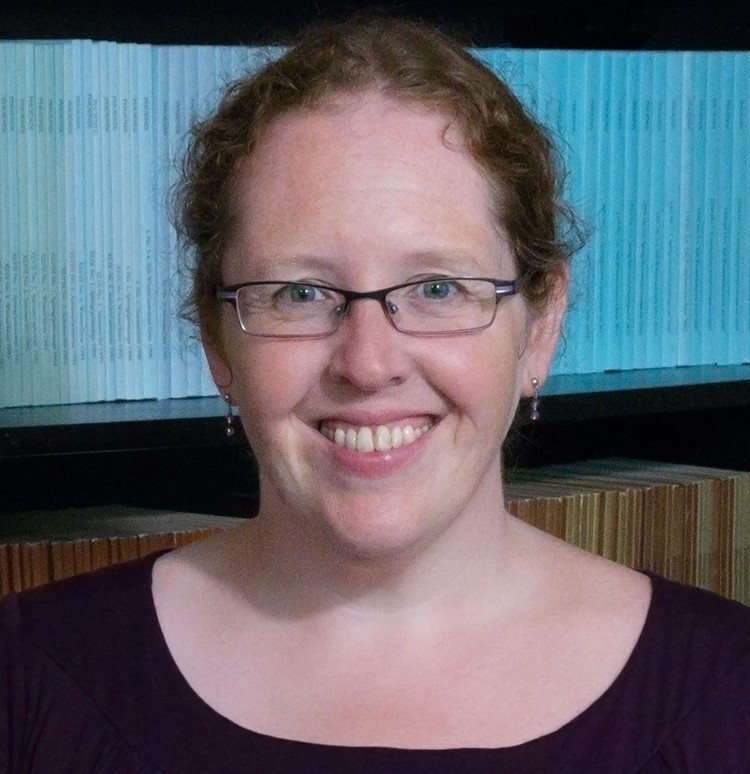
Melanie Racette-Campbell is an Associate Professor in the Classics Department at the University of Winnipeg. Her research focuses on gender and sexuality in Roman literature, Latin literature of the late Republic and early Empire, classical reception in Renaissance and modern culture, and the city of Rome. She holds a BA and MA from the University of Saskatchewan and a PhD from the University of Toronto. Her work bridges textual analysis with historical and cultural context, examining themes like patronage, slavery, and gendered roles in Roman elegy. She has published extensively on Propertius’ poetry, exploring concepts like fides (faith/loyalty), marriage contracts, and women’s agency in ancient texts. Recent publications include analyses of masculinity in Augustan-era literature and embodied identities in Roman elegy. Racette-Campbell’s research also engages with material culture, such as papyri records, to reconstruct economic practices in antiquity. She is involved in academic initiatives like the New Directions in Classics VIII conference and contributes to undergraduate and graduate teaching in classical studies.
Dr. Julia Dyson Hejduk, Reverend Jacob Beverly Stiteler Professor of Classics at Baylor University , specializes in Latin poetry, intertextuality, Roman religion in literature, women in antiquity, and acrostic analysis. She joined Baylor in 2003 after a decade at the University of Texas at Arlington, drawn by the university's classical strength and its Christian research vision. Education : Ph.D. and M.A. in Classical Philology (Harvard), B.A. in Classics summa cum laude (Princeton) Dr. Hejduk's research bridges classical literature with Catholic theological reflection, examining how Roman poetry illuminates biblical context and sacramental theology. Her work explores: Irony and moral complexity in Virgil’s Aeneid Acrostic patterns as theological commentary Eros and divinization in Roman erotic poetry Marian readings of classical texts Poetic structures as models for Christian ethics Recent publications include analyses of Virgil’s biblical echoes, Propertius’s temporal paradoxes, and Horace’s ethical satire. Scientific honors include Choice Outstanding Academic Title recognition and a National Translation Award longlisting. Contact : Julia_Hejduk@baylor.edu | (254) 710-7763 | Morrison Hall 314
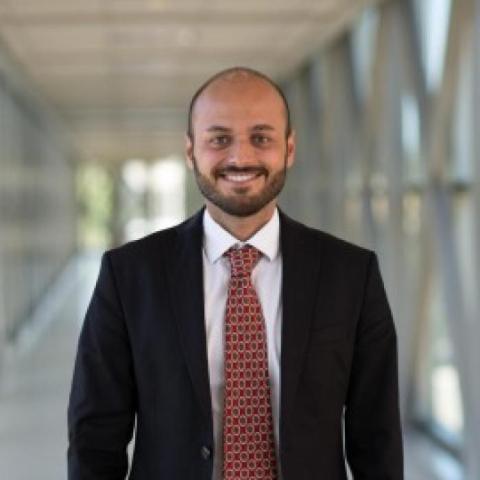
Giulio Celotto is an Assistant Professor in the Classics Department at the University of Virginia . His research focuses on Latin literature of the early Empire , particularly the interplay between philosophical frameworks and narrative in Latin epic, and the intersection of gender and genre in Latin poetry. Education : B.A. (2007) and M.A. (2009) from the University of Naples Federico II Ph.D. in Classics (2017) from Florida State University Research period at University of California, Irvine Research Interests center on Lucan's Bellum Civile , its philosophical themes of Love and Strife, and the transformation of epic norms under Imperial critique. He explores gender dynamics in Catullus, Ovid, and Seneca, and directs The Siren Project , which examines women's voices across literature and visual arts. Scientific Awards : 2023 SCS Outreach Prize for The Siren Project Recent Publications analyze intertextual dialogues between Latin authors and later works (Dante, Renaissance literature), with emphasis on ecofeminism , metapoetry , and Roman political critique . His monograph Amor belli: Love and Strife in Lucan’s Bellum Civile (2022) challenges prevailing interpretations of Lucan's epic as fragmentary, arguing for a transformed but coherent narrative structure. Teaching includes courses on Roman Women Writers, Seneca, Juvenal, and other canonical texts, with a focus on thematic exploration of moral philosophy, gender representation, and historical context.
Micaela W. Janan is a Professor of Classical Studies at Duke University's Trinity College of Arts & Sciences. Her work focuses on Latin literature, gender and identity in antiquity, and interdisciplinary approaches including psychoanalytic and feminist theory. She holds a Ph.D. from Princeton University (1988) and a B.A. from the University of California, Santa Cruz (1979). Her research explores themes such as Roman and Greek sexuality, the intersection of literature and psychoanalysis, and the political dimensions of classical texts. Notable publications include analyses of Ovid's Metamorphoses, Statius' Silvae, and Augustan elegy. She has received grants and fellowships including the Mellon Assistant Professorship and Lilly Teaching Fellowship. Janan teaches courses like Gender and Sexuality in the Ancient World and Latin Epic , emphasizing critical engagement with classical texts. Her service roles include Director of Graduate Studies in Classical Studies (1997-2000) and leadership in organizations like the Women's Classical Caucus. Key Awards: Franklin Humanities Seminar Fellow, Career Development Award (Utah), Faculty Summer Research Grant (Utah) Professional Service: Organized panels on 'Family Values in Flavian Literature' and 'Psychoanalysis and Antiquity'
Prof. Dr. Ulrich Schmitzer is a distinguished Professor of Classical Philology at Humboldt University of Berlin, specializing in Roman literature and historiography. As Chair of the Institute of Classical Philology since 2003, he has led research on Ovid, Velleius Paterculus, and Augustan-era texts. His career includes roles as Acting Professor at Konstanz University, Vice Dean of Philosophy II at HU Berlin, and Director of the August Boeckh Center. His research focuses on Roman poetry (Ovid's Metamorphoses, Propertius, Vergil), historiography (Velleius Paterculus), and literary reception. He has authored over 90 publications, including books on Ovid's political context, Roman historiography, and the Pax Augusta. Editorships include Gymnasium and Vertumnus , and he coordinates international projects like the FIEC conference in Berlin. Teaching spans classical pedagogy, Latin literature, and ancient historiography. His work bridges antiquity and modernity, exploring themes like urban topography, cultural memory, and Augustan ideology. Retired in 2025, he remains active as a Senior Advisor, maintaining Berlin's classical studies legacy.
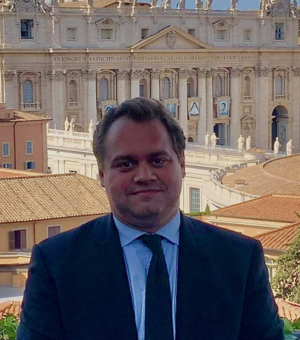
Dr Marcus Beck is Lecturer of Latin at the Martin Luther University Halle-Wittenberg , Faculty of Philosophy I, Institute for Classical Philology. He holds regular office hours on Mondays 15:00–17:00 and can be reached at marcus.beck@altertum.uni-halle.de . His research spans Latin philology, textual criticism, Roman rhetoric and Augustan literature, with particular expertise in Ovid, Cicero, Horace, Propertius and Martial. He has published extensively on authenticity questions in the Heroides , the reception of Greek myth in Latin poetry, and the intersection of Roman law and literature. Across more than two dozen peer-reviewed articles, monographs and encyclopaedia entries from 1996 to 2018, Dr Beck has addressed topics ranging from papyrological readings of Cicero’s Catilinarians to the dramatic dating of Tacitus’ Dialogus . His work repeatedly returns to problems of textual transmission, rhetorical theory and the cultural context of Augustan Rome. Current projects in preparation include studies on Cicero’s Pro Plancio , soloecism in Martial and Juvenal, Goethe’s reception of the Hero and Leander myth, and the antiquity reception in Wolfgang Koeppen’s works.
Adrian Tronson is an Honorary Research Associate and part-time instructor in the Department of Classics and Ancient History at the University of New Brunswick (UNB). He holds a distinguished academic career spanning over decades, including former roles as Assistant and Associate Professor at Memorial University (1988–2002), and teaching positions at Harvard University, Concordia University, and the University of South Africa. His research focuses on the political rhetoric and history of Classical/Hellenistic Greece and the Roman Republic/Empire, ancient drama, and the evolution of political concepts like 'Hellenes.' He explores how ruling powers shape public discourse through literary and epigraphic sources, including myths revived in both ancient and modern contexts. Tronson’s teaching portfolio includes courses on Greek/Latin language and literature, Roman civilization, Alexander the Great, ancient drama, and seminars on topics like 'Greece and Persia' and 'Caesar and the Invention of Europe.' His publications span journals such as Journal of Hellenic Studies , Vergilius , and Acta Classica , with recent projects examining Alexander the Great’s influence on Hellenistic Jewish political thought and the socio-political semantics of 'Hellenes.' His work bridges ancient and modern contexts, analyzing how historical narratives and political ideologies are constructed and reinterpreted. Though no awards are explicitly listed, his contributions to classical studies are evident through his extensive scholarly output and academic leadership across multiple institutions.
Dr. Jonathan Wallis is a Senior Lecturer in Classics and Interim Head of School for Humanities at the University of Tasmania. He holds multiple roles including Coordinator of the Ancient Languages major and Associate Head (Learning and Teaching). His academic background includes a PhD from the University of Cambridge (2008) and MA from the University of Melbourne (2001). Research focuses on Roman literary culture, genre analysis, and modern reception of classical texts. Notable works include studies on Propertius, Horace, and Catullus. He has pioneered blended learning approaches in Classics education, emphasizing technology integration. Teaching specialties span Latin language, Roman epic poetry, and gender studies in classical texts. Recipient of the 2019 Team Citation for Outstanding Contributions to Student Learning, he has mentored over a dozen postgraduate researchers exploring Roman culture and reception studies. Active in curriculum design, he teaches courses like 'Nero and Neronian Literature' and 'Desire and Disorder in the Erotic Text'. His work bridges ancient literary traditions with modern pedagogical innovations.
Tristan Franklinos is a Lecturer in Greek & Latin at the University of Oxford's Faculty of Classics, holding Supernumerary Fellow status at Wolfson College and Lecturer roles at Oriel College. His academic journey includes degrees from the University of St Andrews (MA, MA) and Oxford (MPhil, DPhil). He specializes in classical and medieval Latin literature, textual criticism, and the dynamics of author-reader relationships within texts. Education: MA in Classics, University of St Andrews MPhil in Classical Languages and Literature, University of Oxford DPhil (PhD), University of Oxford His research focuses on first-century BC Roman poetry, medieval Latin literature, and the history of the book. Notable projects include a monograph on Propertius' Cynthia and collaborative editions of medieval texts like the Codex Buranus. Recent fellowships include the Alexander von Humboldt-Stiftung Fellowship (2022–2024) and a Loeb Classical Library Foundation Fellowship (2024). Franklinos has contributed to textual analysis of the Appendix Vergiliana and co-edited volumes on classical and medieval authorship. Upcoming projects include an annotated edition of Peter Abelard's Hymns and translations of Sicco Polenton's Latin literature history.
Prof. Thea Selliaas Thorsen is a Professor of Classical Studies specializing in Greek and Latin literature and their receptions. She holds a PhD from the University of Bergen and has held research positions at Cambridge, Paris IV-Sorbonne, and the University of Oxford. Her affiliations include NTNU's Department of Historical and Classical Studies in Trondheim, where she leads the 'Classical Ages' research group. Her work bridges classical philology with modern interdisciplinary approaches, including feminist theory, ancient rhetoric, and digital humanities. Education: M.A. (University of Oslo), PhD (University of Bergen) Research Stays: Vatican Library, University of Cambridge, Scuola Normale Superiore di Pisa Principal Investigator: 'The Heterosexual Tradition of Homoerotic Poetics' (2015-2020) Her research focuses on classical texts' reception in later periods, with key contributions on Ovid's Heroides, Sappho's Roman receptions, and ancient prose dynamics. She has authored/co-edited major volumes like Roman Receptions of Sappho (2019) and Dynamic of Ancient Prose (2018). Her 2024 translation of Ovid's Metamorphoses earned the Norsk kritikerlags Prize. Outreach activities include founding the Kanon translation series, promoting classical education in schools, and curating the SPOR literature festival. She frequently appears in media (NRK P2, Morgenbladet) as a public intellectual. Her supervision spans classical poetry and translation projects. Current research explores ancient rhetoric's neural systems and female authority in antiquity.
Professor Peter Heslin is a Professor in the Department of Classics and Ancient History at Durham University and Co-Director (Digital Humanities) at the Institute of Medieval and Early Modern Studies. His research spans classical Latin poetry, Roman material culture, and digital humanities, with a focus on applying machine learning and Bayesian methods to literary history. He developed Diogenes, an open-source tool for working with Greek and Latin texts, and its browser-based counterpart DiogenesWeb, enhancing accessibility to ancient languages. His scholarly contributions include three major monographs: The Transvestite Achilles (2005), The Museum of Augustus (2015), and Propertius, Greek Myth, and Virgil (2018). These works explore topics such as Statius’ unfinished epic, the interplay between Pompeiian wall paintings and Augustan poetry, and Propertius’ use of Greek myth in polemics against Virgil. Professor Heslin has held prestigious visiting fellowships, including the Class of 1932 Visiting Fellow at Princeton University and Joan Palevsky Visiting Professor at UCLA. His research interests in digital humanities emphasize computational methods for ancient texts, while his traditional scholarship engages deeply with Augustan poetry, Roman painting, and intertextuality. He supervises PhD students in digital humanities and classical poetry, and is actively involved in public engagement through school talks on Roman mythology and Latin poetry. His work bridges ancient studies with modern technological innovation, fostering accessible and interdisciplinary approaches to classical scholarship.
Professor Roger Green is an Honorary Professorial Research Fellow in Classics at the University of Glasgow. His research focuses on Late Antique Latin literature, particularly the works of Ausonius, Juvencus, and other Late Roman authors. He is recognized for his expertise in Patristic texts, Christian epic poetry, and textual criticism of classical and early Christian works. Green has published extensively on topics such as the intersection of classical and Christian literary traditions, the reinterpretation of biblical narratives in Latin verse (e.g., Juvencus' Evangeliorum Libri), and the cultural contexts of late antique poets like Ausonius. His work often involves critical editions of texts, such as his edition of Augustine's De Doctrina Christiana (1995) and The Works of Ausonius (1991). His research frequently engages with themes of textual exegesis, genre hybridization, and the transmission of classical learning into Christian contexts. He has explored the reception of classical poetry in medieval and Renaissance contexts, including studies of George Buchanan's psalm paraphrases and Carolingian pastoral texts. His contributions span scholarly monographs, edited volumes, and articles in leading journals such as Classical Quarterly and Renaissance Studies. Green's academic career reflects a deep engagement with Latin literature from antiquity through the Renaissance, emphasizing methodologies of textual analysis, historical context, and intertextual relationships.
Simone Gibertini is an Associate Professor in the Department of Humanities, Social Sciences and Cultural Enterprises at the University of Parma, specializing in Latin Language and Literature. He earned his PhD from the University of Parma with a thesis on Petrarch’s Latin verse correspondence and holds a degree in Paleography from the State Archives of Parma. He has held teaching roles in Paleography and Medieval Latin and currently leads several academic initiatives, including the IDEA Latin courses and the CORDA project’s Latin component. Gibertini is a key member of the Centro Studi Catulliani Laboratory and serves as Quality Assurance Coordinator for the Master’s in Classical and Modern Literature. His research centers on the tradition and exegesis of Latin classics—especially Catullus, Tibullus, and Propertius—and the history of Latin writing, with a focus on Early Medieval scripts and the Bobbio scriptorium. He investigates the reception of classical texts in the Middle Ages and Humanism, particularly in Petrarch’s works. His scholarly interests also extend to manuscript studies, editorial practices, and the philological analysis of Latin texts across historical periods. The recent publications reflect a strong emphasis on bibliography, manuscript annotation, and classical reception. Key themes include the Codex Traguriensis marginalia, Petrarch’s intertextual engagement with Ovid and other classical authors, and the editorial history of Latin texts. His work demonstrates a deep commitment to philological rigor and interdisciplinary collaboration, notably in the study of a Leonardo da Vinci manuscript copy. Member, Editorial Board of «Paideia. Rivista di filologia, ermeneutica e critica letteraria» Member, Editorial Board of «Papyrotheke. Studi e testi di papirologia e cultura scrittoria antica» Member, Scientific and Organizing Committee, Centro Studi Catulliani Laboratory Editor, «Catullan Bulletin: the recent Bibliography on Catullus» Member, CUSL - University Council of Latin Studies Member, Deputation of National History for the ancient Provinces of Parma Gibertini has supervised approximately twenty-five undergraduate and graduate theses in Latin Literature and Paleography. He has been involved in research projects on the manuscript Reggio Emilia, Biblioteca Municipale «A. Panizzi», Ms. Regg. A 35/2, collaborating with institutions such as the Max-Planck-Institut in Berlin and the Biblioteca Leonardiana in Vinci. He regularly serves as a referee for national and international journals and contributes to academic publishing through critical reviews and bibliographic compilations. He leads research on documentary heritage within the Centro Studi Catulliani and coordinates Latin language initiatives at the departmental level. His editorial role in the «Catullan Bulletin» underscores his commitment to tracking global scholarship on Catullus. His interdisciplinary work on Renaissance and medieval manuscripts reflects a broad engagement with textual transmission and intellectual history.
Sabina Tuzzo is a Full Professor of Latin Language and Literature at the Department of Humanities, University of Salento, where she has taught continuously from the 2020/2021 through 2025/2026 academic years across multiple degree programs including Classical Letters, Modern Letters, and Language Studies. Her research focuses on Roman literary traditions , specializing in Ovid's Metamorphoses and Heroides , Propertius' Elegies , and classical rhetorical works including Cicero's De Amicitia . She emphasizes prosody, metrics, and interdisciplinary teaching methodologies for modern pedagogical applications. Her work bridges philological analysis with contemporary educational frameworks for secondary and university instruction. Professor Tuzzo serves on examination committees alongside colleagues N. Pellè, A. Micolani, and S. Delle Donne, maintaining structured office hours at the Codacci Pisanelli Building in Lecce. Her academic profile reflects deep engagement with classical Latin literature while adapting traditional scholarship for current educational contexts.
Dr. Jacqueline Clarke is a Research Fellow in the School of Humanities at the University of Adelaide. Her work focuses on classical literature, particularly ancient pain narratives, gender dynamics in Greco-Roman texts, and the interplay between religious and secular traditions. She has published extensively on authors like Prudentius, Propertius, and Catullus, with a strong emphasis on analyzing color symbolism, landscape metaphors, and the representation of trauma and identity in literary works. Her research interests include classical aesthetics, patristic poetry, and mythological adaptations in medieval and modern contexts. Clarke's work often bridges literary analysis with cultural studies, exploring how ancient texts engage with themes of power, mourning, and transformation through spatial and bodily imagery. Recent publications analyze pain narratives in Prudentius' Peristephanon, gendered landscapes in Pan's Labyrinth, and color symbolism in Catullus' poetry. Her scholarship demonstrates innovative approaches to interpreting classical texts through interdisciplinary lenses.