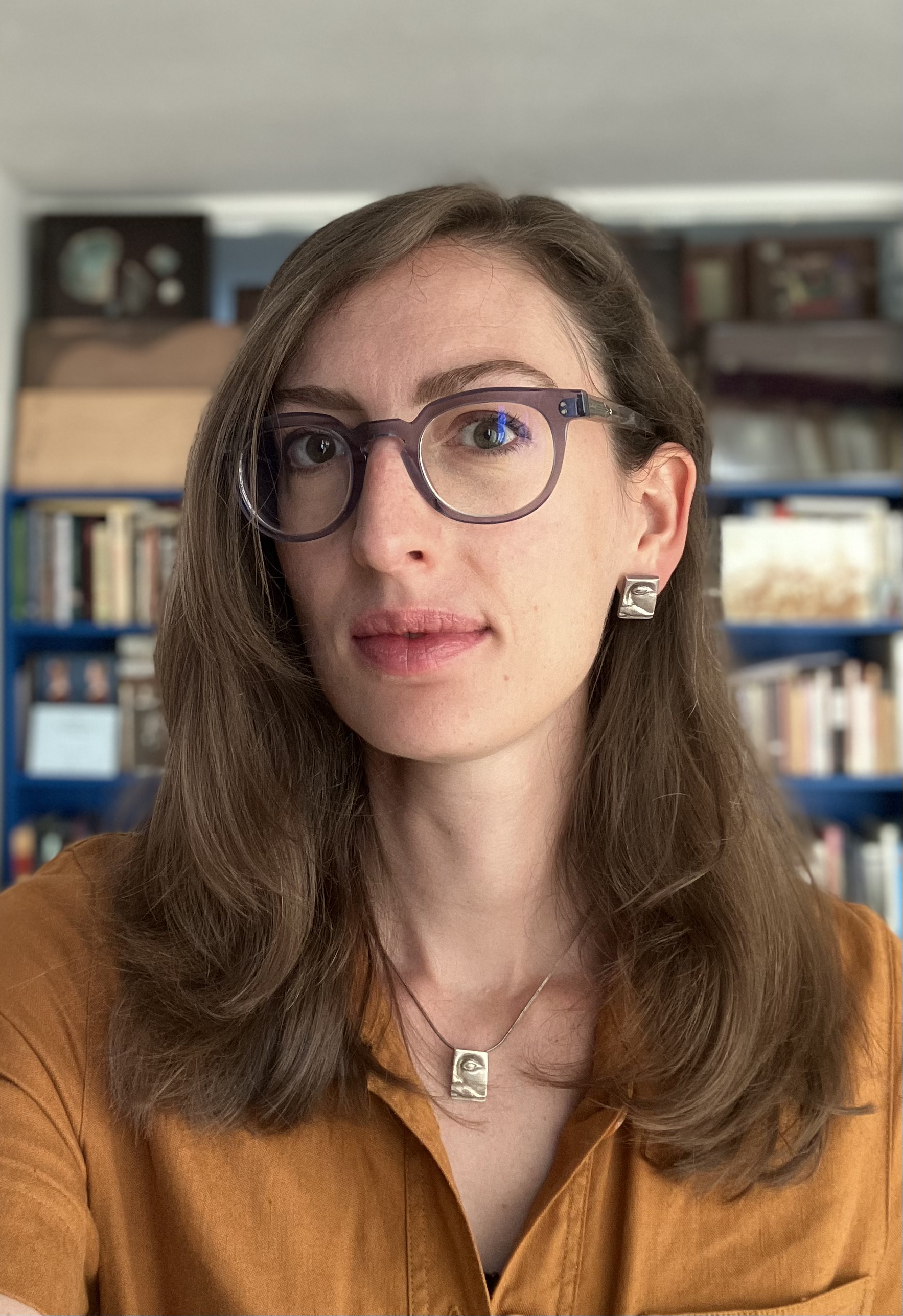
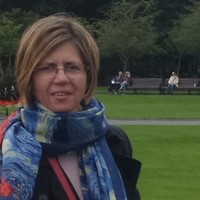
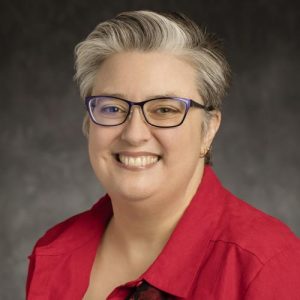
Dr. Julia Hartley is a Lecturer in Comparative Literature at the School of Modern Languages and Cultures, University of Glasgow, since 2023. Her research bridges French, Italian, and Iranian literary traditions, with a focus on cross-cultural representation and adaptation. BA, MA, and PhD in French and Italian Literature (University of Oxford, 2016) MA in Iranian Studies (SOAS, 2017) Lecturer in Comparative Literature at King's College London Leverhulme Early Career Fellow at University of Warwick Her research explores: Dante’s Divine Comedy and Proustian modernism 19th-century French Orientalism and its colonial entanglements Gender and race in opera, historiography, and travel-writing Persian-French literary translation dynamics Decadence and exoticism in global contexts Recent publications include co-edited journals and monographs on Dante-Proust analogies and French Orientalism. Her scholarship intersects with BBC Radio collaborations and creative media outreach. Leverhulme Early Career Fellowship BBC/AHRC New Generation Thinker nomination She supervises projects on 19th/20th-century French literature, Dante, cross-cultural representation, and Middle Eastern-Western literary exchanges.
Prof. Waldemar Żarski is a distinguished linguist and academic at the University of Wrocław, Faculty of Philology. He holds the position of Head of the Department of Editing at the Institute of Polish Philology (IFP UWr) and has previously led multiple departments, including the Lithuanian Language and Culture Studies and the School of Polish Language and Culture for Foreigners. He has taught at international institutions such as Stony Brook University (USA), the University of Vienna (Austria), and the University of Cologne (Germany). His research focuses on utility texts, guidebook discourse, diachronic linguistics, and glottodidactics of Polish for foreigners, with a notable emphasis on culinary identity and cultural distinctiveness in regions like Silesia and Vilnius. He has supervised 42 theses and authored/co-edited over 30 publications since 1977. Education: MA in Linguistics (1974) from University of Wrocław, awarded top prize for his thesis on Indo-European linguistic connections. Administrative Roles: Rector of the State Higher Vocational School in Koszalin (2009–2012), Department Head roles since 1981. His research integrates cultural and linguistic analyses of food discourse, textual functions, and regional identity markers. Notable works include studies on culinary texts, religious terminology evolution, and comparative studies between Sanskrit and Polish. He has been recognized for his contributions to linguistic pedagogy and cross-cultural communication. Awards: 1974 National Master’s Thesis Prize, multiple editorial leadership awards implicit in his institutional roles. Grants/Projects: Extensive international collaborations and research stays in Bochum, Leiden, Clermont-Ferrand, and Vilnius. Led the School of Polish Language and Culture for Foreigners, emphasizing practical language education. Active in societies like the Polish Linguistic Society and Societas Linguistica Europaea. His work bridges historical linguistics with modern applications in cultural studies.
Ülle Pärli is an academic affiliated with the University of Tartu, where she held the position of Associate Professor in the Institute of Philosophy and Semiotics within the Faculty of Philosophy from 2002 to 2007. Her research focuses on cultural semiotics, literary theory, and the analysis of artistic texts, particularly exploring themes like proper names, cultural memory, and narrative structures. She has been actively involved in organizing international conferences and editorial work, including roles as academic secretary of the Institute of Philosophy and Semiotics and editor of Sign Systems Studies . Her work bridges Russian literary traditions, semiotic analysis, and interdisciplinary cultural studies. Education: She earned a Doctor's Degree (1987) and a Russian philologist qualification (1977), both from the University of Tartu. Her career began as a teacher of Russian language and literature, evolving into academic roles with a focus on semiotics and cultural analysis. Research Interests: Dr. Pärli’s work examines the semiotics of proper names, the reception aesthetics of literary texts, and the interplay between oral and written narratives. She has contributed to discussions on postmodernism and avant-garde influences, particularly through analyses of Joseph Brodsky’s poetry. Her methodologies often integrate Juri Lotman’s theories on cultural semiotics and textual interpretation. Publications Trends: Her articles emphasize the semiotic analysis of names, cultural symbolism, and the theoretical frameworks of Lotman. Key themes include the paradoxes of proper names in artistic contexts, the dynamics of infinite/finite concepts in hermeneutics, and the role of toponyms in social memory. Awards: No specific scientific awards are listed in the provided materials. Advising and Grants: She has coordinated multiple projects, including the ETF grant on interdisciplinary analysis of artistic texts (1997–1999) and EstSF grants on proper names and cultural anonymity. Her administrative roles include organizing conferences like 'Naming in Text and Culture' and serving on editorial and academic councils. Labs/Teams: Active in the Semiotics Department’s research networks, contributing to collaborative projects with institutions like the University of Lüneburg.
Dr. Paulina Mazurkiewicz serves as Assistant Professor in the Department of Romance Linguistics at the Institute of Linguistics, Faculty of Humanities, John Paul II Catholic University of Lublin. Her academic profile spans legal linguistics, contrastive French-Polish terminology, and pandemic discourse analysis, with extensive contributions to cognitive metaphor studies and jurislinguistics. Her research focuses on legal terminology (particularly family law concepts like civil unions, filiation, and marriage annulment), Covid-19 discourse (analyzing conceptual metaphors in vaccination communication), and terminological innovation (neologisms derived from political proper names). She employs corpus-based methodologies and cognitive linguistic frameworks to examine cross-linguistic expression patterns. Analysis of her 15 most recent publications reveals a consistent trajectory in specialized discourse analysis , with increasing emphasis on crisis communication since 2020. Her work demonstrates methodological rigor in comparing French and Polish legal lexicons while exploring broader cognitive mechanisms in metaphor realization across Romance and Slavic languages. Medal Komisji Edukacji Narodowej (2024) Scientific editor for special issue 'Limites en la recherche linguistique' (Roczniki Humanistyczne, 2024) Reviewer for Revue Repères Dorif Dr. Mazurkiewicz actively contributes to academic service through conference organization (including 'Entre liberté et contrainte dans la recherche linguistique', 2022), editorial roles (Annals of the Humanities), and Erasmus+ collaborations. She coordinates the Faculty of Humanities' participation in the Lublin Science Festival and organizes national competitions like the Polish Knowledge of France Olympiad. Her research infrastructure includes collaborations with the European Network On Lexical Innovation (COST project), University of Ostrava (Erasmus+), and Polish Academy of Sciences Scientific Station in Paris. Current projects examine implicit communication in political discourse, particularly Emmanuel Macron's discursive strategies.
Dr. Andrea Wurm is a Researcher at Saarland University , affiliated with the Department of Applied Linguistics and Translation and Interpreting . Her work bridges Translation Studies with cross-border cultural history , focusing on empirical methodologies through the KOPTE Corpus – a longitudinal translation learner corpus for analyzing translation competence and evaluation. She also contributes to the MUST network and UniGR Center for Border Studies . Her research spans corpus linguistics , cultural realia in translation , and historical translation effects . Key projects include the KOPTE corpus , enabling studies on translator biographies, annotation schemes, and statistical correlations between text features and translation quality. She teaches French-German translation practice , text analysis , and language-culture interfaces . Academic Appointments: 2001–2021: Lecturer in French and Francophone Department Since 2012: Head of French Section Since 2021: Researcher Research Networks: UniGR Center for Border Studies MUST Network (Multilingual and Specific Translation)
Philip Burton serves as Reader in Latin and Early Christian Studies at the University of Birmingham's Department of Classics, Ancient History and Archaeology, where he bridges linguistic analysis, early Christian history, and classical reception studies through teaching and research. His academic foundation includes: BA, University of Cambridge PhD, University of Cambridge Burton specializes in Latin linguistics (particularly Old Latin and Christian Latin), early Christian textual traditions, and the reinterpretation of antiquity in modern literature. His work examines translation techniques in biblical Latin, the evolution of Christian idiolects, and modern engagements with classical themes by authors like Tolkien and Kipling, employing philological and theoretical frameworks to dissect language evolution and cultural transmission. His publication trajectory reveals sustained interdisciplinary investigation into Latin linguistic development and classical reception, with increasing emphasis on 20th-century British literature's dialogue with antiquity, demonstrating methodological flexibility across textual criticism, historical linguistics, and literary analysis. No scientific awards are documented in available sources. Burton supervises undergraduate dissertations across ancient literature and reception topics, actively seeking linguistics-focused projects. He has co-directed two Arts and Humanities Research Council (AHRC) projects for critical editions of Old Latin Gospel manuscripts, securing significant external funding for textual scholarship. He contributes to the Institute for Textual Scholarship and Electronic Editing (ITSEE) at Birmingham, collaborating on digital and print editions of biblical and patristic texts through this internationally recognized research center.
Erika Raniolo is a Contract Professor of Glottology and Linguistics at the University of Catania 's Special Teaching Structure of Ragusa. She holds a permanent position as Tenured French Language Teacher (AA24) at the G. Curcio Higher Education Institute in Ispica since the 2024/2025 academic year. Her academic journey includes a PhD in Literary, Philological-Linguistic, and Historical-Philosophical Studies (University of Palermo, 2021) and advanced degrees in European and Non-European Languages (Catania, 2013) and Comparative Studies (Catania, 2011). Education: PhD in Literary, Philological-Linguistic, and Historical-Philosophical Studies (2021, University of Palermo) Master's in European and Non-European Languages and Cultures (2013, University of Catania) Bachelor's in Comparative Studies (2011, University of Catania) Research Interests center on poetic translation between sign and spoken languages, onomastics in signed languages, labializations in LIS, and teaching vocal languages to deaf individuals. She explores multimodal communication and sensory linguistic competence through comparative analysis of LIS (Italian Sign Language) and LSF (French Sign Language). Publications demonstrate expertise in: translating poetry through embodied perspectives; tactile sign language (LISt) for deafblind education; name signs in LIS; labialization studies; medical communication between deaf and hearing people; and pandemic-era sign language translation. Her work spans journal articles, book chapters, and a monograph on sign language poetry. Key Conferences: 2024: Accessibility and Cultural Heritage (Catania) 2023: Alterity in Poetry (Catania); Vertical Curriculum in English (Torino) 2022: LIS/LSF Comparative Study (Palermo); Tactile LIS (Catania) Professional Contributions include a Research Grant (2022/2023) on LIS/LSF in Sicilian cultural heritage, teaching LIS and French at the University of Catania for 5 consecutive academic years, and collaborative work with institutions like CNRS Paris, Université d'Ottawa, and BAICR Cultura della Relazione. She serves as a certified LIS interpreter (ANIMU #293) and holds advanced language certifications in French (C2), English (C1), German (B1), and Spanish (B1).
Michela Tonti is a researcher specializing in French linguistics at the University of Bergamo, with extensive expertise in corpus linguistics, computer-assisted discourse analysis, and legal terminology. Her academic journey includes a PhD in Translation, Interpreting, and Intercultural Studies from the University of Bologna (2019), where she focused on brand names in everyday discourse. Her research interests span multiple interconnected domains including corpus linguistics, computer-assisted discourse analysis, rhetoric and metaphor-based argumentation, referential semantics, commercial onomastics, and terminology studies with particular emphasis on neonymy in European law, accounting, and gender equality. Since 2020, she has expanded her work into neural translation through significant European projects. Tonti's publication record demonstrates consistent evolution from traditional linguistic analysis toward cutting-edge AI applications in language processing. Her recent work (2023-2025) shows increasing focus on the intersection of artificial intelligence and inclusive language practices, particularly examining how systems like ChatGPT handle intralingual translation for gender-inclusive writing and legal terminology standardization across European languages. Winner of the 2019 SUSLLF prize for her monograph 'Le nom de marque dans le discours au quotidien: prisme lexiculturall et linguistique' Recipient of research funding through European and national projects focusing on multilingual AI systems As project coordinator for the Italian and French language groups of the Empowering Multilingual Inclusive Communication (E-MIMIC) initiative, Tonti leads cross-institutional collaboration between the University of Bergamo, University of Bologna, and Polytechnic University of Turin. Her work bridges theoretical linguistics with practical AI applications, particularly in developing expert-annotated datasets for inclusive communication systems. She maintains active research partnerships with multiple Italian universities through the PRIN 2022 project framework.
Richard Murphy is the AT&T Professor of Law at Texas Tech University School of Law, where he has taught since 2009. His primary academic home is within the School of Law at Texas Tech University, where he holds a named professorship. Previously, Professor Murphy taught at William Mitchell College of Law starting in 2000, and has served as a visiting professor at the law schools of University of Idaho, Seton Hall, and Lewis & Clark. Professor Murphy received his B.A. from Carleton College in 1987, magna cum laude, and his J.D. from University of Minnesota Law School in 1995, summa cum laude. After law school, he clerked for Judge Stephen S. Trott of the U.S. Court of Appeals for the Ninth Circuit, followed by work as a litigation associate at Dorsey & Whitney in Minneapolis. Professor Murphy's research focuses primarily on Administrative Law, with particular expertise in judicial deference doctrines, separation of powers, and the administrative state. He has developed specialized knowledge in areas including Chevron deference, unitary executive theory, and the judicial review of agency action. His scholarship often examines the relationship between constitutional principles and administrative governance, with notable contributions to understanding presidential control of agencies and the proper scope of judicial review. His publications demonstrate consistent scholarly engagement with evolving administrative law doctrines, particularly the Chevron framework and alternatives to traditional deference models. Professor Murphy's work shows an increasing focus on constitutional dimensions of administrative law, including due process concerns in national security contexts and the proper boundaries of presidential power over agencies. His scholarship bridges theoretical administrative law concepts with practical regulatory concerns. Co-author of Volumes 32 & 33 of Federal Practice & Procedure, Judicial Review of Administrative Action Co-editor of an administrative law casebook Co-author of Supreme Court News in Administrative and Regulatory Law News (ABA) Professor Murphy teaches Administrative Law, Civil Procedure, Property, Antitrust, and Telecommunications Law. His scholarship and teaching reflect deep engagement with both doctrinal and theoretical aspects of administrative governance. While the available information doesn't specify particular advising relationships or grant funding, his extensive publication record and named professorship suggest significant scholarly impact within the administrative law community.
Hugues Engel is an Associate Professor of French at Stockholm University , affiliated with the Department of Romance Studies and Classics . His academic career includes roles as Director of French Studies (2018-2021) , Coordinating Director of Studies (since 2022) , and currently serves as Director of Italian Studies and Director of Portuguese Studies . Engel’s research focuses on second language acquisition , student success , higher education pedagogy , and phonetics/phonology . He leads the Romance Linguistics (RomLing) and Romance Languages and Second Language Acquisition (RomSLA) research groups, exploring rhythmic characteristics in French L2 learners, online language learning strategies, and institutional factors affecting study completion. Key scientific contributions include the Pedagogical Ambassador titles (2017, 2021) for educational development work. His publications span topics like multilingual educational environments , dislocation in French L2 , and stylistic preferences in translated literature , with recent studies on digital learning tools and flipped classroom models in phonetics instruction.
Rachel Goodman is an Associate Professor in the Department of Philosophy at the University of Illinois Chicago (UIC), where she also serves as Director of Graduate Admissions. She holds a PhD from the University of Chicago and previously taught at the University of Nebraska and the University of Wisconsin-Milwaukee. Her research focuses on the philosophy of mind and language, with core interests in mental representation, singular thought, and the concept of mental files. Key themes include the nature of de re reference, explanations of de jure coreference, representational formats, and the format/content distinction. Her work bridges cognitive science and philosophical analysis to explore how mental states represent the world. Recent publications (2022–2024) emphasize refining theories of mental files, analyzing singular thought mechanisms, and critiquing philosophical frameworks for reference. These studies often intersect with debates on proper names, semantic theory, and cognitive architecture. Goodman has held teaching roles at multiple institutions and currently oversees graduate admissions at UIC, reflecting her commitment to academic mentorship and institutional leadership.
Grammatiki Karla is an Associate Professor of Ancient Greek Literature at the National and Kapodistrian University of Athens , affiliated with the Department of Classics under the Philosophical School. She specializes in the ancient novel, fictional biography, and textual criticism, with a focus on Late Antiquity and Byzantine literature. B.A. and M.A. in Classics, University of Athens Ph.D. in Classics, Freie Universität Berlin (2000) Dissertation: Die Fassung der Handschriften BPThSA des Aesopromans Her research explores: The ancient novel and its evolution in post-Classical periods Fictional biography traditions, including lives of Aesop and Alexander the Great Ancient rhetoric from the Imperial era to Late Antiquity Textual editions and diachronic analysis of Greek language Her publications include critical editions like Vita Aesopi (2001) and co-edited volumes such as Fiction on the Fringe (2009). She has contributed to lexicography, diachronic linguistics, and Samian studies. Key awards: Centenary Bursary (2011-2012), British School at Athens Onassis Foundation Doctoral Scholarship (1996-1999) Deutsche Forschungsgemeinschaft (DFG) Research Grant (2002-2003) Prof. Karla serves on editorial boards for Byzantinische Zeitschrift and Brill's International Studies in the History of Rhetoric . She co-organized workshops on Late Antique literature and contributed to academic committees at the Academy of Athens and University of Athens.
Anna Dąbrowska-Kamińska serves as an Assistant Professor at the Faculty of Humanities, Cardinal Stefan Wyszyński University in Warsaw, specializing in linguistic research with emphasis on cultural and structural aspects of naming systems. Her scholarly focus spans: Anthroponomy and proper name analysis Dialectal features in Slavic languages Orthographic systems and metathesis phenomena Ruthenisms within Orthodox cultural contexts Lexicographic methodologies Descriptive formula development With 11 documented publications contributing to linguistic theory, her work demonstrates consistent scholarly output reflected in a Polish ministerial score of 228. Research trends reveal deep engagement with onomastic-cultural intersections and structural linguistics. Professional identification includes ORCID 0000-0003-3757-2566 and institutional profile URN urn:uni-ksw-prod:UKSW-3786.
Una Stojnic is a Professor of Philosophy at Princeton University, holding the title of Charles G. Osgood University Preceptor. Her academic work centers on the intricate relationship between language, meaning, and context, with particular emphasis on philosophical linguistics and semantic theory. Her research interests span Philosophy of Language , Semantics , and Pragmatics , focusing on contextual dynamics in discourse coherence, lexical effects, and metasemantic frameworks. Stojnic investigates how attentional mechanisms shape meaning construction, examining phenomena ranging from inflammatory language and slurring articulations to temporal indexicals and proper naming conventions. Her scholarship bridges analytic philosophy with empirical linguistics, challenging rigid semantic boundaries through studies of felicitous underspecification and inferential constraints. Analysis of her 15 most recent publications reveals a consistent trajectory exploring contextual sensitivity in meaning determination , with increasing focus on sociopolitical dimensions of language (e.g., inflammatory rhetoric, pejorative terms) alongside foundational work in discourse coherence and temporal semantics. Her 2025 publications demonstrate ongoing engagement with real-world linguistic violence while maintaining rigorous formal analysis of semantic structures. No scientific awards were explicitly documented in the provided materials. Professor Stojnic maintains an active research program with continuous publication output through 2025, though specific grant funding details and student advising relationships were not disclosed in the source materials. Her work appears deeply integrated with Princeton's philosophical community through her preceptorship role and ongoing scholarly contributions.
Catherine Lesley Blake serves as Professor and Associate Dean for Academic Affairs in the School of Information Sciences (iSchool) at the University of Illinois at Urbana-Champaign. She additionally holds a joint appointment as a Health Innovation Professor in the Carle Illinois College of Medicine and maintains a courtesy appointment in Computer Science. Her extensive affiliations include the National Center for Supercomputing Applications (NCSA), the Illinois Informatics Institute (I3), and the Personalized Nutrition Initiative (PNI). Dr. Blake's research explores both human and automated methods to synthesize evidence from text, with nearly two decades of experience in text mining and natural language processing, primarily in biomedicine. Her work centers around the Claim Framework, which provides both a conceptual framework and automated methods that extract key findings from empirical studies in medicine, toxicology, and epidemiology. Her research spans diverse areas including chemical risk assessment, health data literacy, exposome analysis, and socio-technical data analytics. She has also explored text mining applications in humanities to detect authorship from movie reviews and in news stories for textual entailment recognition. Her publication portfolio demonstrates strong trends toward applying NLP and text mining techniques to health-related problems, particularly in chemical risk assessment, cancer research, and evidence-based medicine. The most recent works show increasing focus on using semantics to scale up evidence-based chemical risk assessments, analyzing exposome factors that impact cancer, and developing methods for automated systematic reviews. These publications reveal a consistent trajectory of applying computational methods to solve complex biomedical and environmental health problems. JASIST Best Paper Award for collaborative information synthesis papers Honorable mention at iConference (2013) for identifying claims in social science literature Principal Investigator for the NSF's Midwest Big Data Innovation Hub Recipient of multiple NSF, NIH, and IMLS grants totaling over $5 million As an educator and mentor, Dr. Blake has supervised numerous doctoral students including Jooho Lee, Henry Gabb, and Ana Lucic who have gone on to successful careers in academia and industry. She currently mentors Ryan Wang, George Vazquez, Don Keefer, and Jaemin Yang. Her grant portfolio includes significant funding from NSF, NIH, IMLS, VA, and industry partners like CISCO, with recent projects focusing on health data literacy ambassadors, chemical risk assessment, and AI for social impact. She regularly teaches courses including Database Design & Prototyping (IS455) and Text Mining (IS567). Dr. Blake leads multiple research initiatives including the Midwest Big Data Innovation Hub, which drives efforts to use AI for social impact in the region. Her work on the Claim Framework has established a robust infrastructure for evidence-based discovery, while her projects with the Personalized Nutrition Initiative and Illinois Informatics Institute demonstrate strong interdisciplinary collaboration across campus. Current research teams focus on developing methods to harness exposome factors that impact cancer, creating health data literacy programs for middle schoolers, and using text mining to identify privacy statement facets.