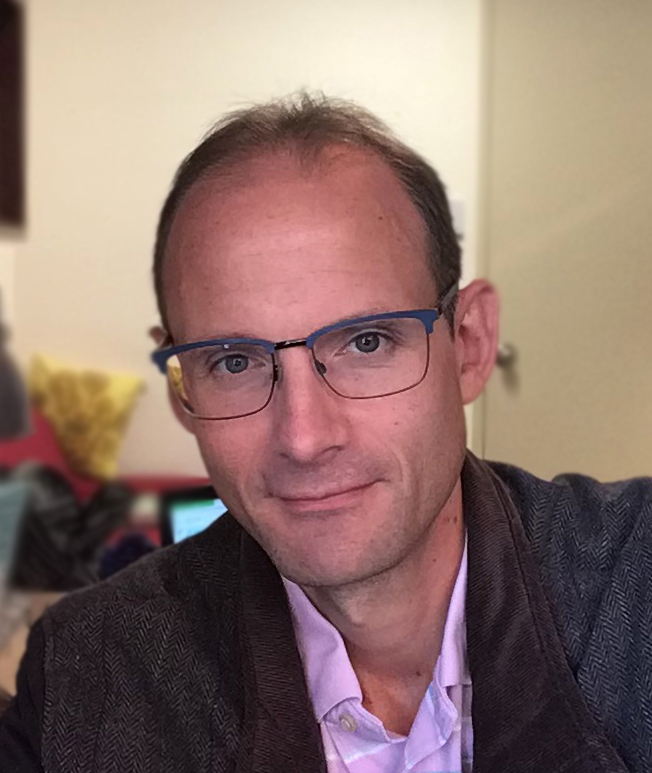
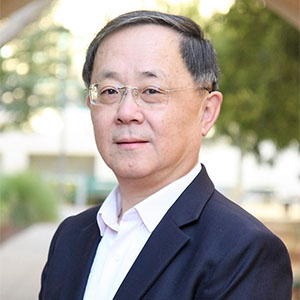
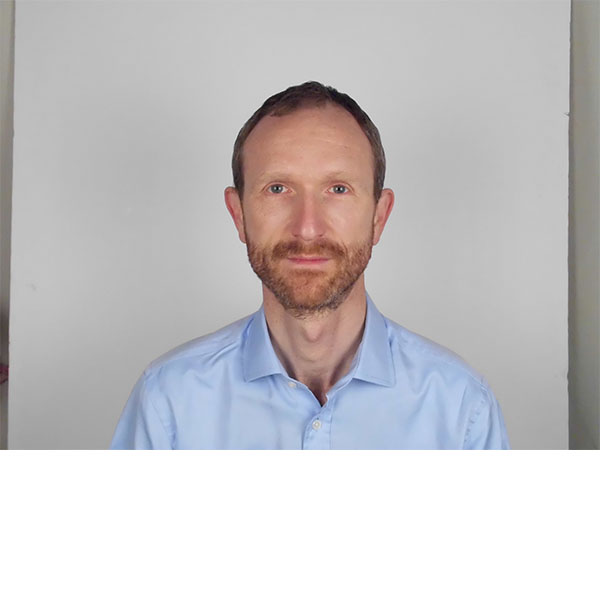
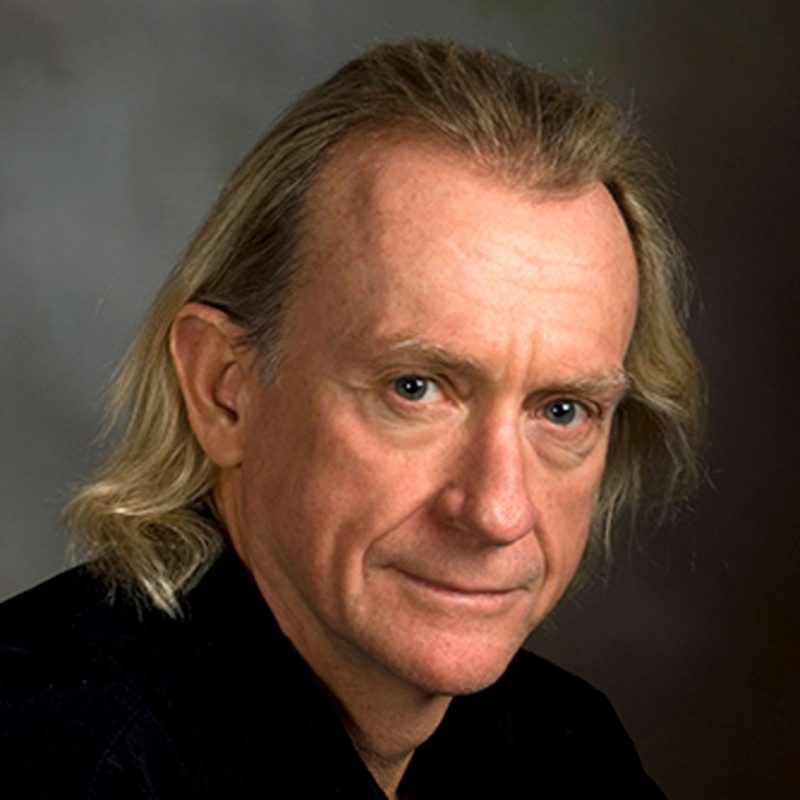
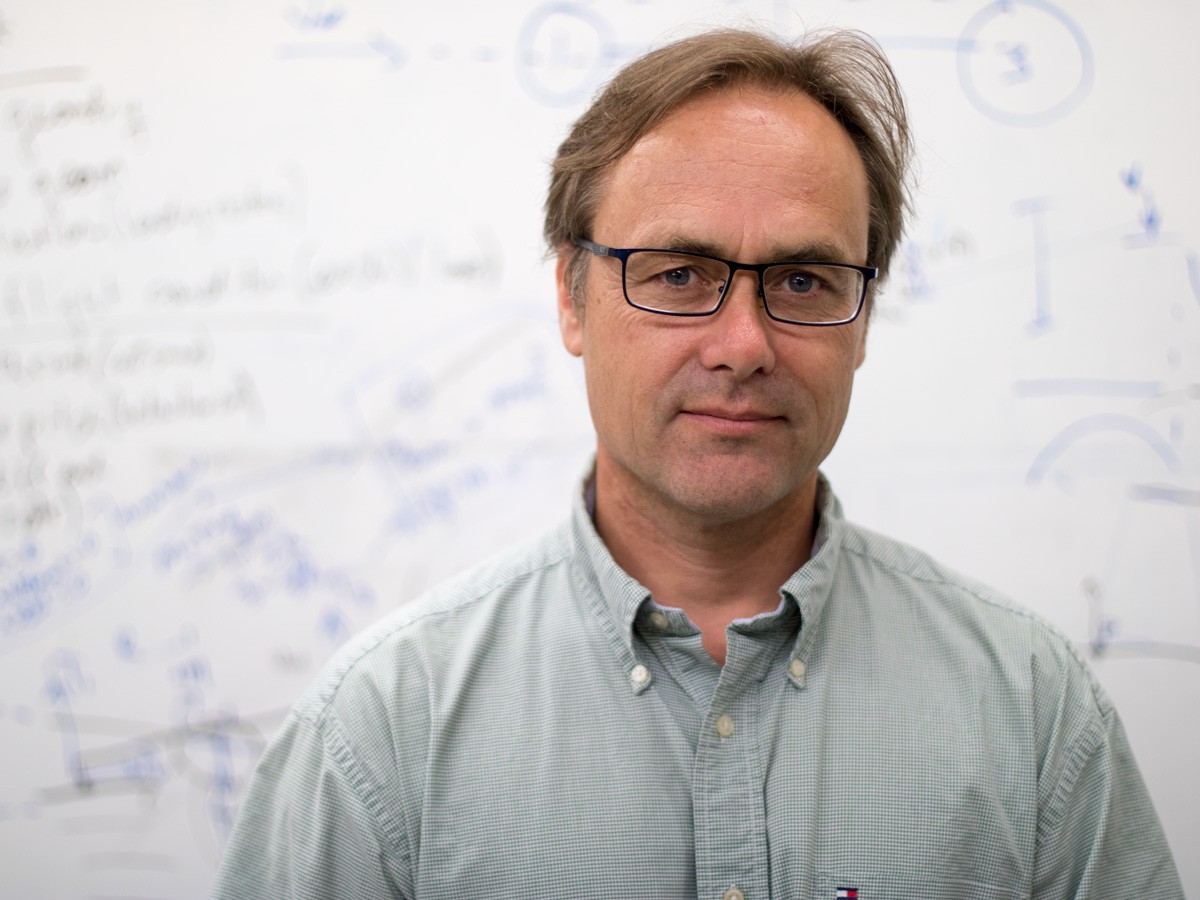
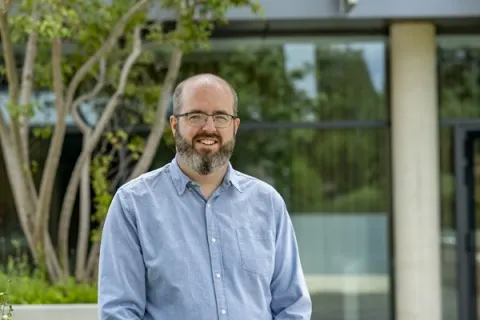
John F. Brady is the Chevron Professor of Chemical Engineering and Mechanical Engineering at the California Institute of Technology. He earned his B.S. from the University of Pennsylvania (1975), M.S. (1977) and Ph.D. (1981) from Stanford University, and has held academic roles at Caltech since 1985, including Executive Officer for Chemical Engineering (1993-99; 2013-19). His research focuses on fluid mechanics, transport processes, and complex/multiphase fluids. Elected to the National Academy of Sciences (20XX) Elected to the American Academy of Arts and Sciences (20XX) Brady's publications reveal expertise in active matter dynamics, microrheology, and non-equilibrium systems. His work spans fundamental fluid mechanics to applied biomedical device design, with a strong emphasis on computational modeling and experimental validation in colloidal and soft matter physics.
Leif Ristroph is an Assistant Professor of Mathematics at the Courant Institute of Mathematical Sciences , New York University . His research bridges experimental physics and applied mathematics , focusing on fluid-structure interactions in both biological and geophysical contexts. Key research areas include: Biophysical Flows : Aerodynamics of insect flight ( Applied Mathematics Laboratory ), hydrodynamics of fish schooling, and flow-sensing mechanisms via the fish lateral line system Geophysical Flows : Shape evolution during erosion, dissolution patterns in fluid flows, and bubble formation dynamics Recent publications (2019-2015) explore: Flow interactions in flapping swimmers and hovering systems Evolutionary optimization of wing shapes and self-sculpting processes Stability mechanisms in tandem flapping and insect flight His work has been featured in major media outlets like Nature , New York Times , and ScienceDaily . Ristroph's lab at NYU's Applied Mathematics Laboratory combines physical experiments, computational models, and theoretical analysis to study complex fluid-structure interactions.
Prof. Ping Lu is the Albert W. Johnson Distinguished Professor and Department Chair in the Department of Aerospace Engineering at San Diego State University (SDSU), College of Engineering. He holds a PhD from the University of Michigan. His research focuses on advanced guidance systems, autonomous trajectory planning, flight control, and flight mechanics, with applications to space transportation systems like the X-33, Orion Crew Exploration Vehicle, and Mars missions. Prof. Lu has contributed to major programs such as the Evolvable Mars Campaign and has pioneered algorithms for propellant-optimal guidance and trajectory optimization. His awards include the NASA Director’s Innovation Group Achievement Award (2016) and AIAA Mechanics and Control of Flight Award (2008). Research highlights include model predictive guidance algorithms, six-degree-of-freedom rocket landing optimization, and fuel-optimal strategies for Mars and lunar missions. His work bridges theoretical control systems with practical aerospace applications, emphasizing real-world feasibility through convex optimization and numerical methods. Key contributions include over 150 peer-reviewed articles, with recent trends focusing on end-to-end trajectory optimization from entry to powered descent, asteroid landing trajectory design, and robust abort protocols. He leads SDSU’s aerospace systems research, collaborating on cutting-edge projects like the Pterodactyl entry vehicle and fractional-polynomial guidance frameworks.
Leon Shpanin is a Senior Lecturer in Electronic and Electrical Engineering at Sheffield Hallam University, where he serves as Course Leader for MSc Automation Control and Robotics. He holds an MSc in Radio Frequency Engineering and a PhD in Electrical Engineering from the University of Liverpool. His research focuses on electrical engineering applications including renewable energy systems, HVDC circuit interruptions, and electromagnetic techniques for current interruption. He received the RAEng Award (2020) for developing next-generation circuit breakers for rail networks. Key projects: Development of Novel Energy Efficient Magnetic Scroll Air Motor (EPSRC) Smart control of multirotor drone propellers for vibration energy harvesting
Srinivas Dharavath is an Associate Professor at the Department of Chemistry, Indian Institute of Technology Kanpur , where he has served since December 2019. His research focuses on Organic Chemistry , High Energy Density Materials , and Medicinal Chemistry , with a specialization in energetic compounds for aerospace and biomedical applications. Education PhD (2014), University of Hyderabad M.Sc (2009), Osmania University B.Sc (2006), Osmania University Current research interests include designing nitrogen-rich azoles, strained-ring molecules for green energetic materials, hypergolic oxidizers for rocket propellants, and drug-like heterocyclic compounds for biological activity. His work bridges synthetic chemistry with applications in defense and pharmaceuticals. Professional experience spans postdoctoral research at McMaster University (Canada, 2017-2019) and University of Idaho (USA, 2015-2017), followed by academic appointments at IIT Kanpur. Contact details include Office: Room 6, Block-A, OLD SAC, and lab phone: 0512-259-2224.
Daniel C. Ludois is a Professor of Electrical and Computer Engineering at the University of Wisconsin–Madison, College of Engineering, where he also serves as the Research & Innovation Director for the Wisconsin Electric Machines and Power Electronics Consortium (WEMPEC). He holds the distinguished title of Jim and Anne Sorden Professor and is an H.I. Romnes Faculty Fellow, reflecting his leadership in research and education. Dr. Ludois earned his Ph.D. in Electrical Engineering from UW–Madison in 2012 and a B.S. in Physics from Bradley University in 2006. His research focuses on advancing power conversion technologies, particularly through electrostatic machines, capacitive wireless power transfer, wound field synchronous machines, and integrated power electronics. He teaches core courses such as ECE 411 (Introduction to Electric Drives), ECE 711 (Dynamics and Control of AC Drives), and ECE 713 (Electromagnetic Design of AC Machines). Power Electronics Wireless Power Transfer (Capacitive Coupling) Electrostatic Machines (Copper-Free, Steel-Free Motors) Sustainable Electric Machine Design High-Frequency and High-Voltage Power Conversion Brushless Excitation Systems Integration of Inductors and Capacitors His recent publications emphasize high-torque electrostatic machines using dielectric liquids, capacitive power transfer for aerial platforms and rotating machinery, and innovative inverter topologies. These works reflect a strong trend toward sustainable, high-performance electric machines that reduce reliance on rare-earth materials and traditional conductive components. Dr. Ludois has received numerous honors, including: NSF CAREER Award (2015) Moore Inventor Fellowship (2017) DOE InDEEP Competition Phase I & II Awards (2024) H.I. Romnes Faculty Fellow (2023) Vilas Faculty Early Career Investigator Award (2022) Wisconsin Alumni Research Foundation (WARF) Innovation Award (2012) He has mentored a highly entrepreneurial group of students, several of whom have founded startups such as H3X (Forbes 30 Under 30) and C-Motive Technologies, which he co-founded to commercialize electrostatic power conversion devices. His team has secured significant recognition, including multiple Grainger Power Engineering Fellowships and IEEE best paper awards. Dr. Ludois leads a vibrant research lab focused on next-generation power systems, with funding from federal agencies and industry partners, driving innovation in electric transportation, renewable energy, and industrial automation.
Laura Alvarez is a Junior Chair (Tenure Track) at the University of Bordeaux since 2022, conducting research at the Paul Pascal Research Center (CRPP), a joint CNRS-University of Bordeaux unit. Her office is located at B-224, 115 Avenue du Dr Albert Schweitzer, 33600 Pessac, France, with contact via (+33) 05 56 84 30 27 or laura.alvarez-frances@u-bordeaux.fr. She leads the BIO 2.0 team's research on active matter and colloidal systems. Her educational trajectory includes: PhD at University of Bordeaux and KU Leuven (2013-2016) under Prof. MP Lettinga and Dr. Eric Grelet Postdoctoral research at ETH Zurich (2017-2021) with Prof. Lucio Isa SNSF Spark postdoctoral fellowship (2020-2021) Her research centers on Active Matter , Chemical Communication , and Bio-inspired microsystems , investigating active liposome design, colloidal-lipid membrane interactions, and collective colloidal behavior. Key methodologies include optical tweezers and microfluidics for studying enzymatic particle navigation and colloidal lattice assembly. Her publication record (2017-2023) reveals a strong focus on programmable active colloids and microfluidic applications , with significant contributions to artificial microswimmers and reconfigurable systems appearing in Nature Communications, PNAS, and Physical Review Letters. Emerging trends show increasing emphasis on biomedical applications of active matter. Key recognitions include: Spark postdoctoral grant (SNSF, 2020) IdEx PhD fellowship (2013) She secured major grants including ANR JCJ Project MYMESYS (2023) and France-Berkeley Fund (2023), while her mentoring role involves graduate student supervision through University of Bordeaux's tenure-track framework. As BIO 2.0 team lead at CRPP, she directs experimental work on active colloidal particles using microfluidic platforms and optical manipulation, maintaining active collaborations with ETH Zurich, University of Bordeaux, and international partners across Europe.
Chris Fuller, Ph.D., is the Samuel Langley Distinguished Professor of Engineering at the College of Engineering , Virginia Tech. He leads the Vibrations and Acoustics Laboratory (VAL) , focusing on active/passive noise control systems, metamaterials, and their application to aerospace, medical devices, and industrial machinery. Education: Ph.D. (1979) and B.E. (1974) from the University of Adelaide, Australia. Research Interests: Structural acoustics, adaptive materials, machine learning in noise prediction, and biomedical acoustics (e.g., neonatal incubators). Awards: ASME Rayleigh Award (2017), NASA Team Achievement Award (1996), and Fellow of the Acoustical Society of America. Recent Publications: Highlight advancements in drone noise reduction using neural networks, metamaterials for HVAC systems, and poro-elastic materials for low-frequency noise control.
Dr. John G. Hayes is a Senior Lecturer at University College Cork (UCC) in the Department of Electrical & Electronic Engineering . He holds a Ph.D. from UCC (1998), an M.S.E.E. from the University of Minnesota (1989), an M.B.A. from California Lutheran University (1993), and a B.E. from UCC (1986). His academic career began at UCC in 2000, and he directs the Power Electronics Research Laboratory (PERL) , focusing on industrial collaborations with companies like Analog Devices and General Motors. Research Interests : Power electronics, magnetic components, electric vehicles, renewable energy systems, smart grids, and energy storage. Notable Work : Joint author of Electric Powertrain: Energy Systems, Power Electronics and Drives for Electric, Hybrid and Fuel Cell Vehicles (Wiley, 2018) and its Chinese edition (2021). Scientific Awards : 2011 IEEE William M. Portnoy Award for Best Paper/Presentation at IEEE ECCE. Advising : Supervised 10+ Ph.D. students across powertrain modeling, magnetic materials, and converter control. Current advisee: Conor Healy (Doctoral Degree). Labs : Leads PERL, which develops high-power converters for automotive and renewable energy applications, partnering with industry leaders like SMA Magnetics and United Technologies.
Dr. Goetz Bramesfeld serves as a Professor in the Department of Aerospace Engineering at Toronto Metropolitan University, where he leads research in applied aerodynamics and unconventional flight systems. His expertise spans flight vehicle design, small UAV development, and motorless flight dynamics, with particular emphasis on energy harvesting from atmospheric phenomena. Bramesfeld's educational background includes a PhD (2006) and MS (1999) from The Pennsylvania State University, and a BEng (1998) from Technische Universität Braunschweig. His research interests focus on applied aerodynamics , flight dynamics , and energy-efficient aircraft design , with notable contributions to sailplane optimization, gust energy extraction, and microwave-powered UAV concepts. His work bridges theoretical aerodynamics with practical applications in both terrestrial and planetary exploration contexts. Analysis of his publication record reveals consistent innovation in energy harvesting flight systems, particularly through gust energy extraction and unconventional propulsion methods. His research evolves from traditional sailplane optimization toward cutting-edge concepts like microwave-powered aircraft and planetary exploration gliders, maintaining strong connections between fundamental aerodynamics and real-world flight applications. Bramesfeld actively supervises graduate students through the Applied Aerodynamics Laboratory of Flight (AALF) and maintains significant professional engagement as a Senior Member of the American Institute of Aeronautics and Astronautics (AIAA), member of the Canadian Aeronautics and Space Institute (CASI), Associated Editor for the Technical Soaring Journal, and board member of the Organisation Scientifique et Technique du Vol à Voile (OSTIV).
Dr Charlie Ryan is an Associate Professor in the School of Engineering at the University of Southampton , specializing in low-cost micropropulsion systems for small spacecraft. He leads the Astronautics Group and has a primary research focus on electrospray thrusters , Hall-effect thrusters , and small chemical propulsion systems using hydrogen peroxide. PhD in electrospray voltage effects from Queen Mary University of London (2011) Postdoctoral work on MEMS electrospray thrusters for cubesats (2011-2013, European Commission FP7 'MicroThrust') Post Doctoral Research Fellow at University of Surrey’s Space Centre (2014-2015) developing low-cost Hall-effect thrusters His recent research involves experimental characterization of ionic liquid ion sources , porous electrospray thrusters , and in-situ lunar propellants . Current projects include Protolaunch and SPRINT (Research England), Cryptalabs , and collaborations with SmallSpark. He has supervised 10 PhD students in propulsion technology and related fields. Publications demonstrate expertise in: Electrospray thruster diagnostics Dual-species ion emission mechanisms Flight-ready microthruster development Alternative propellants for Hall thrusters Lunar regolith-derived propulsion Modular thruster design Research funded by EPSRC , Royal Society , and Research England . His hardware has flown on space missions including the International Space Station.
Jan C.M. van Hest is a Full Professor at Eindhoven University of Technology (TU/e), holding positions in the Department of Chemical Engineering and Chemistry and the Institute for Complex Molecular Systems (ICMS) . He leads research at the intersection of polymer chemistry and biomedicine, focusing on bio-inspired materials, nanomedicine, and artificial cells. His work includes developing synthetic vaccines, drug delivery systems, and adaptive nano/microcompartments mimicking cellular functions. Academic Background : Ph.D. in macro-organic chemistry from TU/e (1996), postdoc at the University of Massachusetts (protein engineering), and industry roles at DSM (1997–2000). Since 2016, he has held the Bio-organic Chemistry chair at TU/e, supervising over 30 PhD students and co-founding startups like Encapson and Noviosense. Research Highlights : His research spans nanomedicine (e.g., polymersomes for cancer treatment) and artificial cells (e.g., synthetic organelles). Recent work includes therapeutic nanovaccines and self-propelled platinum-loaded stomatocytes. His publications span Nature Nanotechnology , Nature Chemistry , and Angewandte Chemie . Awards & Collaborations : Recipient of the ERC Advanced Grant (2015) and NWO Gravitation Grant (2013). Partnerships with GSK, Zoetis, and industry initiatives like the TKI-LSH EUREKA project. Engages in education through courses like Biochemistry and Introduction to Chemistry & Chemical Technology. Labs & Teams : Core member of ICMS, leading interdisciplinary projects in functional molecular systems. Active in training the next generation of researchers through postgraduate programs like ICMS PTN.
Nan Marie Jokerst is the J. A. Jones Distinguished Professor of Electrical and Computer Engineering at Duke University's Pratt School of Engineering and Executive Director of the Duke Shared Materials Instrumentation Facility. She previously served as Chair of the Duke Academic Council (2014-2015) and Associate Dean for six years. B.S. in Physics, Creighton University (1982) M.S.E.E., University of Southern California (1984) Ph.D. in Electrical Engineering, University of Southern California (1989) Her research spans chip-scale photonic sensing systems , III-V thin-film lasers on silicon , metamaterials , and heterogeneous integration . She develops optical systems for medical diagnostics, environmental monitoring, and security applications through the Jokerst Laboratory, which combines optical system design, optoelectronic device development, and semiconductor fabrication expertise. Her recent publications show strong focus on terahertz strain mapping using metamaterials, multi-pixel tissue characterization for cancer margin detection, and microfluidic sensing platforms with embedded photodetectors. Key trends include advancing non-destructive structural monitoring and miniaturized biomedical diagnostics through novel photonic integration techniques. IEEE Fellow (2003) Optica Fellow (2001) NSF Presidential Young Investigator Award IEEE Third Millennium Medal IEEE/HP Harriet B. Rigas Medal USC Viterbi School Alumni Award She has advised numerous graduate students in photonic device research and secured major grants including the NSF National Nanotechnology Coordinated Infrastructure ($6M, 2015-2021) and NNCI: North Carolina Research Triangle Nanotechnology Network ($20M, 2020-2026). Her leadership extends to co-founding Triangle Women in STEM and serving on the National Academies Board on Global Science and Technology. The Duke Shared Materials Instrumentation Facility under her direction provides critical cleanroom and characterization resources for interdisciplinary research.
Dr. Kidambi Sreenivas is an Associate Professor in Mechanical Engineering at the University of Tennessee at Chattanooga (UTC), affiliated with the College of Engineering and Computer Science. He holds a PhD in Mechanical Engineering and specializes in computational fluid dynamics (CFD), with a focus on unstructured multi-physics flow solvers and applications in aerospace, environmental systems, and biomedical engineering. His research bridges academia and industry, collaborating with NASA, the U.S. Navy, Department of Energy, and private companies. Dr. Sreenivas' research interests include rotating machinery simulations, pre-conditioners for non-ideal fluids, and real-world applications such as submarine hydrodynamics, wind farm optimization, aerodynamic efficiency of vehicles, and contaminant dispersal modeling. He has pioneered methods for simulating complex geometries and physics, including high-fidelity simulations of hypersonic vehicles, weapons bay cavities, and shock-wave interactions. Recent work emphasizes advanced CFD methodologies for high-speed flows, thermal effects on turbulence, and aerothermal characteristics of hypersonic test articles. His collaborations have led to practical solutions for drag reduction on Class 8 trucks and improved accuracy in wind turbine modeling. Dr. Sreenivas also contributes to educational initiatives, such as developing PIV systems for undergraduate fluid mechanics labs. His advising and grants reflect partnerships with federal agencies and private sectors, focusing on projects like microplastic sampling devices for stormwater management. These projects highlight his interdisciplinary approach to solving real-world engineering challenges through cutting-edge computational methods.
Professor Mehmet Atlar is a Research Professor in the Department of Naval Architecture, Ocean and Marine Engineering at the University of Strathclyde, Faculty of Engineering. He joined in May 2016 via the Global Talent Platform initiative. Previously, he served as Professor of Ship Hydrodynamics and director of the Emerson Cavitation Tunnel at Newcastle University. His work spans experimental and computational naval hydrodynamics with a focus on ship propulsion, energy efficiency, and marine sustainability. His educational background includes a BSc and MSc in Naval Architecture & Marine Engineering from the Technical University of Istanbul and a PhD from the University of Glasgow on the dynamic motion responses of semi-submersibles. Mehmet Atlar’s research centers on ship performance, propulsion systems, cavitation, underwater noise, and marine biofouling. He is particularly interested in novel hull forms, propulsor design, and biomimetic applications for renewable energy and drag reduction. His recent work emphasizes energy-saving devices and sustainable shipping technologies. The most recent publications highlight a strong trend in experimental and computational analysis of advanced propulsion systems like the gate rudder, with attention to real-world conditions such as ageing, fouling, and oblique wave interactions. There is also a clear focus on sustainability, including carbon footprint assessments and retrofitting energy-saving technologies using CFD. Honorable Mention for the 2022 Vice Admiral E. L. Cochrane Award Professor Atlar has supervised over 28 PhD students as principal supervisor and has led numerous research projects funded by the EC Framework Programme, EPSRC, industry, and defense agencies. He has been a principal or co-investigator in major projects such as the Oldendorff Sustainable Shipping Research Centre and initiatives on hydrogen-fueled zero-emissions vessels. His leadership extends to organizing international conferences, including the bi-annual AMT Conference Series since 2009. He is actively involved in research teams focusing on sustainable shipping, hydrogen propulsion, and advanced measurement technologies. He leads the HTF & AMT25 Management project and contributes to national and international technical committees, including ITTC, RINA, and SNAME.