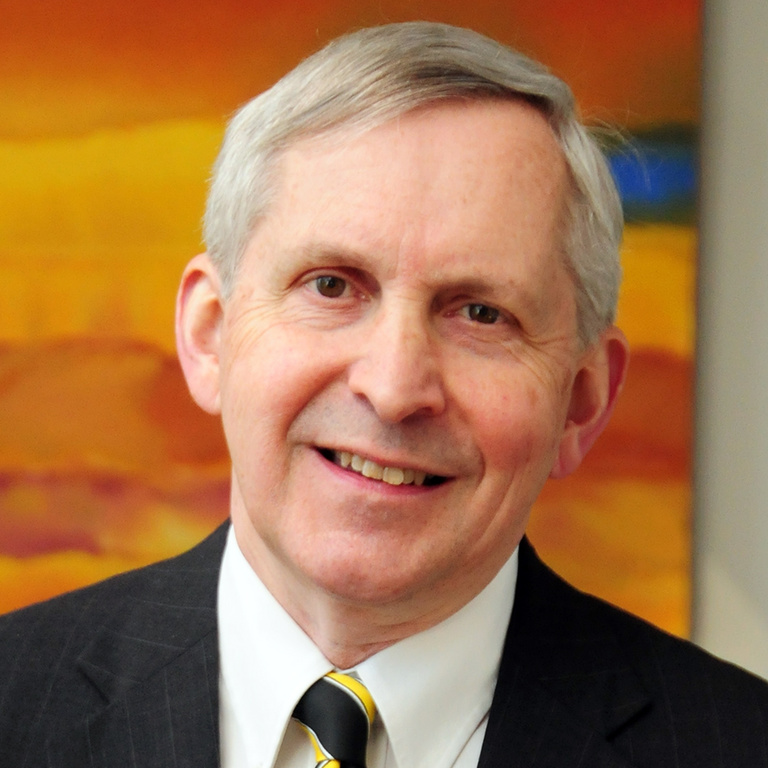
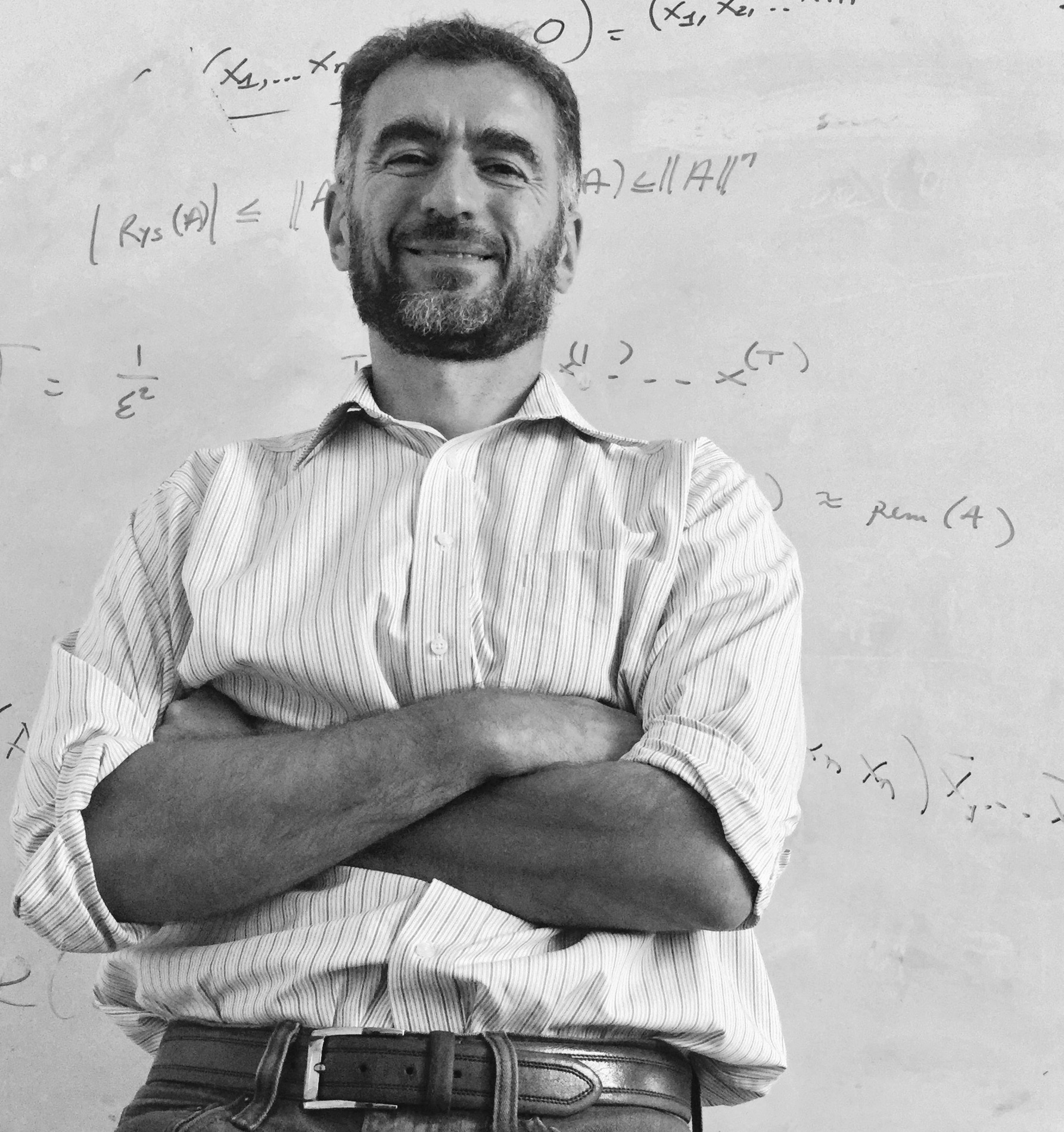
Lu Zhang is an Associate Professor at the School of Hospitality Business, Michigan State University, specializing in social media, crowdsourcing, and sales management. Their research bridges blockchain technology, decentralized finance (DeFi), and artificial intelligence with applications in hospitality, healthcare, and financial systems. Areas of Expertise: Social Media, Crowdsourcing, Sales & Sales Management Research Focus: Blockchain governance, cryptocurrency valuation, AI ethics, and the intersection of Web3 with healthcare and hospitality management Recent publications analyze blockchain interoperability, DeFi sentiment, Ethereum transaction dynamics, and AI-driven financial modeling. Zhang was recognized at the 2023 Faculty Recognition Dinner for their contributions.
Michael Walfish is a Professor at the Courant Institute of Mathematical Sciences within New York University . His work focuses on computer systems, network security, and verifiable computation with applications in distributed systems and cybersecurity. Current faculty member (not retired or former staff) Teaching experience includes advanced systems courses like Operating Systems and Honors Operating Systems at NYU Research interests span multiple dimensions: Network security and defense mechanisms Verifiable computation systems Distributed system design Zero-knowledge proofs applications Hardware and software security Recent publications demonstrate strong focus on: Zero-knowledge systems (Zombie, Verifiable ASICs) Web and email security (Pretzel, Yesquel) Probabilistic verification (Less is more) Cryptographic protocols in systems (Cobra, DQE) Scientific recognition: Best Paper Award at SOSP 2017 Distinguished Student Paper Award at Security 2016
Dr. Goran Branković is a Scientific Advisor at the Institute for Multidisciplinary Research, University of Belgrade , with over two decades of experience in materials science and electroceramics. His work focuses on functional ceramics for energy, sensing, and environmental applications. PhD in Technical Sciences (Chemical Technology) from University of São Paulo (2002) MSc in Materials Science from University of Belgrade (1999) BSc in Physics from University of Belgrade (1993) Research interests span multiple areas: Advanced Electroceramics : Sensors, varistors, ferroelectrics, and multiferroics Renewable Energy Materials : SOFC, photovoltaics, thermoelectrics Photocatalysis : Environmental remediation using TiO2, ZnO, and their composites Nanostructured Materials : Synthesis, characterization, and application in biotechnology Recent publications highlight his work on bioactive biopolymer matrices for pest control, mesoporous oxides for humidity sensing, and doped ceramics for energy applications. His research integrates computational modeling and advanced characterization techniques (SEM, TEM, XRD). Scientific honors include: Award from the Ministry of Science and Environmental Protection of Serbia (2003) He leads collaborative projects between Serbia and international institutions, with expertise in spark plasma sintering , sol-gel methods , and electrochemical synthesis . Current projects focus on concept-proof technologies for gas sensors and photovoltaic materials.
Juri Sidorenko is a researcher affiliated with the Fraunhofer Institute of Optronics, System Technologies and Image Exploitation IOSB in Ettlingen, Germany, and the Institute of Astronomical and Physical Geodesy at the Technical University of Munich. His research focuses on Time of Arrival measurement models and non-convex optimization techniques for localization systems. His work combines mathematical optimization with geodetic principles to solve positioning challenges in indoor and outdoor environments, particularly addressing the problem of local minima in quadratic optimization systems. His research has significant implications for self-calibration systems where reference station positions are unknown. Dr. Sidorenko's scholarly contributions include analytical proofs and numerical validations demonstrating how adding an extra dimension to objective functions can transform local minima into saddle points, substantially improving optimization reliability in positioning applications.
Wolfgang Ahrendt is a Professor at the Department of Computer Science and Engineering, Chalmers University of Technology and University of Gothenburg. His research focuses on formal methods, software verification, and automated deduction, particularly for Java and smart contracts. He has led major projects like the KeY verification system and contributed to bridging AI with formal verification. Education Roles: Vice-head of Department for PhD Education (2023), Director of PhD Studies (2016-2023), Head of IT and Computer Science Programs (2005-2015). Community Work: Chair of iFM Steering Board, PC co-Chair for TAP 2020 and iFM 2019, Conference Chair for CADE-26 (2017), and member of AAR and CADE secretariats. His research interests span formal verification, symbolic execution, runtime verification, and smart contract security. He has pioneered the integration of static and runtime verification through tools like KeY and StaRVOOrS. Recent work explores AI-assisted programming and hybrid verification frameworks. Publications highlight his focus on smart contract analysis, differential dynamic logic for autonomous systems, and advancements in the KeY system. His edited works include Deductive Software Verification - The KeY Book and proceedings for TAP, iFM, and ISoLA conferences. As a teacher , he coordinates courses on formal methods, verification techniques, and Java modeling. His lab assignments emphasize hands-on experience with tools like SPIN and KeY, fostering practical understanding of verification workflows.
Manuel Egele is an Associate Professor at Boston University’s Department of Electrical and Computer Engineering and co-leads the Secure Systems Lab , a member of the International Secure Systems Lab. His work bridges software, systems, and embedded/mobile security with a focus on privacy. His recent research trends include IoT kernel module analysis ( FirmSolo ), PHP web application debloating ( Minimalist ), and fuzzing innovations ( MORPHUZZ , ThreadLock ). He explores microarchitectural vulnerabilities, denial-of-service detection, and hardware-assisted security mechanisms, often publishing in top venues like USENIX Security , NDSS , and ACM CCS . Egele actively contributes to academic service as an area chair, poster chair, and committee member for conferences such as IEEE Oakland, USENIX Security, and NDSS. He teaches courses like EC440: Operating Systems , EC521: Cyber-Security , and EC700: Vulnerability and Malware Defense , emphasizing practical security education.
Prof. Dr. Kristina Reiss holds the Heinz Nixdorf Endowed Chair for Mathematics Education at the Technical University of Munich (TUM) . She has served as Vice Dean (2010-2014) and Dean (since 2014) of the TUM School of Education. Her research focuses on mathematical argumentation, justification, and proving, the development of mathematical competence across educational stages, and the use of heuristic solution examples in teaching. Current projects include ALICE, DigiProMIN, and SHARP Former positions: University of Flensburg (1992-1997), University of Oldenburg (1997-2002), University of Augsburg (2002-2005) She contributes to international large-scale studies like PISA, serves on DFG review boards, and is a member of acatech (German Academy of Engineering Sciences). Her work bridges empirical educational research with mathematics didactics.
Cesare Tocci is an Associate Professor at the Department of Architecture and Design (DAD) of the Polytechnic University of Turin. His academic career focuses on seismic improvement, structural restoration, history of mechanics, and history of constructions. Current affiliation: Department of Architecture and Design (DAD), Polytechnic University of Turin Previously: Researcher at University of Rome La Sapienza (2011-2014) His research explores: Seismic safety assessment of historic masonry structures Structural analysis of ancient masonry buildings Relationship between mechanics and architecture in historical context Recent research trends show a focus on construction systems and strengthening criteria for historic architecture, with particular attention to bomb-proof vaults, structural function in architectural representation, and earthquake engineering for cultural heritage. His work often bridges engineering and architectural history, examining how past designers integrated mechanical understanding into their structural solutions. Scientific recognition includes: Award from the Accademia dei Lincei for seismic restoration work at the church of San Pietro di Coppito His teaching portfolio includes courses on construction characteristics and consolidation of historic architecture, as well as professional training and internships in architectural heritage. He has served as a scientific director for several research projects, including studies on the Citadel of Alessandria and seismic safety of Palazzo Merli in Ascoli Piceno.
Mario Capizzani serves as Senior Lecturer in the Marketing Department at IESE Business School, where he teaches across multiple programs including Executive Education, MBA, and Global Executive MBA. He currently holds the position of Co-Academic Director for the PDD program and International In-Company programs. Ph.D. in Business Administration (Marketing), University of California Berkeley MBA, IESE Business School, University of Navarra Master of Science in Mechanical and Aerospace Engineering, Arizona State University Bachelor of Science in Mechanical Engineering, Calvin College Capizzani's research focuses on behavioral and experimental economics with applications in online marketing, pricing, digital commerce, customer management, and marketing strategy. His work examines how consumers make decisions in digital environments, with particular attention to pricing strategies, online reviews, and digital transformation. His doctoral dissertation centered on pricing and auction mechanisms, establishing the foundation for his ongoing research in consumer decision processes. His publication portfolio demonstrates a consistent focus on consumer behavior in digital contexts, with recent work addressing online reviews, inbound marketing, and mobile marketing strategies. His research appears in reputable journals including The Journal of Retailing and the Journal of the Association for Consumer Research, while his practical insights have been featured in IESE Insight, Harvard-Deusto, and Forbes Magazine. His case studies, particularly the Gillette series published in 2024, reflect his engagement with current marketing challenges faced by major consumer brands. Capizzani has also authored numerous business cases and technical notes that serve as teaching tools across business schools worldwide, demonstrating his commitment to bridging academic research with practical business applications. Since joining IESE Business School in 2002, Capizzani has maintained an active consulting practice alongside his academic work, serving clients in retail, e-commerce, FMCG, advertising, and professional services sectors. Prior to his academic career, he worked as a consultant at McKinsey & Company, as a senior marketing analyst in the telecom industry, and as an engineer in the automotive sector, giving him a diverse professional background that informs his teaching and research.
Weimin Han is a Professor and Collegiate Fellow in the Department of Mathematics at the University of Iowa. He holds additional appointments in the Applied Mathematical & Computational Sciences (AMCS) program and the Iowa Technology Institute. His research focuses on numerical analysis, computational mechanics, and variational/hemivariational inequalities, with applications in fluid and solid mechanics. Han earned his Ph.D. in Mathematics from the University of Maryland (1991), following M.S. (1986) and B.S. (1983) degrees from the Chinese Academy of Sciences and Fudan University, respectively. He has served as Chair of the Department of Mathematics (2020–2022) and Director of AMCS (2007–2019). His honors include Fellow of the American Mathematical Society (2023), Simons Fellow (2012), and recognition as a top scholar in Numerical Analysis by Research.com and ScholarGPS. He has organized conferences like the Midwest Numerical Analysis Day 2024 and serves on editorial boards of journals such as Communications in Nonlinear Science and Numerical Simulation . Han’s research has led to groundbreaking work on nonsmooth problems, including contact mechanics and fluid dynamics governed by variational inequalities. His numerical methods address challenges in engineering and biomedical imaging.
Kurt Anstreicher is a Professor of Business Analytics at the University of Iowa's Tippie College of Business, with complementary appointments in the Department of Computer Science and Department of Industrial Engineering. He holds the Gary C. Fethke Chair in Leadership. His research focuses on mathematical programming, optimization, interior-point algorithms, and nonlinear programming. Anstreicher earned his Ph.D. from Stanford University in 1983 and a B.A. from Dartmouth College in 1978. Research interests include optimization theory and methods, particularly in nonconvex programming, convex relaxations, and algorithm design. His work addresses challenges in quadratic programming, semidefinite optimization, and global optimization techniques. Recent contributions explore applications in trust-region subproblems, copositive cones, and maximum-entropy sampling. Publications span topics like convex hull representations, Kronecker product constraints, and spherical codes. His work bridges theoretical advancements and practical computational methods, with implications for operations research, data analysis, and engineering systems.
Dr. Yuan Wang is Professor and Chair of the Department of Mathematics and Statistics at Florida Atlantic University. An IEEE Fellow, his research focuses on mathematical systems and control theory with specialization in stability analysis of nonlinear and time-delay systems. His extensive publication record demonstrates sustained contributions to: Input-to-State Stability (ISS) frameworks for delay systems Lyapunov-Krasovskii functional methods Robust control of nonlinear systems Exponential stability criteria Singular perturbation techniques Recent survey articles (2023) comprehensively synthesize developments in ISS theory for time-delay systems, while contemporary research establishes new growth conditions for stability under dissipation. Wang's work provides fundamental theoretical advances applicable to engineering control systems operating under delays and disturbances. Professional service includes editorial roles for IEEE and mathematical control journals, and co-organization of workshops on future directions in systems theory. His research has been continuously supported through competitive grant programs.
Rosario Gennaro is a Professor of Computer Science at the City University of New York (CUNY), specifically at The City College of New York (CCNY), and serves as Director of the Center for Algorithms and Interactive Scientific Software (CAISS). He holds a Ph.D. in Electrical Engineering and Computer Science from MIT (1996), an M.S. from MIT (1993), and a Laurea in Mathematics from Universita' di Catania, Italy (1989). His research focuses on cryptography, network security, and theoretical computer science, with recent work addressing cloud security, privacy, anonymity, and proactive security measures. He teaches advanced courses such as Algorithms (CSc 220) and Advanced Cryptography: Digital Currencies (CSc 85030). His publications span topics like zero-knowledge proofs, secure multiparty computation, and cryptographic protocols, with notable contributions to blockchain and privacy-preserving systems. He actively seeks talented students for collaborative research projects. Education: Ph.D., MIT (1996) M.S., MIT (1993) Laurea in Matematica, Universita' di Catania (1989) Research Themes: Cryptographic protocols, cloud security, privacy-enhancing technologies, and theoretical foundations of cryptography. Labs/Teams: Directs the Center for Algorithms and Interactive Scientific Software (CAISS). His work often bridges theory and practice, with applications to real-world systems like voting security, blockchain, and secure communication protocols.
Dominique de Werra is an Honorary Professor at the Swiss Federal Institute of Technology in Lausanne (EPFL), affiliated with the Department of Mathematics within the Faculty of Basic Sciences. He holds an Engineering degree and a Doctorate in Operations Research from EPFL. His career includes roles as Full Professor (1979–2008), Vice-President (1991–2000), and Dean of International Relations (2000–2004). He has served as President of IFORS (2010–2012) and EURO (1987–1988), and led academic networks like CLUSTER and EURECOM. His research focuses on Operations Research, Combinatorial Optimization, Graph Theory, and applications in scheduling, logistics, and multidisciplinary fields. He has authored over 200 technical publications, co-authored textbooks like Operations Research for Engineers , and edited numerous journal special issues. Awards include Honorary Doctorates from Paris-Dauphine, Poznan, and Fribourg, as well as the EURO Gold Medal (1995) and Distinguished Service Medal (2012). de Werra has supervised over 140 master’s theses and 350 student projects. He has held visiting professorships worldwide and served on editorial boards of journals like Discrete Applied Mathematics and European Journal of Operational Research . His contributions span academic leadership, conference organization, and interdisciplinary collaborations in archaeology, zoology, and engineering.
Professor René Hexel currently serves as Dean (Learning & Teaching) and Pro Vice Chancellor (Sciences) at Griffith University, where he directs the Cyber-Physical Systems Lab. With over 85 peer-reviewed publications, he specializes in safety-critical real-time systems and autonomous system verification. 2022–present: Dean (Learning & Teaching), Griffith Sciences 2016–2022: Deputy Head of School (L&T), Griffith School of ICT 2007–2016: Director for Internationalisation, Griffith School of ICT 1999: PhD from Vienna University of Technology His research focuses on safety-critical systems , time-triggered protocols , and human-in-the-loop AI , with applications in aerospace, automotive, and healthcare robotics. Recent work explores humanoid robots for dementia care and verifiable executable models. Key article trends show expertise in: Formal verification techniques Robotics communication protocols Explainable machine learning Real-time system architectures Embedded system validation Human-robot interaction design Research grants include: Australian Space Manufacturing Network (2023–2025) SPASE STEM program grant (2022) Social media wellness monitoring (2019–2020) Internal Griffith grants (2003–2010) He has supervised 12 PhD candidates across topics including: Autonomous system verification Robotics security VR sickness mitigation Intelligent control systems Distributed real-time architectures Professor Hexel previously held academic positions at Vienna University of Technology and founded an IT consulting firm specializing in safety-critical systems.