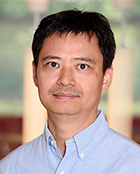
Haibin Ling is the SUNY Empire Innovation Professor in the Department of Computer Science at Stony Brook University, part of the College of Engineering and Applied Sciences. His research focuses on computer vision, medical image analysis, augmented reality, and AI applications in science. He holds a Ph.D. from the University of Maryland (2006) and prior degrees from Peking University. Previously, he worked at Temple University (2008–2019) and held roles at Siemens Corporate Research, UCLA, and Microsoft Research Asia. Professor Ling's work spans biomedical imaging, AI for science, and human-computer interaction. He leads the CV Lab and collaborates with the AI Institute at Stony Brook. Awards include the NSF CAREER Award (2014), Best Student Paper (ACM UIST 2003), and IEEE Fellow (2020). He serves on editorial boards for IEEE Trans. PAMI, Pattern Recognition, and CVIU, and chairs major conferences like CVPR. His research group includes over 50 students and alumni, with active projects in tracking benchmarks (LaSOT), Leafsnap, and medical imaging tools. Notable publications address OCTA flow estimation, backdoor attacks on vision models, and topology-guided medical learning. Collaborations involve institutions like Temple University and Stony Brook's Department of Applied Mathematics and Statistics.
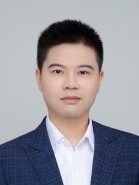
Jianke Zhu is a Professor at the College of Computer Science and Technology of Zhejiang University . He obtained his Ph.D. in Computer Science and Engineering from The Chinese University of Hong Kong and conducted postdoctoral research at the BIWI Computer Vision Lab, ETH Zurich . His research focuses on Computer Vision and Machine Learning , with a particular emphasis on 3D scene understanding, LiDAR-based mapping, and neural rendering. Dr. Zhu’s research spans several subfields, including 3D Reconstruction , Semantic Segmentation , Multimodal Learning , and Autonomous Driving . His work integrates Neural Networks , LiDAR Processing , and Uncertainty Quantification to address challenges in real-time and adverse conditions. Selected Recent Trends: 2025 publications highlight his work in Hexagonal Mesh-based Neural Rendering , Instance-aware 3D Scene Understanding , and Efficient Visual Projectors for Multimodal LLMs . Earlier works include Box2Mask for Instance Segmentation (2024) and Token Selection for Point Cloud Learning (2025). Scientific Awards : Senior member of the IEEE Advising and Grants : As a Doctoral Supervisor , he mentors students in advanced topics like LiDAR Odometry and Multi-view Stereo Recovery . His projects have attracted funding for autonomous driving , 3D scene modeling , and neural rendering .
Gregory F. Welch serves as the Florida Hospital Endowed Chair in Healthcare Simulation at the University of Central Florida, with primary appointments in the College of Nursing, Department of Computer Science, and Institute for Simulation & Training. He also holds an Adjunct Professor position in Computer Science at the University of North Carolina at Chapel Hill. With a Ph.D. from UNC-Chapel Hill in 1996, his career spans academia, NASA's Jet Propulsion Laboratory, and Northrop-Grumman's Defense Systems Division. Ph.D. in Computer Science, University of North Carolina at Chapel Hill, 1996 Degree in Electrical Technology, Purdue University (with Highest Distinction), 1986 Dr. Welch's research spans human-computer interaction, virtual and augmented reality, motion tracking systems, 3D telepresence, and stochastic estimation , with significant applications to healthcare training and education. His work focuses on creating seamless interactions between physical and virtual environments, particularly through innovations in tracking technology, view synthesis, and the Kalman filter. A notable contribution is his internationally-recognized website dedicated to the Kalman filter, which has become a standard reference in the field. Dr. Welch's recent publications (2016-2017) demonstrate a strong focus on social presence in virtual and augmented reality environments , particularly examining how physical-virtual interactions affect user experience. His work explores nuanced aspects like spatial coherence, gesturing, vibrotactile feedback, and environmental effects on social presence. A recurring theme is the development of "human surrogates" - physical manifestations of virtual humans that bridge the gap between real and virtual spaces, with direct applications to healthcare simulation and training. IEEE Senior Member 2nd Prize Best ICDSC 2011 Paper While specific student names aren't listed in the available materials, Dr. Welch has advised numerous researchers in virtual reality, human-computer interaction, and healthcare simulation. His work has attracted significant research funding, particularly through his role as the Florida Hospital Endowed Chair in Healthcare Simulation. His research spans multiple domains including medical applications, military training, and emergency response scenarios, suggesting diverse grant support from NIH, NSF, and defense-related agencies. Dr. Welch is affiliated with multiple research entities including the Institute for Simulation & Training at UCF and maintains connections with UNC-Chapel Hill's Computer Science department. His work often involves interdisciplinary collaborations between computer scientists, medical professionals, and educators. Notably, he co-developed the HuSIS (Human Surrogate Interaction Space), a dedicated facility for studying human interactions with virtual surrogates, demonstrating his commitment to creating specialized research environments for advancing virtual and augmented reality applications.
Jesus Pestana Puerta is a researcher at the Institute of Computer Graphics and Vision (ICG) within the Faculty of Computer Science and Biomedical Engineering at TU Graz. He holds a PhD in Automation and Robotics from the Technical University of Madrid (UPM). With over 10 years of experience, he specializes in Aerial Robotics, focusing on vision-based solutions for drone navigation, obstacle avoidance, and autonomous systems. His work bridges research and industry, including prototypes for delivery drones (Post AG) and inventory management systems. Key projects include Overview Obstacle Maps for safe drone navigation and Micro Aerial Projector for stabilized aerial displays. Research interests span visual-inertial odometry, GPS-denied navigation, and technology transfer. He has contributed to robotics competitions (IC CEA, IMAV, IARC) and published extensively in journals like Journal of Field Robotics and conferences such as IROS. His recent work explores cloud-based navigation systems, AI for waste sorting, and automotive embedded systems optimization. Collaborations include startups and industrial partners, emphasizing practical applications of robotics. He has supervised projects in sensor degradation detection, redundant systems, and UAV lifecycle monitoring. His contributions are documented in over 50 publications, with a focus on advancing drone autonomy and real-world deployment.
Raoul de Charette is a Research Director in computer vision at Inria Paris, leading the Astra-Vision group within the ASTRA team. His academic journey includes a PhD from Mines Paris (2012) and Habilitation (HDR) in 2022, with research stints at Carnegie Mellon University (2011), Mines Paris (2013), and the University of Makedonia (2014). His educational background comprises: PhD from Mines Paris (2012) Habilitation (HDR) (2022) De Charette's research centers on robust and interpretable visual scene understanding , spanning 3D scene reconstruction, domain adaptation, material recognition, and physics-grounded vision foundation models. His work integrates physical principles and synthetic data to enhance model robustness in real-world scenarios like autonomous driving and urban environments. Key contributions include uncertainty-aware 3D scene completion (PaSCo), material extraction from single images (Material Palette), and prompt-driven domain adaptation (PODA). Recent publications reveal a strategic shift toward vision-language integration, material-centric scene understanding, and foundation models that minimize labeled data dependency. His group pioneers physics-informed approaches to improve interpretability and resilience against environmental challenges like adverse weather conditions. Key scientific recognition includes: Best Paper Honorable Mention at EGSR 2025 for MatSwap ELLIS Membership PR[AI]RIE-PSAI Fellowship De Charette actively mentors four PhD students—Fatima Balde, Mohammad Fahes, Ivan Lopes, and Tetiana Martyniuk—often in industry collaborations with Valeo.ai and Kyutai. He secures funding through fellowships and industry partnerships, regularly opening PhD positions (including a 2025 opening for Physics-Grounded Vision Foundation Models). As an area chair for CVPR, ECCV, WACV, and IROS, he shapes the field through conference leadership and co-organizing initiatives like the African Computer Vision Summer School. He directs the Astra-Vision group within Inria Paris' ASTRA team, driving interdisciplinary research at the intersection of computer vision, machine learning, and physics-based modeling for real-world deployment in robotics and intelligent transportation systems.
Suren Jayasuriya is a highly active faculty-level researcher in computer vision and computational imaging, with 79 refereed publications (2014-2025) in leading venues such as CVPR, ICCV, ECCV, NeurIPS, IEEE TPAMI and ACM TOG. His work integrates physics-based models with modern machine learning to tackle problems like non-line-of-sight imaging, atmospheric turbulence removal, neural 3D reconstruction, and speech enhancement, while also advancing STEM education through AI. Education & Affiliation: No explicit institutional details are contained in the supplied DBLP extract; however, the sustained publication record and extensive student mentoring indicate a tenured or tenure-track professorship within an engineering or computing department. Research Interests: Jayasuriya’s interests sit at the intersection of computer vision, computational photography, and physics-based machine learning . He develops algorithms that exploit optical and acoustic phenomena for tasks such as seeing around corners, correcting atmospheric distortion, and reconstructing 3D scenes from sparse sonar or radar data. Additional threads include energy-efficient tracking, robust speech processing, and AI-supported pedagogical innovation. Publication Trends: Across the 15 most recent works (2022-2025) his papers exhibit a clear thematic arc: neural representations for multimodal fusion (camera-sonar, radar-vision), unsupervised video restoration under atmospheric turbulence, attention-driven non-line-of-sight tracking, and evaluation of large multimodal models for perceptual reasoning. These contributions simultaneously advance core vision methodologies and demonstrate interdisciplinary applications spanning robotics, environmental monitoring, underwater perception, and education. Students & Mentoring: Jayasuriya has advised an active cohort of graduate researchers who appear repeatedly as co-authors, including Sreenithy Chandran, Ripon Kumar Saha, Albert W. Reed, Joshua D. Rego, Dehao Qin, Jianwei Zhang, Odrika Iqbal, Sameeksha Katoch, Md. Farhan Tasnim Oshim, and Shenbagaraj Kannapiran, among others. Scientific Awards: No awards are listed in the supplied extract; the awards field is left empty. Labs & Teams: While specific laboratory names are not disclosed, the collaborative scope—encompassing hardware-software co-design, field deployments, and educational outreach—suggests he leads or co-leads a research group with access to specialized imaging and robotics facilities.
Tomáš Marek serves as Assistant Professor at the Department of Information Studies and Library Science within the Faculty of Arts at Masaryk University, Brno. His academic base is in building C/C.127 at Arna Nováka 1, with contact via email (tomas.marek@phil.muni.cz) or phone (+420 549 49 6202). His research centers on data visualization, educational technology, and accessibility. Key investigations include statistical graphics in Czech primary textbooks, data visualization barriers for blind users, and digital competences development for information professionals. His work consistently bridges theoretical frameworks with practical classroom applications across educational contexts. Analysis of his 2015-2024 publications reveals sustained focus on educational data visualization. He has conducted comparative analyses of textbook graphics across disciplines, examined mathematics education representations, and addressed accessibility gaps for visually impaired users. His research extends to practical technology integration like tablet-projector connectivity, demonstrating commitment to enhancing educational experiences through innovative technological solutions. Scientific Awards: No scientific awards or fellowships documented in available records Dr. Marek supervises bachelor's and master's theses while actively contributing to university research initiatives: Teaching innovation for information professionals' competencies (2024-2025) Digital competences development among ISK students (2024-2025) Design Thinking Action Lab: Society and Technology (2024) These Innovation in Teaching program projects focus on modernizing curricula and equipping students with essential digital skills for contemporary information professions. No dedicated laboratory infrastructure is specified, though his cross-faculty project involvement (Arts, Informatics, Social Studies) indicates active participation in interdisciplinary research networks addressing educational technology and cybersecurity challenges.
Magda El Zarki is a Professor in the Department of Computer Science at the University of California, Irvine (UCI). She specializes in Telecommunications and Networking, with research focusing on cloud gaming, exergaming (e.g., MineBike), and serious games for health applications. Her work addresses challenges like optimizing 3D immersive systems, reducing latency, and improving quality of service in cloud-based environments. She teaches courses such as CS 133 (Networking Lab), CS 232P (Computer and Communication Networks), and ICS 167 (Multiplayer Online Systems). Her lab projects include developing frameworks for adaptive streaming and exergaming platforms to promote physical activity in children. Collaboration with students and TAs is facilitated via Piazza, emphasizing active participation. Her CV was last updated in 2020, though the website content dates to 2007. Education & Affiliations: PhD in Computer Science (assumed based on role) Department of Computer Science, UCI Associated with the Networking and Telecommunications research groups Research Interests: Prof. El Zarki’s research spans: Cloud gaming infrastructure and latency optimization Exergaming platforms for health interventions Collaborative multimedia systems and projector networks Network-aware adaptive frameworks for immersive applications Her recent work evaluates MineBike’s efficacy in promoting physical activity and explores flexible cloud gaming systems to balance bandwidth and visual quality. Teaching & Advising: She instructs courses on networking fundamentals, lab practices, and multiplayer systems. While no explicit student advisees are listed, her courses emphasize hands-on projects and lab quizzes. She collaborates with TAs (e.g., Fangqi Liu, Hang Nguyen) and promotes active classroom participation through Piazza. Labs & Infrastructure: Her research utilizes labs like ICS 183/189 for networking experiments and software installations. Projects involve tools like Cisco routers, microcontrollers, and sensor networks for civil infrastructure monitoring.
Jay W. Summet is a Senior Lecturer and OMSCS Associate Director for Academic Affairs at the Georgia Institute of Technology's College of Computing . His career spans research and teaching in computer science, robotics, and interactive display technologies. Ph.D. in Computer Science (HCI specialization), Georgia Tech (2007) MS in Computer Science (End-User Visual Programming), Oregon State (2001) BS in Computer Science (Software Design, Scientific Computing), Central Washington (1999) Dr. Summet's research focuses on Human-Computer Interaction , Interactive Projected Displays , and Robotics , particularly in educational contexts. His work includes developing the Virtual Rear Projection system and BurningWell micro-controller localization technology. Recent publications explore GPS-based urban reconstruction , projector-camera systems , and capture-resistant environments using infrared interference. His teaching impacts courses like CS 6400 (Database Systems) and CS 7638 (AI for Robotics), and he pioneered CS1 with Robots curriculum at Georgia Tech. Scientific Awards Class of 1940 & 1934 Teaching Effectiveness Awards Outstanding Instructor, Georgia Tech College of Computing (2011, 2015) Presidential & Dean's Fellowships (2001-2006) As a Institute for Personal Robots in Education research scientist, he contributed to curriculum development and evaluation. His work appears in top venues like IEEE Pervasive Computing, ACM SIGGRAPH, and CHI.
Jim McCann is an Associate Professor at the Robotics Institute of Carnegie Mellon University. He holds a PhD from Carnegie Mellon University (2010), advised by Nancy Pollard, and has held positions at Adobe Research and Disney Research Pittsburgh. His academic journey includes postdoctoral work and industry experience in game development before joining CMU's faculty in 2017. His research focuses on creativity support tools spanning real-time systems, textiles fabrication, machine knitting, and interactive design. Key themes include: Developing compilers and interfaces for machine knitting (e.g., 3D shape knitting, knitout semantics) Building accessible fabrication tools for textiles and soft objects Creating parameterized design spaces enhanced with machine learning Advancing physics-based animation and simulation tuning His publications demonstrate strong interdisciplinarity, with recent work emphasizing textiles computing (knitting compilers, fabric 3D printing), human-AI collaboration (design adjectives), and novel interfaces (infinity mirrors, RFID systems). Earlier contributions established foundations in gradient-domain editing, fluid control, and motion synthesis. He leads the Carnegie Mellon Textiles Lab and has advised 9+ graduate students on topics ranging from knit microstructures to robot design. His teaching includes courses on Algorithmic Textiles Design, Real-Time Graphics, and Game Programming.