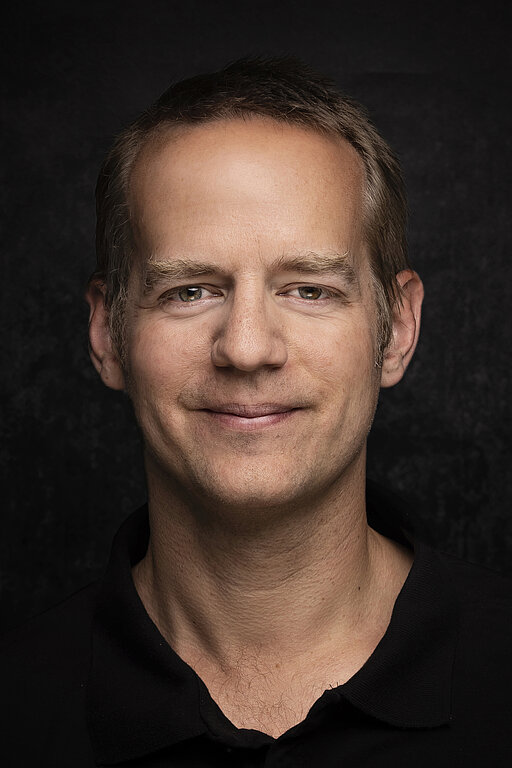
Ryomei Iwasa is an Associate Professor at the Department of Mathematical Sciences , University of Copenhagen. His research focuses on advancing motivic homotopy theory, particularly extending Voevodsky's framework to address non-A1-homotopy invariant phenomena. He has made significant contributions to algebraic K-theory, étale cohomology, and related fields through his work on derived correspondences and motivic spectra. University: University of Copenhagen Department: Department of Mathematical Sciences Academic Rank: Associate Professor Iwasa's research aims to unify cohomology theories in algebraic geometry, such as crystalline cohomology and syntomic cohomology, within a novel motivic spectra category (MSp). His work establishes equivalences between Grassmannians and vector bundles and provides new characterizations of algebraic K-theory. Recent publications highlight his applications of motivic homotopy theory to Milnor excision, cdh descent, and deformation theory. These papers also explore connections to Beilinson's conjecture and Weibel's conjecture via derived blow-ups. Notable awards include the Marie Skłodowska-Curie Grant (Horizon 2020, Grant Agreement No. 896517), supporting his research into foundational motivic homotopy theory. Email: ryomei@math.ku.dk Office: Universitetsparken 5, 2100 Copenhagen Ø
Ross J. Kang is a Canadian mathematician currently serving as an Associate Professor at the Korteweg–de Vries Institute for Mathematics within the Faculty of Science at the University of Amsterdam since 2022. He is an active member of the Discrete Mathematics and Quantum Information group and the NETWORKS consortium. Previously, he held positions as Assistant/Associate Professor at Radboud University Nijmegen (2014-2022), Assistant Professor at Utrecht University (2013), and Researcher at Centrum Wiskunde & Informatica (2012-2013). His academic journey includes postdoctoral positions at Durham University (2010-2012) and McGill University (2008-2010), where he was advised by Bruce Reed and Louigi Addario-Berry. DPhil in Mathematics, University of Oxford (2008) - Thesis: 'Improper colourings of graphs', advised by Colin McDiarmid BSc (Hons) in Mathematics and Computer Science, University of Victoria (2003) - Governor General's Silver Academic Medal recipient Ross J. Kang's research focuses on probabilistic and extremal combinatorics, random discrete structures, graph coloring, geometric graphs, and algorithms. His work bridges theoretical mathematics with practical applications, exploring fundamental questions in discrete mathematics. He has made significant contributions to understanding graph coloring problems, particularly in the contexts of list coloring, distance coloring, and strong coloring. His research often employs probabilistic methods to establish bounds and structural properties in graph theory. Kang's work on the hard-core model, local occupancy method, and triangle-free graphs has advanced our understanding of the interplay between local constraints and global structure in discrete systems. Analysis of his recent publications reveals a strong emphasis on graph coloring problems, particularly list coloring variants and their extensions. His work frequently explores the relationship between graph structure (such as degree constraints, girth, or forbidden subgraphs) and coloring properties. A notable trend is his development and application of the local occupancy method to establish improved bounds for chromatic numbers in various graph classes. His research also demonstrates a consistent interest in extremal problems, seeking optimal configurations under specific constraints, particularly in the context of triangle-free graphs and geometric representations. NWO Open Competition M-1 grant entitled 'Asymptotic triangle-free structure (3Free)', 2022-2026 NWO Vidi grant entitled 'On the edge: theory and techniques at the frontiers of edge-colouring', 2017-2023 NWO Veni grant entitled 'Generalised colouring for random graph models', 2012-2015 Van Gogh travel grants (2020-2021 with Marthe Bonamy; 2016-2017 with Louis Esperet) Governor General's Silver Academic Medal (2003) Ross J. Kang has successfully supervised multiple PhD students including Eoin Hurley (defending May 2025), Stijn Cambie (defended April 2022), and François Pirot (winner of 2020 prix Charles Delorme). His research is supported by significant grants from the Netherlands Organisation for Scientific Research (NWO), including the prestigious Open Competition M-1 grant. Kang is actively involved in the academic community through his editorial role at Combinatorial Theory, co-organization of conferences like the Dutch Days of Combinatorics, and leadership in initiatives such as Innovations in Graph Theory, a diamond open access journal he helped launch in August 2023. As a member of the Discrete Mathematics and Quantum Information group at the University of Amsterdam and the NETWORKS consortium, Kang collaborates with researchers across various institutions. He has established strong international connections through his Van Gogh travel grants and participation in collaborative projects like the Sparse (Graphs) Coalition sessions. His research group focuses on theoretical aspects of discrete mathematics with connections to quantum information science, and he maintains active collaborations with researchers across Europe and North America.
Antti H. Niemi is a Professor and Dean at the University of Oulu 's Faculty of Technology , specializing in computational solid and structural mechanics. His research focuses on advanced numerical methods for engineering analysis and design. Research areas include computational mechanics, structural engineering, and metamaterials Develops innovative finite element methods for thin-body problems Current projects address snow structures, timber building envelopes, and machine learning applications in mechanical systems His recent work emphasizes discontinuous Petrov-Galerkin (DPG) methods for plates and shells, with applications in civil and mechanical engineering. Publications cover: Snow and ice vaults (2024) Machine learning for steel beam capacity prediction (2024) Hygrothermal analysis of timber structures (2024) DPG formulation for Reissner-Mindlin plates (2023) Shell element benchmarking (2018-2022)
Claire Vernade is a Group Leader at the University of Tübingen in the Cluster of Excellence Machine Learning for Science. She leads an active research group focused on theoretical aspects of sequential decision making, with particular expertise in bandit problems and reinforcement learning theory. Her work bridges theoretical foundations with practical applications in scientific discovery. Her research interests span sequential decision making, bandit problems, theoretical Reinforcement Learning, Learning Theory, and principled learning algorithms. She has made significant contributions to understanding non-stationary environments, lifelong learning frameworks, and the theoretical foundations of bandit algorithms. Her work on "Eigengame: PCA as a Nash Equilibrium" received an Outstanding Paper Award at ICLR 2021. Dr. Vernade has been awarded prestigious grants including an Emmy Noether award (2022) for her FoLiReL project and an ERC Starting Grant (2024) for her ConSequentIAL project. Her current ERC project explores the role of Reinforcement Learning in developing Continual Learning agents, with applications to scientific domains like drug discovery and micro-chemistry. Emmy Noether award under the AI Initiative call (2022) ERC Starting Grant (2024) Outstanding Paper Award at ICLR 2021 She currently supervises three PhD students and actively recruits postdocs and PhD candidates through the IMPRS-IS and ELLIS doctoral programs. Her group collaborates extensively with the broader machine learning community, organizing workshops like FoRLaC at ICML 2024 and serving as co-chairs for tutorials at major conferences. Dr. Vernade is also deeply committed to diversity and inclusion in machine learning, co-leading initiatives like Women in Learning Theory and Tübingen Women in Machine Learning.
Sidharth Jaggi is a Professor at the School of Mathematics, University of Bristol, with over 19 years of experience in Information and Data Sciences through the lens of Information Theory. His work emphasizes fundamental performance limits and algorithm design for systems under adversarial threats. Education: B.Tech, M.Phil, PhD Research interests focus on adversarial communication, information-theoretic security, coding theory, and sparse data estimation. He leads the CAN-DO-IT team (Codes, Algorithms, Networks – Design and Optimization for Information Theory), integrating theoretical tools into practical applications like secure distributed computing and robust data storage. Recent publications highlight advancements in adversarial channels , group testing , and privacy-preserving coding . Trends include covert communication under spectral constraints, causal feedback benefits, and efficient algorithms for high-dimensional problems. Current projects include "Information Theory for Interactive Distributed AI" (2024–2029), exploring interactive systems under adversarial constraints.
Prof. Dr. Sebastian von Mammen is a tenured professor at the University of Würzburg's Institute for Computer Science, where he heads the Games Engineering research group and contributes to the Chair for Human-Computer Interaction. His group leads the Games Engineering academic program. Previously, he completed his habilitation (2012-2016) at the University of Augsburg's Chair of Organic Computing and was a postdoctoral fellow at the University of Calgary. His research spans: Real-Time Interactive Systems : Visual programming, immersion techniques, software engineering Interactive Simulations : Serious games for healthcare/logistics/construction Artificial Life : Self-organisation, adaptive systems, evolutionary computation Artificial Intelligence : Agent-based modeling, procedural content generation Recent publications (2023-2025) demonstrate strong focus on: Virtual reality applications in education (femtoPro optics simulator, BrainBuilder neuroanatomy) Healthcare technology platforms (VIA-VR for medical serious games) Game mechanics analysis (Match-3, Jump'n'Run flow) AI-driven emotion recognition and interactive systems Computational modeling of biological systems He leads the Games Engineering research group and previously participated in the Evolutionary and Swarm Design group (Calgary) and LINDSAY project. His lab develops VR simulations for scientific training and serious games applications.
Rune Haugseng is a Professor at the Department of Mathematical Sciences, Norwegian University of Science and Technology (NTNU), specializing in Homotopy Theory and Higher Category Theory. His research also intersects with Derived Algebraic Geometry and Topological Quantum Field Theories. Fields of Interest: Homotopy Theory, Higher Category Theory, Derived Geometry, and Quantum Field Theories. His recent publications focus on advanced topics in higher algebra, such as lax monoidal adjunctions, bispans, and the interplay between ∞-operads and symmetric monoidal structures. He has supervised multiple PhD and Master’s students, including Louis Martini and Klaus Caning, with projects ranging from internal categories in ∞-topoi to state-sum constructions of TQFTs.
Piotr Micek is a professor in the Theoretical Computer Science Department at the Faculty of Mathematics and Computer Science, Jagiellonian University , Kraków, Poland. He is an active researcher in combinatorics, particularly in structural graph theory and poset combinatorics, and maintains extensive international collaborations. University: Jagiellonian University School: Faculty of Mathematics and Computer Science Department: Theoretical Computer Science Department Email: firstname.lastname@gmail.com Office: Room 3151, Łojasiewicza Street 6, 30-348 Kraków Phone: +48 12 664 7594 Duty hours: Wednesdays 11:00–13:00 His main research interests include structural graph theory, combinatorics of partially ordered sets (posets), geometric intersection graphs, graph coloring and choosability, and the entropy compression method. He also works on approximation and on-line algorithms and combinatorial geometry. His work often bridges deep theoretical insights with algorithmic applications. The recent publications highlight a strong focus on graph structure and coloring problems. Key themes include product structure of planar graphs, poset dimension and its relation to height and planarity, weak coloring numbers, and adjacency labelling. His work frequently appears in top venues such as Journal of the ACM , Combinatorica , SIAM Journal on Discrete Mathematics , and SODA, indicating sustained high-impact contributions. Associate Editor, SIAM Journal on Discrete Mathematics (2025–) Former Associate Editor, Discrete Mathematics (2010–2022) Former Associate Editor, Discrete Mathematics & Theoretical Computer Science (2012–2020) He has supervised numerous students at all levels, including PhD candidates Jędrzej Hodor , Marcin Briański , and Michał T. Seweryn , and has led major research grants such as OPUS 24 and WEAVE-UNISONO funded by NCN. He has also been involved in significant trilateral projects with researchers from Belgium and Germany. His recent talks include tutorials on product structure theory and centered colorings, reflecting his leadership in these areas. He actively participates in the academic community, having served on program committees (e.g., SODA 2021, WG 2022) and organized workshops such as the Order & Geometry series. His research is supported by substantial funding, including over 900,000 PLN for current projects.
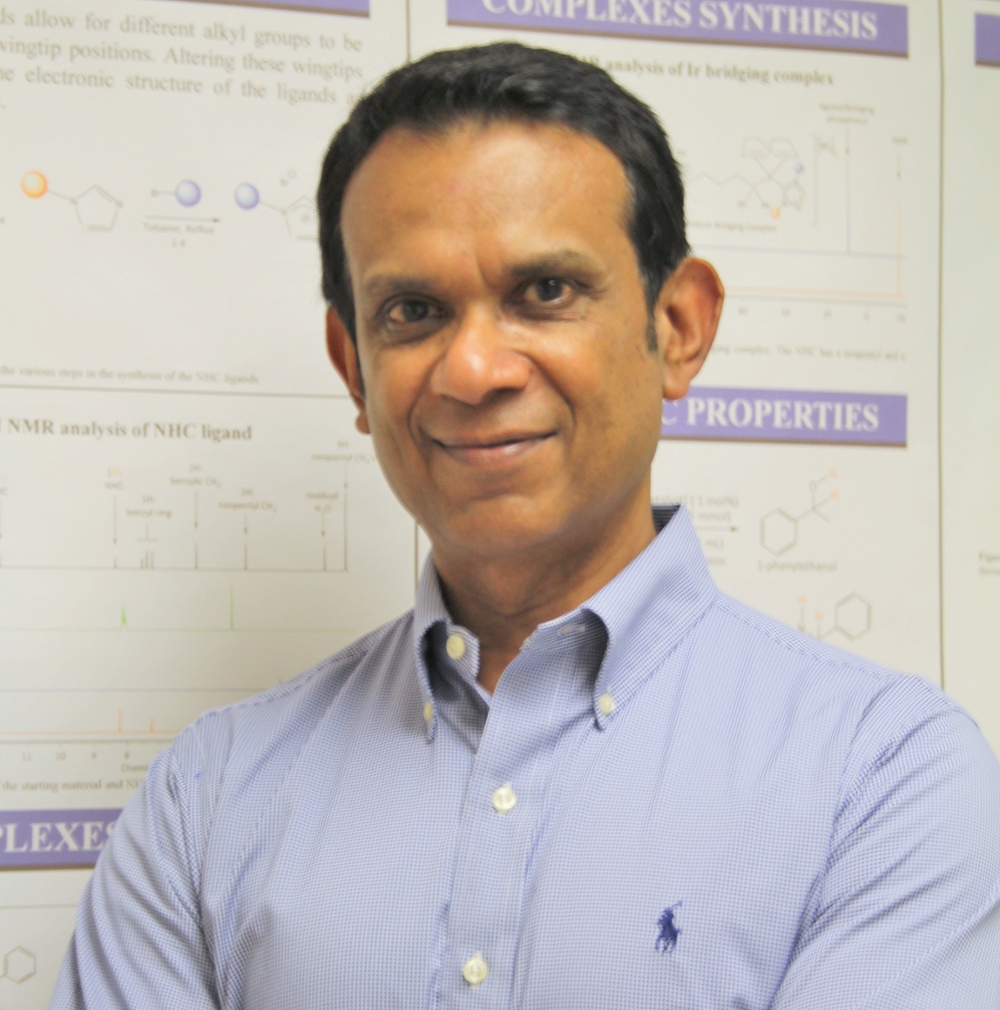
Dr. Edward Rajaseelan is a Professor in the Department of Chemistry at Millersville University, part of the College of Science and Technology. He has been a faculty member since August 1990, contributing extensively to teaching and research in inorganic and organometallic chemistry. His work focuses on the synthesis and characterization of transition metal complexes featuring N-heterocyclic carbenes, nitrogen oxides, and phosphine ligands. Education: B.S. in Chemistry, University of Peradeniya, Sri Lanka (1981) Ph.D. in Chemistry, University of Arizona (1989) Dr. Rajaseelan's research lies at the intersection of synthetic inorganic, bio-inorganic, and organometallic chemistry. His group designs and studies transition metal complexes that serve as potential catalysts in green chemistry and industrial organic synthesis. By exploring ligand effects—particularly with N-heterocyclic carbenes and chelating phosphines—his work contributes to the development of more efficient and sustainable catalytic systems. His sabbatical research at Brown University (1997) and Yale University (2005) further enriched his expertise in organometallic catalysts and NHC chemistry. His recent publications (2021–2025) demonstrate a consistent focus on the crystallographic and synthetic characterization of rhodium and iridium NHC complexes. These works highlight trends in ligand design, steric and electronic tuning, and solvation effects in coordination compounds. The articles are primarily published in IUCrData and Acta Crystallographica, underscoring his contributions to structural inorganic chemistry. Scientific Affiliations: American Chemical Society (ACS) Dr. Rajaseelan actively mentors undergraduate and graduate students, many of whom are co-authors on his publications, indicating a strong commitment to research-based education. His collaborative projects involve grants and institutional support, likely through programs like the Murley SURF Program, where he serves as a faculty mentor. He teaches a wide range of courses including Introductory Chemistry, Inorganic Chemistry, and Advanced Laboratory courses. He leads a research group focused on organometallic synthesis and characterization, working closely with students in laboratory settings. His team investigates molecular conformation, ligand effects, and catalytic potential of synthesized complexes, contributing to fundamental knowledge in coordination chemistry.
Professor Pascal Fua is a distinguished faculty member at EPFL (Swiss Federal Institute of Technology) in the School of Computer and Communication Science. He joined EPFL in 1996 and currently serves as Head of the Computer Vision Laboratory (CVLAB). His extensive research spans multiple cutting-edge areas in computer vision and geometric deep learning, with applications ranging from 3D reconstruction to medical imaging and aerodynamic optimization. Dr. Fua's research interests encompass Computer Vision, 3D Reconstruction, Shape Modeling, Geometric Deep Learning, Medical Image Analysis, Augmented Reality, Motion Recovery, Surface Mesh Processing, and Aerodynamic Shape Optimization. His work demonstrates a remarkable ability to bridge theoretical computer vision with practical applications across diverse domains. His research has evolved from traditional geometric computer vision techniques to incorporating deep learning approaches for 3D modeling, with recent focus on differentiable rendering, implicit surface representations, and applications in medical imaging and engineering design. His publication record shows a consistent trajectory of high-impact research, with recent work focusing on differentiable iso-surface extraction, geometric deep learning for aerodynamic shape optimization, and novel approaches to 3D reconstruction. His work spans both theoretical advances in computer vision algorithms and practical applications in medical imaging, autonomous driving, and computational fluid dynamics. IEEE Fellow Multiple ERC Grants recipient Associate Editor of IEEE Transactions for Pattern Analysis and Machine Intelligence Throughout his career, Professor Fua has mentored numerous PhD students who have gone on to make significant contributions in computer vision and related fields. His laboratory has established collaborations across multiple disciplines, including medical imaging, aerospace engineering, and neuroscience, demonstrating the broad applicability of his research. His current work continues to push the boundaries of geometric deep learning and 3D vision, with particular emphasis on making these techniques more practical and applicable to real-world engineering and medical problems.
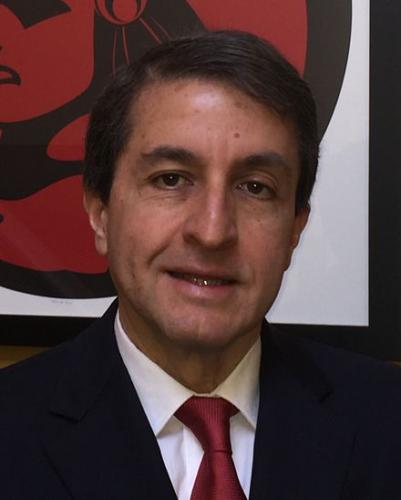
Alejandro Adem is a Professor in the Department of Mathematics at the University of British Columbia , with a distinguished career spanning institutions like the University of Wisconsin-Madison and roles such as Director of the Pacific Institute for the Mathematical Sciences (PIMS) (2008–2015), CEO of Mitacs (2015–2019), and President of NSERC (2019–present). He is on leave from UBC. B.S. , National University of Mexico (1982) Ph.D. , Princeton University (1986) Research Interests : His work bridges algebraic topology and group theory , focusing on the cohomology of finite and infinite groups , spaces of homomorphisms , K-theory , and orbifolds . Recent projects include generalized Tate cohomology, quantum mechanics applications of twisted K-theory, and structural analysis of commuting element spaces in Lie groups. Scientific Trends : His 15 most recent articles emphasize homotopy theory , group cohomology , and topological applications in physics , with collaborations on equivariant K-theory , manifold classification , and commuting element spaces . Fellow of the Royal Society of Canada , American Mathematical Society , and Canadian Mathematical Society Jeffery-Williams Prize (2019) Canada Research Chair at UBC Science, Technology, and Innovation Award of the Americas Advising & Leadership : Supervised 22 PhD students, including Daniel Sheinbaum (2020) and Max Gheorghiu (2024). Served on the NSERC Council , chaired the Global Research Council , and contributed to University of British Columbia policies .
Yan Zhang is a scientific leader at Meshcapade and a guest lecturer at ETH Zurich's Computer Vision and Learning Group (VLG). He previously served as a postdoctoral researcher at ETH Zurich (2020-2023) and research intern at Max Planck Institute for Intelligent Systems (2018-2020). His research focuses on generative human foundation models, human motion and behavior synthesis, 3D human perception, and applications in AR/VR, embodied AI, and interactive avatars. He has pioneered methods for scene-conditioned motion generation, contact-aware reconstruction, and egocentric interaction modeling. His recent publications (2025-2020) span Real-time motor models for avatars (PRIMAL, ICCV'25) Diffusion architectures for motion (RoHM, CVPR'24) Scene-population algorithms (Odysseus, CVPR'22) Physics-aware reconstruction (EgoHMR, ICCV'23) Whole-body grasping models (SAGA, ECCV'22) Multi-modal datasets (EgoBody, ECCV'22) Scientific recognition includes the Qualcomm Innovative Fellowship Europe 2023 . He organized workshops at CVPR'25, ECCV'24, and ECCV'22, and served on senior program committees (AAAI'26) and area chairs (CVPR'25). As co-supervisor, he mentored student projects on diffusion-based hand motion capture, 3D pose estimation, body-scene interaction, and mixed reality navigation at ETH Zurich (2020-2023). His work bridges computer vision, machine learning, and computer graphics to advance human-centric AI systems.
Dr Leok Lee is a Lecturer in the School of Electrical and Mechanical Engineering at the University of Adelaide . He is also an active member of the Centre for Energy Technology , contributing to cutting-edge research in renewable energy systems. Research Interests: Renewable energy systems, with a focus on solar thermal energy and energy storage. System integration and optimisation of complex transient energy systems. Computational fluid dynamics (CFD) and experimental design for energy applications. Decarbonisation of heavy industry through clean energy technologies. His research spans from fundamental studies in heat transfer and fluid mechanics to applied engineering solutions for decarbonising industrial processes. He has led and contributed to projects funded by ARENA and HILT CRC, targeting the integration of concentrated solar thermal energy into industrial applications such as the Bayer Alumina process. Supervision & Mentorship: Dr Lee is eligible to supervise Masters and PhD students and actively mentors undergraduate, Masters, and PhD candidates. He encourages prospective students to contact him via email to discuss research opportunities. Contact: Email: leok.lee@adelaide.edu.au Location: Room 3, Engineering South, North Terrace Campus
Pedro Roque is a Postdoctoral Researcher at KTH Royal Institute of Technology in Stockholm, affiliated with the Wallenberg AI, Autonomous Systems and Software Program (WASP) and associated with the Division of Decision and Control Systems (DCS). He obtained his Ph.D. in 2024 from the same division under the supervision of Prof. Dimos Dimarogonas, Prof. Mikael Johansson, and Prof. Jana Tumova. His research focuses on practically applicable theoretical results in robotics and control, with emphasis on space and aerial systems. Dr. Roque is particularly interested in developing algorithms that directly contribute to system performance and enhanced capabilities. He currently leads the setup of a Space Robotics Laboratory at KTH, associated with the Space Center and the WASP NEST DISCOWER project. He is an advocate for open-source software and hardware, contributing to NASA Astrobee and PX4 projects, with his research tested on the International Space Station and indoor flight arenas. Dr. Roque's work demonstrates a clear progression from theoretical foundations to practical implementation in space environments. His recent publications show an increasing focus on multi-agent coordination in microgravity, with significant contributions to model predictive control for space robotics applications. The research spans from fundamental control theory to complete system implementation, reflecting his commitment to bridging theory and practice. ICRA 2022 Outstanding Coordination Award for work on decentralized model predictive control for collaborative UAV bar transportation Dr. Roque actively mentors Master's students in Space Robotics, Control, and Vision, with supervision details available on his personal website. He has collaborated extensively with NASA Astrobee and PX4 projects, and his DISCOWER project involves collaboration with 3 Ph.D. students, 2 Master's students, 6 Professors, and one Post-doc. He also completed a 4-month internship at JPL within the Maritime and Multi-Agent Systems group. He leads the Space Robotics Laboratory at KTH, associated with the Space Center and the WASP NEST DISCOWER project, which has already demonstrated capabilities to Digital Futures, SAAB AB, SAAB Inc., and Purdue scholars. The laboratory focuses on weightless robotics, collaborative robotics (Space Cobot), and exploration robotics (MoonHopper), with practical testing on the International Space Station.
Professor Allan Rennie serves as Professor in Manufacturing Engineering at Lancaster University's School of Engineering and holds the administrative position of Associate Dean for Engagement within the Faculty of Science and Technology. With a career spanning over 30 years since initiating work in additive manufacturing during the mid-1990s, he has established himself as a leading figure in industrial applications of advanced manufacturing technologies across diverse sectors. His research expertise centers on Additive Manufacturing , Engineering Design , and Manufacturing Process Optimization , with current specializations including design for additive manufacturing (as co-leader of the UK's EPSRC DfAM Network), industrial digitalisation of manufacturing processes, and innovative tooling development using metallic and hybrid approaches. Rennie has significantly contributed to Engineering Education , particularly examining the integration of business and management principles into engineering curricula and analyzing the impacts of online/hybrid delivery modes on student engagement and graduate employability following the COVID-19 pandemic. Recent publication trends reveal Rennie's dual focus on practical manufacturing applications and scholarly analysis of technological evolution. His 2025 bibliometric study maps a decade of Design for Additive Manufacturing research, while his structural analysis of musical instruments demonstrates cross-disciplinary applications of manufacturing techniques. These works reflect his commitment to both advancing manufacturing technology and documenting its academic trajectory through rigorous analysis. Professor Rennie actively supervises PhD candidates including Jenny Roberts, Eunike Sembiring, and Joe Taylor while leading substantial research projects such as the EPSRC DfAM Network (2020-2023), Automating Design for Additive Manufacture with AI (2023-2024), and multiple Engineers in Business Competitions. His extensive grant portfolio spans industrial digitalization, sustainable manufacturing, and educational innovation, with notable projects including RENDER (powder recycling), TecHnology and EntrepreneUrship Education, and Production Capable Additive Manufacturing of Polymers. Rennie contributes to Lancaster's research ecosystem through affiliations with the Centre for Global Eco-innovation, Energy Lancaster initiative, and the Lancaster Product Development Unit. These platforms enable him to bridge academic research with industrial applications across multiple sectors, particularly supporting his work on sustainable manufacturing practices, technology commercialization, and industry engagement strategies that translate research into real-world impact.