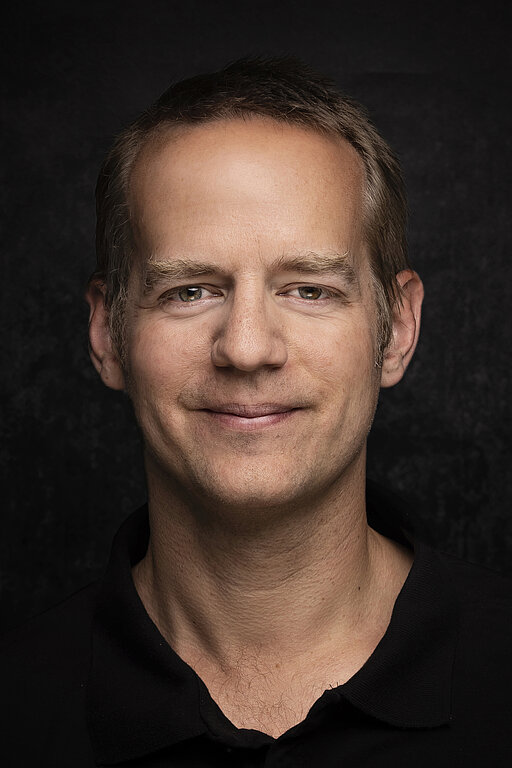
Prof. Dr. Sebastian von Mammen is a tenured professor at the University of Würzburg's Institute for Computer Science, where he heads the Games Engineering research group and contributes to the Chair for Human-Computer Interaction. His group leads the Games Engineering academic program. Previously, he completed his habilitation (2012-2016) at the University of Augsburg's Chair of Organic Computing and was a postdoctoral fellow at the University of Calgary. His research spans: Real-Time Interactive Systems : Visual programming, immersion techniques, software engineering Interactive Simulations : Serious games for healthcare/logistics/construction Artificial Life : Self-organisation, adaptive systems, evolutionary computation Artificial Intelligence : Agent-based modeling, procedural content generation Recent publications (2023-2025) demonstrate strong focus on: Virtual reality applications in education (femtoPro optics simulator, BrainBuilder neuroanatomy) Healthcare technology platforms (VIA-VR for medical serious games) Game mechanics analysis (Match-3, Jump'n'Run flow) AI-driven emotion recognition and interactive systems Computational modeling of biological systems He leads the Games Engineering research group and previously participated in the Evolutionary and Swarm Design group (Calgary) and LINDSAY project. His lab develops VR simulations for scientific training and serious games applications.
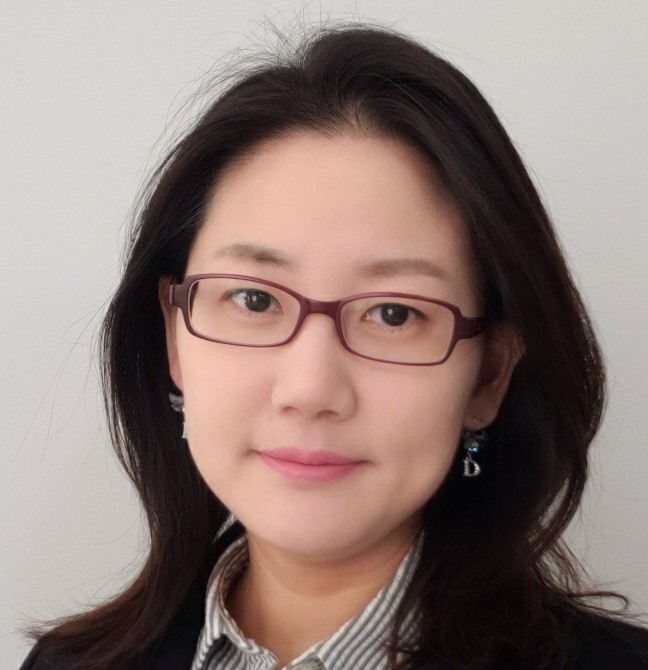
Sunah Chung is an Assistant Professor of Literacy Education at the Department of Literacy, Early Childhood, and Special Education within the College of Education at the University of Northern Iowa. Her work focuses on children's literacy development through engagement with children's literature, particularly informational picturebooks and biographies, with additional emphasis on supporting English language learners. PhD in Curriculum and Instruction from University of Illinois at Chicago B.A. in English Language Education from Chung-Ang University Her research explores equity and inclusivity in children's literature, multimodal literacy support for bilingual learners, and disciplinary knowledge development through visual texts. She actively bridges theory and practice by leading initiatives like the UNI America Reads Book Club and the Science of Reading Lab. Recent publications analyze power dynamics in biographies, multimodal strategies for immigrant families, and cross-cultural responses to Indigenous incarceration narratives. She co-edits studies on Chinese nonfiction picturebooks and children's visual literacy interpretation. Current projects include: UNI America Reads Book Club (after-school program for 4th graders) Science of Reading Lab (maker-space for pre-service teachers)
Aysegul Liman-Kaban serves as an Assistant Professor in ICT/Digital Learning STEM Education at Maynooth University. Her work focuses on integrating immersive technologies like augmented reality, gamification, and AI into educational practices. She actively supervises PhD students and leads international research projects such as MIXAP-EU and From AI Anxiety to Empowerment. Education: Not explicitly stated in provided text Her research interests span: Immersive learning technologies (AR/XR, digital escape games) AI in education and generative AI applications Teacher digital competencies and professional development Flipped learning and multimedia pedagogy Ethical challenges in AI research Blended learning practices Recent publications demonstrate a focus on gamification, mixed reality, and AI applications in education, with methodological expertise in structural equation modeling, mixed methods research, and task-based learning analysis. She contributes to journals like Smart Learning Environments and Higher Education Quarterly . Key activities include: Organizing international conferences on STEAM education Leading EU-funded research on immersive learning tools Developing open-source educational technologies Pioneering generative AI integration frameworks
Isabelle Stadelmann-Steffen is a Professor of Comparative Politics at the University of Bern's Institute of Political Science. Her research focuses on public policy, direct democracy, and political behavior. University of Bern Institute of Political Science Her research examines how policy content in family policy and energy policy influences political preferences, with current projects including EDGE (Enabling Decentralized renewable Generation), SURE (Sustainable and Resilient Energy), and SOTES (Sociotechnological Breakthrough of Thermal Energy Storage). She has published extensively on renewable energy acceptance, welfare state configurations, and political behavior. Her recent publications analyze: Energy policy communication strategies Carbon tax acceptance mechanisms Gendered leadership and crisis response Policy feedback effects on social behavior Direct democracy's impact on climate policy Household work patterns across policy regimes Her work is supported by Swiss Federal Office of Energy and Swiss National Science Foundation grants. She leads a research team including PostDocs (Dr. Gracia Brückmann, Dr. Meret Lütolf, Dr. Dominique Oehrli, Dr. Sophie Ruprecht, Dr. Jonas Schmid, Dr. Guillaume Zumofen) and doctoral assistants Walid El-Ajou, Jana Föcker, and Rebeka Sträter. Swiss National Science Foundation grants SWEET funding programme support Interdisciplinary collaboration with engineering institutions
Peter Lugosi is a Professor of Culture and Organisation and Research Lead for the Hospitality, Tourism and Events Subject Area at Oxford Brookes Business School. With extensive experience in interdisciplinary research bridging sociology, geography, and anthropology, he has established himself as a leading academic in hospitality and tourism studies. Professor of Culture and Organisation at Oxford Brookes Business School Research Lead for Hospitality, Tourism and Events Subject Area Co-Editor of Hospitality & Society journal Associate Editor for Annals of Tourism Research and Journal of Destination Marketing and Management Member of editorial boards for over 15 international journals Professor Lugosi's research spans multiple domains of contemporary hospitality and tourism. His work explores the intersections of food and drink culture with societal structures, examines migration and integration within hospitality labor markets, investigates coaching and mentoring practices, and analyzes consumer cultures within service environments. His interdisciplinary approach combines theoretical frameworks from sociology, geography, and anthropology to provide nuanced understandings of complex hospitality phenomena. He has made significant contributions to understanding how hospitality spaces function as sites of social interaction, cultural expression, and economic activity. His recent publications demonstrate a strong focus on contemporary issues including algorithmic management in hospitality, food waste reduction in luxury settings, migration and labor market integration, and sustainable tourism development. These works reflect his ability to address both theoretical and practical challenges facing the hospitality industry. His research has been supported by prestigious funding bodies including the British Academy, Engineering and Physical Sciences Research Council, European Commission, and Higher Education Academy. Co-founded Hospitality & Society journal Member of Executive Committee, Council for Hospitality Management Education Fellow of the Higher Education Academy Member of British Sociological Association Professor Lugosi has successfully supervised numerous doctoral students to completion, with research topics spanning refugee labor market integration, coaching practices, consumer behavior in hospitality settings, and tourism development. His supervision approach emphasizes interdisciplinary thinking and methodological rigor. He has also contributed to research capacity building through his editorial work and service on multiple journal editorial boards, helping to shape the direction of hospitality and tourism research globally. His work on migrant entrepreneurship, food culture, and hospitality spaces demonstrates his commitment to understanding how commercial settings facilitate social interaction and cultural expression. Recent projects have examined the experiences of refugees in hospitality labor markets, sustainable food practices in luxury hotels, and the role of digital technologies in transforming hospitality management.
Cameron McTernan is a Lecturer in Media and Communication at the University of South Australia, specifically within UniSA Creative. His academic work focuses on the intersection of media, politics, and digital platforms, with particular emphasis on how social media shapes news consumption and political discourse in Australia. Dr. McTernan holds a Master of Arts (Research) from The University of Sydney (2022) and a Bachelor of Arts - Honours from The University of South Australia (2011). His research portfolio encompasses several critical areas in contemporary media studies: Media Diversity and Pluralism in Australia Social Media platforms and their societal impact Streaming Platforms and their economic implications Political Communication in the digital age The Australian Network Media Economy Dr. McTernan's scholarly output demonstrates a consistent focus on platform-mediated political communication and media diversity. His research employs both qualitative analysis of political content on social media and quantitative methods to measure media concentration and engagement patterns, revealing important insights about how digital platforms affect democratic participation and news diversity. His notable research involvement includes: Researcher for the Global Media and Internet Concentration Project (2024), funded by the Social Sciences and Humanities Research Council of Canada Dr. McTernan actively participates in key professional organizations that align with his scholarly focus: The Australian and New Zealand Communication Association International Communication Association International Association for Media and Communication Research As a Research Degree Supervisor at the University of South Australia, Dr. McTernan mentors students in media and communication research, particularly those interested in digital media ecosystems, political communication on social platforms, and media economics. His work with the Global Media and Internet Concentration Project demonstrates his engagement with international research collaborations addressing critical issues in media concentration and platform governance.
Kelly Bass serves as Associate Professor and Faculty Chair in the Department of Social Work at the University of South Dakota, directing the Child & Adult Advocacy Studies (CAASt) program. His clinical expertise spans forensic evaluations, crisis intervention, and therapeutic treatment for vulnerable populations across criminal justice, mental health, and welfare systems. His educational background includes: Doctorate in Social Work (DSW), Clinical Social Work, University of Tennessee - Knoxville, 2015 MS, Advanced Generalist Social Work, University of Nebraska at Omaha, 2001 BS, Generalist Social Work, University of Sioux Falls, 1998 Bass focuses on clinical supervision frameworks, interprofessional education, and trauma-informed interventions for at-risk youth and families. His research examines service delivery integration at healthcare-discipline intersections and outcomes improvement for mentally ill populations within institutional systems. Recent publications reveal a strong emphasis on culturally relevant case studies, advocacy curriculum development, and ACEs mitigation through neuroscience-informed practice. His scientific recognition includes the 2023 IPEC Excellence Award Honorable Mention and multiple Belbas-Larson Teaching Award nominations. Current grants like HRSA's COMPASS initiative ($1.2M) address South Dakota's behavioral health workforce shortages through innovative training pipelines, while the NCWWI case-based learning project enhances child maltreatment practitioner competencies. Bass leads the CAASt certificate program and serves as an ASWB Path to Licensure Scholar, developing national curricular guides for licensing regulation. His clinical supervision research informs the COMPASS grant's mentorship framework, creating sustainable pipelines for rural mental health professionals through university-community partnerships.
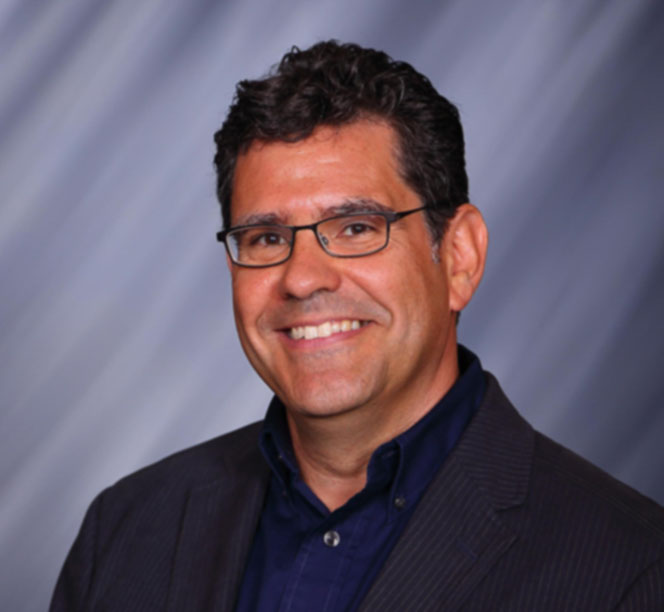
Juan Carlos Castillo is an Associate Professor of Spanish and Spanish Section Coordinator at the University of Northern Iowa. He is affiliated with the Department of Languages & Literatures within the College of Humanities, Arts, and Sciences. His academic background includes a Ph.D. from the University of Maryland, two M.A. degrees from the University of Iowa (in Linguistics and Spanish Linguistics/Literature), and a B.A. from Universidad de Deusto in Spain. Castillo's research interests span multiple disciplines: he explores syntax (particularly Spanish syntax), historical linguistics, old Spanish language studies, language acquisition, and the intersection of sports with Spanish culture and national identity. His teaching portfolio includes courses like Historical Linguistics, Spanish Civilization, and Introduction to Translation. He actively contributes to curriculum development and serves on the Transfer Council. His research often bridges linguistic theory with cultural analysis, such as examining how Spanish sports figures like Federico Martín Bahamontes and Manolo Santana shaped national identity. Recent work highlights the role of sports in promoting cultural narratives and historical memory. Castillo has also published extensively on syntax theory, phonology, and the pedagogical use of sports in language education. Though no specific awards are listed, his scholarly output reflects sustained contributions to both Spanish linguistics and cultural studies. He advises students in linguistics and literature tracks and has been involved in academic governance roles that enhance interdisciplinary collaboration.
Andrea Appolloni is an Associate Professor at the Department of Management and Law, University of Rome Tor Vergata. His academic career focuses on Management with emphasis on Sustainable Supply Chain Management , Digital Transformation , and Circular Economy . His research explores the intersection of technological innovation and sustainability, particularly through topics like AI in Logistics , Green Procurement , and Policy Optimization . Publications span both theoretical frameworks and empirical studies in China, Italy, and Malaysia, with a strong focus on environmental impact and organizational performance. Recent work includes digital twin applications for human-AI collaboration, blockchain integration in sustainable supply chains, and analyzing barriers to circular economy adoption. His 15 most recent articles (2025-2022) demonstrate a trend toward combining Artificial Intelligence , Operations Management , and Environmental Governance .
Mostafa Ammar is a Regents' Professor and Interim Chair of the School of Computer Science at the Georgia Institute of Technology. He has held leadership roles including Associate Chair (2006–2012) and has been a faculty member since 1985. His research focuses on network architectures, protocols, and services, with contributions to mobile cloud computing, network virtualization, and disruption-tolerant networks. He has advised 39 Ph.D. students and secured funding from agencies like NSF, DARPA, and industry partners such as Cisco and IBM. Education : S.B. and S.M. from MIT, Ph.D. from the University of Waterloo. Research Interests : Network architectures, mobile cloud computing, overlay networks, video streaming, and network simulation. His work bridges theoretical advancements with practical implementations, emphasizing scalable and efficient network solutions. Publications : Over 214 publications with a focus on network virtualization, mobile edge computing, and distributed systems. Recent work explores encrypted traffic analysis and femto-cloud resource sharing. Awards : ACM/IEEE Fellowships (2002–2003), Best Paper Awards (2012, 2018), and multiple teaching excellence recognitions. Service : Editor-in-Chief of IEEE/ACM Transactions on Networking (1999–2003), conference co-chair roles, and steering committee memberships. Advising & Grants : Mentored 39 Ph.D. students and secured multi-million-dollar grants. His research has influenced industry standards and academic curricula. Labs/Teams : Active in Georgia Tech’s networking research groups, contributing to open-source network simulators and collaborative projects with global institutions.
Hari Subramonyam is an Assistant Professor (Research) at Stanford University's Graduate School of Education with a courtesy appointment in Computer Science. He serves as the Ram and Vijay Shriram Faculty Fellow at Stanford's Institute for Human-Centered AI (HAI) and is a core faculty member of Stanford HCI. Subramonyam earned his PhD in Information from the University of Michigan under advisor Eytan Adar. His research focuses on the intersection of Human-Computer Interaction (HCI) and Learning Sciences, specifically developing AI systems to augment human learning through cognitively informed design, co-design with educators, and transformative learning experiences. His work prioritizes ethical AI, responsible design practices, and human values in technology creation. Research spans generative AI for education, human-AI interaction paradigms, and accessible learning technologies. Subramonyam's publications demonstrate strong focus on human-centered AI systems for education, visualization, and creative applications. His recent work (2023-2025) concentrates on generative AI interfaces for writing assistance, educational tools, and collaborative systems, while maintaining consistent exploration of visualization techniques and AI transparency frameworks. Awards & Honors: Best Paper Award at CHI (2025, 2020, 2019) Honorable Mention Award at CHI (2025) Best Paper Award at IUI (2021) Ram and Vijay Shriram Faculty Fellow HAI Hoffman Yee Grant (2024) Cover Story in Interactions Magazine (2024) Advising & Grants: Leads 27 students including PhD advisee Neha Rajagopalan (co-advised) and diverse MS/BS researchers. Received HAI Hoffman Yee Grant (2024) for "Integrating Intelligence: Building Shared Conceptual Grounding for Interacting with Generative AI" as co-investigator. Teaches courses on data visualization (CS 448B) and educational technology design (EDUC 432). Labs & Leadership: Core faculty at Stanford HCI group, directing research on human-centered AI systems. Organizes workshops including "Tools for Thought" (CHI 2025) and "Human–AI Coevolution" (ICLR 2025). Maintains collaborations with National University of Singapore and University of Michigan.
Christian Timmerer is a Professor at the Institute of Information Technology, Alpen-Adria-Universität Klagenfurt. His research focuses on adaptive video streaming , energy efficiency , MPEG standardization , and quality of experience (QoE) , with significant contributions to HTTP Adaptive Streaming (HAS), multi-codec optimization, and immersive media systems. Email: christian.timmerer@aau.at Office Hours: Monday 3:00-4:00 PM (by appointment) Projects: CD-Labor ATHENA, GAIA, SPIRIT His research integrates machine learning and generative AI to enhance video encoding, super-resolution, and voice dubbing, while prioritizing sustainability through energy-aware algorithms and open-source tools like GREEM and VEED. Current work emphasizes latency reduction and dynamic bitrate adaptation in live streaming environments. Recent publications address VVC optimization , multi-resolution encoding , and perceptual quality modeling , reflecting interdisciplinary efforts in networking , computer vision , and human-computer interaction . Awards include leading funded projects on adaptive streaming and green video systems.
Matt Sienkiewicz is a Professor and Chair of the Communication Department at Boston College, where he also serves as Director of the Jewish Studies Program and Faculty Advisor to Hillel. He holds a Ph.D. and specializes in global media cultures, Jewish civilization, and comedy studies. His research explores intersections between media, politics, and identity, with a focus on satire, conservative media strategies, and digital content dynamics. Dr. Sienkiewicz has authored influential books such as That's Not Funny: How the Right Makes Comedy Work for Them (2022) and The Other Air Force: U.S. Efforts to Reshape Middle Eastern Media Since 9/11 (2016). His work appears in journals like Journal of Cinema and Media Studies , Media, Culture & Society , and Columbia Journalism Review . He is also an Emmy-nominated media producer, with credits including the documentary Live From Bethlehem and the TV series Windy Acres . His research interests span right-wing media ecosystems, streaming content representation, and the role of comedy in political discourse. Recent projects analyze niche streaming platforms, podcasting’s cultural impact, and counter-narratives in conflict zones like Syria and Ukraine. Awards include recognition for his Emmy-nominated media projects. Awards: Emmy Nomination (Media Production) Media Work: Documentaries, TV series, and open-source journalism initiatives Leadership Roles: Department Chair, Jewish Studies Director, and advisor to campus organizations His academic contributions bridge scholarly rigor and creative media practice, emphasizing the societal role of humor and media in shaping cultural and political landscapes.
Roberto Rojas-Cessa is a Professor in the Department of Electrical and Computer Engineering at New Jersey Institute of Technology (NJIT), affiliated with the School of Applied Engineering and Technology. His research focuses on networking, blockchain applications in smart cities, energy systems, wireless communications, and high-performance switching. He has led multiple National Science Foundation (NSF)-funded projects, including initiatives on controlled delivery power grids and next-generation network quality of service. Notably, his work explores blockchain for energy metering, sustainable environmental measures, and smart grid optimization. He is also a Senior Member of the National Academy of Inventors (2024). His research interests span network protocols, distributed systems, and IoT applications. Recent projects include AMI-Chain (a blockchain-based power metering system) and studies on indirect free-space optical communications for vehicular networks. He has contributed to advancements in medium access control for crowded networks and energy packet switches for digital microgrids. Rojas-Cessa’s work integrates machine learning for network management and flood impact analysis. He has developed tools for time-lapse analysis of urban data and agent-based models to evaluate electric vehicle adoption. His publications emphasize scalability, security, and efficiency in both traditional and emerging technologies. Grants: Collaborative Research on Power Grids (NSF, 2016–2018), NeTS-NR: Quality of Service Networks (NSF, 2004–2008) Awards: Senior Member of the National Academy of Inventors (2024) His lab activities include experimental evaluations of digital microgrids and blockchain implementations for carbon footprint tracking. He actively collaborates on projects addressing emergency communications and resilient energy distribution systems.
Dr. Faisel Tubbal is a Lecturer, Laboratory Manager, and Work Integrated Learning Coordinator at the School of Electrical, Computer and Telecommunications Engineering, University of Wollongong. He holds a PhD in Telecommunication Engineering from the University of Wollongong (2017) and has extensive experience in research and academia. His roles include managing laboratories and coordinating work-integrated learning programs. Education: B.E. in Telecommunication Engineering, College of Electronic Technology, Libya (2004) Graduate Diploma in Engineering Technology, University of Wollongong (2011) M.S. in Telecommunication Engineering, University of Wollongong (2012) M.S. in Engineering Management, University of Wollongong (2013) Ph.D. in Telecommunication Engineering, University of Wollongong (2017) Research Interests: Dr. Tubbal specializes in antenna designs for CubeSat communications, wearable antennas, metamaterials, and wireless power transfer. His work bridges theoretical advancements with practical applications in satellite technology and IoT. Recent trends in his publications focus on RF energy harvesting, 5G/IoT integration, and medical wearable systems. Awards: 2021 and 2016 Vice-Chancellor's OCTAL Awards for teaching excellence Fellow at Wollongong Academy for Tertiary Teaching and Learning Excellence (WATTLE) Grants & Supervision: Currently supervising four PhD students on CubeSat systems, medical wearable antennas, and wireless power reception. He led an institutional grant (2024) on alternative learning content development. Labs & Teams: Manages engineering laboratories and coordinates industry-linked projects at the University of Wollongong. Active in IEEE as a Senior Member and contributes to conference organizing (e.g., ICSPCS 2019 Technical Committee).