Florian Stahl is Professor of Marketing at the University of Mannheim, affiliated with the Department of Business Administration in the Business School. His research focuses on empirical quantitative marketing, digital transformation, and marketing analytics, with applications in digital communications, pricing, and social media. His research interests include: Empirical Quantitative Marketing Marketing Analytics Digital and Social Media Marketing Economics of Data and Digital Products Brand and Advertising Strategy Behavioral and Experimental Marketing Methodologically, he employs applied econometrics, machine learning, and experimental designs. His recent publications center on influencer marketing, online reviews, network effects, and digital content strategies, reflecting a strong trend toward understanding consumer behavior in digital ecosystems using data-driven approaches. His scientific awards include: H. Paul Root Award (2012) MSI Best Paper Award (2012) Donald R. Lehmann Award (2021) IJRM Best Paper Award (2014) Finalist, Paul E. Green Award (2021) Finalist, Harold H. Maynard Award (2012) Florian Stahl has advised numerous research projects and published in top-tier journals, contributing significantly to marketing science. He has held research grants and collaborative projects, though specific grant details are not listed. He leads the Chair of Quantitative Marketing and Consumer Analytics and maintains an active research team focused on digital marketing innovations. His lab, the Quantitative Marketing and Consumer Analytics team, conducts cutting-edge research on user-generated content, influencer dynamics, and digital strategy, leveraging real-world data and experiments.
Dr. Panagiotis Andriotis is a Lecturer in Computer Science at the School of Computer Science, University of Birmingham, within the College of Engineering and Physical Sciences. He is also a GIAC Certified Forensic Examiner (GCFE, GASF) and a Senior Fellow of the Higher Education Academy (SFHEA). His interdisciplinary research spans Cyber Security, Human Factors, and Mobile and Ubiquitous Computing. He teaches courses in Computer Science, Cyber Security, and Digital Forensics. His educational background includes a PhD in Computer Science from the University of Bristol (2016), an MSc with Distinction in Computer Science from the same institution (2011), and a BSc in Mathematics from the National and Kapodistrian University of Athens (2004). Dr. Andriotis’s research interests focus on user-centered security, particularly in mobile environments. He investigates how users interact with Android’s permission systems, develops novel authentication mechanisms like Bu-Dash, and explores adversarial machine learning in cybersecurity. His work bridges technical and human aspects, aiming to improve both system robustness and user experience. His recent publications reflect a strong trend in adversarial machine learning, mobile malware detection, usable privacy, and the societal implications of AI in education. He has contributed to high-impact journals such as IEEE Transactions on Cybernetics, ACM Transactions on Privacy and Security, and Elsevier’s Journal of Information Security and Applications. Best Paper Award at HCI International 2020 Impact Award, UWE Bristol Student Union GIAC Certified Forensic Examiner (GCFE) GIAC Advanced Smartphone Forensics (GASF) SANS Lethal Forensicator Coin Dr. Andriotis has advised PhD students, including Andrew McCarthy, and has been involved in funded research projects such as those related to fuzzing, software security, and critical infrastructure protection in collaboration with Airbus. He has served as an External Examiner at Cardiff Metropolitan University and is currently on the editorial boards of Digital Threats: Research and Practice (ACM) and the Journal of Responsible Technology (Elsevier). He has held visiting roles at the National Institute of Informatics in Tokyo, including as a JSPS Fellow and Toshiba Fellow. He leads research in digital forensics and security, with a lab focus on mobile ecosystems, behavioral modeling, and AI-driven threat detection. His team explores both technical and human dimensions of cybersecurity, contributing to tools and frameworks that enhance mobile security and user awareness.
Jordan Boyd-Graber is a Professor in the Department of Computer Science at the University of Maryland's College of Computer, Mathematical, and Natural Sciences. He serves as a leading researcher in Natural Language Processing with significant contributions across multiple NLP subfields. His work bridges theoretical advances with practical applications requiring human-AI collaboration. His research interests span Natural Language Processing , Question Answering systems , Human-AI collaboration , Machine Translation , and Topic Modeling . He focuses on developing systems that work effectively with humans rather than replacing them, emphasizing interpretability and user-centered design. His work often involves creating evaluation frameworks that better capture real-world utility rather than just technical metrics. His publication record shows consistent leadership in the field, with numerous papers at top venues including ACL, EMNLP, and NAACL. Recent work (2023-2024) demonstrates strong engagement with LLMs, human evaluation methodologies, and practical applications in health and translation domains. His research often involves student collaborators, indicating active mentorship. ACL Fellow (2021) Program Chair for ACL 2023 Organizer of prompt hacking competition Leader in human-centered NLP evaluation Boyd-Graber has secured substantial funding for his research, particularly in projects involving human-AI collaboration and question answering systems. His work often involves interdisciplinary teams spanning computer science, linguistics, and domain-specific applications. He has mentored numerous graduate students who have gone on to successful careers in academia and industry. He leads research groups focused on developing interpretable NLP systems that work effectively with humans, particularly in high-stakes domains like healthcare and education. His lab frequently develops novel evaluation methodologies that better capture real-world utility rather than just technical metrics.
Yuki Tanaka is a Professor at the Department of Contemporary Business, Faculty of Economics, Hosei University . Her research focuses on financial accounting and ESG disclosures , examining how corporate sustainability reporting impacts decision-making and organizational value. PhD in Commerce from Hitotsubashi University (2012) Specializes in empirical research using econometrics, text mining, and field studies Active in Japan Bankers Association and Trust Companies Association of Japan Research Themes include corporate ESG disclosures, climate change risk management, and AI applications in sustainability evaluation. She leads projects like "AI-based ESG Information Analysis" (JSPS Grant-in-Aid (B), 2022-2025) and "Climate Change Disclosure Content Analysis" (JSPS Grant-in-Aid (C), 2020-2023). Professional Memberships : Japan Accounting Association Social Accounting Society of Japan Japan Investor Relations Association
Arnab Nandi is a Professor of Computer Science and Engineering at The Ohio State University, with a courtesy appointment in Biomedical Informatics. He holds leadership roles including Steering Committee Member for the Human-in-the-Loop Data Analytics (HILDA) Workshop and has served as Workshops co-chair for SIGMOD 2025-26 and Demonstrations co-chair for SIGMOD 2024. His research focuses on bridging human interaction and data infrastructure, spanning database systems, human-in-the-loop data analytics, and next-generation query interfaces. Nandi's work emphasizes interactive data exploration through projects like DICE (Distributed Interactive Cube Exploration), GestureDB (Querying Beyond Keyboards), and Omni (Multimodal Data Exploration). His recent research explores integrating LLMs into database education, augmented reality interfaces for data analytics, and multimodal approaches to video querying. Nandi has received numerous honors including the NSF CAREER Award, Google Faculty Research Award, IEEE TCDE Early Career Award, and the University's Alumni Award for Distinguished Teaching. He was also named to Columbus Business First's '40 under 40' and became an ACM Distinguished Member in 2024. As an educator, he teaches courses including CSE 3241 (Introduction to Database Systems), CSE 5242 (Advanced Database Systems), and CSE 5251 (Introduction to Software Startups). His educational innovations include DBTutor, which integrates LLMs into database systems education. At Ohio State, Nandi co-founded the OHI/O Program, which fosters tech culture through hackathons, and The STEAM Factory, an interdisciplinary research collaboration network. Prior to academia, he was founder and CEO of Mobikit, a connected vehicles data analytics startup acquired by Azuga Inc. (a Bridgestone company). His research has been supported by the NSF and industry partnerships, with applications spanning precision agriculture (CropFusion), clinical data pipelines (ICARUS), and interactive visualization systems (Perceptvis).
Mercedes Herrero de la Fuente is a Professor at Antonio de Nebrija University's School of Communication and Arts in Madrid, specializing in Journalism and Media Innovation. Holding a PhD in Information Sciences from Complutense University of Madrid, she coordinates the doctoral program in Innovation in Digital Communication and Media while leading research through the INNOMEDIA Research Group. Her academic affiliations include active participation in multiple national research projects funded by Spain's Ministry of Science and Innovation. Her research focuses on the intersection of digital technologies and communication, with particular emphasis on data journalism, transmedia narratives, disinformation combat strategies, and gender representation in media. Recent work explores augmented reality applications in journalism, accessibility for people with disabilities in the audiovisual sector, and women's leadership in media production. She has conducted research fellowships at Cornell University, Radboud Universiteit, Salford University, and Charles University. Herrero de la Fuente has published extensively in high-impact journals, with her most recent work examining AI applications against electoral misinformation, women creators in streaming platforms, and immersive journalism technologies. Her research demonstrates consistent focus on emerging media technologies and their societal implications, particularly regarding inclusion and verification practices. As an educator, she previously directed Nebrija University's Master's in Digital and Data Journalism (2016-2021) and Master's in Television Journalism (2015-2020), while currently teaching in both undergraduate and graduate programs. Her professional background includes eight years as a producer for TELEMADRID News, providing practical industry experience that informs her academic work.
Paolo Prandoni is a Lecturer at École Polytechnique Fédérale de Lausanne (EPFL) in the School of Computer and Communication Sciences (IC). He serves as a Scientist in the Audiovisual Communications Laboratory (LCAV) and teaches in the SSC-ENS and SIN-ENS units, focusing on signal processing theory and practical applications in audiovisual communications. He earned his PhD from EPFL after completing all prior education there, driven by childhood fascination with long-distance telephony. His doctoral work established foundations in communication systems that continue to inform his research. Prandoni's research spans audio/image processing, machine learning for media analysis, and DSP education. Key areas include computational photography (e.g., spectral imaging, stained glass rendering), speech quality assessment via transfer learning, music information retrieval (e.g., fingering prediction), and audience analytics through his company Quividi. His work consistently bridges theoretical signal processing with real-world implementation. Recent publications reveal a strategic shift toward machine learning integration in signal processing tasks, particularly non-intrusive speech assessment and lensless imaging reconstruction. Simultaneously, he advances DSP pedagogy through MOOC development and hands-on teaching tools using off-the-shelf hardware, emphasizing accessibility and practical skill development. No scientific awards are documented in the provided materials. He has advised PhD student Thanikachalam Niranjan (thesis: Image Based Relighting of Cultural Artifacts , 2016) and teaches Communication Systems and Computer Science courses. His educational impact extends through the open-access textbook Signal Processing for Communications (2008) and tools like MultiPub for maintainable online classes. Industry engagement includes Quividi co-founding (2006) and ongoing CSO role in attention analytics. As a core LCAV laboratory member, he collaborates on interdisciplinary projects including cultural heritage digitization, embedded signal processing systems, and real-time audience measurement, leveraging EPFL's infrastructure for both academic and commercial applications.
Leyla Kahraman Yuce is an Associate Professor in the Department of Public Administration at Nevsehir Haci Bektas Veli University's Faculty of Economics and Administration. She has served as Head of Department since 2011 and previously held significant administrative positions including Department Head at both Nevsehir University (2010-2014) and Nevsehir Haci Bektas Veli University (2022-2023), Director of Research and Application Center (2017-2020), and Deputy Director (2013-2014). Dr. Yuce earned her Doctorate in Political Science from Hacettepe University Institute of Social Sciences in 2005 with a dissertation titled 'Statesmanship and Politicianship in Turkey: The Examples of Demirel, Ecevit and Özal' and holds a second Doctorate in Public Administration from Inonu University Institute of Social Sciences (1999). Her academic journey began as a Research Assistant at Inonu University (1998-2000), followed by positions at Hacettepe University (2000-2006), Nevsehir University (2010-2013), and her current institution where she was promoted to Associate Professor in 2017. Her scholarly work consistently centers on gender dynamics within Turkish political systems, with particular focus on women's political representation, gender equality, and political modernization. She teaches a comprehensive curriculum including Introduction to Political Science, Gender Studies, Turkish Political Life, Women and Politics, and Social Gender Studies at both undergraduate and graduate levels. Her research demonstrates strong interdisciplinary connections between political theory, public administration, and gender studies. Dr. Yuce's publication record spans over two decades with significant output in recent years. Her work shows an evolving focus from foundational studies on political systems and public administration to increasingly specialized research on gender representation in Turkish politics. Recent publications (2020-2024) demonstrate particular attention to contemporary issues including migration history, urban citizenship rights, and digital transformation in local governance. Cumhuriyetin Göçlerle Dolu 100 Yılı (2023) Kentli Hakları (2022) Çağdaş Siyasal Sistemler Türleri ve Belli Başlı Ülke Uygulamaları Cilt:2 (2020) Türkiye de Farklılıklarına Rağmen Kadınlar Post Feminist Çağda Türkiye de Farklı Kadın Konumları (2012) As a dedicated mentor, Dr. Yuce has supervised five graduate theses to completion and currently advises ongoing research. She has led significant research initiatives including an EU-funded project (2014-2015) on strengthening civil society organizations combating violence against women, where she served as Project Coordinator. Her administrative leadership extends beyond departmental roles to include managing research centers and university-community collaboration initiatives focused on municipal governance and gender equality. Dr. Yuce maintains an active scholarly presence through her teaching, research, and leadership at Nevsehir Haci Bektas Veli University, continuing to contribute to academic discourse on Turkish political development and gender equality in political representation.
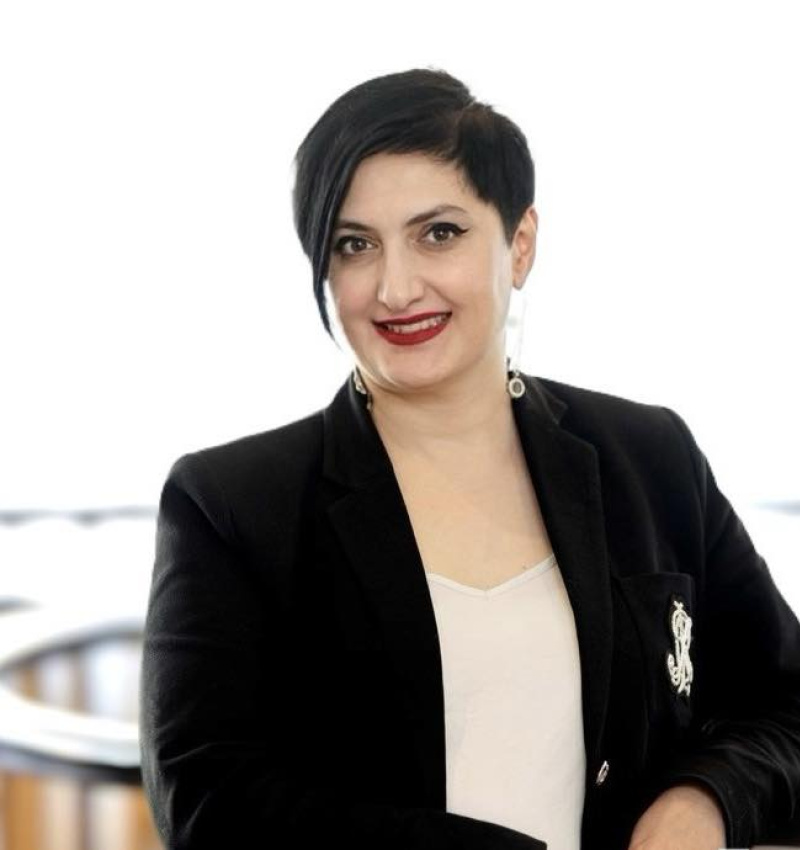
Nvard A. Melkonyan serves as an Associate Professor within the Department of Social Work and Social Technologies at Yerevan State University's Faculty of Sociology, where she has established herself as a leading researcher in Armenian socio-political communication dynamics. Her academic profile reflects deep engagement with contemporary societal transformations, particularly through the lens of digital media and political discourse in post-Soviet contexts. Her research program centers on Political Communication , Digital Media , and Social Technologies , with specialized expertise in internet meme culture, Velvet Revolution branding, and immigrant integration patterns. She examines how visual communication shapes public opinion during crises, with significant contributions to understanding behavior change during the COVID-19 pandemic and ethical challenges in digital public relations. Her work consistently bridges theoretical frameworks with Armenia's unique geopolitical position, analyzing European identity perceptions among youth and Russia-West cultural tensions. Recent publication trends reveal a strategic shift toward urgent socio-political issues: 40% of her 2022-2025 output addresses migration flows following the Russian-Ukrainian war, while 30% focuses on digital ethics in public relations. Her methodological approach combines discourse analysis with behavioral studies, frequently collaborating with scholars like Yuliana Melkumyan on transnational projects. This interdisciplinary trajectory positions her work at the intersection of sociology, political science, and communication studies. Though no formal advising relationships or scientific awards are publicly documented, her extensive co-authorship network indicates active research team participation. Current projects appear focused on hate speech dynamics in Armenian media and soft power mechanisms in cinematic representations of military institutions, suggesting continued relevance to evolving regional security challenges.
Fabrizio Falchi is a researcher at the Artificial Intelligence for Media and Humanities (AIMH) Lab of the Institute of Information Science and Technologies (ISTI) within Italy's National Research Council (CNR). He also maintains an associate position at the Biorobotics Institute of Scuola Superiore Sant'Anna. His work focuses on developing advanced multimedia retrieval systems, with the VISIONE platform being his most notable contribution, which has won international competitions including the Video Browser Showdown in 2024 and placed second in 2023. Falchi's educational background includes: Ph.D. in Information Engineering from University of Pisa (Italy) Ph.D. in Informatics from Faculty of Informatics of Masaryk University of Brno (Czech Republic) M.B.A. from Scuola Superiore Sant'Anna in Pisa His research spans deep learning, convolutional neural networks, deep features extraction, similarity search algorithms, distributed indexing systems, multimedia information retrieval, computer vision applications, and peer-to-peer systems. Falchi has made significant contributions to fine-grained visual understanding, cross-modal retrieval (particularly image-text matching), and robustness of deep learning systems against adversarial attacks. His work demonstrates a strong focus on practical applications of these technologies, particularly in video retrieval systems and safety monitoring solutions. Analysis of Falchi's recent publications reveals a strong focus on video and image retrieval systems, with the VISIONE platform being central to his work. His research shows increasing emphasis on fine-grained understanding in computer vision, cross-modal retrieval, and addressing practical challenges like cross-resolution face recognition. Recent work demonstrates innovation in making these systems more efficient through techniques like knowledge distillation (ALADIN) and leveraging virtual worlds for training data. His publications consistently bridge theoretical advances with practical applications in surveillance, safety monitoring, and multimedia search. Falchi's work has received significant recognition: Best paper award at CBMI 2024 for 'Is ClLIP the main roadblock for fine-grained open-world perception?' VISIONE 2024 won the Video Browser Showdown competition in Amsterdam VISIONE obtained second place at Video Browser Showdown 2023 in Bergen Best Paper Award for 'Learning Safety Equipment Detection using Virtual Worlds' at CBMI 2019 Falchi collaborates extensively with researchers at ISTI-CNR, particularly within the AIMH Lab. His work on VISIONE involves collaboration with Giuseppe Amato, Paolo Bolettieri, Fabio Carrara, Claudio Gennaro, Nicola Messina, Lucia Vadicamo, and Claudio Vairo. As co-chair of Ital-IA 2023, the 3rd National Conference on Artificial Intelligence, he plays an active role in the academic community. He is a member of ACM (since 2012), the Computer Vision Foundation, the Italian Association for Computer Vision Pattern Recognition and Machine Learning (CVPL), and the CINI Lab on Artificial Intelligence and Intelligent Systems. Falchi is a key member of the Artificial Intelligence for Media and Humanities (AIMH) Lab at ISTI-CNR, where he leads research on video retrieval systems. The lab has developed the award-winning VISIONE platform, which combines multiple scientific results in content-based video retrieval. His team focuses on developing systems that enable users to search for target videos using textual prompts, drawing objects and colors, or images as query examples. The lab's work demonstrates strong interdisciplinary collaboration, bridging computer science with practical applications in media, safety monitoring, and urban environments.
Molly S. Shoichet serves as a University Professor at the University of Toronto's Faculty of Applied Science and Engineering, holding the Pamela and Paul Austin Chair in Precision and Regenerative Medicine and previously the Michael E. Charles Chair in Chemical Engineering. She leads the Shoichet Laboratory (Room 514, 160 College Street) focused on biomaterials-driven solutions for regenerative medicine and drug delivery challenges. Her educational foundation includes a B.Sc. from MIT and M.Sc./Ph.D. from the University of Massachusetts. This training underpins her cross-disciplinary approach integrating engineering, chemistry, and biology to address unmet medical needs. Shoichet's research centers on four synergistic pillars: (1) Targeted cancer delivery using colloidal drug aggregates for breast, brain, lung, and lymphoma; (2) Injectable hydrogels enabling sustained biomolecule release to the CNS for spinal cord/retinal repair; (3) 3D biomimetic scaffolds modeling disease microenvironments for drug screening; and (4) Cell delivery systems enhancing stem cell survival in blindness/stroke applications. Her lab emphasizes translational impact through commercialization efforts like AmacaThera. Analysis of her 2021-2025 publications reveals accelerating innovation in RNA delivery platforms, neural repair strategies, and disease-specific hydrogel systems, with strong emphasis on pulmonary delivery, stroke recovery mechanisms, and ocular therapeutics. These works bridge nanomedicine, regenerative biology, and clinical translation across cancer and neurological disorders. Her exceptional contributions are recognized through over 30 major honors including: Gerhard Herzberg Canada Gold Medal (2020) Killam Prize in Engineering (2017) Foreign Membership in US National Academy of Engineering (2016) Fellowship in The Royal Society (2019) Officer of the Order of Canada (2018) L’Oréal-UNESCO For Women in Science Laureate (2015) Shoichet actively mentors graduate students (including OGS/QEII scholars Chris Ling, Nadiyah Khan, and Riley Li) and secures major funding from Natural Sciences and Engineering Research Council (NSERC), Canadian Institutes of Health Research (CIHR), Canada First Research Excellence Fund (Medicine by Design), Krembil Foundation, and McEwen Foundation. Her lab operates as a multidisciplinary hub collaborating with stem cell biologists, neurosurgeons, and cancer researchers to advance therapeutic pipelines. The Shoichet Lab maintains state-of-the-art facilities for polymer synthesis, cell culture, and in vivo testing, with current projects focused on RNA delivery stabilization, glaucoma treatment systems, and stroke recovery mechanisms. Her TERMIS-Americas leadership and commercialization initiatives demonstrate commitment to translating biomaterials innovations into clinical impact.
Núria Agell Jané is a Full Professor at ESADE Business School , Universitat Ramon Llull, specializing in Artificial Intelligence and Decision-Making Systems. She leads the JUICE (Judgements and Decisions in the Market Place) research group and the ESADE D3 - Institute for Data-Driven Decisions . Doctorate in Applied Mathematics (Qualitative Reasoning Modelling), UPC-BarcelonaTech Bachelor's in Mathematics, University of Barcelona Her research focuses on Artificial Intelligence , Decision-Making Systems , and Fuzzy Logic , with applications in Business, Marketing, and Sustainability. Recent publications emphasize Hesitant Fuzzy Linguistic Term Sets , Consensus Modeling , and AI in Sustainable Development . She coordinates multiple publicly and privately funded projects applying AI to Business and Marketing challenges. As PhD Programme Director (2005-2013) and current Department Director of Operations, Innovation and Data Sciences , she has shaped academic and research strategies at ESADE. Her work spans collaborations with institutions like LAAS-CNRS (France) and University of Edinburgh Business School , with over 40 journal publications and 50 conference contributions. She has directly supervised 11 PhD students in AI and Decision Sciences.
Bian Qing serves as an Associate Professor and Master's Supervisor in the Department of Communication at Tongji University's School of Art and Media. His research centers on media sociology, media convergence, and news production dynamics, with affiliations including the Health Communication Professional Group of the Chinese Preventive Medicine Association. He has held visiting positions at City University of Hong Kong (2017) and the University of Cambridge (2019-2020). Education: PhD in Radio and Television, Fudan University School of Journalism (2009-2012) MA in Radio and Television Journalism, Communication University of China (2004-2007) BE in Recording Engineering, Beijing Broadcasting Institute (2000-2004) Research Focus: Professor Bian investigates algorithmic governance in social media , hate speech regulation , and newsroom transformations in digital ecosystems. His work critically examines emotional drivers of online collective action and the sociopolitical dimensions of Chinese media landscapes, bridging theoretical frameworks with empirical analysis of platform dynamics. Publication Trends: Recent works (2021-2022) analyze algorithmic bias and cyber hate in global social platforms, while earlier research (2012-2016) explores Chinese social media's role in public diplomacy and journalism evolution. His scholarship consistently addresses media's societal impacts through convergent journalism frameworks and digital discourse analysis. Awards: National and university research grants including National Social Science Fund Youth Project (150,000 yuan) Multiple Outstanding Advisor Awards for China Data Journalism Competition (2019, 2021, 2022) Tongji University Young Talent Program recognition (2011, 2013) Shanghai European Society Youth Paper Award (2014) Mentorship & Grants: He has secured significant funding from national and provincial sources for projects on online public discourse and media convergence. His student guidance has yielded award-winning data journalism projects, and he serves as an SSCI journal reviewer while teaching courses including 'Converged Media Reporting' and 'Frontiers of Global Journalism Practice'. Research Infrastructure: Affiliated with Tongji University's Media Experiment and Practice Teaching Center and Omnimedia Research Institute, his work integrates experimental media production with sociological analysis of digital communication systems.
Saverio Mascolo is a Full Professor at the Polytechnic University of Bari , Department of Electrical and Information Engineering. He leads the Control of Computing and Communication Systems Lab (C3Lab) and contributes to IEEE/ACM Transactions on Networking as an Associate Editor. His research focuses on Future Internet, network congestion control, and real-time communication systems. Laurea in Electronic Engineering, Politecnico di Bari (1991) PhD in Electronic and Automatic Control, Politecnico di Bari (1995) Visiting researcher roles at UCLA (1995, 1999), INRIA (2004), and FTW (2004) Research spans network congestion control , adaptive video streaming , and real-time communication . His lab develops protocols like TCP Westwood+ and contributes to WebRTC standards. Current projects include low-delay protocols for immersive video streaming and autonomous systems control. Recent publications emphasize adaptive threshold mechanisms in congestion control, millimeter-wave radar datasets , and immersive teleoperation systems . Projects integrate nonlinear control , time-delay analysis , and cloud-based multimedia delivery . Scientific recognition includes: Elevated to IEEE Fellow (2018) for congestion control contributions Google Faculty Award (2014) for WebRTC research Cisco Research Award (2013) for video streaming control Best paper awards at MMSYS (2025, 2024, 2016) Grants fund research in cloud-based video platforms (MISE, 2017-2020), WebRTC optimization (MIUR, 2012-2015), and network control algorithms. His lab collaborates with institutions like Uppsala University (since 2001) and industry partners.
Philip Moscoso is a full professor and Vice Dean for Academic Affairs and Innovation at IESE Business School, University of Navarra. He holds the Eurest Chair of Excellence in Services and serves as academic director for several programs. He also teaches executive training programs, customized programs for large companies, and various IESE MBA programs. Additionally, he is a visiting professor at the Chinese business school CEIBS and ISEM Fashion Business School. Ph.D. in Industrial Engineering and Management, ETH Zurich M.Sc. in Chemical Engineering, ETH Zurich Service Business Management program, Harvard Business School General Management program, IESE Business School, University of Navarra Professor Moscoso's research focuses on how companies can generate competitive advantage through excellence and innovation in operations, with special emphasis on service and consumer products companies. His work spans operations management as a source of competitive advantage, excellence and innovation in service, and project management. He has published more than 40 articles in international journals and authored over 30 case studies and two books on operations management. His recent publications demonstrate a strong focus on contemporary operations challenges including global supply chain management in volatile environments, business model innovation in emerging sectors like space technology, and strategic transformations in established industries. His research consistently bridges theoretical frameworks with practical applications, often examining the intersection of operational excellence with overall business strategy, particularly in service contexts and retail environments. Professor Moscoso combines his academic work with extensive consulting experience, having worked for international consulting firms such as Bain & Co. and KPMG. For over 25 years, he has advised clients across various sectors on strategic, organizational, and performance and service improvement issues. His practical experience directly informs his academic work and teaching methodology, creating a robust connection between theory and practice in operations management education.