Shiva Jahangiri is an Assistant Professor in the Department of Computer Science and Engineering at Santa Clara University's School of Engineering. His research focuses on Big Data Management Systems, Databases for AI/ML, and Query Optimization. He leads the DBIS Lab, which explores database internals, vectorized data processing, and open-source projects like Apache AsterixDB. Education: Ph.D. in Computer Science from the University of California, Irvine; M.S. in Computer Science (Data Science) from the University of Southern California. Current courses taught include Advanced Programming, Advanced Database Systems, and Introduction to Database Systems. He advises Ph.D. and Master’s students on topics like Vector Databases, Query Scheduling, and Resource Management. Recent research trends involve optimizing group-by/aggregation operators, schema inference for semi-structured data, and memory management in complex join queries. His work bridges theoretical advancements with practical implementations in open-source systems. DBIS Lab activities include student participation in senior design projects, directed research, and volunteer roles. The lab emphasizes industry collaboration for hands-on experience in database systems development.
David R. Kauchak is a Professor of Computer Science at Pomona College, part of The Claremont Colleges. He has been affiliated with the institution since 2014. His academic background includes a Ph.D. (2006) and M.A. (2006) in Computer Science from the University of California, San Diego, and a B.S. (2005) in Computer Science from the University of Utah. His research focuses on Natural Language Processing (NLP) , particularly text simplification , aiming to reduce text complexity while preserving content. Applications include improving health literacy through simplified medical text and enhancing accessibility of technical documents. He has also contributed to machine learning methodologies and information retrieval systems. Key awards include the Distinguished Poster Award at AMIA 2016 and the Best Undergraduate Paper Award at SocalNLP 2018. His work frequently addresses interdisciplinary challenges in healthcare communication, education technology, and software tool development. Teaching highlights include courses in Artificial Intelligence , Algorithms , Natural Language Processing , and foundational computer science modules. He has advised numerous projects in computational linguistics and health informatics, though specific student names are not explicitly listed in the provided materials. His collaborations span academic and medical domains, including joint research with institutions like the University of Utah and projects funded through initiatives like the German Climate Modeling Initiative (though this appears unrelated to his primary work). He maintains an active presence in academic conferences, publishing in venues such as ACL, AMIA, and IEEE journals.
Dr. Indratmo is an Associate Professor and Chair of the Department of Computer Science at MacEwan University. He holds a PhD from the University of Saskatchewan, an M.Sc. from the University of Manitoba, and a B.Eng. from Petra Christian University. His research focuses on information visualization, human-computer interaction, and social computing, with a particular emphasis on developing tools for analyzing social media data. He has contributed to projects like a visual analytical tool for sentiment analysis in Edmonton's traffic-related social media data and studies on multimedia content effectiveness in communication strategies. Indratmo teaches a range of computer science courses, emphasizing student engagement through transparent pedagogical practices. His work bridges technical innovation with social impact, aiming to enhance communication strategies for organizations through data-driven insights. He has published extensively in journals like Big Data Research and Visual Informatics , and his research spans topics from educational visualization tools to smart mirror applications and geospatial heritage systems. Outside academia, he enjoys outdoor activities in the Canadian Rockies. Notable collaborations include work on stacked bar chart efficacy, web-based course registration models, and exploratory browsing frameworks. His research portfolio demonstrates a commitment to both theoretical advancement and practical applications in computing.
Vinay Lal is Professor of History and Asian American Studies at the University of California, Los Angeles (UCLA), where he has been teaching since Fall 1993. He holds a joint appointment in the Department of History and the Asian American Studies Department. Born in Delhi and raised across multiple countries including India, Indonesia, Japan, and the United States, Lal brings a global perspective to his scholarship and teaching. His educational journey began at Johns Hopkins University, where he earned both his B.A. (1982) and M.A. (1982) from the Humanities Center with concentrations in literature, history, and philosophy. He then studied film in Australia and India on a Thomas J. Watson Fellowship before pursuing his Ph.D. at the University of Chicago's Department of South Asian Languages and Civilizations, which he completed with Distinction in 1992. His dissertation, 'Committees of Inquiry and Discourses of 'Law and Order' in Twentieth-Century British India', received the Marc Galler Award for the best dissertation in the Division of the Humanities at the University of Chicago. Lal's research spans an extraordinary breadth of intellectual interests, with primary focus on Indian history, historiography, public and popular culture in India, the Indian diaspora, colonialism, human rights, American politics, the architecture of nonviolence, Gandhi studies, and the global politics of knowledge systems. His work consistently challenges conventional disciplinary boundaries, engaging with topics ranging from the politics of religion and ethnicity in South Asia to the moral and political thought of Mohandas Gandhi, from the partition of India to the intersection of history and popular cinema. His scholarship reflects a deep commitment to decolonizing knowledge systems and exploring alternative epistemologies from the Global South. His publications reveal a scholar deeply engaged with both historical analysis and contemporary political issues. The 15 most recent articles demonstrate his consistent focus on South Asian politics, historical memory, nonviolence, and the politics of knowledge. His writing spans academic journals, major newspapers, and public intellectual platforms, with a distinctive voice that bridges scholarly rigor and public accessibility. His work on Gandhi, colonialism, and contemporary Indian politics forms a particularly strong thread throughout his recent publications. Fellow of the World Academy of Art and Science (elected February 2000) William R. Kenan Fellow, Society of Fellows in the Humanities, Columbia University (1992-93) Senior Fellowship from the American Institute of Indian Studies National Endowment for the Humanities Fellowship for University Teachers Fellowship from the Society for the Promotion of Science/Japan Area Studies Center Listed among the '101 Most Dangerous Professors in America' in David Horowitz's book Fulbright-Nehru Fellowship for Academic and Professional Excellence Fellow at the Stellenbosch Institute for Advanced Study (STIAS), South Africa (2024) Oxford University Press India Academic (Humanities) Delegate (2022-2028) As a dedicated mentor, Lal has supervised numerous PhD students who have gone on to prominent academic careers at institutions including CSU-Sacramento, UNC-Charlotte, O.P. Jindal University, UC Irvine, and the University of Pittsburgh. His teaching portfolio at UCLA is exceptionally broad, encompassing undergraduate courses on Indian Civilization, British India, contemporary South Asia, and world history, along with graduate seminars on Indian politics and religion, historiography of modern India, nationalism and colonialism, Indian cinema, and postcolonial theory. His lecture courses are available in their entirety on his academic YouTube channel, which has garnered over 3 million views and 36,000 subscribers. Lal has also served as University of California's Director of the Education Abroad Program in India and as Professor of History at the University of Delhi during 2010-11. Lal is a founding member of the Backwaters Collective on Metaphysics and Politics (2010-2020), which met annually in Kerala, and was associated with Multiversity, a group of scholars focused on decolonizing Western knowledge systems. His current work includes a four-book project titled 'The Genocide and Hope Quartet: Studies in the Architecture of Oppression and the Redemptive Possibilities of Nonviolence', examining Dandi, Auschwitz, Hiroshima, and Robben Island. He maintains an active public intellectual presence through his blog 'LAL SALAAM' and his academic YouTube channel, making scholarly content accessible to wider audiences.
Afua Hirsch is a Professor of Journalism at the University of Southern California’s Annenberg School for Communication and Journalism. She is a journalist, writer, broadcaster, and former barrister known for her work on race, identity, and politics across Europe, Africa, and America. Her career spans roles at The Guardian, Sky News, BBC, and CNN, and she founded Born in Me Productions in 2020 to create scripted and nonscripted media content. Hirsch’s research focuses on racial inequality, media representation, and historical justice, with notable works including the book Brit(ish) and documentaries on African art and the transatlantic slave trade. Her education includes studies at St. Peter’s College, Oxford (Domus Award, 2000), and a legal background in media law and human rights. Awards include the Campaign for Broadcast Equality Journalist of the Year (2020) and the Jerwood Prize (2017). Hirsch regularly contributes to high-profile media outlets and has been a vocal advocate for social justice, addressing themes such as systemic racism, colonial legacy, and the intersection of race and health disparities during the pandemic. Her recent projects include a podcast series for Audible and a trilogy on African art for the BBC, reflecting her commitment to amplifying underrepresented narratives. Hirsch’s work bridges academia, media, and activism, making her a leading voice in contemporary discourses on identity and global justice.
Shrimai Prabhumoye is a Senior Research Scientist at NVIDIA's Applied Deep Learning Research group and an Adjunct Assistant Professor at Boston University. Her research focuses on advancing large language models (LLMs), particularly in enhancing their reasoning capabilities and ensuring safety through toxicity and bias reduction. She is a core contributor to the Nemotron family of LLMs, including the state-of-the-art Nemotron4-15B. Previously, she earned her PhD from Carnegie Mellon University (2021), advised by Prof. Ruslan Salakhutdinov and Prof. Alan W. Black, with a thesis on controllable text generation and computational ethics in NLP. Education: PhD in Machine Learning (CMU, 2021), MS in Language Technologies (CMU, 2017), Undergraduate at National Institute of Technology Karnataka, India. Research Interests: LLMs, controllable generation, ethical AI, bias mitigation, data curation, and model safety. Her work emphasizes rigorous evaluation frameworks and practical applications of NLP systems. Publications span key venues like EACL, ACL, NAACL, and EMNLP, with notable contributions to bias testing, toxicity control, and model scalability. She has been recognized as a Rising Star finalist in the VentureBeat Women in AI Awards 2022 and has led teams in competitions like the Alexa Prize. Labs/Teams: Part of NVIDIA's Applied Deep Learning Research Group and contributed to CMU's Computational Ethics for NLP initiatives. Active in mentoring students on projects like politeness transfer and dataset creation.
Deborah Kelemen is Professor of Psychological & Brain Sciences at Boston University, where she directs the Child Cognition Laboratory. Her research examines conceptual development across domains including intuitive theory formation, moral cognition, and science education. She investigates how children develop frameworks to understand the natural and social world, with particular focus on teleological reasoning and biological essentialism. Kelemen's work explores how early-emerging cognitive biases influence reasoning about nature's purpose and design, and how these intuitions persist into adulthood. Her research program bridges developmental psychology with science education, creating interventions to improve evolution understanding and environmental attitudes. Current projects examine the cognitive foundations of moral judgments about environmental issues and human purpose. Through extensive experimental studies, Kelemen analyzes how children and adults conceptualize biological traits, environmental relationships, and complex scientific mechanisms. Her educational research develops storybook curricula to foster accurate scientific understanding while addressing persistent misconceptions.
Susana Morris is an Associate Professor at the School of Literature, Media, and Communication within the Ivan Allen College of Liberal Arts at Georgia Institute of Technology. She holds a Ph.D. in English with a Certificate in Women's Studies from Emory University and a B.A. in English from Mount Holyoke College. Her research focuses on Black Feminism, Afrofuturism, and African American literature. She explores the intersections of race, gender, and technology in contemporary cultural production, with particular emphasis on digital media's role in feminist discourse. Morris's publications demonstrate consistent engagement with Afrofuturism, feminist theory, and cultural studies. Recent work shows increased focus on musicology and Southern cultural studies, particularly examining hip-hop's cultural significance. Her scholarship maintains strong connections between literary analysis and social justice frameworks. Awards and honors include: PULSE Community Building Award from Harvard Black Law Student Association (2017) DILAC Fellowship at Georgia Tech (2017) Dream Defender recognition from Planned Parenthood Action Fund (2015) Outstanding Teaching & Research Award from Auburn University (2011) Morris co-founded the Crunk Feminist Collective, a platform for feminist discourse, and serves as series editor for New Suns: Race, Gender, and Sexuality in the Speculative at Ohio State University Press.
Dr. Jia Wu is an Associate Professor and Research Director of the Centre for Applied Artificial Intelligence at Macquarie University. He holds a PhD in Computer Science from the University of Technology Sydney (2009) and is an IEEE Senior Member. His research focuses on artificial intelligence, data mining, graph neural networks, and anomaly detection, with over 200 publications in top-tier journals/conferences like IEEE TPAMI, TKDE, and conferences like KDD, IJCAI, and NeurIPS. He has received awards including the Heidelberg Laureate Forum Fellowship (2019) and multiple best paper awards. Education: PhD in Computer Science (UTS, 2009). Current roles include Director of HDR (Higher Degree Research) and Associate Editor for IEEE TNNLS and ACM TKDD. He leads projects in AI-driven cybersecurity, personalized banking solutions, and disaster response systems. Research interests emphasize graph-based learning, fake news detection, and deep learning applications. His recent work explores hypergraph neural networks for fraud detection and brain graph analysis for neurological disorders. He has pioneered scalable semi-supervised clustering techniques and transformer-based hypergraph models for anomaly detection. Awards include CIKM'22 Best Paper Runner-Up, ICDM'21 Best Student Paper, and the 2023 Faculty of Science and Engineering Collaboration Award. His work spans 13 active research projects, including mitigating AI deepfakes in identity systems and enhancing disaster response networks through graph-based simulations. Labs/Teams: Leads teams in the Data Horizons Research Centre, Future Communications Research Centre, and Hearing Research Centre. Collaborates internationally in AI, data mining, and social network analysis.
Professor Daniel Angus is a faculty member at Queensland University of Technology (QUT), holding the position of Professor of Digital Communication in the School of Communication and serving as Director of QUT's Digital Media Research Centre (DMRC). His research focuses on computational methods applied to communication and media studies, with a particular emphasis on AI, automation, misinformation, and digital societal impacts. He holds a PhD in computer science from Swinburne University of Technology and has extensive experience in interdisciplinary research across computer science, design, communication, linguistics, and journalism. Affiliations: ARC Centre of Excellence for Automated Decision Making & Society, ARC Centre of Excellence for the Dynamics of Language. Research Projects: Leads projects like 'Using Machine Vision to Explore Instagram’s Everyday Promotional Cultures' and 'Evaluating the Challenge of ‘Fake News’ and Other Malinformation'. Research Interests: Daniel’s work bridges technology and society, exploring AI ethics, algorithmic transparency, social media governance, and computational methodologies for analyzing communication patterns. He develops tools like Discursis and PauseCode to study discourse and conversational dynamics in healthcare, aged care, and media contexts. Grants & Awards: Principal Investigator on multiple ARC grants and collaborates with industry stakeholders to address challenges like unhealthy food advertising and platform accountability. His research has informed policy submissions to parliamentary committees on social media regulation and AI adoption. Supervision: Current PhD students focus on topics like algorithmic transparency, computational methods for meme analysis, and AI in publishing. Labs/Teams: Directs the Digital Media Research Centre, fostering interdisciplinary projects on digital culture and platform studies.
Matthew Duvall is a Lecturer at the University of Pennsylvania’s Graduate School of Education. His career spans roles as a computer programmer, high school teacher, instructional designer, and writer. His research focuses on leveraging technology to create inclusive learning experiences, particularly for underserved populations. He specializes in game-based learning, computational thinking, teacher professional development, and corporate training. Dr. Duvall’s work includes directing the Skyscraper Games project at Drexel University’s ExCITe Center, where middle school students designed video games displayed on Philadelphia’s Cira Centre. His dissertation explored using Goodreads to engage high school students in English language arts. He has also designed corporate training programs informed by learning science frameworks. His research trends emphasize bridging educational technology with practical applications, such as evaluating serious games, refining teacher feedback models, and integrating literacy tools like Goodreads into classrooms. His articles reflect a focus on equity, innovative pedagogy, and technology’s role in fostering authentic learning experiences. While no specific awards are listed, Dr. Duvall’s projects highlight impactful contributions to educational equity and technology integration. He collaborates with teams like the ExCITe Center and organizations serving individuals with autism, emphasizing collaborative approaches to educational innovation.
Piotr Przybyła is a tenure-track Assistant Professor at Universitat Pompeu Fabra in Barcelona, Spain, where he researches in the TALN (Natural Language Processing) Research Group. He maintains a significant affiliation with the Linguistic Engineering Group at the Institute of Computer Science, Polish Academy of Sciences (ICS PAS) in Warsaw, Poland, where he completed his PhD in Computer Science. Previously, he worked as a research fellow at the National Centre for Text Mining (NaCTeM) at the University of Manchester. Przybyła's research focuses primarily on Natural Language Processing with particular emphasis on misinformation detection, adversarial attacks on text classifiers, text simplification, and Polish language processing. His work bridges theoretical NLP with practical applications for credibility assessment and language understanding. He has developed innovative approaches for testing the robustness of text classifiers against adversarial examples and has made significant contributions to Polish language resources and processing tools. His recent publications demonstrate a strong trajectory in examining the robustness of NLP systems, particularly in the context of misinformation detection and credibility assessment. His work spans from foundational research on language model behavior to practical applications in Polish language processing and text simplification. The ERINIA project, funded by a prestigious Marie Skłodowska-Curie Postdoctoral Fellowship, represents a significant contribution to understanding how misinformation detection systems can be made more robust against adversarial attacks. Marie Skłodowska-Curie Postdoctoral Fellowship for the ERINIA project Computing grant of 10,000 hours on the Athena supercomputer for accelerating work in the ERINIA project Przybyła actively contributes to the NLP community through conference organization, shared tasks (such as coordinating the InCrediblAE shared task for CheckThat! 2024), and developing open-source tools like Plainifier for multi-word lexical simplification. His work demonstrates a commitment to both advancing NLP research methodology and addressing practical challenges in misinformation detection and language understanding across multiple languages, with special attention to Polish language processing.
Dr. Petya Eckler is a Senior Lecturer in Journalism, Media and Communication at the University of Strathclyde, part of the Faculty of Humanities & Social Sciences. Her research focuses on health communication through social media, particularly examining how young people's body image and mental health are influenced by social media use. She leads the Working Group on Body Image and Eating Disorders, fostering collaboration between academics, clinicians, and advocacy groups. Dr. Eckler holds a PhD in Electronic Word of Mouth from the University of Missouri and has contributed to advisory groups like the Scottish Government’s Healthy Body Image Advisory Group. She has received awards including the Runner-up Prize for Outstanding Impact on Society (2020) and multiple Scottish Student Journalism Awards. Her work spans topics such as vaccination hesitancy, social media addiction, and crisis communication. She teaches courses in journalism, strategic communication, and media and health. Dr. Eckler actively engages in public outreach through media talks, TEDx presentations, and collaborative projects like the #HealthySocialMedia initiative. She supervises PhD students exploring themes like the 'ideal beach body,' influencer identity, and K-pop fandom dynamics. Key research projects include the Health Literacy in Crisis project (Newton Funds, 2017–2018) addressing gender-based violence among Syrian refugees. Her interdisciplinary collaborations extend to departments like Marketing and Psychology, reflecting her commitment to addressing complex societal issues through media and health studies.
Dr. Nicole Hartnett is a Senior Marketing Scientist at the Ehrenberg-Bass Institute for Marketing Science, University of South Australia, where she conducts high-impact research on advertising effectiveness, brand performance, and consumer behavior. She serves as Associate Editor of the Journal of Advertising Research , contributing to the advancement of marketing science globally. Research Focus: Nicole's work centers on how advertising content influences sales, with particular emphasis on creative drivers, distinctive brand assets, and media planning. Her research integrates data analytics with behavioral insights to improve advertising measurement and strategic decision-making for consumer packaged goods companies. Her recent publications reveal a consistent focus on advertising effectiveness, brand health, and consumer response across digital and traditional media. She frequently investigates how brands perform when advertising is reduced or paused, the role of attention in video ads, and the validity of persuasion frameworks—demonstrating a strong commitment to evidence-based marketing. Scientific Recognition: Associate Editor, Journal of Advertising Research Prolific contributor to top-tier marketing journals including International Journal of Market Research , European Journal of Marketing , and Australasian Marketing Journal Advising & Grants: While no formal students are listed, Nicole collaborates extensively with global sponsors of the Ehrenberg-Bass Institute, managing brand health trackers and delivering strategic insights. Her work is applied in real-world contexts with major CPG firms, suggesting active engagement in funded research projects and industry partnerships. Labs & Teams: She is a core member of the Ehrenberg-Bass Institute, the world’s largest center for marketing science research, working within a team of over 60 marketing scientists focused on evidence-based brand growth.
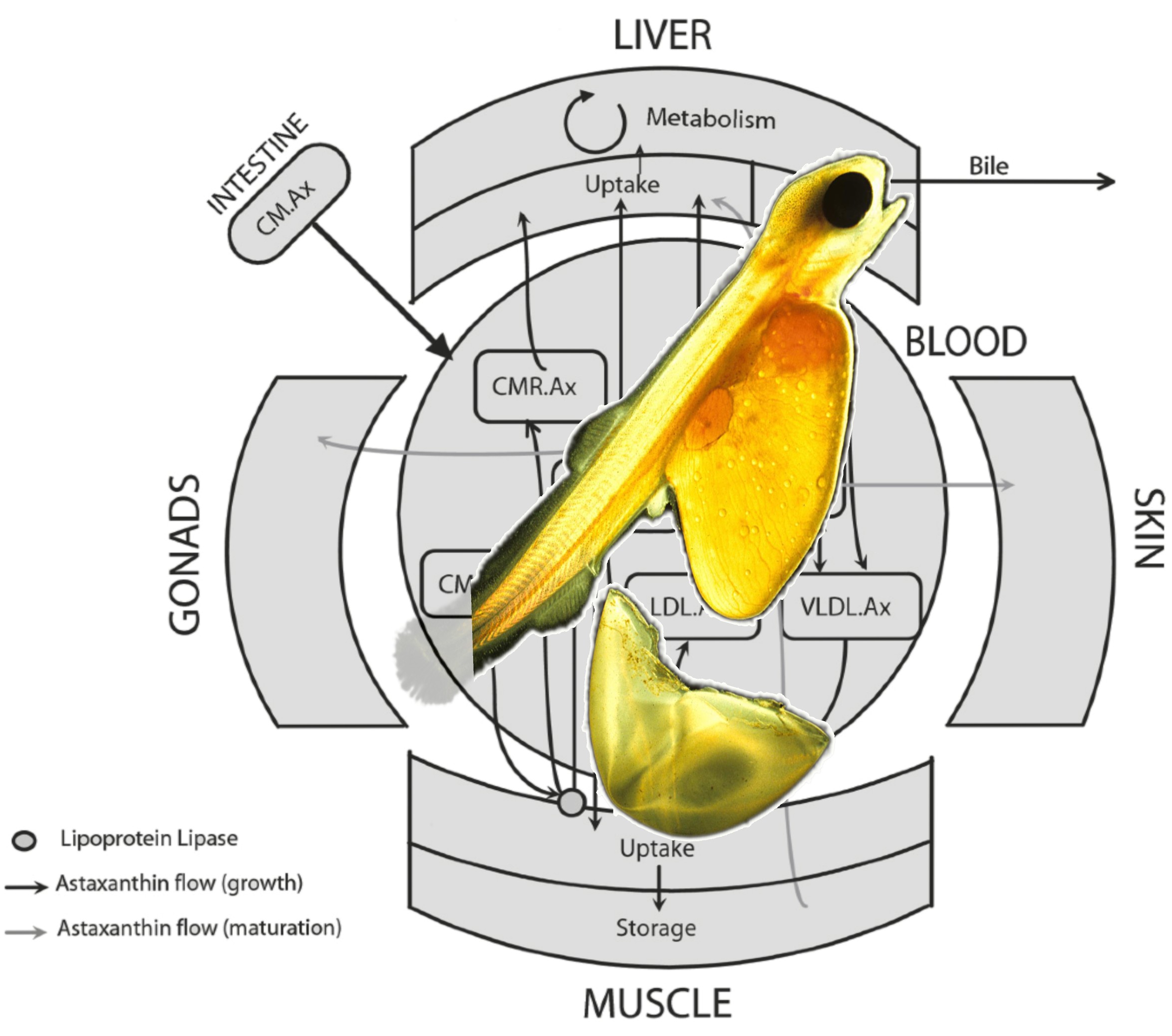
Jon Olav Vik is a Professor at the Norwegian University of Life Sciences (NMBU), affiliated with the Department of Mathematical Sciences and Technology within the Faculty of Science and Technology. He leads the DigiSal project—"Towards the Digital Salmon: From a reactive to a pre-emptive research strategy in aquaculture"—funded under the Research Council of Norway’s Digital Life initiative. He is also a lead modeller in the GenoSysFat project, which aims to enhance omega-3 content in farmed salmon through integrated genomics and systems biology approaches. His research spans systems biology , computational physiology , genotype-phenotype modeling , and ecological dynamics . He works at the intersection of biology, mathematics, and computer programming, developing models to understand how genetics, nutrition, and environment interact in fish and ecological systems. His pedagogical focus includes biostatistics and programming in R, and he teaches courses such as STIN100, STIN300, and STAT100. The 15 most recent publications reflect a consistent focus on systems-level understanding in biology, particularly in salmon aquaculture, metabolic regulation, and genotype-phenotype relationships. These works appear in high-impact journals like Nature , Science , PLOS Computational Biology , and Journal of The Royal Society Interface , demonstrating interdisciplinary reach across computational biology, genomics, ecology, and biostatistics. Key themes include metabolic modeling, microbiome stability, lipidome remodeling, and sensitivity analysis in dynamic models. Jon Olav Vik has contributed to major collaborative efforts including the Infrastructure for Systems Biology Europe (ISBE) , where he helped develop frameworks for "modelling as a service." He has also authored book chapters and technical deliverables on systems biology and modeling practices. He actively supervises students and invites master’s thesis candidates with interests in quantitative biology. While no specific awards are listed, his leadership in national and international research projects underscores his scientific impact. His work supports both fundamental science and sustainable aquaculture innovation.