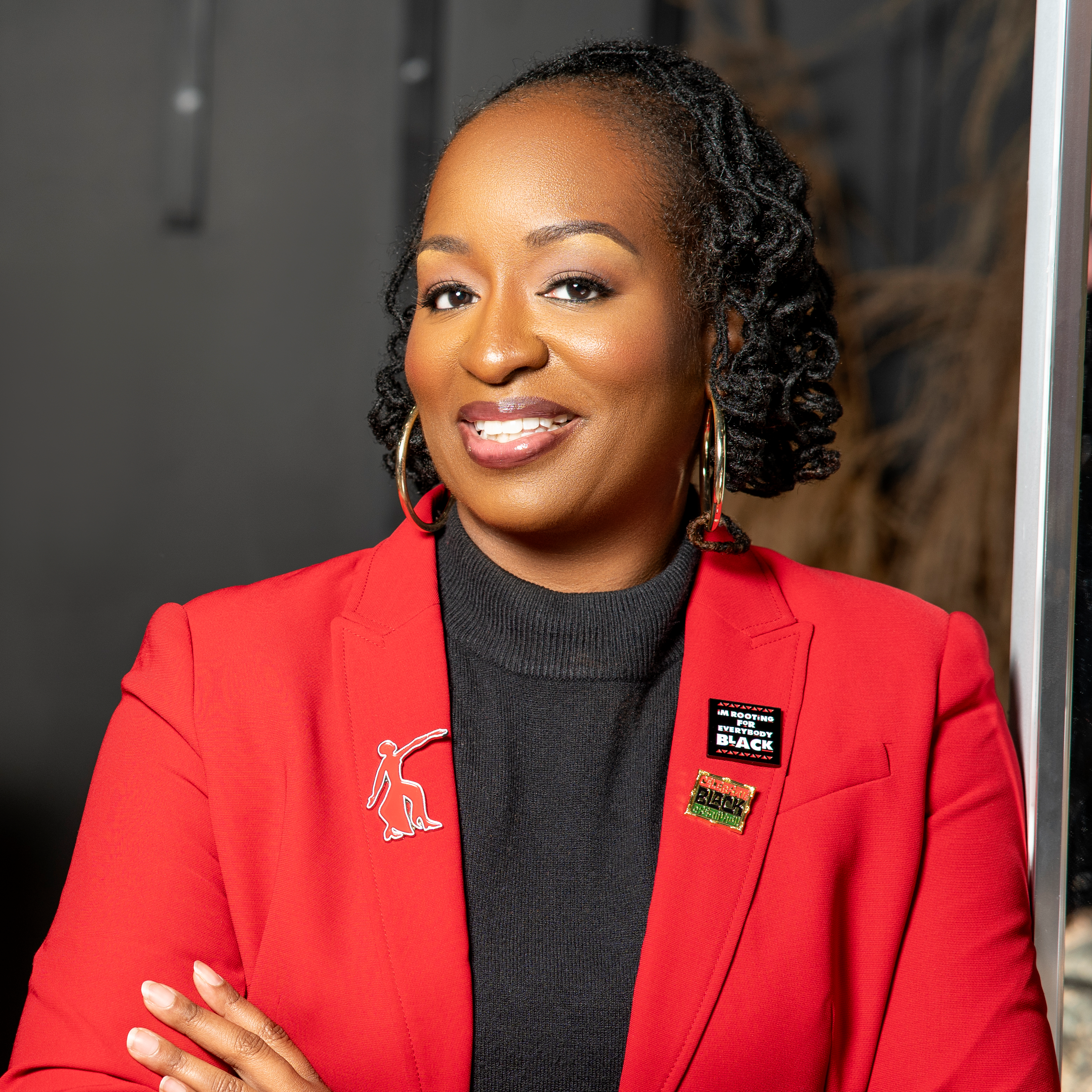
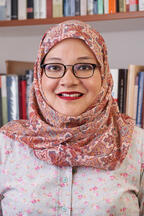
Dr. Grace D. Gipson is an Assistant Professor in the Department of African American Studies at Virginia Commonwealth University (VCU), where she has taught since 2020. Her work focuses on Black future feminism, exploring intersections of race, gender, and popular culture through comic books, Afrofuturism, and digital humanities. She holds a Ph.D. from UC Berkeley, an M.A. from Georgia State University, and a B.A. from Clark Atlanta University. Previously, Gipson served as a postdoctoral fellow at the University of Rochester’s Frederick Douglass Institute and a visiting lecturer at Georgia State University. Her research examines Black female identities in comics, online academic networks, and representations of race/gender in speculative fiction. Key projects include a forthcoming book analyzing Black female identities in comics fandom and a study on Black academic-popular networks. Her work appears in venues like AAIHS/Black Perspectives and edited volumes on Afrofuturism. Gipson actively engages with communities through projects like the #BlackComicsChat podcast, advocating for inclusive representation in media. Her scholarship bridges academia and pop culture, emphasizing marginalized voices in creative industries.
Eric Wertheimer is a Professor of English and American Studies at Stony Brook University’s College of Arts & Sciences. Previously, he spent 23 years at Arizona State University, where he founded and directed the Center for Critical Inquiry and Cultural Studies. He holds a Ph.D. in English from the University of Pennsylvania (1994) and a B.A. from Haverford College. His research focuses on early and nineteenth-century American literature and culture, cultural and literary theory, popular political discourses, new media, and poetry. He has authored influential books like *Imagined Empires* (1998) and *Underwriting* (2006), and co-edited *Critical Trauma Studies* (2016). His poetry has been published in journals such as *Exquisite Corpse* and *Tupelo Quarterly*, with collections like *Mylar* (2012) and *Regulus* (2018). Wertheimer’s work has been recognized with a Barrett Honors College Faculty Fellowship and two nominations for ASU Professor of the Year. He has led interdisciplinary projects funded by the Mellon and Luce Foundations. His professional roles include serving on the MLA’s Publication Committee, editorial board of *Early American Literature*, and NEH review panels. His academic contributions span teaching, research, and creative writing, reflecting a commitment to bridging literary analysis with broader cultural and historical contexts.
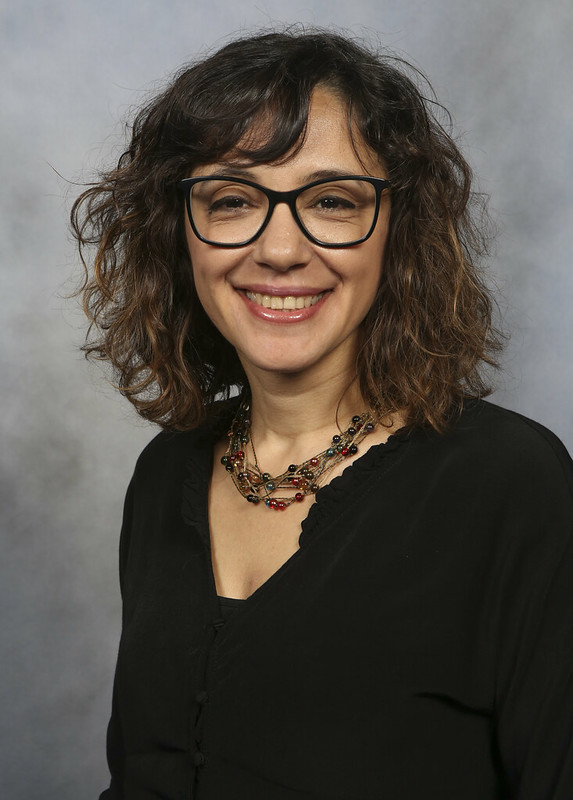
Alisa Piekny, PhD, is a Professor of Biology and Associate Dean of Research and Infrastructure at Concordia University's School of Health. Her research focuses on cytoskeleton regulation during cell division, migration, and polarity, particularly in cancer cells. She employs human cell cultures, iPSCs, and collaborative drug discovery approaches to advance anti-cancer therapies and nanotechnology-based diagnostic tools. Education: PhD (University of Calgary), Post-Doc (IMP Vienna and University of Chicago). Research interests include anillin protein dynamics, microtubule-actomyosin interactions, and nanoparticle-cell interactions. Her work bridges cell biology with translational medicine, emphasizing cytokinesis mechanisms and their hijacking in cancer. Recent publications highlight innovations in drug delivery systems, fluorescent nanoparticle imaging, and molecular tools for live-cell cytokinesis analysis. Collaborations span nanotechnology, cancer biology, and developmental biology, yielding insights into cell fate regulation and therapeutic targeting. Her research has been recognized through interdisciplinary projects at the interface of biology and materials science, with a focus on practical medical applications.
Cassidy Ellis is an Assistant Professor at the University of Cincinnati, specializing in critical cultural communication, media studies, and rhetorical criticism. Her academic work intersects with grassroots activism in reproductive justice, particularly in the Deep South, West, and Southwest regions of the U.S. PhD in Cultural Studies, Media Studies, Rhetorical Criticism (University of New Mexico, 2023) M.A. in Communication - Identity & Difference (University of Alabama, 2016) B.A. in History (University of Alabama, 2013) Her research focuses on unpacking ideologies in social debates, settler colonialism, and the material histories shaping contemporary discourses. She critically examines anti-abortion rhetorics, particularly how race and personhood are discursively constructed within the social imaginary. Her methodological approach includes autoethnography, qualitative research, and intersectional frameworks. Her recent publications in journals like The Journal of Autoethnography and Fat Studies Journal , as well as chapters in edited collections, emphasize praxis-based scholarship, queer futurities, and critical resistance to colonial narratives. Her work bridges academic inquiry with community organizing, informed by her co-founding of the Yellowhammer Fund and other reproductive justice initiatives. Graduate Student Activist Award, NCA Activism and Social Justice Division Top Student Paper, Southern States Communication Association Gender Studies Division Doctoral Fellowship for Inclusive Engagement, University of Denver Ellis has served editorial and professional roles, including peer reviewing for international journals and organizing within the Southern States Communication Association. Her community service spans abortion funds, doula projects, and patient advocacy, reflecting her commitment to material change.
Dr. Lindsay C. Malloy is an Associate Professor in Forensic Psychology at Ontario Tech University's Faculty of Social Science and Humanities. Previously, she held faculty positions at Florida International University (2011–2017) and completed postdoctoral training at the University of Cambridge (UK). Her research focuses on children's disclosure of traumatic experiences, memory suggestibility, investigative interviewing techniques, and legal implications of such findings. She has been supported by grants from the U.S. National Science Foundation, National Institute of Child Health and Human Development, and Department of Health and Human Services. Notable awards include the Saleem Shah Award and Diane J. Willis Early Career Award. Malloy teaches courses such as The Child Witness and Children and the Law . Education: PhD (Psychology and Social Behavior, University of California, Irvine, 2008); MA (Social Ecology, UC Irvine) Research Interests: Developmental psychology and law, child maltreatment disclosure, investigative interviewing, and legal system impacts. Her work bridges psychological research and legal practice, emphasizing ethical interviewing methods and improving legal outcomes for youth. Recent grants include studies on ADHD-related memory challenges and child recantation dynamics. Malloy collaborates on projects addressing confessions, juvenile justice perceptions, and forensic methodologies. Awards: Saleem Shah Award (APA Division 41), Diane J. Willis Award (APA Division 37). Grants: Over $364,000 in funding from NSF, NIH, and HHS for projects on child memory, disclosure patterns, and forensic interviewing. Malloy's publications span journals like Developmental Psychology and Law and Human Behavior , with co-edited works on children’s testimony. Her lab focuses on applied research to inform policy and practice in forensic settings.
Dr. Deniz Ortactepe Hart is a Lecturer in TESOL at the University of Glasgow, specializing in social justice language education. She joined the university in 2022 and has extensive experience across Turkey, the US, and the UK in teacher training and educational research. Her roles include founding convenor of the BAAL Language and Education for Social Justice SIG and coordinator of ELINET’s Language and Social Justice strand. Her research focuses on teaching languages for diversity, equity, and social transformation. Notable projects include the Social Justice in ELT initiative in Turkey (2018–2022) and collaborations with California’s Migrant Education Office. She authored Social Justice and the Language Classroom (2023) and is co-editing volumes on environmental and language justice. Her articles emphasize anti-oppressive digital spaces, culturally sustaining pedagogies, and identity重构 in multilingual contexts. Current research explores intersectional identities and environmental justice representation. She teaches courses like Which English? Sociolinguistics and Language Teaching and supervises students in social justice education and environmental justice. Grants include the British Council-funded project on feminist pedagogies (2024–2025) and leadership in Turkish migrant education initiatives (2018–2022). She actively engages in invited talks and professional memberships with TESOL, AAAL, and BAAL.
Prof. Dr. Udo Zolleis is an Adjunct Professor in the Political Science Institute at Eberhard Karls University Tübingen, affiliated with the Department of Social Sciences within the Faculty of Economics and Social Sciences. He holds an Honorarprofessor title since 2010 and focuses on parties & elections, comparative political systems, and political communication. His career includes academic roles alongside political management in Baden-Württemberg and CSU parliamentary planning. Education: PhD (Dr.) in Political Science from Georg-August University Göttingen & Eberhard Karls University Tübingen (2000-2006), with a thesis on the CDU’s ideological shift. Earlier studies in Political Science, German, and History at Ludwig-Maximilians-Universität (Munich), including time abroad in London and Perugia. Research emphasizes German Christian democratic parties, electoral strategies, and regional political systems. Key works include analyses of CDU adaptation, political marketing, and Baden-Württemberg election campaigns. Collaborations with Daniel Buhr and Josef Schmid produced influential edited volumes like *Innovation im Wohlfahrtsstaat* (2021) and *Wahlkampf im Südwesten* (2007). Publications span monographs, journal articles, and policy analyses, with a focus on applying comparative methodologies to party systems. Active in interdisciplinary projects such as the Baden-Württemberg Democracy Monitor and Hans-Böckler Foundation doctoral programs.
Akin Oyawale is an Assistant Professor in International Security at the University of Warwick, serving as Course Director for the MA in International Relations and Module Convener for PO926: Theories and Issues in International Relations. He holds a PhD from the University of East Anglia (UEA), alongside degrees from the University of Ibadan and University of Sussex. A recipient of multiple teaching excellence awards including the ISA's Deborah Gerner Award (2025) and BISA Early Career Prize (2024), his pedagogical approach emphasizes inclusivity through the 'Nobody Left Behind' philosophy, prioritizing student agency and diverse lived experiences. Education: B.A. Politics/Psychology (University of Ibadan), M.A. International Security (University of Sussex), PhD Politics (UEA) Research focuses on critical interrogations of International Relations theory, particularly its raced/gendered dimensions, and examines security from 'bottom-up' perspectives. Key areas include Boko Haram's impact on Nigerian citizens, counterterrorism policies, vernacular security frameworks, and postcolonial critiques of security governance. His monograph project analyzes the state-Boko Haram interaction in Northeast Nigeria. Active in PhD supervision on topics relating to security, extremism, and critical approaches. Awards reflect both pedagogical innovation and scholarly contributions, including the Warwick Teaching Excellence Award (2023) and Nigeria's President's NYSC Award (2012). Public engagement includes organizing Abuja's Gender/Insecurity Policy Roundtable and co-editing Special Issues on Vernacular Security Studies for Security Dialogue (2025). Teaching and research are underpinned by commitments to decolonizing knowledge production, intersectional analysis, and amplifying Global South perspectives in IR. Current projects explore racial biopolitics in Sahel resilience policies and the political economy of counterterrorism in Nigeria.
Simon Dixon is a Professor of Computer Science and Director of the UKRI Centre for Doctoral Training in Artificial Intelligence and Music (AIM CDT) at Queen Mary University of London. He also serves as Deputy Director of the Centre for Digital Music (C4DM). His work focuses on music informatics, AI, and computational musicology, with emphasis on music signal analysis, performance modeling, and MIR applications. He leads projects funded by UKRI, Innovate UK, and industry partners like Yamaha and Spotify. Dixon has supervised over 20 PhD students and contributed to major initiatives like the Jazz Digital Archives Project and the Dig that Lick study on jazz melodic patterns. His research has been recognized with awards including the Peter Claricoats Award and Turing Fellowship. Education: PhD in Computer Science, BSc(Hons) in related field, with music qualifications (AMusA LMusA) Roles: AIM CDT Director, C4DM Deputy Director, EU H2020 MIP-Frontiers PI Research: Music transcription, expressive performance analysis, MIR, and AI applications in music education Key projects include industry collaborations (e.g., Yamaha for jazz piano modeling), semantic audio analysis, and large-scale music corpus studies. His team has pioneered methods in chord detection, source separation, and alignment algorithms, with top rankings in MIREX evaluations. Publications span journals like TISMIR and ICASSP, with a focus on foundational MIR techniques and AI-driven music systems. His work bridges technical innovation with cultural heritage through projects like JazzDAP and the Dig that Lick analysis of jazz solos.
Professor Karen E. Smith is a leading scholar in European Union foreign policy studies at the London School of Economics and Political Science (LSE). She serves as a Professor in the Department of International Relations and directs the European Foreign Policy Unit. Her research focuses on EU foreign policy formulation, ethical foreign policy goals (human rights advocacy), genocide policy-making, and EU-UN relations. Notable contributions include work on feminist foreign policy frameworks, emotions in EU diplomacy, and mass atrocity prevention. She has held leadership roles including Head of the International Relations Department (2019–2022). Awards include the 2020 ACUNS Award for best UN-related book and Royal Society of Arts Fellowship (2016). Education: PhD in International Relations (LSE, 1996), MA from Johns Hopkins SAIS (1998), BA from Wellesley College (1987). Academic leadership includes co-editing the Palgrave Macmillan Global Foreign Policy Studies series and directing the LSE IDEAS Women in Diplomacy project. Recent projects analyze gender representation in diplomacy and EU responses to humanitarian crises. Teaching includes courses on EU global engagement and supervision of doctoral students in EU foreign policy areas. Key publications address EU-UN coalition politics, feminist policy impacts, and genocide designation strategies. Grants include EU-funded research networks on EU-UN relations (2012–2019) and contributions to the UN Prevention of Mass Atrocities Task Force (2012–2013). Her work bridges theoretical insights with policy-relevant analysis for global governance challenges.
Nurfadzilah Yahaya is an Assistant Professor in the Department of History at Yale University. She specializes in Southeast Asian, Indian Ocean, and Islamic world histories with a focus on legal, environmental, and infrastructural themes. Currently on leave for academic year 2024-25, her work examines colonial legal systems, environmental engineering projects, and transnational networks. Education: BA (2003) and MA (2006) from National University of Singapore; PhD (2012) in History from Princeton University. Previously taught at National University of Singapore and held the Mark Steinberg Weil Early Career Fellowship in Islamic Studies (2012-2015). Research interests include colonial legal pluralism, environmental history of land reclamation, and intersection of Islamic law with imperial governance. Her book Fluid Jurisdictions (2020) analyzes how colonial subjects navigated multiple legal systems in 19th-century Southeast Asia. Current book project ' Overflow ' explores British Empire land reclamation projects in the 20th century. Publications appear in Journal of Women’s History , Law and History Review , and Muslim World . Co-edited special issues on Islamic law and colonialism, and waqf endowments. Awards include Indonesia and Malay World Young Scholar Prize (2015). Teaches courses on Southeast Asian history, Islamic world studies, legal history, colonialism, and infrastructure history at Yale.
S. Pearl Brilmyer serves as Assistant Professor of English within the Department of English at the University of Pennsylvania's School of Arts & Sciences, teaching courses on nineteenth-century European literature, sexuality, philosophy, and science. Her research critically examines Victorian realism through interdisciplinary lenses, notably in her book project The Science of Character: Matter, Form, and the Ends of Victorian Realism , which investigates intersections of scientific thought and literary form. She actively engages with 19th-century German philosophy (particularly theories of will and drive), feminist and queer temporalities, critical race studies, and evolving materialist frameworks. Her publications in PMLA , Representations , and Victorian Studies reflect sustained scholarly contributions to literary theory, while her co-edited GLQ special issue on 'The Ontology of the Couple' underscores commitments to queer theoretical innovation.
Ricardo Valerdi is a Professor and Department Head in the Department of Systems and Industrial Engineering at the University of Arizona's College of Engineering. He is a Distinguished Outreach Professor, Faculty Athletics Representative for the Big 12 Conference and NCAA, and a member of the Graduate Faculty. His academic journey includes positions at MIT (2005–2011) and continuous service at the University of Arizona since 2011, with current roles beginning in 2018 and ongoing leadership since 2020. His educational background includes a PhD in Industrial and Systems Engineering from the University of Southern California, an MS in System Architecture and Engineering from the same institution, and a BS in Electrical Engineering from the University of San Diego. Valerdi's research spans systems engineering, cost estimation, model-based systems engineering (MBSE), digital engineering, sports analytics, and test and evaluation of complex systems. He is renowned for his work on the Constructive Systems Engineering Cost Model (COSYSMO) and has pioneered the integration of virtual reality with MBSE. His recent publications reflect a strong focus on executable modeling, systems thinking education, cost modeling convergence, and applications in space and defense systems. His body of work from 2020 to 2025 shows a consistent trajectory in advancing digital engineering tools, integrating immersive technologies into systems design, refining parametric cost models, and assessing systems thinking competencies in education. The publications emphasize interdisciplinary applications, including space missions, ERP systems, and cyber resiliency, demonstrating a blend of theoretical and applied systems engineering. Best paper award, Journal of Systems Engineering International Council of Systems Engineering, Summer I 2016 Foreign Member, Mexican Academy of Engineering, Summer I 2016 Frank Freiman Award for Lifetime Achievement in Cost Estimation and Parametric Modeling, International Cost Estimating & Analysis Association, Fall 2015 Dr. Valerdi has advised numerous graduate students and led educational initiatives integrating industry-focused projects. He founded and co-edited the Journal of Enterprise Transformation and served as editor-in-chief of the Journal of Cost Analysis and Parametrics. He has received significant recognition and grants supporting research in systems engineering cost modeling, human systems integration, and digital transformation. His leadership extends to service as a Fulbright Scholar, visiting professor at West Point, and visiting fellow of the UK Royal Academy of Engineering. He leads research teams focused on cost estimation, digital engineering, and systems integration, often collaborating with defense and aerospace stakeholders. His labs and initiatives emphasize virtual reality integration, executable modeling, and systems thinking assessment. Future work is expected to further explore AI-driven cost models, digital twins for complex systems, and scalable frameworks for MBSE adoption across domains.
Ulrich Lächelt is an Assistant Professor in the Department of Pharmaceutical Sciences at the Faculty of Life Sciences. His research focuses on nanoparticle technology, drug delivery systems, and gene therapy, with a particular emphasis on CRISPR/Cas9 genome editing and RNA-based therapeutics. He leads a project on nanoformulations of prime editing ribonucleoproteins (2025–2029), aiming to advance precision medicine. His work contributes to UN Sustainable Development Goals, particularly in health and innovation. Research Interests: Nanoparticle design and material science CRISPR/Cas9 delivery systems siRNA and mRNA therapeutic formulations Cancer-targeted drug delivery Biomedical engineering applications Publications (2025–2023): Highlighted studies include dual pH-responsive CRISPR delivery systems and accelerated endosomal escape mechanisms. His work spans 40+ peer-reviewed articles, with recent trends focusing on xenopeptide carriers and tumor-targeted therapies. Grants & Projects: Current research funding includes a nanoformulations project (2025–2029). He actively collaborates on international initiatives, with recent presentations at global conferences on CRISPR delivery and gene editing strategies. Labs/Teams: Involved in interdisciplinary teams developing novel drug delivery platforms and screening tools for prime editor RNPs.
Dagmar Abendroth-Timmer is a Professor in Romance Studies - Didactics at the University of Siegen, Faculty I. She is a leading figure in foreign language didactics, with a strong focus on action-oriented teaching, multilingualism, teacher education, and digital learning environments. Her research is deeply international, involving collaborations across Europe through projects like LANGSCAPE, ENROPE, and ViMuLEnc. University: University of Siegen School: Faculty I Department: Romance Studies - Didactics Position: Professor Email: abendroth@romanistik.uni-siegen.de Her research interests include foreign language didactics, multilingual and intercultural education, teacher professionalization, empirical research methods, and digital learning. She has made significant contributions to the development of action-oriented language teaching models, particularly in digital and multilingual contexts. Her recent publications explore virtual multilingual encounters, translanguaging, and identity formation in language classrooms. The recent articles reflect a strong trend toward digitalization in language education, with a focus on virtual exchange, teacher training in digital environments, and the role of multilingualism in online learning. There is a consistent emphasis on reflective practice, identity, and critical pedagogy across her work. She is actively involved in academic leadership, serving as a network consultant for LANGSCAPE and coordinating international projects. She has contributed to numerous edited volumes and special journal issues, particularly on plurilingualism and teacher education. Dagmar Abendroth-Timmer supervises research assistants and contributes to curriculum development in teacher education. She is engaged in ongoing research projects such as ViMuLEnc, which explores virtual multilingual learning encounters, and drama pedagogy in language teaching. Her work bridges theory and practice, aiming to enhance both teacher training and classroom instruction in foreign languages.