Sean Healy is Associate Professor of Physical Activity and Sport Participation at the University of Limerick's Department of Physical Education & Sport Sciences. His research examines 24-hour movement behaviors (physical activity, sedentary behavior, sleep) in marginalized populations, particularly autistic individuals and people with intellectual disabilities. Current projects include the STAR initiative developing digital interventions to promote physical activity in autistic college students. Research employs time-use epidemiology and qualitative methods to understand multi-level determinants of health behaviors. Recent publications address cancer screening access, hypertension management through activity timing, and inclusive education support systems. As Associate Editor of Adapted Physical Activity Quarterly, he advances methodological rigor in disability research. Funded projects include Erasmus Sport collaborations and studies on cardiovascular health in disabled populations.
Ciaran MacDonncha is a Professor in the Department of Physical Education & Sport Sciences at the University of Limerick, affiliated with the Physical Activity for Health Research Centre and the Faculty of Education and Health Sciences. He has over 20 years of experience in physical activity measurement, health promotion, and public health research. His work focuses on determinants of physical activity and sedentary behavior across the lifespan, with contributions to national policy frameworks like Ireland's Physical Activity Guidelines. Education: PhD (1998), MSc in Exercise and Health Sciences (University of Bristol, 1992), B.A. in Physical Education (University of Limerick, 1991). Teaching and Leadership: Program Director, Head of Department, Assistant Dean of Research, and currently supervising 5 PhD students. His research spans 60+ publications, 8 completed PhDs, and €1.6M in grants. He co-leads the DE-PASS project on physical activity determinants and chairs the DEDIPAC Data Pooling Taskforce. Research Interests: Determinants of physical activity/sedentary behavior, data harmonization, adolescent health, and school-based interventions. His work addresses SDGs related to education and health. Professional Contributions: Member of Ireland’s National Physical Activity Steering Group (2008-2012), EU JPI Policy Evaluation Network, and EMPATIA Erasmus+ project (2018-2020).
Tatsuma Padoan is a Lecturer in East Asian Religions at the Department of Study of Religions, University College Cork (UCC), and a Research Associate at SOAS, University of London. He holds a PhD from Ca' Foscari University of Venice and has held fellowships at institutions including Osaka University and SOAS. His research focuses on the anthropology of religion, semiotics, and pilgrimage studies, with a particular emphasis on Japanese mountain asceticism and the semiotics of space. Education: PhD in Religions and Anthropology of Japan (Ca' Foscari University, 2011), MA in Cultural Anthropology (Keio University, Japan), and extensive training in semiotics under Paolo Fabbri. Research Interests: Paris School Semiotics, Actor-Network-Theory, Japanese Religions, Pilgrimage, Ritual Apprenticeship, Religious Materiality, and Science and Technology Studies. Current projects include 'Aesthetic Communication: The Role of Senses in Social Interaction' funded by the Wenner-Gren Foundation. Publications span books, edited volumes, and peer-reviewed articles on pilgrimage semiotics, Buddhist rituals, and urban space. Notable works include Towards a Semiotics of Pilgrimage (2026) and Semiotic Landscapes: Language Practices, Materialities and Agency (2026). Awards: Newton International Fellowship (2014), JSPS Postdoctoral Fellowships (2015, 2017), and multiple grants from the British Academy and Japan Society for the Promotion of Science. Teaching: Coordinates BA/MA programs in Religions and Anthropology at UCC, teaching modules on semiotics, Japanese religions, and ethnographic methods.
Professor Abina Crean is a faculty member at the School of Pharmacy , University College Cork , Ireland. With a PhD in Pharmaceutics from Trinity College Dublin, she established a pharmaceutical technology research group at UCC in 2003 and leads projects in pharmaceutical manufacturing, formulation science, and biopharmaceutical delivery systems. BSc Pharmacy, Robert Gordon's University PhD Pharmaceutics, Trinity College Dublin Her research focuses on pharmaceutical excipients , solid oral dosage forms , microneedle systems , and oral bioavailability enhancement . She actively collaborates with pharmaceutical companies and contributes to SFI's SSPC (Science Foundation Ireland Pharmaceutical Research Centre). Recent publications analyze protein stability in microneedles , insulin degradation , excipient behavior , and continuous manufacturing . Her group explores biorelevant testing , quality-by-design strategies , and patient-centric formulations for children and elderly populations. Key collaborations include industry partnerships and academic contributions to European Journal of Pharmaceutics , Molecular Pharmaceutics , and Drug Delivery and Translational Research . She supervises PhD/MSc students in pharmaceutical technology and biopharmaceutical processing .
Sean Moore is an Associate Professor in the School of Engineering at the University of Limerick. His research focuses on lean manufacturing, quality control, and biomedical device production, with a strong emphasis on integrating advanced technologies like machine vision, real-time analytics, and cyber-physical systems into production systems. He has contributed to process optimization, waste valorization through pyrolysis, and sustainable industrial practices. Key research areas include non-destructive testing methods (e.g., Raman spectroscopy, FT-IR), data-driven process monitoring, and the application of statistical process control in healthcare manufacturing. His work bridges engineering and healthcare, addressing challenges in medical device development, supply chain efficiency, and environmental sustainability. Collaborations span academia and industry, with projects addressing global policy frameworks for disability support and industrial wastewater management. His publications highlight trends toward closed-loop production systems, energy-water-carbon nexus analysis, and lean methodologies tailored to biomedical manufacturing. Notable contributions include pioneering work on bio-oil production from torrefied feedstock, optimizing coronary stent supply chains, and refining interventional catheter designs. His research aligns with the UNCRPD by advocating for accessible healthcare solutions and sustainable industrial practices.
Con Sheahan is an Associate Professor at the University of Limerick with joint appointments in Lero – the Research Ireland Centre for Software and the School of Engineering. His research focuses on industrial engineering solutions including additive manufacturing, serious games for engineering education, and optimization of production systems. Sheahan develops innovative approaches to product development processes and sustainable manufacturing techniques. Research domains: Application of 3D printing for industrial tooling Gamification of product development processes Techno-economic analysis of biofuel production Mass customization strategies in manufacturing Discrete event simulation for production environments Publication analysis shows consistent focus on bridging theoretical engineering principles with practical industrial applications. Recent work demonstrates strong interdisciplinary connections between manufacturing technology, educational innovation, and sustainable production methods. Community engagement includes collaborative research with European partners on bioethanol production optimization and participation in engineering design education conferences. Current projects explore democratization of product development through game-based learning frameworks.
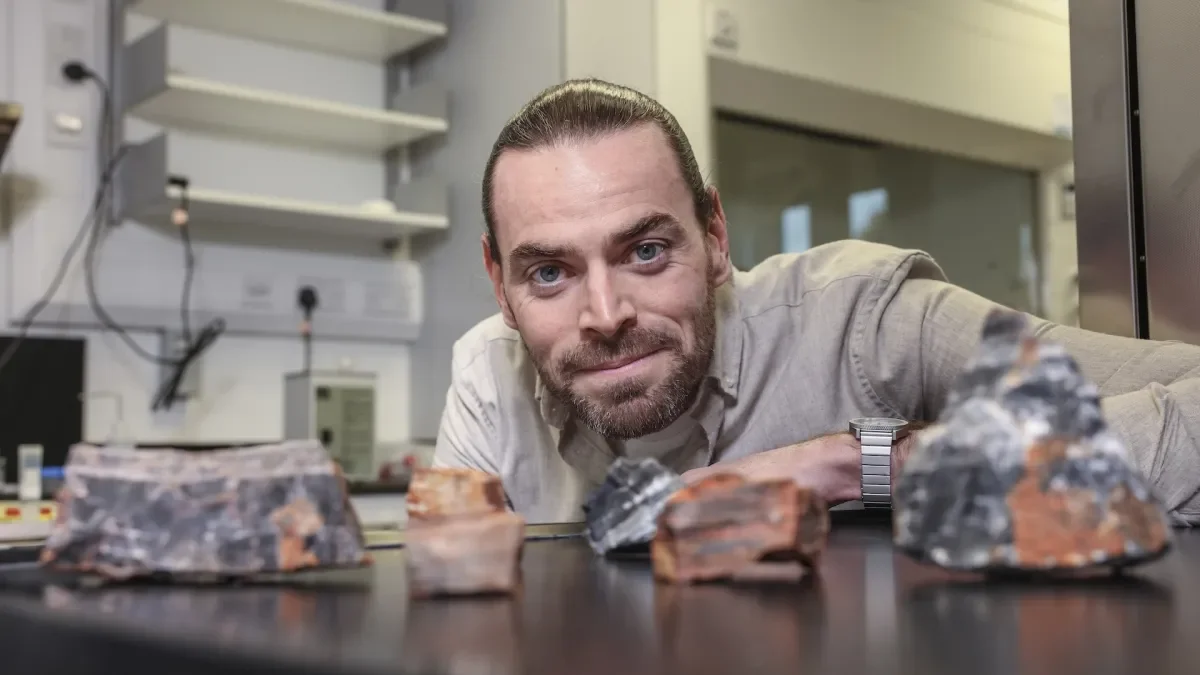
Dr. Seán Jordan is a Lecturer in the School of Chemical Sciences at Dublin City University (DCU), holding a prestigious ERC Starting Grant. His research focuses on the origin of life, early Earth fossils, and astrobiology. He investigates whether ancient microstructures are biological or abiotic, using lab experiments simulating early Earth conditions and applying machine learning for analysis. Education: Bachelor's in Chemical Sciences (DCU) PhD in marine sediments (DCU) Postdoctoral research at University College London (UCL) and the University of Lisbon Research Interests: Dr. Jordan explores early cell membrane formation, fossilization processes, and the biogenecity of microfossils. His work bridges geochemistry, astrobiology, and planetary science, with implications for interpreting samples from Mars missions. Key projects include analyzing 3.5-billion-year-old Australian fossils and 800-million-year-old Svalbard microfossils to distinguish biological signatures from inorganic processes. Grants & Awards: ERC Starting Grant for large-scale biogenecity analysis SFI-IRC Pathway Grant Marie Sklodowska-Curie COFUND Fellowship Labs & Teams: Based in DCU's Nano Research Facility, he will lead a team of four PhD students and two postdocs. His lab focuses on replicating fossilization processes and developing standardized methods for analyzing extraterrestrial samples.
Dr. Tyler Riordan is a Postdoctoral Research Fellow in Strategy and Entrepreneurship at the University of Queensland Business School within the Faculty of Business, Economics and Law. His current research evaluates post-disaster reconstruction incentivisation programs across physical, financial, social, and emotional resilience dimensions in Queensland and New South Wales. Previously, he co-authored the 'Queensland Tourism Workforce Crisis Resilience and Recovery Strategy' and developed the multilingual 'Humanising food delivery work in Australia toolkit'. His educational background includes a PhD in Hospitality and Anthropology (2023), BA (Honours) in Anthropology (2013), and dual BA in Anthropology & History with Diploma in Languages (Spanish) (2012), all from the University of Queensland. With over eight years of hospitality industry experience and professional work in community development with vulnerable populations across Australia and Latin America, his research bridges academic and practical domains. Riordan's research centers on labor dynamics in the digital platform economy, particularly focusing on how disadvantaged communities—including migrants—navigate employment, training, and precarious work conditions. His work examines algorithmic hostility in digital hospitality, justice frameworks for gig workers, and disaster resilience implications for labor markets. Key trends in his publications reveal growing interdisciplinary integration of disaster studies with labor economics, emphasizing emotional and social dimensions of resilience alongside physical and financial aspects. His professional engagements include media contributions to The Conversation on hospitality labor issues and submissions to government inquiries like the Victorian On-Demand Workforce standards. Current funding supports his work on the 'Evaluating the Resilient Homes Fund' project (2024-2027) with Natural Hazards Research Australia. Though not available for student supervision, his research directly informs policy through toolkits and industry strategies.
Tom Finegan is an Assistant Professor in the Department of Theology and Religious Studies at Mary Immaculate College. His research focuses on fundamental moral theology, bioethics, and New Testament ethics, with particular attention to contemporary debates in medical ethics and marriage theology. Academic Background: Finegan holds a BTh, MA, and PhD in theology and religious studies, with specialized training in moral philosophy and theological ethics. Research Focus: His scholarship examines core questions in moral normativity, conscience rights in liberal societies, and the theological foundations of ethical reasoning. Current projects include a monograph on Matthew's divorce clause and analyses of fundamental equality in moral theology. Publication Trends: Recent work engages with end-of-life ethics, conscience protections in healthcare, Catholic marriage doctrine, and the normative foundations of Christian ethics. Publications demonstrate rigorous engagement with both theological traditions and contemporary ethical challenges. Professional Service: Finegan chairs the Board of Governors at the Anscombe Bioethics Centre and serves on the Bioethics Consultative Group of the Irish Catholic Bishops' Conference. He regularly peer-reviews for leading journals in theology and ethics.
Professor Suzanne Guerin is a full Professor in the School of Psychology at University College Dublin (UCD), where she also completed her BA and PhD. She has held academic positions at UCD since 2000, progressing from Assistant Lecturer to Associate Professor (2014–2020) and Professor (from 2020). She is an active faculty member with no indication of part-time status, retirement, or former staff designation. Her research centers on Applied Health Research and Evaluation , with key themes in intellectual disability, palliative care, bereavement, and research methodology. She is Deputy Director of the UCD Centre for Disability Studies and holds research appointments at St Michael's House Disability Services and LauraLynn, Ireland's Children's Hospice. She was appointed National Designated Expert in Research Methods in Intellectual Disability by the National Federation of Voluntary Bodies and previously served as Interim Head of Research at the All Ireland Institute of Hospice and Palliative Care. Her recent publications reveal a strong focus on dementia palliative care models , grief and bereavement in intellectual disability , mental health relapse prevention , and advanced psychometric methods in depression research. She frequently employs mixed methods, qualitative, and systematic review methodologies, often with a translational aim to inform policy and practice. UCD Fellow in Teaching & Academic Development (2011–2013) UCD College of Human Sciences Teaching Award (2009) Massey University Visiting Scholar (2010) She supervises postgraduate students (MPsychSc, MLitt, DPsychSc, PhD) and coordinates key modules such as Applied Research Methods , Advanced Qualitative Design & Analysis , and Ethics in Psychology . She has led teaching innovation projects, including the Undergraduate Research Accelerator initiative, which involved students in creating educational videos. Her professional leadership includes past presidency of the Psychological Society of Ireland (PSI) and membership on numerous UCD and national ethics and research committees.
John Brannigan is a Full Professor in the School of English, Drama and Film at University College Dublin, where he conducts research and teaches in twentieth-century Irish, English, Scottish, and Welsh literatures. His work critically examines the intersections between literature and social identities such as race, class, nation, and environment. BA, Humanities – Thames Polytechnic (University of Greenwich) MA, Modern English and American Literature – University College Dublin PhD, English Literature – University of Luton Brannigan’s research spans literary theory, cultural materialism, critical race theory, and archipelagic modernism. He is particularly known for his studies on Brendan Behan and Pat Barker, and for pioneering the application of critical race theory to modern Irish literature in Race in Modern Irish Literature and Culture (2009). His 2014 monograph Archipelagic Modernism reimagines literary connections across the British and Irish Isles through spatial and environmental lenses. More recently, his work has evolved into the environmental humanities, focusing on cultural ecosystem services and the cultural value of coastlines. His recent publications reveal a trend toward interdisciplinary research that bridges literary studies with environmental science and policy, particularly in coastal and island contexts. Articles such as 'Valuing plurality' (2024) and 'Evaluating and communicating cultural ecosystem services' (2020) demonstrate his leadership in integrating humanities perspectives into ecological frameworks. His scholarship consistently emphasizes materiality, social context, and the cultural significance of place. Brannigan was editor of the Irish University Review from 2010 to 2016, a role that underscores his standing in the academic community. He has secured multiple research grants, including 'The Cultural Value of Coastlines' and 'SEASIDE,' reflecting sustained external funding and collaborative research activity. He has supervised graduate programs and coordinated key modules such as 'Literature and Crisis' and 'Dissertation Research Methods,' contributing significantly to pedagogical innovation. He has also led transdisciplinary projects involving film and public engagement, such as 'Human Nature: the cultural value of coastlines.' His teaching and research reflect a commitment to connecting literary scholarship with broader societal and environmental concerns.
Emilie Pine is Professor of Modern Drama at the School of English, Drama and Film, University College Dublin (UCD), where she has been a faculty member since 2008. She is a leading scholar in the interdisciplinary fields of theatre, memory, trauma, and cultural studies, with a particular focus on contemporary Irish culture and the ethics of witnessing institutional abuse. She is Principal Investigator of the major IRC-funded project Industrial Memories , which re-examines the 2009 Ryan Report through digital humanities methods. Pine is also Editor of the Irish University Review and founding Director of the Irish Memory Studies Research Network. BA (Mod), Trinity College Dublin PhD, Trinity College Dublin Her research centers on the intersections of memory, testimony, and performance, particularly in the context of Ireland’s institutional past. She investigates how trauma is remembered, represented, and re-performed in theatre and digital media. Her work combines literary scholarship with data analytics to develop new methodologies for reading large-scale state reports. She has published extensively on modern drama, memory cultures, and the politics of commemoration, with a strong emphasis on ethical witnessing and social justice. Her recent publications reflect a sustained engagement with digital witnessing, textual analysis of state reports, and site-specific performance. These works explore themes such as digital audio walks, machine learning applications in humanities research, and the affective dimensions of spectatorship. Collectively, her articles demonstrate a methodological innovation at the intersection of literary studies, digital humanities, and human rights advocacy. Irish Book of the Year Award (2018) for Notes to Self Kate O’Brien First Novel Award (2023) for Ruth & Pen Fulbright Irish Scholar (2010) Emilie Pine supervises research in modern drama and memory studies and has coordinated numerous modules including Contemporary British Theatre , Memory and Testimony , and Theatres of War . She has received competitive research grants such as the IRC New Horizons grant for Industrial Memories and funding for digital humanities projects involving the British Library Labs corpus. She is actively involved in academic service as a committee member of the Royal Irish Academy’s Languages and Literatures Committee, the Memory Studies Association Advisory Board, and the International Association for the Study of Irish Literatures. She also leads the Memory Cloud Project and co-founded initiatives to commemorate Irish Magdalene history. She is a founding member of the Irish Memory Studies Research Network and has collaborated with theatre companies such as ANU Productions and Dead Centre Theatre Company, contributing to public-facing performances that engage with historical trauma and personal narrative.
Dr. Grace Wenling Cao is an Assistant Professor in Linguistics (Phonetics and Phonology) at the School of Languages, Cultures and Linguistics, University College Dublin. She holds a PhD from the University of York and an MSc from the University of Edinburgh. Prior to her current position, she served as a Hong Kong RGC Postdoctoral Fellow and lecturer at the Chinese University of Hong Kong and the Hong Kong University of Science and Technology. PhD in Linguistics – University of York MSc in Developmental Linguistics – University of Edinburgh Her research focuses on sociophonetics , forensic phonetics , and language attitudes in multilingual contexts, particularly in Hong Kong. She investigates phonetic convergence, cross-language speaker identification, the impact of visual cues on speech perception, and identity-related language changes in Cantonese and Hong Kong English. Her work bridges theoretical linguistics with real-world applications in forensic science and human-AI interaction. Recent publications span high-impact journals and conferences, showing a strong trend in using acoustic-phonetic analysis to understand social biases, speaker identity, and forensic challenges in trilingual environments. Her work increasingly integrates AI and machine learning approaches to speaker recognition, especially in cross-language settings using filled pauses as biometric markers. She has received multiple scientific awards and grants, including the prestigious Hong Kong RGC Postdoctoral Fellowship and funding from the Worldwide Universities Network. Her current research includes a major project on human-AI speech accommodation. Hong Kong RGC Postdoctoral Fellowship Worldwide Universities Network Research Mobility Program CUHK Global Scholarship Program Linguistic Association of Great Britain Conference Fund University of York Humanities Research Centre Grant Dr. Cao actively supervises graduate students, having guided 14 Master’s theses and one undergraduate intern. She coordinates key modules such as Phonology (MA), Phonology 2, and Sounds in Language at UCD. She has also taught a wide range of undergraduate and postgraduate courses at CUHK and HKUST, including sociolinguistics, phonetics, and bilingualism. She leads research on trilingual speech in Hong Kong, particularly focusing on forensic applications and sociolinguistic identity. Her team explores how filled pauses, accent perception, and visual cues affect intelligibility and speaker identification, with implications for both legal and technological domains.
Assoc. Prof. Mary Codd is an Associate Professor of Epidemiology & Biostatistics at University College Dublin's School of Public Health, Physiotherapy and Sports Science. She holds leadership roles, including Director of the UCD MPH Programme and the Erasmus Mundus Joint Master European Public Health. Her research focuses on epidemiology, public health policy, and curriculum development. She co-authored EU guidelines on mammography screening and led Ireland's first national breast screening program. During the pandemic, she directed the UCD Contact Tracing Centre. Her teaching spans biostatistics, epidemiology, and public health research methods. Education: MB BCh BAO (UCD), MD (UCD), PhD (University of Minnesota), MPH (University of Minnesota). Research Interests: Public health workforce development Cancer screening and quality assurance Health services research One Health interdisciplinary approaches Key Achievements: Recipient of CHAS Teaching Award (2022), UCD Values in Action Award (2020) Lead of ASPHER Core Curriculum Programme for Public Health Authored over 400 publications, including pandemic response studies and public health frameworks Grants & Funding: CSTAR Centre for Support and Training in Analysis & Research (2012-2028), HSE-funded projects on health inequalities and drug use in prisons. Labs/Teams: Director of UCD CSTAR, UCD Contact Tracing Centre, and collaborator in the PelvEx Collaborative for oncology research.
Dr. Sarah Cooney is an Assistant Professor at University College Dublin's School of Psychology and Director of the UCD Body Lab. She holds a PhD from University College Dublin and has postdoctoral experience at Trinity College Dublin. Her research focuses on body image, interoception, perceptual cognition, and eating disorders, with a particular interest in how these factors interact across diverse populations. She has secured grants including the Ad Astra Start-Up and the HRB-funded BodyWise project. Dr. Cooney actively contributes to public engagement, including events on body image and mental health, and serves on committees such as the EDIP (Equality, Diversity, and Inclusion in Psychology). She teaches courses like 'Brain & Behaviour' and coordinates advanced research methods modules. Her work bridges experimental psychology with educational technology, exemplified by her development of the Cartesian-Garden VR tool for teaching mathematics. PhD: University College Dublin Postdoctoral Fellowships: Trinity College Dublin (2017–2019) and UCD (2018–2019) Her research interests include: Body representation and sensorimotor integration Interoceptive awareness and its clinical implications Developmental spatial-numerical cognition Multisensory learning in immersive environments Dr. Cooney's articles explore topics ranging from body image disturbances in adulthood to the influence of sports/music experience on motor imagery. She has authored over 50 peer-reviewed publications and actively participates in academic conferences, including the Psychonomic Society and Spatial Cognition events.