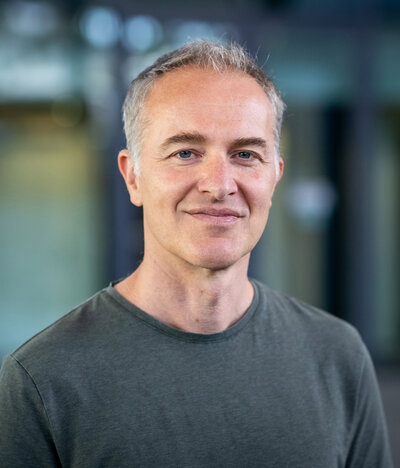
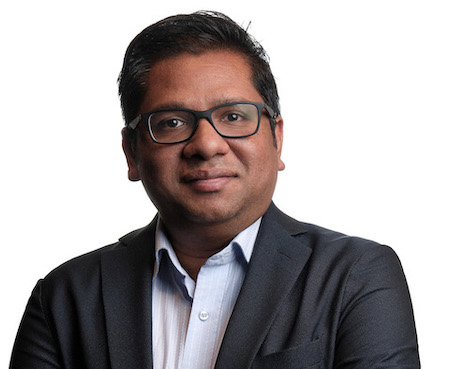
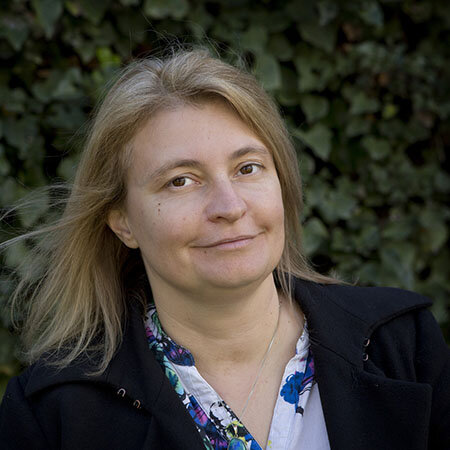
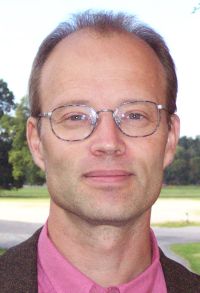
Jia Hu is an Associate Professor in Computer Science at the University of Exeter. He holds a PhD in Computer Science from the University of Bradford (2010), and M.Eng/B.Eng degrees in Electronic Engineering from Huazhong University of Science and Technology. His research specializes in edge-cloud computing, federated learning, and AI-driven optimization for networks and IoT systems. Research Interests: Hu's work spans resource optimization, applied machine learning (particularly in distributed settings), network security, blockchain integration, and intelligent systems for electric vehicles and Industry 4.0. His recent projects focus on federated edge AI, 6G-enabled industrial IoT, and real-time federated learning via hardware-algorithm co-design. Publications: His 150+ papers emphasize federated learning, edge computing, and reinforcement learning applications. Recent works (2020–2025) show a strong trend toward optimizing AI at the network edge, with themes like digital twins, blockchain security, and EV-integrated systems dominating. Awards & Recognition: Best Paper Awards: IEEE SOSE'16, IUCC'14 Outstanding Service & Leadership Awards for IEEE conferences Top 4% contributor to EPSRC Peer Review Fellow of the Higher Education Academy (HEA) Grants & Projects: Secured €4.7M+ funding from EU Horizon, EPSRC, and Royal Society for projects including: SAILING (Secure AI for Smart Internet-of-Energy, €3.6M) REFINE (Real-time Air Quality Monitoring with UAVs, €897K) SustainAIRA6G (Energy-Efficient AI for 6G Networks, £118K) Advising: Supervised 12 PhD students to completion; currently mentoring 7 students in federated learning, edge computing, and AIoT.
Dr. Manuel Alejandro Barranco González is an Associate Professor in the Department of Mathematics and Informatics at the University of the Balearic Islands (UIB). His research focuses on Dependable Real-Time Fault-Tolerant Distributed Systems, Adaptive Systems, and Industrial Networks like Fieldbuses and TSN Ethernet Standards. Ph.D. in Informatics (UIB, 2010) Specialized in fault-tolerant architectures for Distributed Critical Embedded Systems Co-author of 50+ publications and 3 patents in CAN reliability His research spans rigorous modeling of system reliability, collaboration with institutions like the University of Aveiro and FEUP, and contributions to IEEE conferences (Technical Program Committee member since 2014, Financial Chair at WFCS 2015). He has supervised 4 Ph.D. theses and numerous master’s projects, all rated 'excellent.' Best Paper Award at IEEE WFCS 2004 Best Paper Award at IEEE ETFA 2022 Best Work-in-Progress Awards at IEEE ETFA 2012, WFCS 2014, and WFCS 2016 His recent work explores TSN networks, node replication, and fault tolerance mechanisms in adaptive systems. He actively contributes to academic governance as a member of the Comissió de Direcció at UIB and technical committees in IEEE conferences.
Yanlei Diao is a Professor of Computer Science at École Polytechnique (France) with a joint appointment at the University of Massachusetts Amherst. She received her PhD from UC Berkeley in 2005. Her research focuses on scalable data systems, particularly in big data analytics, cloud computing optimization, and real-time stream processing. Research Interests: Her work spans cloud infrastructure optimization (UDAO project), explainable anomaly detection in data streams (EXAD), interactive data exploration (AIDEme), genomic data analysis (GESALL), and uncertain data management (CLARO). She leads the CEDAR team at Inria/LIX focusing on cloud-scale data exploration. Awards & Honors: ERC Consolidator Grant (2017-2023) CRA-W Borg Early Career Award (2013) NSF CAREER Award (2008) Keynote speaker at ACM DEBS 2021 and SWIFT 2023 AI Forum Best Paper Award at SIGMOD 2011 ACM SIGMOD Dissertation Honorable Mention (2005) Advising & Leadership: Mentored over 20 PhD students and postdocs, currently supervising 7 researchers. Served as PVLDB PC Co-Chair (2025-2026) and ACM SIGMOD Editor-in-Chief (2014-2019). Leads multiple projects with industry partners including Alibaba Cloud.
Stephan Kessler is a researcher at the Technical University of Munich , affiliated with the Department of Mechanical Engineering and the Chair of Conveying Technology, Material Handling, and Logistics . His work focuses on construction logistics, digital twins, and IoT integration in building processes. Contact: stephan.kessler@tum.de Key research areas: Digital Twin, BIM, DEM simulations, IoT in construction Collaborates with Prof. Johannes Fottner on construction automation projects His research emphasizes digitalization of construction processes through technologies like RFID, machine learning, and simulation tools. Recent publications address tower crane planning, co-robot integration, and bulk material handling standards. Article trends show consistent focus on construction automation (IoT, digital twins, BIM), material flow optimization (DEM simulations, screw conveyor standards), and equipment lifecycle management (telematics, RFID identification). Kessler contributes to industry-university collaborations through projects like BauFlott (fleet management systems) and TEP (Tower Crane Deployment Planner). His work bridges theoretical research with practical implementations in construction site logistics.
Anne Fischer, M.Sc., is a researcher at the Chair of Material Handling, Material Flow, and Logistics at the Technical University of Munich (TUM). Her work focuses on digital twins, construction automation, and resource scheduling in heavy civil engineering. She is based in Garching near Munich and collaborates with institutions like UC Berkeley and Stanford University. Research Interests: Digital Twin frameworks, simulation-based optimization, BIM integration, activity recognition in construction, and sustainable logistics systems. Collaboration: Serves as a contact person for international exchanges with U.S. institutions. Publication Trends: Her recent articles (2024–2021) address construction automation, digital twin applications, and variability management in civil engineering projects. Key Projects: Engaged in initiatives like Bauen 4.0 , MiProcess2Twin , and SiteRoute , which focus on digitalization and automation in construction. Location: Boltzmannstraße 15, Garching bei München (Room: 5505.EG.501).
Dr. Jose Paolo Talusan is a Research Scientist at the Department of Computer Science and Computer Engineering , Vanderbilt University, specializing in smart transportation systems , distributed computing , and cyber-physical systems . He is affiliated with ScopeLab , a research group focused on smart cyber-physical systems. Education: PhD from Nara Institute of Science and Technology, Japan (2020) Research Interests: His work addresses challenges in urban mobility through middleware architectures, optimization algorithms, and machine learning. Key areas include incident detection in transportation systems, privacy-preserving route planning, and vehicle-to-building charging optimization. Publication Trends: Recent publications focus on real-time transit optimization (2024-2025), leveraging reinforcement learning for heterogeneous agents in vehicle-to-building systems, and privacy-aware route planning in smart cities. His work integrates IoT , edge computing , and graph neural networks to tackle imbalanced data and sparsity issues in transit analytics. Labs & Teams: Actively contributes to ScopeLab at Vanderbilt University, collaborating on interdisciplinary projects with researchers in computer science, electrical engineering, and urban planning.
Rudi Pendavingh is an Assistant Professor at the Department of Mathematics and Computer Science at Eindhoven University of Technology. Affiliated since 1999, he specializes in matroid theory , combinatorics , and topological graph theory within the Combinatorial Optimization group. Research Interests include: Matroid theory with focus on excluded minors and representability over partial fields Topological graph theory, particularly Colin de Verdière invariants for surface-embedded graphs Discrete optimization modeling and algorithmic complexity Geometric combinatorics in polyhedral complexes like Dressians Recent Publications highlight his work on: Stable tournament formats using finite projective planes (2025) Bounding topological graph parameters via combinatorial methods (2024) Computational enumeration of matroid minors (2024) Asymptotic analysis of Dressian dimensions (2024) Contact : Email: r.a.pendavingh@tue.nl Phone: +31 40 247 4235 Office: MetaForum 4.105, TU/e Campus
Christopher Hojny is an Assistant Professor at the Department of Mathematics and Computer Science at Eindhoven University of Technology , specializing in combinatorial optimization. He contributes to the EAISI Foundational group and co-develops the academic solver SCIP . His research focuses on symmetry handling in mixed-integer programming , theoretical properties of integer programs, and algorithm development for combinatorial optimization. Recent work explores applications in graph neural network verification , clustering problems, and network coding through mixed-integer programming frameworks. Key publication trends show expertise in Symmetry detection and mitigation techniques Relaxation complexity theory Applications to machine learning robustness Decision diagram-based scheduling Scientific contributions include Proof systems for symmetry certification Topological bounds tightening in GNNs Stable set problem symmetry handling SCIP solver extensions He supervises PhD students Cédric Roy (NWO project on Local Symmetries) and Sten Wessel (co-supervised with Frits Spieksma), while Jasper van Doornmalen (2019-2023) investigated symmetry propagation algorithms.
Abhishek Halder is an Associate Professor in the Department of Aerospace Engineering at Iowa State University and an Associate Adjunct Professor in the Department of Applied Mathematics at the University of California, Santa Cruz. He is also a member of the Translational AI Center at Iowa State University. His academic journey includes joining Iowa State University as an Assistant Professor in July 2023 and previously serving as faculty at UC Santa Cruz starting from October 2017. Dr. Halder's educational background includes studies at IIT Kharagpur and Texas A&M University, where he developed expertise in systems and control theory with applications to matrix analysis, probability, and optimization. His research has been recognized with prestigious awards including the O. Hugo Schuck Best Application Paper Award from the American Automatic Control Council, Applied Mathematics Research Award from UC Santa Cruz, Outstanding Doctoral Student Award from Texas A&M, and Best Dual Degree Thesis Award from IIT Kharagpur. His research focuses on stochastic systems, control and optimization with applications to large scale cyber-physical systems. Dr. Halder has made significant contributions to the fields of optimal transport, Schrödinger Bridge theory, distributional control, and uncertainty propagation in dynamical systems. His work bridges theoretical developments with practical applications in power systems, aerospace engineering, and machine learning. He has secured multiple research grants from NSF, including a CPS Frontier project on Computation-Aware Algorithmic Design for Cyber-Physical Systems. Dr. Halder has demonstrated leadership in the control systems community through editorial roles including Associate Editor for IEEE Transactions on Automatic Control (2025-present), ASME Journal of Dynamic Systems, Measurement, and Control (2025-present), Systems & Control Letters (2022-present), and previously for IEEE Control Systems Society Conference Editorial Board (2019-2025) and IEEE Transactions on Aerospace and Electronic Systems (2019-2022). He is a Senior Member of IEEE and a member of IFAC, SIAM and ASME. His research group has produced numerous publications in top-tier journals and conferences, with recent work focusing on connections between optimal transport theory, stochastic control, and machine learning. The publication trends show increasing integration of Schrödinger Bridge formulations with machine learning techniques for distributional control problems across various domains including power systems, aerospace applications, and resource allocation. O. Hugo Schuck Best Application Paper Award (2024) Applied Mathematics Research Award from UC Santa Cruz (2022) IEEE Senior Member (2021) Outstanding Doctoral Student Award from Texas A&M Best Dual Degree Thesis Award from IIT Kharagpur Dr. Halder has mentored numerous PhD students including Alexis, Georgiy, Iman, Shadi, and Kenneth, many of whom have received prestigious fellowships. His research group maintains strong collaborations with national laboratories including Lawrence Livermore National Lab and Los Alamos National Lab, as well as industry partners. Dr. Halder is also committed to education and outreach, having created and taught the 'Feedback Control' course for high school students in the California State Summer School for Mathematics and Science (COSMOS), introducing complex control theory concepts without calculus or linear algebra.
Professor Mahdi Mahfouf holds the Chair in Intelligent Systems at the University of Sheffield's School of Electrical and Electronic Engineering . He obtained his MPhil (1988) and PhD (1991) in Control Systems from the same institution. After postdoctoral research (1992-1996) on Leverhulme-funded projects in Model-Predictive Control and Fuzzy Logic, he progressed through academic ranks at Sheffield to Full Professor (2005). Recipient of the IEE Hartree Premium Award (1992) and MEDIPEX Innovation Award (for ICU Decision Support Systems) Over 370 publications, including 130+ journal papers Head of the Intelligent Systems Research Laboratory Research Themes His work spans fundamental research in Fuzzy Logic (modelling, control), Neural-Fuzzy Systems, Self-Organising Control, and Evolutionary Optimization, alongside applied domains in pharmaceutical manufacturing, aerospace systems, biomedical engineering (ICU monitoring), and intelligent transportation. Recent publications focus on hybrid AI for pharmaceutical processes , type-2 fuzzy control systems , and machine learning in manufacturing metrology . Lab initiatives include multistage process monitoring and human-machine interaction systems for stress management.
James Gross is a Professor at the School of Electrical Engineering and Computer Science at KTH Royal Institute of Technology, Stockholm. He leads research in mobile systems and networks, with a focus on 5G/6G, edge computing, and performance evaluation. He is Associate Director of KTH's Digital Futures center and a board member of the Innovative Centre for Embedded Systems. Previously, he directed the ACCESS Linnaeus Centre (2016–2019) and was Assistant Professor at RWTH Aachen University. PhD, TU Berlin (2006) Studies: TU Berlin, UC San Diego His research lies at the intersection of wireless networking, edge computing, and mathematical performance modeling. Key areas include ultra-reliable low-latency communications (URLLC), age-of-information, network calculus, and resource allocation. He applies these to 5G/6G, cyber-physical systems, and industrial IoT. His work combines theoretical modeling with real-world implementation and standardization impact. The recent publications highlight a strong focus on deterministic and reliable communications for future networks. Topics include hierarchical inference at the edge, age-of-information optimization, finite blocklength coding, and integration of TSN with wireless systems. There is a clear trend towards AI/ML for resource management and semantic communications, reflecting the evolution of intelligent edge networks. Best Paper Award, ACM MSWiM 2015 Best Demo Paper Award, IEEE WoWMoM 2015 Best Paper Award, IEEE WoWMoM 2009 Best Paper Award, European Wireless 2009 ITG/KuVS Dissertation Award, 2007 James Gross has supervised PhD students such as Samie Mostafavi and advises numerous master's projects. His research has been funded by national science foundations in Germany and Sweden, the ICT TNG SRA, Linnaeus ACCESS Centre, DFG-funded UMIC Centre, German Ministry of Science, and various industry partners. His work has led to patents and influenced wireless standards. He is involved in initiatives like the TECoSA project on trustworthy edge computing and organizes summer schools on Edge AI and 6G. His lab conducts experimental research on edge computing testbeds (e.g., Ainur, ExPECA) and wireless performance evaluation.
Professor Sylvie Thiébaux is a leading AI researcher affiliated with the HMI (Human-Machine Interaction) center, serving as Professor in the Department of Computer Science. She leads major projects in fundamental and applied AI research and acts as co-editor-in-chief of a top-tier journal in artificial intelligence. Her research specializes in automated planning and scheduling, reasoning under uncertainty, and their real-world applications in energy infrastructure and transportation systems, particularly through optimization technologies for smart grids. This work bridges theoretical AI advancements with critical societal domains. Professor Thiébaux has earned significant recognition including: Multiple best paper awards at premier AI conferences National innovation awards for smart grid applications Election as Fellow of the Association for the Advancement of Artificial Intelligence (AAAI) She has secured over $6.5 million in research funding during the last five years for basic and applied R&D. Within HMI, she contributes to core initiatives spanning Automating Governance, Personalisation, Algorithmic Ethics, and Human-AI Interaction, driving the center's mission to shape responsible technology development.
Dr. Inigo Auzmendi is a Research Fellow at the University of Queensland within the Faculty of Science , affiliated with the Queensland Alliance for Agriculture and Food Innovation and the ARC Centre of Excellence for Plant Success in Nature and Agriculture. His work focuses on functional-structural plant modeling to improve management practices in avocado, macadamia, and mango orchards through analysis of architecture, carbon balance, and environmental interactions. His research interests include: Biophysical processes in fruit trees (light interception, photosynthesis) Carbohydrate dynamics in grapevine growth Computational modeling of plant architecture and physiology Application of L-systems and L-Studio in horticultural research Recent publications emphasize modeling tree canopies to optimize yield through planting density and pruning strategies, with a strong focus on carbon allocation and multi-scale physiological interactions. Current projects involve supervising PhD and Honours students in computational approaches to orchard productivity and photosynthesis simulation. Dr. Auzmendi collaborates with multidisciplinary teams on projects funded by organizations including the Queensland Department of Agriculture and Fisheries and Horticulture Innovation Australia Limited.
Bengt Jonsson is a Professor at the Division of Computer Systems, Department of Information Technology, Uppsala University. His research focuses on formal methods, real-time and distributed systems, semantics and verification of concurrent systems, and IoT security. Current Projects: UPMARC (Software Technology for Multicore Programming), aSSIsT (Secure Software for IoT), and Designed for UPDATE (Safe Embedded Software Updates) Past Projects: CoDeR-MP (Multicore Real-Time Applications), ProFun (Wireless Sensor Networks), CONNECT (Networked Component Synthesis) His work includes automated verification, model checking, and symbolic execution for concurrent systems. Recent publications address dynamic partial order reduction, IoT protocol testing, and lock-free data structures. Scientific Awards : CAV Award 2017 He advises PhD students and teaches courses like Model-Based Development of Embedded Systems and graduate-level symbolic execution. Personal interests include piano playing and orienteering.
Pedram Beldar is a researcher affiliated with the University of Skövde , specifically the School of Engineering Science and Department of Engineering . He actively contributes to the fields of Industrial Engineering , Operations Research , and Production Optimization . His research focuses on optimization algorithms for manufacturing processes, including batch processing , flexible transfer lines , and energy-efficient production . He has collaborated on projects like Digitalized and optimized production planning for energy-efficient production (May 2022 - April 2025) and Virtual Engineering . His work emphasizes sustainable manufacturing and smart Industry 4.0 solutions. The trends in his publications highlight applications of operations research to non-identical parallel machines , cross-docking systems , and teaching-learning-based optimization , with a growing emphasis on sustainable production in recent years. He is involved in course coordination for bachelor-level industrial engineering courses and collaborates with researchers such as Masood Fathi , Amir Nourmohammadi , and Gilbert Laporte .