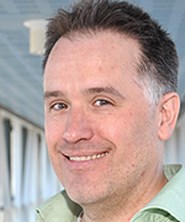
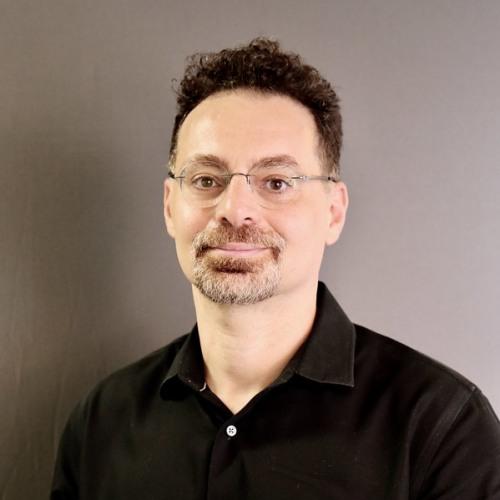
Michael Minock is an Associate Professor in Computing Science at Umeå University. His research focuses on the intersection of AI and relational databases, particularly in natural language interfaces, semantic tractability, and knowledge representation. He has led significant projects such as the VR grant (2015-04953) and EU STREP SpaceBook (2011–2014). Minock also co-founded C-Phrase Technologies AB and teaches courses on databases and large language models. B.S. in Computer Science (Honors), University of Michigan Ph.D. in Computer Science, UCLA His research explores the logical foundations of database query languages, emphasizing higher-order logic in natural language interfaces. Recent work integrates LLMs into database management systems. Key publication trends include query containment analysis, cooperative question answering, and context-aware navigation systems. Subfields span natural language processing, spatial databases, and semantic reasoning. Scientific Awards: Pell Grants Michigan Competitive Scholarship DARPA AASERT Award Minock's teaching includes courses on database management and LLM applications in IT. He actively contributes to open-access publications and maintains a strong interdisciplinary focus across AI, logic, and real-world database challenges.
Mitra Nasri is an Assistant Professor at the Eindhoven University of Technology, affiliated with the College of Engineering's Department of Electrical Engineering. She contributes to the High Tech Systems Center and EAISI Foundational, focusing on interconnected resource-aware intelligent systems. Research Focus: Real-Time Systems, Scheduling Algorithms, Embedded Systems, Fault-Tolerant Computing, and Cyber-Physical Systems. Key Contributions: Development of scheduling frameworks for multi-rate task chains, response-time analysis techniques, and containerization strategies for real-time distributed applications. Her recent work includes advancements in weakly-hard timing constraints, parallel global scheduling, and cloud integration for embedded systems. She actively collaborates on projects like SAM-FMS and COMP4DRONES. Scientific Awards: Best Paper Award - RTAS 2022 Best Paper Award - RTNS 2016 Outstanding Paper Awards at RTAS 2017, 2022 and RTSS 2020 She teaches courses in Real-Time Systems, Operating Systems, and Automotive Software, and participates in organizing conferences like Embedded Systems Week and CompSys.
Parag Khanna is a Doctoral Student at the Division of Robotics, Perception and Learning , KTH Royal Institute of Technology. His work focuses on Human-Robot Interaction (HRI) , particularly in developing adaptive techniques for robot-human handovers. University: KTH Royal Institute of Technology Department: Robotics, Perception and Learning Khanna's research explores physical and social aspects of HRI . He studies human-human handovers to improve robotic grip release strategies and object weight adaptation. His work also delves into non-touch modalities like EEG and gaze tracking for intention detection. His recent publications highlight advancements in data-driven control , failure explanations , and multimodal datasets for HRI. Notable works include the REFLEX Dataset and studies on adaptive grip release in human-robot collaborations. Key Research Areas: Human-Robot Handovers Machine Learning for Robotics EEG and Gaze-Based Intention Detection Failure Communication in Social HRI Khanna is affiliated with the Digital Futures - Advanced Adaptive Intelligent Systems project, aiming to empower elderly and disabled individuals through autonomous robotics.
Olaf Schenk is a Professor at the Institute of Computing within the Faculty of Informatics at Università della Svizzera italiana (USI), Switzerland. He serves as Director of the Institute of Computing and Co-Director of the Master in Computational Science. He is also an adjunct member of the Computer Systems Institute at USI. PhD in Information Technology and Electrical Engineering, ETH Zurich (2001) Venia Legendi in Mathematics and Computer Science, University of Basel (2009) Applied Mathematics, Karlsruhe Institute of Technology (KIT), Germany His research focuses on high-performance computing , computational science and engineering , and applied algorithms for extreme-scale simulations. He bridges computer science with scientific computing needs, particularly in parallel algorithms , sparse solvers , graph analytics , and manycore architectures . His work emphasizes scalable software tools and programming models for emerging HPC systems. The 15 most recent publications reflect a consistent focus on sparse matrix computations , parallel and task-based algorithms , graph partitioning , and performance optimization for heterogeneous and manycore systems. Keywords span high-performance computing, numerical linear algebra, and large-scale data analysis, showing strong integration of theoretical algorithm design with practical implementation. Olaf Schenk has received several prestigious honors: Elected Fellow, Society for Industrial and Applied Mathematics (SIAM) Senior Member, IEEE and ACM SIAM Supercomputing Prize 2023 IBM Faculty Award Two Leadership Computing Awards from the U.S. Department of Energy He has held leadership roles as Chair, Vice Chair, and Program Director of the SIAM Activity Group on Supercomputing. He serves as Associate Editor for ACM Transactions on Mathematical Software and on the editorial board of SIAM Journal on Scientific Computing . He has participated in over 60 international program committees, including top-tier conferences such as SC, IPDPS, and IEEE CSE. He advises PhD and Master’s students in computational science and leads research projects funded by national and international agencies. He is also the Founder & Director of Panua Technologies Sagl, focusing on high-end software for simulation and optimization. His research group at USI works on next-generation computing tools for extreme-scale scientific simulations, with ongoing work in adaptive algorithms, resilience, and hybrid CPU-GPU computing. He leads collaborative projects with institutions in Europe and the U.S., aiming to develop scalable, robust, and efficient software for future exascale systems.
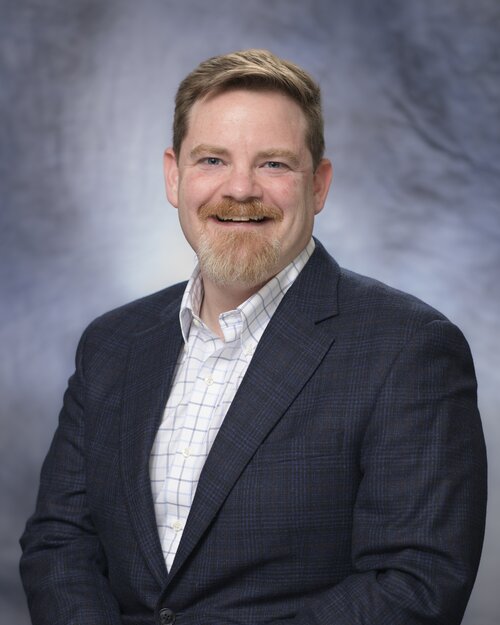
David Bernal Neira is an Assistant Professor in the Davidson School of Chemical Engineering at Purdue University, joined in August 2023. His research focuses on optimization algorithms, quantum computing, and computational methods applied to chemical and energy systems. He holds a PhD in Chemical Engineering from Carnegie Mellon University and degrees from Universidad de Los Andes, Colombia. Education: PhD in Chemical Engineering, Carnegie Mellon University (2017–2021) M.Sc. in Chemical Engineering, Universidad de Los Andes (2014–2016) B.A.Sc. in Chemical Engineering, Universidad de Los Andes (2010–2014) B.A.Sc. in Physics, Universidad de Los Andes (2011–2018) Research Interests: His work bridges classical and quantum optimization, with applications in process systems, energy, and chemical engineering. Key areas include mathematical modeling, quantum annealing, and federated learning. He develops algorithms and software tools, such as GDP and QUBO frameworks, and explores quantum computing for chemistry and combinatorial problems. Publications: Over 30 peer-reviewed articles since 2020, focusing on quantum optimization, federated learning, and algorithm design. Recent work emphasizes benchmarking quantum hardware and hybrid quantum-classical methods. Awards: Fellow, National Academies (2025, 2023) Best Talk Award (2022) Outstanding Teaching Assistant (2019) Advising & Grants: Supervises graduate students in quantum computing and optimization. Collaborates with NASA, USRA, and industry on quantum projects. Formerly an Associate Scientist at NASA QuAIL and Adjunct Professor at Carnegie Mellon. Labs & Teams: Leads the SECQUOIA Research Group at Purdue, focusing on systems engineering via quantum and classical optimization. Active in federally funded initiatives and industry partnerships.
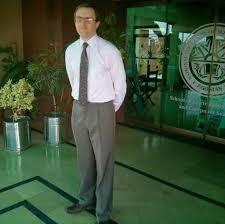
Dr. Peter Bloodsworth is a Lecturer and Professional Masters Programme Project Supervisor in the Department of Computer Science at the University of Oxford. He holds a PhD in Multi-agent Systems from Oxford Brookes University. His research focuses on multi-agent systems, cloud computing, distributed computing, and artificial intelligence, with applications in medical research and robotics. Dr. Bloodsworth has over a decade of academic experience, including a role as a Foreign Professor at the National University of Sciences and Technology (NUST) in Islamabad, Pakistan (2011–2016), and prior work as a Research Fellow at the University of the West of England (UWE), Bristol. He has contributed to major European projects such as the FP7-funded neuGRID project, where he acted as a workpackage leader and User Manager. His research emphasizes applying semantic technologies and multi-agent systems to solve complex problems, including medical ontology integration and grid computing in healthcare environments. Dr. Bloodsworth is a full member of the IEEE and a Chartered Member of the British Computing Society (BCS), reflecting his commitment to professional standards in computing. His recent research themes include deploying multi-agent systems for scalable cloud solutions, robotic control, and managing cloud resources through agent-based frameworks. He has over 30 publications in international journals and conferences, with notable work on cloud marketplaces, elastic multi-agent systems, and neuroimaging analysis using grid computing.
Joshua Barbour is a Professor in the Department of Communication at the University of Illinois Urbana-Champaign. He directs the Automation Policy and Research Organizing Network (APRON) Lab, founded in 2018, which focuses on data-intensive automated work systems and communication strategies. His research explores how institutional structures shape organizational communication and collaborative efforts, emphasizing macromorphic perspectives that bridge micro-level practices and macro-level frameworks. Barbour’s work spans health communication, risk management, and digital innovation, with a focus on communication design logics and institutional moorings. Education details are not explicitly listed, but his career demonstrates advanced academic qualifications in communication studies. His research interests include automation policy, organizational analytics, and conflict of interest frameworks in biomedical research. He has published extensively on topics like emergency communication infrastructure, temporal dominance in workplace cycles, and interdisciplinary collaboration in healthcare settings. Barbour’s APRON Lab collaborates across disciplines to address future-of-work challenges, particularly in healthcare and organizational resilience. His work emphasizes practical solutions for navigating regulatory constraints and fostering reliable communication systems in dynamic institutional environments. Grants and advising details are not explicitly mentioned, but his role as a professor and lab director suggests involvement in academic mentorship and funded research initiatives. The APRON Lab serves as a hub for interdisciplinary projects addressing automation and organizational communication challenges.
Jun Yan is a Professor at the University of Wollongong's School of Computing and Information Technology within the Faculty of Engineering and Information Sciences. His roles include academic leadership and research supervision, with active involvement in committees like the Student Academic Experience Sub-Committee and Quality Assurance Review Group. Current research focuses on service-oriented computing, workflow technology, adaptive process management, and AI-driven systems. His work intersects with IoT, UAV systems, federated learning, and multi-agent reinforcement learning. Research interests span service-oriented software engineering, decentralized workflow management, and cybersecurity challenges in autonomous systems. Notable projects include an ARC-funded initiative on robust defenses against adversarial ML for UAV systems (2025–2027). He supervises Masters/PhD projects on topics like diffusion model-based MRI, graph prompt learning, and industrial defect detection. His publications from 2023–2025 emphasize scalable multi-agent systems, federated learning with non-IID data, and UAV applications in intelligent transportation. Key areas of contribution include trust models for e-commerce, privacy-preserving cloud computing, and fault-tolerant service architectures.
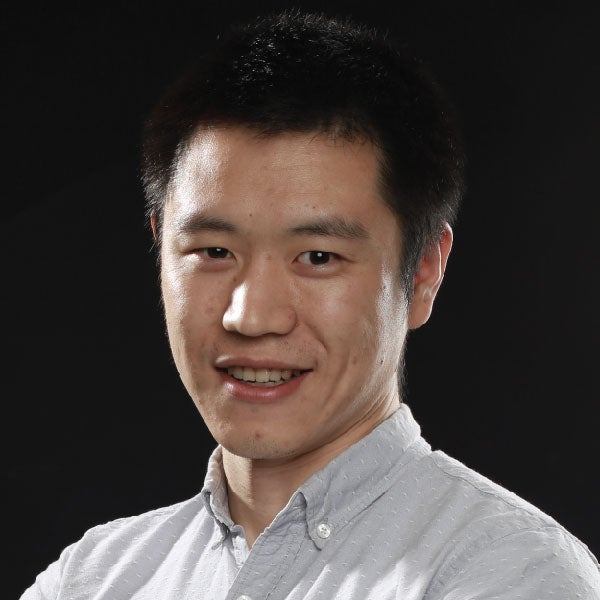
Zhongyuan Zhao is a Research Assistant Professor at Rice University's Department of Electrical and Computer Engineering, affiliated with the George R. Brown School of Engineering. He holds a Ph.D. in Computer Engineering from the University of Nebraska-Lincoln and completed his postdoctoral studies at Rice under Prof. Santiago Segarra. His research integrates graph-based neuro-symbolic approaches with domain-specific models to address challenges in wireless communications, edge computing, and networked systems. Dr. Zhao has over a decade of industry experience in 4G base-station development at Ericsson and ArrayComm, followed by academic research roles focusing on distributed algorithms and machine learning applications. His education includes a B.Sc. and M.S. in Electronic Engineering from the University of Electronic Science and Technology of China, where he also worked as a teaching assistant for national design contests. He earned a minor in Finance (15 credits) during his Ph.D. and is completing the CFA Level III program in 2024. Zhao has contributed to large-scale wireless testbeds like NEXTT and authored/co-authored 25+ peer-reviewed publications, 2 patents, and delivered academic service roles including conference session chair and journal reviewer. Research interests span autonomous networking, graph-based machine learning, stochastic optimization, and their applications in infrastructureless wireless systems. His work emphasizes distributed solutions for resource allocation, scheduling, and edge intelligence. Awards include the Future Faculty Fellowship (2023) and IEEE travel grants. He has mentored over 40 students through research internships, hackathons, and undergraduate projects, showcasing his commitment to education. Recent projects focus on scalable computation offloading, generalized backpressure routing in tactical networks, and neuro-symbolic AI frameworks for networked systems. His lab work involves open-source contributions to tools like the Actor-Twin Framework and SelR algorithm, promoting reproducibility and collaboration in the field.
Sherief Reda is a Professor of Engineering and Computer Science at Brown University's School of Engineering. He leads the SCALE lab, focusing on energy-efficient computing, digital chip design, embedded systems, and machine learning applications. His research bridges hardware design and combinatorial optimization, with over 130 publications and five US patents. Reda has secured $21M+ in research funding from NSF, DoD, DARPA, and industry partners like Samsung and Intel. Education: PhD in Computer Science & Engineering, UC San Diego (2006) MS in Computer Science, Ain Shams University (2000) BS in Computer Science, Ain Shams University (1998) Research Interests: His work spans resource-efficient AI, approximate computing, and interdisciplinary applications in social sciences. Recent projects include chemical-based computing and thermal management for high-performance chips. Reda's lab explores machine learning for combinatorial optimization, with practical applications in logistics and hardware design. Publications & Awards: Over 130 articles in top venues like IEEE Transactions and Nature Communications. Recipient of the NSF CAREER Award (2021) and IEEE Fellow (2020). His work on energy-efficient computing earned him the AAIA Fellowship. Grants & Collaborations: Principal Investigator on NSF, DoD, and industry-funded projects. Collaborators include Prof. Kim (Chemistry) and Prof. Rose (Engineering). Reda also serves as an Amazon Scholar and expert witness in patent litigation. Labs & Teams: Directs the SCALE lab, which develops open-source EDA tools and novel thermal simulation frameworks like PACT. His team pioneered techniques like ABACUS for approximate circuit synthesis and LoCool for energy efficiency in servers.
Dr. Liang Zhang is an Assistant Professor in the Department of Engineering and Aviation Sciences at the University of Maryland Eastern Shore (UMES). He holds a Ph.D. in Electrical Engineering from New Jersey Institute of Technology (NJIT) and an M.S. in Information and Communication Engineering from the University of Science and Technology of China (USTC). His research focuses on machine learning, mobile edge computing, UAV communications, wireless communications, and IoT, with an emphasis on resource optimization and algorithm design. Education: Ph.D., Electrical and Computer Engineering, NJIT (2014–2020) M.S., Information and Communication Engineering, USTC (2011–2014) B.S., Electronic Science and Technology, Huazhong University of Science and Technology (HUST) Research Highlights: Dr. Zhang has pioneered work on deep reinforcement learning algorithms for UAV-assisted edge computing, caching optimization, and latency reduction in IoT systems. His contributions include the BRIDGES testbed project at George Mason University (GMU), supported by a $2.5M NSF grant, and the development of QoE-optimized frameworks for wireless VR and airborne networks. Awards & Recognition: Outstanding Dissertation Award (NJIT, 2023) Hashimoto Prize (NJIT, 2020) IEEE GLOBECOM Travel Grant (2016) Best Paper Award (IEEE ICNC, 2014) Professional Contributions: He has published 32 peer-reviewed articles and serves as a reviewer for IEEE journals. His work integrates machine learning with networking challenges, addressing practical issues like spectrum sharing in 5G, energy-efficient VM management, and dynamic resource allocation in optical networks.
Jae Patterson, PhD, is an Associate Professor in the Department of Kinesiology at Brock University. His primary research focuses on motor skill acquisition across the lifespan, emphasizing practice variables such as augmented feedback, learner-controlled practice, and error detection. His work has implications for sport, rehabilitation, and vocational training. He is affiliated with the Motor Skills Acquisition Laboratory and the Centre for Neuroscience at Brock University. Research interests include augmented feedback mechanisms, repetition scheduling, observational learning, and cognitive effort during skill acquisition. His studies explore how practice conditions influence learning outcomes in diverse populations, including athletes and individuals with movement disorders. Publications span peer-reviewed journals and book chapters, addressing topics like self-controlled learning protocols, focus of attention in sports, and the impact of concussion on athletic performance. His work emphasizes practical applications in rehabilitation and sports training. Professional affiliations include the Canadian Society for Psychomotor Learning and Sport Psychology, and the North American Society for the Psychology of Sport and Physical Activity. The Motor Skills Acquisition Lab actively seeks graduate and undergraduate students for research projects.
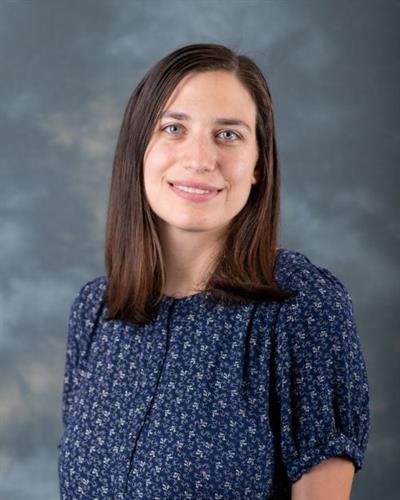
Samantha Petti is an Assistant Professor in both the Department of Mathematics (School of Arts and Sciences) and the Department of Computer Science (School of Engineering) at Tufts University. She is based at 177 College Avenue, Medford, MA. Her research focuses on computational biology, bioinformatics, and machine learning, with particular emphasis on protein structure analysis, genotype-phenotype mapping, and algorithm design for biological sequence analysis. She teaches courses such as Master's Thesis supervision, PhD Thesis guidance, and specialized topics in mathematics and computer science. Her work integrates interdisciplinary approaches, combining statistical methods, deep learning, and probabilistic models to address challenges in genomics, structural biology, and network science. Recent projects include developing end-to-end protein alignment tools and exploring sparse graph models for biological systems. Teaching: Supervises graduate thesis work (Master’s/PhD) and advanced courses in mathematics and computer science at Tufts. Lab/Team: Engages in collaborative research at the intersection of computational methods and biological systems.
Dr. Sydur Rahman is a Lecturer and Researcher in Engineering at the Faculty of Science and Engineering, Southern Cross University. He holds a PhD in Environmental Engineering from SCU, a Master of Water Resources Engineering from Bangladesh University of Engineering and Technology, and a Bachelor of Agricultural Engineering (First Class Honours). His expertise spans water resources engineering, hydrology, and sustainable water management. Dr. Rahman's research focuses on water modeling, irrigation systems, wastewater management, and groundwater sustainability. He has led projects addressing integrated water resources management, crop water productivity under climate change, and contaminated land remediation. Notably, he is currently involved in an industry-funded project to develop techniques for removing chlorocresol from tannery waste. He has extensive teaching experience, instructing courses such as Hydraulic Engineering Fundamentals, Hydrogeology, and Engineering for Resilient Catchments. His work integrates holistic approaches, including geochemical and ecological tools, to assess environmental risks and refine water management practices. Dr. Rahman has authored over 20 peer-reviewed publications on topics ranging from arsenic sorption in soils to crop water modeling. His contributions aim to enhance water use efficiency and sustainable resource management across field, farm, and regional scales.
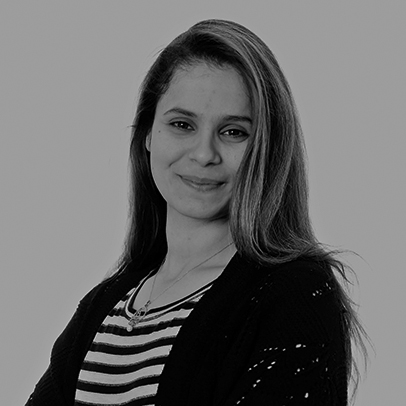
Dr. Rand Raheem is a Lecturer in Computer Science at Middlesex University's Faculty of Science and Technology, London. She specializes in wireless communication systems, vehicular networks, and interference management in future mobile networks. Her research focuses on improving performance in safety-critical wireless sensor networks and 4G/5G/6G technologies. Education: Diploma in Electrical and Computer Engineering (Dhofar University, Oman, 2009) BSc Computer Communication Engineering (Dhofar University, 2010) MSc Telecommunication Engineering (Middlesex University, 2011) PhD on interference management in small cell networks (Middlesex University, 2016) Research Interests: Mobile and vehicular network optimization Bio-inspired algorithms for network scheduling Dependable safety-critical systems Cooperative femtocell technology Machine learning applications in wireless networks Teaching: CST4540 - Network Management CST3570 - Network Management and Disaster Recovery CST2560 - Project Management and Professional Practice CST2531 - Compliance and Project Management CST1500 - Computer Systems Architecture and Operating Systems Key Research Trends: Recent work emphasizes bio-inspired algorithms (bird flocking, bat algorithms) and neural networks for enhancing wireless sensor network dependability. Earlier research focused on femtocell interference management in LTE networks and vehicular environments. Advising & Grants: No specific grants or supervisees listed. Active collaborator with researchers like Dr. A. Lasebae on multiple projects. Labs/Teams: Participates in network research initiatives at Middlesex University's Computer Science Department, though specific lab affiliations are unspecified.