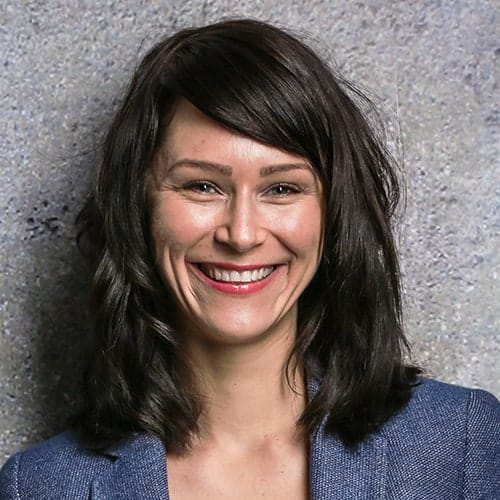
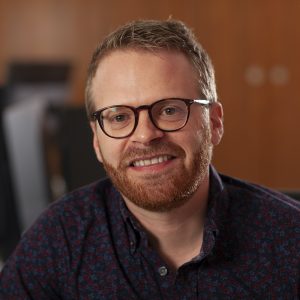
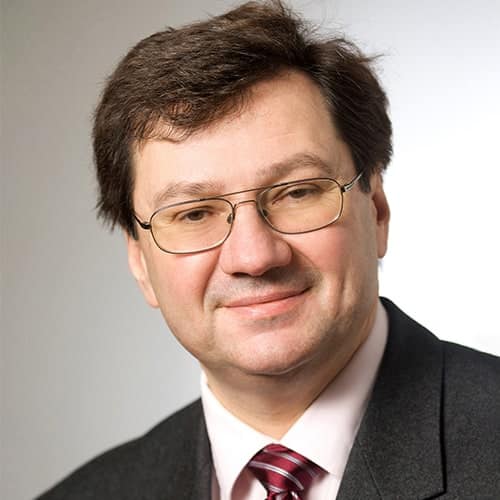
Jan Madsen is a Professor at DTU Compute, Technical University of Denmark, and Head of the Embedded Systems Engineering section. His research focuses on system-level modeling and design of embedded computing systems, particularly cyber-physical systems, microfluidic biochips, and synthetic biology applications. Develops design automation tools and methodologies for embedded systems Supervises numerous PhD students and leads major research projects Research Interests Key areas include: Embedded systems-on-a-chip Cyber-Physical Systems (Internet-of-Things) Microfluidic Lab-on-Chip devices Synthetic biology with molecular computing Design, modeling, and optimization of complex systems Scientific Awards DATE Fellow (2019) IEEE CEDA Outstanding Recognition (2019) DTU Scientific Advise Award (2013) Best Paper Awards at MECO (2013) and CASES (2009) Jorck’s Foundation Research Award (1995) Publications His 14+ journal papers and 115+ conference papers demonstrate expertise in: SystemC-based modeling frameworks Energy-aware sensor networks Self-healing eDNA architectures Microfluidic biochip synthesis RTOS modeling and MPSoC exploration
John M. Woodley is a distinguished Professor in the Department of Chemical and Biochemical Engineering at the Technical University of Denmark (DTU), where he leads research at the PROSYS - Process and Systems Engineering Centre and contributes to the DTU Microbes Initiative. With over 30 years of experience, he has established himself as a leading expert in biocatalysis and bioprocess engineering, with research spanning both theoretical and experimental work across multiple scales. His primary research interests focus on the interface of bioprocess engineering, process chemistry, and reaction engineering. Dr. Woodley's work encompasses multi-step biocatalysis (including systems biocatalysis and flow chemistry), downstream processing from biocatalytic reactors and fermentations (including ISPR), modeling tools for bioprocess assessment (thermodynamics, kinetics, process simulation, economic evaluation), and bio-oxidations (including oxygen supply methods). His enzymatic investigations particularly target alcohol oxidases, carbohydrate oxidases, cytochrome P450s, Baeyer-Villiger monooxygenases, and transaminases. His research portfolio demonstrates consistent innovation in sustainable chemical production, with particular emphasis on enzymatic synthesis of pharmaceuticals and chemicals from renewable resources. Analysis of his recent publications reveals a strong focus on overcoming industrial implementation challenges, particularly regarding enzyme stability in various reactor environments, optimization of multi-enzyme systems, and scale-up methodologies for biocatalytic processes. Dr. Woodley actively supervises multiple PhD students and leads several significant research projects, including 'P450-based biocatalytic processes for the pharmaceutical industry' (2025-2028), 'Integrated model for up- and downstream bioprocess intensification' (2024-2027), and 'ENFACE: A tool for prediction of enzyme stability at gas-liquid interfaces' (2024-2027). His work has resulted in an impressive publication record of 781 research outputs across various formats, including journal articles, book chapters, and conference proceedings. His research group operates within the Department of Chemical and Biochemical Engineering at DTU, utilizing advanced facilities for biocatalysis research, including specialized reactor systems for studying gas-liquid interfaces, computational modeling resources, and laboratories for enzyme characterization and bioprocess development. Through his leadership in the PROSYS center, he contributes to DTU's strategic focus on sustainable process technologies and systems engineering.
Professor John W. Edmunds is a leading academic in Infectious Disease Modelling at the London School of Hygiene and Tropical Medicine (LSHTM). Holding a Professor position since 2013 and serving as Dean of the Faculty of Epidemiology and Population Health (2013-2019), he combines mathematical, statistical, and economic models to inform public health policy. His part-time role at the Health Protection Agency (HPA) since 2008 underscores his policy advisory contributions. PhD in Infectious Disease Modelling (Imperial College, 1994) MSc in Health Economics (University of York, 1995) BSc in Biology (Imperial College, 1989) His research focuses on understanding disease transmission and optimizing control strategies. He has pioneered methods integrating social contact surveys , participatory surveillance (e.g., Influenzanet), and economic analysis to evaluate vaccines and interventions. Recent work includes SARS-CoV-2 dynamics , Ebola spatial forecasting , and typhoid vaccine prioritization . His 15 most recent publications highlight social contact patterns (Reconnect, CoMix studies), vaccine impact (HPV, typhoid), and real-time outbreak analytics (Ebola, cholera). Key trends include digital epidemiology , behavioral surveillance , and cross-country modeling for global health. Knighthood (2024) for services to epidemiology Weldon Memorial Prize (2022) for biostatistics contributions FMedSci (2018) for medical science excellence OBE (2016) for public service As an educator, he teaches "Modelling and the Dynamics of Infectious Diseases" and co-organizes "Pandemics: Emergence, Spread and Response" . Current grants include National Institute for Health and Care Research projects on post-pandemic surveillance and Bill & Melinda Gates Foundation funding for polio eradication. He leads collaborations with the Centre for Mathematical Modelling of Infectious Diseases , Vaccine Centre , and Health in Humanitarian Crises Centre , while advising UK and WHO committees on zoonotic influenza , variants , and testing programs .
Majken Schultz is a Professor of Management and Organization Studies at Copenhagen Business School (CBS) since 1996, affiliated with the Center for Organization and Time (COT). She serves as Chair of the Carlsberg Foundation (since 2022) and Deputy Chair of the Carlsberg Group (since 2022), with prior board roles at Realdania (until April 2023) and Danish Crown (2018–2021). Her research explores the temporal dimensions of organizational phenomena, focusing on how distant futures and pasts influence strategy, identity, and temporary organizations, particularly in the context of climate change. Research Trends : Recent work examines organizational resilience through temporal trajectory models, path enactment for distant-future goals, and corporate sustainability initiatives. Publications highlight challenges in translating long-term climate targets into actionable strategies and reconfiguring organizational-nature relationships via pilot projects. Scientific Awards : Member of the Royal Danish Academy of Sciences and Letters Grants & Leadership : Principal Investigator for the Making Distant Futures Actionable: Innovating for Zero-Carbon Future project (Novo Nordisk Foundation, 2021–2025). Active in Danish business networks with board roles in multiple organizations (2013–2025).
Wenjing Zhang is a Professor and Head of the Section for Water Technology and Processes at the Department of Environmental and Resource Engineering, Technical University of Denmark (DTU). She is also affiliated with the DTU Microbes Initiative, contributing to interdisciplinary research in sustainable water technologies and environmental nanomaterials. Professor, DTU Head of Section, Water Technology & Processes Member, DTU Microbes Initiative Her research spans nanofiber technology, electrospinning, membrane processes, and catalytic materials for environmental applications. She focuses on innovative solutions for water purification, plastic waste recycling, CO2 photoreduction, and green hydrogen production, aligning with UN Sustainable Development Goals. The recent publications highlight a strong trend in advanced materials for environmental sustainability, particularly electrospun nanofibers, heterojunction photocatalysts, and ceramic membranes. These works emphasize applications in microplastic degradation, solid oxide cells, and chemical recycling of plastics, reflecting a multidisciplinary approach combining materials science, electrochemistry, and environmental engineering. Researcher at DTU Energy becomes honorary professor in China Wenjing Zhang actively supervises PhD students and leads multiple research projects, including EU and nationally funded initiatives on decentralized wastewater treatment and biocatalytic membrane systems. She collaborates with leading researchers and institutions, securing funding for high-impact environmental technologies. Her lab focuses on nanostructured membrane design and advanced fabrication of porous ceramics for industrial and municipal applications.
Claudia Wagner is a full professor for Applied Computational Social Sciences at RWTH Aachen University and the Scientific Director of the Computational Social Science department at GESIS—Leibniz Institute for the Social Sciences. She is also an External Faculty member at the Complexity Science Hub Vienna. Her work bridges computer science and the social sciences to study algorithmic systems and their societal impacts. Her research focuses on socio-technical phenomena such as inequality, sexism, and perception bias in algorithmically infused societies. She investigates methodological challenges in using digital behavioral data to study human behavior, attitudes, and group dynamics. Her interests span computational social science, algorithmic fairness, network science, and AI ethics. The analysis of her recent publications reveals a strong emphasis on bias, fairness, and methodological rigor in digital data analysis. Her work spans AI psychometrics, gender inequality in online platforms, and validation frameworks for digital traces. She frequently publishes in top-tier venues such as Nature , Science , and AAAI conferences. DOC-fFORTE fellowship from the Austrian Academy of Sciences Four best paper awards at international conferences (ICWSM, CSCW, WWW, AAAI) Associate Editor, EPJ Data Science Steering Committee Member, International AAAI Conference on Web and Social Media Board Member, International Society for Computational Social Science Claudia Wagner has led and co-led substantial research projects funded by national and international agencies. She mentors a diverse group of PhD students working on topics like algorithmic bias, data quality, and dehumanization. She has organized training events such as the CSS Methods Summer School and delivered keynotes globally on inequality and computational social science. She leads the Computational Social Science department at GESIS and collaborates with interdisciplinary teams at RWTH Aachen and the Complexity Science Hub. Her group develops tools for measuring algorithmic impacts and visualizing disparities in socio-technical systems, such as the 'Planets of Disparity' dashboard.
Sebastian Risi is a Professor at the IT University of Copenhagen , where he directs the Creative AI Lab and co-directs the Robotics, Evolution and Art Lab (REAL) . His work bridges computational evolution, deep learning, and collective intelligence for applications in robotics, art, and video game design. His research focuses on self-organizing AI systems that grow or assemble through local interactions, inspired by biological development. Key areas include neuroevolution , neural cellular automata , and generative modeling , with applications in adaptive robotics, game content creation, and damage-resilient AI. Recent publications highlight trends in self-assembling neural architectures (NDPs) and 3D functional machine generation (Minecraft experiments). Awards include ERC Consolidator Grant (2022), Best Paper at FDG’21 , and Google Faculty Award (2019). Scientific Awards : ERC Consolidator Grant (GROW-AI), Best Paper FDG’21, Runner-Up IEEE Games’20, GECCO 2017 Competition Winner, Sapere Aude Grant, Amazon/Google Faculty Awards He advises on projects like GROW-AI (EU-funded), AI-TESTER (game testing), and C2SIM (military systems). Media coverage includes Science , Wired , and Popular Science .
Tina Eliassi-Rad is Professor and the Inaugural Joseph E. Aoun Chair at Khoury College of Computer Sciences, Northeastern University in Boston. She serves as Core Faculty at the Network Science Institute and holds External Faculty positions at both the Santa Fe Institute and Vermont Complex Systems Institute. Additionally, she maintains Affiliated Faculty status across six Northeastern University institutes including the NULab for Digital Humanities and Computational Social Science, Global Resilience Institute, Cybersecurity and Privacy Institute, Institute for Experiential AI, and Internet Democracy Initiative. Her research spans: Data Mining & Machine Learning Network Science & Complex Systems Artificial Intelligence & Society She leads two major research initiatives: Trustworthy Network Science , which addresses explainability, transparency, stability, and robustness in network science ML algorithms; and Just Machine Learning , which examines broader complex systems where ML operates to understand and mitigate risks. Her work bridges theoretical foundations with societal applications. Dr. Eliassi-Rad's publication record demonstrates consistent focus on applying network science to critical societal challenges. Her recent research examines pandemic mobility patterns and cybersecurity threats using network-based approaches that combine epidemiological modeling with network analysis techniques. She actively mentors doctoral students through her RADLAB research group, currently advising PhD candidates Wan He (Network Science) and David Liu (Computer Science), along with PhD students Zohair Shafi and Samantha Dies (Computer Science). Her research has secured funding from prestigious organizations including the National Science Foundation, Department of Defense, Defense Advanced Research Projects Agency, Army Research Lab, and others. As leader of RADLAB, she directs research at the intersection of data science, network analysis, and societal impact, with particular emphasis on ensuring that technical advances in AI and network science serve societal needs responsibly and equitably.
Sara Green is an Associate Professor at the Department of Science Education, University of Copenhagen, specializing in the Section for History and Philosophy of Science . Her work bridges philosophy, biology, and biomedical ethics, focusing on the epistemic and social implications of datafication in healthcare and the ethical challenges of precision medicine and consumer health technologies. Green holds a PhD in Science Studies from Aarhus University and was a postdoctoral fellow at the University of Pittsburgh’s Center for Philosophy of Science. She leads the PROMISE and COPE projects and contributes to EU-funded initiatives like DataSpace , TRANSCEND , and REDESIGN . Research Themes: Philosophy of precision medicine and data-driven healthcare Ethics of patient-derived organoids and organ-on-chip technologies Epistemic standards in consumer medicine Interdisciplinary integration in systems biology Article Trends: Recent publications explore organoid ethics , datafication in medicine , and philosophical frameworks for emerging health technologies . Key sub-fields include biobanking, cross-border data governance, and temporal dimensions of personalized medicine. Scientific Recognition: DFF Research Project 1 (2020) Semper Ardens Accellerate Grant (2023) Silver Medal, Royal Danish Society of Science and Letters (2024) Werner Callebaut Prize (2015) EU SwafS-Horizon stipend (2020) Teaching & Supervision: She teaches philosophy of science to students in biology, chemistry, and sports science, supervising projects on philosophy of biology and medicine and co-supervising science communication research. Collaborative Networks: Green collaborates across Denmark, the EU, and the U.S., particularly on cross-border health data infrastructure and reduction of animal models through organoid technologies.
Tor Hernes is a Professor at the Department of Organization, Copenhagen Business School, and directs the Centre for Organization and Time (COT). His research focuses on organizational continuity, temporal dynamics in organizing processes, and narrative theory. He holds adjunct professorships at the University of South-Eastern Norway and has been a visiting professor at Université Paris-Dauphine. His research explores how organizations navigate time through event-based perspectives, distant future goal setting, and temporal trajectories in resilience. Key themes include the interplay between organizational processes and natural environments, particularly in sustainability contexts. Hernes has authored influential works such as Organization and Time (2022) and A Process Theory of Organization (2014). His recent articles analyze temporary organizing structures, environmental framing, and resilience frameworks. He actively supervises master’s theses and PhD students in organizational studies. Hernes also contributes through academic leadership roles, including editing research agendas on organizational continuity. His work bridges theoretical insights with practical challenges like climate change adaptation and strategic innovation.
Ditte Hededam Welner is a Senior Researcher & Group Leader at the Novo Nordisk Foundation Center for Biosustainability, Technical University of Denmark. Her research focuses on Enzyme Engineering and Structural Biology, particularly the development of enzyme biocatalysts for sustainable industrial production of natural products like aromas, dyes, and pharmaceuticals. She leads efforts to replace petroleum-based chemical synthesis with eco-friendly bio-based processes, emphasizing glycosyltransferase (GT) engineering to enhance substrate specificity, efficiency, and stability. Education: Biochemistry, University of Copenhagen (2000–2011). Research Interests: Glycosylation mechanisms, high-throughput enzyme discovery/evolution, structural biology techniques (X-ray crystallography, NMR), and biocatalysis applications in sustainable chemistry. Her work contributes to UN SDG 9 (Industry, Innovation, and Infrastructure) and SDG 12 (Responsible Consumption and Production). Recent publications highlight advancements in alginate degradation mechanisms, sucrose synthase engineering, and glycosyltransferase applications in biocatalytic routes for indigo/indican production. She supervises multiple PhD projects on enzyme optimization, machine learning for enzyme engineering, and sustainable bioprocessing. Professional Activities: Peer review for journals like Nature Catalysis and Metabolic Engineering , conference organization, and editorial contributions. Active in promoting open-access science and sustainable biotechnology. Labs/Teams: Leads the Enzyme Engineering and Structural Biology group at DTU, collaborating with industry and academic partners globally to advance biocatalytic solutions for environmental challenges.
Alfred Taudes is a Full Professor at the Department of Information Systems and Operations, Institute for Production Management, Vienna University of Economics and Business (WU Vienna). He holds a doctoral degree and a Habilitation from WU Vienna in Business Administration and Management Information Systems, and a Magister degree from Vienna University. He has held assistant professorships at WU and visiting professorships at Augsburg, Münster, Essen, and Tsukuba University, Japan. He joined WU permanently in 1993 and served as head of the Department of Information Systems and Operations from 2010 to 2016. His research spans Operations and Supply Chain Management , Marketing Engineering , Knowledge Management , and the impact of Big Data and Blockchain on production systems. Using Complexity Science and Cryptoeconomics , he investigates digital production, integrated value chains, and market designs. He teaches undergraduate and graduate courses including Operations Strategy, Data Science, and IT seminars in WU’s International Supply Chain Master program, and has also taught at Japanese universities. His recent publications focus on blockchain privacy (e.g., CoinJoin analysis), CBDCs, MiCAR regulation, decentralized federated learning, and digital custody, reflecting a strong trend toward cryptoeconomics and blockchain-based systems in operations and finance. These works appear in top journals and conferences in information systems, security, and operations research. Cooperation Officer of the Year 2013/14 Distinguished Paper Award WI 2009 VHB Best Paper Award Nomination VHB Best Paper Award Dr. Wolfgang Houska - Recognition Award Alfred Taudes has coordinated major research projects such as the WWTF-project “Integrated Demand and Supply Chain Management” and the Special Research Area Adaptive Models in Economics and Management Science. He currently leads the research group on Cryptoeconomics at WU and chairs the scientific board of the Austrian Internet Offensive . His leadership extends to project management in initiatives like the Austrian Blockchain Center and research on decentralized finance and digital assets. He is actively involved in academic service, including organizing conferences like DEXA 2022, serving on editorial boards, and advising on research policy. His lab and research group focus on blockchain applications, digital transformation in operations, and the societal implications of big data.
Mads Leth Jakobsen is an Associate Professor at the Department of Political Science , Aarhus University, specializing in Public Leadership , Leadership Development , and Bureaucracy and Debureaucratization . He serves as a member of the King Frederik Center for Public Leadership management team, focusing on leadership for public value creation and handling complex social challenges like the climate crisis. Academic Rank: Associate Professor Primary Research: Public Leadership, Distributed Leadership, Climate Governance Teaching: Public Leadership and Governance on political science programs Key Projects: Public Value Leadership (2022), Distributed Leadership (2012-2016) His research explores paradox leadership , organizational responses to climate challenges, and leadership credibility. Recent publications examine municipal climate strategies, bureaucratic dynamics, and leadership development frameworks. He emphasizes the interplay between leadership practices and employee outcomes in public sector organizations. Scientific awards and student supervision details are not listed in the available information. His articles highlight a strong focus on reconciling performance regimes with organizational learning, leadership credibility, and innovative governance models in public sector contexts.
Morten Birkved is a Professor at the Department of Green Technology, University of Southern Denmark, and Head of SDU Life Cycle Engineering. He leads the SDU Climate Cluster and actively contributes to research on Life Cycle Assessment (LCA) , Circular Economy , and Environmental Sustainability . His work spans cross-disciplinary collaborations in Denmark and internationally. Education: M.Sc. in Environmental Chemistry, PhD in Sustainable Development His research interests focus on integrating LCA with circular economy principles, analyzing environmental impacts of construction materials, and developing sustainable solutions for agriculture and energy systems. Recent projects include microbial protein production, green fuels in shipping, and biorefineries for organic waste valorization. Recent publications highlight 2025 advancements in: Eco-design strategies for buildings Hybrid wastewater treatment systems Carbon-storing asphalt pavements Comparative LCA of housing typologies These studies emphasize Denmark as a case study region and leverage both parametric and probabilistic modeling approaches. Scientific Awards Recipient of SCC Fast Track Prize (2025) Teaching & Supervision Supervised PhD research on circular agriculture and plastic circularity Lectured on chemical processes and environmental impacts since 2019 Labs & Projects Coordinates EU-funded initiatives like FLAVOURFERM (plant-based fermentation) and AgriLoop (circular agriculture) Develops microbial platforms for waste-to-protein conversion Advances biostimulants for sustainable agriculture
Carsten Greve serves as Professor of Public Management and Governance and Head of the Department of Organization at Copenhagen Business School (CBS), where he maintains an office in room KIL/14.A-4.75 with contact number +4538153598. His academic leadership extends to directing departmental operations while maintaining an active research profile focused on the intersection of public sector management and private sector collaboration. At CBS, he teaches core courses including Leading Reform and Change for the Master of Public Governance program and Strategic Public Management Across the Public Sector , shaping the next generation of public sector leaders. Greve's research program centers on four interconnected domains: public management and governance systems, public management reform trajectories, public-private partnership frameworks, and market-based governance mechanisms. His work critically examines how privatization processes transform public service delivery, particularly in Nordic contexts where traditional welfare state models confront market-oriented reforms. Through comparative analyses of infrastructure projects and elderly care systems, he investigates the tension between efficiency-driven market mechanisms and democratic accountability requirements in public administration. His scholarship consistently bridges theoretical frameworks with Danish policy implementation challenges, especially in healthcare and transportation sectors. Recent publications reveal evolving research trajectories toward regulatory capitalism frameworks and agile governance models, with the 2025 Research Handbook on Privatisation synthesizing global privatization debates while the 2023 Handbook on Strategic Public Management advances collaborative governance approaches. His article corpus demonstrates increasing focus on temporal dimensions of reform implementation, risk allocation in complex partnerships, and the adaptation of public management practices in digitally transforming administrations. The recurrent Nordic case studies highlight distinctive administrative traditions navigating privatization pressures while maintaining public value commitments. No scientific awards or formal honors are documented in the available materials. Greve's supervisory record includes 10 successfully completed PhD dissertations at CBS, though specific student names and dissertation topics remain unlisted. His research activities generate substantial external engagement through presentations at national institutions including Rigsrevisionen (National Audit Office), Aalborg University, and Danske Professionshøjskoler, alongside international contributions to European Union policy reports. While grant funding details are unspecified, his prolific publication output across edited volumes, book chapters, and peer-reviewed journals indicates sustained research productivity.