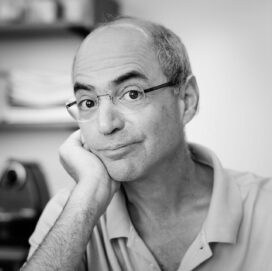
Elliot Currie is a Professor of Criminology, Law and Society at the University of California, Irvine. A graduate of Roosevelt University and the University of California, Berkeley, his work focuses on the social and economic roots of violence, racial disparities in criminal justice, and the critique of punitive policies. His research spans drug abuse, youth violence, and global crime patterns, with a particular emphasis on the United States. Ph.D., University of California, Berkeley Co-editor, Progressive Justice in an Age of Repression Noted author of A Peculiar Indifference: the Neglected Toll of Violence on Black America , a New York Times Notable Book of 2020 Currie's scholarship examines the intersection of market society, inequality, and crime. His work critiques neoliberal economic systems and advocates for structural reforms to address violence and injustice. His recent publications analyze violence reduction strategies, racialized policing, and the failures of the 'free market-tough state' ideology. These works emphasize interdisciplinary approaches, drawing on sociology, economics, and public policy. August Vollmer Award, American Society of Criminology Mentor Award, American Society of Criminology Benjamin L. Hooks Institute for Social Change Book Award (2004) Currie's long-standing contributions to criminology include Pulitzer Prize finalist work and foundational texts like Crime and Punishment in America . He advocates for a public criminology that bridges academic research and policy solutions.
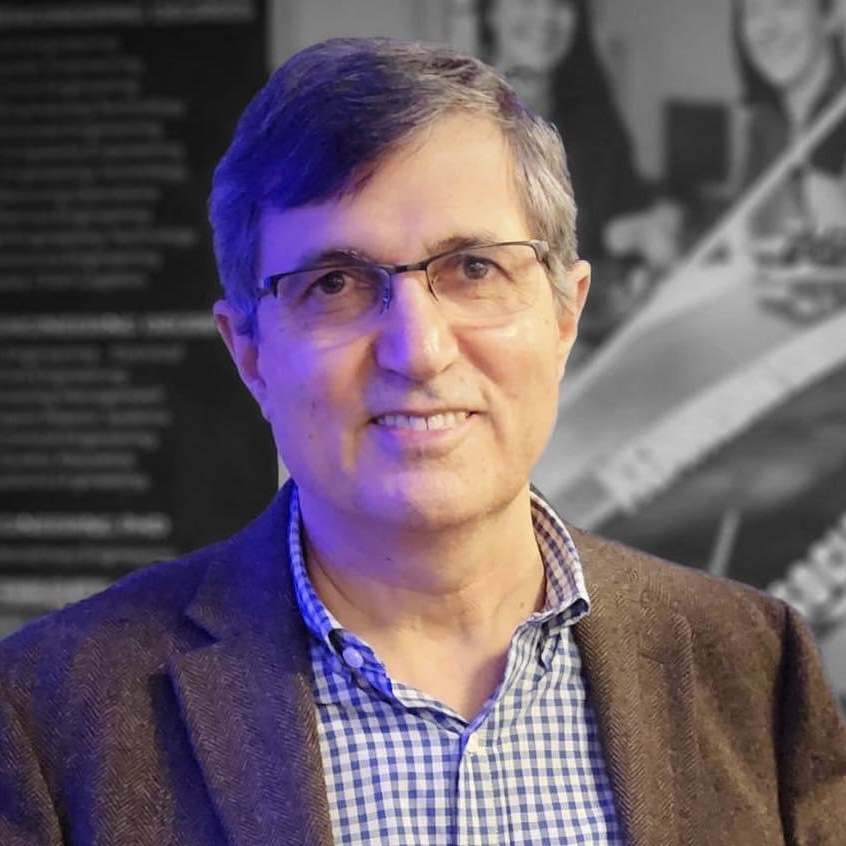
Daniel Rothman is a Professor of Geophysics at the Massachusetts Institute of Technology (MIT), where he has been a faculty member since 1986. He serves as Co-Director of the MIT Lorenz Center, a privately funded interdisciplinary research center devoted to learning how climate works, which he co-founded with Kerry Emanuel in 2011. His work spans multiple departments and disciplines at MIT, including the Department of Earth, Atmospheric, and Planetary Sciences (EAPS), where he contributes to research in geophysics, atmospheres, oceans, climate, and geology. Rothman received his AB in applied mathematics from Brown University and his PhD in geophysics from Stanford University. His academic journey began with a focus on seismology, but he has since expanded his research interests to encompass: Earth system dynamics Carbon cycle and climate interactions Biogeochemistry and geobiology Statistical and nonlinear physics Mathematical geoscience As a theoretical scientist, Rothman's research focuses on understanding how the organization of the natural world emerges from the interactions of life and the physical environment. He employs mathematics, statistical physics, and nonlinear dynamics to construct simple mathematical models that predict or explain observational data. His current work centers on the carbon cycle and its coupling to climate, exploring fundamental questions about how global biogeochemical cycles arise and evolve, their stability, and how they impact climate stability. This research has important implications for understanding current climate change and potential tipping points in the Earth system. Rothman's publication record reveals a consistent focus on using mathematical approaches to understand Earth's systems. His work shows progression from fluid dynamics and pattern formation to carbon cycle modeling and mass extinction analysis. A recurring theme is identifying characteristic patterns and thresholds in Earth's systems, particularly how carbon cycle disruptions correlate with mass extinction events. His recent work has focused on identifying critical thresholds in the carbon cycle that, when breached, could lead to catastrophic climate change. Daniel Rothman has received numerous prestigious awards for his contributions to science: Fellow, American Association for the Advancement of Science (2023) Levi L. Conant Prize, American Mathematical Society (2016) Fellow, American Geophysical Union (2014) Fellow, American Physical Society (2012) Fellow, Radcliffe Institute for Advanced Study (2007-2008) Rothman has mentored numerous students throughout his career, supervising PhD students across multiple disciplines including Earth, Atmospheric and Planetary Sciences, Physics, Mechanical Engineering, and Mathematics. His research group has received significant funding for projects investigating Earth system dynamics and carbon cycle modeling. He has taught courses such as "Modeling Environmental Complexity" and "Nonlinear Dynamics: Chaos," training students in mathematical approaches to environmental problems. The Rothman research group operates within the Department of Earth, Atmospheric, and Planetary Sciences at MIT and is closely affiliated with the MIT Lorenz Center. His team combines theoretical approaches with data analysis to investigate complex Earth systems, frequently collaborating with researchers from physics, mathematics, biology, and oceanography. The group's work bridges disciplinary boundaries, applying concepts from statistical physics to understand biogeochemical cycles and Earth history.
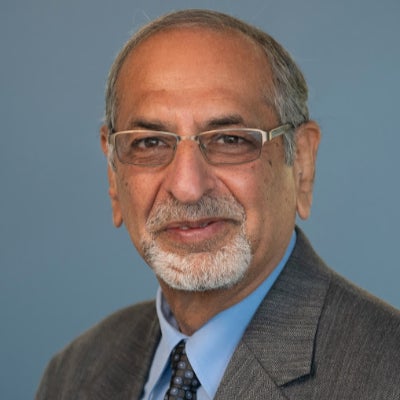
Professor Juan Sagaseta is a Professor of Structural Robustness at the University of Surrey, affiliated with the School of Sustainability, Civil and Environmental Engineering and the Centre for Infrastructure Systems Engineering. He leads structural engineering modules at undergraduate and postgraduate levels and specializes in improving structural design efficiency and safety, particularly in concrete construction and robustness of critical infrastructure. His research focuses on enhancing structural systems' resilience against accidental loads like blast, impact, and flooding. Education: PhD in Structural Engineering from Imperial College London (2008), Post-doctoral research at EPFL (Switzerland). Professional memberships include Fellow of the Institution of Civil Engineers (ICE), fib Action Group 10 (Robustness), and editorial roles in Magazine of Concrete Research . Research interests include: Structural robustness under blast/impact loads Disproportionate collapse prevention Modern methods of construction (precast, steel-concrete composites) Dynamic punching shear analysis Risk-based design frameworks Key contributions include full-scale testing of precast structures, development of post-punching shear models, and validation of Eurocode 2 provisions. His work has been recognized with awards including the ACI Mete A. Sozen Award (2021) and fib Achievement Award (2011). Grants and collaborations involve EPSRC projects on blast impact, international initiatives on building segmentation, and industry partnerships for modular construction systems. Labs/Teams: Leads the Structural Robustness Research Group at Surrey, collaborating with global institutions like EPFL and ACHE (Spain).
Mohammad Jonaidi is a faculty member in the Department of Civil and Construction Engineering at Kennesaw State University , where he has worked since Fall 2016. He previously served as an adjunct professor from Spring 2011 to Fall 2016 and has 40 years of combined industrial and academic experience in structural engineering. Ph.D. in Civil Engineering (1998), University of Sydney MSc in Structural Engineering (1988), Amir Kabir University BSc in Civil Engineering (1985), Amir Kabir University Dr. Jonaidi specializes in structural engineering with expertise in finite element analysis , post-tensioned concrete , steel structures , and earthquake engineering . His work spans industrial projects (e.g., below-grade shoring walls, FRP retrofitting) and academic research (e.g., AI in education, composite medical devices). His recent research trends include seismic response modeling , machine learning applications , and mechanical analysis of sports equipment . Collaborations with Mechanical Engineering students and faculty members highlight his interdisciplinary approach. Dr. Jonaidi has advised students on topics such as concrete structure experiments , finite element method research , and structural connections . He has presented at conferences including CSCE and ASEE and has published extensively on structural analysis and educational innovations.
John V. Parachini is a Senior International and Defense Researcher at the RAND Corporation and a Professor of Policy Analysis at the RAND School of Public Policy. He previously directed the RAND Intelligence Policy Center and has served in the U.S. State Department’s Bureau of Arms Control, Deterrence, and Stability, focusing on Russia and Ukraine. He has held teaching positions at Georgetown University, the University of Southern California, and Baruch College. His research focuses on nuclear, biological, and chemical weapons proliferation, arms control, counterterrorism, intelligence, and emerging technologies. His expertise spans global security, homeland security, and international diplomacy, with deep regional knowledge of Russia, Ukraine, North Korea, and the Middle East. The most recent publications highlight trends in disinformation by state actors, chemical and biological weapons threats, U.S.-India defense cooperation, Russian military exports, and pandemic-related security challenges. His work increasingly analyzes the strategic use of weapons of mass destruction in hybrid warfare and the erosion of international norms. Fact-Checking Russia's Claims on Chemical Weapons (2025) Boosting U.S.-India Private Sector Defense Industrial Cooperation (2025) Syrian Rebels' Remarkable Call for International Help on Chemical Weapons (2025) Fallout from Syria: Q&A with RAND Experts (2024) The International Community Held Russia to Account for Not Abiding by Chemical Weapons Treaty (2024) Parachini has testified before Congress and published widely in journals such as Arms Control Today , The Washington Quarterly , and The Nonproliferation Review , as well as in major media outlets including The Los Angeles Times and The Hill . His work is frequently cited in policy debates on global security and counterterrorism. He has led major RAND projects on nuclear terrorism, open-source intelligence, pandemic preparedness, and strategic warning. While no specific grants are listed, his extensive research output suggests sustained funding from defense and security agencies. He has not advised any named students in the provided materials. Parachini is affiliated with RAND’s international policy and defense research teams, contributing to expert panels and multimedia content such as videos and podcasts on North Korea, Russia, and global terrorism. His recent work continues to shape policy discussions on WMD proliferation and strategic stability.
Dr. Mengzhu Diao is a Lecturer in the School of Civil, Mining, and Environmental Engineering at the University of Wollongong. She holds a PhD from Griffith University and specializes in structural engineering with a focus on progressive collapse analysis, post-tensioned systems, and steel-concrete composites. Her research addresses collapse prevention, vulnerability assessment, and numerical simulation of structures. She teaches courses like Surveying (CIVL272) and Structural Design 2 (CIVL314), and supervises PhD research on 3D printing in civil engineering. Education: PhD in Structural Engineering, Griffith University Research Interests: Her work centers on structural failure mechanisms, including progressive collapse of RC flat plate systems, post-tensioned joints, and fire-induced collapse. She explores innovative materials like FRP retrofitting and 3D printing applications. Key themes include robustness assessment, dynamic load responses, and reinforcement strategies. Recent Trends in Publications: Dr. Diao’s recent work emphasizes precast concrete systems (e.g., wet/dry connections), post-tensioned slab-column joints, and numerical validation of structural models. Her studies aim to improve collapse resistance through optimized designs and material integration. Teaching & Supervision: Coordinates courses on surveying and structural design. Current supervision includes a PhD project on 3D printing steel technology in civil engineering.
Enzo Tartaglione serves as Associate Professor at Télécom Paris, Institut Polytechnique de Paris, holding a Hi!Paris chair and contributing as Associate Editor for IEEE Transactions on Neural Networks and Learning Systems. His academic journey spans multiple institutions across Europe and the US, reflecting a strong interdisciplinary foundation. Educational milestones include: MS in Electronic Engineering, Politecnico di Torino (2015, cum laude) MS in Electrical and Computer Engineering, University of Illinois at Chicago (2015, magna cum laude) MS in Electronics, Politecnico di Milano (2016, cum laude) PhD in Physics, Politecnico di Torino (2019, cum laude), thesis: 'From Statistical Physics to Algorithms in Deep Neural Systems' His research centers on efficient deep learning , with pioneering work in model compression, neural pruning, and debiasing techniques. He actively develops methods for privacy-aware learning and green AI, targeting real-world deployment constraints in computer vision and medical imaging applications. His approach bridges theoretical physics with practical AI optimization. Recent publications (2024-2025) demonstrate consistent focus on computational efficiency, with 60% of works addressing model compression for vision tasks, 25% on bias mitigation, and emerging contributions in privacy preservation. Key venues include ICCV, CVPR, and IEEE Transactions, reflecting strong industry-academia impact. Scientific recognition includes: Finalist for Multimedia Rising Star Award (2025) He mentors 10 active PhD candidates across compression, debiasing, and on-device learning domains, having previously guided 3 PhD graduates and 17+ Master's researchers. Research funding includes the Hi!Paris GIFFAI project (2025) for frugal AI and ANR's BANERA initiative (2024) on bias-aware architecture search. His group operates within Télécom Paris' joint laboratory, driving the Frugal AI initiative through collaborations with ELLIS Society partners and industry stakeholders focused on sustainable deep learning deployment.
Waleed Mekky is an Adjunct Assistant Professor in the Department of Civil Engineering at McMaster University, with a focus on structural safety, blast resistance, and probabilistic risk assessment. His career spans over two decades of research in masonry systems, reinforced concrete, and nuclear infrastructure resilience. McMaster University, Faculty of Engineering Specializes in blast engineering, seismic risk, and CFD analysis for nuclear applications Research Interests Blast-induced structural failure and mitigation strategies Probabilistic risk assessment for masonry and concrete systems Thermal and mechanical analysis of nuclear reactor components Progressive collapse prevention in steel and masonry structures Recent Publications highlight advancements in CANDU reactor safety, blast modeling for buildings, and vibration analysis in piping systems. His work integrates computational fluid dynamics, finite element methods, and material degradation studies. Collaborations include researchers like Wael El-dakhakhni and Michael Tait, with over 40 publications from 1997–2024. His co-author network reflects interdisciplinary work in structural, mechanical, and nuclear engineering.
Yaakov Fein is a quantum-physics researcher at the University of Vienna, active within the interdisciplinary research cluster Quantum Optics, Quantum Nanophysics and Quantum Information . Operating from the Währinger Straße campus, he explores fundamental aspects of matter-wave physics using progressively more massive nanoparticles and molecules. His academic qualifications include a BA, MA and an MSc, and he is reachable at yaakov.fein@univie.ac.at ; however no explicit faculty rank is supplied in the text. Fein’s experimental and theoretical agenda centres on high-mass matter-wave interferometry, quantum-assisted metrology, and nano-scale magnetism. By levitating or beam-loading nanoparticles—ranging from metals to functionalised biomolecules—into long-baseline interferometers, he investigates quantum superposition limits, decoherence mechanisms, and novel sensing protocols that exploit干涉条纹位移 for measuring electromagnetic and inertial quantities. Across more than two-dozen peer-reviewed works (2017-2024) a clear trend emerges: continual push toward heavier masses (>25 kDa), longer interferometer baselines, and incorporation of internal degrees of freedom (spin, diamagnetism, polarizability) to boost sensing precision. Studies also encompass historical perspectives on Otto Stern’s legacy and foundational tests of wave-function collapse, positioning the research at the intersection of quantum optics, metrology, and quantum foundations. Awards & Funding: No specific prizes or grants are listed in the provided material. Advising & Collaboration: No named students or formal advising roles are mentioned; affiliations imply active participation within a larger quantum-optics consortium at Vienna. Labs & Teams: While no standalone laboratory title is given, the affiliation Quantum Optics, Quantum Nanophysics and Quantum Information indicates integration into a well-equipped research environment capable of ultra-high-vacuum facilities, hollow-core fibre loading, and high-mass interferometry stages.
Professor Mark Stewart is an Honorary Professor at the School of Engineering, University of Newcastle, with over 30 years of experience in probabilistic risk and vulnerability assessments for infrastructure and security systems. His work spans terrorism, climate change, and natural hazards, focusing on cost-benefit analysis and policy optimization. Current Roles : Director of the Centre for Infrastructure Performance and Reliability (2007–present), Editor-in-Chief of Structural Safety (2020–present), and member of the ARC College of Experts (2019–2021). Education : BE (Hons) in Civil Engineering (Monash University, 1984), PhD in Structural Engineering (University of Newcastle, 1988). Stewart’s research centers on risk assessment and cost-effectiveness of measures against extreme events. He has led major projects like the $3.5M CSIRO CAEx Cluster (2012–2016), developing models for climate adaptation of infrastructure. His work challenges conventional perceptions of terrorism and climate risks, advocating for evidence-based policy and resource allocation. Scientific Awards include Fellowships from the Royal Society of NSW (2021), Australian Academy of Technology and Engineering (2020), and the Japan Concrete Institute Award (2012). He has authored over 500 papers, five seminal books, and received continuous ARC funding since 2004. Stewart’s public policy impact is notable, with research featured in Playboy Magazine , CNN , and collaborations with political scientist John Mueller. His work emphasizes transparency in risk assessment, urging policymakers to prioritize cost-effective solutions over fear-driven expenditures.
Professor MUHITTİN EREN UÇKAN is a distinguished academic in Civil Engineering at Alanya Alaaddin Keykubat University's Faculty of Engineering, specializing in earthquake engineering and structural dynamics. With over three decades of academic experience, he has held positions at prominent Turkish institutions including Boğaziçi University, Gebze Institute of High Technology, and Middle East Technical University. His educational background includes a Doctorate in Earthquake Engineering from Boğaziçi University's Kandilli Observatory (1988-1994), a Master's in Civil Engineering from Middle East Technical University (1984-1987), and a Bachelor's degree in Civil Engineering from the same institution (1979-1984). Throughout his career, he has progressed from Research Assistant to Professor, while also serving in significant administrative roles including Vice Dean and Head of Department at Gebze Institute of High Technology, and Commission Presidency at Alanya Alaaddin Keykubat University. Professor Uçkan's research focuses on critical aspects of earthquake engineering, particularly seismic performance of infrastructure systems. His work extensively covers buried pipelines at fault crossings, liquid storage tanks, masonry structures, and steel buildings. His recent publications following the 2023 Kahramanmaras earthquakes demonstrate his continued active research in real-world seismic events, with particular emphasis on pipeline systems and liquid storage facilities. His research methodology combines advanced numerical modeling with practical field observations from actual earthquake events. His scholarly contributions include numerous publications in high-impact journals such as Bulletin of Earthquake Engineering, Journal of Earthquake Engineering, and Engineering Failure Analysis. His work often addresses practical engineering challenges in seismic zones, with particular attention to lifeline infrastructure resilience. The consistent publication record spanning from 1989 to 2024 indicates sustained research productivity and relevance in the field of earthquake engineering. Professor Uçkan has actively participated in international conferences including the European Conference on Earthquake Engineering, ASME Pressure Vessels and Piping Conference, and various trilateral symposiums on lifeline earthquake engineering. His work demonstrates strong international collaboration, particularly with European researchers on critical infrastructure projects.
Assoc. Prof. Dr. Kadir Ozakgul is an Associate Professor at the Civil Engineering Department of Istanbul Technical University (ITU), specializing in Earthquake Engineering and Steel Structures. He holds a PhD in Structural Engineering from ITU (2006) and has been affiliated with the university since 1996, progressing from Research Assistant to Assistant Professor (2015) and currently serving as Associate Professor. Education: PhD in Structural Engineering, ITU (2002-2006) MSc in Structural Engineering, ITU (1993-1997) BSc in Civil Engineering, ITU (1989-1993) Research Focus: His work centers on structural safety, seismic fragility analysis of railway bridges, fire damage assessment of steel structures, and fatigue life prediction in infrastructure. He emphasizes probabilistic methods and real-world applications in bridge engineering, including retrofitting and sensor-based monitoring systems. Publications: Over 40 peer-reviewed papers focus on railway infrastructure resilience, structural behavior under extreme loads (earthquakes, fire, ice), and experimental methods for assessing structural integrity. Recent trends highlight probabilistic seismic risk modeling and sensor network optimization for bridge health monitoring. Labs/Teams: Leads the Damage Detection Laboratory (HASLAB) at ITU, specializing in non-destructive evaluation techniques and experimental structural analysis.
Prof. Dursun Zafer Şeker is a faculty member at Istanbul Technical University , where he holds the Department of Geomatics Engineering within the Faculty of Civil Engineering . His work spans Geographic Information Systems , Remote Sensing , and Photogrammetry , with a focus on integrating Deep Learning and UAV technologies for disaster management, environmental monitoring, and infrastructure analysis. Education: PhD in Geodesy and Photogrammetry Engineering (1989) and Master's in Photogrammetry Engineering (1985), both from Istanbul Technical University. Career: Progressed from Research Assistant (1986-1996) to Professor (2004-present), with administrative roles in academic governance. His research explores GIS applications in transportation accessibility, forest fire prevention, and earthquake response. He has pioneered the use of Deep Learning for medical imaging (e.g., multiple sclerosis lesion segmentation) and agricultural disease classification , while also advancing UAV-based monitoring for coastal and archaeological sites. Recent publications highlight a shift toward AI-driven remote sensing for disaster resilience, including super-resolution techniques for historical imagery and object detection in post-earthquake building collapse mapping. Trends emphasize multi-source data fusion (LiDAR, satellite), climate change adaptation , and urban sustainability . Scientific Awards: Dursun Zafer Şeker Prize, FIG Young Surveyors' Competition (2023) Best Poster/Best Short Presentation Awards at MESAEP (2017), Selçuk University (2016), and Çukurova University (2016) Recognition at International Conferences (2015-2025) for remote sensing and geospatial innovation. As an advisor, he has supervised over 20 PhD and Master’s students , spanning topics like gas pipeline leak detection , PM2.5 prediction , and solar plant site selection . His grants include projects funded by TÜBİTAK and Ministry of Development , such as ORBIS and Forest Fire Decision Support Systems . He also serves on editorial boards for International Journal of Environment and Geoinformatics and Map Magazine .
Gian Paolo Cimellaro is a Full Professor in the Department of Structural, Building and Geotechnical Engineering (DISEG) at the Polytechnic University of Turin, Italy. He is a leading researcher in disaster resilience, structural health monitoring, and seismic engineering, with extensive contributions to infrastructure interdependencies and urban resilience. He is affiliated with the SISCON Interdepartmental Center for Safety of Infrastructures and Constructions and leads the Disaster Resilience Simulation Laboratory. Research Interests: Disaster and Seismic Resilience Structural Health Monitoring (SHM) Earthquake Engineering and Structural Control Infrastructure and Network Interdependencies Smart Cities and Resilience Technologies Machine Learning Applications in Civil Engineering His recent publications focus on probabilistic resilience frameworks, Bayesian network modeling, infrastructure interdependencies, and post-disaster recovery, with applications to hospitals, transportation networks, and urban water systems. He has pioneered tools like the PEOPLES resilience framework and software such as ParkAdvisor and OpenSignal for urban resilience and damage assessment. Scientific Awards: Seed Grant Award, Siebel Energy Institute (2015) for work on power network vulnerability He has supervised numerous PhD students and secured significant research funding from EU programs including ERC (IDEal reSCUE, IDEAL SENSOR, IDEAL DRONE) and MSCA projects (FOURIER, ReCharged). His research integrates experimental work, computational modeling, and real-world applications to improve the safety and sustainability of civil infrastructure. Laboratories and Research Groups: Disaster Resilience Simulation Laboratory (DISEG) Research on structural control, SHM, and smart sensor networks Development of software platforms: EDAM, OpenSignal, ParkAdvisor
Arun Shukla is the Simon Ostrach Professor in the Department of Mechanical, Industrial and Systems Engineering at the University of Rhode Island. He leads the Dynamic Photomechanics Laboratory (DPML), conducting cutting-edge research in experimental mechanics, underwater structural response, and blast mitigation. Dr. Shukla received his B.S. from the Indian Institute of Technology, Kanpur in 1976, followed by an M.S. in 1978 and Ph.D. in 1981 from the University of Maryland. His research focuses on experimental and theoretical mechanics, particularly in underwater structural response, blast mitigation, fracture mechanics, and composite materials. Dr. Shukla's work spans optical methods, nano materials, impact mechanics, and elasticity. His laboratory investigates shock tube loading under extreme temperatures, underwater implosion and explosion phenomena, wave propagation, and electro-mechanical characterization of materials. This research has significant applications in naval architecture, defense technology, and underwater vehicle design. Analysis of Dr. Shukla's recent publications reveals a strong focus on underwater implosion phenomena, composite material response to extreme loading conditions, and energy dissipation mechanisms. His work increasingly integrates computational modeling and machine learning approaches with experimental validation, particularly in characterizing material behavior under dynamic loading conditions. The research shows progression from fundamental material characterization to complex system-level investigations of underwater structures. Dr. Shukla has secured numerous research grants, primarily from the Office of Naval Research and the Naval Undersea Warfare Center, focusing on underwater vehicle technology, composite material response, and implosion mitigation strategies. Dr. Shukla has mentored numerous graduate students, with recent master's theses focusing on implosion mitigation, underwater blast response, and composite material behavior. His laboratory collaborates extensively with researchers at the University of Connecticut and industry partners through the National Institute for Undersea Vehicle Technology. The Dynamic Photomechanics Laboratory maintains specialized facilities including an Optics and Laser Research Laboratory and a Dynamic Material Testing Laboratory for investigating various dynamic phenomena associated with materials. The lab is part of the National Institute for Undersea Vehicle Technology, a collaborative initiative between URI, UConn, and General Dynamics Electric Boat.