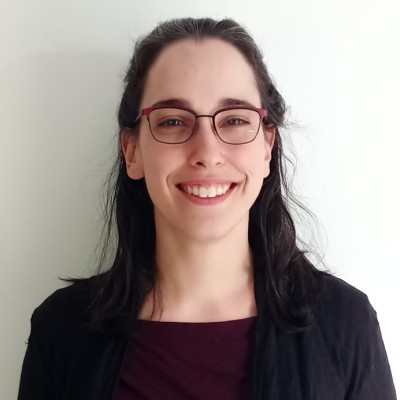
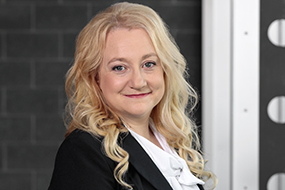
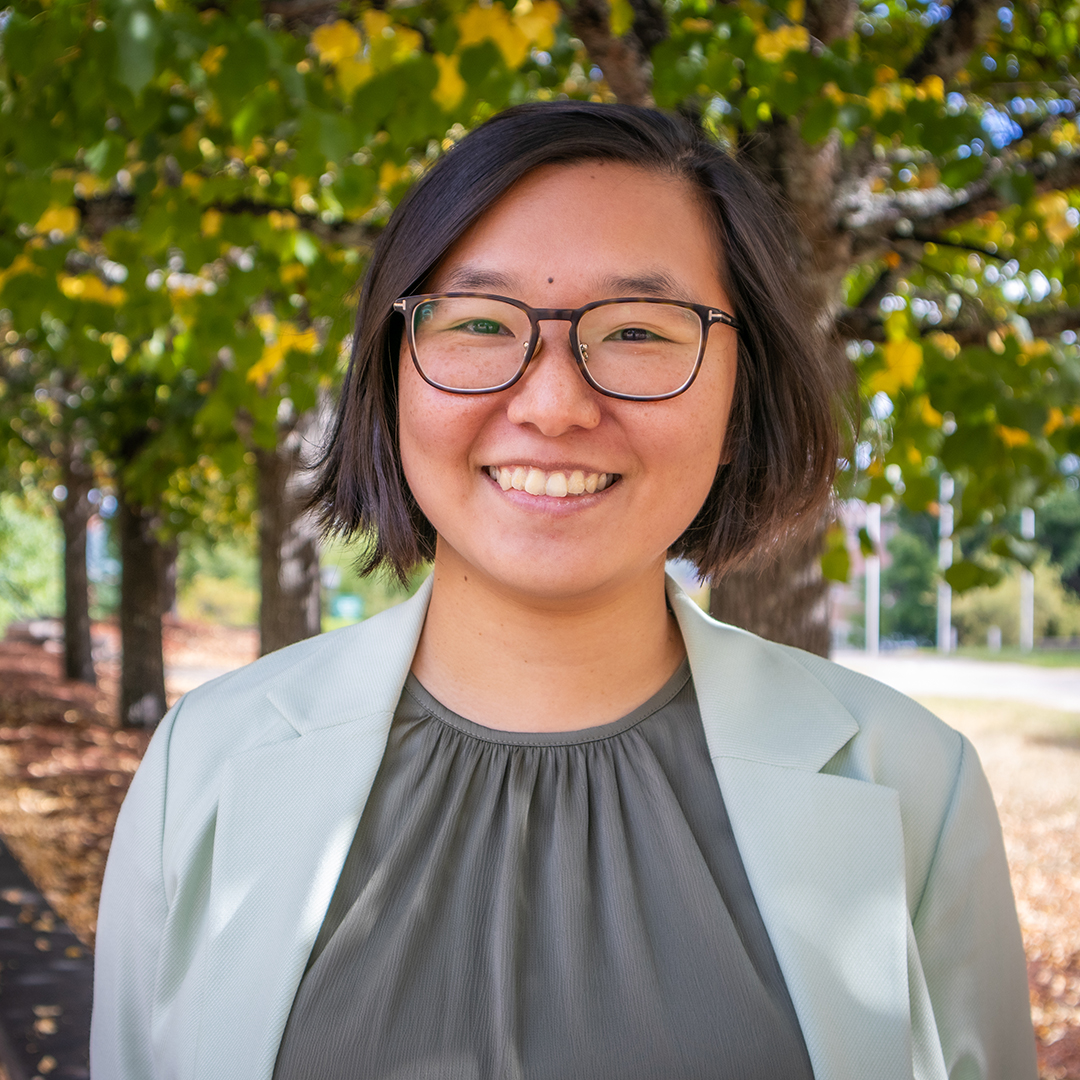
Dr. Andréa Lavigne serves as Assistant Professor in the Department of Teaching and Learning Studies at Université Laval's Faculty of Education (FSÉ). She is affiliated with the Joint Research Unit Synergia (UMR Synergia), focusing on adaptation and educational success for students with disabilities. Her research specializes in inclusive education for neurodiverse learners, particularly examining: Teacher-student interactions with autistic and intellectually disabled students Multimodal communication strategies in classroom settings Sensory needs accommodation in educational environments Participatory research methods centering student voices Her recent publications demonstrate consistent output in special education journals, with emphasis on practical applications for teachers. Current projects investigate sensory interventions and Universal Design for Learning implementation. Dr. Lavigne actively supervises graduate students and contributes to teacher education programs, drawing on her decade of prior experience teaching special education across multiple grade levels. Her work bridges academic research with practical classroom applications to strengthen communication between disabled students, families, and educators.
Érick Falardeau is a Full Professor in the Department of Teaching and Learning Studies at Laval University's Faculty of Education. He is affiliated with the Interuniversity Research Centre on Teacher Training and the Teaching Profession (CRIFPE-Laval). His 25+ year career focuses on French didactics, particularly explicit teaching methodologies for reading and writing. His research examines: Explicit strategy instruction for reading comprehension and writing proficiency Cultural education integration in French language teaching Formative assessment tools for elementary/secondary students Motivational impacts of pedagogical interventions He has secured over $800,000 in grants (SSHRC/FQRSC) and developed the open-access resource platform StrategiesLectureEcriture.com. Recent publications emphasize mixed-methods studies on writing self-regulation, peer assessment frameworks, and pandemic-era motivation. He frequently collaborates with international scholars and contributes to literature on language-text articulation and didactic engineering. He mentors graduate students in developing practical teaching tools and maintains active knowledge transfer through professional journals and teacher training initiatives.
Stéphane Gauvin is a Full Professor in the Marketing Department at Université Laval's Faculty of Business Administration, where he maintains an active research program examining technology adoption across public and private sectors. His work bridges marketing theory, e-government implementation, and digital policy analysis with current affiliations including ongoing university research and historical collaborations with Quebec government agencies. His educational foundation includes a Doctor of Economics in Marketing (Ph.D.) from Pennsylvania State University, complemented by a Master of Science in Marketing from the University of Sherbrooke and a Bachelor of Business Administration in Marketing from the same institution. This tripartite business education anchors his applied research approach. Professor Gauvin's research centers on technology adoption dynamics across three interconnected domains: e-government implementation (evidenced by 12+ Quebec government reports 2005-2012), digital ecosystem analysis (including 2024 algorithmic studies of YouTube comments), and sector-specific applications in healthcare marketing and wine economics. His methodology integrates quantitative big data analysis with policy evaluation frameworks, consistently examining visibility-power relationships in digital spaces and barriers to technology dissemination. Recent work demonstrates increasing focus on computational social science approaches while maintaining practical policy relevance. Publication trends over the past decade reveal expanding investigation into algorithmic measurement (2024), digital inclusion (2014 Waswanipi study), and SME technology assimilation (2012 framework), building upon foundational work in virtual collaboration (1996). Key thematic threads include digital divide mitigation, political campaign tracking through internet metrics, and optimization of technology-driven markets. His academic service includes leading the French adaptation of major marketing textbooks (2011-2020 editions) and developing pedagogical frameworks for international online teaching. Current research directions examine social media analytics applications in consumer behavior and policy impact assessment through digital trace data.
Lavy Khoushinsky serves as Assistant Professor in the Marketing Department at Laval University's Faculty of Administrative Sciences, where he maintains an active research program bridging analytical marketing, artificial intelligence, and consumer behavior. His work addresses critical contemporary challenges including ideological polarization in markets, healthcare access barriers, and ethical AI implementation. His educational foundation includes a Ph.D. from Smith School of Business, Master's in Sustainable Energy Policy from Carleton University, and Bachelor's in Communication from Concordia University. This interdisciplinary background informs his research approach that integrates technical marketing analytics with social impact considerations. Professor Khoushinsky's research program demonstrates remarkable thematic evolution from sustainable transportation (2019) through banking experience innovation (2020-2021) to his current focus on AI-consumer interactions in contested spaces. His 14 publications (2019-2025) reveal three dominant trajectories: AI-Mediated Consumer Interactions (50% of recent work): Examining chatbots, healthcare navigation systems, and accountability frameworks Ideological Market Dynamics (30%): Analyzing niche marketing in polarized environments and consumer discourse patterns Technology Adoption Barriers (20%): Studying privacy paradoxes, e-waste responsibility, and mixed-reality banking experiences His methodological approach combines computational linguistics with experimental design to address complex marketing phenomena. Through his teaching portfolio spanning Marketing Principles to AI applications, Professor Khoushinsky prepares students for evolving marketing landscapes. His course development emphasizes practical analytical skills while addressing contemporary ethical challenges in digital marketing. The collaborative nature of his publication record (80% co-authored) indicates strong team-based research practices and interdisciplinary connections across institutions.
Christine Hamel is a Full Professor and currently serves as Vice-Dean of Studies at the Faculty of Education (FSÉ) at Université Laval. She is affiliated with the Department of Teaching and Learning Studies and holds research positions at the Centre for Research and Intervention on Academic Success (CRIRES) and Community-Based and Transformative Distance Learning (TACT). Her research focuses on practical teacher training, integration of theory and practice in professional learning, and reflective practice supported by technology. She extensively examines analysis of professional activity in context, professional development of teachers, professional learning communities, teaching pedagogy, and classroom interaction management. Her work applies activity theory to understand teacher development and professional integration. Analysis of her recent publications (2022-2025) reveals a strong focus on practical applications of educational research, particularly examining how digital technologies can support teacher development, collaborative practices, and inclusive education. Her work spans early childhood education, elementary teaching, and special education contexts, with particular attention to professional integration of novice teachers and the use of video analysis for reflective practice. Dr. Hamel has been actively involved in numerous research projects funded by SSHRC, FRQSC, the Ministry of Higher Education, and other organizations. Her work demonstrates a consistent commitment to bridging research and practice in teacher education. As a supervisor, she has guided doctoral students like Pier-Ann Boutin and Amélie Desmeules to completion of their PhDs in educational psychology. Her research projects provide substantial opportunities for graduate student involvement in meaningful educational research that directly impacts teacher training and professional development. Her laboratory work centers around the Centre for Research and Intervention on Academic Success, where she collaborates with a multidisciplinary team to investigate professional development, teacher training, and educational innovation.
Dr. Samira Abbasgholizadeh-Rahimi serves as Assistant Professor at McGill University in the Faculty of Medicine and Director of Artificial Intelligence in Family Medicine (AIFM) . She holds the Canada Research Chair in Advanced Digital Primary Health Care and maintains affiliations with Mila – Quebec AI Institute and Lady Davis Institute for Medical Research . B.Eng., Ph.D. from McGill University President-Elect, Canadian Operational Research Society Her interdisciplinary research bridges Artificial Intelligence and Primary Healthcare , with specific focus on: AI-enabled decision support tools Explainable machine learning for clinical contexts Medical knowledge graphs and NLP applications Addressing algorithmic bias in vulnerable populations Ageism mitigation in health AI systems Digital support for neurocognitive disorders Recent publications demonstrate her expertise in: AI ethics and EDI integration (4 papers since 2024) Geriatric depression prediction models (2025 JMIR study) Shared decision-making frameworks (2022-2023 series) Conscious AI debates in clinical settings (2024 commentary) Scientific recognition includes: 2022 NAPCRG New Investigator Award Cross-institutional collaborations across Canada, Europe, and Asia Research funding sources: Fonds de recherche du Québec – Santé Natural Sciences and Engineering Research Council Brocher Foundation (Switzerland) CIHR SPOR grants Industry partnership with Roche Canada Lab activities including: Developing HOPE (Home-Based Older Adults' Depression Prediction) model Creating incorpoRATE SDM assessment framework Building evidence-based decision support tools for dementia caregivers Training next-gen AI healthcare researchers through Mila collaborations
Nancy Gagné serves as a full Professor and Director of the Department of Humanities, Letters and Communication at TÉLUQ University. She holds a prominent position in Quebec's academic landscape with extensive contributions to language education. Ph.D. in Second Language Teaching (Laval University) Her research spans decades of inquiry into language acquisition processes. Initially examining cognitive dimensions like memory variables in second language learning, she expanded to investigate how diverse educational contexts—classroom instruction, immersion programs, intensive courses, and study abroad experiences—affect oral and written language development. Current work emphasizes intercultural variables and the complexities of third/additional language acquisition, bridging psycholinguistic theory with practical pedagogy. Her scholarly recognition includes membership in the Ordre de l'excellence en éducation du Québec (2025) for transformative contributions to Quebec's educational system. Regular member of the Jacques Couture Institute Scientific committee member for Médiations & Médiatisations journal Gagné has profoundly impacted second language teacher education through decades of involvement in Quebec's initial and continuing teacher training programs, shaping pedagogical approaches across the province.
Louise Fontaine is an Associate Professor in the Department of Administrative Sciences at Sainte-Anne University in Nova Scotia, Canada, specializing in Public Management and Organizational Theories. Her academic career spans multiple institutions across Canada and Belgium, reflecting her international research perspective. Her educational background includes: Postdoctoral fellowship in sociology at the Ethnicity and Society Research Group (GRES), University of Montreal (1991-1993) Doctorate in Political Science from Laval University (1986-1990) with thesis on "The State Organization of Inclusion and Exclusion: The Case of Quebec (1976-1988)" Degree in sociology from Catholic University of Louvain, Belgium (1985) Master's degree in political science from Laval University (1983-1985) with thesis on "Linguistic groups, political conflicts: the Belgian case" Bachelor's degree in political science with minor in history from Université Laval (1978-1981) Professor Fontaine's research program has consistently examined the relationship between identity and otherness in the context of international migration. Her work initially analyzed these phenomena at the systems level but has increasingly focused on microsocial perspectives. She approaches the question of identity/otherness from multiple angles across different situated fields, connecting theoretical and methodological dimensions in her analyses. Her research intersects both macrosocial and microsocial dimensions related to temporalities and life courses, international migration, and processes of social inclusion/exclusion, with particular attention to Francophone communities in Nova Scotia and Quebec. Her scholarly output demonstrates a consistent focus on identity, migration, and public administration, with increasing attention to the work of sociologist Jacques Zylberberg. Professor Fontaine has made significant contributions to understanding Francophone immigration in Nova Scotia, the political categorization of cultural communities, and the application of Goffman's theories to contemporary social issues. Her methodological approach combines qualitative analysis with theoretical innovation, particularly in examining how bureaucratic structures interact with social identities across different cultural contexts. Professor Fontaine is actively involved in academic leadership, serving as co-founder and co-responsible for Working Group 37 (Socio-anthropology of social interactions) of the International Association of French-Speaking Sociologists (AISLF) for 2024-2028, and as co-responsible for Working Group 15 (Interdisciplinary qualitative analysis) for the same period. She has supervised numerous doctoral students and participated in various research networks focused on migration, identity, and qualitative methodology. She maintains strong community connections through affiliations with the Centre Métropolis Atlantique (2006-2013), the Group d'accueil communautaire pour les nouveaux arrivants dans Clare (2018-2020), and the Comité local sur l'immigration pour la région du sud-ouest de la Nouvelle-Écosse (2006-2010), demonstrating her commitment to bridging academic research with community needs related to immigration and integration.
Doris Chow is an active Assistant Professor of Psychology at St. Thomas University (STU), where she has served on faculty since 2022. Her research laboratory focuses on multisensory perception and cognition, investigating how humans integrate sensory information across the lifespan through experimental studies with human participants. She teaches core psychology courses including Introduction to Psychology, Perception, and Visual Perception, while mentoring undergraduate researchers in experimental design and scientific communication. Her educational background spans a Bachelor of Social Sciences and Master of Philosophy from the University of Hong Kong, followed by a Ph.D. in Developmental and Brain Sciences from the University of Massachusetts Boston and postdoctoral training at the University of British Columbia Vancouver. Dr. Chow's research examines the neural mechanisms of multisensory integration, with emphasis on how perceptual abilities evolve from infancy through adulthood and the consequences when these processes malfunction. Her work bridges experimental psychology, vision science, and developmental neuroscience through controlled laboratory experiments. Current research trends in her publications reveal consistent focus on cross-modal interactions (particularly audio-visual and audio-tactile), developmental trajectories of perception, and the neural underpinnings of sensory integration. Recent work increasingly incorporates infant studies and computational approaches to understanding perceptual organization. Scientific recognition includes: NSERC Discovery Grant (awarded summer 2024) Harrison McCain Foundation research funding Dr. Chow maintains an active mentoring program where students develop research skills through honors theses and NSERC-funded projects. Her lab has produced multiple conference presentations at venues like Vision Sciences Society and Science Atlantic, with recent graduates accepted into competitive graduate programs including the Max Planck School of Cognition. She collaborates with community partners such as the Museum of Science in Boston (2014-2018) and continues this outreach approach at STU. The Multisensory Perception and Cognition Laboratory involves undergraduate researchers in all stages of experimental work, from participant recruitment to data analysis. Current projects examine haptic exploration strategies, sound-shape correspondences, and optic flow perception, with strong emphasis on developing students' academic writing and technical skills for research careers.