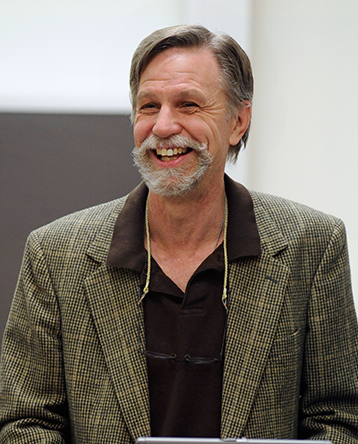
Jignesh Patel is a Professor in the Computer Science Department at Carnegie Mellon University, specializing in database systems and data-intensive computing. His research focuses on hardware-software synergy for high-performance databases and democratizing data analytics through no-code interfaces. He co-founded DataChat, a startup focused on intuitive data analytics platforms. He holds fellowships from AAAS, ACM, and IEEE, along with teaching awards. His work emphasizes building systems that leverage novel hardware and user-friendly interfaces. Research interests include scalable data platforms, LLM-based query interfaces, and optimizing database performance through hardware collaboration. Notable projects include the Quickstep data platform and the Ava conversational interface. Awards: Fellow of AAAS, ACM, IEEE; Multiple Teaching Awards Labs/Teams: CRISP (Intelligent Storage and Processing), DataChat startup
Paul Fischbeck is a Professor in the Department of Engineering and Public Policy and the Department of Social and Decision Sciences at Carnegie Mellon University, where he applies decision analysis and behavioral social science to complex policy challenges. His research focuses on risk analysis, uncertainty communication, and regulatory design, with applications in energy, environment, and public safety. He directs the Center for the Study and Improvement of Regulation and actively collaborates with graduate students on interdisciplinary research. Education: Ph.D. in Industrial Engineering/Engineering Management, Stanford University (1991) M.S. in Operations Research, Naval Postgraduate School (1981) B.S. in Architecture, University of Virginia (1974) Fischbeck's research interests lie at the intersection of decision science and public policy. He specializes in modeling and communicating uncertainty, improving risk communication, and designing decision support systems for regulators and the public. His work spans climate change policy, energy systems, environmental regulation, and behavioral responses to risk. He has contributed to understanding the effectiveness of warning labels, insurance behavior, and the risks of aging infrastructure. His recent publications and media engagements reflect a strong focus on climate communication, energy policy alignment across political parties, and innovative environmental monitoring using IoT and machine learning. Themes across his work include the importance of behavioral insights in policy design, the challenges of long-term infrastructure planning, and the need for transparent communication of scientific uncertainty. Scientific Awards: No awards listed in the provided text. Fischbeck advises graduate students and leads an active research program at CMU. His work is supported by institutional affiliations and collaborative projects, though specific grants are not detailed. He contributes to public discourse through media appearances and policy-relevant research. He is involved with the Center for the Study and Improvement of Regulation, where he leads efforts to enhance regulatory decision-making through rigorous analysis and systems thinking. Labs and Research Centers: Center for the Study and Improvement of Regulation (Director)
Jinghai Rao is a Researcher at Carnegie Mellon University's School of Computer and Information Science within the Institute for Software Research International. His work focuses on semantic web services, security policies, and logic-based programming. He holds a PhD in Computer Science from the Norwegian University of Science and Technology (NTNU) and has Master's and Bachelor's degrees from Renmin University of China. His research emphasizes web service composition, policy enforcement, and automated reasoning. Notable contributions include the use of linear logic for service composition and frameworks for interleaving policy reasoning with service discovery. He has received a best paper runners-up award at ICWS 2004. Rao has been actively involved in professional activities, serving on committees for workshops like ECWS'06 and SOT'06, and as a reviewer for conferences such as IJCAI'05 and ISWC'05. His work bridges theoretical foundations of semantic web services with practical applications in security and collaborative systems.
Hamish Gordon is an associate professor in the Department of Chemical Engineering and the Center for Atmospheric Particle Studies at Carnegie Mellon University (CMU). He holds affiliations with the Wilton E. Scott Institute for Energy Innovation and has been at CMU since 2019, following postdoctoral work at the University of Leeds. His research focuses on aerosol-cloud interactions, climate modeling, and air pollution impacts, leveraging advanced computational tools like the UK Met Office Unified Model. Education: Ph.D. in Physics, University of Oxford (2013) M.S. in Natural Sciences, University of Cambridge (2010) B.A. in Natural Sciences, University of Cambridge (2009) Research Interests: Dr. Gordon investigates how atmospheric particles influence weather and climate through interactions with clouds. Key areas include aerosol formation mechanisms (e.g., sulfuric acid and organic compounds), the role of anthropogenic and natural sources in climate feedbacks, and fog/visibility modeling. His work integrates laboratory experiments (e.g., CERN CLOUD project) with field campaigns (e.g., South Atlantic smoke studies). Publications & Grants: Recent studies address aerosol impacts on tropical cyclones, biomass burning radiative effects, and Delhi fog forecasting. He has secured NSF CAREER awards and DOE funding, collaborating with institutions like NASA and the National Center for Medium Range Weather Forecasting (India). Awards: NSF Faculty Early Career Development (CAREER) Award (2023) Lab Team & Outreach: The Gordon Group includes postdocs and Ph.D. students working on aerosol modeling, climate dynamics, and AI integration. Outreach efforts focus on STEM education and community engagement, including mentoring programs and public speaking on environmental issues.
Thomas O'Connor serves as an Assistant Professor in the Department of Materials Science and Engineering within Carnegie Mellon University's College of Engineering. His research group employs molecular and continuum modeling to design sustainable polymer materials and improve soft material manufacturing processes, building on his prior work as a Harry S. Truman Fellow at Sandia National Laboratories where he developed the open-source RHEO platform. His educational background includes: Ph.D. in Physics from Johns Hopkins University M.S. in Physics from Johns Hopkins University B.S. in Physics from Rensselaer Polytechnic Institute O'Connor's research integrates computational materials science with polymer physics to study nanoscale structure and dynamics in soft matter. His lab uses molecular dynamics, lattice-Boltzmann methods, and mesh-free hydrodynamics across multiple scales to bridge molecular mechanisms with macroscopic material behavior. Key focus areas include sustainable polymer design, biomimetic manufacturing inspired by natural systems (e.g., insect silk production), and advancing computational tools for materials innovation in additive manufacturing and biomanufacturing. His publication on super stretchable ring polymer elastomers demonstrates how molecular architecture enables novel mechanical properties, reflecting broader research trends in sustainable soft materials where computational modeling guides the design of recyclable polymers and efficient manufacturing processes. His scientific awards include: Harry S. Truman Fellowship DOE Early Career Program Award IOP Early Career Lectureship Prize Professor O'Connor currently advises three PhD students—Songyue Liu, Eric Palermo, and Cindy Chongvimansin—who present research at major conferences including the APS March Meeting and Society of Rheology. His work is funded by the DOE Early Career Award and a Manufacturing Futures Institute seed grant for 3D printing fiber-reinforced composites with Prof. Adam Feinberg. The O'Connor Lab collaborates within CMU's Manufacturing Futures Institute to develop open-source modeling tools like LAMMPS for sustainable materials engineering, focusing on molecular mechanisms that enable next-generation polymer manufacturing and recycling solutions.
Christopher Warren is a Professor of English at Carnegie Mellon University , with a Courtesy Appointment in History and roles as Associate Department Head and director of CMU's minor in Humanities Analytics (HumAn) . He is co-founder of the digital humanities project Six Degrees of Francis Bacon and a founding member of the Center for Print, Networks, and Performance (CPNP) , while co-convening the Digital Humanities Faculty Research Group . Education: BA, English, Dartmouth College (1999) MA, English, Georgetown University (2003) DPhil, English, University of Oxford (2008) Warren's research spans Digital Humanities , Law and Literature , Political Theory , Early Modern Literature , Print Culture , and the History of Political Thought . His current project, Freedom and the Press before Freedom of the Press , uses machine learning to recover anonymous craftsmen in early modern clandestine printing. His 2015 monograph Literature and the Law of Nations, 1580-1680 (Oxford University Press) examines intersections between literary genres and foundational international legal concepts. His publications focus on 17th-century literature , computational bibliography , and network analysis , with recent work appearing in Shakespeare Quarterly , Eighteenth-Century Studies , and ArXiv:CS . Articles often address Thomas Hobbes , John Milton , and Shakespeare through lenses of political philosophy , anonymity in print culture , and historical legal frameworks . Scientific Awards: Roland H. Bainton Prize for Literature (2016) Warren actively mentors graduate students in Early Modern Studies , Digital Humanities , and Print Culture , and advocates for humanities funding through the National Humanities Alliance . He previously held positions at Oxford University, University College London, NUI-Galway, and the University of Chicago.
Gabriel Gomes is an Assistant Professor in the Departments of Chemistry and Chemical Engineering at Carnegie Mellon University, where he leads the Gomes Group research program focused on the intersection of machine learning and chemistry. His work centers on developing new chemical reactions, catalysts, and materials using state-of-the-art machine learning and automated synthesis techniques. Dr. Gomes received his Ph.D. in Chemistry from Florida State University in 2018 under Professor Igor V. Alabugin, where he researched stereoelectronic effects. Prior to joining CMU in 2022, he was a Banting Postdoctoral Fellow at the University of Toronto in the Matter Lab led by Professor Alán Aspuru-Guzik. He earned his B.S. in Chemistry from Federal University of Rio de Janeiro, Brazil in 2013. His research program focuses on developing autonomous platforms for reaction discovery, with emphasis on catalysis. Gomes aims to create inverse design frameworks where algorithms can propose new functional catalysts from scratch based on desired properties. His work integrates quantum mechanics with machine learning to teach computers chemical intuition, enabling novel approaches to catalyst design and chemical synthesis. He strongly advocates for the integration of AI with human creativity to transform chemical research. Gomes' recent publications demonstrate a clear trend toward integrating large language models with chemical discovery, developing transferable machine learning potentials for catalysis, and advancing molecular representations with quantum chemical insights. His work spans from fundamental quantum chemistry to practical applications in biocatalysis and materials design. Scialog Fellow (2023) C&EN Talented Twelve (2022) NSERC Banting Postdoctoral Fellowship (2020-2021) CAS SciFinder Future Leaders Program (2018) ACS COMP Chemical Computing Group Excellence Award (2018) FSU's Graduate Student Research and Creativity Award (2018) IBM Ph.D. Scholarship (2017) Dr. Gomes mentors several graduate students including Robert MacKnight and Daniil Boiko, who have contributed to projects like the Catnip web application for biocatalyst prediction. His research has received funding through prestigious programs like the Scialog Automating Chemical Laboratories awards. Gomes actively promotes open science initiatives and has contributed to the Open Reaction Database to improve data accessibility for machine learning in chemistry. The Gomes Group operates at the cutting edge of AI-driven chemistry research, developing tools like Coscientist that bridge the gap between natural language prompts and actual chemical reactions. Their work on autonomous reaction discovery systems represents a significant step toward fully automated chemical laboratories where machines can 'dream of molecules' with specific desired properties.
Adam Perer is an Associate Professor at Carnegie Mellon University, where he is a member of the Human-Computer Interaction Institute within the School of Computer Science. He serves as Co-Director of the Data Interaction Group and holds leadership positions as Area Papers Chair at IEEE VIS and Visualization Subcommittee Papers Chair at ACM CHI. Previously, he worked as a Research Scientist at IBM Research. Ph.D. in Computer Science from the University of Maryland, College Park Perer's research integrates data visualization and machine learning techniques to create visual interactive systems that help users make sense of big data. His work focuses on human-centered data science, extracting insights from clinical data to support data-driven medicine, and facilitating human-AI collaboration. He investigates how people engage with and make decisions using data, designing new interfaces to interact with complex information while assisting impactful domains drowning in data. His recent publications reveal a strong trend toward healthcare applications of AI and visualization, particularly in clinical decision support and overdose prevention. There's also a significant focus on explainable AI (XAI), with multiple papers examining how imperfect explanations affect human-AI collaboration and decision-making in critical contexts like healthcare. His work consistently bridges visualization theory with practical applications in high-stakes domains. Best Paper Honorable Mention for 'Dead or Alive: Continuous Data Profiling for Interactive Data Science' (VIS 2023) Best Paper for 'Neo: Generalizing Confusion Matrix Visualization' (CHI 2022) Most Reproducible Paper Award for 'SQLShare' (SIGMOD 2016) Perer actively mentors students across all levels, with PhD students focusing on human-AI collaboration in healthcare settings, visualization techniques, and clinical decision support systems. His lab receives funding for projects related to human-centered AI, data visualization in healthcare, and explainable machine learning systems. The Data Interaction Group, which he co-directs, focuses on empowering everyone to analyze and communicate data through interactive systems. His research has been supported by collaborations with medical institutions and appears in premier venues for visualization, human-computer interaction, and medical informatics. Current projects include Eye into AI (improving XAI interpretability), Predicting and Visualizing Overdose Risk, and AI applications in intensive care units.
André Platzer is an Alexander von Humboldt Professor at the Karlsruhe Institute of Technology (KIT), where he leads the Institute for Reliability of Autonomous Dynamical Systems . He previously founded the Logical Systems Lab at Carnegie Mellon University (CMU) and held full professorships there from 2008 to 2022. His work focuses on developing logics for cyber-physical systems (CPS) to ensure safety-critical interactions between computers and physical processes. Education Ph.D. in Computer Science, University of Oldenburg (2008) Diploma (M.Sc.) in Computer Science and Mathematics, Karlsruhe Institute of Technology (2004) Research interests include Logic of Dynamical Systems , Differential Dynamic Logic , and Formal Methods . His groundbreaking work on CPS verification has led to the development of tools like KeYmaera X , applied in transportation and medical robotics. He has pioneered logics for hybrid systems, games, and stochastic processes. Scientific Awards Alexander von Humboldt Professorship for AI (2023) NSF CAREER Award (2011) IEEE Intelligent Systems' AI's 10 to Watch (2010) ACM Doctoral Dissertation Honorable Mention (2009) Popular Science's Brilliant 10 (2009) Best Paper Awards at TABLEAUX 2007, FM 2009, FM 2019, and HSCC 2022 Labs & Teams : Founded the Logical Systems Lab at CMU and leads the Institute for Reliability of Autonomous Dynamical Systems at KIT.
Dominik Moritz is an Assistant Professor at the Human-Computer Interaction Institute (HCII) of Carnegie Mellon University and Machine Learning researcher at Apple. He leads the Data Interaction Group and develops systems for interactive data visualization. Ph.D. in Computer Science from University of Washington (2019) B.S. in Computer Science from Hasso Plattner Institute (2013) His research focuses on: Human-Centered Machine Learning Data Visualization Toolkits Interactive Systems Design Accessibility in Visual Analytics Scalable Web-Based Visualization Recent publications address visualization design knowledge formalization (Draco), cross-filtering frameworks (Mosaic), and accessibility evaluation (Chartability). He has received Best Paper Honors at VIS and EuroVis conferences. Professional Collaborations: Co-founder of Vega-Lite visualization grammar Collaborations with Jeff Heer, Bill Howe, Jock MacKinlay Projects with Microsoft Research and Google Research
Tze Meng Low is an Associate Research Professor in the Department of Electrical and Computer Engineering at Carnegie Mellon University (CMU), part of the College of Engineering. His research focuses on high-performance algorithms, formal methods, and hardware-software co-design, with an emphasis on achieving performance portability across architectures. He holds a Ph.D. and M.S. in Computer Science and dual B.A./B.S. degrees in Economics and Computer Science from the University of Texas at Austin. His research interests span parallel computing, graph algorithms, machine learning, and cyber-physical systems. He has contributed to projects like the DARPA BRASS initiative, collaborating on adaptive software systems for resource-challenged environments. His work also involves developing tools such as SMaLL and qLD, which address challenges in machine learning library instantiation and genomic analysis. Low has received the Dean’s Early Career Fellowship (2022) and led the $2.7M DARPA-funded BRASS project (2016–2020), supported by SpiralGen, Inc. and academic collaborators. His contributions include code generation frameworks like SPIRAL and advancements in linear algebra-based graph algorithms, emphasizing analytical models and automated code optimization. His research bridges theoretical formal methods with practical implementations, aiming to enhance software reliability and scalability in emerging domains. Collaborations include work on fault-tolerant coded computing and high-assurance systems for cyber-physical applications.
Eduardo Miranda is a Teaching Professor in the Department of Software and Societal Systems at Carnegie Mellon University, bringing extensive industry experience from roles at Ericsson (1996–2005) and Lockheed Martin (1991–1996) as a software developer, project leader, and manager. Prior to CMU, he taught as an adjunct professor in Argentina and Canada for nearly two decades. His academic credentials include: Bachelor of Science in Systems Analysis from the University of Buenos Aires, Argentina Master of Engineering from the University of Ottawa, Canada Master of Science in Project Management from the University of Linköping, Sweden PhD in Software Engineering from the École de Technologie Supérieure – Université du Québec Miranda's research centers on bridging agile practices with disciplined project management, specializing in visual milestone planning, paired comparisons for estimation, and contingency modeling. He has pioneered techniques like the Paired Comparisons Estimation Tool and developed frameworks for MoSCoW prioritization with quantitative validation through Monte Carlo simulations. His work integrates Petri Nets for requirements analysis and combinatorial testing for verification. His 15 most recent publications (2010–2023) reveal a clear trajectory toward hybrid methodologies, emphasizing visual, participatory approaches to agile execution while maintaining rigorous planning foundations. Key themes include buffer management for timeboxing, recovery models for estimation failures, and lightweight process assessments using nominal group techniques. Notable recognitions include: Master of Software Engineering Coach Award for Outstanding Teaching and Mentorship (2014) Best Industrial Paper award at IEEE System and Software Reliability Engineering Conference (1998) As an educator, Miranda created simulation-based agile teaching tools used in CMU's MSE program, though specific student mentorship details and grant funding are not documented in available sources. His industry collaborations include the MSE/NIST seminar series on combinatorial testing, but no dedicated research lab is associated with his current work.
Matthew A. Smith is a Professor in the Department of Biomedical Engineering and the Carnegie Mellon Neuroscience Institute, where he serves as Co-Director of the Center for the Neural Basis of Cognition. His research bridges computational and experimental neuroscience to understand visual perception, cognition, and motor control. Dr. Smith's research focuses on neural engineering, visual perception, cognition, eye movements, and neural circuits . His laboratory investigates how groups of neurons interact to construct visual perception and translate it into cognitive processes and motor outputs. The lab employs a multi-scale approach combining single-neuron electrophysiology with global signals like EEG and near-infrared imaging, examining both normal and disease states of the brain. Analysis of his recent publications reveals strong trends in brain stimulation optimization (e.g., MiSO/OMiSO frameworks), neural population dynamics during cognitive tasks, visual cortex plasticity , and non-invasive neurotechnology development. His work spans fundamental neuroscience questions about working memory and perception while developing practical tools for brain monitoring and intervention. NIH K99/R00 Pathway to Independence Award Research to Prevent Blindness Career Development Award Dr. Smith has secured substantial funding from NIH, NSF, Research to Prevent Blindness, Schaffer Foundation for Glaucoma Research, and Hillman Foundation to support his research program. His laboratory actively develops novel methodologies for neural recording and stimulation while investigating fundamental mechanisms of visual processing and cognition. The lab maintains strong collaborative ties within Carnegie Mellon's neuroscience ecosystem through the Center for the Neural Basis of Cognition.
Kristen Kurland is a full-time faculty member at Carnegie Mellon University (CMU) with appointments in the H. John Heinz III College of Information Systems and Public Policy , School of Architecture , and a courtesy role in Civil and Environmental Engineering . She combines expertise in Geographic Information Systems (GIS) , 3D visualization , and health equity through interdisciplinary collaborations with institutions like the University of Pittsburgh Medical Center and Children’s Hospital of Pittsburgh . Her work addresses smart cities , sustainability , and social justice in healthcare and urban design. With a BA from the University of Pittsburgh , Kurland has pioneered technology-enhanced learning since 1999, teaching courses in Building Information Modeling (BIM) , CAD , and GIS to students and executive physicians. Her research explores climate resilience , community health disparities , and spatial epidemiology , often using GIS to map pediatric health outcomes and urban infrastructure . Her publications span pediatric mental health GIS analysis , healthcare referral regions , and food desert impacts , with keywords like Public Health , Urban Design , and Spatial Statistics . Awards include the 2020 Carlow University Women of Spirit Award and multiple Esri GIS honors . She chairs the National Academies' Geographical and Geospatial Sciences Committee and has led 20+ funded projects, including the 2024 Downtown Pittsburgh Quality of Life Study . Key Collaborations: University of Pittsburgh School of Medicine, UPMC, National Academies Teaching: Online GIS since 1999, BIM/CAD instruction, Health Analytics for physicians Leadership: National geospatial committee chair, CMU strategic planning roles
Dr. Robert T. Monroe is a Teaching Professor of Business Technologies at the Tepper School of Business, Carnegie Mellon University. He previously served as Associate Dean for the university's Qatar branch (2008-2012) and held roles including Co-Director of the MS in Product Management program. His academic journey includes a PhD and MS in Computer Science (Carnegie Mellon University) and a BS in Philosophy and Computer Science (University of Michigan). Research interests span Business Technologies, software architecture, AI strategy, and product management. His work bridges academia and industry, informed by roles at companies like IBM and FreeMarkets. Notable publications include foundational work in software architecture frameworks and marketing choice models. Awards include the Gerald L. Thompson Teaching Award (2023) and Charles E. Thorpe Distinguished Service Award (2012). He actively contributes to academic governance, serving on committees like the Masters Educational Affairs Committee (MEAC) and MBA Academic Actions Committee. Monroe co-founded curriculum for Carnegie Mellon's Executive Education program on AI & Business Strategy. Consulting engagements include advising Habib University (Pakistan) on institutional development and SCA Technologies on strategic repositioning. His career combines technical expertise with educational innovation, particularly in online and hybrid MBA programs.