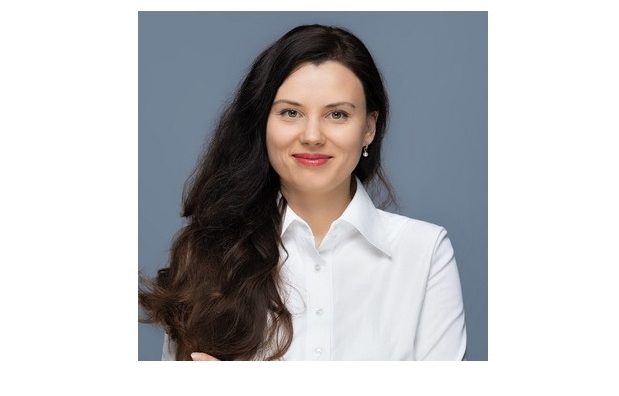
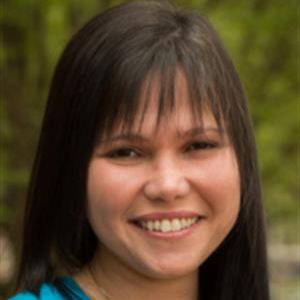
Katažyna Bogdzevič is a Professor at Mykolas Romeris University (MRU) Law School, specializing in Private International Law , European Law , Human Rights , and Environmental Law . She leads the MRU Human Rights LAB and contributes to the Environmental Management Research LAB, focusing on legal frameworks for ecosystem services, climate change mitigation, and stakeholder engagement. Key Research Themes: Integration of Private International Law with Environmental Law , analysis of legal conflicts in nature-based solutions, and name rights under international human rights conventions. Policy Engagement: Serves as advisor to Lithuania's Minister of Justice Ewelina Dobrowolska , emphasizing knowledge transfer to legislative and judicial practices. Email: roffice@mruni.eu
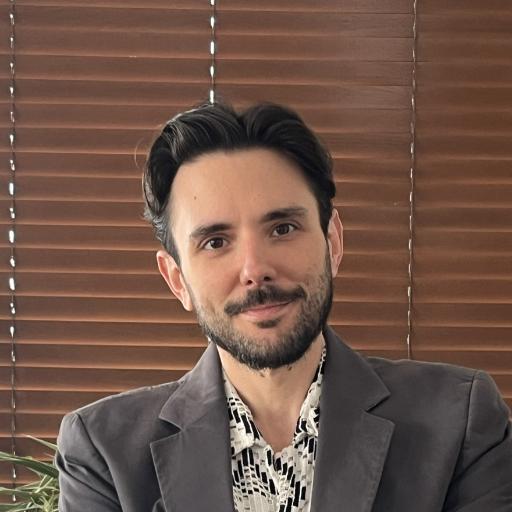
Jesse Arseneault is an Assistant Professor at Concordia University, specializing in African Cultural Studies. His research interrogates the intersections of animality, postcolonialism, queer theory, and posthumanism, with a focus on representations of human-animal relations in African cultural texts. He supervises graduate students in English, Humanities, and Individualized Programs, and teaches courses on postcolonial literature, decolonization, and multispecies ethics. PhD in English and Cultural Studies, McMaster University (2016) MA in English Literature, McMaster University (2010) BA in English Language and Literature, Brock University (2008) His current manuscript, Africa's Animalities , critiques anthropocentric frameworks in postcolonial discourse, while recent publications examine pestilence, reproductive control in animal trials, and South African student protests. He co-founded the Society, Politics Animals, and Materialities (SPAM) center and edits special issues on African cultural studies. Key research themes include: Postcolonial critiques of human-animal binaries Queer and posthumanist approaches to African literature Multispecies resilience and environmental justice Decolonial pedagogy and political movements Scientific contributions: FRQSC grant (2020-2024) for "The Radical Collectivity of Pests" Co-authored works on animal trials and resilience frameworks Editorial leadership in Critical Arts and Studies in Social Justice
Professor David Evans is an expert in special and inclusive education at the University of Sydney's Sydney School of Education and Social Work, where he coordinates the Special and Inclusive Education designation. His research examines curriculum design for students with special needs, evidence-based practices in special education, and teacher preparation for inclusive classrooms. Education includes a PhD from the University of Oregon, GDSE from Edith Cowan University, MA in Special Education from Macquarie University, and BEd from the University of South Australia. His practitioner background includes experience in Australian and New Zealand government and law firms. Current research investigates early numeracy development for students with learning difficulties, teacher attitudes toward inclusion across international contexts, literacy support interventions, and Universal Design for Learning applications. Projects include the Australia-Thailand Institute's 'Off to a Good Start' initiative enhancing early reading skills. Publication trends show focus on inclusive pedagogies, teacher competencies, and systemic approaches to disability inclusion. Recent work analyzes art education's role in inclusion and higher education pathways for students with intellectual disabilities. Professor Evans teaches courses in Torts and Contracts II, Environmental Law, and International Environmental Law. He leads international collaborations in Indonesia and Thailand and serves as Associate Editor for the Australasian Journal of Special Education.
Partow Izadi is a University Lecturer at the Faculty of Education, University of Lapland. His research focuses on culturally-sensitive educational strategies and democratic education frameworks, with a regional emphasis on Lapland's unique socio-cultural context. Research Projects: Cultural-Sensitive Learning Path in Lapland (2018-2020, ESF-funded): Developed inclusive education models addressing Lapland's multicultural student population Demokratia ja ihmisoikeuskasvatus opetta (2016, Gov't-funded): Created human rights education materials for schools Research Interests: Integrating cultural responsiveness into educational practices, democracy education, and supporting youth decision-making through innovative pedagogical approaches. Grants & Funding: Successfully obtained €450k+ in project funding from EU Structural Funds and Finnish Ministry of Education since 2016. Labs/Teams: Collaborates with multidisciplinary teams including Lapland regional education authorities and Sami cultural organizations.
Megan J. Elias is an Associate Professor of the Practice and Director of the Food Studies Program at Boston University. She holds a PhD from the City University of New York (CUNY), an MA from San Francisco State University, and a BA from Cornell University. Her research explores the intersection of food, culture, and history, with a focus on food writing, markets, home economics, and gender. Dr. Elias is the author of seven books, including *Food on the Page: Cookbooks and American Culture* (2017) and *Food in the United States, 1890–1945* (2009), which received the American Library Association’s Outstanding Academic Text award. She serves as editor-in-chief of *Food, Culture & Society* and has been a co-recipient of multiple National Endowment for the Humanities grants. Elias teaches courses such as *History of Food*, *Introduction to Gastronomy*, and *Food and Gender*, emphasizing interdisciplinary approaches. Her work bridges historical analysis with public engagement, including contributions to Sundance Channel’s *Love/Lust* series and collaborations on museum podcasts like the *Making Objects Speech* project. Her research interests span business history, cultural history, food technology, and the scholarship of teaching and learning. In grants and fellowships, she secured $350,000 as Lead Faculty Mentor for the *Bridging Historias* program and a $74,937 NEH grant for the *Foodways and Humanities Project*. Her awards include the CUNY Chancellor’s Fellowship (2014) and the Culinary Historians of New York Amelia Scholars Grant (2007). She actively mentors faculty and curricular development, reflecting her commitment to academic innovation and educational equity.
Caitlyn Hall is a Joint Assistant Professor of Practice in Hydrology and Atmospheric Sciences, Assistant Professor of Practice in Biosystems Engineering, and Director of the Future Earth Resilience minor program at the W.A. Franke Honors College. She founded the Arizona Science Policy Network and advises decision-makers on equitable legislation. Her roles span multiple departments at the University of Arizona, integrating environmental science with policy and community engagement. Educations: PhD in Environmental Engineering, Arizona State University BS and MS in unspecified fields from the University of Arizona Research Interests: Hall focuses on environmental justice, natural hazard resilience, and science policy, particularly in water governance, sustainability, and soil/water remediation. Her work emphasizes community-driven solutions and equitable policy development, leveraging transdisciplinary approaches to address climate adaptation and disaster recovery. She has pioneered efforts in open science and inclusive geoscience education. Articles Trends: Her recent publications emphasize integrating earth observation technologies with policy, advancing microbial-based ground stabilization techniques, and promoting equity in post-disaster recovery. Key themes include climate action frameworks, cross-cultural sustainability solutions, and open hydrology practices. Awards: No specific awards listed. Advising & Grants: Leads the Future Earth Resilience minor program and advises policymakers on legislative frameworks. Active in curriculum development for interdisciplinary environmental studies and community-driven research initiatives. Labs/Teams: Founder of the Arizona Science Policy Network, collaborates with global hydrology platforms like eWaterCycle, and engages in initiatives addressing US-Mexico border sustainability challenges.
Professor Joshua S. Mostow is a scholar of pre-modern Japanese literature and art, specializing in text-image relationships, Heian-period studies, and gendered cultural constructions. He holds a professorship at the University of British Columbia’s Department of Asian Studies (Faculty of Arts), where he also serves as Acting Director of Language Programs. Mostow earned his doctorate in Comparative Literature and Literary Theory from the University of Pennsylvania, with additional studies at International Christian University (Tokyo), Université de Paris, and Gakushuin University. His career includes visiting roles at institutions like Heidelberg University and the University of California, Berkeley. His research focuses on intersections of literature and visual arts, particularly in Japanese pre-modern contexts. Key interests include the ideological construction of the Heian period, women’s writing traditions, and the role of sexuality in cultural identity. Major works include *Courtly Visions: The Ise Stories and the Politics of Cultural Appropriation* (2014) and *Pictures of the Heart: The Hyakunin Isshu in Word and Image* (1996). He has received prestigious awards such as the Japan Foreign Minister’s Commendation (2017) and induction into the Royal Society of Canada (2015). Mostow has authored/co-authored over 20 books, edited volumes, and numerous articles across Japanese literature, art history, and cultural studies. His work spans medieval commentaries, Edo-period print culture, and modern reception histories. He frequently lectures internationally on topics like gender representation in classical texts and the visual legacy of *The Tale of Genji*. Grants and fellowships include support from the Sainsbury Institute, Japan Foundation, and SSHRC (Canada). His contributions to Japanese studies include co-editing *The Columbia Companion to Modern East Asian Literature* (2003) and curating exhibitions on Rinpa aesthetics and Edo-period shunga. Scholarly activities further include invited lectures at institutions worldwide and participation in major international conferences.
Professor Robyn Healy is the Associate Deputy Vice Chancellor (Learning and Teaching) and Head of the School of Fashion and Textiles at RMIT University. She holds a Professorial rank within the Department of Design and Social Context. Her career includes roles as Senior Curator at the National Gallery of Victoria and National Gallery of Australia, alongside extensive academic leadership. Her research focuses on fashion design, curatorial practices, museums, material culture, and practice-led research, with a PhD exploring new museum exhibition methodologies for fashion. She is a Category 1 research supervisor and leads a vibrant research team overseeing numerous PhD projects in fashion and design innovation. Education Leadership: Spearheaded restructuring of fashion programs to enhance cross-disciplinary studios and industry engagement. Professional Roles: Chair of IFFTI Research Sub-Committee, member of TEQSA accreditation panels, and advisor to national cultural institutions. Research Interests: Robyn’s work bridges fashion design, museology, and material culture with a focus on curatorial innovation and the phenomenology of wear. Her projects explore sustainable fashion practices, digital curation, and the intersection of fashion with health and technology. Awards: Centenary Medal (2013) for contributions to Australian fashion, and Gordon Darling Foundation Travel Scholarship. Supervision & Grants: Active in mentoring over 20 PhD and Masters candidates, with research projects addressing topics like sustainable textile methods, fashion curation in digital spaces, and biomimetic design. Engaged in collaborative grants exploring wearable health technologies and fashion’s environmental impact. Labs/Teams: Directs the School of Fashion and Textiles, fostering industry partnerships and innovative research initiatives in sustainable design and curatorial practices.
Sarah Howard is an Honorary Professor at the School of Education, University of Wollongong, and concurrently holds roles such as Visiting Professor at Vrije Universiteit Brussel. Her research focuses on leveraging new technologies and data science to understand classroom practices, teacher change, and technology integration. Key areas include cultural and individual factors influencing teachers' digital technology use, blended learning environments, and automated classroom observation systems. She leads projects like national app use studies in primary schools and data/video mining methods for digital-physical space integration. Her academic roles include supervision of higher-degree research students across multiple institutions. Funding includes ARC grants and internal university schemes exploring rural student potential, generative AI in education, and flexible learning spaces. Her work emphasizes innovative educational technologies, teacher professional development, and systemic educational change. Recent publications span AI in education, blended learning frameworks, and teacher readiness for online instruction. She collaborates internationally, with a focus on integrating theoretical and practical insights to drive educational innovation.
Professor Simone Fullagar is a sociologist specializing in gender equity in sport, mental health, and social well-being. She serves as Chair of the Sport and Gender Equity research hub at Griffith University and holds affiliations with the Griffith Centre for Social and Cultural Research and the Centre for Mental Health. Her academic career includes roles at the University of Bath, UK, and leadership in organizations like parkrun's global research board. Fullagar earned her PhD from the University of New South Wales and a Bachelor of Arts with Honours from the University of Technology Sydney. Her research explores intersections of gender, health, and sport, with recent projects funded by the Australian Research Council and international bodies. Key interests include violence prevention in sport, disability inclusion, and feminist new materialist methodologies. Fullagar has supervised numerous doctoral students, focusing on topics like sport development systems and gender equity in parasport organizations. Notable awards include the Shaw-Mannell International Leisure Research Award (2015) and Fellowship with the UK Academy of Social Sciences (2019). She contributes to policy through roles such as Chair of Griffith's Inclusive Futures research beacon and member of the Gold Coast Sport and Physical Activity Strategy Steering Committee. Her work emphasizes transformative approaches to social inequities through interdisciplinary collaboration.
Christian Gasser is a Lecturer in Film at the Lucerne School of Design, Film and Art (HSLU D&K). He holds a background in German and Romance Studies from universities in Bern and Paris. Beyond academia, he is a freelance writer, cultural journalist for publications like the NZZ and Swiss-German radio stations, and co-editor of the comic magazine STRAPAZIN. His professional roles include curator for events like the Graphic Novel Days in Hamburg and Avant Comics in Madrid, alongside jury memberships for international comic and animation festivals. Education: Germanistik und Romanistik (Bern/Paris) His research focuses on animation film aesthetics, history of moving images, illustration history, and mentorship in theory/practice. He has curated festivals and contributed to radio programs, earning awards such as the Zürcher Radiopreis (1994) and Prix Europa Berlin (1996). Recent publications include the novel Rakkaus! (2014) and Comic Deluxe (2012) . He has been affiliated with HSLU since 2004, teaching theory in Animation and Illustration programs since 2013. His articles explore diverse themes from Swiss animation history to avant-garde comics, reflecting his interdisciplinary approach. Engagements include moderating panels at international festivals and publishing in academic journals. He co-led the Video Essay research project on audiovisual education methodologies.
Dr. Jacob Brower is an Associate Professor & Distinguished Teaching Fellow of Marketing at the Smith School of Business, Queen’s University. His research focuses on marketing strategy, corporate social responsibility (CSR), sustainability, and brand management. He holds a PhD in Marketing from the University of Texas at Austin, alongside advanced degrees in Marketing and Economics. Prior to academia, he worked as a consultant and market research analyst for Fortune 500 firms like FedEx and IBM. His research explores CSR drivers, corporate social performance (CSP) impacts on firm performance, and pro-social consumer behavior. Notable contributions include studies on top management team dynamics and innovation. He has published in journals like Journal of Management Studies and Journal of Business Ethics . Awarded the Distinguished Teaching Fellow title (2019–present), he also leads initiatives in teaching development and pedagogy. His service roles include co-organizing the Smith School Pedagogy Café and serving on Queen’s Research Ethics Board. He has supervised numerous graduate students and secured grants from SSHRC and industry partnerships.
Chuck Jackson is a Professor of English and Coordinator of the B.A. in English program at the University of Houston-Downtown, overseeing concentrations in creative writing, education, and film studies. He earned his Ph.D. in U.S. Literature, Film, and Culture from Rice University. His research focuses on nontheatrical film studies, archival film preservation, independent Black cinema, and the intersection of prison abolition with literary and cultural studies. Jackson has received significant grants including the Mellon Foundation Black Studies Course Development Grant (2025) and a National Endowment for the Humanities (NEH) award (2024). He teaches courses like Film Theory, Cultural Criticism, and Literature and Culture, emphasizing critical pedagogy and interdisciplinary approaches. His scholarship bridges cinematic horror analysis with historical contexts, particularly exploring petroleum culture in 1960s-70s horror films and the work of Black cinematographers like James E. Hinton. Recent publications include 'Small Collection, Enormous Power' (2025) examining archival film curation and 'Texas/Chain Saw/Atmospheres' (2024) analyzing regional identity in horror cinema. Jackson has secured multiple Organized Research Grants (2023, 2021) and focuses on educational justice through pedagogical innovations. His work frequently intersects with social justice themes, linking literary analysis to contemporary debates about incarceration and systemic racism.
Aurelia Rio is an Assistant Professor of Spanish at the University of Delaware. She has been affiliated with the College of Arts & Sciences and the Languages, Literatures & Cultures department since 2003. Dr. Rio holds a Ph.D. in Spanish from Temple University (2015) and an M.A. in Foreign Languages and Literature from the University of Delaware. Education: Ph.D., Spanish, Temple University (2015) M.A., Foreign Languages and Literature, University of Delaware Her research focuses on Spanish for professional contexts, online pedagogy, second language acquisition mechanisms, and cultural studies via film. She actively advises the Spanish for Healthcare Minor program and has led multiple study abroad initiatives. Teaching responsibilities include courses in Spanish language proficiency, healthcare Spanish, Latin American cultures, and oral communication. She employs both in-person and online modalities across undergraduate and graduate programs.
Andrew P. Dicks is a Teaching Professor in the Department of Chemistry at the University of Toronto, serving as Associate Chair for Undergraduate Studies. His work focuses on transforming chemistry education through green laboratory practices, sustainable curricula, and innovative pedagogical strategies. He has spearheaded the redesign of undergraduate organic chemistry labs to emphasize microscale experiments, green chemistry principles, and collaborative learning. His research explores methods to integrate the United Nations Sustainable Development Goals into education and has been recognized with the ACS-CEI Award for an undergraduate catalytic chemistry course. Dr. Dicks’ administrative contributions include mentoring faculty and developing programs like the Chemistry Teaching Fellowship. He advocates for teaching assistant training, writing instruction, and student learning communities. His lab initiatives emphasize real-world relevance, using waste materials (e.g., McDonald’s cooking oil) and natural media (citrus juice) to demonstrate chemical principles. Notable research themes include solvent-free reactions, energy-efficient microwave techniques, and metrics for evaluating reaction greenness. His articles highlight trends in green chemistry education, pandemic-driven pedagogical adaptations, and interdisciplinary approaches to materials science. Awards include the ACS-CEI Award, reflecting his impact on advancing sustainable chemistry education globally. Dr. Dicks also champions humor and puzzles in science communication to engage learners and foster a culture of curiosity.