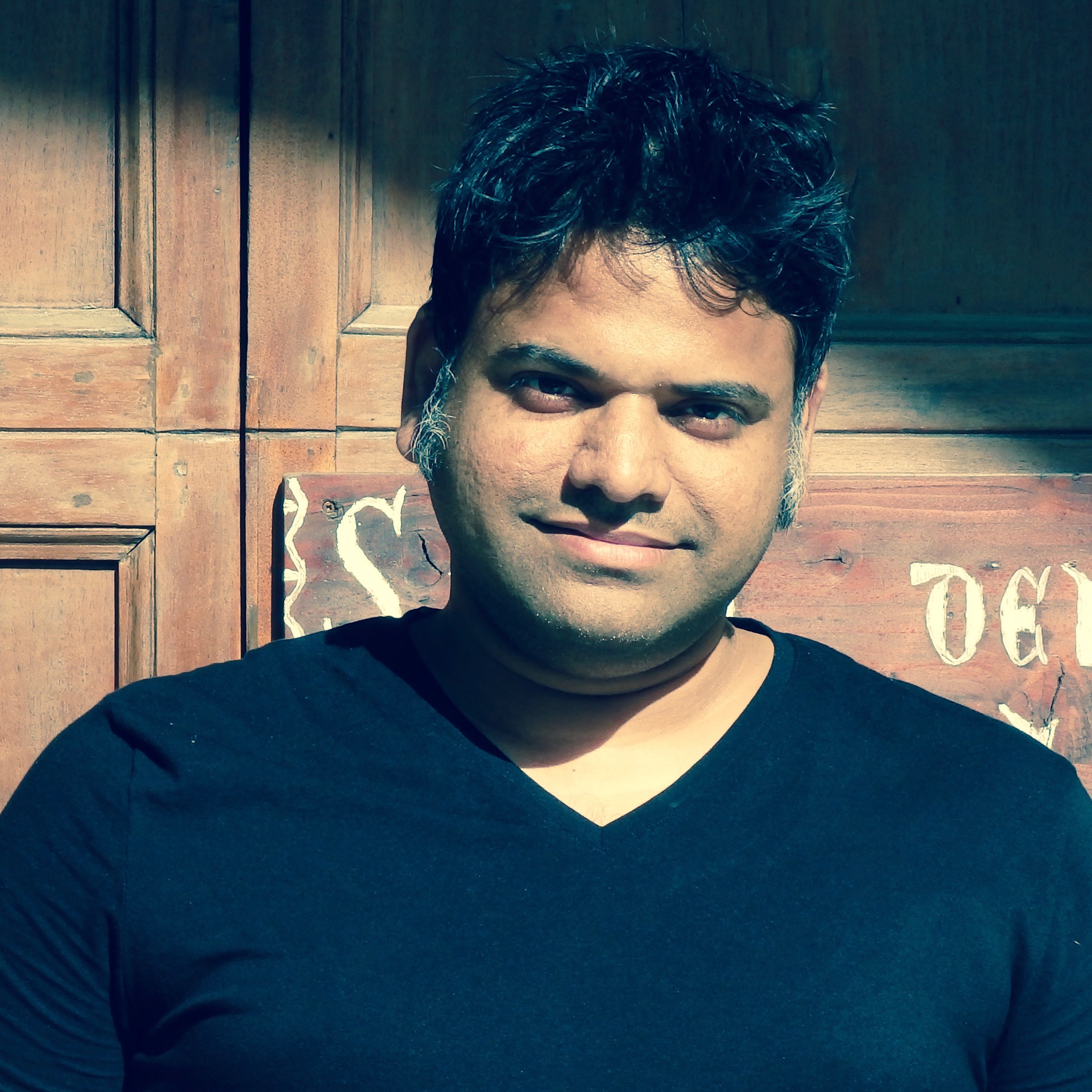
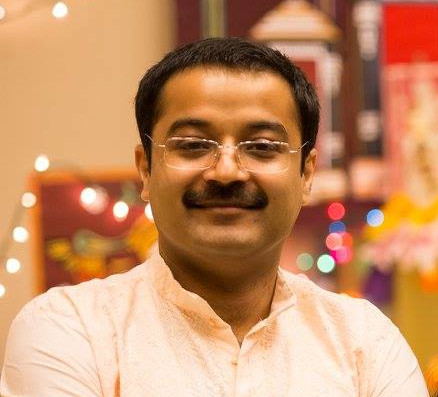
K. V. Raghavan is an Associate Professor at the Department of Computer Science and Automation in Indian Institute of Science, Bangalore . His research focuses on programming languages , program analysis , and software engineering , with an emphasis on automated tools for program verification and transformation. Teaching: Courses include Program Analysis and Verification (Aug-Dec 2024) and Principles of Distributed Software (Jan-Apr 2025), covering topics like abstract interpretation , dataflow analysis , lambda calculus , Hoare logic , Docker , and Kubernetes . Service: Served as PC co-chair for the Int. Symposium on Automated Technology for Verification and Analysis (ATVA 2025) . Research: Active opportunities for Project Assistant/Associate and Post Doc positions in his group.
Soumen Chakrabarti is a Professor in the Department of Computer Science and Engineering at Indian Institute of Technology Bombay. His work bridges graph theory, natural language processing, and knowledge representation, focusing on scalable solutions for complex information retrieval problems. He has held visiting positions at Carnegie-Mellon University and Google. Education: B.Tech from IIT Kharagpur, PhD from UC Berkeley Key research areas: Graph Neural Networks, Knowledge Graphs, Code-Switched Text Analysis, Temporal Reasoning His recent publications emphasize neural graph matching , code-switched NLP , and multi-modal QA systems , often integrating symbolic reasoning with deep learning. Awards include the WWW 1999 Best Paper Award and ECML/PKDD 2008 Best Student Paper . He leads projects like CRUSH4SQL for text-to-SQL parsing and CSAW for annotated web search. His lab collaborates with IBM and Google on graph representation learning and temporal knowledge graph completion.
Parag Chaudhuri is a Professor in the Department of Computer Science and Engineering at the Indian Institute of Technology Bombay. His research centers on computer graphics, animation, and virtual reality, developing computational models to replicate real-world phenomena for enriched virtual experiences. His educational background includes: Ph.D. from IIT Delhi under Prem Kalra and Subhashis Banerjee Postdoctoral research at MIRALab, University of Geneva with Nadia Magnenat Thalmann Bachelor's degree in Civil Engineering from Delhi College of Engineering Professor Chaudhuri's research spans Computer Graphics with core focus areas in character/natural phenomena animation, visual data understanding, and 2D/3D content generation. His work integrates computer vision, physics simulation, and machine learning to address challenges in virtual worlds. Specific interests include rendering, modeling, VR/AR systems, and vision-based graphics. Applications extend to medical simulation, entertainment, industrial processes, and digital heritage preservation through physics-driven approaches. Recent publications (2022-2025) reveal strong trends in document analysis for multilingual text recognition (especially Indic scripts), real-time hand/character animation in AR environments, and physics-based fracture/deformation systems. His work bridges graphics with machine learning for practical solutions in visual data processing. At IIT Bombay, he mentors graduate students requiring foundational courses CS675 and CS775. He accepts Ph.D./M.S. candidates through official CSE department procedures but does not offer internships to non-IITB students. He leads a research group advancing computational techniques for virtual world creation, focusing on interactive animation systems and visual data synthesis.
Ashutosh Gupta is an Associate Professor in the Department of Computer Science and Engineering at the Indian Institute of Technology Bombay, where he has been a faculty member since 2018. His research focuses on formal methods for software verification, particularly in the areas of model checking, constraint solving, and automated reasoning for both sequential and concurrent programs. He teaches advanced courses including Automated Reasoning (CS433), Analysis of Concurrent Programs (CS766), and Logic for Computer Science (CS228). Dr. Gupta received his Ph.D. in Computer Science from Technical University of Munich (TUM) in 2011, with affiliations during his doctoral studies at TUM, Max Planck Institute for Software Systems (MPI-SWS), and École Polytechnique Fédérale de Lausanne (EPFL). Prior to joining IIT Bombay, he served as a faculty member at Tata Institute of Fundamental Research (TIFR) in Mumbai and completed post-doctoral research in the Henzinger group at IST Austria. His research interests span formal verification of sequential and concurrent software, modeling of biological systems, and constraint solving including constraint logic programming, decision procedures, and automated theorem proving. He has developed several verification tools including VAJRA, HSF, and InvGen. His work bridges theoretical foundations with practical applications, particularly in verifying safety-critical systems and biological processes. Dr. Gupta's publication record shows a consistent trajectory of high-impact research in top venues like POPL, CAV, TACAS, and AAAI. His recent work has expanded into neural network verification, reinforcement learning verification for medical devices, and applying formal methods to biological systems, demonstrating both depth in core verification techniques and breadth in application domains. Best Paper Award at TACAS 2015 Best Paper Award at TACAS 2009 Dr. Gupta actively mentors numerous students through course projects, research presentations, and specialized workshops like SATfest. He has supervised students working on SAT/SMT solvers, verification of concurrent programs, and applications of formal methods to biological systems. His teaching philosophy emphasizes hands-on experience with verification tools and encourages students to engage with cutting-edge research through reading and presenting recent conference papers. He maintains active research collaborations with institutions including TUM, MPI-SWS, EPFL, IST Austria, and TIFR, reflecting his continued integration into the international formal methods research community.
S. Ramesh serves as a Professor in the Department of Computer Science and Engineering at Indian Institute of Technology, Bombay. His research spans formal methods, verification systems, and brain-computer interfaces with notable projects including CFDVS (Center for Formal Design and Verification of Software), UML-based specification systems, and concurrent program analysis. His research interests focus on Formal Verification , Concurrent Systems , and Reactive Applications , with significant contributions to slicing techniques for concurrent Java programs, FPGA testing, and synchronous language applications. The work demonstrates strong interdisciplinary connections between computer science and neuroscience, particularly in event-related potential analysis. Analysis of his publication history reveals dual research trajectories: computer science projects in verification systems and neuroscience publications concerning unconscious processing, ERP analysis, and brain-computer interfaces. This unusual combination suggests cross-disciplinary collaboration between IIT Bombay's computer science department and neuroscience research groups. Ramesh has supervised four PhD students including Ambar Gadkari (working on GALS verification), M.G. Nanda (slicing concurrent Java programs), Sridhar Iyer (reachability analysis of concurrent OO programs), and A. Sowmya (autonomous robot motion specification). His current projects include the CFDVS initiative, Design and Verification of Distributed Applications, Slicing Concurrent Programs, UML-based Specification Systems, and FPGA Testing, demonstrating sustained research activity in formal methods and verification technologies.
Ramakrishna Upadrasta is an Associate Professor in the Department of Computer Science & Engineering and Heritage Science & Technology at Indian Institute of Technology Hyderabad. He earned his PhD from University of Paris-Sud and INRIA, Paris, with a focus on improving scalability in polyhedral compilation tools. His academic journey includes an M.S. from Colorado State University, M.Tech from Indian Institute of Science (IISc), and B.E. in Electrical and Electronics Engineering from Andhra University. His research expertise includes: Domain Specific Programming Languages for Parallelization LLVM Optimizations Polyhedral Compilation Abstract Interpretation Sub-polyhedral Approximations High-Performance Computing (HPC) He leads the IITH-LLVM group and collaborates with industries on compiler technologies. His work addresses scalability vs. precision trade-offs in static analysis tools and extends polyhedral compilation frameworks like Pluto and Polly. Scientific Recognition : HiPEAC paper award for his POPL-2013 publication As an educator, he has taught advanced compiler courses (e.g., CS6250, CS5260) and coordinated interdisciplinary initiatives, including Sanskrit language courses via Samskrita Bharati. His students span PhD, M.Tech, and B.Tech levels, focusing on compiler design and parallelization.
Vijayalaxmi serves as Associate Professor - Senior Scale in the Department of Electrical and Electronics Engineering at Manipal Institute of Technology, Manipal Academy of Higher Education. With an h-index of 66 and 12 research outputs since 2012, her recent scholarly activity shows significant acceleration with five publications in 2023-2024 alone. Her research program bridges artificial intelligence with critical real-world applications: Developing deep learning frameworks for agricultural disease detection (e.g., LeafSpotNet for jasmine plants) Creating computational techniques for poultry health management through machine learning Applying natural language processing to analyze pandemic mental health impacts Designing embedded systems for smartphone sensor stabilization Publication trends from 2023-2024 reveal concentrated expertise in agricultural AI, with four of five papers focusing on plant and poultry disease detection systems. Her work consistently employs computer vision and deep learning methodologies to solve practical problems in sustainable farming, demonstrating strong interdisciplinary impact across electrical engineering and agricultural technology domains. No scientific awards are documented in the available profile information. While her advisory activities and grant funding remain unspecified in the provided materials, her collaborative publication patterns suggest active engagement with researchers across computer science and agricultural domains. Laboratory or team affiliations are not explicitly mentioned in the current profile.
Amey Karkare is a Professor in the Department of Computer Science and Engineering at the Indian Institute of Technology Kanpur (IIT Kanpur). He holds a PhD from IIT Bombay and has been affiliated with IIT Kanpur since 2010, progressing through academic ranks to his current role since 2021. Education: PhD, IIT Bombay (2003-2008); B.Tech., IIT Kanpur (1994-1998) Research Interests: His work spans compilers , functional programming , program analysis , code optimization , and programming education . He focuses on improving compiler error messages, automated error repair, and educational tools like Prutor for programming courses. Recent Publications highlight advancements in pedagogical error repair , intelligent problem indicators , error localization , and GPU energy optimization . Notably, his 2023 paper on automated error repair received a Best Paper Award. Awards & Recognitions: Poonam and Prabhu Goel Chair Fellowship (2022) IIT Kanpur 1989 Batch Faculty Award for innovative teaching (2019) Best Faculty of the Year by Computer Society of India (2018) P. K. Kelkar Young Faculty Fellowship (2013-2016) Teaching & Advising : He supervises PhD, M.Tech, and B.Tech students, offering courses like Advanced Compiler Optimizations and Principles of Programming Languages . His projects integrate AI and functional programming in education.
Kavi Arya is a Professor in the Department of Computer Science and Engineering at the Indian Institute of Technology Bombay, serving as Principal Investigator for the e-Yantra Project (http://www.e-yantra.org) and Director of Chetana Pvt. Ltd. since 1994. His academic qualifications: B.Sc. (Hons.) in Computer Science, Imperial College, London University (1980-1983) M.Sc. (Hons.), Programming Research Group, Oxford University (1983-1984) D.Phil., Programming Research Group, Oxford University (1984-1988) Research focuses on Functional Programming applications through Domain Specific Languages, high-level language approaches for Embedded Systems design, Parallel Programming Languages, and Distance Learning methodologies. His work emphasizes software-centric solutions for embedded systems and educational innovation through robotics initiatives. Professional roles include: Research Scientist, IBM TJ Watson Research Center, Yorktown Heights, NY, USA (1988-1990) Research Staff, Tata Research Development and Design Centre, Pune (1992-1994) Technical Advisor (CTO) to Vice Chairman/MD's Office, Mahindra & Mahindra Ltd. (2007, sabbatical) He leads the e-Yantra project establishing robotics/embedded systems labs across Indian engineering colleges, significantly impacting hands-on technical education through scalable infrastructure and curriculum development.
Pushpak Bhattacharyya is a distinguished Professor in the Department of Computer Science and Engineering at the Indian Institute of Technology (IIT) Bombay. He holds the prestigious title of Abdul Kalam National Fellow and is a Fellow of the National Academy of Engineering (FNAE). His academic leadership extends to roles such as Professor Incharge of the IIT Bombay-Monash Australia Academy and Chairman of the MEITY Committee for Indian Language Standards. Professor Bhattacharyya's research spans multiple domains within computational linguistics and artificial intelligence. His work focuses on Natural Language Processing, Computational Linguistics, Machine Learning, Sarcasm Detection, Sentiment Analysis, Multilingual Processing, and Cognitive NLP. He has made significant contributions to Indian language technology, leading NITI Aayog's initiative on creating an Indian Language NLP stack and Virtual Agents. His recent publications reveal a strong focus on multilingual NLP for Indian languages, bias detection in language models, sarcasm and humblebragging detection, mental health applications of NLP, and code generation. His work bridges theoretical advances with practical applications in education, healthcare, and government services. The research demonstrates increasing integration of cognitive aspects with traditional NLP approaches and a growing emphasis on ethical AI considerations like bias detection and cultural competence. FNAE (Fellow of National Academy of Engineering) Abdul Kalam National Fellow Listed among top 10 Machine Learning Researchers in India Listed among most prolific NLP-ML researchers 2012-17 Professor Bhattacharyya has mentored numerous PhD and Masters students who have gone on to make significant contributions in academia and industry. His research has been supported by various grants from government agencies and industry partners, enabling large-scale projects in Indian language technology and NLP. He has led the development of comprehensive NLP resources for Indian languages and has been instrumental in establishing research collaborations between IIT Bombay and international institutions. He leads a vibrant research group at IIT Bombay focused on Natural Language Processing, with active projects in sarcasm detection, multilingual processing, cognitive NLP, and applications of NLP in healthcare and education. His team has developed several notable systems including those for Indian language translation, sarcasm detection, and mental health analysis through text.
Ashutosh Trivedi is an Associate Professor of Computer Science at the University of Colorado Boulder, currently on leave from his position as Assistant Professor in the Department of Computer Science and Engineering at the Indian Institute of Technology Bombay. He is affiliated with multiple research initiatives including the Centre for Formal Design and Verification of Software (CFDVS) at IIT Bombay, Free and Open Source Software for Education (FOSSEE), and the Indo-French project on Algorithmic Verification of Real-Time Systems (AVeRTS). At CU Boulder, he leads the Programming Languages and Verification (CUPLV) research group focusing on trustworthy AI systems. Trivedi's research centers on bridging formal methods with artificial intelligence to create more trustworthy systems. His work spans formal verification of cyber-physical systems, reinforcement learning with formal guarantees, and developing techniques for ensuring software fairness and accountability. He specializes in using formal languages, automata, and logic to transform vague natural-language instructions into precise specifications for AI systems. His recent projects include developing reinforcement learning algorithms for cardiac pacemaker design based on formal safety requirements, using SAT solvers to ground large language model outputs in logical reasoning, and encoding state representations in reinforcement learning using formal languages. His publication trends reveal a strong focus on neurosymbolic approaches that combine neural networks with symbolic reasoning, particularly for safety-critical applications. Recent work demonstrates increasing integration of formal methods with reinforcement learning, with applications spanning medical devices, tax preparation software, and puzzle-solving AI. His research shows a clear trajectory toward making AI systems more explainable, accountable, and verifiable through principled mathematical frameworks. Distinguished Paper Award at CAV for Regular Reinforcement Learning (2024) NeuS 2025 Disruptive Idea Award for Stochastic Neural Simulation Relations for Transferring Control under Uncertainty ACM Senior Member recognition (2024) Royal Society Wolfson Visiting Fellowship (2024) Trivedi has successfully advised multiple PhD students to completion, including Shadi Tasdighi Kalat (2025), Mateo Perez (2025), John Komp (2024), Vishnu Murali (2024), and Taylor Dohmen (2024). His teaching portfolio includes foundational courses in automata theory, digital logic design, and cyber-physical systems at both IIT Bombay and CU Boulder. He has served on program committees for major conferences including FSTTCS, HSCC, and FORMATS, and organized workshops such as ICLA 2015 and ALC 2015. As leader of the CUPLV research group, Trivedi directs projects focused on formal verification of AI systems, reinforcement learning with safety guarantees, and software fairness. His group collaborates with medical researchers on cardiac device verification and with legal scholars on tax software accountability, reflecting his commitment to applying formal methods to real-world problems with significant societal impact.
Swarnendu Biswas is an Assistant Professor in the Department of Computer Science and Engineering at the Indian Institute of Technology Kanpur. He teaches courses including Programming for Performance (CS 610), Analysis of Concurrent Programs (CS 636), and Compiler Design (CS 335), demonstrating his expertise across multiple areas of computer systems. His research interests center on Programming Languages, Compilers, Runtime Systems, and Parallel Software Systems. He leads the PROSPAR (Programming Languages and PARallel Systems) research group, which focuses on developing techniques to build efficient and correct parallel software through program analysis, compiler optimizations, and runtime systems. His recent publications reveal a strong trend in addressing fundamental challenges in parallel computing, with work spanning cache coherence, false sharing detection, data race analysis for GPUs, verification of neural networks, and thermal-aware management of heterogeneous systems. His research bridges theory and practice with significant contributions to both hardware and software aspects of parallel systems. His scientific achievements have been recognized through multiple prestigious awards: Google India Research Award 2021 Google Explore CSR 2022 Research Grant from Intel Corporation SERB Start-up Research Grant 2019 Google Cloud Platform Research Credits (2019, 2020) IITK Initiation Grant 2019 As an advisor, he mentors several PhD and MTech students working on cutting-edge research in parallel systems. His PROSPAR group has secured significant funding from industry and government sources, supporting innovative research in programming languages and parallel systems. The group actively collaborates with industry partners including Google and Intel, addressing real-world challenges in parallel computing. He leads the PROSPAR research group at IIT Kanpur, which brings together faculty, PhD students, and MTech researchers to tackle challenging problems at the intersection of programming languages, compilers, and parallel systems. The group maintains strong industry connections and focuses on practical solutions that can be deployed in real systems.
Sandeep K. Shukla is a Professor in the Department of Computer Science and Engineering at the Indian Institute of Technology Kanpur (IIT Kanpur), where he conducts cutting-edge research in formal methods, embedded systems, and cyber security. Previously, he served as Professor at Virginia Tech and held various academic positions including Associate Professor and Assistant Professor at the same institution. Dr. Shukla received his educational foundation from prestigious institutions: PhD in Computer Science from State University of New York at Albany (1997) M.S. in Computer Science from State University of New York at Albany (1995) B.E. in Computer Science and Engineering from Jadavpur University, Kolkata (1991) His research interests span multiple domains within computer science and engineering, with a strong focus on formal verification techniques for system design. Dr. Shukla specializes in applying formal methods to critical infrastructure systems, embedded hardware and software design, and smart grid technologies. His work bridges theoretical computer science with practical engineering applications, particularly in safety-critical domains where reliability is paramount. He has pioneered approaches in model-driven engineering and software synthesis that have influenced industry standards and practices. Dr. Shukla's publication record demonstrates a consistent trajectory of innovation in system-level design methodologies. His work shows a clear progression from foundational research in formal verification to practical applications in critical infrastructure systems. The publications reveal expertise across computer science subfields including embedded systems design, formal methods, hardware-software co-design, and cyber-physical systems. His more recent work focuses on integrating different computational models for complex system design, particularly addressing challenges in smart grid and critical infrastructure security. Dr. Shukla has received numerous prestigious awards recognizing his contributions to the field: IEEE Fellow (2014) for "contributions to applied probabilistic model-checking for system design" ACM Distinguished Scientist (2013) Humboldt Bessel Award (2008) Presidential Early Career Award for Scientists and Engineers (2003) National Science Foundation CAREER Award (2002) Throughout his career, Dr. Shukla has mentored numerous graduate students and secured significant research funding from various sources including the National Science Foundation, US Air Force, and other government agencies. His work on reliability-driven nano-computing led to the development of the NANOPRISM tool, and his contributions to system-level design languages influenced new kernels of the SystemC language. He has collaborated extensively with international research groups, including projects funded by US AFOSR to collaborate with INRIA and the University of Kaiserslautern. Dr. Shukla is actively involved with research centers including the Center for Developing Intelligent Systems (CDIS) at IIT Kanpur. His work integrates multiple research teams focusing on formal methods applications to critical infrastructure systems, with particular emphasis on smart grid security and embedded system reliability. His research group maintains strong industry connections, particularly with technology companies working on embedded systems and security solutions.
Sanjeev Saxena serves as Professor in the Department of Computer Science and Engineering at the Indian Institute of Technology Kanpur, where he has established himself as a prominent researcher in algorithm design and parallel computing. His research spans five key domains: Algorithms - specializing in efficient computational methods and theoretical foundations Parallel Processing - developing architectures for multi-processor computation VLSI - exploring algorithm-hardware integration for circuit design Data Structures - innovating in information organization techniques Heuristics - creating practical solutions for complex computational problems Professor Saxena's publication timeline reveals a consistent research trajectory focused on computational efficiency, with early work on VLSI parallel algorithms evolving into broader applications in data structures and scientific computing. His most recent publications demonstrate expertise in translating theoretical computer science into practical implementations for scientific and engineering applications. His educational contributions include authoring the textbook "Java for Scientists and Engineers" (2008), which bridges programming knowledge with scientific applications, reflecting his commitment to computer science education.
Subhajit Roy is an Associate Professor in the Department of Computer Science and Engineering at the Indian Institute of Technology Kanpur. He holds a PhD from the Indian Institute of Science (IISc), which he completed in 2010. His research focuses on Programming Languages, Compilers, Program Analysis, and Code Optimization. Dr. Roy has made significant contributions to compiler design, static analysis, and program optimization techniques. His work bridges theoretical foundations with practical applications in software development and performance enhancement. The research interests span from heap manipulation and program synthesis to path profiling and bug localization. Dr. Roy's research has been published in prestigious conferences including Static Analysis Symposium (SAS), International Symposium on Code Generation and Optimization (CGO), and Compiler Construction (CC). His work demonstrates expertise in both theoretical aspects of programming languages and practical compiler implementation, with particular focus on advanced static analysis techniques, speculative optimizations, and program behavior profiling. As an active researcher, Dr. Roy has contributed to advancing compiler technology through innovations in SSA form extensions, path profiling algorithms, and statistical bug localization methods. His publications reveal a consistent research trajectory focused on improving program analysis and optimization techniques.