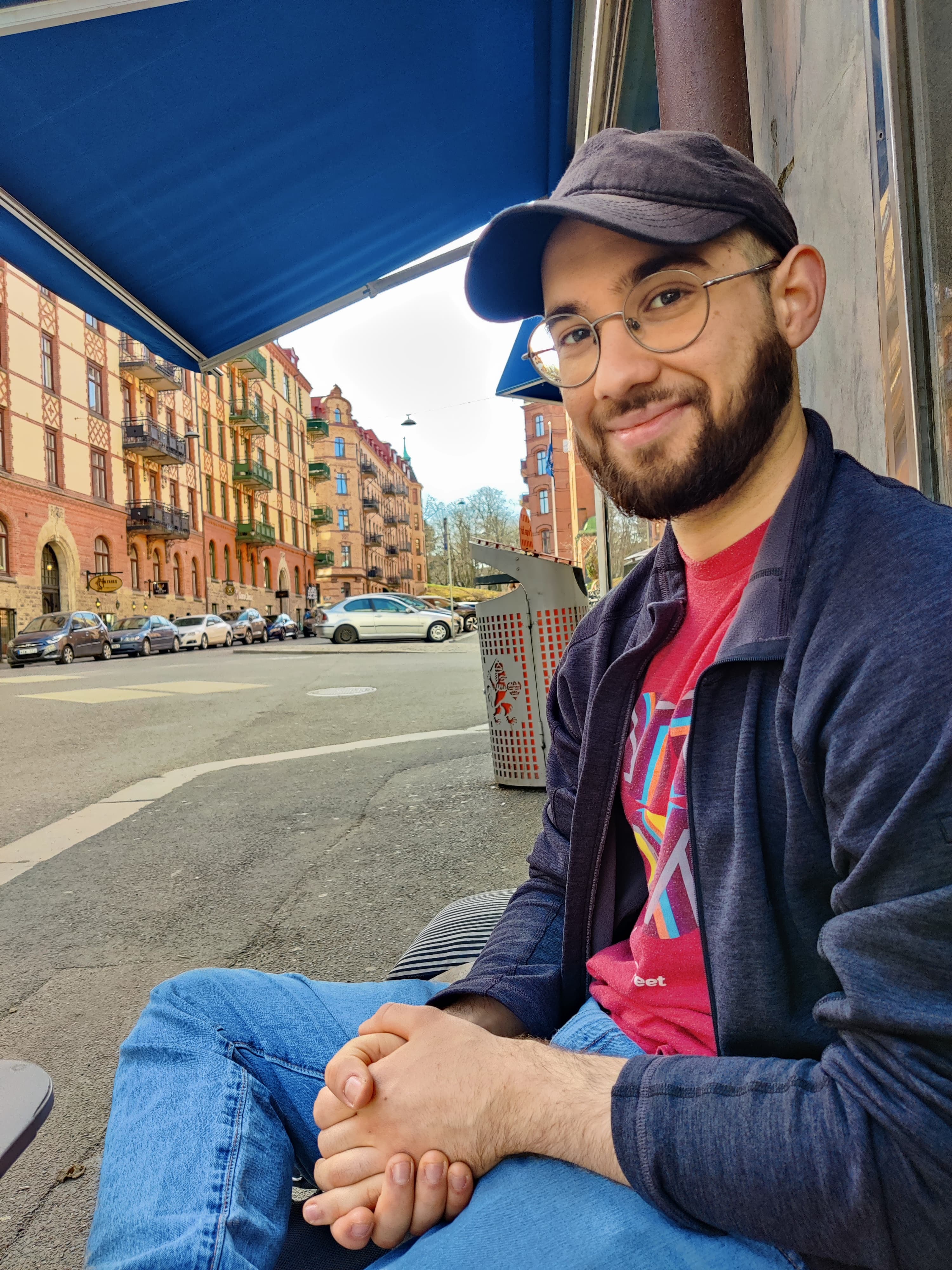
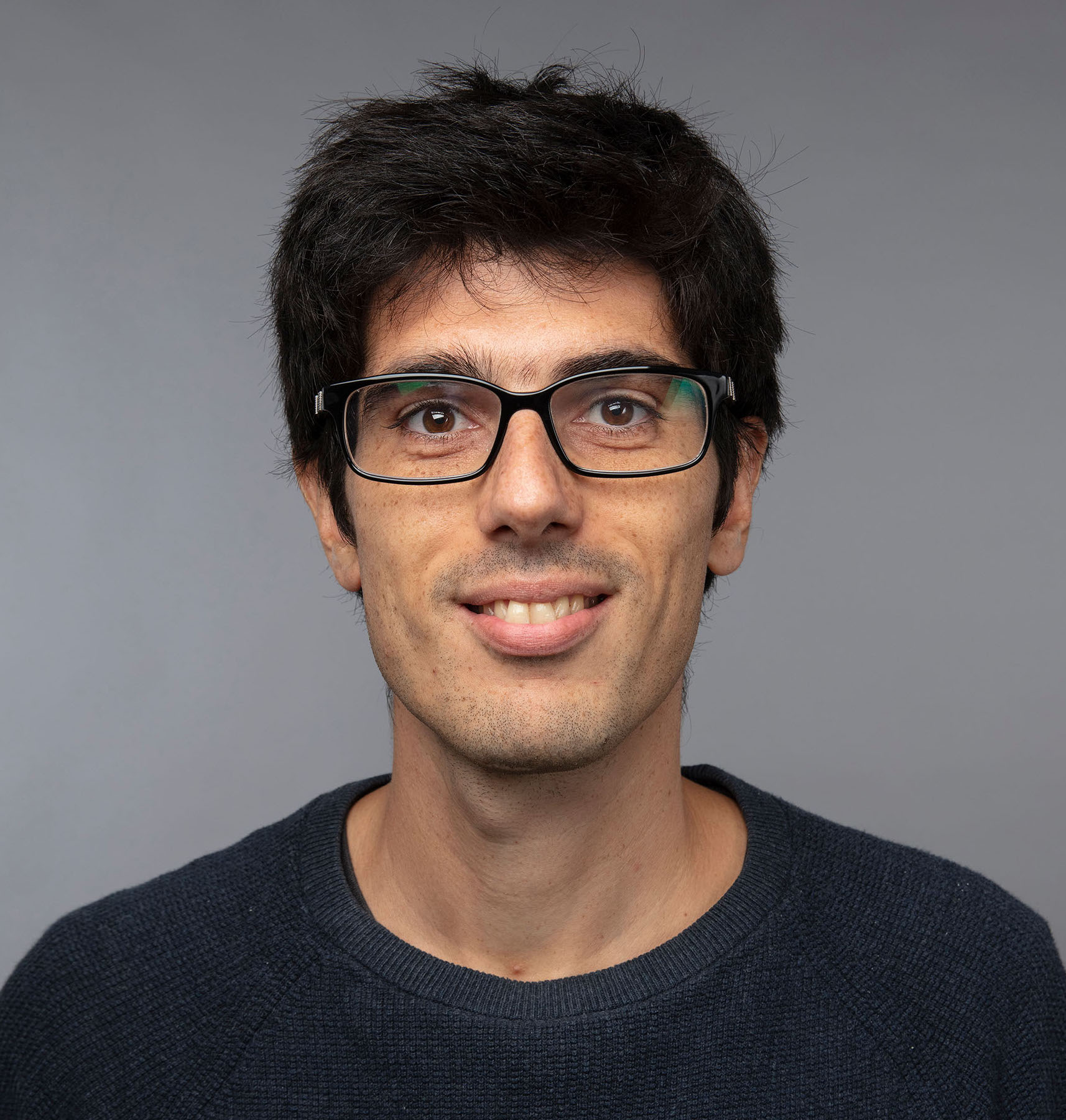
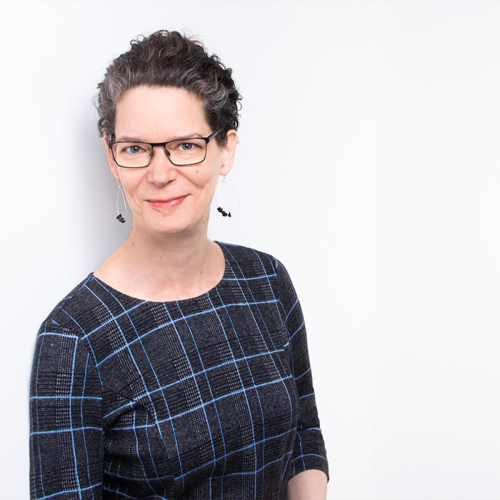
Barbara Plank is a Professor and Chair for AI and Computational Linguistics at LMU Munich , where she leads the Munich AI and NLP (MaiNLP) Lab within the Center for Information and Language Processing (CIS) . She also serves as a Visiting Full Professor at the IT University of Copenhagen . Her research focuses on natural language processing under real-world constraints, including domain adaptation, continual learning, and multimodal learning. Current Projects: ERC Consolidator DIALECT Project KLIMA-MEMES Project Her recent work investigates annotation bias , self-consistency in language models , and trustworthy model evaluation . She has delivered keynotes at major conferences like ACL, EMNLP, and CLEF, emphasizing human-centric approaches to NLP. Scientific Awards: ACL 2024 Area Chair Award Barbara actively contributes to the academic community as VP-Elect for the Association for Computational Linguistics (ACL) and through teaching roles in MSc/BSc Computational Linguistics programs.
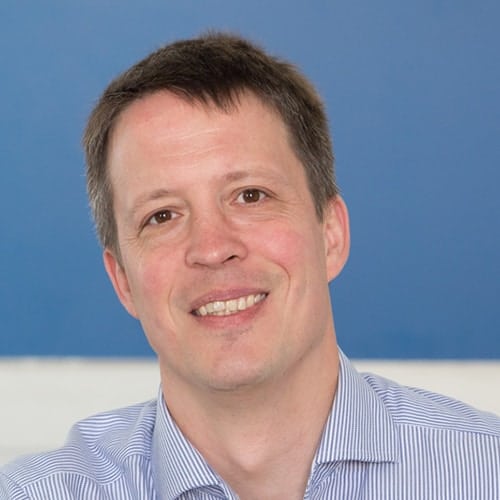
Daniel Gratzer is an assistant professor in the Department of Computer Science at Aarhus University, affiliated with the Logic and Semantics group. He studies programming languages and type theories through category theory, focusing on dependent, modal, and homotopy type theory. He co-teaches graduate courses on type theory and maintains a forthcoming textbook with Carlo Angiuli. Daniel is visiting Oxford from August 2024 to February 2025. His research explores applications of modal type theory to synthetic (∞,1)-category theory, guarded type theory for denotational semantics, and categorical methods in program logics like Iris. He collaborates with researchers including Carlo Angiuli, Lars Birkedal, and Jonathan Sterling. Recent work includes publications at LICS 2025, FoSSaCS 2025, and LMCS 2025. He contributed to the development of proof assistants like mitten and formal verification tools for higher-order concurrent separation logic. Contact: gratzer@cs.au.dk
Siddharth Bhaskar is an Assistant Professor in the Department of Mathematics and Computer Science at the University of Southern Denmark. His research lies at the intersection of theoretical computer science and mathematical logic, with a focus on programming language foundations and formal structures. His research interests include structured programming, imperative languages, graph traversal algorithms, and the application of category theory (particularly functors) to computation. These areas reflect a deep engagement with the mathematical underpinnings of programming and algorithmic processes. The two recent publications show a consistent trend in formalizing programming concepts through mathematical structures—particularly using universal constructions from category theory and extending structured programming into transfinite domains. This indicates a research trajectory grounded in computability, logic, and the semantics of programming languages. No scientific awards mentioned in the provided text. Siddharth Bhaskar has no listed advisees or grant information in the available data. However, his peer-reviewed publications in high-quality conference proceedings (CiE and MFCS) suggest active research supervision and potential involvement in collaborative projects, though specific details are not disclosed. There is no mention of specific laboratories, research groups, or teams in the provided text. However, his affiliation with the Department of Mathematics and Computer Science and his research profile suggest potential collaboration within formal methods or logic research circles at the University of Southern Denmark.
Andreas Pavlogiannis is an Associate Professor in the Department of Computer Science at Aarhus University. His research focuses on formal methods , algorithmic verification , automata theory , concurrency , static and dynamic program analysis , network diffusion , evolutionary graph theory , and evolutionary game theory . Teaching courses: Programming Languages (Bachelor) , Algorithmic Model Checking (Master) , and Program Analysis (Master) Service: Program committee member for POPL, ESOP, AAAI, IJCAI, CONCUR, OOPSLA, and organizer of CONFEST'25 His research has been supported by the Austrian Science Fund (FWF), VILLUM Foundation, Stibo Foundation, and Danish Council for Independent Research (DFF). He is actively recruiting PhD and PostDoc researchers. Recent publications span quantum computing , concurrent systems , evolutionary dynamics , and network science , with particular emphasis on symbolic algorithms , dynamic analysis , and graph-based models .
Patrizia Paggio serves as an Associate Professor and Senior Researcher within the Department of Nordic Studies and Linguistics at the University of Copenhagen's Faculty of Humanities, concurrently holding a full professorship at the University of Malta's Institute of Linguistics and Language Technology since September 2011. Her scholarly work centers on the intricate relationship between verbal and nonverbal communication modalities, with international recognition for advancing methodologies in multimodal analysis. Academic Background: PhD in Computational Linguistics from the University of Copenhagen (1997), dissertation: "The Treatment of Information Structure in Machine Translation" Professor Paggio's research program investigates how gestures, head movements, and other nonverbal cues interact with spoken language to construct meaning in natural communication. She has pioneered methodologies for constructing and analyzing multimodal corpora, while maintaining technical expertise in machine translation systems, grammar engineering, and content-based querying frameworks. Her theoretical work spans formal syntactic structures, discourse phenomena, information packaging, and ontological representations for linguistic data, consistently bridging computational methods with linguistic theory. Analysis of her recent publications (2020-2025) reveals a sustained focus on computational approaches to nonverbal communication, particularly the automatic detection and annotation of head movements and gestures in both physical and digital environments. Key contributions include the GEHM Zoom corpus for online interaction analysis, eye-tracking studies of emoji processing, and diachronic modeling of historical language change. Her work strategically integrates eye-tracking, corpus linguistics, and machine learning techniques, establishing her at the convergence of linguistic theory, cognitive science, and artificial intelligence applications. Professional Leadership: Coordinator of the international GEHM (Gestures and Head Movements in Language) research network Organizer of MULTIMODAL CORPORA 2018, 4th European/Nordic Symposium on Multimodal Communication, and LREC2022 Workshop on People in Vision, Language and the Mind
Ivan Lind Christensen is an Associate Professor at the Department of Politics and Society, Aalborg University, specializing in the Faculty of Social Sciences and Humanities. His research spans history, public health, and nuclear studies, with a focus on Cold War preparedness, societal impacts of nuclear threats, and historical sociocultural analysis. Current projects: Hvis krigen kommer (2017-2021) on wartime welfare planning Collaborative work on UNESCO's global history (1945-75) Media commentary on nuclear risks and language erosion in academia His recent publications examine nuclear anxiety in Denmark, household categorization in Ghanaian cash transfer programs, and far-right visual narratives. Active in supervising PhD students and organizing academic seminars, he contributes to historical methodology and research communication debates. Notable activities include the 2022 Atomvinter workshop, 2024 seminar on gender and preparedness, and participation in international research networks. Funded by the Velux Foundation and Danish Council, his work bridges historical analysis with contemporary societal challenges. Contact: ilc@dps.aau.dk | ORCID: 0000-0003-0803-1832
Anders Møller is a Professor and Vice Head of Department at the Department of Computer Science, Aarhus University, Denmark. He is a leading researcher in programming languages and software engineering, with a primary focus on static and dynamic program analysis. He serves as Chairman of the PhD Committee and holds leadership roles in the international research community, including Vice-Chair of ACM SIGPLAN and Associate Editor for ACM TOPLAS and ACM TOSEM. His research interests include programming languages, software engineering, static and dynamic analysis, program verification, and security. His work bridges theoretical foundations and practical applications, particularly in improving software reliability and security through advanced analysis techniques. The trends in his recent publications reflect a strong emphasis on static analysis for security, scalability, and real-world impact—especially in web applications, smart contracts, and open-source software supply chains. His research has evolved toward practical deployment, demonstrated by the founding and acquisition of Coana by Socket in 2025 for enhanced vulnerability detection. Recipient of the Danish Elite Research Prize 2020 ACM Distinguished Member He actively mentors students and contributes to the academic community through conference leadership (e.g., OOPSLA, PLDI, ICSE). He also co-authored the widely used textbook Static Program Analysis with Michael I. Schwartzbach. His work is deeply integrated into both academic and industrial advancements in software analysis and security.
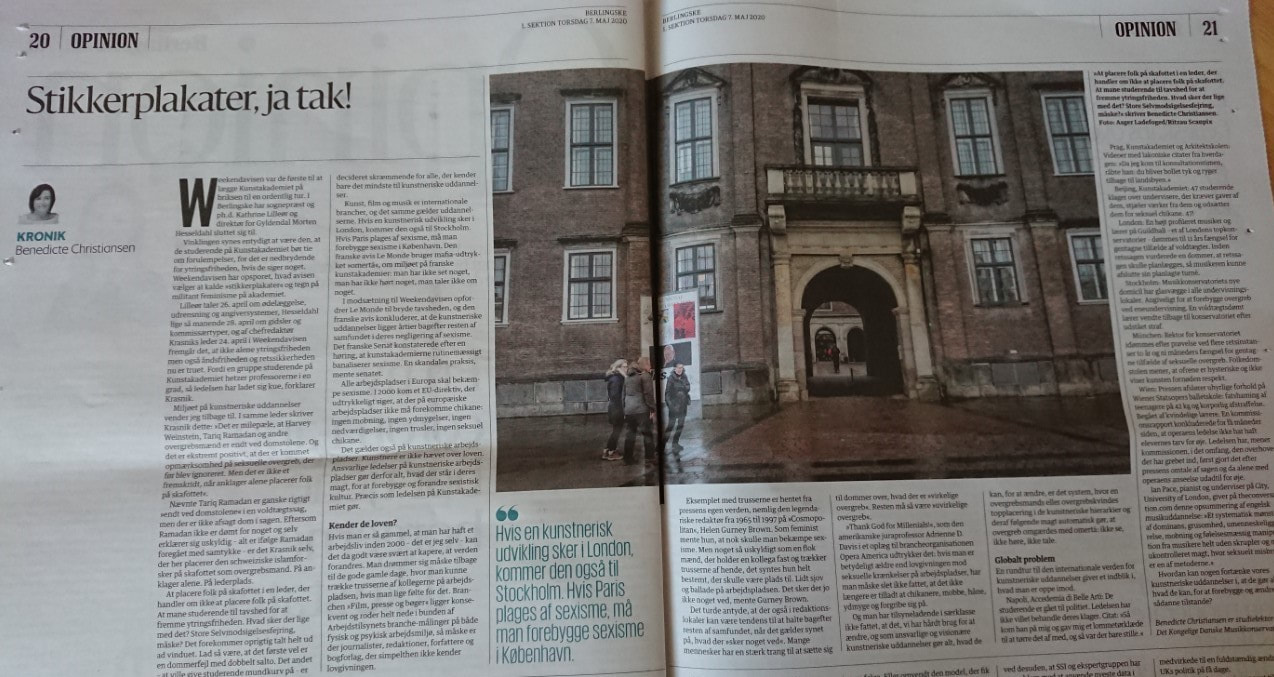
Benedicte Christiansen serves as Associate Professor at the Danish National Academy of Music (DKDM), where she has taught Italian for singers since 1997 and conducts writing courses for all BA students. Her academic career is deeply intertwined with professional practice in opera, journalism, and cultural policy. Christiansen graduated as a singer from the Danish Academy of Music in 1995, with further education in Italian at the University of Copenhagen and classical philology at Aarhus University. She also trained as a journalist at the Danish School of Journalism. Her international experience includes living and working in Rome and Trieste, where she studied Italian repertoire with Prof. Marta Lantieri, former head of the Opern Studio at the Vienna State Opera. Her research and professional interests span opera studies, cultural policy, music education, and the intersection of music with democratic society. Christiansen has conducted Italian courses for prestigious institutions including the Danish National Radio choir, the Royal Danish Opera, and the Jutland Opera. She has been instrumental in developing music education initiatives, particularly as the initiator and project manager of OrkesterMester, a nationwide program connecting music schools with school orchestras. Her publications reveal consistent engagement with the economic and social value of opera and symphonic music, cultural diplomacy, and the relationship between arts participation and democratic citizenship. Christiansen approaches these topics through both academic analysis and practical experience, often highlighting international perspectives from Europe and Asia. Speaker at DKDM's music education conference on OrkesterMester (2019) Conference participation at Opera Europe, Antwerp (2019) Co-organizer of Nordic Music and Culture School Union's conferences (Oslo 2017, Finland 2016, Aalborg 2015) Nordic Children's Culture Conference in Nuuk (2014) 2018: Scholarship to the Danish Institute in Rome for research on 'La pronunzia ecclesiastica' Christiansen has held leadership positions including head of the secretariat for music schools' trade association (2013-2018), head of administration for the Jutland Opera (2019), and head of Bornholm's Cultural School (from 2021). She has been elected to the Study Board and Conservatory Council at DKDM for multiple election periods and serves on the sector board for leaders in the Danish Association of Masters since 2019.
Troels Henriksen is an Assistant Professor on Tenure Track at the Department of Computer Science (DIKU) at the University of Copenhagen, where he is affiliated with the Programming Languages and Theory of Computation research section. His research focuses on programming languages, particularly functional array programming languages, compiler design, and parallel computing. He maintains an active research profile with numerous publications in top-tier programming language conferences. Dr. Henriksen's research interests center around programming language theory and implementation, with particular emphasis on functional array programming languages. His work bridges theoretical foundations with practical high-performance computing applications. His research spans type systems, compiler optimizations, parallelism, and memory management in the context of array programming languages, contributing to both academic knowledge and practical language implementations. His recent publications reveal a strong focus on array programming language design and implementation. There is a clear trend toward optimizing functional array languages for high-performance computing environments, with significant work on fusion optimizations, parallelism, and memory management. His research often intersects with practical applications in scientific computing and machine learning, particularly through work on automatic differentiation for array languages. Dr. Henriksen is actively involved in the programming languages research community, regularly publishing in prestigious venues such as the ACM SIGPLAN conferences. His collaborations span multiple institutions, indicating an active research network in the programming languages field.
Robert Glück is a Professor at the Department of Computer Science under the Faculty of Science , University of Copenhagen. He also served as a Visiting Professor at the National Institute of Informatics, Tokyo . His research spans programming languages , reversible computing , and metaprogramming , with a focus on energy-efficient computation. Email: glueck@di.ku.dk Phone: +45 29611655 Address: Universitetsparken 5, Building B, 2100 Copenhagen Ø Glück's research interests center on reversible computing , program generation , and metaprogramming , particularly for low-energy systems. His work includes developing reversible logic circuits, invertible interpreters, and tools for program inversion via term rewriting systems. Recent publications highlight advancements in reversible flowchart languages , partial evaluation techniques , and compiler design . Key themes include garbage-free reversibility, memory-efficient algorithms, and formal verification of reversible systems. Scientific Awards: Japan Society for the Promotion of Science (JSPS) Fellowship Grants & Projects: Presto Basic Research Grant (JST) Danish Council for Strategic Research (DSF) project Danish Council for Independent Research (FNU) project Administrative Roles: Current member of the Study Board for Mathematics and Computer Science Former Head of Studies for the Master in Computer Science Professional Activities: IFIP Technical Committee WG 2.11 member (2004–) Steering Committee roles at LOPSTR 2024, FLOPS 2024, HCVS 2024, RC 2024 Editorial Board member for New Generation Computing (2005–)
Sarah Robinson is an Associate Professor at Aarhus University's Centre for Educational Development (CED). Her work focuses on curriculum development, teacher agency, and the future of universities. She combines ethnographic research with innovative pedagogical frameworks to promote change-making practices in higher education. Her research explores the intersection of entrepreneurship education, institutional values, and societal impact. Her current projects include redesigning the Master in Digital Innovation program, leading the SEEDS initiative on social entrepreneurship in preschools, and investigating feedback mechanisms in entrepreneurial learning. She provides coaching for educators and supervises PhD students in teaching methodologies. Key research themes include curriculum reform, entrepreneurial learning processes, and the role of universities in addressing 21st-century challenges. Her work emphasizes ethical considerations, participatory methods, and the transformation of educational systems through pedagogical innovation. Recent publications highlight collaborative learning dynamics in entrepreneurship education, transformative learning through pedagogical nudging, and ethnographic approaches to studying educational practices. Her projects often involve interdisciplinary collaborations and practical toolkit development for educators.
Andreas Møgelmose is an Associate Professor at Aalborg University's Department of Architecture, Design and Media Technology under the Technical Faculty of IT and Design. His research focuses on computer vision, artificial intelligence, and their applications in autonomous systems, driver assistance, and industrial vision. He leads projects like AI Color Fashion and Real-world adaption of generative AI for architecture. Møgelmose teaches introductory programming, computer vision, and advanced master's courses, emphasizing practical project-based learning. His work includes developing datasets such as the Multi-view Traffic Intersection Dataset (MTID) and exploring vision-language models for autonomous vehicle safety. He actively engages in media discussions on AI ethics and societal impacts. Research interests span dynamic gesture interpretation for cooperative autonomous vehicles, surgical skill assessment via automated metrics, and multimodal classification of environmental data. He has contributed to over 50 publications, including work on 3D object detection frameworks and generative AI education. Møgelmose collaborates on projects funded by industry partners like COWI and Danish government initiatives. His teaching philosophy centers on blended learning and practical application, fostering innovation in AI and computer vision education. Notable projects include AI:Xpertise Lab (2025–present), which explores AI-driven expertise systems, and collaborations on forest biodiversity analysis using LiDAR and orthophotos. His recent media engagements highlight societal AI challenges, emphasizing responsible implementation in public sectors.
Andreas Kornmaaler Hansen is an Assistant Professor at the Department of Architecture, Design and Media Technology within Aalborg University's Technical Faculty of IT and Design. His primary affiliation is with the AAU Design Lab. He holds a PhD in Human-Centred Production and focuses on Industry 4.0, manufacturing innovation, and human-robot interaction. His work addresses digital transformation challenges in SMEs, workforce competency development, and assistive robotics applications. Research interests include: Robotization in manufacturing work environments Human-centred design of industrial technologies SME digitalization barriers and solutions Collaborative robotics training methodologies Recent publications highlight participatory studies in socially assistive robotics for mental health, thematic analysis of manufacturing robotization, and interpretive structural models for SME production improvements. He contributes to projects like ZeroWaste (2024-2028) and Innovation Factory North (2019-2022), focusing on transforming manufacturing ecosystems. Key collaborations involve interdisciplinary teams addressing Industry 4.0 challenges through learning factories and sandbox approaches. His work emphasizes bridging technological innovation with human-centric considerations in production systems.
Professor Frauke Kreuter holds the Chair of Statistics and Data Science at Ludwig-Maximilians-Universität (LMU) Munich, Germany, and is a faculty member at the Joint Program in Survey Methodology (JPSM) at the University of Maryland, USA. She is Co-Director of the Social Data Science Center (SoDa), and plays a leading role in advancing data science for social research. Her research focuses on the intersection of statistics, survey methodology, and data science. Key areas include: Development and application of modern survey methods Integration of big data and traditional survey data Machine learning in social science research Secure and ethical access to sensitive data Training and capacity building in data science for researchers and policymakers Professor Kreuter has been recognized with several honors, including: Elected Fellow of the American Statistical Association Warren Mitofsky Innovators Award (2020) from the American Association for Public Opinion Research She is the Founder of the International Program for Survey and Data Science (IPSDS), Co-Founder of the Coleridge Initiative—which enables secure access to government data for research—and Co-Founder of the German-language podcast Dig Deep , promoting public understanding of data science. Her work involves extensive collaboration across academia, government, and policy sectors, and she leads initiatives that bridge methodological innovation with real-world impact.
Axel Polleres is a full professor in the area of 'Data and Knowledge Engineering' at the Vienna University of Economics and Business (WU Wien) and a faculty member at the Complexity Science Hub (CSH) in Vienna, a position he has held since January 2017. His work bridges academic research and real-world applications in semantic technologies, knowledge graphs, and data governance. His research interests lie at the intersection of semantic web technologies, knowledge engineering, and data management. Focused on querying and reasoning over ontologies, logic programming, and rule-based systems, he explores how structured data can be effectively managed, validated, and integrated—especially through standards like SPARQL and SHACL. His work extends to applications in open data, legal data, biomedical informatics, and socio-environmental challenges such as climate and public health. The most recent publications highlight a growing trend toward practical and societal applications of knowledge graphs, including climate risk assessment, crisis response, healthcare accessibility, and open data governance. These works combine technical rigor in semantic modeling with impactful real-world use cases, particularly in European and Austrian contexts. Axel Polleres has been actively involved in international standardization, notably as co-chair of the W3C SPARQL Working Group, and serves on the editorial boards of the Semantic Web Journal and Journal of Web Semantics . He has contributed to numerous European and national research projects and has published over 100 articles in top-tier journals and conferences. He advises and collaborates with researchers across disciplines and institutions, contributing to interdisciplinary teams working on complex societal challenges. His work is supported by significant research grants, though specific funding sources are not detailed in the provided text. He leads and participates in research groups focused on semantic technologies, knowledge graphs, and data-driven policy.