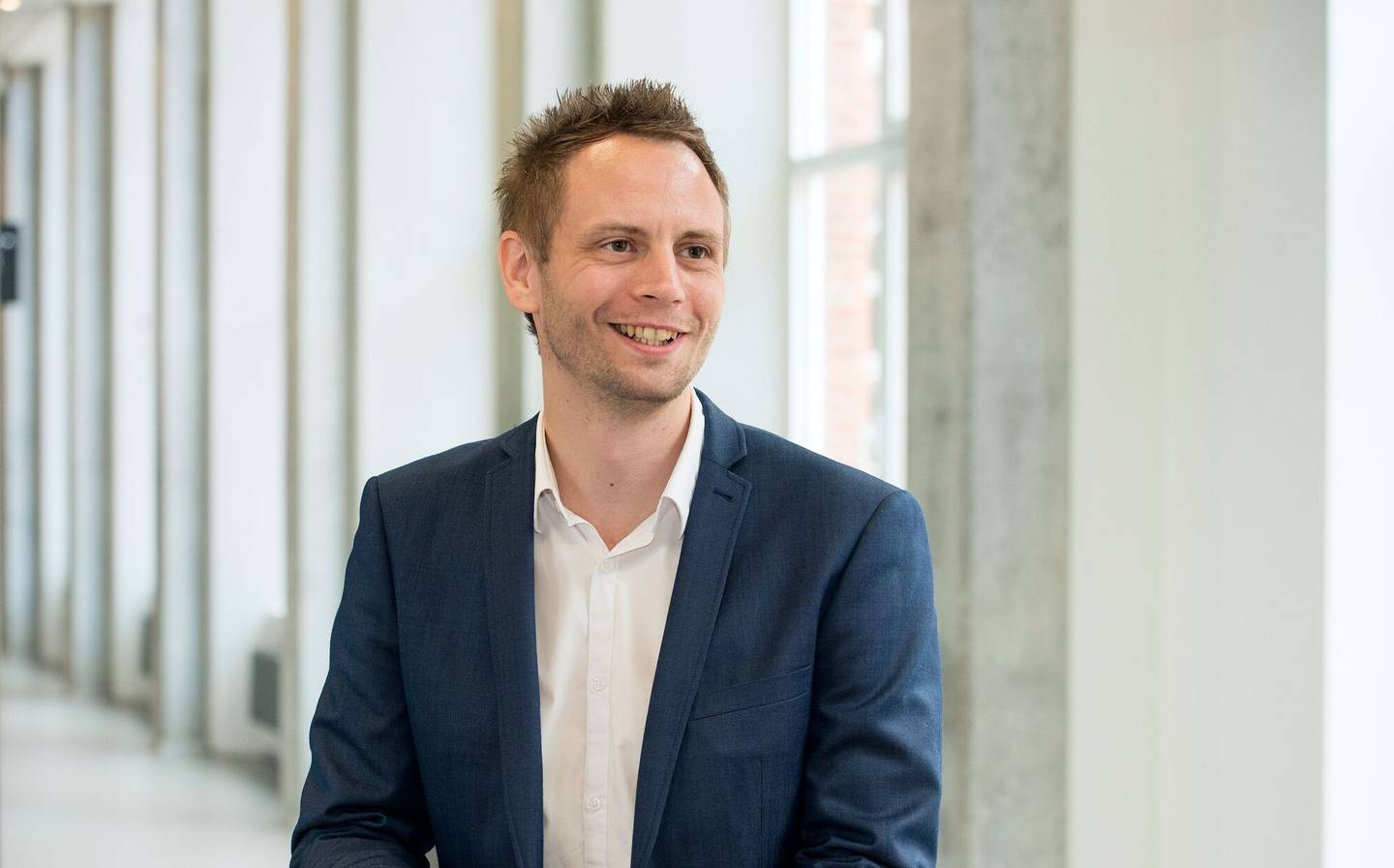
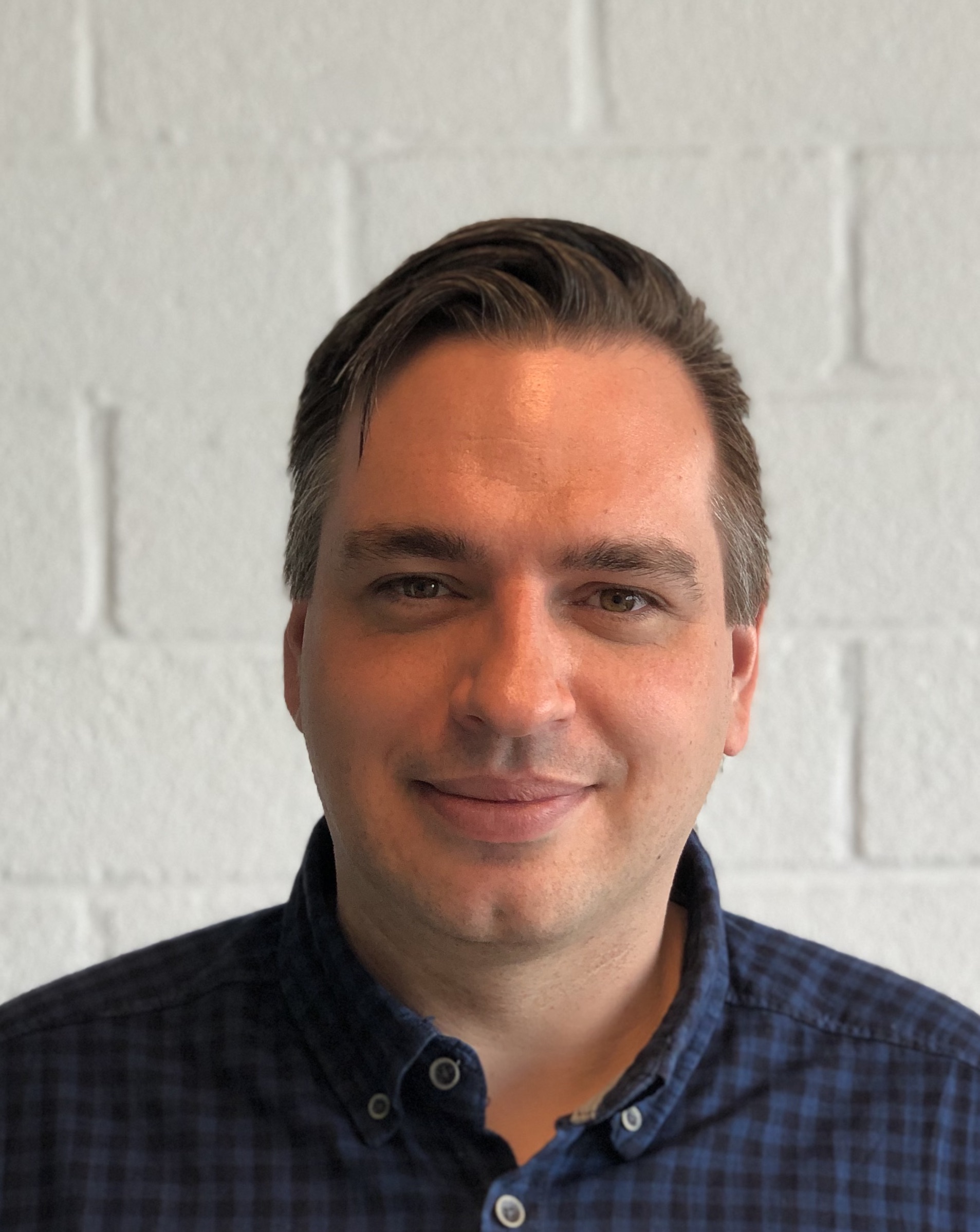
Philippe Baecke is a Professor of Business Analytics and Artificial Intelligence at Vlerick Business School, where he also serves as Programme Director for the Master in Business Analytics & AI and two executive programmes. He holds adjunct roles as Lecturer at Trinity Business School, Ireland, and Professor at the University of Namur. He earned his Doctorate in Applied Economics from Ghent University, complemented by an Advanced Master and Master in Applied Economics, both from Ghent University. His research focuses on leveraging big data analytics across marketing, operations, and finance, with specialties in digital marketing, customer relationship management, and network analysis. Notable areas include ad targeting, spatial modeling, and the application of AI in call center optimization and emotion recognition. He advises companies like KBC, ING, and Telenet on data strategy, blending strategic and operational insights. His recent work explores digital transformation trends, cost-effective AI adoption for SMEs, and the integration of human judgment in forecasting systems. He has published extensively in peer-reviewed journals, addressing topics like telecom data monetization, churn detection, and consumer privacy in addressable TV advertising. Baecke’s expertise also extends to vehicle telematics in insurance risk selection and spatial econometrics in customer acquisition modeling. He has collaborated on projects involving Bluetooth tracking in retail environments and the analysis of urbanization effects on customer behavior.
Prof. Dr. Stef Slembrouck is a faculty member at the Department of Linguistics , Ghent University. His research spans discourse analysis, sociolinguistics, and multilingualism, with a focus on institutional contexts such as education, healthcare, and social work. Key Research Areas: Institutional discourse, multilingualism, language policy, globalization, linguistic ethnography Recent Publications (2025–2024) examine English-medium instruction in Vietnam, multilingual assessment in education, and discourse dynamics in pandemic contact tracing. His work emphasizes the interplay between language, policy, and interactional practices. Projects: Supervised studies on EMI in bio-science engineering, linguistic citizenship, and language policy in education. PhD Students Promoted: Alexander De Soete (2025), Fauve De Backer (2020), Uranela Demaj (2019), Azadeh Elmianvari (2017), Abraham van Dam (2016), Kirsten Rosiers (2016), Mieke Vandenbroucke (2013), Demi Krystallidou. Teaching includes courses on discourse analysis, sociolinguistics, and spoken interaction. His collaborations with UGent colleagues like Piet Van Avermaet and Romeo De Timmerman highlight interdisciplinary approaches to language and society.
Bart Bogaerts is an Associate Professor in the Department of Computer Science at KU Leuven's Faculty of Engineering Science. He is affiliated with the Declarative Languages and Artificial Intelligence (DTAI) research unit and is a member of Leuven.AI - KU Leuven Institute for Artificial Intelligence. Bogaerts serves on the Council of the Faculty of Engineering Science as senior academic staff and participates in the Programme Committee for Artificial Intelligence curriculum development. His research focuses on foundational aspects of logic programming and knowledge representation, with particular expertise in approximation fixpoint theory, higher-order logic programming, and non-monotonic reasoning. Bogaerts investigates the theoretical underpinnings of stable model semantics, justification frameworks, and executable query languages. His work bridges theoretical computer science with practical applications in artificial intelligence and knowledge-based systems. Bogaerts' publication record demonstrates consistent contributions to top venues in logic programming and artificial intelligence. His recent work shows increasing focus on category-theoretic approaches to approximation theory, distributed web traversal specifications, and certified model expansion techniques. The publications reveal a strong emphasis on formal methods with applications spanning from theoretical mathematics to practical AI systems. As a promotor for multiple significant research projects, Bogaerts leads investigations into certified answer set programming (CertifASP), first-order model expansion (CertiFOX), proof generation for combinatorial optimization, distributed configuration problems, and knowledge integration paradigms. These projects, funded through 2028-2029, demonstrate his leadership in advancing the theoretical foundations of AI and logic programming. Bogaerts is actively involved in teaching courses on knowledge representation and reasoning, contributing to the development of next-generation AI researchers. His work within the DTAI research unit positions him at the forefront of declarative AI approaches in Belgium's leading research university.
Vladimir ZHEREBOV is a Visiting Professor of Russian language at the EU International Relations and Diplomacy Studies Department of the College of Europe. He holds a PhD in Slavic and Eastern European Studies from KU Leuven (University of Leuven) and a Master’s in Russian Language and Literature from Bashkir State University (Ufa, Russia). Born in the Soviet Urals, his academic career spans teaching, research, and diplomatic expertise in Belgium since 2008. Leadership roles: Head of the CIS Expert Group at Brussels Diplomatic Academy (VUB since 2019) Research Fellow at KU Leuven’s Department of Cultural Studies Independent academic advisor on Russia/CIS affairs His research focuses on Russian language pedagogy , Cognitive Linguistics , and the intersection of Slavic Studies with Political Sciences and Diplomacy . He has developed cultural programs at KU Leuven’s Centre for Russian Studies and collaborates with international organizations on educational initiatives. No specific academic awards are mentioned in the text. His publications, while numerous, are not itemized here. He advises via independent consultancy and leads educational programs without listed grants or funding details. His professional network includes the Brussels Diplomatic Academy and various cultural/scientific organizations. He oversees the CIS Expert Group, a multidisciplinary team analyzing post-Soviet geopolitical dynamics.
Prof. Estefanía Serral Asensio is an Associate Professor at the Faculty of Economics and Business (FEB) at KU Leuven , with a primary affiliation to the Information Systems Engineering Research Group (LIRIS) in Brussels. She holds a highly international and interdisciplinary academic profile, having previously served as an Assistant Professor at Eindhoven University of Technology (2018), led the Semantic Knowledge Representation and Integration research group at the Technical University of Vienna (2012–2014), and contributed to the ProS Research Center at the Technical University of Valencia (until 2012). PhD in Computer Science (2011) Master in Software Engineering, Formal Methods, and Information Systems (2008) 5-year Bachelor in Computer Science (2006) Her research focuses on Internet of Things (IoT) , Business Process Management , and context-adaptive systems , with methodological expertise in Model-Driven Development , Conceptual Modeling , and ubiquitous systems . Key projects include Novel Process Mining Techniques for Discovering IoT-enhanced Business Processes (2022–2025), Novel Sustainability-Driven IoT Prescriptive Analytics for Improving Irrigation Practices in Fruit Trees (2021–2024), and foundational work on Runtime Evolution of IoT Processes (2018–2020). Her publications span top-tier venues like CAiSE , ER , SOSYM , and Internet of Things Journal . She teaches courses in ICT Strategy and Architecture , ICT Management , and Research Methodologies in Business Information Systems Engineering , contributing to academic programs at KU Leuven.
Dimitri Van Landuyt serves as an Associate Professor in the Department of Computer Science at KU Leuven , affiliated with the Information Systems Engineering Research Group (LIRIS) . He leads and co-promotes multiple high-impact research projects focused on security and privacy engineering, including initiatives on model-driven security risk analysis , privacy by design , and IoT security . His work spans GDPR compliance, synthetic data management, and threat modeling innovations. Academic Leadership : Member of the Council of FEB and Campus Council Leuven/Kortrijk Research Pillars : Privacy threat modeling, security automation, IoT systems, GDPR technical implementation His publications demonstrate expertise in privacy-enhancing technologies, with recent work analyzing LLM applications in threat modeling, developing tree-based privacy analysis frameworks, and creating adaptive trust management architectures. He explores serious games for security training, synthetic data quantification standards, and runtime threat assessment mechanisms. Dimitri contributes to educational programs through courses in ICT Service Management , Security & Privacy by Design , and Research Methodologies . He supervises student research while collaborating with industry and academia on data protection challenges.
Prof. Ruben Vanderlinde is a faculty member at Ghent University , Belgium, with a focus on Education and Teacher Training . His research spans Team Teaching , Educational Technology (ICT) , Professional Development , and Inclusion , often utilizing video-based observation and self-determination theory . He has co-authored over 257 publications in Social Sciences, emphasizing diversity , educational policy , and teacher educators' researcherly disposition . Recent work includes large-scale studies on teachers’ self-efficacy in team teaching (2025) and ICT integration in primary education (2025). His 2025 articles analyze collaborative pedagogy , cluster analysis of teaching behavior , and curriculum coherence in teacher education. Vanderlinde also co-edited the ESTAFETT project (2025), providing policy recommendations for team teaching. He supervises PhDs in areas like diversity-responsive teaching and technology in early childhood education . Notable students include Yuqiao Luo (2024) and Benjamin Ponet (2021) . His collaborations with Hanne Tack (67 papers) and Johan van Braak (37 papers) highlight his interdisciplinary approach.
Nathalie Aelterman is a prominent researcher at Ghent University specializing in educational psychology with a focus on motivation, self-determination theory, and physical education. Her extensive publication record demonstrates deep engagement with teacher-student dynamics, motivational processes, and educational interventions across multiple contexts from primary education to higher education and sports settings. Her research interests center on understanding motivational mechanisms through self-determination theory, particularly examining how teachers' and coaches' styles influence student and athlete motivation. She investigates autonomy support, need satisfaction, and the interplay between psychological needs and behavioral outcomes in educational environments. Her work frequently employs both quantitative and qualitative methodologies to develop and validate assessment tools for measuring motivational climates. Analysis of her recent publications reveals consistent focus on circumplex modeling of motivating/demotivating behaviors, longitudinal motivational shifts, and the application of self-determination theory across diverse educational contexts including physical education, speech therapy, and nonprofit volunteer management. Her work bridges theoretical frameworks with practical educational applications. Nathalie Aelterman actively collaborates with leading researchers at Ghent University, particularly with Leen Haerens and Maarten Vansteenkiste, contributing to a robust research program in educational motivation. Her work includes developing and evaluating training programs for teachers and coaches to foster need-supportive interactions. She has contributed significantly to understanding how educational professionals can create environments that foster intrinsic motivation, examining everything from classroom rules internalization to the psychological needs of university teachers. Her research extends beyond traditional educational settings to sports coaching and volunteer management contexts.
Philippe Snauwaert is a researcher at the Research Institute in Didactic and Education at the University of Namur (UNamur), where he has been actively involved in educational research since the 1980s. His work spans chemistry education, semiotics in science, teacher training, and student orientation to higher education. He holds a Doctor of Science degree from UNamur and continues to lead and contribute to significant research projects. Doctor of Science, University of Namur, 1992 His research interests lie at the intersection of science education and linguistic-semiotic analysis, particularly in how students interpret chemical symbols and solve stoichiometry problems. He investigates the evolution of chemical language and the use of visual tools like slowmation to teach dynamic chemical processes. His work also extends to reflective teaching practices and collaborative training for educators. The recent publications and projects highlight a strong trend toward improving science education through innovative didactic methods, teacher development, and curriculum analysis. His work increasingly integrates interdisciplinary approaches, especially in animal welfare education and educational transitions from secondary to higher education. Philippe Snauwaert has not received any explicitly mentioned scientific awards in the provided text. He has supervised or collaborated on research with several scholars and students, though specific advisees are not listed. He has been involved in multiple research grants and projects, including continuous training initiatives and university certificate programs in animal welfare. His leadership roles in projects like CUBEA and Salle des Pros demonstrate sustained engagement in educational innovation and professional development. He is actively involved in research teams such as the Department of Education and Technology and collaborates within networks focused on science didactics, including ARDiST. His work is often conducted in collaboration with researchers like Dehon J., Biemar S., Pondeville S., and Diederich C.
Anne-Catherine Pardon is a Junior Researcher in Historical Theology at the Evangelical Theological Faculty Leuven (ETF Leuven), Belgium. She holds a Master of Arts in Linguistics and Literary Studies (summa cum laude) from Vrije Universiteit Brussel and is pursuing a Ph.D. in Theology and Religious Studies. Her research focuses on historical theology, antisemitism studies, and critical discourse analysis, particularly examining the works of Gerhard Kittel and their implications for 20th-century theology. Education highlights include a Teacher's Diploma (magna cum laude) from ETF Leuven and a Master of Arts in Theology (cum laude) from the same institution. She also holds a diploma in Economics-Modern Languages from Sint-Catharinacollege High School. Her academic roles include coordinating interdisciplinary programs at ETF Leuven, lecturing in theological seminaries, and serving as an affiliated researcher at multiple institutions including CegeSoma in Brussels. She has held teaching positions in Protestant religion and French across various Belgian institutions since 2007. Her research interests emphasize analyzing the intersection of theology and antisemitism, particularly in Nazi-era contexts. Recent work critically examines Gerhard Kittel’s ideological contributions and their influence on apartheid theology. She is a member of the Brussels Centre for Language Studies, the General Assembly of Evadoc, and the Editorial Board of Hokhma. Publications focus on discourse analysis of theological texts related to antisemitism and boundary-making in religious studies. Her work bridges historical theology with contemporary ethical dilemmas in religious pluralism.
Coen De Roover is a Professor at the Software Languages Lab of the Vrije Universiteit Brussel , actively leading research in program analysis, software quality, and security. He chairs the Bachelor in Computer Science program and supervises a dynamic research group. Research Focus: Static/dynamic analysis, automated testing, software maintenance, AI for SE, infrastructure as code security. Projects: Bugatti (2025-2028), Cracy (2024-2027), CRPF (2024-2028), BaseCamp Zero (2022-2026), EcoPipe (2023-2025), APAX (2022-2024). Scientific Awards: MSR 2025 Distinguished Dataset Award IEEE TCSE Distinguished Paper Award (SANER 2022) ICSE 2022 Best Artifact Award SCAM 2022 Best Artifact Award Conference Leadership: General Chair of SCAM 2024, Program Co-Chair for GPCE 2024, and active in organizing summer schools on security testing.
Dr. Olivia Gosseries serves as Director of the Coma Science Group and holds the position of Associate Professor at the University of Liège, where she also maintains her status as a FNRS Research Associate. Her academic journey began with a Bachelor's degree in Psychological and Educational Sciences from the University of Brussels in 2004, followed by a Master's with Neuropsychology expertise in 2007, and culminated in her PhD in Biomedical and Pharmacological Sciences from both the University of Liège and University of Brussels in 2012. Prior to her current position, she spent three years at the University of Wisconsin-Madison researching sleep and working memory. Dr. Gosseries' research program spans multiple dimensions of consciousness studies. Initially focusing on diagnosis and prognosis in disorders of consciousness using non-invasive brain stimulation and electrophysiology, her work has evolved to encompass therapeutic interventions for patients recovering from coma. Her current research investigates anesthesia mechanisms, coma memory, lucid dreaming, meditation, hypnosis, cognitive trance, and virtual reality applications to understand human consciousness more comprehensively. This multidisciplinary approach integrates clinical neurology, neuropsychology, and advanced neuroimaging techniques to address complex questions about consciousness states. Her extensive publication record of over 200 peer-reviewed articles in prestigious journals including Science, Lancet, Lancet Neurology, Annals of Neurology, and Brain demonstrates consistent scholarly productivity. The recent publications (2024-2025) reveal a clear trajectory toward exploring novel therapeutic approaches for disorders of consciousness, particularly investigating psychedelic compounds like psilocybin and ketamine, while maintaining strong methodological rigor through computational modeling, multimodal assessment techniques, and international collaborative studies. Her work bridges theoretical neuroscience with practical clinical applications, addressing both fundamental questions about consciousness and tangible improvements in patient care. As Associate Editor for Clinical Neurophysiology and Frontiers in Systems Neuroscience, Dr. Gosseries plays a significant role in shaping scholarly discourse in her field. She co-edited the second edition of 'Neurology of Consciousness' (Elsevier, 2015) and has reviewed for numerous scientific journals. Her leadership extends to organizing major conferences including Coma Day and Human Brain Project conferences on consciousness, fostering international collaboration in consciousness research. Dr. Gosseries actively supervises PhD students and leads the Coma Science Group at the University of Liège's GIGA research center. Her research has been supported by prestigious funding bodies including F.R.S.-FNRS, JSMF, MSF, EC, and Fundação BIAL. The Coma Science Group maintains an active presence in both academic and public spheres, with a mission to improve medical care for patients with disorders of consciousness following acute injuries such as coma, unresponsive wakefulness syndrome, minimally conscious state, or locked-in syndrome.
Lieve Macken is Associate Professor at Ghent University's Department of Translation, Interpreting and Communication within the Faculty of Arts and Philosophy. With 28 years of experience in language technology, she leads research in machine translation, natural language processing, and translation technology applications. Her work bridges academic research and practical implementation through the Language and Translation Technology Team (LT3). Dr. Macken's research focuses on machine translation evaluation, human-machine interaction in translation workflows, literary translation with MT, and educational applications of translation technology. Her work spans multiple dimensions including quality assessment metrics, eye-tracking studies of translation processes, syntactic difficulty prediction, and specialized applications for asylum seekers and language learners. She has pioneered research on translationese in machine translation output and developed methodologies for assessing translation quality through both process and product metrics. Her recent publications reveal a strong trend toward examining the intersection of large language models with traditional machine translation systems, particularly in literary contexts. She investigates how different translation workflows impact textual characteristics, reading effort, and translator productivity. A significant portion of her recent work addresses social applications of translation technology, particularly through the MaTIAS project serving asylum seekers, and educational applications through projects like WiLMa and IVESS. Guest editor of Special Issue 'Advances in Computer-Aided Translation Technology' in Informatics journal (2019) Extensive experience as reviewer/referee for journals, conferences, and research projects External examiner for seven PhD candidates Dr. Macken has supervised numerous PhD projects including Joke Daems' work on translation robots, Arda Tezcan's research on MT quality estimation, and Bram Vanroy's study of syntactic difficulties in translation. She currently supervises the Horizon Europe Marie Sklodovska Curie Fellowship of Paola Ruffo and multiple PhD projects including Margot Fonteyne's WiLMa project and Jasper Degraeuwe's IVESS project. Her research is funded through diverse channels including Horizon Europe, BOF UGent, FWO, and AMIF grants. She coordinates the postgraduate program Computer-Assisted Language Mediation and co-coordinates the European Master's in Technology for Translation and Interpreting (EM-TTI), teaching courses in Computer-Assisted Translation, Machine Translation, and Dissertation. As coordinator of the Language and Translation Technology Team (LT3), Dr. Macken leads a vibrant research group that regularly presents at major conferences including MT Summit, EAMT, and ICTIC. The team's work spans theoretical research in translation technology and practical implementations addressing real-world challenges in scholarly communication, language education, and social integration.
Philippe Thiran is a part-time Professor at the Faculty of Computer Science of the University of Namur, Belgium, with his primary appointment at Sirris, the collective center of the Belgian technology industry. He serves as Regional Director Brussels, Head of the Software Engineering department, and leads the Sirris interdisciplinary program Product of the Future . BSc and MSc in Geography, Catholic University of Louvain (UCL), 1995 MSc in Computer Science, University of Namur (FUNDP), 1997 PhD in Science (Computer Science), University of Namur, 2003 Certificate in Academic Practice, Eindhoven University of Technology, 2004 Executive Master in Management, Solvay Brussels School (ULB), 2018 Thiran's research focuses on software-intensive distributed systems , particularly multi-agent systems and decentralized systems . His work spans service-oriented and cloud computing , adaptive systems , and web engineering . He has co-authored over 80 scientific articles and contributed to international standards via W3C, IEEE, and OASIS. Recent publications highlight trends in cloud broker systems , collaborative web services , community-driven service management , and game-theoretic decision models . His research integrates artificial intelligence, workflow optimization, and social network dynamics into service-oriented architectures. External responsibilities include: Member of the Editorial Board of the International Journal of Web Engineering and Technology Active participation in the IEEE Services Computing Community Advisory role at W3C Thiran has organized over 10 international conferences, including JFO 2009 and SWF—IEEE 2013 . His lab affiliations include the Research Center on Information Systems Engineering (PReCISE) and the LaQuSo Laboratory during his tenure at Eindhoven University of Technology.
Aron Decuyper is an active researcher at Ghent University's Faculty of Psychology and Educational Sciences, Department of Educational Studies, specializing in collaborative teaching dynamics and teacher professional development. His work primarily focuses on team teaching implementation, teacher self-efficacy, and instructional effectiveness within the Flemish educational context. His research interests center on educational psychology and teacher training , with specific expertise in collaborative pedagogy, classroom dynamics, and teacher self-efficacy. Decuyper investigates how team teaching structures impact instructional quality, teacher collaboration patterns, and professional development needs, employing both quantitative large-scale surveys and qualitative video-based observation methodologies. Analysis of his 15 most recent publications reveals a consistent focus on team teaching dynamics across multiple dimensions: implementation challenges in Flemish schools, teacher self-efficacy measurements, behavioral observation studies, and the development of practical frameworks for educational practitioners. His work demonstrates increasing methodological sophistication from descriptive studies to complex multilevel analyses and mixed-methods approaches. Decuyper is actively involved in the ESTAFETT research project and the LOPO (LerarenOpleiding en Professionalisering) research group, contributing to teacher training innovations and educational policy recommendations in Flanders. His collaborative network includes key figures like Ruben Vanderlinde (28 co-publications) and Hanne Tack (20 co-publications), indicating strong institutional research partnerships. His current research trajectory shows expansion into related areas including teacher burnout recovery, global citizenship education, and digital feedback tools for teacher training, suggesting growing influence across multiple educational subdomains while maintaining core focus on collaborative teaching practices.