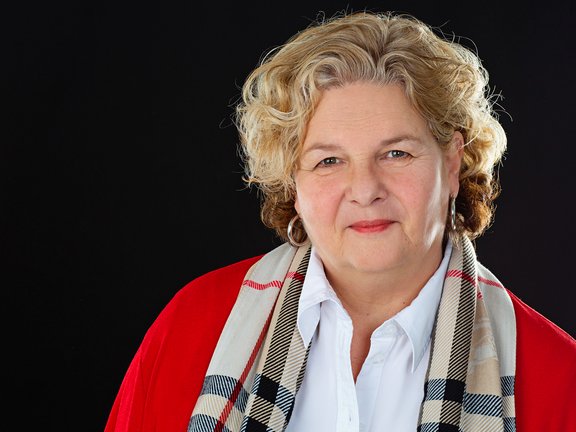
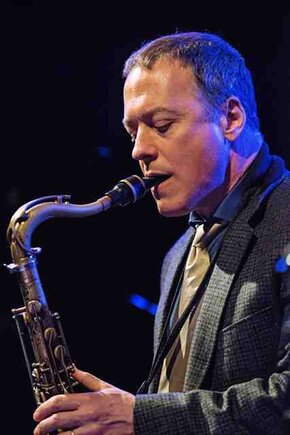
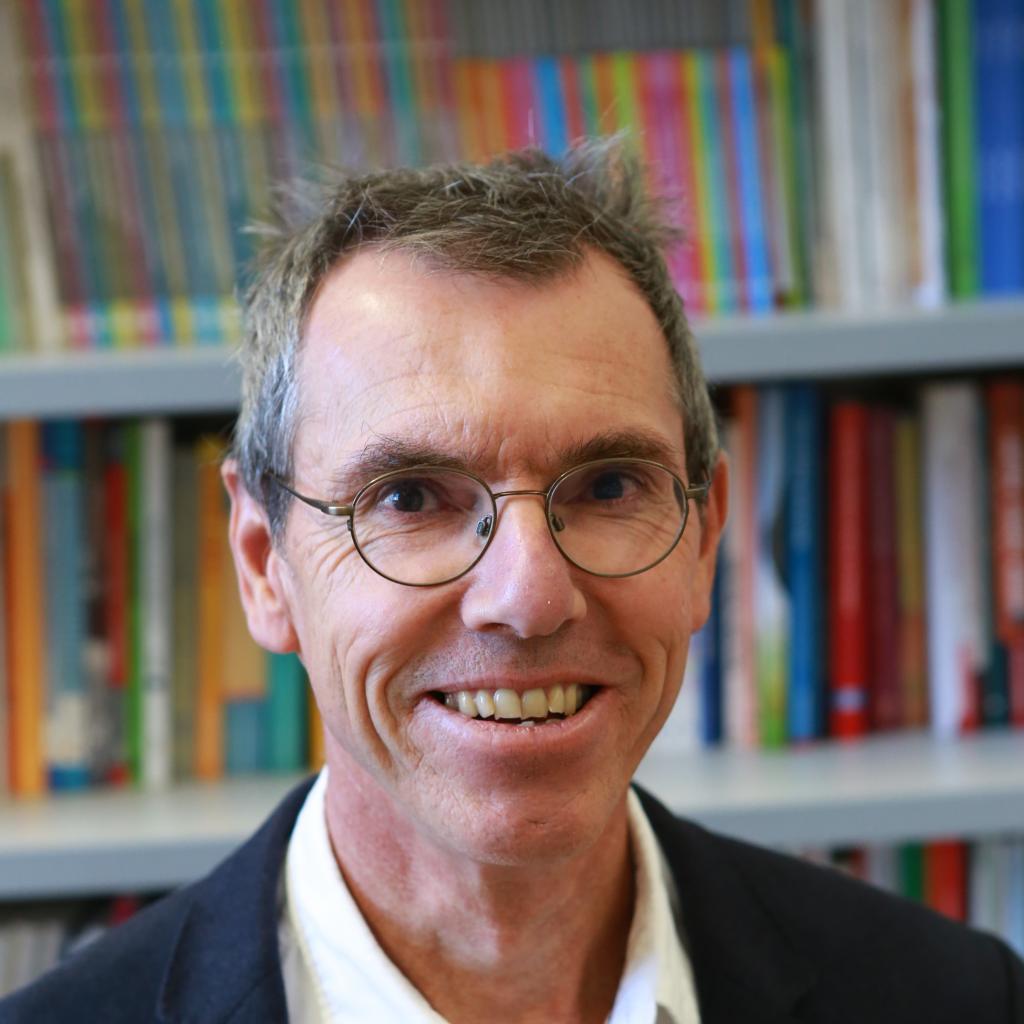
Ulrike Jessner-Schmid is an Extraordinary Professor at the University of Innsbruck (Austria) and holds an academic position at North West University (South Africa). Her primary affiliation is with the Department of English . She holds a PhD in English and French Philology (1988) from Karl-Franzens-Universität Graz, followed by a Habilitation (2006) at Leopold-Franzens Universität Innsbruck, recognized with the Liechtenstein Award. She also serves as an official representative for the Austrian Science Fund (FWF) since 2016. Research Interests: Focuses on Applied Linguistics, Multilingualism, Third Language Acquisition (TLA), Metalinguistic Awareness, and Cross-cultural Pragmatics . Her work challenges monolingual educational norms, emphasizing multilingual advantages in cognitive development and pedagogical strategies. Key Achievements: Received the Arthur-Haidl-Prize 2015 for the DyME research group's contributions to multilingualism research. Coordinates international partnerships, including with South Africa and Hungary, and leads the DyME (Dynamics of Multilingualism with English) research group. Her research extends to multilingual education in diverse contexts like South Tyrol, Tanzania, and South Africa. Administrative Roles: Oversees linguistic publications, serves as a grant reviewer for FWF, and manages educational initiatives such as the MKT Metalinguistischer Kompetenztest for evaluating multilingual competencies. Her work bridges theory and practice, influencing language policies and teaching methodologies globally.
Alice Vadrot is a Professor in the Department of Political Science at the Faculty of Social Sciences. Her research focuses on marine biodiversity governance, science-policy interfaces, and global environmental agreements. She leads projects like MARIPOLDATA, examining marine biodiversity data politics and negotiation processes. Her work addresses Sustainable Development Goal 14 (Life Below Water), with expertise in topics like epistemic selectivity, environmental diplomacy, and BBNJ treaty negotiations. Recent projects include MARine Coastal BiOdiversity Long-term Observations (2022–2026) and MARIPOLDATA (2018–2023). Research Interests: Marine biodiversity, science policy, environmental agreements, ecosystem services, knowledge systems Key Contributions: Developed MARIPOLDATAbase for negotiation tracking, analyzed expert authority in global governance Media Engagement: Provided expert commentary on biodiversity crises and ocean protection Publications span 52 works since 2010, emphasizing interdisciplinary approaches to environmental governance challenges.
Sebastian Schrittwieser is a Researcher in the Research Group Security and Privacy, part of the Faculty of Computer Science. His work focuses on cybersecurity, code obfuscation, malware analysis, and machine learning applications in security. He leads and contributes to projects like INODES (Cyber Defense Strategies) and EMRESS (Resilience Evaluation Models). His research bridges theoretical foundations and practical applications, addressing challenges in software protection and threat detection. Key research interests include: Code Obfuscation Techniques and Resistance Adversarial Machine Learning and Risk Assessment Malware Analysis and Program Simulation User Behavior in Cybersecurity Contexts Recent publications emphasize empirical studies on IT/OT infrastructure security, graph neural network vulnerabilities, and quantum-inspired machine learning. He actively collaborates with institutions like SBA Research and presents at international conferences. Grants include Research Funding for projects on optimal cyber defense strategies (INODES) and software resilience evaluation (EMRESS). His work aligns with interdisciplinary efforts in security engineering and privacy-preserving technologies.
Manuel Schabus is a University Professor of Psychology at the University of Salzburg, specializing in sleep research, consciousness studies, and cognitive neuroscience. With over 403 publications and numerous ongoing research projects through 2027, he leads significant work in understanding sleep mechanisms and developing innovative sleep interventions. His research spans from fundamental neuroscience to practical applications for sleep disorders. Professor Schabus's work focuses on the intersection of sleep, brain activity, and cognitive functions, with particular expertise in EEG analysis and sleep architecture. His research explores how sleep affects memory consolidation, emotional regulation, and overall mental health. He has pioneered digital approaches to sleep assessment and intervention, including mobile applications and online therapy platforms that make evidence-based sleep treatments accessible to broader populations. His recent publications reveal a strong trend toward digital sleep medicine, with multiple studies on AI-enhanced wearables, mobile CBT-I applications, and personalized sleep optimization strategies. The research spans from fundamental neuroscience (examining prediction-related signals during sleep) to applied interventions (including specialized programs for Ukrainian refugees and shift workers). Franz Gerstenbrand Wachkoma Award 2020 Kurt-Zopf-Förderpreis 2018 START-Preis 2014 Professor Schabus manages numerous research grants totaling millions in funding, with current projects including the Virtual Sleep Laboratory (2024-2027), Sleep2Optimize, and specialized interventions for shift workers and Ukrainian refugees. He actively mentors junior researchers and collaborates internationally across multiple institutions. His work bridges laboratory research with real-world applications, as evidenced by his frequent media appearances discussing practical sleep optimization strategies for the general public. He leads the Center for Cognitive Neuroscience at the University of Salzburg, where his team operates both traditional sleep laboratories and develops digital sleep assessment tools. The research group combines expertise in neuroscience, psychology, computer science, and clinical medicine to tackle sleep-related challenges from multiple angles, with a strong emphasis on translating research findings into practical interventions that improve sleep health in diverse populations.
Emanuele Rodolà is a Full Professor of Computer Science at Sapienza University of Rome , leading the GLADIA group (Geometry, Learning and Applied AI) funded by an ERC Grant and a Google Research Award. Former Assistant (2017-2020) and Associate Professor at Sapienza Postdoc at USI Lugano (2016-2017), TU Munich (Alexander von Humboldt Fellow, 2013-2016), and University of Tokyo (JSPS Research Fellow, 2013) His research spans geometry processing , graph/geometric deep learning , computer vision , and language/sound processing , with over 100 publications. He has served on program/organizing committees of top conferences and founded successful workshops in machine learning and graphics. Ellis Fellow ERC Grant recipient Google Research Award Alexander von Humboldt Fellow JSPS Research Fellow
Lars Mehnen serves as a Senior Lecturer and Researcher at the University of Applied Sciences Technikum Wien (UAS Technikum Wien) in Austria, where he has been teaching since 2019 in Computer Science and previously from 2003-2019 in Biomedical Engineering. His academic career includes significant roles at Vienna University of Technology as University Assistant (2004-2007) and Research Assistant (1998-2002), along with leadership positions in major international space initiatives including QB50 (2010-2013), GENSO (2006-2010), and SSETI (1999-2006). TU-Wien: Dipl.Ing. in Computer Engineering and Medical Informatics Dr. Techn. from Institute for Fundamentals and Theory of Electrical Engineering and Institute of Technical Mathematics Mehnen's research spans multiple domains with particular expertise in Artificial Intelligence, Evolutionary Algorithms, and Sensor Technology. His work in explainable and non-parametric evolutionary algorithms represents cutting-edge contributions to AI methodology. In biomedical engineering, he has developed innovative magnetoelastic skin curvature sensors for cardiovascular monitoring and other medical applications. His teaching portfolio is exceptionally diverse, covering Statistics (parametric and non-parametric), Artificial Intelligence, Aerodynamics (particularly for sports equipment), Physics for game engineering, and extensive programming topics including Java, C/C++, Python, and functional programming languages. His publication record from 2001-2024 shows a clear evolution from early work on magnetostrictive bilayer sensors toward more recent applications of machine learning in biological classification, medical diagnostics, and educational technology. The 2024 publication on ChatGPT's diagnostic accuracy for medical conditions demonstrates his engagement with the latest AI developments. His research consistently bridges theoretical computer science with practical applications in healthcare, sports engineering, and space technology. Mehnen has been deeply involved in European collaborative projects throughout his career, including QB50 (EC F7), GENSO (ESA initiative), and B-Sens (EC-Project in 5th framework). These projects involved coordination with numerous universities and institutions across Europe, demonstrating his ability to lead international research collaborations. His work on the SSETI Express satellite project resulted in the successful launch of a micro-satellite at the end of 2005. At UAS Technikum Wien, Mehnen contributes to curriculum development across multiple domains including statistics, AI, programming, and physics. His research on paraglide control systems demonstrates application of his expertise to sports safety technology, while his recent work in teaching analytics shows commitment to improving educational outcomes through data-driven approaches.
David Meyer is a Professor at the University of Applied Sciences Technikum Wien. Since 2017, he has served as Program Director for the Bachelor in Business Informatics program, and since 2020, also for the Master Data Science program. He is a Senior Lecturer and a member of the University Council. Education Habilitation in Business Informatics PhD in Business Informatics from Vienna University of Business Administration Undergraduate studies in Business Informatics at Vienna University of Technology and University of Vienna Lycée Français de Vienne Research Interests Meyer's work spans Data Science , including core areas like Data Engineering, Data Visualization, and Machine Learning. His focus extends to Statistical Computing , programming language R , ERP Systems , and Business Intelligence/Data Warehousing . He has held leadership roles in academic governance, including membership of the University Council since 2018 and board membership of the Doctoral College 'Resilient Embedded Systems' from 2018–2024. Professional Experience 2010–present: Professor and Lecturer at UAS Technikum Wien 2004–2010: Assistant Professor at WU Wien (Institute for Business Informatics) 2000–2004: Research Assistant at TU Wien (Institute for Statistics and Probability Theory) 1998–2000: Consultant at Arthur Anderson and as a freelancer 1995–1998: IT Project Manager for ERP systems 1990–1995: Software Engineer for medical ERP systems Contact Email: david.meyer@technikum-wien.at
Ursula Hölbling is a Lecturer at the Carinthian University of Education , with a focus on German as a Second Language (DaZ) education. Her contact details include email: ursula.hoelbling@phk.ac.at and office location in Klagenfurt, Austria. Role: Teacher in the German support class at Volksschule (VS) St. Veit/Glan. Responsibilities: Organization and management of the HLG DaZ program. Research Interests: German as a Second Language, language education, teacher training, educational management. Affiliation: Institute for Humanities and Cultural Education at Carinthian University of Education.
Univ.-Prof. Andrew L. Middleton serves as Professor at the Music and Arts Private University of Vienna's Faculty of Music since 2006, specializing in jazz composition, saxophone performance, and music education. His institutional affiliation encompasses both artistic creation and pedagogical leadership within the Jazz Department. His research interests focus on jazz composition and improvisation , exploring innovative approaches to melodic development, ensemble interaction, and cross-cultural synthesis. Middleton's work bridges European classical traditions with contemporary jazz practices, emphasizing pedagogical frameworks that develop both technical mastery and creative expression in improvisers. His scholarly contributions include systematic methods for melodic construction and harmonic reinterpretation that have influenced jazz education internationally. Artistic output trends reveal consistent exploration of original composition across ensemble formats from quartet to big band, with increasing emphasis on cross-cultural dialogue in later works. His creative trajectory demonstrates deepening integration of European classical structures with jazz improvisation, particularly evident in post-2000 recordings like Reinventing the World featuring Kenny Wheeler and Water and Sky . Major Awards : Prize of the 'Ambassador of Jazz' (2018), Federal Chancellery Film Composition Funding (2014), NEA Performance Grant (1996), Down Beat Magazine Outstanding Jazz Soloist (1987) Grants : Chamber Music America New Works Grant (2004), NYFA fiscal sponsorship (2006-2009), Fund for US Artists at International Festivals (1992-2004) As artistic director of the Poysdorf Jazz & Wine Summer Workshop (2000-2009) and Jazzinty International Workshop (2009-2015), Middleton developed comprehensive training programs across 20+ countries. His global clinic network included Erasmus residencies at Sibelius Academy, Royal Conservatoire Glasgow, and Malmoe Academy, focusing on saxophone pedagogy and ensemble leadership. Middleton's educational impact spans university programs, high school workshops, and professional development across Europe and the Americas. His creative laboratory operated through international collaborations including the Andy Middleton Group, European Quartet, and partnerships with Maria Schneider, Lionel Hampton, and Randy Brecker. Performance contexts ranged from jazz clubs and concert halls to major festivals across five continents, often integrating educational components within professional performance settings.
Bernhard Koch is a Professor of Early Childhood Education at the Tyrol University of Education (Pädagogische Hochschule Tirol), where he has held a professorship since 2023, having previously served as Professor in the Department of Early Childhood Education from 2020-2022. Before his current position, he was a Professor of Early Childhood Education at the Styrian University of Teacher Education (2018-2020) and has taught at several Austrian universities including Innsbruck, Graz, Salzburg, FH Campus-Wien, and PH Upper Austria. Tyrol University of Education (2023-present): Professorship in Early Childhood Education Tyrol University of Education (2020-2022): Professor in the Department of Early Childhood Education Styrian University of Teacher Education (2018-2020): Professorship in Early Childhood Education University of Innsbruck (2007-2016): Research Associate and Lecturer, Department of Early Childhood Education Professor Koch earned his Mag. phil. in psychology, education, and political science from the University of Innsbruck, followed by doctoral studies in philosophy (educational science, political science) from 2008-2011, earning his Dr. phil. His academic journey reflects a deep commitment to early childhood education, with practical experience gained through work in daycare centers and kindergartens as a temporary caregiver and board member of early childhood education institutions. Koch's research spans several critical areas in early childhood education, with particular emphasis on gender diversity in the field (especially increasing male participation), migration and diversity in kindergarten settings, climate education for young children, and the professionalization of early childhood educators. His work often bridges theory and practice, examining how academic training translates to real-world educational settings. A significant portion of his research addresses the challenges of implementing educational theory in practical settings, particularly in the context of Austria's ongoing professionalization of early childhood education through tertiary education pathways. His recent publications demonstrate a clear trajectory of research interests evolving from foundational work on gender diversity in early childhood education toward more complex investigations of migration, climate change education, and the impact of the pandemic on early childhood settings. The publications reveal a consistent focus on practical applications of research, with numerous evaluation studies, handbooks for practitioners, and policy-relevant research. His work frequently emphasizes the importance of diversity, equity, and professional development in early childhood settings. Professor Koch has been actively involved in numerous research projects including studies on migration in kindergartens, climate communication with parents, kindergarten assistants, language support projects, and evaluations of bachelor programs in early childhood education. His work has been supported by various institutions including the Austrian Integration Fund, Tyrol Chamber of Labor and Employees, and multiple universities. He serves as Country Coordinator Austria for the European Early Childhood Education Research Association (EECERA) (2014-2023), is a member of the working group 'Improving staff working conditions for better quality in early childhood education and care in Austria' (BMBFW & UNICEF) (2022-2024), and has held various advisory roles including membership on the ÖFEB-Sektion Elementarpädagogik board (2019-2022) and the Fachbeirat KiTa aktuell Österreich (2013-2022). His expertise is frequently sought for policy development, having contributed to expert groups on the 'Qualitätskompass Elementarpädagogik' and 'Bildung für die Wissensgesellschaft' for the Austrian government.
Simon Kranzer is a Senior Lecturer and Head of Research Group at the Department of Information Technologies and Digitalisation, FH Salzburg. His work bridges academic research and practical application in digital transformation. Location: Campus Urstein, Room 425 Contact: simon.kranzer@fh-salzburg.ac.at | +43-50-2211-1316 Research Focus: Digital Twins for industrial systems Collaborative Robotics (Co-Bots) in retail Knowledge Transfer between academia and industry Operational Technology (OT) Security Data Acquisition and Visualization Programming Language Applications in industrial contexts Research Trends: Recent publications show expertise in retail automation (service robots, customer behavior analysis), industrial digital twins, and OT security. Earlier work spans GIS-SCADA integration, medical software implementation, and 3D microstructure analysis. Collaborative Projects: Active in interdisciplinary living labs, smart factory bootcamps, and 5G-based robotics exploration.
Jasmin Mersmann is Professor of Art History at the University of Art and Design Linz since 2019, holding a professorship within the School of Fine Arts and Cultural Studies and the Department of Art History and Art Theory / Gender Studies / Curatorial Practice. Her research spans art and cultural history from the early modern period to contemporary practices, with core focuses on historical anthropology, NatureCultures, body studies, demonology, and the intersections of art and science. Her current projects include Shaping bodies. On modeling living beings 1500–1800 , UnBinding Bodies: Lotus Feet and Corset , Deal with the Devil: On the Cultural History of the Devil's Pact , and coordination of the IMAGE+ Platform for Open Art Education. Mersmann's scholarly work demonstrates consistent engagement with bodily transformations, anamorphic techniques, and truth claims in visual culture across historical periods. Key publications include the monograph Lodovico Cigoli. Forms of Truth around 1600 (2016) and co-edited volumes such as UnBinding Bodies: On the History of Footbinding in China (2023) and Clean Cube. On the Critique of Pure Reason (2021). Her extensive essay output reveals recurring analytical threads connecting early modern scientific paradigms with contemporary artistic practices, particularly through examinations of castration, negation gestures, and devotional imagery. Mersmann's academic trajectory includes doctoral research through the Franco-German University program, postdoctoral fellowships at IKKM Weimar and IFK Vienna, and foundational contributions to the journal ilinx. Berliner Beiträge zur Kulturwissenschaft . She maintains active engagement with both theoretical frameworks and material practices in art historical scholarship.
Professor Wolfgang Obenaus serves as Full Professor at Vienna University of Economics and Business (WU), specializing in business language and communication. With academic affiliation dating back to 1976, he progressed from assistant professor to full professor in 1991. He earned his Mag. rer. soc. oec degree in 1976 and Dr. rer. soc. oec. degree in 1979, both from Vienna University of Economics and Business Administration. His research career includes significant periods at Georgetown University, Export-Import Bank of the United States, Overseas Private Investment Corporation, and Harvard Business School through the Schumpeter-Fellowship. Professor Obenaus's scholarly work centers on business communication domains including foreign trade terminology, presentation language, negotiation linguistics, and cross-cultural management. His research integrates practical applications through CEMS-Business Language Programs and terminological database development. Currently teaching International Trade, International Trade Policy, and Risk Management in International Trade, he bridges theoretical knowledge with practical business communication skills essential for global commerce.
Dr. Axel Beer serves as Associate Professor at the Vienna University of Economics and Business (WU), where he holds dual leadership roles as Head of the Institute for English Business Communication and Deputy Program Director of the Department's Master's Program in Business Communication. His academic career has been deeply rooted at WU, where he earned both his Magister (1991) and Doctoral (1995) degrees. Professor Beer's research spans several interconnected domains centered around communication in business contexts. His primary interests include corporate communication, corporate language, digital communication, and U.S. studies, with a distinctive specialization in Disney-related research as evidenced by his doctoral dissertation on Corporate Communication and Corporate Language at Walt Disney World. He has established himself as the department's recognized Disney expert, bringing this unique perspective to his academic work. His publication record reveals a consistent scholarly trajectory focused on business communication evolution, particularly examining the transition from traditional business letters to digital communication channels. Beer's work demonstrates how language and communication practices impact business processes, organizational identity, and cross-cultural understanding. His research shows particular attention to the intersection of language proficiency, professional communication standards, and business effectiveness. As academic advisor for WU's exchange programs with the University of Wisconsin-Madison, University of Miami, and Boston College, Professor Beer plays a significant role in international student mobility. His teaching portfolio includes skills-related classes, a long-running lecture on life in Britain and the U.S. (co-taught with Dr. Herles), and various master's level communication courses.
Ruth Trinder is an Associate Professor at the Institute for English Business Communication at Wirtschaftsuniversität Wien (Vienna University of Economics and Business). She holds a PhD in English from 2000 and completed her Habilitation in 2006 focusing on online/blended learning and individual learner differences. Her research spans computer-assisted language learning (CALL), language teaching methodology, and English literature, with particular emphasis on technology integration in tertiary education. Education: First degree in English and American studies (1993), PhD in English (2000), Habilitation (2006) Her work involves developing and evaluating online learning materials, serving as project leader in multiple initiatives. She currently represents WU in the Erasmus project "IntlUni: The challenges of the multilingual and multicultural learning space," a collaboration among 37 universities across 28 countries. Recent research publications demonstrate her focus on technology-mediated language learning, covering topics like: Student perspectives on digital learning environments Blended learning implementation strategies Learner autonomy in CALL resource utilization Multimedia courseware development in higher education While no specific scientific awards are mentioned in the text, her work includes empirical investigations into technology's role in both formal and informal language learning contexts. She has contributed to academic resources like the Online Writing Lab (OWL) through educational recommendations, particularly for platforms supporting business English and academic writing.