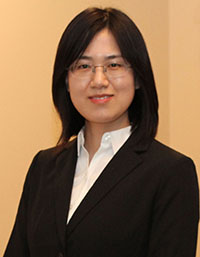
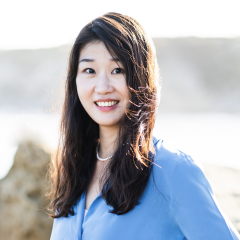
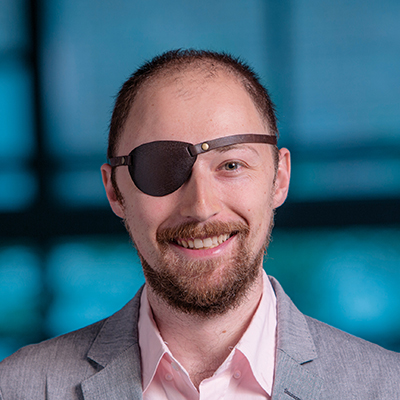
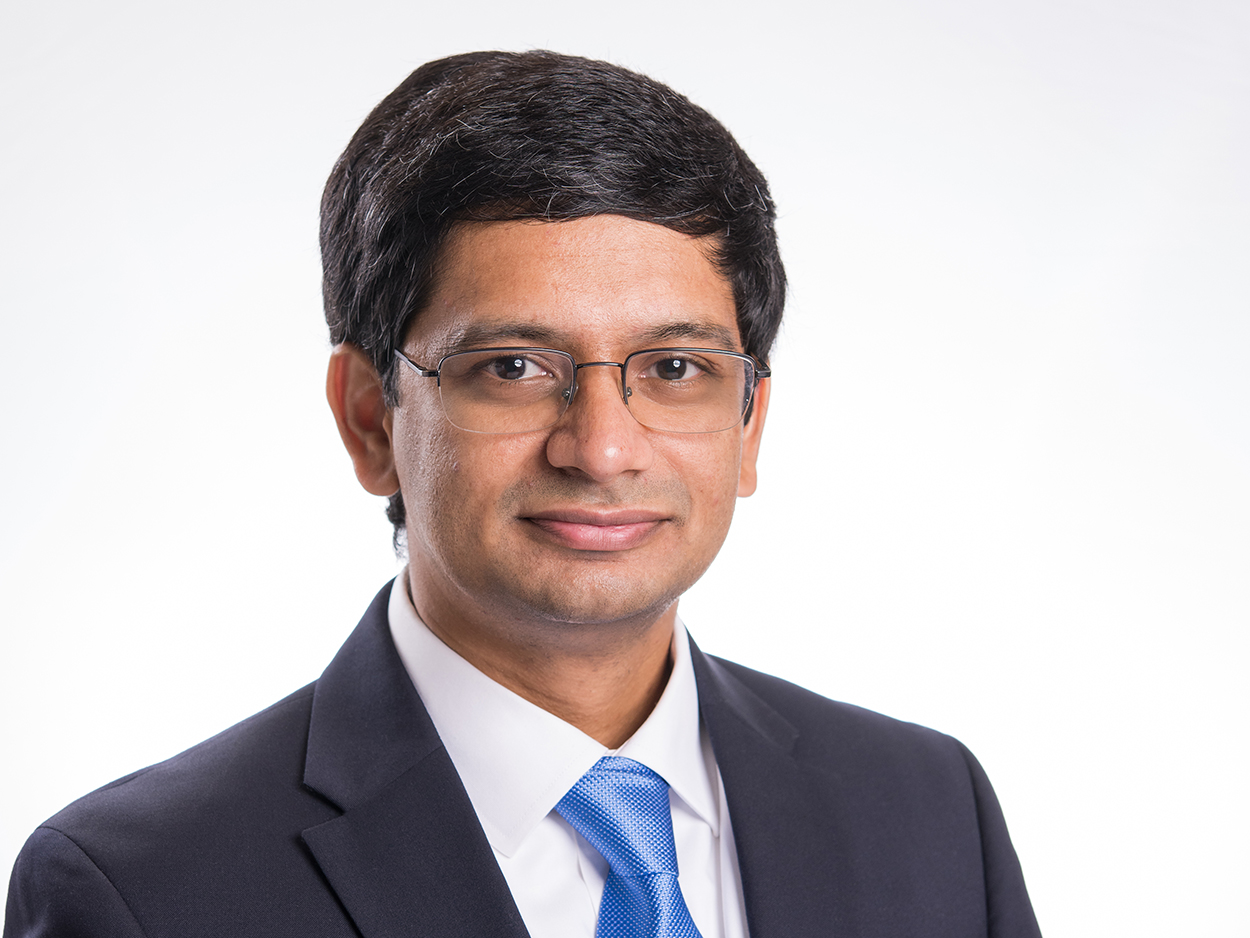
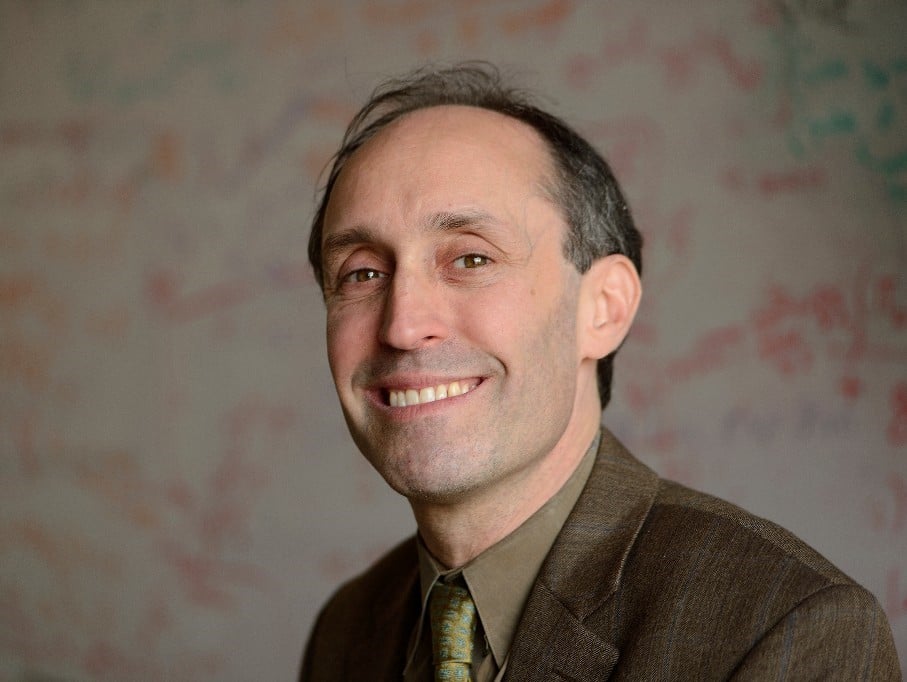
Dr. Stan Ahalt serves as the inaugural Dean of the UNC School of Data Science and Society (SDSS) and holds a professorship in the Department of Computer Science at UNC-Chapel Hill. He previously directed the Renaissance Computing Institute (RENCI) and currently acts as its executive advisor. Additionally, he is the associate director of informatics and data science at NC TraCS, the translational research institute at UNC. His academic journey includes a 22-year tenure as professor of electrical and computer engineering at Ohio State University and leadership roles at the Ohio Supercomputer Center. Ahalt’s research focuses on applying data science to societal challenges such as healthcare, climate, and judicial reform. Key initiatives include the National Consortium for Data Science and the iRODS project, which advanced enterprise data management systems. Ahalt has secured over $34.5M in grants to lead high-impact projects like the NHLBI BioData Catalyst (unifying biomedical data), the NCATS Translator (accelerating clinical discovery), and the NIH HEAL Initiative (ensuring FAIR data standards). He mentors students across doctoral and master’s programs, teaching data science fundamentals in courses like COMP 116: Introduction to Scientific Programming. His work emphasizes interdisciplinary collaboration, evidenced by roles in RENCI, NC TraCS, and the SDSS. Ahalt’s contributions span cyberinfrastructure development, educational innovation, and translational research, positioning UNC as a national leader in data science.
Angel Xuan Chang is an Associate Professor at Simon Fraser University's School of Computing Science, affiliated with labs including 3DLG, GrUVi, SFU NatLang, SFU AI/ML, and VINCI. He holds a Canada CIFAR AI Chair and was a TUM-IAS Hans Fischer Fellow (2018-2022). His research bridges natural language processing (NLP), 3D scene understanding, and embodied AI, focusing on language-grounded 3D generation and biodiversity monitoring via DNA barcodes. Recent work includes NuiScene (unbounded outdoor scene generation), ViGiL3D (3D visual grounding dataset), and CLIBD (vision-genomics biodiversity analysis). He advises students in projects like BIOSCAN-5M insect dataset and embodied AI navigation. His 2025 highlights include multiple ICCV and ICLR papers, workshops at ICML and CVPR, and a CRV invited talk. Education: Ph.D. in Computer Science from Stanford University (2014), advised by Chris Manning. Previous roles include visiting research scientist at Facebook AI Research and researcher at Eloquent Labs.
Ruihong Huang is an Associate Professor in the Department of Computer Science and Engineering at Texas A&M University, part of the College of Engineering. She holds a Ph.D. from the University of Utah (2014) and completed a postdoctoral fellowship at Stanford University. Her research focuses on Natural Language Processing (NLP) with emphasis on information extraction, event recognition, media bias analysis, and ethical AI applications. She teaches courses like Information Storage and Retrieval (CSCE 470), Natural Language Processing (CSCE 638), and has advised numerous PhD, Master’s, and undergraduate students. Key research contributions include work on event coreference resolution, discourse analysis, and detecting media bias through event relation graphs. Huang has developed benchmark datasets like UAL-Bench and EMONA, and her work spans applications in disaster management, fake news detection, and moral reasoning in LLMs. She is a recipient of the NSF CAREER Award and serves on program committees for top conferences like ACL and EMNLP. Her academic service includes roles as Area Chair for ACL 2024 and Senior Area Chair for EMNLP 2024. She maintains an active lab group focusing on NLP fundamentals and real-world applications, with projects involving propaganda identification, polarity calibration for opinion summarization, and multimodal dialog act classification. Huang has published over 80 papers in top-tier venues such as NAACL, EMNLP, ACL, and NeurIPS.
Yao Qin is an Assistant Professor in the Department of Electrical and Computer Engineering at the University of California, Santa Barbara (UCSB), with dual affiliation in the Department of Computer Science. She concurrently serves as Co-Director of the REAL AI Initiative at UCSB and holds a Senior Research Scientist position at Google DeepMind, where she contributes to the Gemini Multimodal project. Her academic credentials include a PhD in Computer Science and Engineering from the University of California, San Diego (advised by Prof. Garrison W. Cottrell) and a BS in Electrical Engineering from Dalian University of Technology. During her doctoral studies, she completed internships with pioneering researchers Geoffrey Hinton and Ian Goodfellow. Dr. Qin's research program centers on machine learning robustness, with emphasis on adversarial robustness, out-of-distribution generalization, and fairness. She develops reliable AI systems specifically for healthcare applications, with diabetes management as a primary focus. Her lab explores critical themes including AI safety in multimodal models and diabetes-specific AI solutions, particularly exercise metabolism modeling and glycemic effect prediction. Recent publications reveal a strong trajectory in robust machine learning with cross-domain applications. Her work consistently bridges theoretical robustness concepts with practical healthcare implementations, particularly in diabetes care. Key publication venues include CVPR, ICML, NeurIPS, and ICLR, with notable contributions to out-of-distribution detection, adversarial transfer learning, and multimodal AI safety. Her distinguished recognition includes: EECS Rising Star at MIT (2021) UCSB Regents' Junior Faculty Fellowship Award Helmsley Charitable Trust award for Type 1 diabetes research UCSB Faculty Research Grant American Diabetes Association Abstract Award (ADA-2025) Dr. Qin actively mentors four PhD students—Mehak Dhaliwal, Andong Hua, Kenan Tang, and Youngseok Yoon—on projects spanning LLMs for diabetes, multimodal robustness, and generative time-series modeling. Her research is funded by the Helmsley Charitable Trust and UCSB, with recent grants supporting exercise-specific AID algorithms for diabetes management. As Co-Director of the REAL AI Initiative, she leads a research ecosystem focused on developing reliable artificial intelligence. Current lab activities include organizing workshops at NeurIPS-2024 (AdvML-Frontiers and AIM-FM) and developing next-generation diabetes management tools through collaborations with medical institutions.
Mark Yatskar is an Assistant Professor in the Department of Computer and Information Science at the University of Pennsylvania. His research focuses on the intersection of natural language processing, computer vision, and fairness in machine learning. He earned his PhD from the University of Washington under advisors Luke Zettlemoyer and Ali Farhadi, and previously worked as a Young Investigator at the Allen Institute for Artificial Intelligence. Education: PhD in Computer Science, University of Washington (Advisor: Luke Zettlemoyer & Ali Farhadi) Research Interests: Yatskar's work explores how language can structure visual perception and mitigate human biases in machine learning systems. Key themes include: Natural language as a scaffold for visual intelligence Bias characterization and control in machine learning systems His lab currently investigates projects like language-guided bottlenecks, annotator cognitive heuristics, and gender bias amplification. Teaching: CIS 5300: Computational Linguistics (2021-2024) CIS 7000: Language and Vision (2020) CIS 6300: Efficient NLP (2023, 2025) Awards: Best Paper Award at EMNLP (Gender Bias Amplification Research) Advising & Grants: Yatskar advises a team of PhD/Master's students and actively seeks motivated researchers. His group has explored funding in areas like interpretable AI, multimodal reasoning, and dataset bias mitigation. Labs/Teams: Leads the Penn NLP & Vision Lab, focusing on projects like MolMo/PixMo open models, ViUniT visual unit tests, and bias mitigation frameworks.
Joydeep Biswas is an Associate Professor in the Computer Science Department at the University of Texas at Austin, where he serves as the Director of the Autonomous Mobile Robotics Laboratory (AMRL). He is also affiliated with Texas Robotics, the UT Machine Learning Laboratory, and UT Good Systems. Previously, he was an Assistant Professor in the College of Information and Computer Sciences at the University of Massachusetts Amherst. Dr. Biswas earned his PhD in Robotics from Carnegie Mellon University in 2014 and his B.Tech in Engineering Physics from the Indian Institute of Technology Bombay in 2008. His educational background has provided him with a strong foundation in both theoretical and applied aspects of robotics and artificial intelligence. Dr. Biswas's research focuses on enabling long-term autonomy for mobile robots operating in human environments. His work spans robot perception, motion planning, control systems, and AI, with the ultimate goal of creating self-sufficient autonomous mobile robots that can perform tasks accurately and robustly in real-world settings. He is particularly interested in perception, planning, and failure recovery for autonomous mobile robots, which supports his vision of having autonomous service mobile robots deployed at campus-to-city scale, both indoors and outdoors, performing assistive tasks over deployments spanning years. His IJCAI 2019 Early Career Spotlight talk summarizes much of his research to date and ongoing interests. His recent research has shown a strong trend toward social navigation, human-robot interaction, and the application of machine learning techniques to robotics problems. There's a clear progression from fundamental robotics research toward more complex, real-world applications that require robots to understand and navigate human social spaces effectively. His work increasingly integrates large language models and other advanced AI techniques with traditional robotics approaches, as evidenced by his recent publications on topics like preference-conditioned navigation, social navigation benchmarks, and instruction-following navigation systems. Dr. Biswas has received numerous prestigious awards including the NSF CAREER Award (2021), J.P. Morgan Faculty Research Award (2019), Amazon Research Award (2019), and a grant from Northrop Grumman Mission Systems (2018). These awards recognize his innovative contributions to the field of robotics and autonomous systems. As a dedicated educator and mentor, Dr. Biswas actively supervises PhD and master's students, with his PhD student Sadegh Rabiee winning the student poster award at the Northrop Grumman University Symposium 2019. He has secured significant grant funding from the National Science Foundation for projects including 'Introspective Perception and Planning for Long-Term Autonomy' and 'Interactive Synthesis and Repair For Robot Programs,' demonstrating his ability to secure competitive research funding and his commitment to advancing the field. Dr. Biswas leads the Autonomous Mobile Robotics Laboratory (AMRL), which serves as a hub for interdisciplinary research in mobile robotics. The lab has developed notable resources such as the UT Campus Object Dataset (CODA) for 3D perception research and SOCIALGYM, a framework for benchmarking social robot navigation. His team regularly deploys robots on the UT Austin campus and in urban environments to test and refine their approaches in realistic settings, bridging the gap between simulation and real-world application.
Noorbakhsh Amiri Golilarz is an Assistant Professor in the Department of Computer Science at The University of Alabama, College of Engineering. He has established himself as a prominent researcher in artificial intelligence, particularly in computer vision, deep learning, and image processing. His educational background includes: Postdoctoral Research Fellow, Computer Science, Boston College (2023) Ph.D., Electrical and Computer Engineering, Southern Illinois University Carbondale (2023) D. Eng., Computer Science and Technology, University of Electronic Science and Technology of China (2021) M.S., Electrical and Electronic Engineering, Eastern Mediterranean University (2017) B.S., Electrical Engineering, University of Guilan (2012) Dr. Golilarz's research spans multiple domains of artificial intelligence with a particular focus on computer vision, deep learning, and image processing applications. His work addresses challenges in medical imaging, satellite imagery, and cognitive neuroscience. He has made significant contributions to image denoising techniques, control chart pattern recognition, and AI applications in healthcare. His recent work has expanded into generative AI, large language models, and secure machine learning operations. His publication portfolio demonstrates consistent productivity with over 2500 citations and an h-index of 25. His most impactful work includes applications of blockchain and federated learning for COVID-19 detection, optimized support vector machines for medical diagnosis, and innovative image denoising techniques using metaheuristic optimization algorithms. Among his professional achievements: Co-founded AI Letters journal in 2024, serving as Associate Editor-in-Chief Served as Lead Guest Editor and Topic Editor for several SCI-indexed journals Held the role of Conference Program Chair Dr. Golilarz has supervised numerous graduate students and research projects, with his work spanning theoretical advancements in AI algorithms to practical applications in healthcare, energy systems, and cybersecurity. His research group has established collaborations with institutions including Boston College and Mississippi State University.
Lorraine (Xiang) Li is an Assistant Professor in the Department of Computer Science at the University of Pittsburgh’s School of Computing and Information (SCI). Her research focuses on the intersection of natural language processing, commonsense reasoning, knowledge representation, and machine learning, particularly in designing probabilistic models and evaluation methods for implicit commonsense knowledge in language. Li holds a PhD from the University of Massachusetts, Amherst, and previously worked as a young investigator with the Mosaic team at AI2. She has an M.S. in Computer Science from the University of Chicago, where she conducted research at TTIC. Her work emphasizes advancing AI’s ability to reason contextually and generate robust, human-like understanding through probabilistic frameworks. Key research themes include bias detection in reasoning models, iterative model editing, domain adaptation with LLMs, and evaluating commonsense through probabilistic measures. Her recent publications explore challenges like confirmation bias in chain-of-thought reasoning and geographical robustness in object recognition. Li actively contributes to the NLP community, serving on program committees for ACL, EMNLP, NAACL, and ARR. Though no formal awards are listed, her prolific publication record reflects her impact in AI research. She currently leads research in procedural knowledge models (e.g., Plasma) and long-tail knowledge generation, advancing foundational AI methodologies.
William Yang Wang serves as the Mellichamp Professor of Artificial Intelligence at the University of California, Santa Barbara (2019-present). He directs the UCSB Center for Responsible Machine Learning, the Mind and Machine Intelligence Initiative, and the UCSB NLP Group. His research focuses on theoretical foundations and practical algorithms for AI, particularly in NLP, LLMs, and neuro-symbolic reasoning. PhD in Computer Science from Carnegie Mellon University Active in AI theory and applications (2016-present) Research interests span multiple AI domains, with special emphasis on NLP and responsible machine learning. He has pioneered datasets like HybridQA, TabFact, and VaTeX, enabling advancements in multi-hop QA, fact verification, and video-language tasks. His work combines statistical relational learning with modern deep learning paradigms. Recent publications center around multimodal reasoning, knowledge graph integration, and responsible AI development. He has received numerous accolades including the IEEE SPS Pierre-Simon Laplace Award (2024) and NSF CAREER Award (2021). Karen Sparck Jones Award (2022) DARPA Young Faculty Award (2018) IBM Faculty Award Mentoring 15+ PhD and postdoc researchers who now hold positions at Microsoft Research, Amazon, Meta GenAI, and academic institutions like Arizona and Rutgers. His lab maintains active collaborations with industry partners through initiatives like ChipAgents.ai, which he founded as CEO.
Professor Liyue Shen is a faculty member in the Department of Biomedical Engineering within the College of Engineering at the University of Michigan. Her research program focuses on cutting-edge applications of artificial intelligence in biomedical imaging and healthcare, with particular expertise in diffusion models and inverse problem solving for medical image reconstruction. Dr. Shen's research interests span biomedical AI, medical image analysis, biomedical imaging, machine learning, computer vision, signal and image processing, AI for precision health, and bioinformatics. Her work bridges theoretical advances in AI with practical clinical applications, developing novel methods for medical image reconstruction, segmentation, and analysis that can improve diagnostic accuracy and treatment planning. Analysis of her recent publications reveals a strong focus on diffusion models for solving complex inverse problems in medical imaging, with particular emphasis on patch-based approaches, latent space disentanglement, and efficient sampling techniques. Her research group has made significant contributions to 3D CT reconstruction, chest X-ray analysis, holographic phase retrieval, and patient-specific imaging studies, demonstrating both theoretical innovation and practical clinical relevance. While specific scientific awards aren't mentioned in the available materials, her extensive publication record in top venues demonstrates significant scholarly impact in the field of biomedical AI. Her research program appears well-funded through grants supporting her work in medical imaging and AI development.
James A. Evans is a Professor at the University of Chicago, where he serves as Director of the Knowledge Lab and Faculty Director of the Masters Program in Computational Social Science. He is also an External Professor at the Santa Fe Institute. His research bridges computational methods with social theory to analyze collective cognition, innovation, and knowledge production across science, technology, and broader societal domains. Director, Knowledge Lab Faculty Director, Masters Program in Computational Social Science External Professor, Santa Fe Institute Evans’s research explores how social and technical institutions shape discovery processes, utilizing machine learning, network modeling, and large-scale data analysis. His work spans fields like computational social science, sociology of science, and data science, focusing on team dynamics, peer review, and the global structure of scholarship. His recent publications examine team size effects on innovation, discursive influence in academia, and the interplay between tradition and novelty in research strategies. Articles trend toward interdisciplinary approaches combining social theory, computational methods, and science policy. Evans supports novel observatories for human understanding through crowdsourcing, sensor networks, and semantic modeling. He has received funding from the National Science Foundation, National Institutes of Health, and Air Force Office of Scientific Research, with findings featured in major media outlets like Nature , Science , and The New York Times .
Jason Eisner is a Professor in the Department of Computer Science at Johns Hopkins University's Whiting School of Engineering, with a secondary joint appointment in Cognitive Science. He is affiliated with the Center for Language and Speech Processing (CLSP), the Human Language Technology Center of Excellence, and leads JHU's cross-departmental machine learning group. His research focuses on developing probabilistic modeling, inference, and learning techniques for linguistic structure. Eisner has authored over 100 papers in computational linguistics, particularly in parsing, grammar induction, machine translation, computational phonology, computational morphology, and weighted finite-state methods. He is the lead designer of Dyna, a declarative programming language for AI research that allows concise programs backed by efficiency tricks. Eisner's work centers on novel methods in NLP and machine learning, with emphasis on probabilistic modeling and inference in complex, structured settings. His research program combines computer science with statistics and linguistics to create statistical models that capture linguistic structure and develop efficient algorithms for applying these models to data with minimal supervision or through large pre-trained models. As an ACL Fellow, Eisner has made significant contributions to the field. His recent work (2023-2025) shows a strong focus on large language models, semantic parsing, controlled text generation, model interpretability, and privacy-preserving techniques, continuing his long-standing interest in the intersection of probabilistic modeling and linguistic structure. ACL Fellow He teaches courses including Natural Language Processing (601.465/665), Machine Learning: Linguistic and Sequence Modeling (601.765), Declarative Methods (601.325/425/625), and Selected Topics in Natural Language Processing (601.865). His advising focuses on research students through the Argo research group, with emphasis on fundamental research questions in NLP rather than immediate applied engineering.
Jeremy Rau is a Professor of Linguistics and Classics at Harvard University's Department of Linguistics, part of the Faculty of Arts and Sciences. He currently serves as Director of Graduate Studies for Fall 2024 and is on leave for Spring 2025. His office is located in Boylston Hall, Cambridge, MA. Rau specializes in Greek and Latin historical linguistics with a particular focus on Homeric language, Indo-European linguistic systems, and Indo-Iranian comparative studies. His research explores ancient language structures, verb morphology, and diachronic phonological changes in pre-classical texts. Research Interests: Proto-Indo-European root analysis Mycenaean Greek linguistic features Homer's language and epic conventions Indo-Iranian comparative linguistics Verb derivation mechanisms Publications reflect deep engagement with ancient language structures, including studies on Mycenaean contract verbs, Homeric noun inflections, and Proto-Germanic lexicon. He has contributed to journals like Die Sprache , Glotta , and Historische Sprachforschung , as well as edited volumes such as Verba Docenti . Administratively, Rau oversees graduate programs and participates in departmental governance. His work bridges historical linguistics with philological scholarship, emphasizing systematic analysis of ancient language data.
Lucia Binotti is a Professor of Spanish and Digital Humanities at the University of North Carolina at Chapel Hill (UNC-CH), with dual affiliations in the Department of Romance Studies and interdisciplinary Digital Humanities initiatives. She serves as Graduate Advisor for Hispanic Linguistics and Director of the Honors Study Abroad Program in Rome. Her work bridges traditional philology with cutting-edge digital scholarship, emphasizing immersive learning experiences through virtual reality (VR) and augmented reality (AR) technologies. Binotti holds a Ph.D. from UC Santa Barbara (1990), an MA (1985), and a BA (1984) in Romance Philology from the Università degli Studi di Pisa. Her research focuses on linguistic identity, cultural heritage preservation, and innovative educational platforms like Amirabilia—the world’s first experiential learning platform. Notable projects include nXimena (healthcare training for Latinx abuse survivors) and Entiendelo (a linguistic/cultural navigation app for Latinx communities). Her scholarly interests span Early Modern Spanish literature, digital humanities applications, and the intersection of technology with social justice. She has directed grants totaling over $500K for projects involving AR/VR integration in education, including collaborations with the UNC Health Science Library and NCSU’s DELTA initiative. Recent awards include the John K. Walsh Award (2010) and Digital Innovation Fellow status (2014). Grants & Leadership: CFE-Lenovo Technology Grants (2018–2019) for AR/VR expansion iLRN 2020 International Co-Chair XR Faculty Learning Community Leader (UNC) Teaching: Courses span from introductory Hispanic literature to advanced topics like medieval intellectual history and digital humanities methodologies. Binotti’s work emphasizes ‘place, presence, and perspective’ in Cyber-Humanities education, particularly addressing marginalized communities through technology-driven solutions.
Virginia Smith is the Leonardo Associate Professor of Machine Learning at Carnegie Mellon University's School of Computer Science, with a courtesy appointment in the Electrical and Computer Engineering Department. She leads research addressing critical challenges in machine learning systems, particularly focusing on safety and efficiency. Her research interests span federated and collaborative learning, efficient training methods, data privacy, and AI safety. Recent work has explored topics such as model unlearning, LLM security, and resource-efficient distributed learning systems. She has made significant contributions to understanding how to make machine learning systems more robust, private, and efficient while maintaining performance. Professor Smith's publication record demonstrates a clear progression toward addressing practical challenges in deploying machine learning systems at scale. Her recent work shows strong emphasis on large language model safety, privacy-preserving techniques, and efficient distributed learning approaches. The research spans theoretical foundations to practical implementations, with numerous papers appearing in top-tier venues including NeurIPS, ICML, ICLR, and MLSys. AFOSR Young Investigator Award Sloan Research Fellowship 2023 Samsung AI Researcher of the Year Best Paper Award at ICML 2025 Exploration in AI Workshop Outstanding Paper Award at MLSys 2023 As an educator, Professor Smith mentors numerous PhD students and postdocs while teaching advanced machine learning courses at CMU. She serves as Program Chair for ICML 2025 and co-organizes a semester program on Federated and Collaborative Learning at the Simons Institute. Her research group maintains strong collaborations with industry partners including Amazon, where she has received research awards.